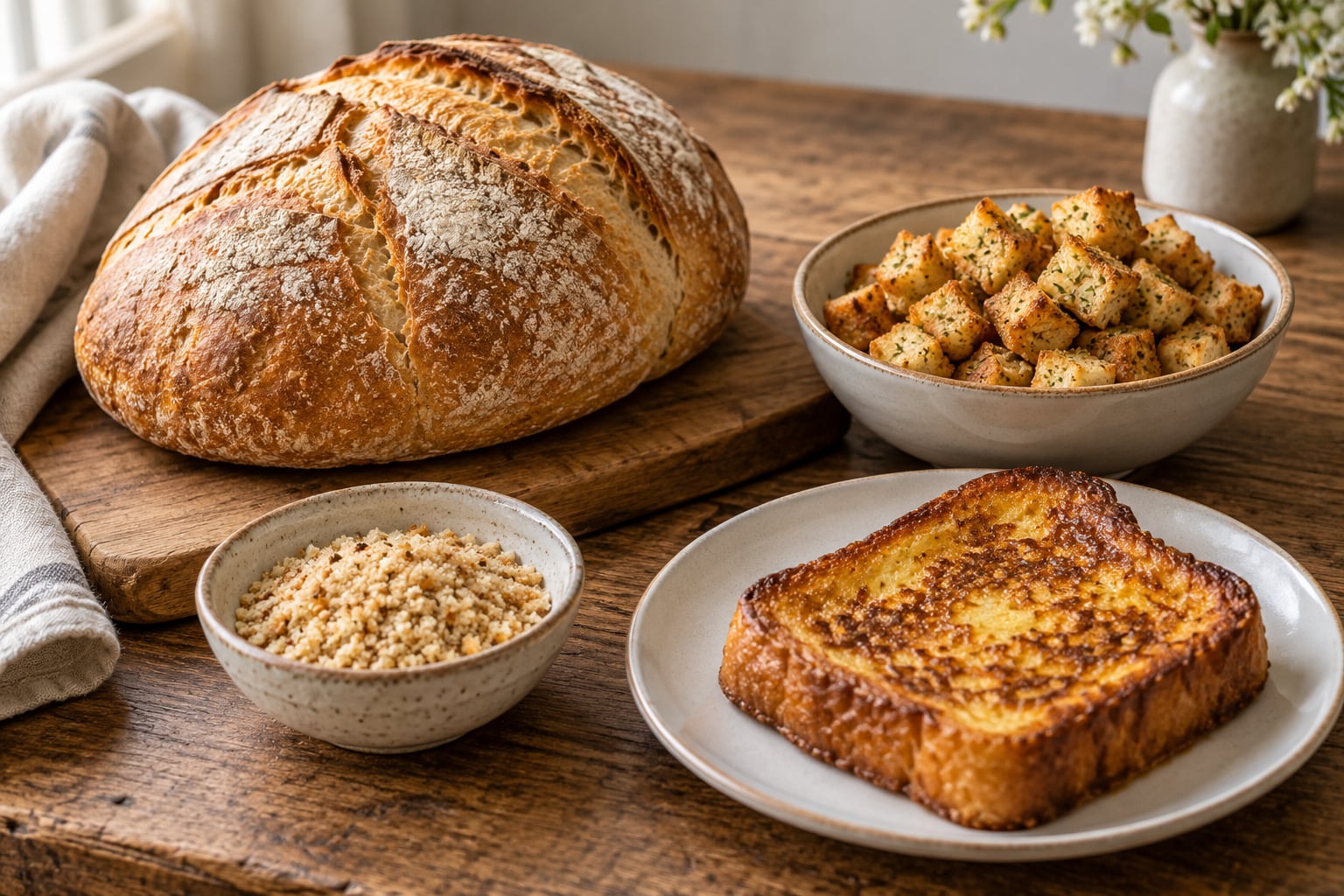
Stale bread is not waste, and it is not unsafe. It is dry and firm rather than soft, which means it holds its shape and, in almost every dish that needs to soak up liquid, it works better than a fresh loaf. Here is how to use stale bread instead of throwing it out: check it for mould, match the method to how firm it is, then crisp it, cube it, soak it or bake it into something new.
The reason bread goes stale is boring but useful. Moisture leaves the crumb and the starch firms up, so the loaf loses the soft, springy bounce it had coming out of the oven. That same dryness is exactly what a bread pudding, a breakfast strata or a Tuscan bean stew wants.
Most weeks I don’t bin a loaf at all. I toast a batch of croutons the day after baking, blitz whatever is left into crumbs, and freeze a few slices flat for a custard I haven’t decided on yet.
Table of Contents
- What You Need Before You Start
- Step-by-Step: How to Use Stale Bread Instead of Throwing It Out
- 1. Check whether the bread is still safe to use
- 2. Choose the right use for the bread
- 3. Cut or break the bread into the right form
- 4. Revive or crisp the bread before serving
- 5. Turn stale bread into a complete dish
- Common Mistakes to Avoid
- Frequently Asked Questions
- Is stale bread still safe to eat?
- How do I revive stale bread so it tastes soft again?
- Can I use very firm bread for breadcrumbs?
- What is the best way to store bread so it stays fresh longer?
- Which recipes work best with stale bread?
- Can stale bread be frozen and used later?
- Conclusion
What You Need Before You Start
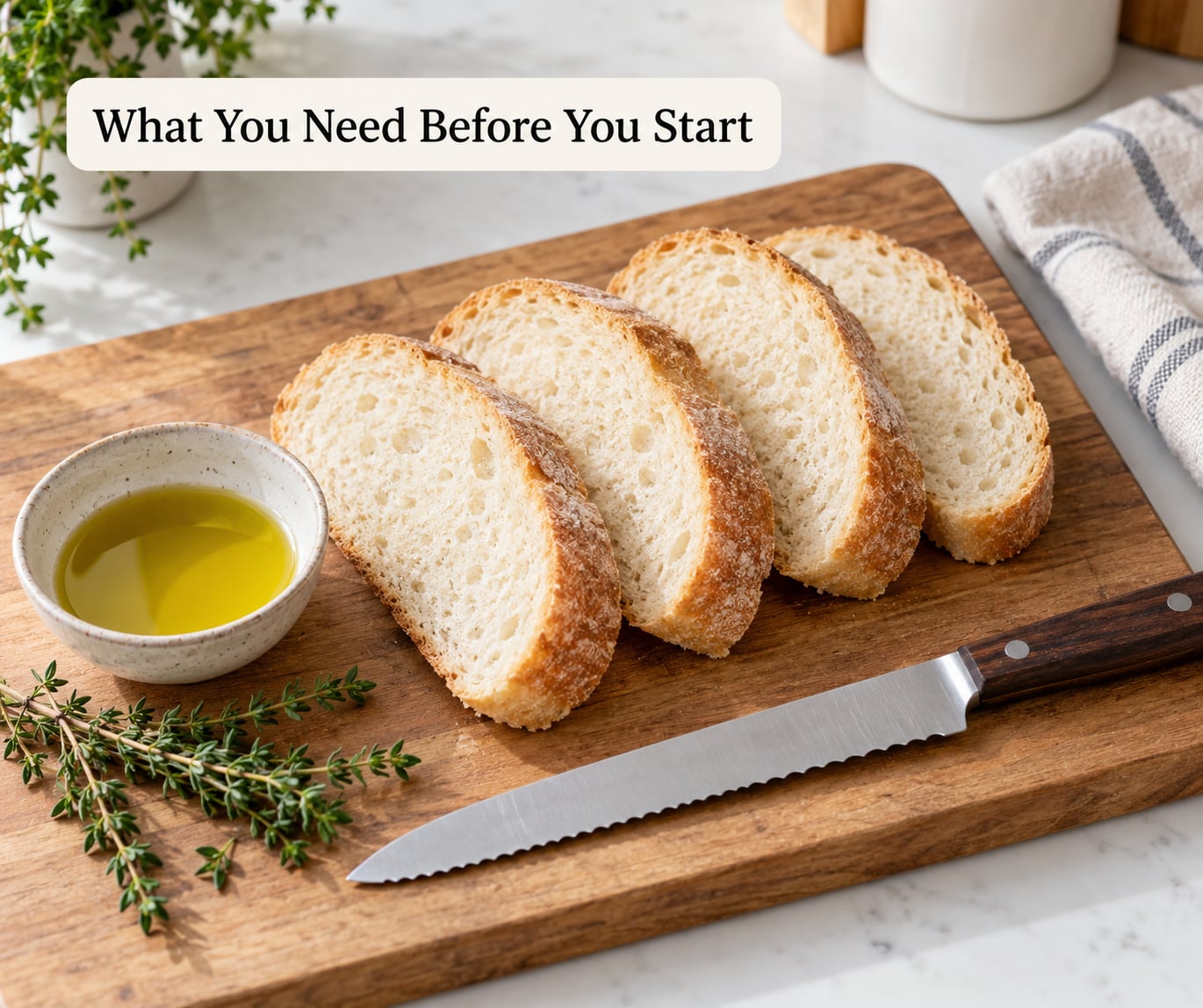
Nothing special. You need a way to look at the bread, a knife, and either a hot oven or a frying pan, plus whatever else the dish calls for.
- A cutting board and a serrated knife. A serrated blade goes through a firm crust without crushing the crumb, which matters once the loaf has hardened.
- A baking sheet or a skillet. A sheet for croutons, a pan for reheating slices or frying bread for a salad.
- A food processor, or a zip-top bag and a rolling pin. Only if you want fine breadcrumbs rather than coarse ones.
- Optional extras: olive oil or butter, hard cheese, fresh herbs, eggs, milk, cream, and a little sugar if the loaf is sweet. A little broth or bouillon is worth keeping on hand for stuffing and soup.
Before you start, decide how much bread you are dealing with. A single loaf gives you croutons, crumbs and a pudding. Two or three loaves at once means scaling a custard, doubling a crouton batch or making enough stuffing for a whole table.
Step-by-Step: How to Use Stale Bread Instead of Throwing It Out
1. Check whether the bread is still safe to use
Look at the loaf before you look at recipes. Dryness, a firmer texture and a browner crust are the ordinary signs of staleness, and bread in that condition is fine to cook with and to eat.
Mould is different. Fuzzy white, green, blue, grey or black patches, a musty or damp smell, or a slimy crumb all mean the loaf has gone past stale into spoiled. Cutting the visible patch off is not enough, because the threads of mould run through the crumb where you cannot see them, and the same goes for a mouldy crust at one end of a loaf. Discard the whole thing.
Stale bread is a poor place for mould to grow, which is why hard loaves keep while soft ones spoil. Keep yours in a cool, dry cupboard away from the stove, and put any egg- or dairy-soaked preparation in the fridge within two hours.
2. Choose the right use for the bread
How to use stale bread comes down to one question: how firm is it? Match the firmness to the dish and you will barely have to change anything about the recipe.
Slightly stale, still squeezable: toast it, revive it for sandwiches, or turn it into bruschetta. A quick crisping brings back enough softness for a normal lunch.
Firm, no bend at all: croutons, breadcrumbs, French toast, breakfast strata, sausage meatloaf, or a casserole topping. These want a dry, absorbent base.
Rock hard: bread pudding, bread and butter pudding, stuffing, panzanella, ribollita, apple brown betty, and a soup you want thickened. At this stage, boiling and baking do all the softening work for you.
What does not work is anything that depends on a soft, compressible crumb. A plain toastie or a sandwich made on stale white bread comes out tough and bendy rather than pleasant, so use fresh bread for those and save the rest for cooking.
Bread type changes the method more than most guides admit. A thin supermarket sandwich slice crisps in a few minutes and turns to dust if you leave it going. A dense sourdough or country loaf can take a soak, an hour of simmering or an hour of baking without falling apart, which makes it the better candidate for panzanella, ribollita and bread pudding. Flatbreads and rolls dry out faster than a tall loaf, so they tend to need using first.
Another useful distinction is sweetened bread. A loaf with sugar or honey in it caramelises rather than crisps, so it wants croutons with a shorter bake and a lower temperature, or it will burn before the middle dries. Plain and savoury bread browns more readily and can take more heat. Sweet crusts are also the ones to send to bread pudding and brown betty, where the sugar in the crumb works with the fruit.
3. Cut or break the bread into the right form
Slice it for toast, and keep the slices a centimetre thick so they crisp before they dry out. Cut one-inch cubes for croutons, puddings and strata, and tear rather than cut when you are making stuffing, so the irregular pieces hold more moisture.
For breadcrumbs, blitz cubes in a food processor and stop while the crumbs are still uneven. In a zip-top bag, crush the bread with a rolling pin in short, light taps. Coarse crumbs brown better and give more texture; over-processing turns them into paste-like dust that goes greasy and burns.
Leave the crusts on unless they are bitter, such as the dark ends of a rye loaf. If you only have crusts and offcuts, skip straight to crumbs, croutons or bruschetta, which is where they are most useful anyway.
4. Revive or crisp the bread before serving
In the oven: heat to 175°C, or 350°F, and put the slices straight in on the rack. A light sprinkle of water over the crust, or a damp paper towel wrapped around them, steams the crumb back to soft while the outside crisps. Give it five to ten minutes; you will know it worked when the crust crackles under your fingers and the centre feels warm rather than damp.
In the microwave: ten seconds on high for a slice, longer for a thick piece. It softens fast, so pull it out early and warm it straight away.
In a skillet: a shallow film of olive oil over medium heat, two minutes a side. This is the fastest route to a properly crisp slice for soup or a salad, and it is what I use most often.
Stop while the bread still feels right. Left in a warm oven too long, it dries out again and goes from chewy to rock-hard, which defeats the point.
5. Turn stale bread into a complete dish
French toast. Soak one-inch cubes in a beaten egg, milk and a little sugar for a minute or two, then fry in butter until golden on both sides. Fresh bread sits on top of the custard and stays bready; stale bread drinks it right through, which is the texture you actually want. Day-old sandwich bread works, and a denser loaf works better still.
Bread pudding. Cubes, a custard of egg, milk, sugar and a splash of vanilla, poured over and left to stand. Bake at 175°C for 35 to 45 minutes until a skewer comes out clean. Dried fruit, grated apple or a little cinnamon disappear into it happily.
Bread and butter pudding. Butter the bread, layer it in a dish with raisins or sultanas, pour over an egg-and-milk custard and bake at 175°C for about 40 minutes. The slices hold their shape instead of dissolving, so it looks like a pudding rather than a baked sponge.
Breakfast strata. The best use for a whole loaf when breakfast is for six people. Layer soaked cubes with beaten eggs, cream, cheese and any cooked sausage or mushrooms, then bake at 175°C for 45 to 55 minutes until set in the middle. Assemble it the night before and bake in the morning.
Soup, stew and casserole. A head of stale bread blitzed coarse thickens tomato soup, bean soup or a minestrone without flour. Torn bread added to ribollita, the Tuscan stew of reheated leftovers, does the same job while turning the pot into a meal. Italian cooks made this dish for exactly the reason it is being asked about now: yesterday’s bread is what makes it.
Stuffing. Tear the loaf, cook onion and celery in butter, add herbs, and moisten with broth or bouillon until it holds together when squeezed. Bake alongside poultry and keep in mind that stuffing mixed with raw chicken has to reach 74°C, or 165°F, in the centre. Stuffing cooked separately only needs to be steaming hot through.
Panzanella. The Tuscan bread salad people ask about most. Soak day-old cubes in a dressing of olive oil, vinegar and garlic for about ten minutes, no longer, then toss with tomatoes, cucumber, onions and basil. Ten minutes seasons the bread; thirty turns it to mush.
Sweet, and served at room temperature. Treacle tart takes a blind-baked shell pressed from stale crusts. Apple brown betty layers fruit with buttered bread crumbs and bakes until the top is bronzed. A summer pudding uses day-old slices to line a bowl, and the bread absorbs the juice from whatever fruit you have left in the fridge. All three are better after an hour at room temperature than straight from the oven.
Coatings and tops. Breadcrumbs coat chicken, fish and meatballs, and a crumb layer gives a pasta bake or a cauliflower cheese a hard top under the grill. If your bread is too stale for any of the above, it is still fine for crumbs.
As a rough guide, a pudding or strata for eight people takes about 400 grams of bread, roughly eight cups of cubes. Stuffing runs to a cup and a half per person, and croutons need only two or three thick slices each.
Common Mistakes to Avoid
Storing bread while it is still warm. Steam trapped in a closed bag turns to condensation and the crust goes soft and moulds faster. Let a loaf cool fully on a rack, even if it costs you an hour.
Blitzing crumbs to a fine powder. You lose the texture that makes a crumb coating worth eating, and fine crumbs burn before they brown. Stop when the crumbs are roughly the size of coarse salt.
Adding bread to soup or salad too early. Ten minutes in broth is right; an hour makes porridge. For panzanella, add the bread at the last moment before serving.
Reviving a slice for twenty minutes. The first ten minutes bring back moisture and the crust. After that the crumb dries out again and you are back where you started with a warmer kitchen.
Cutting the mould off and using the rest. Mould runs where you cannot see it. That loaf goes in the bin, and using crusts and offcuts is the better way to reduce waste in the first place.
Treating firm bread exactly like fresh bread. Firm bread needs more liquid and more cooking time, and it dries out rather than browning if you toast it plain. Spritz it, soak it, or give it longer in the oven.
Bakeries handle the same problem at a bigger scale. Unsold day-old loaves go into bread pudding, into croutons, into staff meals, or into sealed bags kept for a local food bank that accepts surplus bakery stock, rather than into general waste.
Frequently Asked Questions
Is stale bread still safe to eat?
Yes, as long as it has not grown mould. Stale bread is dry, firm and sometimes a little darker, which is harmless. Bread carrying fuzzy patches in white, green, blue, grey or black, or giving off a musty smell, is spoiled rather than stale, and the whole loaf should be discarded because the mould spreads invisibly through the crumb.
How do I revive stale bread so it tastes soft again?
Sprinkle a few drops of water over the crust or wrap the loaf or slices in a damp paper towel, then heat at 175°C for five to ten minutes. The crust crisps and the crumb softens. For a single slice, ten seconds in the microwave or two minutes a side in a lightly oiled skillet also works. Take it out as soon as it feels right, because longer reheating dries it out again.
Can I use very firm bread for breadcrumbs?
Firm bread is the best kind for breadcrumbs. Cut it into cubes, dry them in a low oven for about ten minutes so nothing steams, then blitz in a food processor or crush in a bag. Stop at coarse crumbs rather than powder. Because there is little moisture left in the crumb, these crumbs brown well and stay crisp for months in a sealed container or a freezer bag.
What is the best way to store bread so it stays fresh longer?
Keep bread at room temperature in a paper bag, a cloth bag or the paper wrapper it came in, in a cool cupboard away from the stove. That lets trapped moisture escape and slows mould. A sealed plastic bag softens the crust for a day or two, then traps moisture and speeds spoiling. Slice and freeze what you will not use within a few days, and toast it straight from frozen.
Which recipes work best with stale bread?
Dishes that need a dry base for liquid work best: French toast, bread pudding, bread and butter pudding, breakfast strata, stuffing, panzanella, ribollita, bread soup and apple brown betty. Croutons and bruschetta want firm bread too. Plain sandwiches and toasties are the exception, since they depend on a soft, springy crumb that firm bread simply does not have.
Can stale bread be frozen and used later?
Yes, and freezing slows staling rather than reversing it, so freeze bread while it is still good quality. Wrap slices in a freezer bag or cling film, press out the air, and label with the date; most bread keeps three months or more frozen. Toast and fry frozen slices without thawing, or thaw them in the pan for a dish like bread pudding. Mouldy bread should never be frozen or thawed for reuse.
Conclusion
Start by looking at the loaf. Dry and firm means it is fine to use, and mould means the whole thing goes in the bin. Then judge the firmness: lightly stale bread gets revived or toasted, firm bread becomes croutons or crumbs, and rock-hard bread goes into a custard, a stew or a stuffing.
Pick one thing to do today rather than planning a whole week of it. A tray of croutons takes fifteen minutes, reviving a few slices takes less, and the rest can go in the freezer for the casserole you have not planned yet.