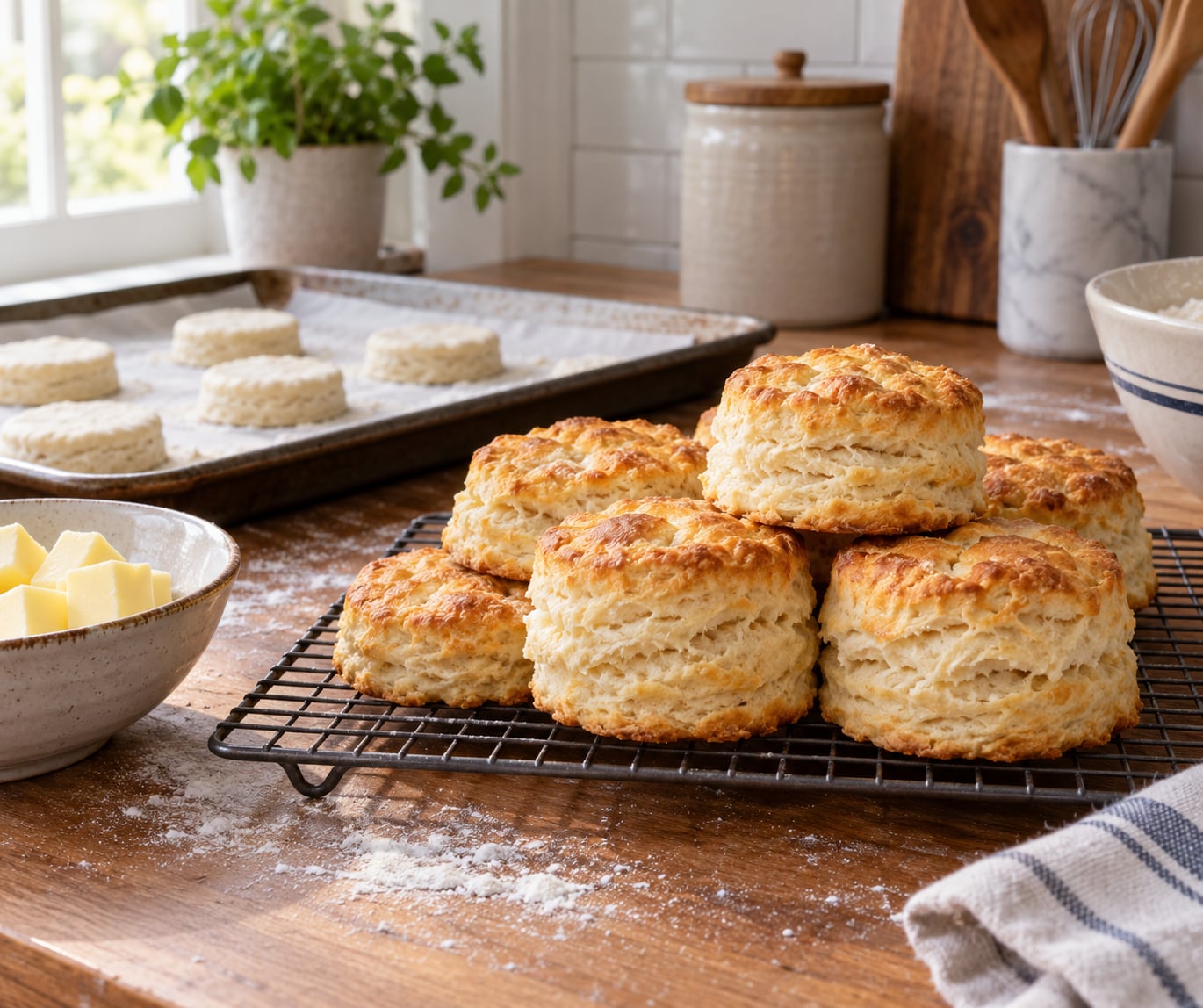
To make biscuits that rise tall, you need cold fat, barely mixed dough, a hot oven, and thick rounds cut straight down without a twist. Biscuit height comes almost entirely from those four things rather than from the ingredient list. Start with a 2:1 ratio of flour to fat and keep everything cold until the pan goes in the oven. The whole process takes about 30 minutes, and the technique is forgiving once you know what to look for at each stage.
Flaky, high biscuits are quick breads leavened with baking powder and baking soda. Cold butter pieces turn to steam in a 450°F oven and push the layers apart, while the acid in buttermilk gives the baking soda something to react with. Get any one of those parts wrong and you get a dense little hockey puck. Get them right and the same recipe turns out a two-inch-high biscuit you can split for biscuits and gravy.
On this site we bake a lot of bread and cake, but biscuits are the thing that snuck up on me. My first batch came out 3/4 inch tall, pale, and slightly gritty. It took me several attempts to see that the problems were all tiny: butter that had softened while I measured the flour, a cutter I habitually twisted, and an oven that ran cool. Once you control those, the method stops being a matter of luck.
Table of Contents
- What You Need
- Step-by-Step: How to Make Biscuits That Rise Tall
- 1. Chill the butter and prepare the baking sheet
- 2. Mix the dry ingredients and cut in the butter
- 3. Add just enough buttermilk and bring the dough together
- 4. Rest, fold, and pat the dough to even thickness
- 5. Cut tall biscuits and place them on the hot sheet
- 6. Bake until the tops are golden and the centers are cooked through
- Common Mistakes
- Biscuits spread in the oven
- Biscuits turn out tough and chewy
- Biscuits taste like raw flour
- Biscuits crumble apart when you cut them
- Some biscuits are tall and others are short
- Do biscuits need to touch on the baking sheet?
- Make-Ahead and Freezing
- Making More Height: Adjustments That Help
- Frequently Asked Questions
- Why are my homemade biscuits flat?
- How do I make my biscuits rise higher?
- What is the secret to fluffy biscuits?
- Does baking powder or baking soda make biscuits rise better?
- How do I stop biscuits from spreading?
- Can I make biscuit dough ahead and freeze it?
- Start With the Four Things That Matter
What You Need
The tool list is short and nothing here is specialty equipment. Everything can be done with a fork, a knife, and a baking sheet.
- All-purpose flour (250 g / 2 cups). Low protein AP flour gives a tender crumb without needing a mixer.
- Cold unsalted butter (85 g / 6 tablespoons), cut into 1/2-inch cubes or grated from a frozen stick.
- Buttermilk (180 ml / 3/4 cup), cold.
- Baking powder (12 g / 1 tablespoon), double-acting, checked for freshness.
- Sugar (12 g / 1 tablespoon) and fine salt (6 g / 1 teaspoon).
- A sharp 2-inch round cutter with a fluted edge. A drinking glass works in a pinch, and a bench scraper cut into circles does too.
- A heavy baking sheet with no rim, plus a wire rack set over a second sheet.
- A cooling rack so the bottoms get air.
If you want to weigh ingredients, a 1-cup scoop of AP flour is roughly 125 g. Baking flour or bread flour will make biscuits chewier and taller-but-tougher, and cake flour dries them out.
Step-by-Step: How to Make Biscuits That Rise Tall
1. Chill the butter and prepare the baking sheet
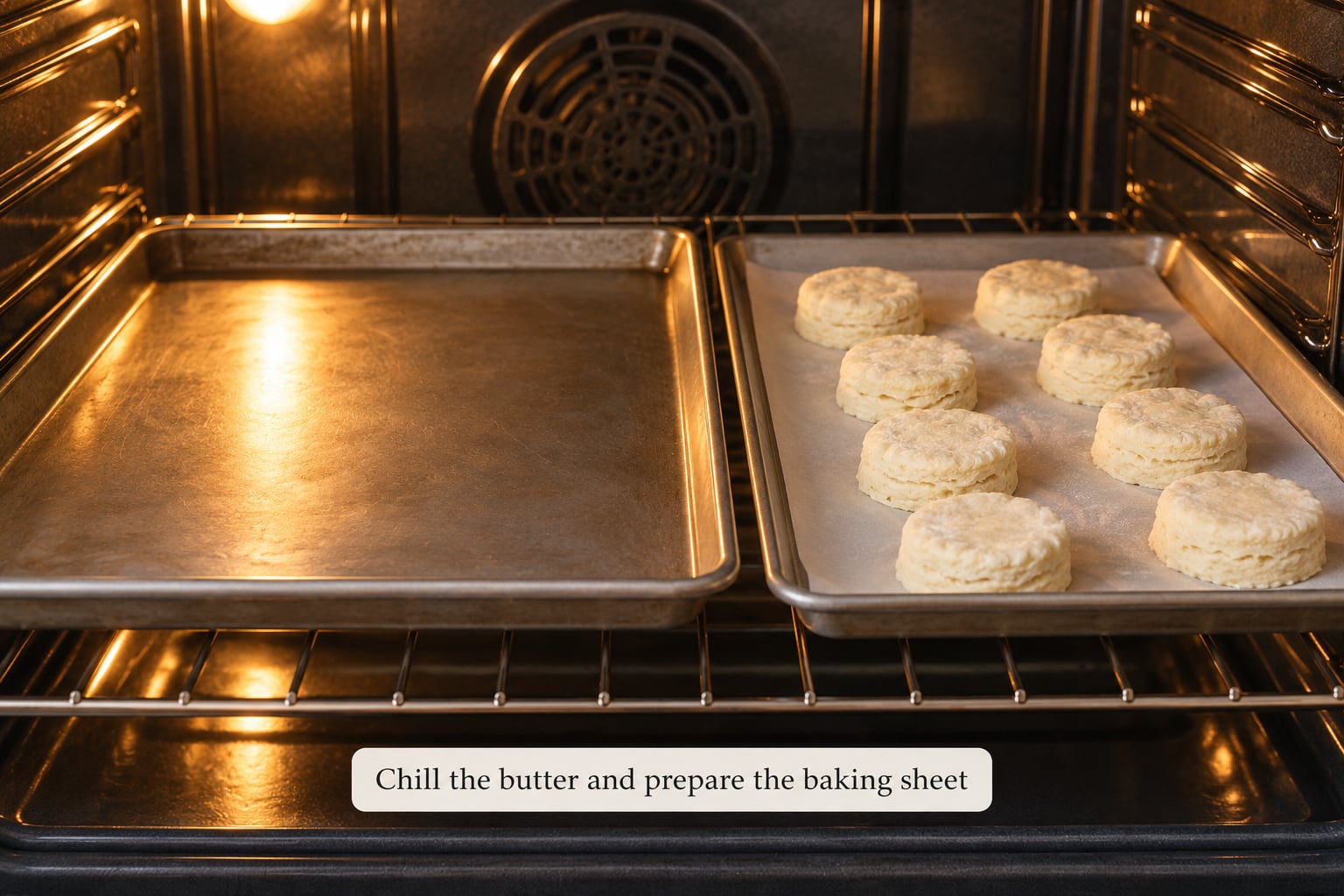
Cold fat is the engine of the rise. Butter melts around 350°F, and in a 450°F oven the water trapped inside it flashes into steam that forces the dough layers apart. Warm butter does that work too late and too gently, which is why room-temperature fat gives you a flat biscuit with a flat top.
Cut the butter into 1/2-inch cubes and put them back in the fridge while you set everything else up. Grating a frozen stick of butter straight into the flour is even better, since the smaller pieces melt slower and leave more intact pockets in the crumb. If your kitchen runs warm, chill the mixing bowl and even the flour for 15 minutes before you start.
Slide the heavy baking sheet into the oven at the same time you preheat it to 450°F. A room-temperature sheet absorbs the first minutes of heat and stalls the rise; a preheated sheet gives the dough instant oven spring on contact. Place it on a lower-middle rack, never on the bottom, so the base does not scorch before the top browns.
2. Mix the dry ingredients and cut in the butter
Whisk 250 g flour, 12 g baking powder, 12 g sugar, and 6 g salt in a large bowl. Mix the baking powder into the flour rather than dumping it on top, because pockets of concentrated leavening taste bitter and bloat unevenly.
Cold baking powder matters too. Baking powder is starch plus an acid and a base that react with moisture and heat, and once it has been sitting open in a humid cupboard for six months it may not fizz in hot water. If the whole spoonful bubbles weakly, buy a new tin.
Work the cold butter into the flour with a pastry cutter, two knives, or clean fingertips, pinching and turning until the pieces are about the size of dried peas and no larger. Stop there. Rubbing the fat in until it disappears into fine flour is exactly what turns a tall flaky biscuit into a flat crumbly one.
3. Add just enough buttermilk and bring the dough together
Pour in 180 ml of cold buttermilk and stir with a fork just until no dry flour is left. The dough will look shaggy, streaky, and slightly sticky, with loose flakes of butter still visible. That is correct.
Biscuit dough has no gluten development step on purpose. Flour hydrated in water begins forming gluten strands the moment it is worked, and those strands tighten when heat hits, squeezing out the pockets you want. Gentle mixing leaves the dough tender and flaky; ten extra seconds of kneading is enough to make them tough and chewy.
Do not add more buttermilk to fix a sticky dough. Wet dough spreads in the oven instead of springing up, and you lose the steam pockets that create lift. A tacky dough is only a problem if you cannot handle it, and a floured bench scraper solves that.
4. Rest, fold, and pat the dough to even thickness
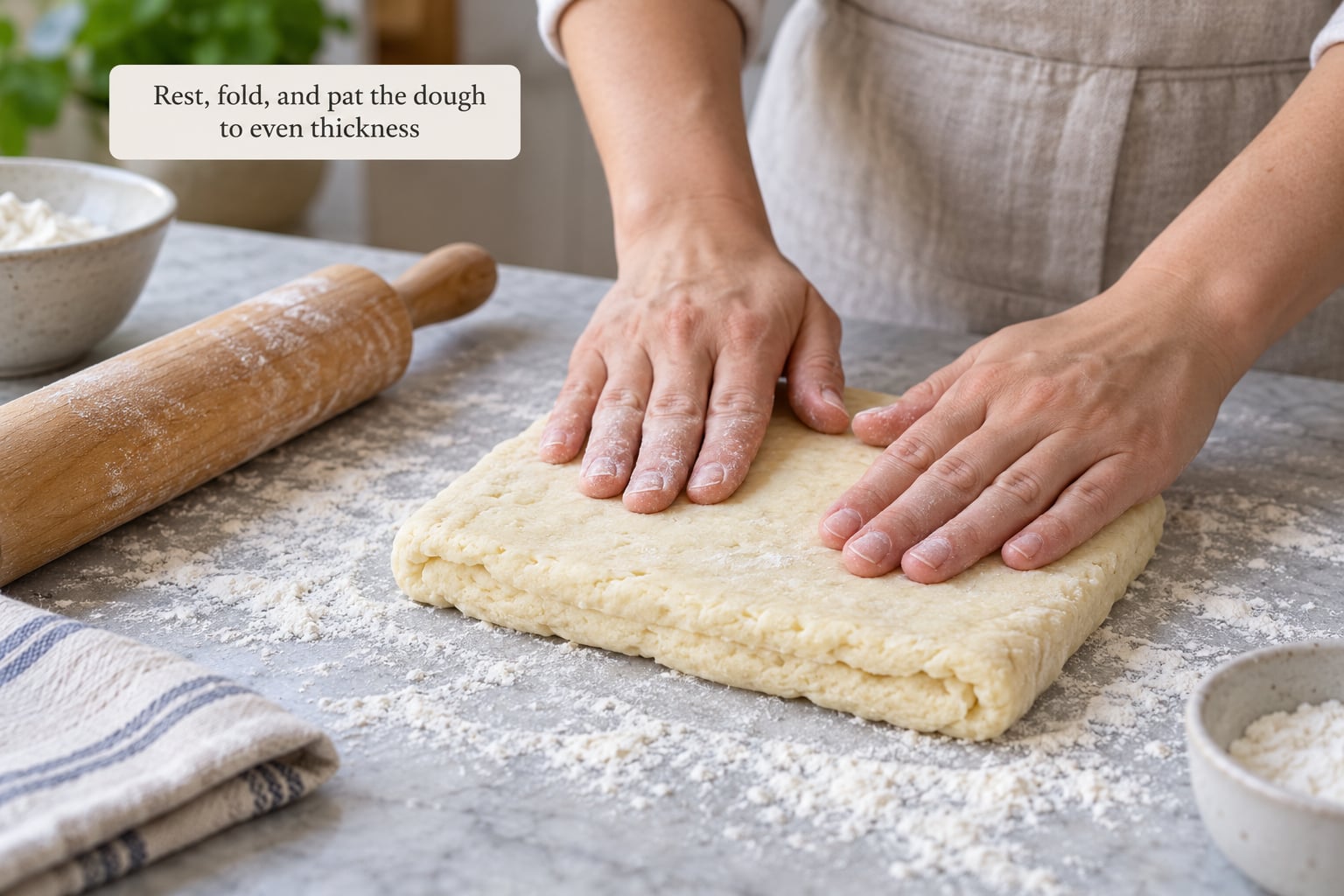
Press the dough into a rough rectangle about 1/2 inch thick and let it sit for 15 minutes. Resting lets the flour drink up the liquid and the gluten relax, so the dough stops fighting you when you fold it.
Now laminate. Fold the rectangle in thirds like a letter, rotate it 90 degrees, and repeat two or three times. Each fold layers cold butter between dough, and each layer is a seam the steam will push apart. Keep the dough at 1/2 inch thick throughout, or the butter shears out of alignment instead of forming even layers.
Rest the dough again for 15 minutes if it feels soft. Then pat it, do not roll it, into a rectangle about 1 inch thick. Patting with your fingertips keeps the butter in flat, even sheets. A rolling pin crushes the layers and squeezes out the air you spent the folds creating.
Judging 1 inch by eye is easy once you calibrate: a standard kitchen counter is roughly 36 inches long, so one quarter of that is 9 inches. Tap the dough with a fingertip and it should leave a shallow dent without springing back immediately.
5. Cut tall biscuits and place them on the hot sheet
Dip a 2-inch round fluted cutter in flour, tap off the excess, and press it straight down into the dough without rotating your wrist. Lift it straight up. Twist the cutter and you seal the cut edges closed, and sealed edges cannot rise.
Each biscuit should be about 1 inch thick. Thick dough rises higher because there is more structure to hold the steam pockets open, and it bakes more evenly through the center. Cutting short, at 3/4 inch, is the most common reason home biscuits look squat beside a restaurant one.
Place the rounds on the preheated sheet 1 inch apart so air can move around them for even baking. For the tallest possible biscuits, set them nearly touching; the dough puffs slightly on contact, and a wall of biscuits rises better than isolated ones. The tradeoff is that the sides stay softer and less crisp.
Rework the scraps into a second pat. Those second-round biscuits are always a little less tall, so tuck them wherever they fit or make them drop biscuits by spooning small clumps onto the sheet.
6. Bake until the tops are golden and the centers are cooked through
Put the sheet in the 450°F oven on the lower-middle rack and bake for 12 to 14 minutes. Height happens in the first 5 to 7 minutes, which is the oven spring, so do not open the door during that window. A temperature drop of 25°F or more sends the dough back down.
Pull them when the tops are deep golden brown and the bottoms sound hollow when tapped, around 160°F at the center. Biscuits keep baking from residual heat after they leave the oven, so a pale biscuit pulled early will finish and darken on the rack.
Rest them on a wire rack for five minutes. They are still setting inside, and cutting one open too soon leaves you with a gummy middle even though it baked correctly.
Common Mistakes
Almost every flat, dense, or crumbly biscuit traces back to one of a handful of things. Work down this list before you change your recipe.
Biscuits spread in the oven
Warm butter and warm dough are the usual causes, and so is an oven that is not actually hot enough to set the structure quickly. Chill the fat, chill the bowl, and check your oven with an independent thermometer, which commonly reads 20 to 30°F off the dial in either direction. Put the sheet in before the dough is cut, not after.
Biscuits turn out tough and chewy
You overmixed. Biscuit dough should still show streaks of dry flour and visible flakes of butter when it comes together. Use a fork, stop as soon as it holds together, and accept the shaggy look. Toughness also comes from rolling the dough too thin or pressing hard while shaping.
Biscuits taste like raw flour
The dough was too thin or the bake was too short, so it never cooked through. Keep the rounds at 1 inch, bake until the center reaches about 160°F, and give the sheet another minute before you pull it if the bottoms pale before the tops.
Biscuits crumble apart when you cut them
Overworked butter or not enough liquid makes the crumb dry and short. Cut the butter into peas rather than powder, and measure buttermilk properly. A rough shortcut is one cup of milk plus one tablespoon of lemon juice or vinegar, which needs about five minutes to thicken.
Some biscuits are tall and others are short
The dough was not an even thickness. Pat to 1 inch and check with your fingertip dent at several points before the first cut. Rolling pins with one high and one low end are a common cause, so check your thickness across the whole rectangle.
Do biscuits need to touch on the baking sheet?
For maximum height, yes. Bakers comparing results report that rounds placed close together give noticeably taller results, and separated rounds for airflow bake more evenly but a bit shorter. Both are legitimate, so pick based on whether you want taller biscuits or crisp edges.
Make-Ahead and Freezing
Dough freezes better than baked biscuits, and a frozen dough portion bakes up taller than one that has sat in the fridge for a day. Shape the biscuits, lay them on a tray to freeze solid, then transfer to a bag or container.
Bake from frozen at 425°F, adding 3 to 5 minutes to the bake time. Going straight from freezer to a 450°F oven gives you a spread biscuit because the outside sets before the inside warms. Do not thaw unbaked dough on the counter, since the butter melts into the flour and the layers disappear.
Baked biscuits keep two days at room temperature in a loose bag or a container with the lid cracked. A sealed container traps condensation and softens the crust. Warm them at 350°F for five to eight minutes; the microwave works in 15 seconds but dries the crumb out fast, so the oven or toaster oven wins for keeping the texture.
Making More Height: Adjustments That Help
Once the base method is reliable, a few adjustments add lift. Mixing half the fat as butter and half as vegetable shortening keeps a high melt point through the bake, and bakers report it produces the flakiest layers, though shortening brings less flavor than butter.
Low-protein flour such as White Lily or a similar cake-adjacent brand makes noticeably more tender biscuits than standard all-purpose because it has less protein to develop. Grating frozen butter instead of cubing it gives more, smaller pockets and a taller bake.
At high elevations, above about 5,000 feet, drop the baking powder by roughly a third and add a couple more minutes to the bake time. The lower air pressure lets steam escape early, so you need both more gas to lift the dough and longer for the structure to set.
Home bakers on r/Baking report two fixes that cost nothing: freezing the shaped biscuits for 15 minutes before baking, and using a bench scraper instead of your hands so the butter never warms. Both do the same thing, which is keeping the fat cold and solid longer.
Frequently Asked Questions
Why are my homemade biscuits flat?
Flat biscuits almost always come from one of four things: butter that was too warm, dough that got overmixed, rounds cut much thinner than 1 inch, or an oven that was not fully preheated or runs cooler than its dial. Chill the fat and the mixing bowl, stir with a fork only until the dough holds together, pat the dough to a full inch, and use a thermometer to confirm your oven reaches 450F before the dough goes in.
How do I make my biscuits rise higher?
Start with more fat in the dough for a higher rise. Use 6 tablespoons of cold butter with a 2:1 flour-to-fat ratio, laminate it in two or three letter folds, and cut 1-inch-thick rounds. Bake at 450F on a preheated heavy sheet placed on a lower-middle rack, and do not open the oven door during the first five minutes, which is when oven spring happens.
What is the secret to fluffy biscuits?
The secret is leaving the dough alone. Biscuit dough should still look shaggy and streaky with loose flakes of butter when it comes together. Mixing it until it looks smooth develops gluten, which tightens in the oven and squeezes out the air pockets you want. Cold ingredients and a hot oven do the rest of the work.
Does baking powder or baking soda make biscuits rise better?
Most biscuit recipes use both, and they do different jobs. Baking powder is double-acting, so it releases gas in the cold dough and again in the heat, which is what gives the initial lift. Baking soda needs acid to activate, and the acid in buttermilk supplies it. Use baking powder alone for a taller bake; drop the soda only if you also remove the buttermilk.
How do I stop biscuits from spreading?
Spread happens when there is not enough structure to hold the dough up. Keep the butter cold, avoid extra buttermilk, pat the dough to a full inch rather than rolling it thin, and place the rounds on a preheated heavy baking sheet. Baking them close together also limits how far the sides can flare outward.
Can I make biscuit dough ahead and freeze it?
Yes, and the frozen dough rises better than dough kept in the fridge for a day. Shape the biscuits, freeze them solid on a tray, then bag them. Bake from frozen at 425F rather than 450F and add 3 to 5 minutes. Baking straight from the freezer at high heat sets the outside before the center warms, which makes them spread.
Start With the Four Things That Matter
If you only change four things from your current routine, change these: keep the butter cold and cut it to pea size, stop mixing while the dough still looks shaggy, pat the rounds a full inch thick and press the cutter straight down, and bake on a sheet that has been heating at 450°F for ten minutes.
None of it requires new equipment or a special ingredient, and each one addresses a cause rather than a symptom. Biscuit height is a chain of small things, and once the chain holds, the baking powder does what it was always going to do.