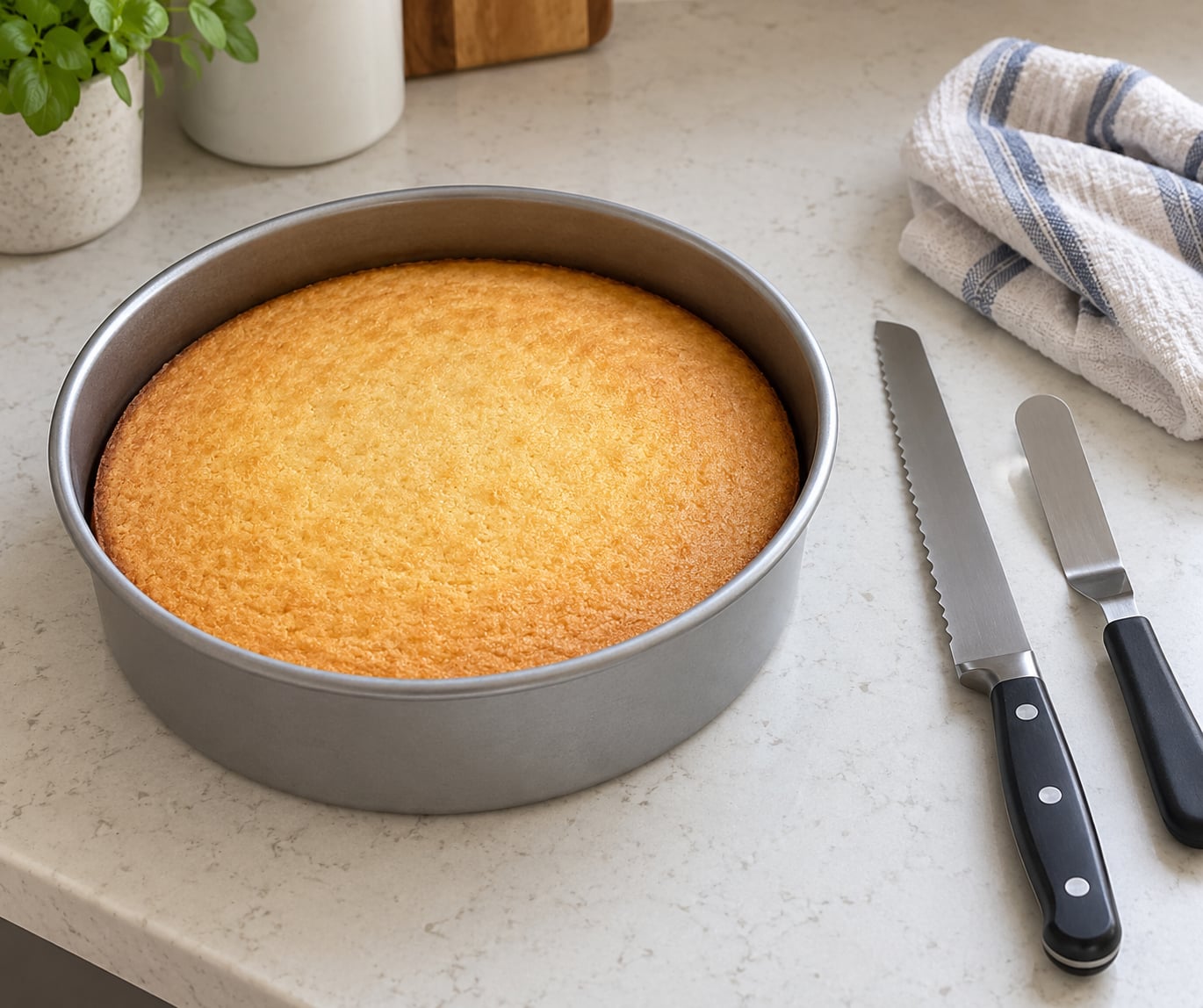
Layer cakes dome because the thin ring of batter touching the hot pan wall dries out and sets first, while the insulated middle keeps rising underneath it. To keep layer cakes from doming, you have to slow that edge down: weigh your ingredients, level the batter in the pan, and check that your oven is really at the temperature the dial claims. None of that takes more than a few extra minutes.
The same physics that makes a good cupcake dome in the middle is what ruins a stacked layer cake. Cupcakes are meant to crown. A layer cake has to sit flat under frosting and filling, so the doming has to go somewhere.
Here is what I have found after baking more tall layer cakes than I care to admit, and what the forums agree on when you read the comments under the popular guides. The fixes are ordered by how much they change the outcome.
Table of Contents
- What You Need for Flat, Even Layers
- Step-by-Step: How to Keep Layer Cakes From Doming
- How to Measure and Mix the Batter for Even Layers
- How to Level Cake Batter Before Baking
- How to Control the Oven and Bake the Layers Flat
- How to Cool and Level the Baked Layers
- How to Stack the Layers Without Creating a New Dome
- Common Mistakes That Cause Domed Layers
- Frequently Asked Questions
- Why does my cake dome even when I follow the recipe exactly?
- Does lowering the oven temperature actually stop doming?
- Are cake strips necessary, or does the damp towel trick work as well?
- Can I save a domed layer that is already out of the oven?
- What do I do when only one side of the layer is higher?
- Conclusion: Weigh, Level, Verify
What You Need for Flat, Even Layers
The honest answer is that you need very little. Most of what people buy to fix doming is a nicer version of a towel and a sharp knife.
- A digital kitchen scale. Flour packed into a measuring cup can vary by a quarter cup between scoops. Weight does not vary.
- The right pan size. If the recipe was written for two 8inch rounds, use two 8inch rounds. Batter in a smaller pan rises taller and hotter.
- An oven thermometer. This is the single most useful item on the list, and the cheapest one to skip.
- An offset spatula and a small ruler or straight edge. Both for leveling batter before it bakes.
- A cooling rack. Layers need air on the bottom as well as the top.
- Optional: cake strips or a damp towel, and a serrated knife or cake leveler. The strips fix doming before it happens. The knife fixes it after.
Two preparation choices matter as much as any technique: weigh your ingredients instead of scooping them, and let the oven come all the way up to temperature before the pans go in. Underheated oven, under-measured flour, and doming all trace back to the same place.
Step-by-Step: How to Keep Layer Cakes From Doming
How to Measure and Mix the Batter for Even Layers
Weigh the flour. Sit the bowl on the scale, tare it, and spoon flour in until you hit the gram weight. If your scale is buried in a cupboard, a cup of spooned-and-leveled flour can easily be a quarter cup heavier than the recipe intended, and extra flour makes a taller, drier, more domed cake.
Mix until the streaks disappear and no more. Overmixing develops gluten, which tightens the crumb and holds more air, so the batter rises higher than the recipe tested. Scrape the bowl sides, and stop.
Divide the batter by weight rather than by eye. Set your two pans on the scale one at a time and pour until each reads the same number. Equal batter means equal layers, which means a cake that stands straight.
How to Level Cake Batter Before Baking
After pouring, push the batter gently from the center out toward the wall in a spiral, then drag the flat of the spatula around the edge to pull the thicker ring back inward. The batter at the perimeter should be the same depth as the batter at the center.
To check, lay a ruler across the top of the pan and look down it. A layer that reads even at the rim and even at the middle will bake even. If one side is deeper, the finished layer will come out sloped, which is harder to fix than a dome because a slope shows up in the frosting.
One more move here costs nothing: lift the pan a few centimetres and drop it onto the counter five to eight times. The jolt settles the batter and pops large air pockets that would otherwise lift the middle. Five to eight drops, not a hammer blow, or you will push the batter into one side.
How to Control the Oven and Bake the Layers Flat
Preheat properly. Most ovens are not at temperature when the timer starts, and an oven coming up to heat while the cake bakes means a fast, uneven early rise. Give it a full 20 to 30 minutes, then confirm with a thermometer instead of trusting the beep.
Bake on the middle rack, and only one batch at a time unless you are baking two layers. Two racks means the top pans get hot air from the heating element and brown on the bottom while staying pale on top. More than two layers, bake in batches.
If your thermometer reads more than about 15 degrees above the dial, the oven is the reason your layers dome and no recipe change will fix it. Many home ovens run 25 to 50 degrees hot, and ovens with a visible broil element or a window are usually the worst offenders. When the thermometer disagrees with the dial, trust the thermometer and drop the dial by the difference.
For temperature, drop 25 degrees from the recipe and add roughly half the original bake time. A 350 degree cake becomes 325 degrees with a longer bake, and that slower start gives the edges time to set at the same pace as the center.
Insulate the sides if you want to be sure. Wet a cotton towel, wrap it around the pan, and pin it closed with safety pins, or fold a foil collar around the outside of the pan. Bakers have been doing this for decades and it works about as well as the strips sold for the purpose. Cake strips are the tidier version of the same idea: a wet band around the pan that slows the edge from drying out.
Pan material changes the doming math too. Dark metal and glass run hotter than light metal at the same dial setting, so a layer in a dark pan domes more. Drop the temperature about 25 degrees for a dark or glass pan, and consider lining dark pans with parchment on the bottom.
And leave the door closed for the first 20 to 25 minutes. A cold rush of air in a hot oven collapses the structure that has just started to set, which is how you get a layer that falls in the middle.
How to Cool and Level the Baked Layers
Cool in the pan for 10 to 15 minutes, until the edges pull away slightly and the top no longer looks wet. Turn onto a rack and cool completely, or chill for 20 to 30 minutes if you are in a hurry to trim.
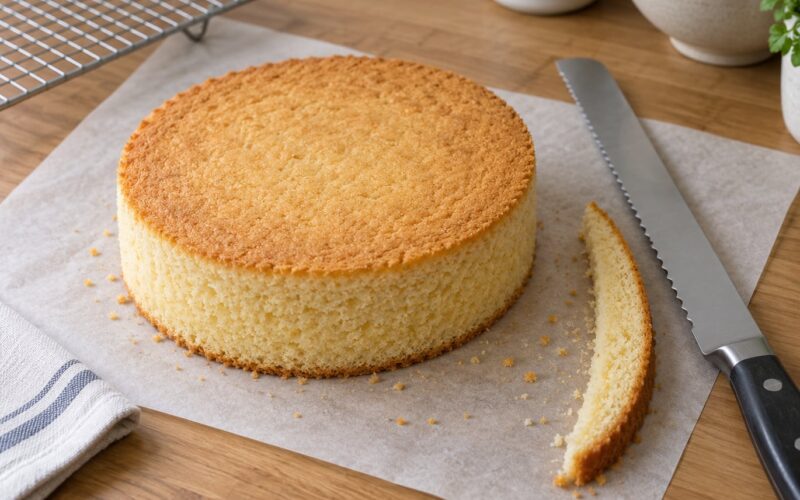
Trim cold. A warm dome smears under the knife and tears into crumbs, while a chilled layer cuts clean. Chill, then use a long serrated knife with a sawing motion and a level hand, turning the cake a quarter turn every few cuts. A bench scraper on top of the layer and a knife guided against it takes off more than you meant to, which is why it is worth starting shallow.
Do not press the dome down out of the oven. The crumb is still elastic and barely set, so the top springs back within minutes and you are left with a cracked, compressed mess. Some bakers turn the layer out upside down to cool, which is harmless, but the dome comes back the same either way.
If you have a serrated turntable knife or a proper cake leveler, use it. The long blade stays level across the whole top, so the trimmed layer is flatter than one cut with a chef’s knife following the curve.
How to Stack the Layers Without Creating a New Dome
Only stack fully cooled layers. Warm cake is soft, and filling it soft makes the layers slide and tilt, which reads as doming even when the tops are flat.
For two layers, put the cake on a board or a turntable, spread a measured thickness of filling, and press the next layer down gently so it sits flat. Keeping the filling the same depth all the way round is what stops a tier from leaning.
For four or more layers, the cake is tall enough that the filling alone will compress under its own weight. Add a central dowel and internal supports before you build, so the middle of the cake carries the load instead of the filling. If you only ever bake two layers, skip this.
Common Mistakes That Cause Domed Layers
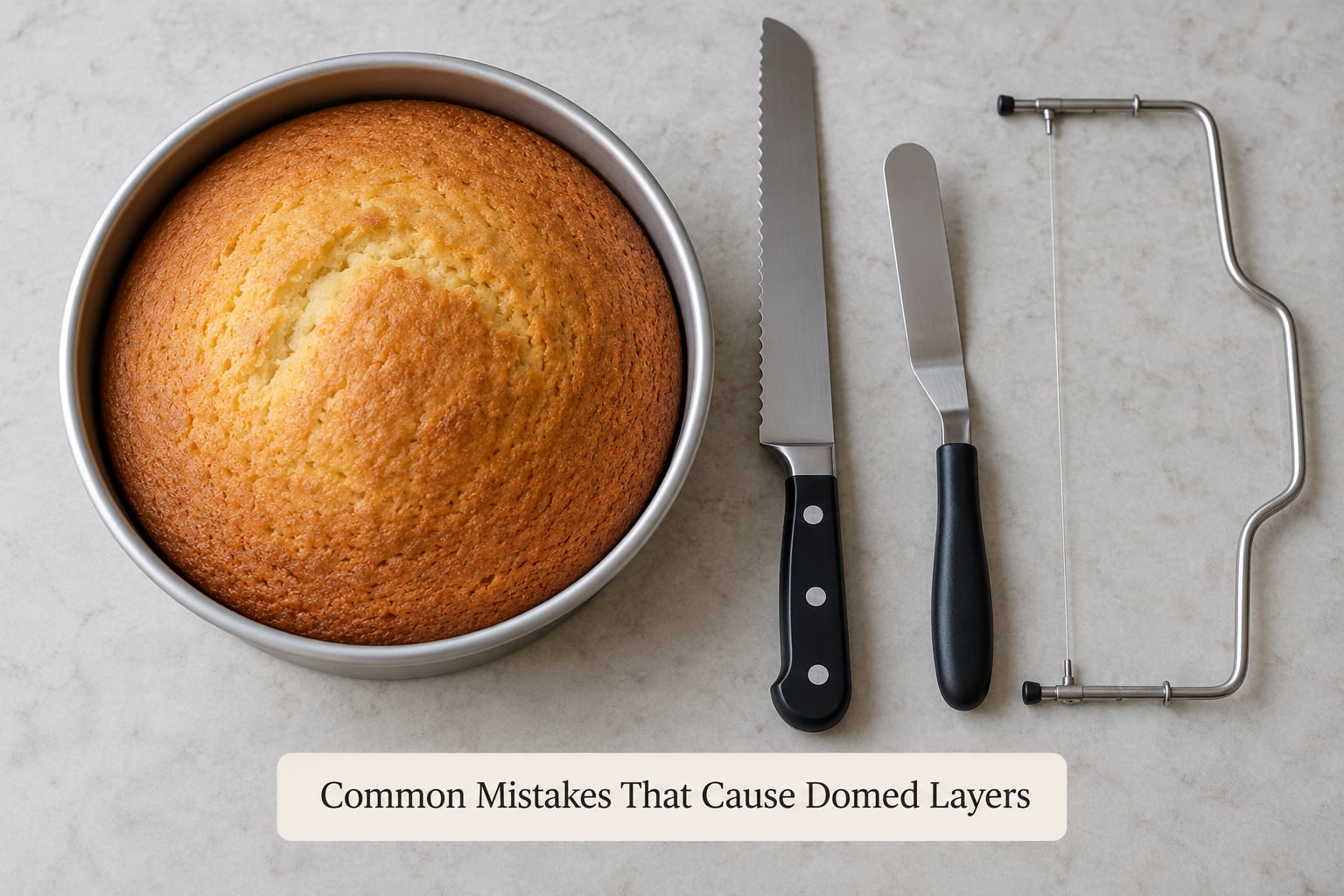
Almost every domed layer traces back to one of about nine causes. Find the symptom that matches your cake and fix that first.
| Symptom | Cause | Fix |
|---|---|---|
| Even dome all around, taller than the recipe | Oven running hot, or no insulation on the pan sides | Oven thermometer, drop 25 degrees, add bake time, wrap the pan in a damp towel |
| Dome with a dark, tough ridge at the edge | Edges dried out before the center set | Insulate the sides, or lower the temperature another 25 degrees |
| One side higher than the other | Batter spread to one side, or a hot spot in the oven | Level the batter before baking, rotate the pan halfway, move the oven element |
| Very tall rise, dense or tough texture | Overmixed batter or too much flour | Weigh the flour, stop mixing as soon as streaks vanish |
| Layers of different heights | Batter divided by eye | Weigh each pan on the scale after pouring |
| Center collapsed in the oven | Oven door opened early, or an underbaked center | Leave the door shut for 25 minutes, bake until a toothpick from the center comes out clean |
| Sponge sinks after it leaves the oven | Structure overstretched, then collapsed as it cooled | Lower the temperature, extend the bake, cool in the pan before turning out |
| Bottom browning unevenly | Two racks baked at once, or a hot element below | Middle rack only, one batch at a time, rotate once |
| Stacked cake leans or slides | Warm layers, uneven filling, no board | Cool completely, measure the filling, build on a board or turntable |
One more cause deserves its own warning: cutting the baking powder. Reducing it by an eighth to a quarter teaspoon will flatten the rise, and it will also flatten the texture. Bakers who do it generally describe it as a gamble, and I agree, so save it for the cake where you have another plan for texture.
If you want a single habit to fix the most cakes, weigh the ingredients and check the oven with a thermometer. Everything else on this list is a refinement on top of those two.
Frequently Asked Questions
Why does my cake dome even when I follow the recipe exactly?
Most often the oven, not the recipe. Home ovens commonly run 25 to 50 degrees hotter than the dial, which makes the center rise faster than the edge can set. Check with an oven thermometer, and if it reads high, drop the dial by the difference. Flour scooped rather than weighed is the other common culprit, since a heaped cup can add enough extra structure to over-rise the batter.
Does lowering the oven temperature actually stop doming?
Yes, and it is the cheapest fix available. Drop the recipe temperature by 25 degrees, so a 350 degree cake bakes at 325 degrees, and add roughly half the original bake time. The slower start slows the edge down just enough to set alongside the center. Keep the temperature steady once the bake begins, since opening the door in the first 25 minutes collapses the crumb.
Are cake strips necessary, or does the damp towel trick work as well?
The damp towel works about as well. Wet a cotton towel, wrap it around the outside of the pan and pin it with safety pins, and you have the same insulation the strips provide. Cake strips are simply a neater, reusable version of the same idea. Neither can rescue an oven running hot or a badly divided batch, so check those things first.
Can I save a domed layer that is already out of the oven?
Yes. Chill the layer for 20 to 30 minutes until it is cold and firm, then trim with a long serrated knife held level, turning the cake a quarter turn as you go. A chilled layer cuts cleanly instead of tearing into crumbs. Do not press the dome down while the cake is warm, because the crumb is still elastic and the top springs straight back.
What do I do when only one side of the layer is higher?
That is a leveling problem, not a doming problem, and it shows up badly in the frosting. Before baking, spread the batter from the center out to the edges and check the depth with a ruler across the pan. If it still happens, your oven has a hot spot, so bake on the middle rack and rotate the pan halfway through. Trim any existing slope before stacking.
Conclusion: Weigh, Level, Verify
Start with three things on your next batch: weigh the flour, level the batter in the pan with a ruler across the top, and check the oven with a thermometer. Those three cover most of the domed layers I have seen, and they cost nothing.
Then change one variable at a time. Drop the temperature 25 degrees on the next bake and leave everything else identical, so you know what actually moved the result. Once the batter and the oven are behaving, add insulation for the pan sides and keep a serrated knife nearby for the occasional stubborn layer.