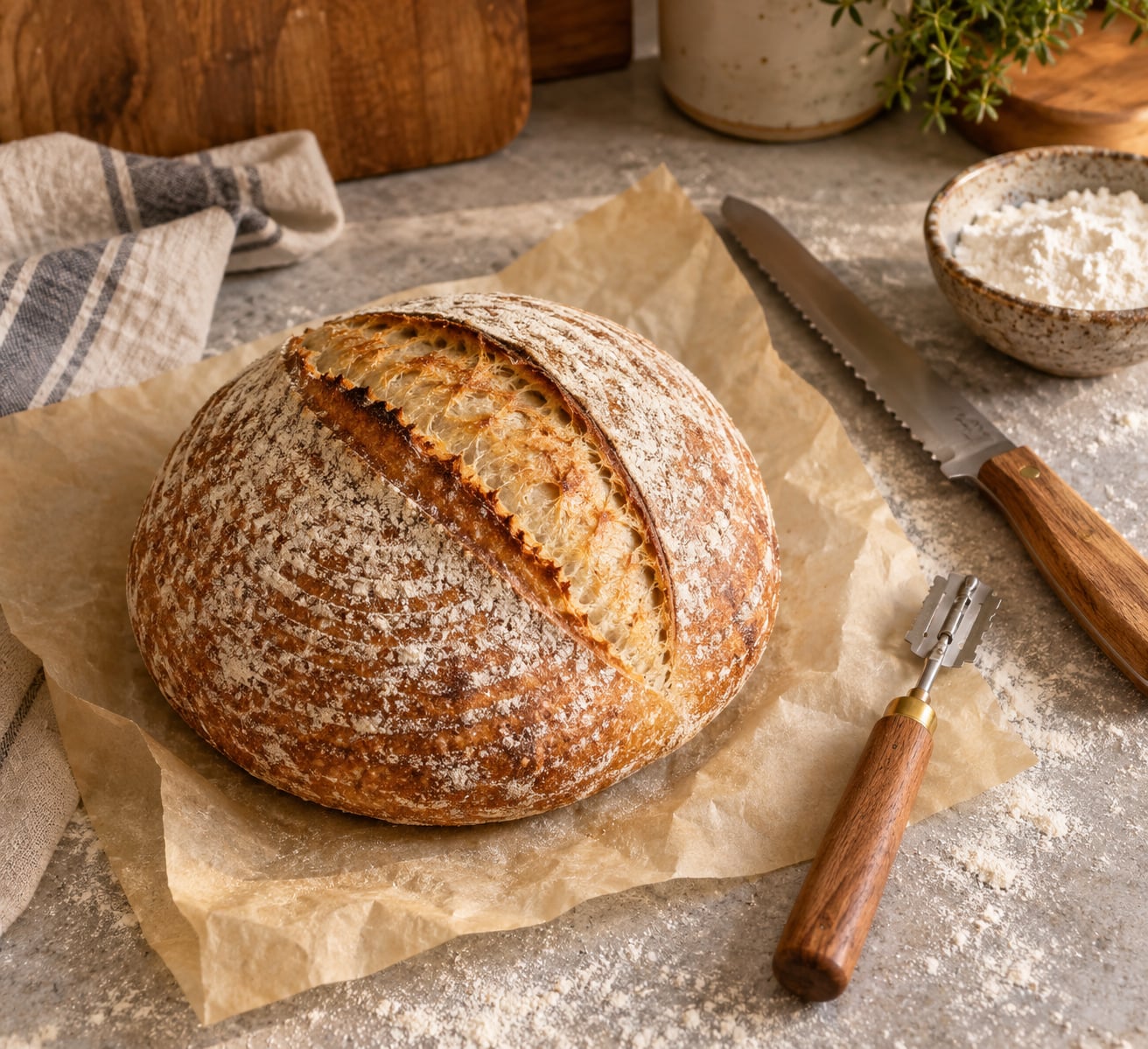
To score sourdough bread before baking, take cold dough straight from the fridge, cut it with a sharp razor or bread lame held at a 30-45 degree angle, go about a quarter inch deep in one decisive stroke, and get the loaf into the oven without lingering. That single cut is what tells the loaf where to open. Leave it out and the dough finds its own exit, usually at the side or along the shaping seam.
It takes under a minute per loaf. The whole difficulty is not the cut itself but the moment you make it: too early and the cut seals, too late and the loaf splits where you did not want it to.
Table of Contents
- What You Need
- Scoring sourdough without a lame
- Step-by-Step: How to Score Sourdough Bread Before Baking
- 1. Check That the Dough Is Ready to Score
- 2. Choose the Right Blade for the Score
- 3. Decide Between One Curved Score or a Cross
- 4. Score the Right Depth Without Cutting Through
- 5. Use a Shallow Angle and One Decisive Motion
- Angle and Depth Reference
- Common Mistakes
- Reading the baked loaf
- Frequently Asked Questions
- How deep should I score sourdough bread?
- When should I score sourdough before baking?
- Can I use a regular knife instead of a bread lame?
- Should I score sourdough while it is cold?
- Why did my sourdough score not open in the oven?
- Should I use a single slash or a cross?
- Conclusion
What You Need
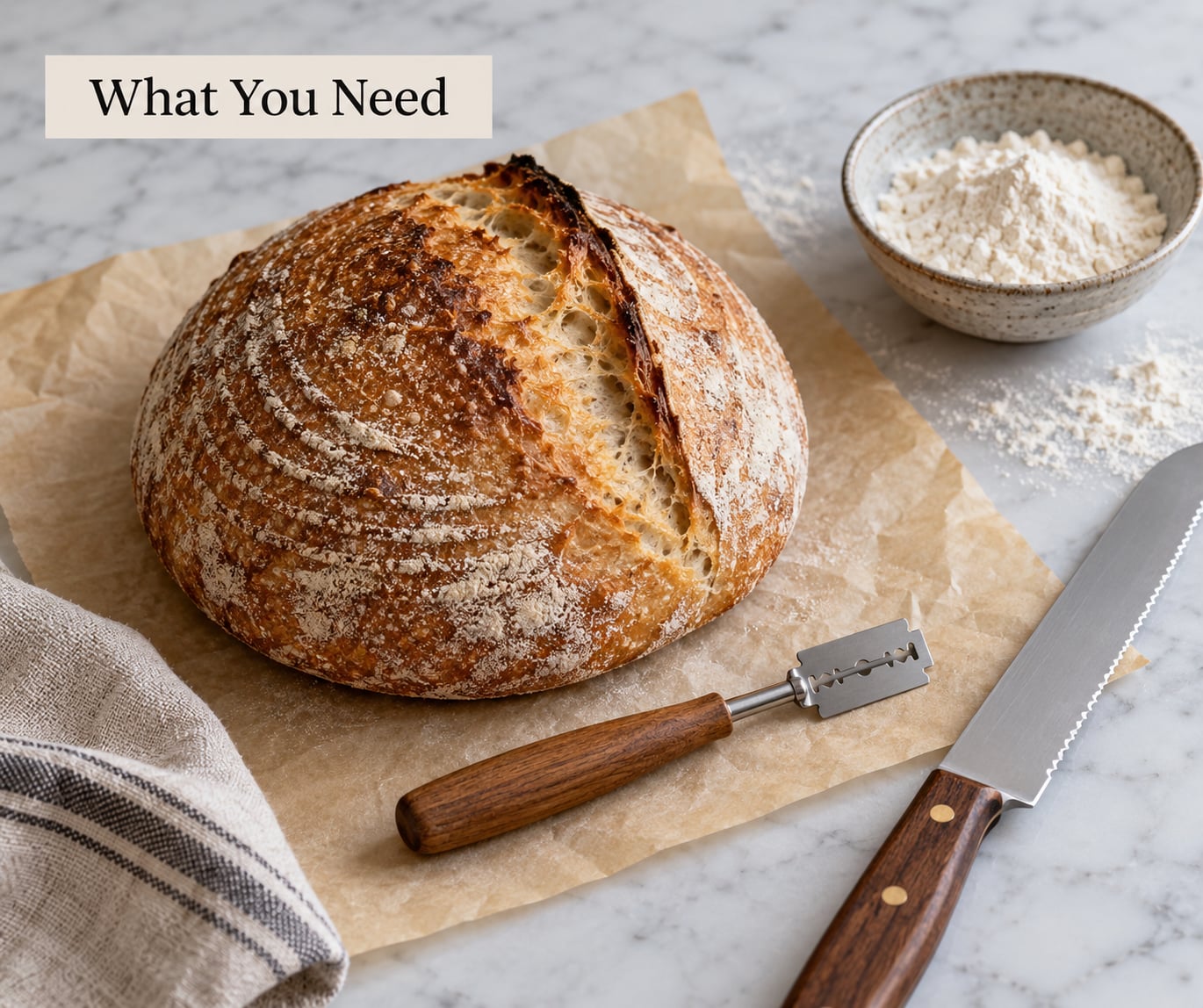
A bread lame is a handle that holds a single replaceable razor blade. That is the whole tool. The blade is a standard double-edged razor, and the handle just gives you something to push with so your knuckles stay clear of the dough.
- A bread lame or straight razor blade – the blade matters, the handle does not. If you have neither, the substitutes below still work.
- A fresh blade – change it roughly every 5 to 8 bakes, or any time the cut starts to drag rather than slice.
- Rice flour or plain flour for dusting – rice flour keeps the loaf pale and stops the surface sticking to the parchment.
- Parchment paper – turn the dough out onto the paper rather than onto the base of your Dutch oven or baking stone, so you can score without scraping the loaf onto a hot surface.
- Cold dough, ready to bake – chilled, shaped, and still holding its structure.
If you want to skip the store, a lame takes about ten minutes to build at home: two rounds of scrap wood, one screw, one nut, and a razor slotted into the wood. It will not look pretty and it will outlast most kitchen gadgets.
Scoring sourdough without a lame
You do not need a lame. These substitutes work, in descending order of how clean the cut comes out.
- A fresh single-edge razor blade held in a chopstick or folded card – closest match to a lame, because the blade sits off to one side and you can keep the angle shallow.
- A small sharp paring or utility knife – works well for a single slash on a boule if the blade is straight and keen. Hold it at 45 degrees rather than straight down.
- Bread scissors – give good control on batards, since you can cut a chevron in a series of small snips. The hinge slows you down, so work briskly.
- A serrated knife – a last resort. The teeth drag and tear the surface, which is why kitchen and steak knives are the tools most guides tell you to avoid.
Two tricks help with any substitute. Dipping the blade in water before cutting reduces drag, and rotating the razor a few degrees to an unused corner of the edge buys you several more clean bakes before a replacement.
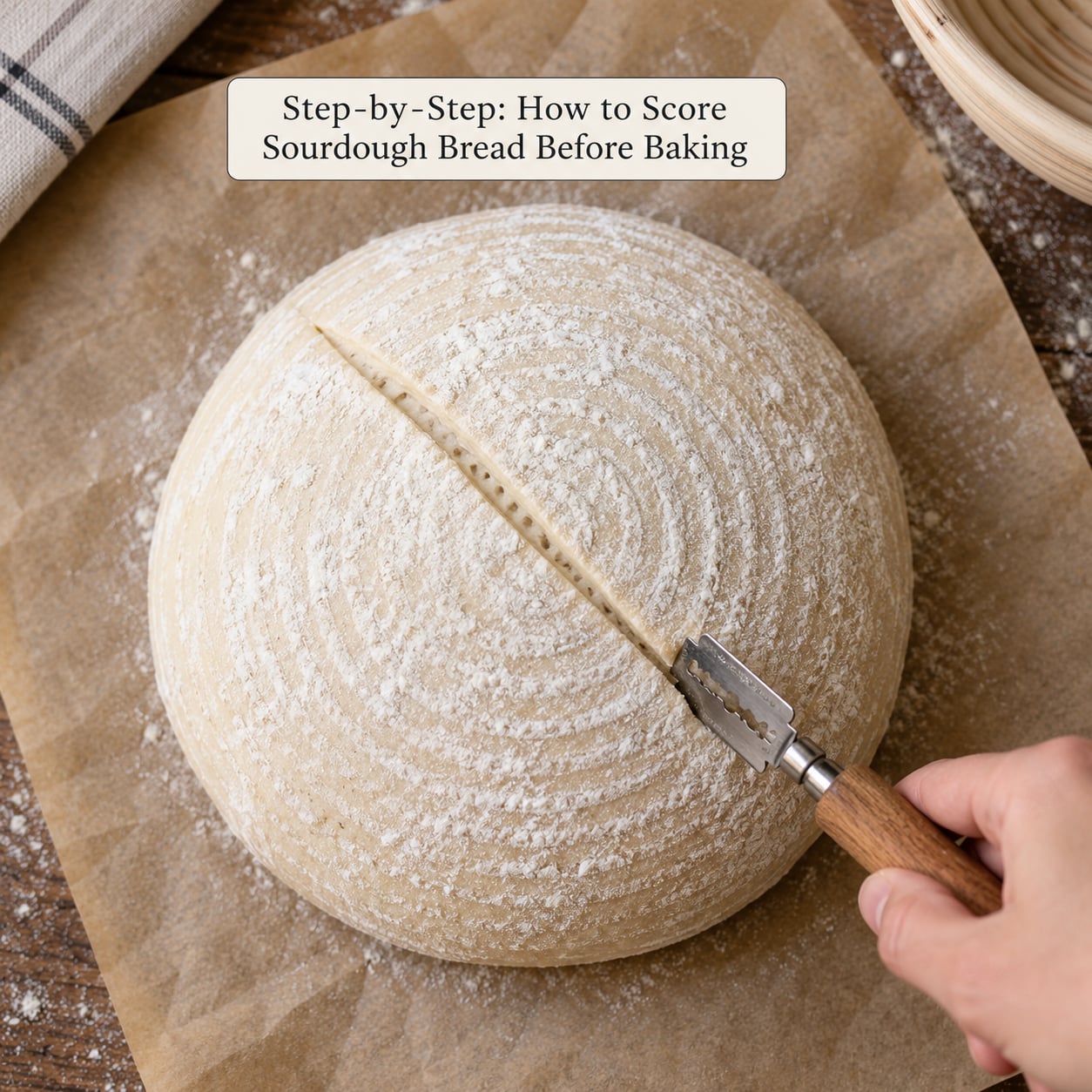
Step-by-Step: How to Score Sourdough Bread Before Baking
1. Check That the Dough Is Ready to Score
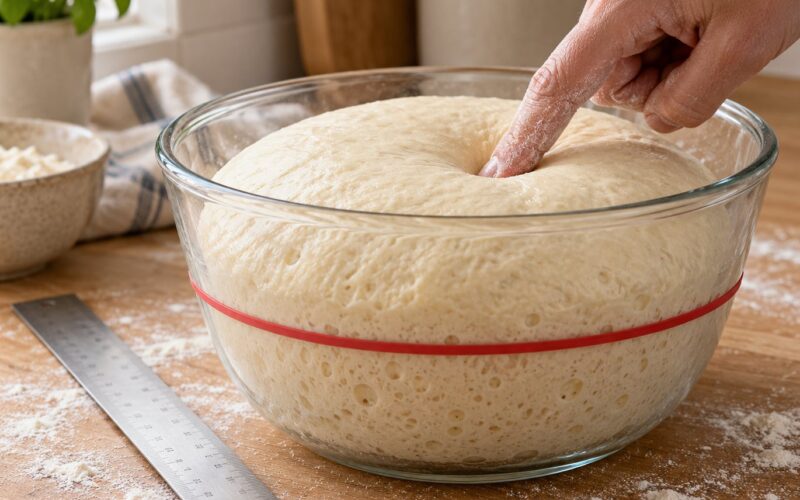
Score a relaxed loaf that still holds its shape. Press a finger about half an inch into the dough: if the dent fills back slowly and only partway, the dough is ready. If it springs back instantly, it needs more time. If it collapses and stays collapsed, it has gone past ready.
Over-proofed dough is the single most common reason a score looks fine going in and never opens in the oven. The same dough would have scored beautifully an hour earlier. Bakers on r/Sourdough keep coming back to this: if the loaf is already flat and spreading before you pick up the lame, scoring is not your problem.
2. Choose the Right Blade for the Score
Use a sharp double-edged razor. A dull blade pushes dough ahead of itself instead of parting it, and that drag is what leaves the ragged, torn marks people mistake for bad technique. A sharp blade should feel like it is parting the dough rather than cutting through it.
Avoid kitchen knives and steak knives for the main score. Their length and weight push the loaf around, and a serrated edge tears. If a paring knife is all you have, keep the cut shallow and the motion short.
3. Decide Between One Curved Score or a Cross
Make one cut unless you have a reason not to. A single curved slash on a boule gives the cleanest ear, because all the pressure releases through one line. A cross gives you four points of expansion and a more symmetrical look, and it suits a round loaf that is slightly underproofed. On a batard, a single long slash or a chevron is the standard choice, since a cross on an oval loaf pulls it into a round shape as it rises.
Circular and decorative scores are the least reliable. Community bakers joke that a scored circle produces a circular ear, which is exactly the risk – the expansion happens in the wrong place and the loaf comes out with a bulge where your pattern ran.
If you want more than one cut, make one deep expansion score first, then add shallow decorative cuts. Several deep cuts let the loaf deflate and spread instead of rising.
4. Score the Right Depth Without Cutting Through
Aim for about a quarter inch, and on a large boule push toward half an inch. The cut only needs to reach through the crust into the gas-filled crumb beneath it. Cut too shallow and the crust has nothing to lift; cut all the way to the base and the loaf flattens on the peel before it hits the oven.
There is a useful way to calibrate by eye. On a boule about 8 inches tall, a quarter inch is roughly the width of your little finger. Score to that depth first, and only go deeper once you have baked a few loaves at the same size.
5. Use a Shallow Angle and One Decisive Motion
Hold the blade at 30 to 45 degrees from the surface and push the cut forward rather than straight down. A shallow angle gives the cut a ramp, and the expanding gas runs up that ramp and lifts the crust into an ear. A straight-down cut at 90 degrees makes a clean line that opens evenly and blooms without much of a lip. That is a legitimate choice – it just gives you less height.
Support the far side of the loaf with your other hand so it does not roll, then make one fluid stroke from one end to the other. No sawing, no stopping halfway, no second pass. The bakers whose scores come out most consistent all describe the same thing: one motion without digging or dragging.
Then move. Cold dough sits fine for two to three minutes after it leaves the fridge, but as the surface warms it starts to drag and the cut starts sealing at the edges. Load the oven immediately.
Angle and Depth Reference
No two variables matter more, and it is easier to think of them separately. Angle decides how much lift you get. Depth decides whether the cut opens at all.
| Blade angle | What happens | Best for |
|---|---|---|
| 30 degrees | Highest ear, dramatic lift along the score | Boules and small bâtard loaves where height is the goal |
| 45 degrees | A clear lip with a controlled rise | Most everyday loaves, and the safest place to start |
| 90 degrees | Even bloom along the line, minimal lift | Tin loaves, sandwich bread, and very slack dough that might spread |
| Cut depth | What happens | Best for |
|---|---|---|
| 1/8 inch (about 3 mm) | Decorative line, may barely open | Pattern detail after your main expansion score |
| 1/4 inch (about 6 mm) | Reliable opening with a modest ear | The default for most home bakers |
| 1/2 inch (about 12 mm) | Large lift, fastest expansion, risk of deflation | Large, well-structured boules that need a big open crumb |
Common Mistakes
Scoring too shallow. The line bakes into a faint crease and the top of the loaf stays flat. Fix: cut a quarter inch deeper on the next loaf, and check that the blade is still sharp.
Scoring too deep. The loaf spreads and bakes flat, with a pale, compressed band around the cut. Fix: shallower next time, roughly a quarter inch, and keep the knife nearly parallel to the base of the loaf rather than angling down into it.
Scoring too late in the proof. The loaf bursts at the side or along the seam and the top stays smooth. Fix: score earlier, and if you suspect over-proofing, shorten the proof rather than fixing it with a sharper cut. Surface tension from shaping matters as much as the cut itself.
Scoring warm dough. The blade sticks and pulls a flap with it. Fix: score cold straight from the fridge. If the dough is already out and warming, put the loaf back in the fridge or chill the blade in the freezer for 20 minutes.
Several deep cuts. A crosshatch or multi-slash pattern made at full depth lets the loaf deflate and spread. Fix: one deep expansion score, then decorative lines at 1/8 inch.
A wandering, hesitant stroke. Starting shallow, stopping, then going again produces a ragged channel that bakes closed. Fix: commit to one motion and one depth from start to finish.
Reading the baked loaf
The loaf tells you what went wrong, if you know where to look.
- Split down the side or along the seam, top smooth: the score was too shallow, or the dough expanded faster than the cut. Usually also a sign of underproofed, loose dough.
- The score line sealed and is barely visible: the cut was too shallow, the blade was dull, or there was not enough steam to keep the crust flexible early in the bake.
- Torn or ragged marks around the cut: a dull blade or warm dough caused drag.
- A flat, wide loaf: over-proofed, or scored too deeply.
- A crack running off at an angle to the score: the score was off-centre, so expansion found the nearest weak point.
Frequently Asked Questions
How deep should I score sourdough bread?
Cut about a quarter inch deep on a standard boule, and closer to half an inch on a large, well-structured loaf. That is deep enough to break through the crust into the gas-filled crumb and give the expansion somewhere to go. Too shallow and the line bakes into a flat crease; cutting all the way through to the base lets the loaf spread and bake flat. Calibrate by eye first: on an 8 inch loaf, a quarter inch is about the width of your little finger.
When should I score sourdough before baking?
Score just before the loaf goes in the oven, after shaping and after the final cold proof. Cold dough from the fridge is firmer and scores far more cleanly than room-temperature dough, and it gives you a narrow window of roughly two to three minutes out of the fridge before the surface warms and starts to drag. Score earlier than that and the cut has time to seal slightly; score much later and the dough spreads on the peel.
Can I use a regular knife instead of a bread lame?
Yes, with care. A small sharp paring or utility knife handles a single slash on a boule reasonably well, held at about 45 degrees. Bread scissors work well for a chevron on a batard. Avoid kitchen knives, steak knives, and anything serrated for your main score: their length and teeth drag and tear the surface instead of parting the dough. A single-edge razor in a chopstick is a closer substitute to a lame than any kitchen knife.
Should I score sourdough while it is cold?
Cold, yes. Chilled dough is firmer, less sticky, and far less likely to tear or drag under the blade, which is why a straight-from-the-fridge loaf takes a clean cut while a warm one does not. Cold dough also gives the score a defined edge that lifts into an ear during oven spring. If your dough is already out and warming, chill the loaf again or put the blade in the freezer for 20 minutes before cutting.
Why did my sourdough score not open in the oven?
Four causes account for most sealed scores. The cut was too shallow, so the crust had nothing to lift. The blade was dull, and it pushed the dough rather than parting it. There was not enough steam in the first minutes, so the crust set before the loaf finished expanding. Or the dough was over-proofed and had already lost the gas it needed to push the cut open. Judge by the result: a faint crease means shallow or dull, a side burst means late or over-proofed.
Should I use a single slash or a cross?
A single slash is the safer default. All the expansion releases through one line, which gives the cleanest ear and the most predictable shape. A cross opens the loaf in four places and looks symmetrical, which suits a round boule that is slightly underproofed, but it pulls an oval loaf toward round as it rises. If you want both, make the single cut deep at a quarter inch and treat the other lines as decoration at 1/8 inch.
Conclusion
Start with the easy part and it fixes most of the rest: pull the loaf from the fridge, keep it cold, and cut one confident slash a quarter inch deep at a 30 to 45 degree angle with a sharp razor. One stroke, no sawing, into the oven immediately.
Everything else follows from those two minutes. Learn to read the loaf afterwards – a side burst, a sealed line, a flat top – and the next score will be better than the last.