If you want the short version of how to tell if flour has gone bad, smell it first. Put a handful right under your nose, then check the colour, the texture, and the bottom of the container for insects or webbing. That takes about two minutes and needs no equipment beyond a spoon. Updated for 2026, this guide covers the smell test, the paste test for subtler odours, how to tell rancid flour apart from mouldy flour, and how long flour actually keeps.
The reason smell comes first is simple. Flour is a shelf-stable food, so the two things that actually change over time are the oils in the grain germ going rancid and moisture getting in so mould can start. Both change the smell before they change anything you can see.
Table of Contents
- What You Need
- Step-by-Step: How to Tell If Flour Has Gone Bad
- Step 1: Check the Package and Storage History
- Step 2: Smell the Flour
- Step 3: Look for Changes in Color and Texture
- Step 4: Check for Pests, Webbing, and Foreign Matter
- Step 5: Decide Whether It Is Safe to Use
- Common Mistakes When Checking Flour
- Frequently Asked Questions
- How long does flour last in the pantry?
- Is 10 year old flour still good?
- Is flour still good if it has weevils?
- Can you still eat flour with flour mites?
- What happens if you bake with old flour?
- Is flour bad for diabetics?
- Conclusion
What You Need
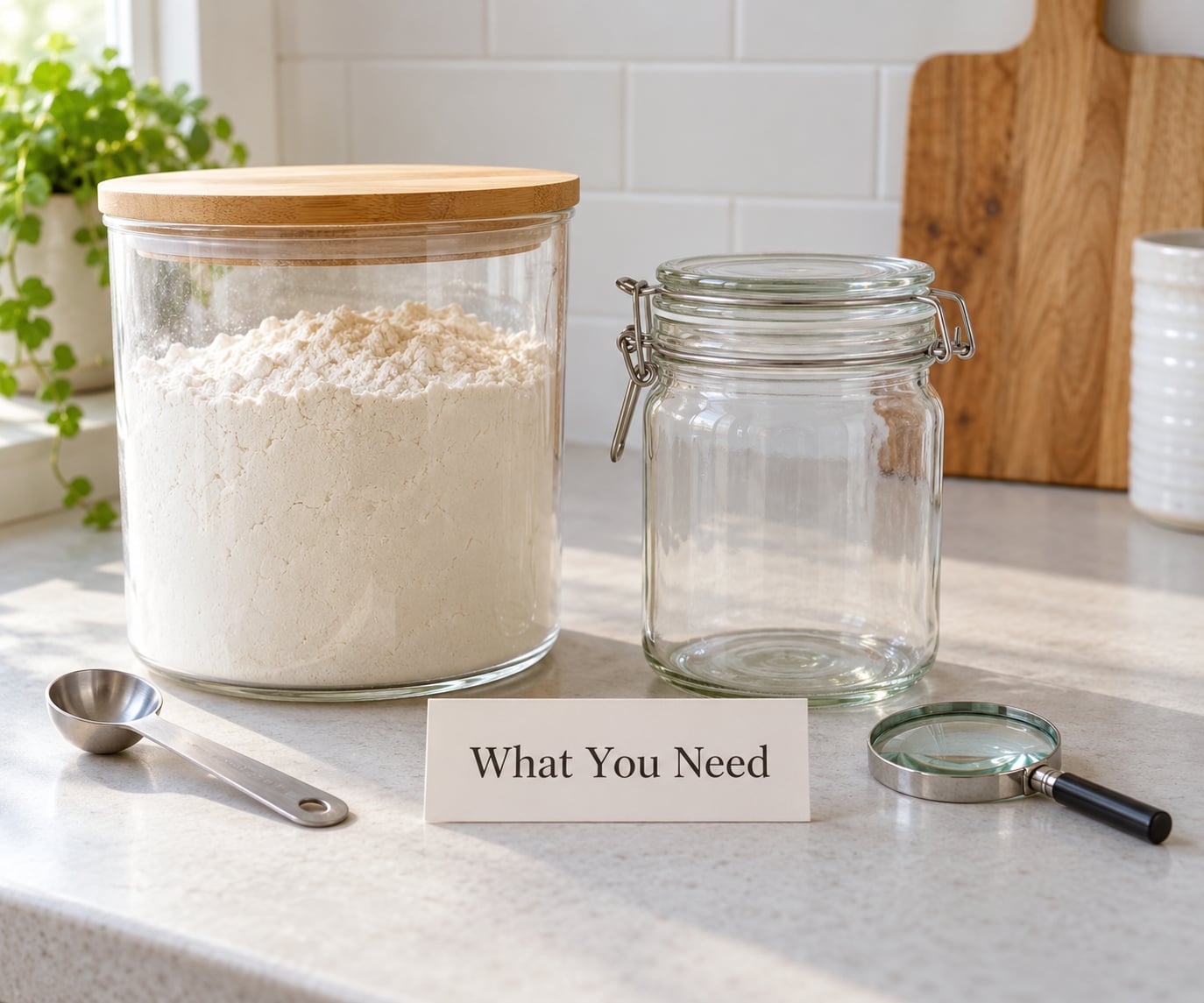
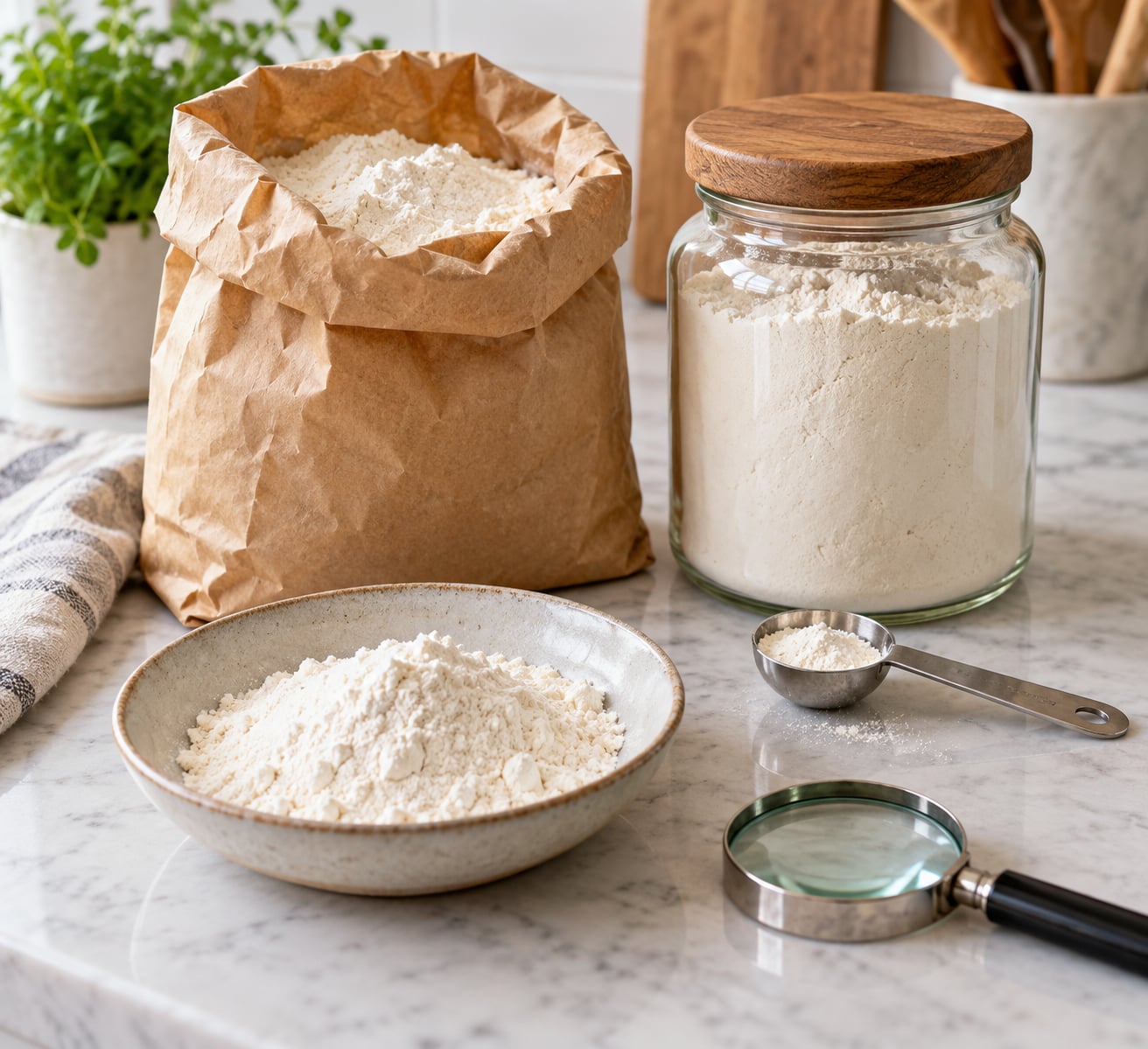
You do not need anything special. Having these four things on hand makes the check faster and keeps you from re-opening bags you already inspected:
- The original package or a labeled container. If you decant flour into a jar, write the flour type and the month you opened the bag on masking tape. Storage history is the single most useful clue you will get.
- A clean, dry spoon. Wet utensils are how moisture gets back into a container you thought was sealed.
- A sealed glass jar. For moving flour that passes inspection, or for quarantining a suspect bag so a decision can wait a day.
- A magnifying glass, optional. Genuinely useful for eggs, larvae, shed skins and tiny stones in the bottom of the bag.
A clean sink or counter works as your inspection surface. Good daylight beats a warm overhead lamp when you are trying to spot grey or pink discoloration.
Step-by-Step: How to Tell If Flour Has Gone Bad
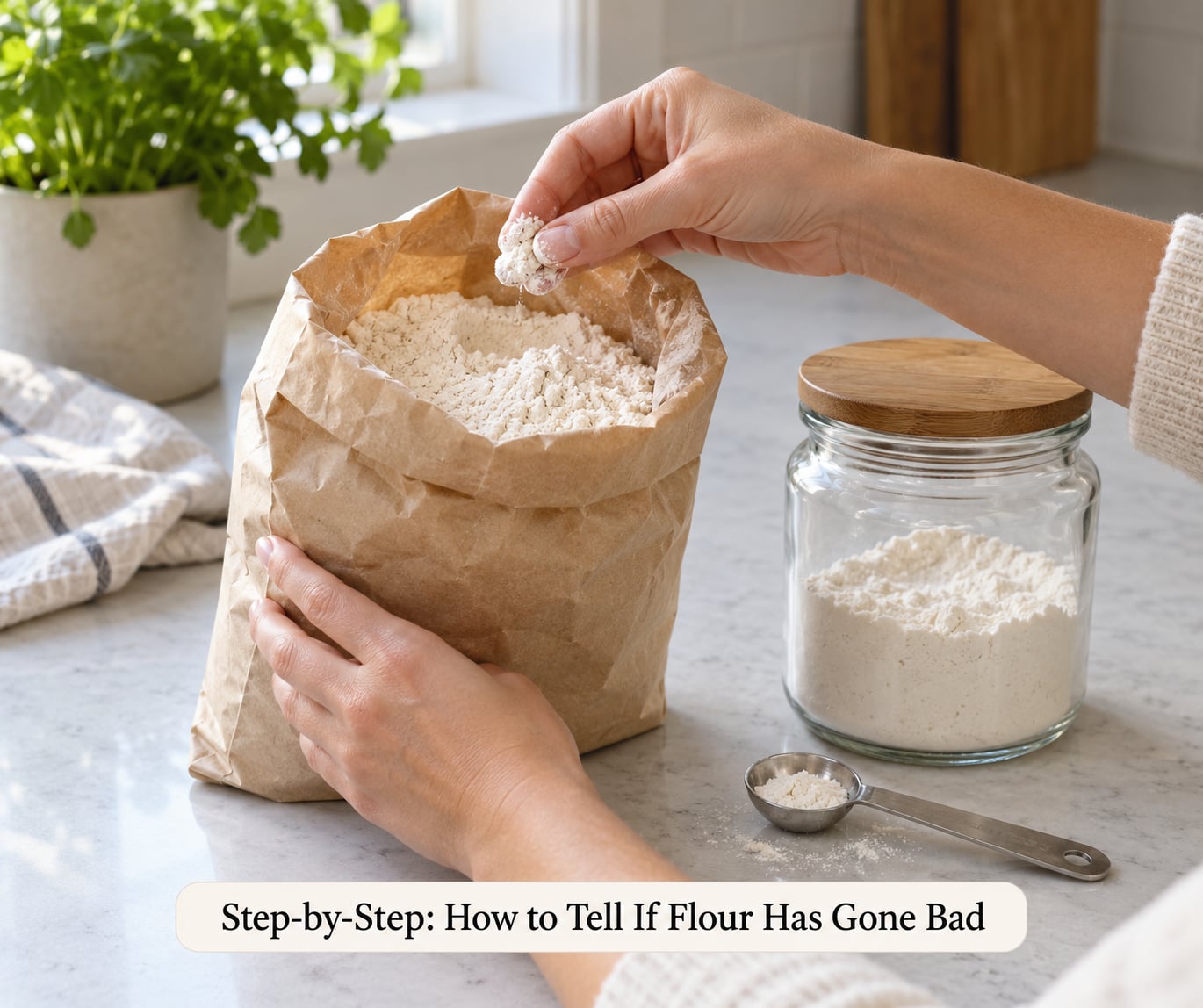
Step 1: Check the Package and Storage History
Before you touch the flour, read the bag. Note the flour type, the purchase or opening date, and any best-by date, then ask yourself where it has actually been living. A flour that has sat on a car seat in July, or above a stove, or in a garage, has already failed the storage test no matter what the date says.
Also check the container itself. A dented, split, or rodent-chewed bag means outside contamination is possible, and that changes the verdict. Marked best-by dates in the US are about quality, not safety, so treat them as a prompt to inspect rather than a deadline.
Step 2: Smell the Flour
Fresh flour smells faintly sweet, soft and faintly earthy, like clean wheat or a warm bakery. That is your baseline. Anything past that baseline is worth pausing over.
Different off smells point to different problems. Bakers on cooking.stackexchange.com describe rancid flour as smelling like old oil, paint thinner, damp dirt or old Play-Doh, and that vocabulary is genuinely useful because it is what you will actually recognise in your own kitchen:
- Musty, damp, or like wet cardboard means moisture got in. Look for clumps and treat mould as likely.
- Sour or fermented points to moisture plus microbial activity. Discard it.
- Old oil, crayon, or paint-like is fat oxidation, which is rancidity rather than mould.
- Acetone or nail-polish remover is an aggressive form of the same oxidation.
For a subtle odour that a dry handful hides, use the wet-pinch test. Pinch a teaspoon of flour into a paste with a few drops of water and smell that instead. Water releases the compounds, so a bag that smells fine dry can still smell wrong as a paste. Most people learning how to tell if flour has gone bad stop at the dry smell, which is exactly where slow rancidity in whole grain slips through.
And do not taste flour to test it. Smell is a better instrument than your tongue and it comes without the downside.
Step 3: Look for Changes in Color and Texture
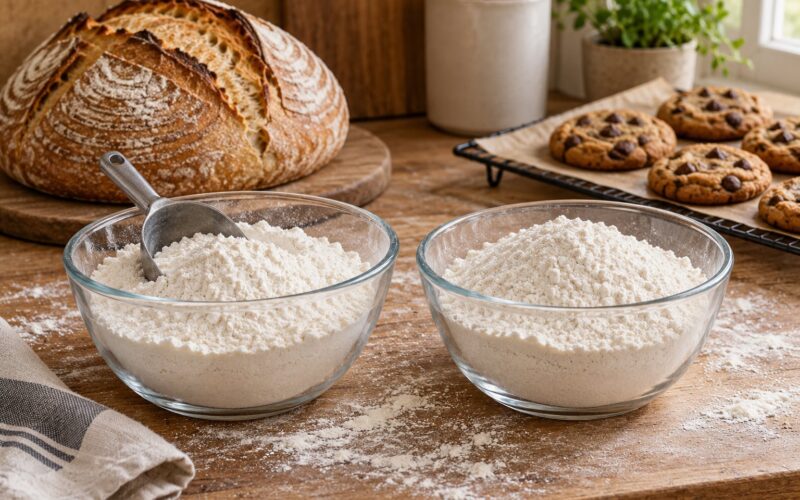
White all-purpose flour should look pale and even, almost like clean snow with a faint cream cast. Whole wheat flour is naturally tan to light brown, so judge it against what that flour normally looks like rather than against white flour.
Warning signs include grey flour or grey streaks, yellowing, and any pink, green, or black specks. Also press your fingers into the flour. Good flour is fine and powdery; flour that has absorbed humidity feels gritty, heavy, or has set into blocks that need a knife to break up.
One important distinction: hard caking in a bulk sack is often just compression from a 25-pound bag stacked on itself, and it is not spoilage. Break the lumps, then smell and look before deciding. Flour that is hard but pale, clean and neutral-smelling is usually just caked.
Step 4: Check for Pests, Webbing, and Foreign Matter
Go through the flour with a spoon and check the seams and the bottom of the container, which is where insects settle first. Look for live moving specks, white or creamy larvae, tiny eggs, shed skins, grey dust-like frass, silk strands or webbing, and small stones or grit.
Identifying what you found tells you how bad the infestation is:
- Granary weevils are reddish-brown and about the size of a small pinhead. They lay eggs inside the grain, so eggs survive a sifting.
- Flour mites and flour beetles move slowly, leave webbing, and stain the flour grey-brown.
- Pantry moths leave the tell-tale silk webbing strung across the flour and lay eggs on the surface.
- Cockroach egg cases are brown, capsule-shaped, about the size of a rice grain.
Multiple users on Reddit’s r/Baking report finding weevils in factory-sealed bags and unopened pasta, so sealed packaging is not a guarantee. If eggs, larvae or webbing are present, that is a discard situation rather than a sift-it-out situation. Sifting removes insects; it does not remove eggs, and it certainly does not remove whatever accompanied them into the container.
Step 5: Decide Whether It Is Safe to Use
Rancid flour and mouldy flour get different verdicts, and most articles blur them together.
Rancid flour is flour whose oils have oxidized. It tastes bad and it will not perform well, but it is generally not the food-safety event that mould is. Smell it, and if it is only off-smelling rather than damp or mouldy, you can choose to use it or not. Many bakers use slightly rancid flour for non-critical bakes.
Mouldy flour is a discard. Mould produces mycotoxins, which can trigger vomiting and diarrhoea and, over long repeated exposure, are linked to liver disease and cancer. Mycotoxins can also be present where you cannot see any growth, so a few white specks mean the whole bag goes.
| Flour type | Pantry, airtight container | Fridge, sealed | Freezer, sealed |
|---|---|---|---|
| All-purpose white | 6-12 months | About 1 year | 2 years or more |
| Whole wheat | 1-3 months | 6-9 months | 1-2 years |
| Bread flour | 6-12 months | About 1 year | 2 years or more |
| Cake and self-rising flour | 8-12 months | About 1 year | 2 years or more |
| Almond flour | 1-3 months | 6 months | About 1 year |
| Coconut flour | 1-3 months | 6 months | About 1 year |
| Gluten-free blends | 3-6 months | 6-9 months | 1 year |
White flour lasts longer because milling strips out the bran and germ, leaving mostly the starchy endosperm. Whole wheat keeps its oil-rich germ, and that oil is exactly what goes rancid, so whole grain and nut flours turn much faster. Nut and seed flours go rancid quickly enough that many bakers keep them in the freezer and pull out what they need for a week at a time.
On fridge storage, the community advice is more cautious than most blogs. A fridge is a humid box, and flour that is not perfectly sealed there can pick up condensation and cake. If you refrigerate flour, the container has to be airtight and airtight means airtight.
Freezing causes a separate problem people complain about constantly: flour used straight from the freezer condenses, clumps, and can even develop ice crystals in the loaf. Let it come to room temperature sealed before you open it.
Finally, the verdict guide. Clean pale colour, powdery texture, only a faint wheaty smell and no pests: usable, and use it soon. Hard lumps but clean and neutral-smelling: break them up and use them. Faint musty or oily smell, no moisture, no mould: your call, and I would not spend it on something you want to be good. Any mould, any damp, any insects, webbing or unknown contamination: discard the whole bag. If you still cannot tell whether flour has gone bad after all five checks, discard it rather than gamble on mycotoxins you cannot see.
Common Mistakes When Checking Flour
Trusting the best-by date as a safety deadline. In the US, best-by dates on flour indicate quality, not a point where the food becomes dangerous. Home bakers routinely find flour two and three times past the date that smells fine and bakes fine. Conversely, a bag well inside its date that sat somewhere warm and damp can already be finished.
Judging by smell alone. Smell catches rancidity well. It is less reliable for very old flour and for moisture that has not yet reached the nose, so pair it with the look and texture checks. That is the whole reason the order is smell first and then everything else.
Tasting flour to test it. There is nothing to gain. Your nose detects rancidity at concentrations far below what you would consciously taste.
Assuming flour cannot spoil. It is shelf-stable, which is not the same as never-going-off. Rancidity and mould both happen at room temperature in ordinary kitchens.
Storing flour warm or uncovered. A cloth bag on an open shelf is fine for a day or two of baking, terrible for a month. Decant into a container with a gasket seal, keep it in a cool dark cupboard rather than next to the oven, and freeze whole grain or nut flours you will not use within a month.
Sifting out insects or trying to skim off mould. Sifting works for a few stray weevils in otherwise clean flour. It does nothing for eggs hidden in the grain, for moth webbing, or for mould, and partial salvage is how infestations come back. Discard the bag, scrub the container with hot soapy water, and check the neighbouring dry goods before closing it up again.
One last thing: flour that is merely stale rather than spoiled still has uses. Playdough, papier-mache paste, wood glue, dusting pans, or thickening a small amount of pan gravy are all jobs where the flour never reaches anyone’s mouth.
Frequently Asked Questions
How long does flour last in the pantry?
It depends on the type. Refined white all-purpose, bread, and cake flour keep roughly 6 to 12 months in the pantry in an airtight container, and far longer frozen. Whole wheat flour lasts about 1 to 3 months because its oil-rich germ turns rancid quickly. Almond and coconut flour also keep only 1 to 3 months, and gluten-free blends around 3 to 6 months. Dates on the bag describe quality, not safety, so always check smell and texture before baking.
Is 10 year old flour still good?
Age alone does not make flour dangerous, but ten years is a long time for the oils to sit. White flour stored sealed and cool is often still free of mould and insects, yet the smell test decides it. If it smells clean and faint, it is usable for rustic baking. If it smells musty, oily, or sour, discard it. Flour with any sign of mould or insect activity goes regardless of age.
Is flour still good if it has weevils?
A few weevils are unpleasant rather than a health hazard, and baking kills them, so flour with a small number of visible insects can be sifted and used. Eggs are the problem, because they survive sifting and sit hidden inside the grain. If you find larvae, frass, webbing, or any eggs, discard the whole bag, clean the container with hot soapy water, and check nearby grain products for the source.
Can you still eat flour with flour mites?
Flour mites are a strong reason to discard. Unlike a few stray weevils, mites multiply quickly and leave webbing and grey-brown staining through the flour, so the infestation is throughout the bag rather than on the surface. Sifting will not clear it. Throw the flour away, wash the container in hot soapy water, vacuum or wipe the surrounding dry goods, and store replacement flour airtight and ideally frozen.
What happens if you bake with old flour?
The loaf suffers more than you do. Stale flour has weaker gluten response, so doughs rise poorly and bread comes out dense and heavy. Cakes and pastries turn grey or dull instead of golden, and can bake up gummy in the middle because the flour holds more moisture. The flavour carries through, and any rancid taste gets stronger in the finished bake rather than milder. Muffins, crackers, and rustic loaves tolerate it best.
Is flour bad for diabetics?
Flour does not have a special risk for people with diabetes. It is a starch, so it raises blood sugar, and portion size is the part that matters for blood-glucose management rather than whether the flour is old. The exception worth knowing about is gluten-free flour, which is often milled and handled near wheat, soy or other gluten sources and can be cross-contaminated. Anyone with celiac disease or a wheat allergy should buy certified gluten-free flour and use clean, dedicated equipment.
Conclusion
Start with the package and the smell. Put a handful of flour under your nose, compare it to clean wheat, then look at the colour, feel the texture, and check the bottom of the container for webbing or larvae.
Discard the bag if you find rancidity you cannot live with, damp or clumping, any mould, or insects and webbing. Otherwise use it soon, move it into an airtight container in a cool dark cupboard, and freeze whole grain or nut flours you will not use within a month.