The answer in one line: let the loaf cool completely, then seal it airtight at room temperature. Plastic works for soft sandwich-style bread, cut-side down on a board or in a bread box works for a crusty sourdough, and anything you need past three days goes in the freezer.
Most homemade loaves do not go stale because of how they were baked. They go hard because the moisture left the crumb and the starch quietly re-crystallized while the loaf sat there wrapped in plastic, looking perfect. Bakers on r/Breadit describe the same failure constantly: tender on day one, brick by day two, sealed bag and all.
It takes about five minutes of attention on bake day to avoid that. Here is what you need, then the process in order.
Table of Contents
- What You Need
- Step-by-Step: How to Store Homemade Bread So It Stays Soft
- 1. Let the Bread Cool Completely
- 2. Choose the Right Storage Method
- 3. Wrap the Bread for Its Texture
- 4. Store Bread in the Right Container
- 5. Label and Check Freshness
- Common Mistakes
- Frequently Asked Questions
- How long does homemade bread stay soft at room temperature?
- Why does my homemade bread get hard after two days?
- Should I refrigerate homemade bread to keep it from molding?
- What is the best container to store homemade bread in?
- Can you freeze homemade bread and keep it soft?
- How do I bring stale bread back to life?
- Conclusion
What You Need
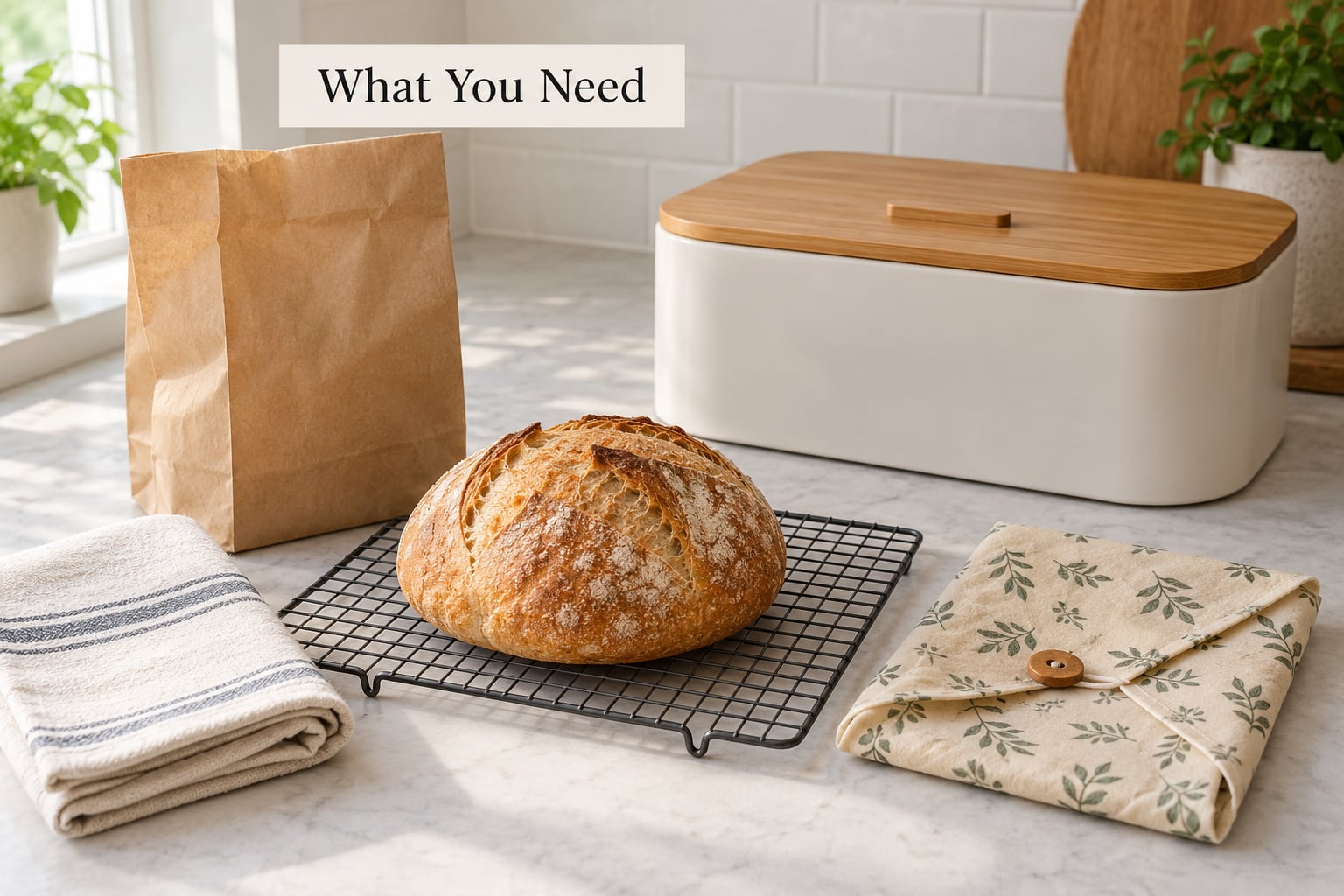
None of this is expensive, and you can get through with the first three items alone. Everything past a wire rack is a container question, and the container is where the texture gets decided.
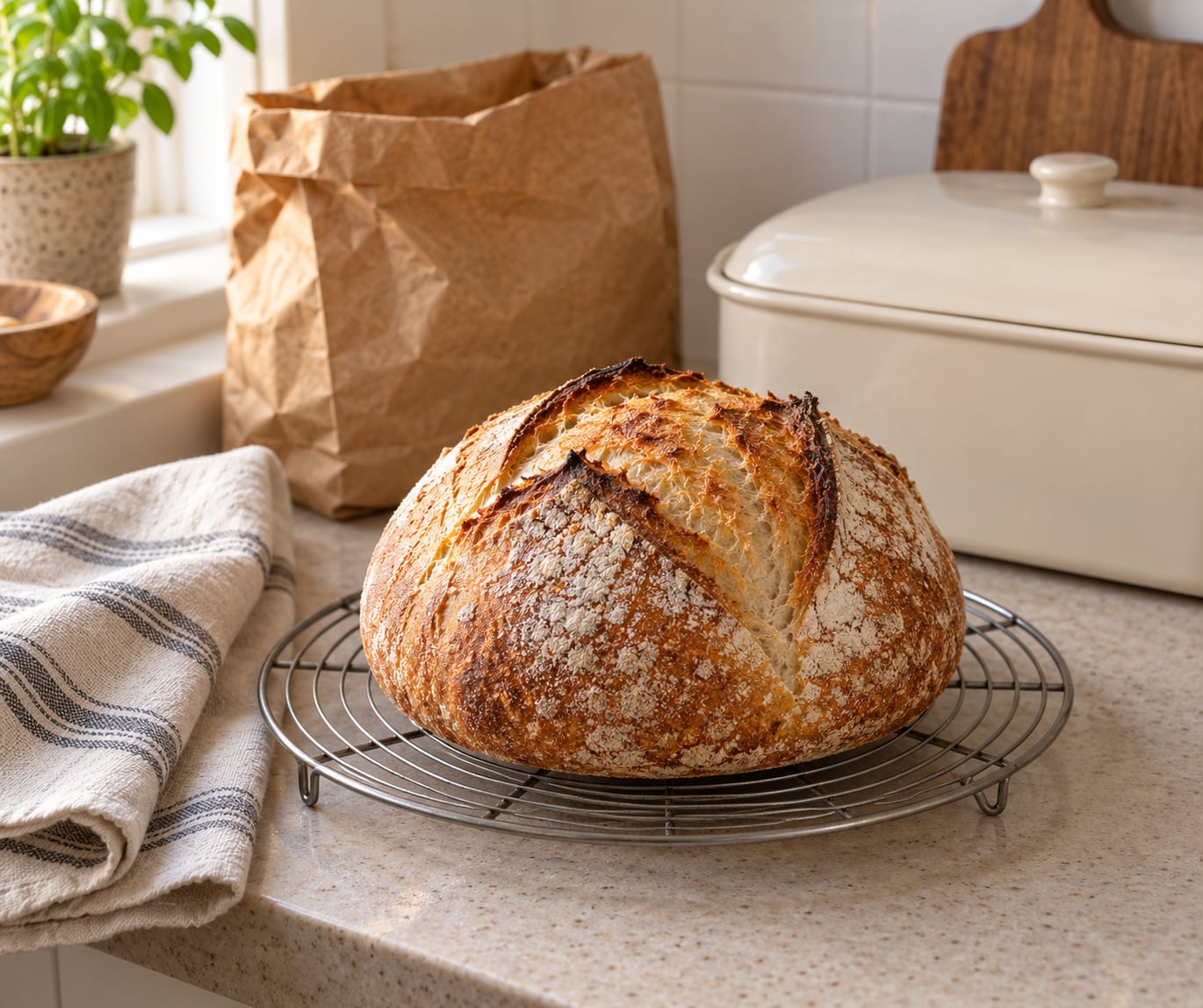
- Wire cooling rack. A rack that lifts the loaf so air circulates underneath it. A flat towel on the counter traps steam under the crust.
- Serrated bread knife. A dull knife compresses the crumb as you saw, which is half of why homemade slices feel dry by day three.
- Sealable plastic bag or storage container. The right home for soft sandwich bread, enriched doughs like brioche, and burger buns.
- Reusable bread wrap (beeswax or silicone). Works nearly as well as plastic for a soft loaf, without the cling film.
- Bread box, or a large bowl with a clean towel pulled over it and a rubber band. The improvised version works because it does the same two jobs a real bread box does.
- Clean cotton towel or linen bread bag. For crusty loaves you want to keep eating with a crackling crust.
- Baking sheet, freezer bags and a marker. For flash-freezing and portion packets of four to six slices.
Step-by-Step: How to Store Homemade Bread So It Stays Soft
Five steps, and the order matters more than any single trick. Skipping the first one ruins the crumb; skipping the second is what makes bread hard fast.
1. Let the Bread Cool Completely
Bread that comes out of the oven is still full of steam. Wrap it and that steam has nowhere to go, so it condenses inside the wrap, softens the crust and can leave the crumb gummy and dense against the crust.
Wait until the loaf is room temperature all the way through, not just on the outside. A lean loaf like a sandwich bread or baguette shape is usually there in one to two hours. Dense and enriched breads, including whole wheat, rye and brioche, run three to four hours, and cutting one early is the fastest way to get a gummy interior.
The test is simple: press the bottom of the loaf with your palm. If it feels the same temperature as your hand, it is ready to slice and wrap.
2. Choose the Right Storage Method
How to store homemade bread so it stays soft comes down to one decision: how long do you need it to last, and what kind of crumb do you want to keep? Match the method to those two things and the rest is straightforward.
| Method | Best for | Stays soft | Watch out for |
|---|---|---|---|
| Cut-side down on a board | Crusty sourdough, baguettes, boules | 1 to 2 days | Crumb firms sooner, so freeze if you need more |
| Sealed plastic bag | Sandwich bread, milk bread, burger buns | 3 to 5 days | Mold in humid or hot kitchens |
| Reusable bread wrap | Most soft loaves, crusty loaves eaten same day | 2 to 4 days | Crust softens faster than in plastic |
| Bread box or towel over a bowl | Crusty loaves, or a mixed household | 2 to 3 days | Not ideal for very soft enriched bread |
| Refrigerator | Last resort when bread is molding early | 2 to 3 days, already hard | Stales several times faster than room temperature |
| Freezer | Anything past three days | 2 to 3 months | Thaw and refresh, never microwave from frozen |
Room temperature between roughly 60 and 80 degrees is the window where bread keeps its texture best, which is most kitchens for most of the year. King Arthur Baking put three identical boules through plastic, cloth and foil storage and found plastic and foil beat cloth for holding softness, which is why a sealed bag is the default answer even though plenty of blogs say never use plastic.
The refrigerator is the one place to hold firm. Bread goes hard in the fridge several times faster than it does on the counter, because the cold temperature accelerates starch retrogradation and pulls moisture out of the crumb. It buys you mold-free days, not soft ones.
3. Wrap the Bread for Its Texture
Matching the wrap to the crumb is what settles the plastic-versus-cloth argument that confuses so many readers. Soft bread wants a moisture-proof wrap. Crusty bread wants air and a dry cut face.
For soft sandwich bread, enriched doughs and burger buns, seal it in plastic or a reusable wrap and press the air out of the bag before you close it. For a crusty sourdough boule, slice the loaf in half and lay it cut-side down on a wooden board; the flat cut face seals the crumb against drying, and the crust stays up in the air where it keeps its crackle. Cover that loosely with a clean towel.
Paper bags work for the same day only. They let moisture out, so by tomorrow the crumb has firmed even though the crust still looks fine. Aluminum foil is a good overnight option for crusty loaves because it holds the crust’s texture while protecting the crumb.
Rolls and buns want one extra step: slide a square of parchment or a small piece of plastic between each layer before they go in the bag. Stacked soft rolls press the contact surfaces flat and trap steam, and the tops turn leathery on day two.
4. Store Bread in the Right Container
Whatever you wrap it in, the container sets the ceiling on how long it lasts. A bread box is a mild, even chamber that lets a loaf breathe just enough to keep a crust crisp while protecting the crumb from drying. That is why experienced bakers love them for sourdough and why they get criticized for enriched breads, which genuinely do need a sealed bag.
For soft breads use an airtight container or a resealable bag with the air pushed out. For the freezer, lay slices flat on a baking sheet, freeze them for about 20 minutes until firm, then pack them in standing rows in freezer bags of four to six slices. Freezing the slices first stops them from welding into one solid brick, which is the usual complaint about frozen bread.
Where the bread sits matters as much as what holds it. Put it in a dark cupboard or pantry away from the stove and the sink, out of any sunlight, and never on top of the refrigerator where the motor warms the air around it. A dark cupboard beats an open shelf in both cases.
5. Label and Check Freshness
Tape a small piece of masking tape to the bag or the board and write the bake date and the bread type on it. Two lines is enough, and it turns a guess into a decision.
To check on it, press the crumb with a fingertip. A fresh loaf springs back and leaves almost no dent; a stale one holds the dent, and that is staling rather than drying, which you can partly reverse. Then smell it, and look for mold. Any fuzzy white, blue or green growth, or a musty sour smell, means discarding the whole loaf. Scraping the patch off is not safe, because hyphae run through the crumb where you cannot see them.
Unmoldy homemade bread typically has a two to four day window at room temperature depending on the dough. Enriched and whole grain loaves mold first in a warm kitchen because they carry more moisture and a little more fat; a lean sourdough in a dry kitchen will hold much longer.
Common Mistakes
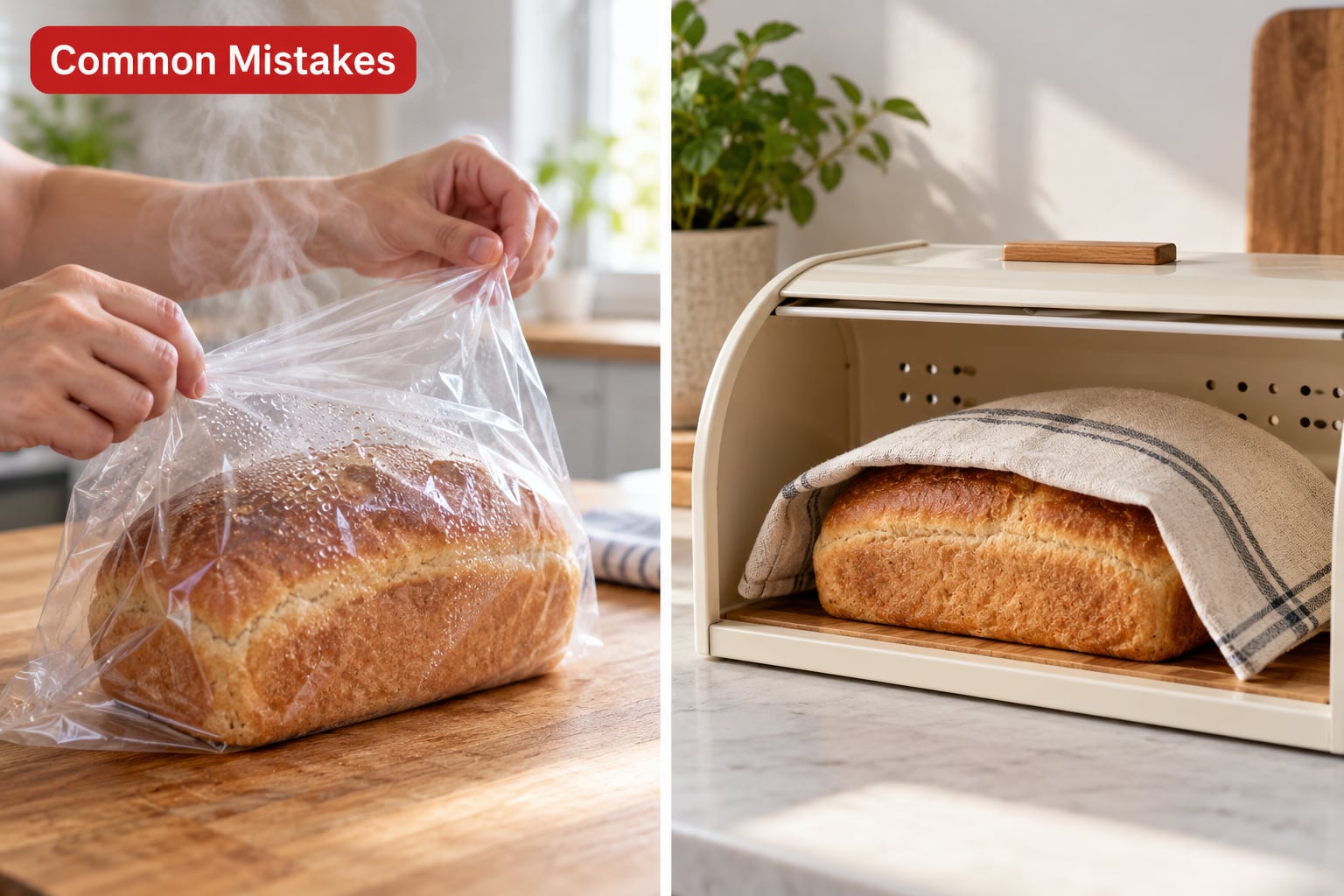
Almost every storage complaint traces back to one of five mistakes, and all five have a quick fix.
Wrapping warm bread. Trapped steam softens the crust and can gummy the crumb. The fix is waiting until the loaf is room temperature at the bottom before it goes in anything.
Refrigerating every loaf out of habit. Cold speeds up staling hard, so bread turns hard faster in the fridge than on the counter. Use it only when bread is molding ahead of schedule in a humid kitchen, and move it back out once the weather cools.
Leaving bread exposed on the counter. An uncovered loaf loses moisture to the air within hours and firms up fast. Cut-side down plus a towel over it buys a couple of days, and costs nothing.
Using plastic for everything. Sealed plastic is right for soft bread and wrong for a crusty sourdough, which goes soft and chewy inside. Match the wrap to the crumb rather than to the rule.
Thawing bread badly. Loosening bread on the counter overnight or microwaving it from frozen leaves it gummy and tough. Thaw sealed at room temperature for a couple of hours, or overnight in the refrigerator, then refresh it in a 300 degree oven for 10 to 15 minutes.
One more worth knowing: store-bought bread feels damp and squishy because it carries added moisture and softeners and then sits in sealed plastic. That is not a technique to copy at home. Your bread has no additives, so it needs the opposite treatment, sealed but never sweaty.
Frequently Asked Questions
How long does homemade bread stay soft at room temperature?
Most homemade loaves stay soft for two to four days at room temperature, depending on the dough. A lean sandwich loaf sealed in plastic holds longest, around three to five days. A crusty sourdough stored cut-side down under a towel is usually best within a day or two, even though the flavor keeps improving. Enriched and whole grain breads, which carry more moisture, tend to mold first in a warm kitchen.
Why does my homemade bread get hard after two days?
Hardening is staling, not drying, and it is caused by starch retrogradation. Starch molecules that were softened during baking slowly re-crystallize, so the crumb firms even while it still holds moisture. Wrapping slows it by keeping air away, slicing exposes more surface to the air and hardens faster, and the refrigerator makes it happen several times quicker. Freezing stops it completely.
Should I refrigerate homemade bread to keep it from molding?
Only as a last resort. The refrigerator keeps bread mold-free longer than the counter, but the cold pushes moisture out of the crumb and speeds up staling, so the loaf arrives firmer than if you had left it out. If your kitchen is genuinely humid and bread is molding within a day or two, refrigerate it and move it back out when the weather turns. In a dry kitchen, sealed plastic is all you need.
What is the best container to store homemade bread in?
It depends on the crumb. Soft sandwich bread, brioche and burger buns do best in a sealed plastic bag or airtight container with the air pressed out. Crusty sourdough and baguettes do best cut-side down on a wooden board, or in a bread box, so the crust stays crisp. Reusable beeswax or silicone wraps are a good middle ground. Freezer bags of four to six slices win for anything stored past three days.
Can you freeze homemade bread and keep it soft?
Yes, and freezing is the best long-term answer. Cool the loaf fully, slice it, lay the slices flat on a baking sheet and freeze for about 20 minutes so they firm up, then pack them standing in freezer bags of four to six slices. Flash-freezing first stops them sticking together. Thaw sealed at room temperature or overnight in the fridge, then refresh in a 300 degree oven for 10 to 15 minutes before serving.
How do I bring stale bread back to life?
Lightly sprinkle or mist the crust with water, then heat it in a 300 degree oven for 10 to 15 minutes. The moisture and heat reverse the firming that causes staling, and most loaves taste close to fresh. For a baguette, wet the crust under the tap for 10 to 15 seconds first and eat within ten minutes of baking, while the crust is still crackling. Bread that has dried out, rather than staled, needs a drizzle of oil instead.
Conclusion
Do one thing first: let the loaf cool all the way to room temperature before you touch it, then match the storage to the crumb. Soft bread goes in a sealed bag, crusty bread goes cut-side down or into a bread box, and rolls get parchment between the layers.
If you need it to last beyond three days, slice it, flash-freeze the slices for 20 minutes, and pack them four to six at a time. Refresh in a 300 degree oven before serving, and skip the fridge unless mold is actually winning.