Short answer: swap butter for shortening cup for cup, and if you weigh instead of scoop, use about 20 percent more butter by weight. That covers how to substitute butter for shortening in baking for most recipes, and the whole job takes about two minutes of measuring.
The swap works cleanly in cookies, cakes, brownies and most pie crusts. It does not work in laminated dough, where the fat has a structural job that water will break. What changes is texture and flavor: butter spreads more, browns more, and tastes like dairy.
This is also the cheapest fix when you are out of Crisco mid-recipe and would rather not make a second grocery run.
Table of Contents
- What You Need to Substitute Butter for Shortening in Baking
- Step-by-Step: How to Substitute Butter for Shortening in Baking
- Step 1: Check the Recipe’s Shortening Type
- Step 2: Replace the Shortening One-for-One
- Step 3: Choose the Right Butter Texture
- Step 4: Adjust the Recipe if Needed
- Common Mistakes When Substituting Butter for Shortening
- How to Fix Cookies That Spread Too Much After the Swap
- Frequently Asked Questions
- How much butter should I use instead of 1 cup of shortening?
- Can I use melted butter in a recipe that calls for shortening?
- Does substituting butter for shortening change the flavor?
- What is the best butter for cakes, cookies, and biscuits?
- Will cookies spread more if I use butter instead of shortening?
- How do I substitute butter for shortening by weight?
- Conclusion
What You Need to Substitute Butter for Shortening in Baking
You need butter, a way to measure it, and two minutes. Everything else is optional. The single most important thing to understand first is what your recipe means by shortening, because the word covers more than one thing.
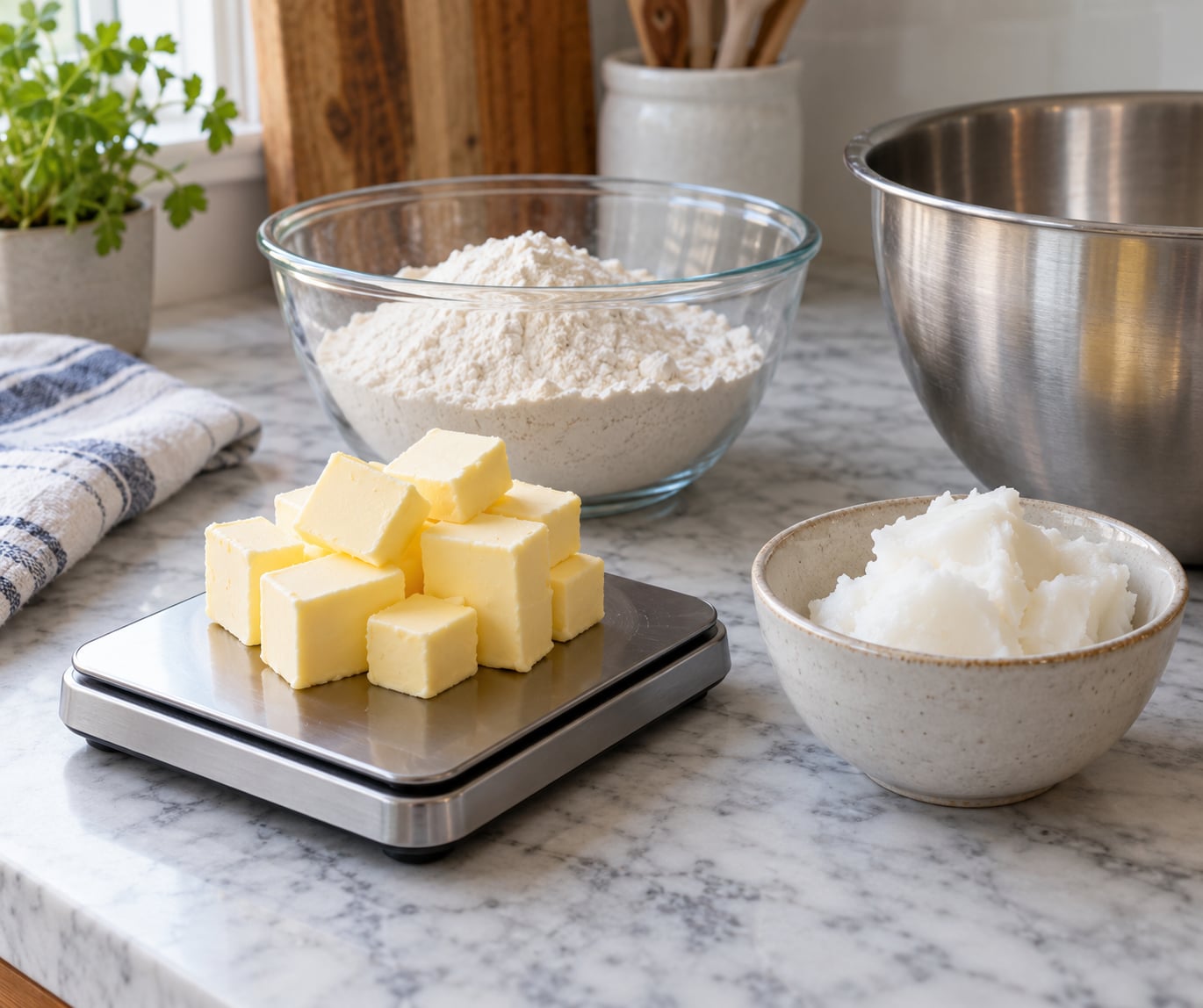
Solid vegetable shortening is made from partially hydrogenated plant oils, usually soybean, cottonseed, or palm. It is 100 percent fat with no water, no milk solids, and no flavor of its own, and it stays firm well above room temperature. Butter is roughly 80 percent fat and 20 percent water, and that water arrives along with milk solids that give it a flavor you can taste across the room.
Most shortening on the shelf today is trans fat free. If you have been avoiding it for old health reasons, that is worth rechecking against the label.
Here is what to have on hand:
- Butter, ideally unsalted, so you control the salt
- A kitchen scale, or reliable measuring cups
- A paddle attachment or a sturdy bowl for creaming
- Thirty spare minutes of fridge time for the dough
- Optionally, a couple of tablespoons of extra flour and a pinch of salt
Here is the conversion you will actually use. The left column is what you scoop, the middle is the cup-for-cup answer, and the right is what to weigh if you want fat parity rather than volume parity.
| Shortening | Butter, cup for cup | Butter by weight for fat parity |
|---|---|---|
| 1 cup (about 190 g) | 1 cup, about 227 g | about 228 g |
| 3/4 cup | 3/4 cup, about 170 g | about 170 g |
| 1/2 cup | 1/2 cup, about 113 g | about 114 g |
| 1/3 cup | 1/3 cup, about 76 g | about 76 g |
| 1/4 cup | 1/4 cup, about 57 g | about 57 g |
| 1 baking stick | 1/3 cup, about 48 g of butter | about 50 g |
Where the swap is easy: cookies, cupcakes, cakes, brownies and bars, quick breads, scones, biscuits, and a basic butter-style pie crust if you keep the fat cold. Where it needs a second thought: yeast breads, where you may want to drop added milk slightly. Where you should leave it alone: laminated dough such as croissants and puff pastry.
Step-by-Step: How to Substitute Butter for Shortening in Baking
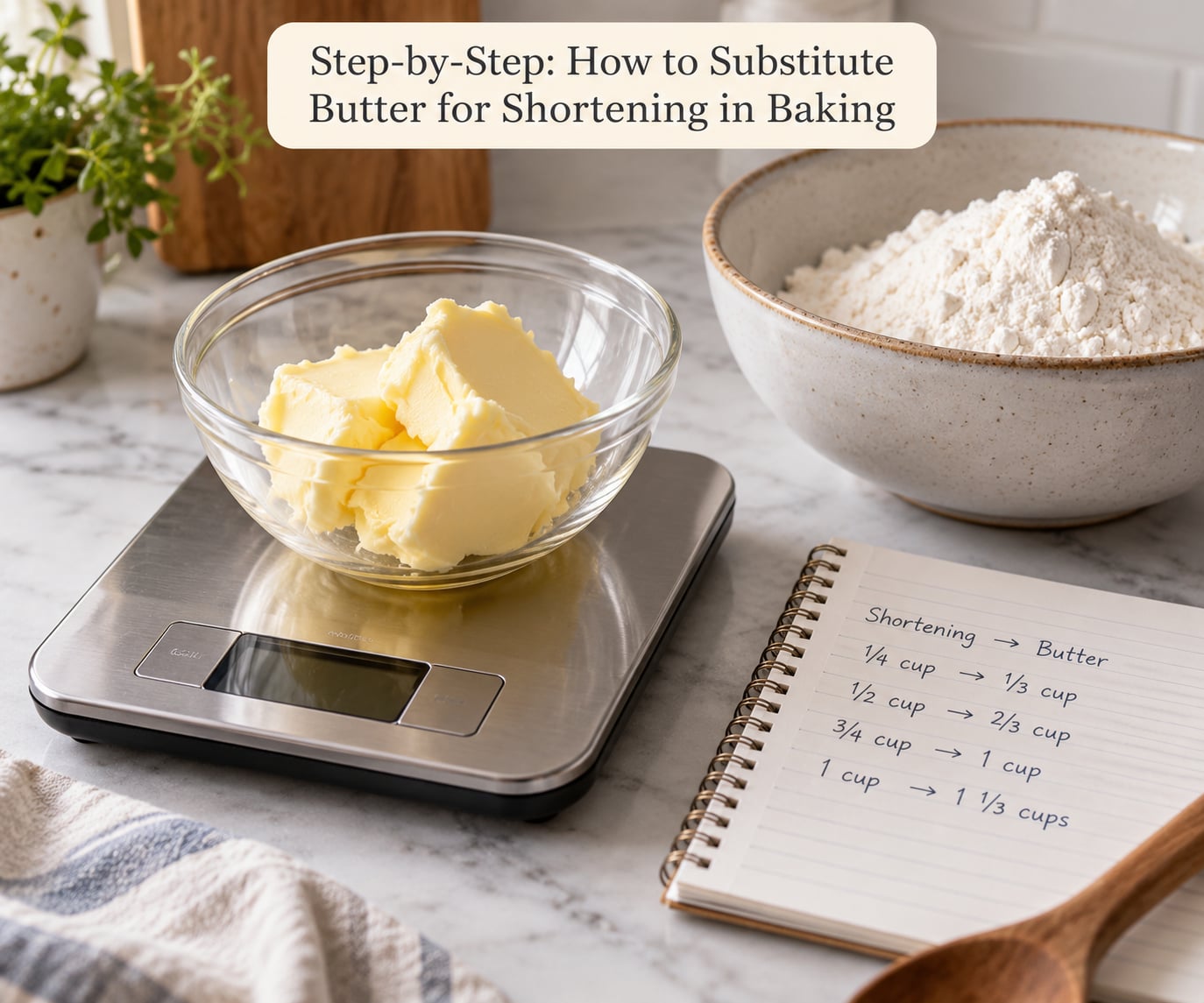
Step 1: Check the Recipe’s Shortening Type
Read what the recipe actually calls for, because shortening, whipped shortening, sticks, and melted shortening do not behave the same way. A recipe listing a solid vegetable shortening by the cup is the easy case. A recipe listing shortening sticks wants you to treat one stick as about a third of a cup.
If the recipe calls for melted shortening or plain vegetable oil, the swap is a melted-butter swap instead of a solid-fat swap. Melt the butter, cool it so it is no longer hot, and cut any milk or buttermilk in the recipe by about 1 tablespoon per stick of butter you melted, since melted butter carries the water with it.
If the recipe already calls for both fats, which happens with a lot of older cookie and pastry recipes, you can simply combine them into all butter. You will get more flavor and a flatter, crisper cookie. One r/Baking thread on thumbprint cookies put the trade-off in a single sentence: all butter bakes flatter and crisper with better flavor, while shortening bakes taller and more tender.
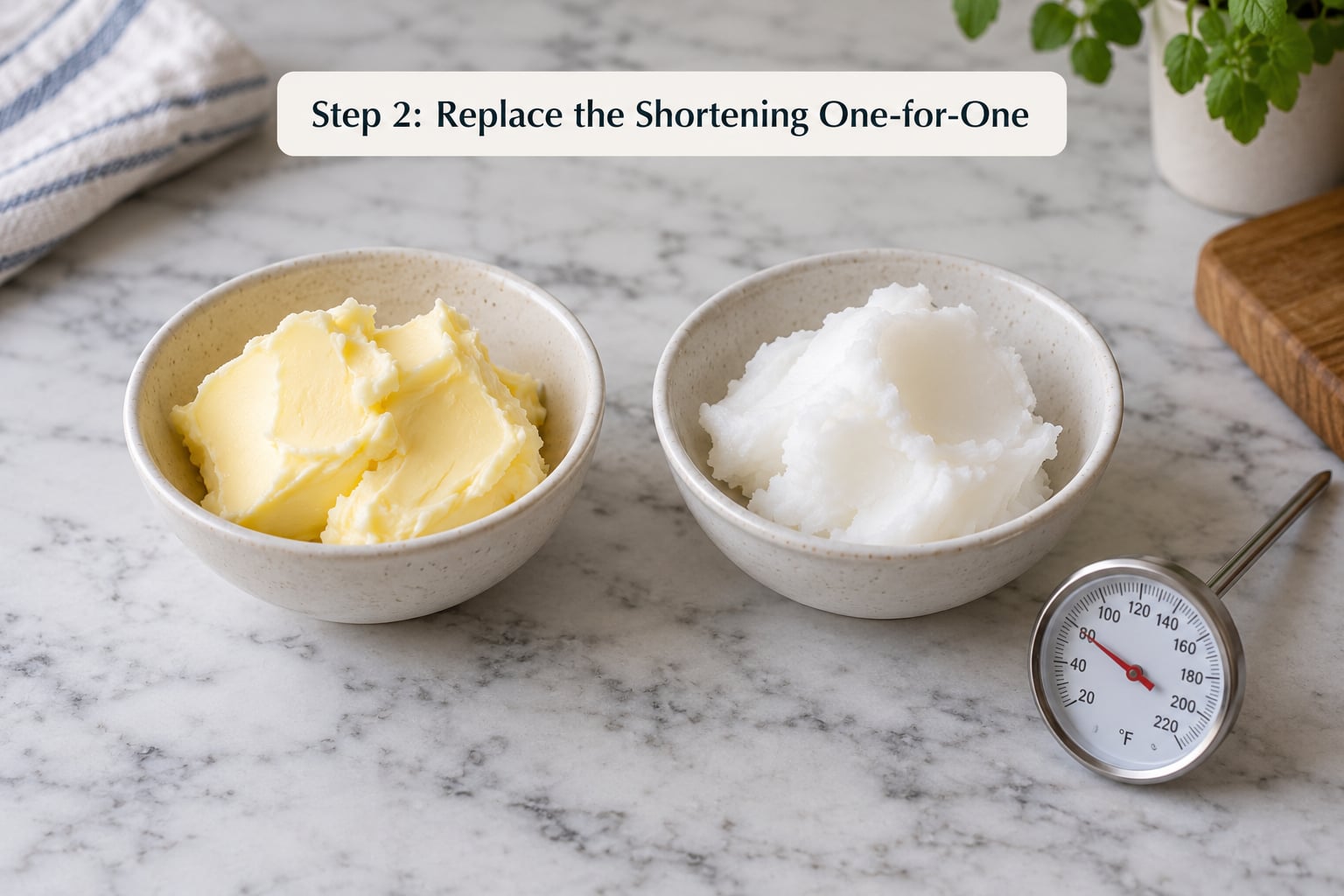
Step 2: Replace the Shortening One-for-One
Scoop the butter in the same volume the shortening occupied. One cup of shortening becomes one cup of butter, one stick of shortening becomes about a third of a cup of butter, and that is the rule most recipes were written against.
If you weigh, add roughly 20 percent to the shortening’s weight, because butter is only about 80 percent fat. A cup of shortening weighs about 190 g, and one fifth more is about 228 g, which is exactly a cup of butter. The Crisco package label makes the same point in plain words: one cup of shortening plus two tablespoons of water equals one cup of butter. That two tablespoons is the entire difference between the two fats.
In practice both routes land in the same bowl, so weigh only if the recipe is fat-sensitive, such as a pastry dough you are rolling thin.
Step 3: Choose the Right Butter Texture
Use butter at whatever temperature the step calls for, which is the one real technique change in the whole swap. Shortening comes out of the tub already workable. Butter does not.
Softened, around 65 to 70 F, is what you want for creaming in cookies and cakes. It should dent under a fingertip without splitting. Cold, right out of the fridge, is what you want for pie crust, biscuits, and scones, where you cut the fat into flour and want visible pieces of it in the dough for flaky layers. Melted and just cooled to room temperature is right for brownies, chocolate chip cookies, and quick breads where the fat goes into a hot batter.
One note from r/Cooking worth stealing: if you are only swapping a tablespoon or two, the substitution is a non-issue, but the butter still has to be soft or it will not mix in. Hard butter leaves you with streaks of fat that never cream.
Step 4: Adjust the Recipe if Needed
Most recipes need one small adjustment, and it depends on what you swapped into.
Salt comes first. Shortening is unsalted, so if the recipe listed a salt call, keep using unsalted butter and nothing changes. If you reach for salted butter, add nothing else. If you go the other way someday and replace butter with shortening, put the salt back in.
Spread is next. Butter cookies spread more because butter softens earlier in the oven than shortening does. Chill the dough for 30 minutes, and if you want the exact thickness the shortening version gave you, add a tablespoon of flour per half cup of butter. That is the fix a r/Baking baker landed on after converting a family recipe, and it worked, though they noted the crinkle top never came back quite the same.
Liquid and leavening rarely need changing on a single swap, but in a rich yeast dough the butter’s water will make the dough feel sticky. Pull about 1 tablespoon of milk per stick of butter and knead it in a little later.
Common Mistakes When Substituting Butter for Shortening
Most disappointing swaps trace back to one of five things. Each has a fix you can apply before the dough ever reaches the oven.
- Using cold butter for a creaming recipe. It will never aerate, so the cookie bakes dense. Soften it to 65 to 70 F first and give the cream time to turn pale.
- Confusing shortening with oil. Liquid fat cannot cream. Melt the butter and cool it, then reduce the recipe’s milk so the total liquid does not climb.
- Changing the quantity because it feels wrong. A 1:1 scoop is the intended answer. Doubling up on butter to chase flakiness ruins the formula, and so does scaling the recipe in a hurry without measuring.
- Expecting an identical cookie. You are not getting the same cookie. You are getting a flatter, crispier, better-tasting one. Aim for a different result rather than waiting for the old one.
- Skipping the chill. Butter dough needs refrigeration before baking, even when shortening dough did not. Thirty minutes makes a real difference in spread.
How to Fix Cookies That Spread Too Much After the Swap
If the batch already went thin and wide, most of it is still salvageable. Refrigerate the remaining dough for 30 minutes and reroll it thicker before baking the rest. For cookies already in the pan, freeze them for 10 minutes, which firms the set butter and stops them running.
For the next round, add a tablespoon of flour per half cup of butter, or trim the baking powder by a small pinch if your recipe is already leavened generously. Baking a single test cookie on a cold lined sheet at the recipe’s stated temperature tells you in nine minutes whether the batch is right, which is faster than baking twelve bad ones.
One last habit: measure butter by weight rather than by volume when you can. Butter packed loosely into a cup can vary by 30 to 40 grams between scoops, and that is a bigger swing than the substitution itself.
Frequently Asked Questions
How much butter should I use instead of 1 cup of shortening?
Use 1 cup of butter, about 227 g or 8 tablespoons. That is the standard cup-for-cup answer and it works in cookies, cakes, brownies, and pie crust. If you weigh, the fat-parity figure is also about 228 g, so both routes land in the same bowl. Weigh rather than scoop whenever accuracy matters, since loosely packed butter can vary by 30 to 40 g between scoops.
Can I use melted butter in a recipe that calls for shortening?
Yes, with one adjustment. Melted butter works well in brownies, quick breads, and many drop cookies. Because melted butter brings its water with it, cut the milk or other liquid in the recipe by roughly 1 tablespoon for every half cup of melted butter. Do not use melted butter when the recipe creams fat and sugar, because melted fat will not trap air and you will lose the lift.
Does substituting butter for shortening change the flavor?
It does, noticeably, and most people consider it an upgrade. Shortening is neutral, while butter carries dairy and a hint of tang from its milk solids. Butter also browns faster at the edges because its water content keeps the surface moist longer. If you need the dairy note back when going the other way, replace some of the liquid with buttermilk or milk rather than reaching for artificial butter flavoring.
What is the best butter for cakes, cookies, and biscuits?
Unsalted butter, always. It keeps the salt level exactly where the recipe put it and stops you from over-salting. Plain American-style butter at about 80 to 82 percent fat works well for most baking. For pie crust, biscuits, and croissants, high-fat European-style butter at 84 to 86 percent behaves more like shortening, though it carries a little more water to compensate.
Will cookies spread more if I use butter instead of shortening?
Yes, in most cases. Butter softens at a lower temperature than solid shortening, so it spreads sooner in the oven. Cookies will be flatter, wider, crisper at the edges, and less tall. Chill the dough for 30 minutes and add a tablespoon of flour per half cup of butter if you want the height back. Expect less lift, more chew, and a stronger flavor.
How do I substitute butter for shortening by weight?
Add about 20 percent to the weight of the shortening, because butter is roughly 80 percent fat and shortening is 100 percent fat. A cup of shortening weighs about 190 g, and one fifth more comes to about 228 g, which is one cup of butter. For reference, 1/2 cup of shortening becomes about 114 g of butter and 1 stick becomes about 50 g. Treat the figure as a rule of thumb.
Conclusion
Start here: weigh the butter rather than scoop it, use 1 cup of butter for 1 cup of shortening, and add about 20 percent if you are working strictly by weight. Then match the butter to the step. Soft for creaming, cold and visible in the flour for pie crust and biscuits, melted and cooled for brownies and quick breads.
Check the dough before it goes in the oven. If it spreads when you pinch it, chill it longer or add a tablespoon of flour per half cup of butter. Skip the swap entirely for croissants and puff pastry, where the fat has to stay solid, dry, and 100 percent fat to build layers.
The one rule worth memorizing: measure cup for cup, and expect a flatter, crispier, tastier result than shortening ever gave you.