To pick a steak for grilling, look for even fat flecks running through the muscle, choose a cut at least 1 to 1.5 inches thick, and buy meat that looks bright red, firm, and moist. Grade matters far less than most shoppers think. Marbling, thickness and freshness decide whether a steak stays juicy over direct heat, and you can check all three in about a minute at the counter.
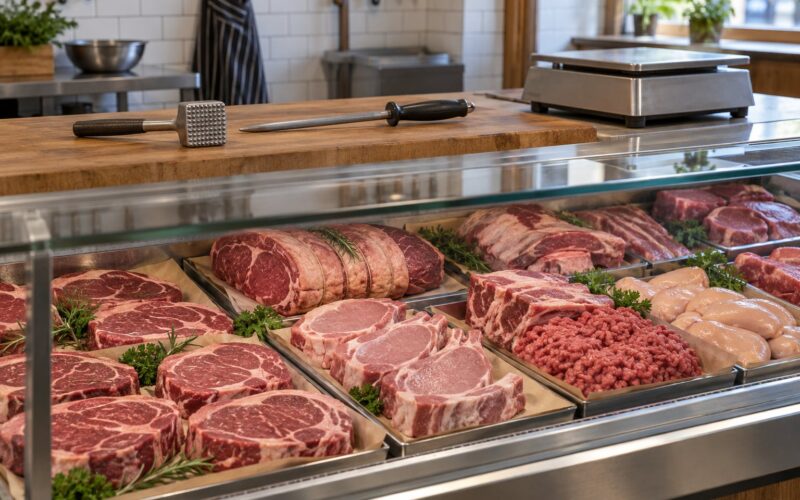
Most of the difficulty at a meat case is naming, not quality. Ribeye, Delmonico, Kansas City strip and shell steak are often the same muscle wearing different labels, which is why buyers pay a premium for a word instead of for the meat. Walk in knowing your cooking method and how many people you are feeding, and the case gets much easier to read.
Table of Contents
- What You Need
- Step-by-Step: How to Pick a Steak for Grilling
- Step 1: Choose the Cut for Your Grilling Method
- Step 2: Decide How Tender and Flavorful You Want It
- Step 3: Look for Marbling Without Paying for the Wrong Thing
- Step 4: Check Thickness and Size for Even Cooking
- Step 5: Check Freshness and Appearance
- Step 6: Compare Price by Cut, Weight, and Quality
- Common Mistakes
- Frequently Asked Questions
- What should I ask the butcher when buying a steak for grilling?
- Is more marbling always better when choosing a steak?
- How thick should a steak be for grilling?
- What is the best steak cut for a home grill?
- How can I tell if raw steak is fresh?
- How should I store a steak if I am not grilling it that night?
- Conclusion
What You Need
Before you shop, settle four things. Each one changes what you should be looking at in the case.
- The cooking method. Direct heat over charcoal or gas calls for a steak you can sear in a few minutes per side. A smoker or a low-and-slow cook can handle a tougher, fatter cut that would disappoint on a fast sear.
- Your guest count. A useful rule is roughly 8 to 12 ounces of raw steak per adult, and bone-in cuts need more raw weight because a good part of that weight is bone you will not serve.
- How tender and how beefy you want the result. Tender and mild, or lean and assertively beefy, are different shopping lists.
- A case you trust, and one point of comparison. A dedicated butcher counter lets you ask questions. A supermarket case forces you to read the label. A photo of a well-marbled cut on your phone makes a wrapped, unlit package much easier to judge.
Step-by-Step: How to Pick a Steak for Grilling
Step 1: Choose the Cut for Your Grilling Method
For direct grilling, you want cuts that are tender enough to finish in a few minutes per side: ribeye, New York strip, flat iron, tri-tip, bavette and sirloin tip. A flat iron or a tri-tip behaves beautifully on cast iron and gas, and both hold up on charcoal if you keep the coals to one side and move the steak away from the hottest zone if it is browning faster than you like.
Connective tissue is the real dividing line, not price. Shoulders, chuck and round carry more collagen, so they want low, slow heat and a long rest to turn into something worth eating. Those are excellent smoker cuts and poor sear cuts.
Shape changes the cooking as much as the cut does. A flat, even steak like a strip or a sirloin hits the grate the same way across its whole face. A rounded ribeye or a bone-in chop has a thick end that lags behind, which is why a bone-in steak is often easier to cook evenly than its boneless twin once the bone is acting as a heat sink.
Step 2: Decide How Tender and Flavorful You Want It
Tenderness and beefy flavor live in different muscles, and you usually have to pick one. Working from most tender to most flavorful: filet mignon and other tenderloin cuts are the softest and mildest, ribeye is tender because of the rib cap muscle, New York strip and flat iron sit in the middle with a strip of edge fat, and sirloin and round are leaner and firmer with more of a mineral, beefy bite.
The commonly repeated shorthand from cooking forums holds up: the filet is the most tender, the ribeye has the most flavor, and the strip is somewhere in between. Pick deliberately from that lineup instead of buying the most expensive name on the board.
If you are heading for a leaner cut, a marinade or a dry brine earns its keep. Acid and salt loosen and season a tight muscle, and salt drawn to the surface in advance helps it hold moisture. Ribeye and flat iron need neither, and a salty marinade on a well-marbled steak can make it taste like seasoning rather than beef.
Step 3: Look for Marbling Without Paying for the Wrong Thing
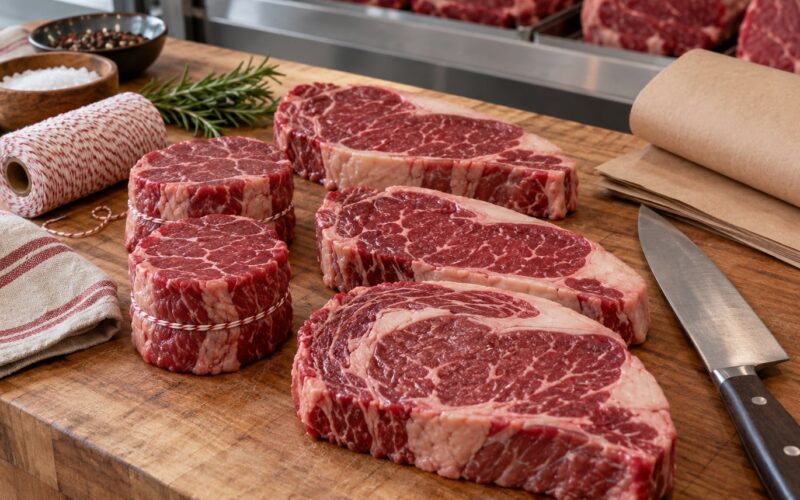
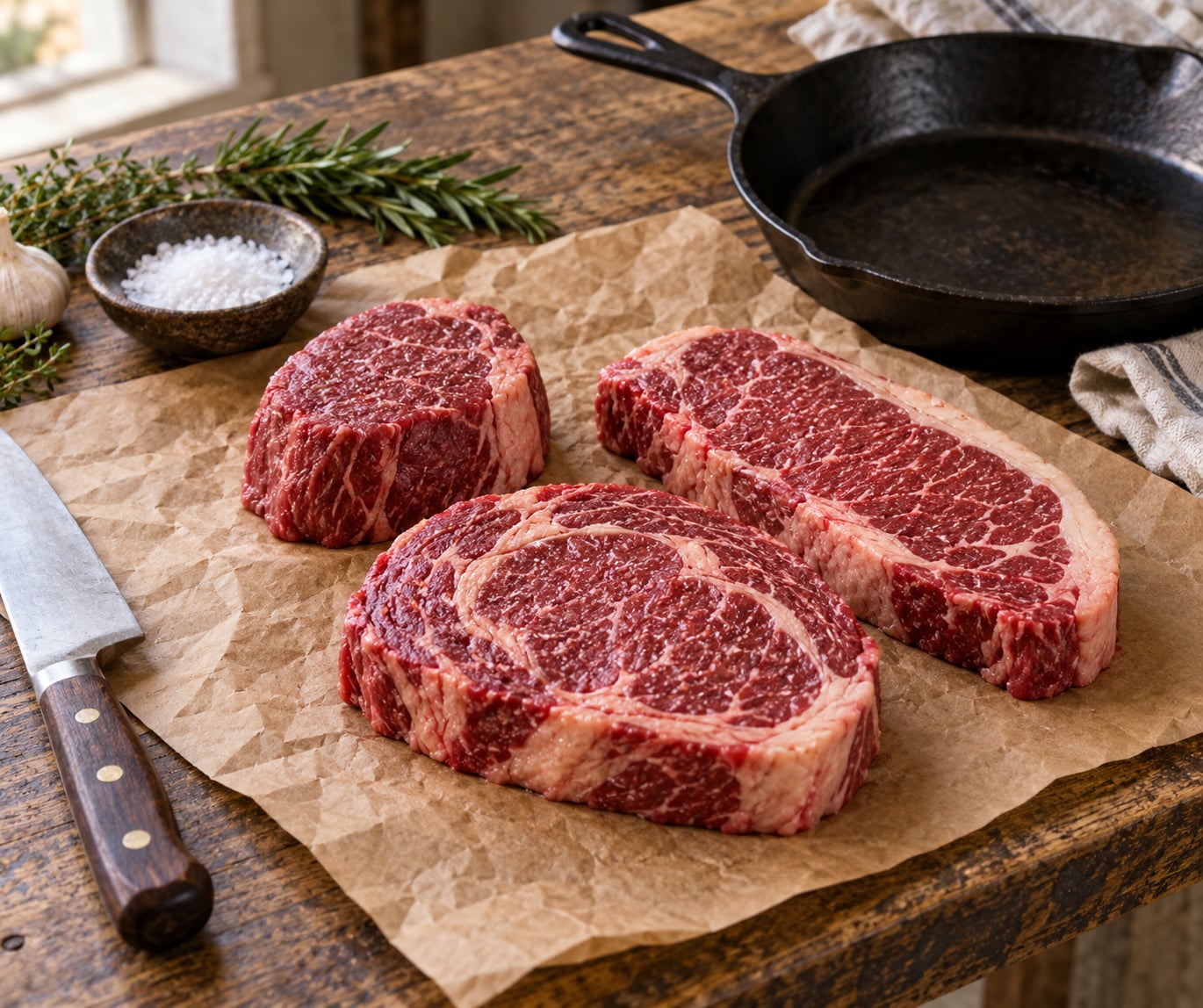
Marbling is intramuscular fat, the cream-colored streaks inside the muscle itself. That is the fat that melts during cooking and keeps the center from drying out. It is different from intermuscular fat, the seams and edge fat between muscles, which mostly bastes the outside. A steak can have a generous fat cap and very little marbling, and it will still cook well but drier in the middle.
What you are looking for is small, even flecks spread through the red, not heavy slabs of white. Ribeye carries the most, short rib next, then flat iron and strip. Tenderloin is the least marbled of the premium cuts, which is part of why it is mild.
More marbling is not automatically better. On a ribeye, the jump from modest to heavy is a smaller flavor gain than the price jump, and a heavily marbled steak can render out noticeably during a long cook. Ask for moderate marbling on cuts that already have plenty, and spend the difference on thickness instead.
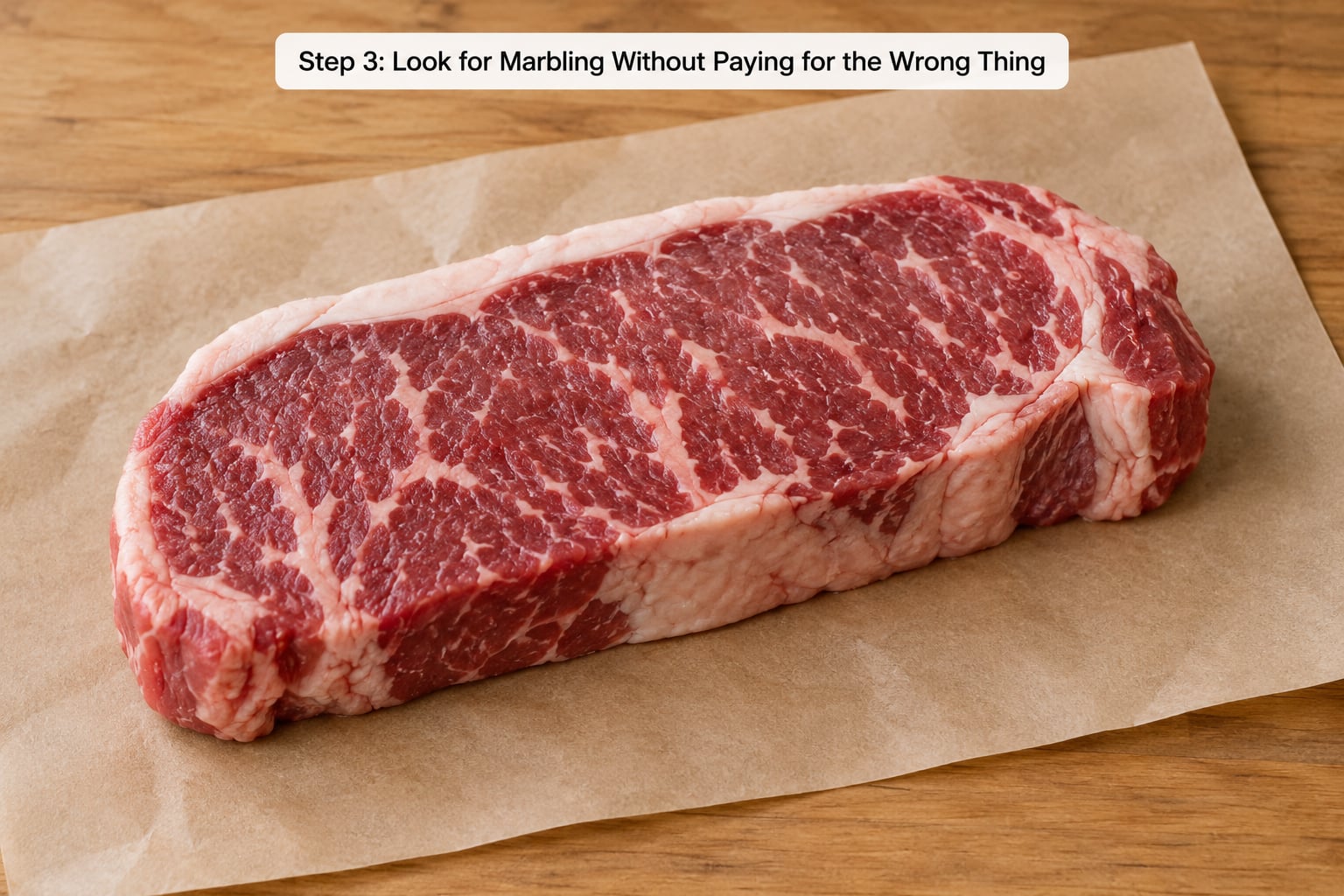
USDA grades are a quick shorthand for the same thing. Prime has the most marbling, Choice sits a step below with plenty for grilling, and Select is leaner and often better suited to slow cooking than a hard sear. Grading is voluntary and producers pay for it, so treat it as a reliable ranking rather than a promise of quality on any given animal.
Step 4: Check Thickness and Size for Even Cooking
Thin steaks are the most common regret at the grill. A thin steak chars before the middle cooks, so you end up serving something that is burnt outside and raw or rubbery inside. Aim for at least 1 inch on a quick sear, and 1.25 to 1.5 inches when you want a real crust and a medium-rare center.
Useful minimums: 1 inch for a strip or sirloin, 1.25 inches for a ribeye, and 1 to 1.25 inches for a filet. Bavette, skirt and hanger steaks are naturally thin, which is fine; plan to cook them fast over direct heat and serve them immediately.
Match the size to the grill, not just the table. Thin steaks need space and a hot zone, and a crowded grate drops the temperature. For a crowd, several medium steaks beat one large one, because they cook at the same rate and you avoid the problem of a thick center and a thin edge in the same piece.
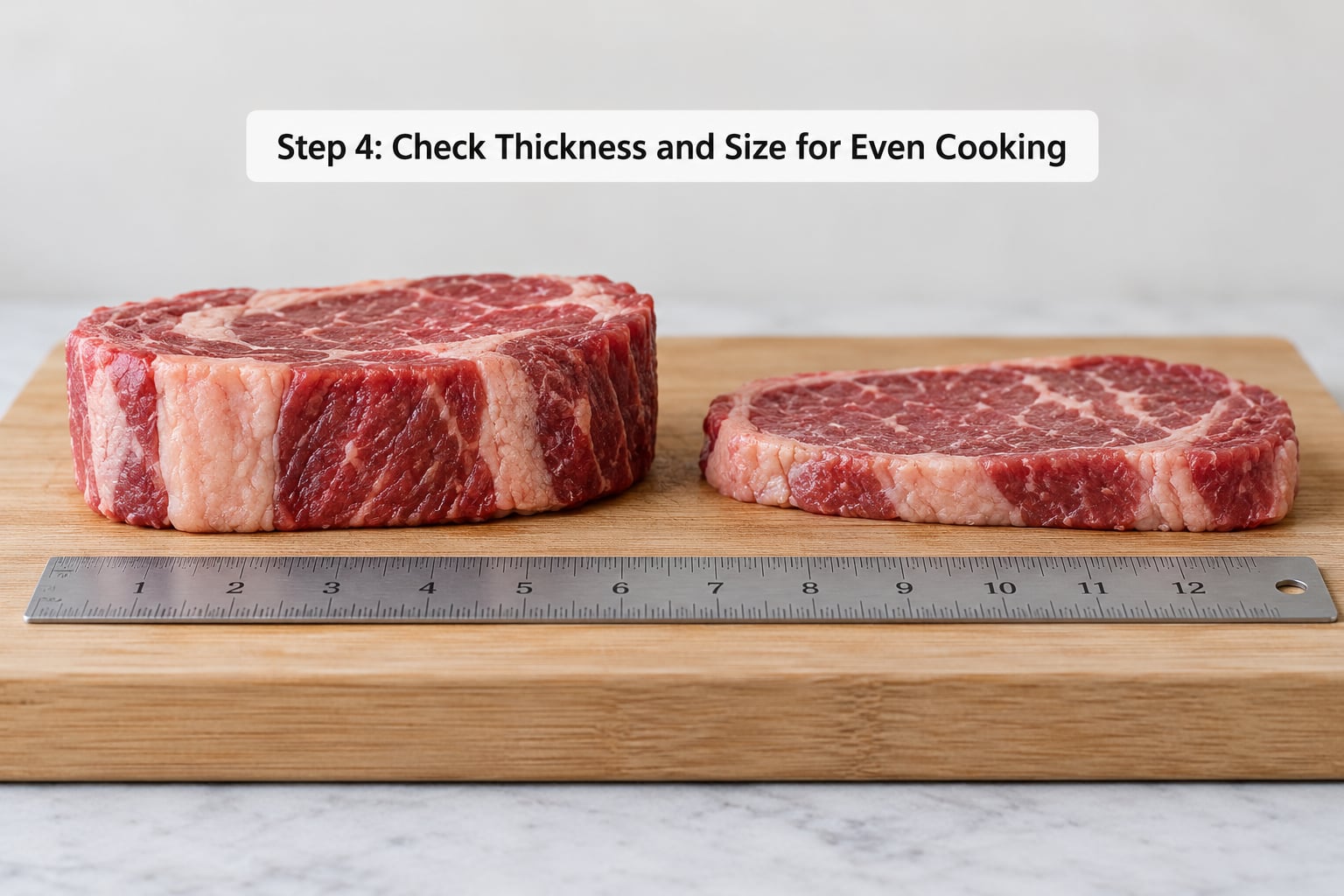
Most butchers will cut a thicker steak for you at no extra charge, or cut a thicker piece from the same subprimal. Ask. It is the easiest quality upgrade available and it costs nothing but a sentence.
Step 5: Check Freshness and Appearance
Fresh raw beef is a bright, even red with a slightly purplish cast, and it looks wet rather than shiny with plastic. The surface should have a little pliant sheen, not a dry or dulled rim. Gray or brownish edges mean moisture has been leaving that steak for a while, and a gray rim around an otherwise red center in a sealed package is the classic sign of a piece that was frozen and thawed and refrozen for display.
At a service counter, look for meat that holds its shape and springs back when you press it. Very soft meat that dents and stays dented has lost its structure. Smell it, too. Fresh beef has a clean, slightly metallic smell, while anything sour, ammonia-like or vaguely fishy should be walked away from without a second thought.
For packaged meat, read the label for the cut name, the grade and the use-by date, and check the case temperature and the date on the sticker. Buy packaged steak that has been continuously cold, and skip anything sitting in a warm case or a tray with pooled liquid underneath it.
At home, refrigerate steak on the lowest shelf or in a sealed container below ready-to-eat food and use it within three to five days of purchase. Freeze it in individual portions on a tray first, then bag it once solid, and thaw it in the refrigerator, never on the counter.
Step 6: Compare Price by Cut, Weight, and Quality
Compare cuts on cost per pound of meat you will actually eat, not on the sticker. A bone-in ribeye or T-bone carries a large share of weight in bone and fat cap that never reaches the plate, so its effective cost per edible ounce is often lower than a boneless cut priced in the same range.
Value cuts grill well if you cook them right. Flat iron is tender and flavorful for a fraction of a ribeye, and the same is true of bavette, tri-tip, skirt and sirloin tip. The cheapest option is not automatically a bad buy, it is a different cut with different needs, mostly more heat and less time.
Decide what an extra dollar is actually buying. On a lean cut, moving up a grade buys marbling you will taste. On an already well-marbled ribeye, the same money is usually better spent on a thicker piece, since more marbling on a ribeye is a smaller gain than another quarter inch of thickness.
Common Mistakes
Choosing by the name on the label. Several names refer to the same muscle, so a fancier word can mean a normal steak. Identify the cut first, then judge the grade, marbling and thickness on the meat in front of you.
Ignoring thickness. This is the one that ruins dinner most often. Anything under three-quarters of an inch will struggle to sear without overcooking, so have the butcher cut it thicker or move up a size.
Paying heavily for marbling you cannot taste. On cuts that are already well marbled, extra marbling changes very little in the pan. Ask for moderate marbling and put the difference into thickness.
Buying the wrong size for the grill or the guest list. Overcrowding the grate kills your sear, and one oversized steak guarantees uneven cooking. Cook several medium steaks instead.
Skipping the freshness check. Color, firmness and smell take a few seconds and catch a dried-out or old piece. A dulled gray rim, a soft texture or any sour smell is reason enough to put it back.
Grilling by time instead of temperature. A probe thermometer is the only fix for a steak that came out wrong. Take a whole cut off the heat at 145 F / 63 C, the USDA minimum internal temperature, and carryover cooking adds another 5 to 15 F depending on thickness. Let it rest 5 to 10 minutes, and add a dry brine of salt ahead of time if the steak is thick enough to benefit from it.
Frequently Asked Questions
What should I ask the butcher when buying a steak for grilling?
Ask four things: what is the cut and where is it from, how thick can you cut it, how long has it been aged and how was it finished, and what would you pick for my grill. A fifth is worth asking on any bone-in piece, which is how much of that weight is bone and fat cap, so you can judge the real cost per edible ounce.
Is more marbling always better when choosing a steak?
No. Marbling is fat inside the muscle, and it does add flavor and juiciness, but the gain flattens on cuts that are already well marbled. On a ribeye, modest-to-moderate marbling at 1.25 inches cooks better than a heavily marbled piece bought thin. Lean cuts like sirloin and round genuinely benefit from a marbling upgrade.
How thick should a steak be for grilling?
At least 1 inch for a quick sear, and 1.25 to 1.5 inches if you want a pronounced crust with a medium-rare center. Ribeyes suit 1.25 inches or more, strips and sirloins 1 inch or more. Naturally thin cuts such as bavette, skirt and hanger are exceptions; cook those fast over direct heat and serve them right away.
What is the best steak cut for a home grill?
Ribeye for marbling and beefy richness, New York strip for a leaner flavor with a fat cap that bastes the crust, and flat iron when you want tenderness and value together. Those three cover almost every home grill. Save shoulder and chuck for low-and-slow cooking, where their connective tissue has time to soften.
How can I tell if raw steak is fresh?
Look for a bright, even red color with a slightly purplish cast and a surface that looks moist rather than dull. Press it: fresh meat springs back, while very soft meat that stays dented has lost moisture. Smell it, since fresh beef is clean and slightly metallic and anything sour or ammonia-like should be avoided. A gray or brown rim is a warning sign.
How should I store a steak if I am not grilling it that night?
Refrigerate it on the lowest shelf in a sealed container, below anything you eat uncooked, and use it within three to five days. For longer storage, freeze it in single portions, then bag or wrap each piece once it is solid and label it with the date. Thaw in the refrigerator, never on the counter, and let the steak come to room temperature before it hits the grill.
Conclusion
Start at the counter with the method, not the menu. Decide whether you are searing fast or cooking low and slow, count your guests, and target a cut at least an inch thick. Then look through the meat for even marbling, press and smell it for freshness, and ask the butcher to cut it thicker or pick for you. Buy the best steak that fits your grill and your list, and take it home with a thermometer rather than a timer.