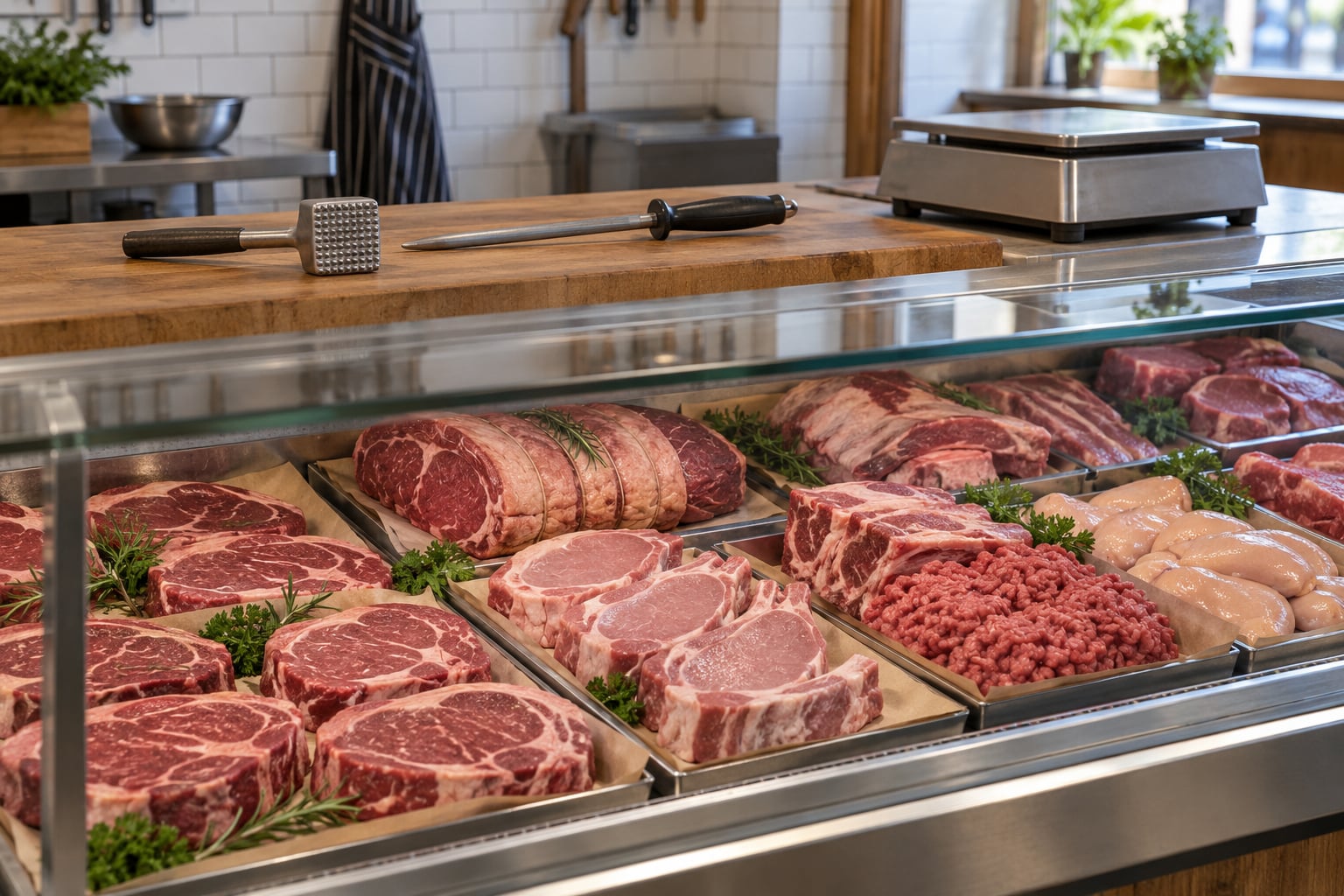
Never been to a butcher counter? It is simpler than the display case makes it look. Tell the butcher the meal you want to cook, name the cut or describe it, give a rough weight, and say how thick you want it. Everything else is a question you are welcome to ask.
Learning how to buy meat at a butcher counter for the first time takes about ten minutes at the counter plus an hour at home. A good butcher would much rather spend two minutes helping you than hand you something that will disappoint you on the plate.
Most of the anxiety at a meat counter is vocabulary, not courage. The words look invented because nobody explains them. Once you know that flank is a flavourful cut for slicing thin, that a thicker steak is not a better steak, and that a bigger package is not a better deal, the whole interaction settles down.
Table of Contents
- What You Need to Buy Meat at a Butcher Counter
- Step-by-Step: How to Buy Meat at a Butcher Counter
- Start With the Meal You Want to Cook
- Decide Between Fresh and Frozen Meat
- Ask the Butcher for a Recommendation
- Compare Cut, Size, and Price Per Pound
- Choose the Right Portion
- Check Appearance, Packaging, and Temperature
- Ask About Labeling and Safe Storage
- Common Mistakes
- Frequently Asked Questions
- What should I ask the butcher when buying meat?
- How can I tell if fresh meat is good?
- Should first-time meat buyers choose fresh or frozen?
- Is custom-cut meat worth the higher price?
- How should I take meat home and store it safely?
- Start With One Easy Purchase
What You Need to Buy Meat at a Butcher Counter
Bring less than you think. The counter will do the real work of trimming, portioning, grinding and sealing.
- A meal decided in advance. Pick what you are cooking before you walk in. Chicken thighs for roasting, ground beef for tacos, pork shoulder for the oven, flank steak for a stir-fry. The cut follows the meal, not the other way around.
- A rough weight in mind. Three to four ounces of raw meat per person per meal is a normal starting point for a main course, and you can double it for leftovers or a hungry table.
- A way to compare unit price. A handwritten scrap of paper or your phone notes are enough. Write down the weight and the price per pound for each option so you compare like with like.
- An insulated bag or small cooler with ice packs. Cold meat should not warm up on the drive home, especially in a warm car.
- An instant-read thermometer, if you do not own one. This is the single tool that turns confidence at the counter into confidence at the stove.
Shopping bags go in your car, not your hand. A butcher will happily write your order on a label, but you are the one who has to get it into the fridge within a safe window once you get home.
Step-by-Step: How to Buy Meat at a Butcher Counter
Walk in, take a look at the case first, then order. These seven steps work whether you are at a dedicated butcher shop, a market stall with a meat vendor, or the service counter at the back of a grocery store.
Start With the Meal You Want to Cook
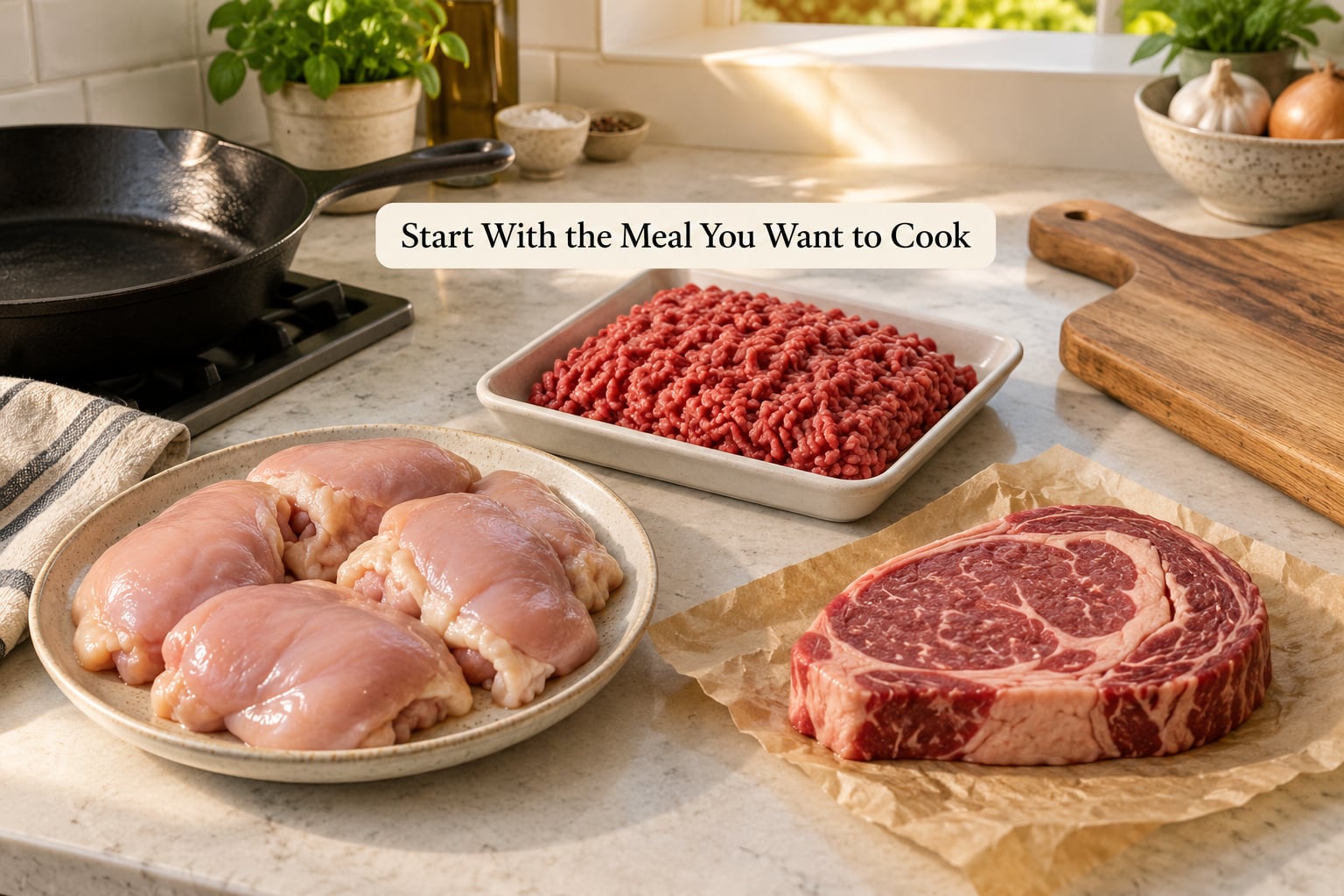
Decide the dish first, then find the cut that fits it. This is the cheapest decision you will make at the counter, because it is the one that stops you paying for a cut that does not suit your pan, your oven or your schedule.
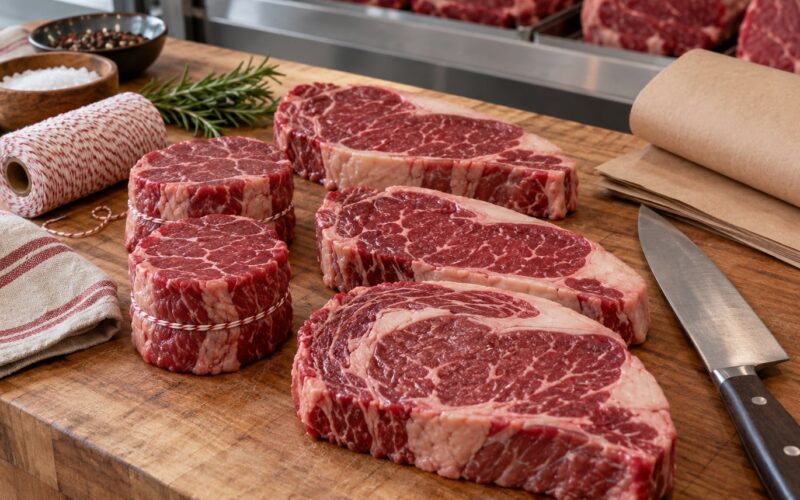
Chicken thighs roast, grill and braise without much attention, which makes them a forgiving first purchase. Ground beef turns into tacos, chili, meatballs and bolognese, and a butcher can grind it to a fat percentage you choose. If you want steak, an inexpensive flank or sirloin cut sliced thin across the grain cooks faster and forgives more mistakes than a thick ribeye.
Cooking the cut correctly is the whole trick. A cut matched to a method that suits your experience will taste better than an expensive cut seared past the point where you can judge it.
Decide Between Fresh and Frozen Meat
Fresh is not automatically better, and frozen is not a compromise. Freezing holds flavour and texture well when the meat was frozen quickly and stays frozen, so a frozen commercial cut can be the more honest and more economical option for a first-timer.
Buy fresh when you are cooking it within a day or two, when you want the butcher to slice or grind it for you, and when you are still deciding. Buy frozen when you are buying bulk, cooking later in the week, or comparing value and a frozen steak cut can undercut a fresh whole cut that has more trimming waste.
At the counter, ask whether a piece is fresh or previously frozen, and how thick it is. Frozen meat that was thawed for display and re-frozen is where quality falls apart, and a butcher will tell you the truth if you ask plainly.
Ask the Butcher for a Recommendation
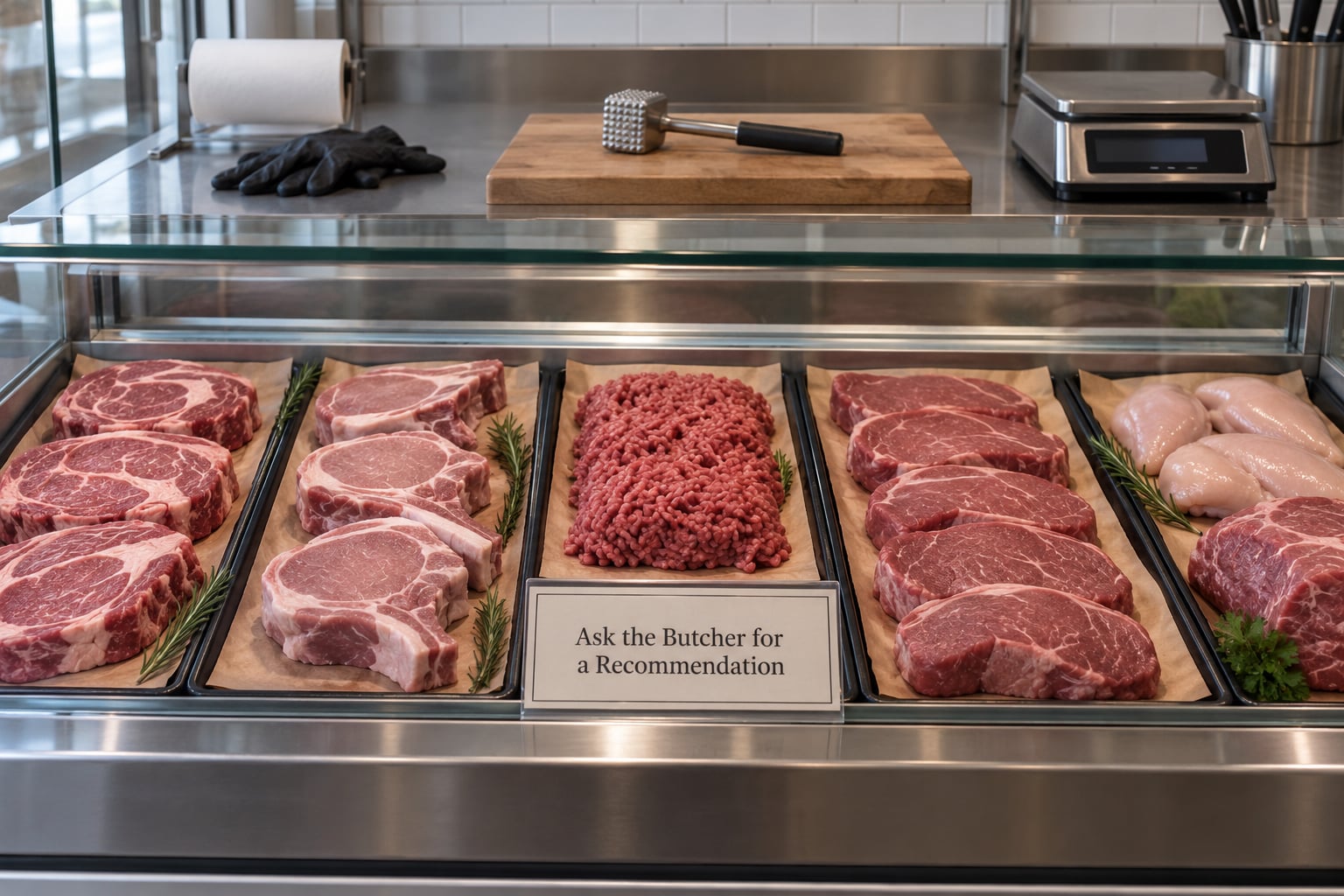
Start with the sentence that unlocks everything: “What would you make with this?” Counter staff are trained to sell meat by matching it to a cook, and they will often steer you toward a cut that costs less and cooks better for your plan.
Questions that are always welcome: which of these is the most tender, what thickness should I ask for if I am using a cast-iron pan, is there anything here that is underpriced today, can you slice this thin across the grain, and what is your recommendation for a first time buyer. Questions about sourcing, aging, dry-aging and how the animal was raised are welcome too. None of them need technical vocabulary on your part.
Socially, the counter is a conversation, not a test. The person behind the case wants the meat to get cooked and eaten well, because that is how the shop earns repeat business. Taking your time is fine. So is changing your mind halfway through the order.
Compare Cut, Size, and Price Per Pound
Almost every confusion at a butcher counter comes from mixing up the weight of a package with the price of a pound. The tag shows a weight and a unit price per pound, and you pay for the weight that actually lands on the scale after trimming.
Compare three things when you look at two different options: the price per pound, the portion size you need, and how much of the weight is not food. A bone-in chop loses perhaps a third of its weight to bone, and a heavily marbled cut can lose a meaningful slab to trimming. Both may still be the right buy, but you should know what you are paying for.
Ask for the total in advance if the weight is a surprise. “About how will this come out in total?” is a polite, ordinary question, and it stops the shock at the register that first-timers describe more than anything else.
Choose the Right Portion
Buy for the number of people, then adjust for the occasion. Three to four ounces raw per person works for a normal dinner. Five or six suits a holiday table. Cooking for one or two, ask the butcher to split a larger cut into two or three smaller ones and vacuum-seal the extras so nothing goes to waste.
This is also where special requests pay off. Ask for a thicker cut if you are pan-searing, thinner slices for stir-frying, meat sliced across the grain for a flat-iron or flank, the bone taken out if you are feeding people who dislike bones, or a mix of thicknesses so the fast and slow pieces leave the pan together.
Value bundles exist for a reason: a mixed box of end cuts or a family-size package of chicken can cost less per pound than buying the premium piece alone. Ask what the shop puts in the value box, and whether they will build one for you.
Check Appearance, Packaging, and Temperature
Freshness is mostly a look and smell check, but colour alone is a poor guide. Beef that is vacuum-packed darkens toward burgundy or brown-purple in the bag, and that is oxidation, not spoilage. Pork should be pink rather than pale, poultry pale pink with fat that looks creamy rather than yellow.
Press the surface with a finger. Good meat is firm and springs back rather than feeling slick or spongy. Smell it: a clean cut smells of almost nothing, while a sour, ammonia or off note is a reason to move on. A pool of liquid in the tray is worth asking about, since excess fluid usually points to temperature abuse during display.
Check the wrapping. Retail-packed meat at a counter should have intact film with no tears, leaks or loose corners. Read the use-by date and any state inspection legend on the label, and keep the meat cold while you decide. A cut taken out of a display case may look different from a sealed supermarket tray and be perfectly good.
Ask About Labeling and Safe Storage
Federal inspection is required for meat sold across state lines, and USDA grading for beef is voluntary, so a shop may carry a range of grades or none. Grade labels, added dates, country of origin, added solutions, and raising claims are all things you can ask about directly. If a label does not say, ask.
Ask the butcher to mark the package with the date it was cut, and keep your receipt. If anything goes wrong at home, a shop with a legible label and a date is far easier to deal with than a tray with nothing on it.
Here is the storage cheat sheet. Keep your refrigerator at 40°F (4°C) or below, and refrigerate meat within two hours of purchase, or one hour if it is above 90°F (32°C) outside. Use ground meat and poultry within one to two days, and steaks, chops and roasts within three to five days. Freeze at 0°F (-18°C) in portions you will actually cook, label with the cut and the date, and thaw in the refrigerator, never on the counter.
When you cook, use a thermometer rather than a guess. Whole cuts of beef, pork, lamb and veal reach 145°F (63°C) with a three-minute rest. Ground meat and ground poultry reach 160°F (71°C). Poultry, including thighs and any stuffed parts, reaches 165°F (74°C). Letting a thick steak sit out of the fridge for 20 to 30 minutes before searing is a good habit too: an even temperature across the meat means the middle catches up with the crust instead of lagging behind it.
Common Mistakes
Almost every first-timer mistake has a two-second fix at the counter.
- Judging freshness by colour alone. Vacuum-packed beef darkens naturally. Fix: press for firmness, smell for off notes, and ask the butcher about the date and storage.
- Assuming red meat must be fresh. Frozen is often the better buy for planned meals and bulk. Fix: ask whether a cut was previously frozen and how it was handled.
- Reading the package price as the price per pound. Fix: look for the unit price and ask for the expected total before you pay.
- Ordering a cut with no plan for it. Fix: name the dish, the cooking method and how many people you are feeding before you name a cut.
- Skipping the thickness question. A two-inch steak and a three-quarter-inch steak are different cooking jobs. Fix: say how you plan to cook it and let the butcher pick the thickness.
- Buying pre-ground when you wanted the cut. Fix: ask for the cut by name and have it ground to order with the fat level you want.
- Letting the counter wait warm on the ride home. Fix: bring an insulated bag with ice packs and go straight home.
Two habits make the rest easier. Write the cut name on your own shopping list so you can find it again, and slice meat only after it has rested. Resting is just waiting, and the juice you keep by waiting stays in the meat instead of running off onto the cutting board.
Frequently Asked Questions
What should I ask the butcher when buying meat?
Say the meal you are cooking, the rough weight you need, and how you plan to cook it, then ask what they recommend. Useful follow-ups include which cut is most tender, what thickness to request, whether the cut is fresh or previously frozen, and how long they suggest cooking it. Beginners who want the full walkthrough can start with how to buy meat at a butcher counter for the first time, which follows the same order from meal plan to cold transport home.
How can I tell if fresh meat is good?
Colour alone is unreliable, because vacuum-packed beef darkens toward burgundy and pork and poultry can vary. Press the surface: good meat is firm and springs back. Smell it, and walk away from a sour, sour-sweet or ammonia note. Check that the wrapping is intact with no leaks, read the use-by date, and ask the butcher when it was cut and how it was stored.
Should first-time meat buyers choose fresh or frozen?
Fresh is best when you are cooking within a day or two or want the butcher to slice or grind it for you. Frozen is best when you are cooking later in the week, buying bulk, or trying to keep cost per pound down, since a frozen commercial cut can be cheaper than a fresh whole cut that trims down. Either way, ask whether a cut was previously frozen and how it was handled.
Is custom-cut meat worth the higher price?
Sometimes, and often not on the sticker alone. Custom cutting lets you choose thickness, deboning, slicing across the grain, a fat level for ground meat, and a portion size matched to your household, all of which reduce waste. Compare the price per pound, the weight you will actually eat after trimming, and the price per serving against a pre-cut supermarket tray before deciding.
How should I take meat home and store it safely?
Bring an insulated bag with ice packs, keep the meat cold in the shop, and go straight home. Refrigerate at 40°F (4°C) or below within two hours of purchase, or one hour in temperatures above 90°F (32°C). Use ground meat and poultry within one to two days, steaks, chops and roasts within three to five days, and freeze portions you will not cook within a few days.
Start With One Easy Purchase
Your first visit does not need to be a big order. Pick one dish you already cook, ask the butcher what cut they would use for it, request a portion that matches your household, compare the true price per pound, and get it home cold.
Then do it again with something new. Every counter visit teaches you a cut name, a thickness and a price, and after a handful of them you will be ordering confidently without a script in your hand.