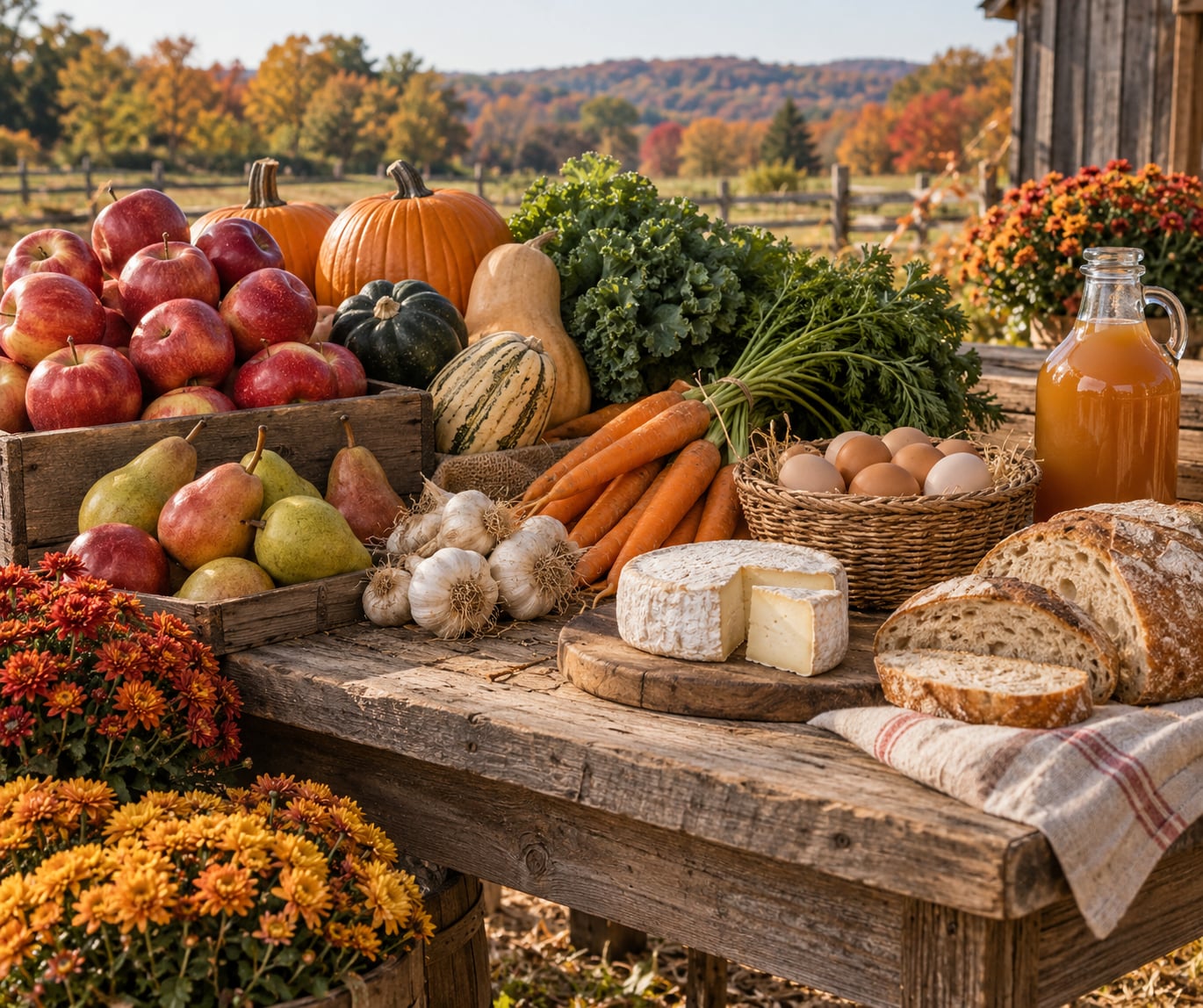
Fall is the best market season, and it lasts roughly from late September through November. When you’re figuring out what to buy at a farmers market in fall, start with crisp apples and pears, then winter squash and pumpkins, hardy greens and root vegetables, fresh herbs and curing garlic, eggs and cheese, bread and cider. Add meat, fish, preserves, late corn and dried beans if your market offers them, and you have a full season of cooking in one Saturday morning.
Timing matters more than anything else at a market. Items picked and sold within days of harvest simply taste different from produce that has been in cold storage for a month, and the fall window for each crop is narrow.
Table of Contents
- What to Buy at a Farmers Market in Fall at a Glance
- 1. Crisp Apples and Pears for Eating, Baking, and Storage
- How to pick apples and pears at a stall
- 2. Pumpkins, Squash, and Gourds for Savory and Sweet Dishes
- 3. Fresh Fall Greens and Root Vegetables
- 4. Herbs, Garlic, and Onions for Building Autumn Meals
- 5. Local Cheese, Eggs, and Dairy for a Complete Market Basket
- 6. Fresh Bread, Baked Goods, and Seasonal Treats
- 7. Meat, Poultry, and Sausages for Fall Cooking
- 8. Fish and Seafood When the Vendor Offers It
- 9. Cider, Juice, Preserves, and Other Pantry Goods
- 10. Flowers, Corn, Beans, and Other Seasonal Market Finds
- Frequently Asked Questions
- What is the best thing to buy at a farmers market in fall?
- How do I know if fall produce is fresh?
- What fall vegetables last the longest after I buy them?
- Can I buy meat, fish, and eggs at a farmers market?
- How should I store farmers market food after shopping?
- Are farmers markets open in fall?
- What to Buy First on Your Next Fall Market Trip
What to Buy at a Farmers Market in Fall at a Glance
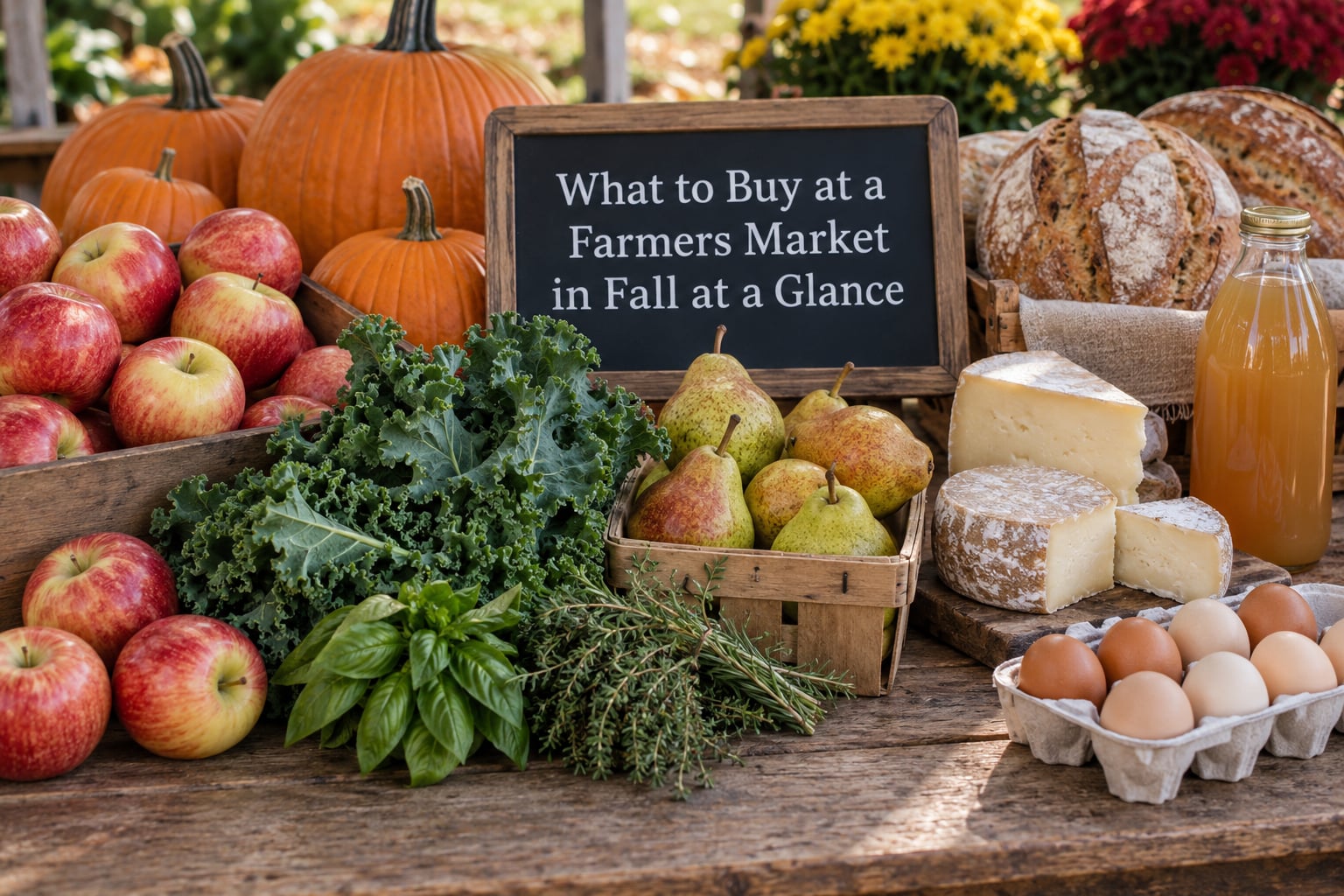
This is the short version of what to buy at a farmers market in fall, with the peak window and the stall-side test for each item.
| Fall market find | Peak window | Flavor and typical use | How to pick it |
|---|---|---|---|
| Apples and pears | September to November | Snacking, sauce, pie, baking, long storage | Heavy for its size, firm skin, no bruises at the stem |
| Winter squash | October to December | Roasting, soup, puree, risotto | Hard stem, matte dense rind, heavy |
| Pumpkins | September to October | Pie, soup, carving, seeds | Solid woody stem, deep color |
| Kale and collards | October onward | Soups, braises, salads, pesto | Deep color, crisp leaves, perky stems |
| Brussels sprouts | October to December | Roasted, shaved raw, slaw | Tight firm heads, no yellowing |
| Carrots, beets, turnips | September to November | Roasting, soups, salads, pickling | Firm shoulders, greens fresh if attached |
| Sweet potatoes | September to December | Roasting, fries, casseroles | Firm skin, no soft spots or cracks |
| Sage, garlic, onions | September to November | Soups, roasts, sauces, braises | Fragrant leaves, hard papery garlic skins |
| Eggs and cheese | All fall, weather permitting | Baking, breakfast, charcuterie, gifting | Cool and dry, clean shells, ask for the age |
| Cider, honey, preserves | All fall | Drinking, gifting, pantry shelves | Short ingredient lists, sealed jars |
Ten items form the core of a fall market basket, and each one is expanded below:
- Apples and pears for snacking, sauce and baking
- Winter squash and pumpkins for roasting, soup and pie
- Kale, collards and other hardy greens
- Brussels sprouts, cabbage and cauliflower
- Carrots, beets, turnips and potatoes
- Sweet potatoes
- Sage, rosemary, garlic and onions
- Farm eggs and artisan cheese
- Fresh bread, cider and baked goods
- Honey, preserves and dried beans
1. Crisp Apples and Pears for Eating, Baking, and Storage
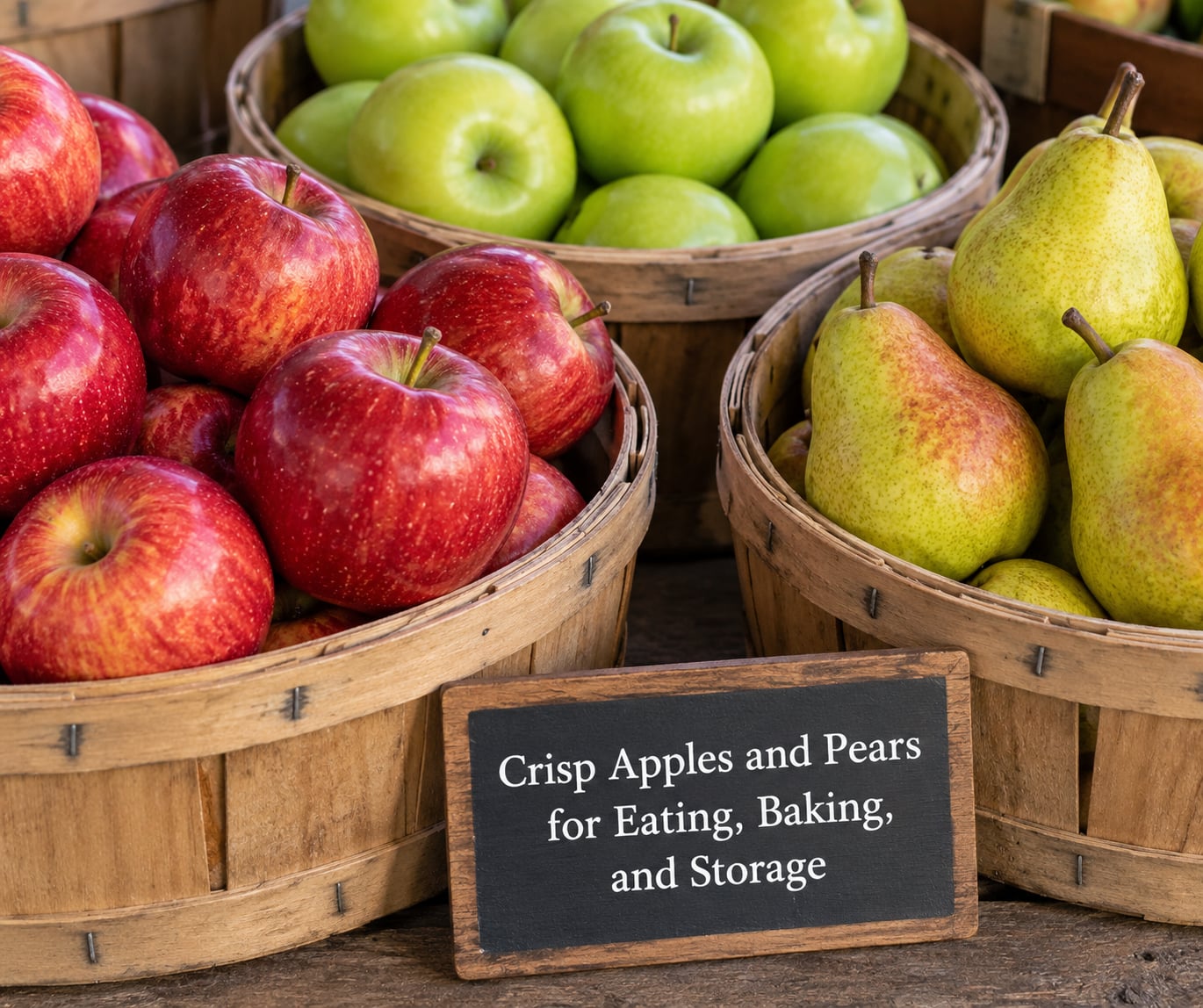
Apples and pears are the reason many people wait for September. Honeycrisp, Gala and Fuji come in for eating, and Granny Smith plus Pippin-type varieties hold their shape in a pie. Ask the vendor which variety came out of which field, because tartness and sweetness change the week after a cool night.
How to pick apples and pears at a stall
Skip anything soft at the shoulders or bruised near the stem. Apples should feel heavy for their size and smell of apples at the blossom end rather than the crown. Pears are usually picked firm and ripen off the tree, so bring them home and set them on the counter until the neck gives slightly under your thumb.
Bosc and Comice ripen to a buttery texture that works in a galette, while firm Anjou and Bartlett hold up in salads and crisps. That difference is what to buy at a farmers market in fall rather than grabbing one bag for every job.
For storage, refrigerate apples and pears in the crisper drawer, not on the counter. Apples give off ethylene gas that speeds up softening in leafy greens, so keep them in a separate drawer or a closed bag if you are storing kale or Brussels sprouts alongside. Most varieties hold three to eight weeks cold; russet-type and late-keeping varieties stretch further.
2. Pumpkins, Squash, and Gourds for Savory and Sweet Dishes
Shopping squash at a market means choosing between three groups: sugar and cooking pumpkins for the table, pie pumpkins for baking, and the big carving pumpkins that exist to sit on a porch. A vendor will happily point out which patch each came from.
Sugar pie pumpkins are small, dense and sweet enough for a pie with nothing more than brown sugar and a little spice. Butternut squash creams into soup and risotto, acorn is a weeknight roasted vegetable, and delicata and spaghetti squash have edible skin and cook whole in under half an hour. Kabocha is the one to try if you make Japanese-style curries or tempura.
Look for a hard, woody stem on every pumpkin and squash. If the stem is soft, it sat on the ground and probably went through a rough patch before you bought it. Size is a flavor cue too: the bigger the squash, the more watery it tends to be, so reach for the medium and small ones when you plan to soup it.
Winter squash wants two weeks of curing in a warm, dry room before storage. That thickens the skin and sweetens the flesh. Once cured, keep it somewhere around 50 to 55F, not in the refrigerator, and check monthly for soft spots. You can also freeze cooked squash in single portions, which takes it off the risk list entirely.
3. Fresh Fall Greens and Root Vegetables
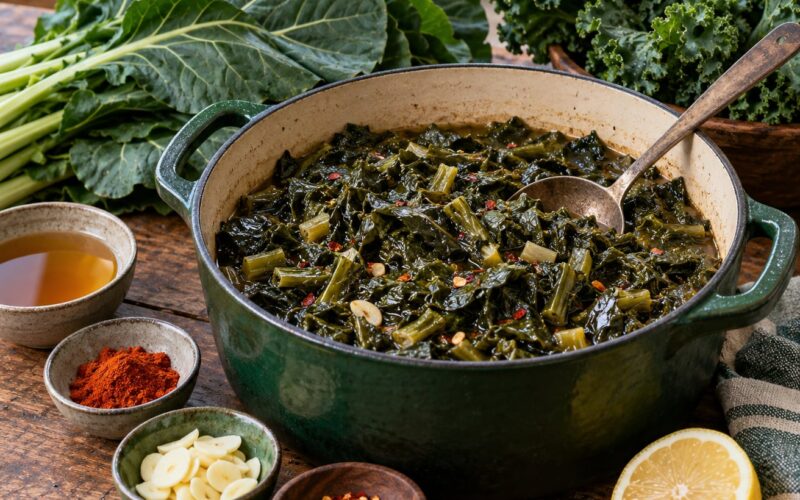
Cold weather changes what the farmers plant, and by October the tender lettuce and peas of summer are replaced by kale, collard greens, chard, cabbage, Brussels sprouts, leeks and spinach. A light frost actually sweetens brassicas, so the greens get better as the season goes on.
Inspect leaves before you buy: kale should be dark and perky rather than yellowed at the edges, and a bunch of carrots or beets with tops still attached tells you it came out of the ground recently. Those greens are edible, and they are the easiest sign at a stall that the produce is fresh.
Sturdy greens keep longer than delicate herbs. Remove the leaves from their stems, store them in a bag or a container lined with a towel, and they will last a week or more instead of three days. Root vegetables like carrots, beets, turnips, rutabaga and parsnips are the opposite: leave them unwashed in the crisper and they will hold for weeks.
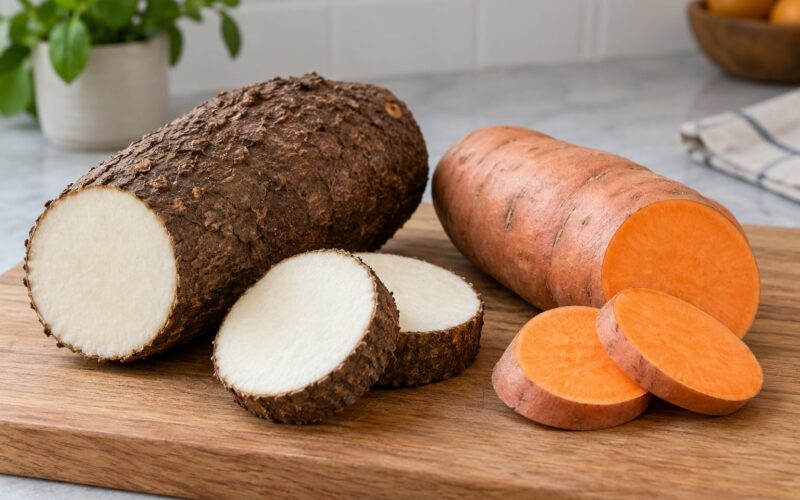
Potatoes want to be kept cool and dark, away from light, which turns them green. Sweet potatoes do best in a warm, dry place and are commonly stored at room temperature rather than refrigerated, because chilling turns the starch to sugar and dulls the texture. Leftovers from an overbuy become roasted roots, a quick pickle, or a soup you freeze in portions.
4. Herbs, Garlic, and Onions for Building Autumn Meals
Sage is the defining fall herb, and it is one of the few herbs that actually improves as the season cools. It pairs with squash, pork and beans, and it dries well enough to last into winter. Thyme, rosemary and chives also show up late in the season, while parsley and cilantro are still around but start slowing down with the first real cold snap.
Buy herbs with a story attached if the vendor offers one. Sage clipped early in the season tastes softer than sage clipped after frost, and a grower who tells you which bed it came from usually has a recipe idea worth taking.
Garlic is the item most worth buying in bulk. Fresh garlic needs curing: lay the bulbs in a single layer somewhere dry and airy for two to three weeks until the papery skins rustle. Cured garlic keeps for months in a cool kitchen, and a braid hung on a door handle is as good a storage method as any. Onions and shallots need the same treatment before they belong in the pantry.
A useful rule for autumn meals: if it roasts, it wants sage, rosemary and garlic. If it simmers, it wants thyme, bay and peppercorns. Keep a few bundles of each and the whole season of soups, roasts and braises takes care of itself.
5. Local Cheese, Eggs, and Dairy for a Complete Market Basket
A farmers market is one of the few places to buy cheese that was made days or weeks ago instead of months, which changes everything about how it tastes. Soft fresh cheeses have a short life and are best eaten within days. Aged hard cheeses keep for weeks, and a wedge bought at a stall makes an easy gift.
Ask the cheesemaker about the milk, the aging and the variety. If you plan to cook with it rather than serve it, buy something you know: a firm cheddar for gratins, a melting cheese for sandwiches. Raw-milk wheels are a real category here too, just be aware that raw-milk cheese is not allowed to be aged under 60 days.
On eggs, the differences are real and worth asking about. Pasture-raised hens lay eggs with orange yolks, and farm eggs are frequently unwashed, which means they have not been refrigerated and keep well on a counter for a few days. Buy them fresh if you plan to bake within the week, and refrigerate everything the day you get home.
Food safety during travel is the part people skip. A cooler bag with ice packs is not fussiness for market cheese, raw meat or eggs in warm weather. Keep cold food under 40F, and follow the two-hour rule for unrefrigerated items, or one hour if it is above 90F outside.
6. Fresh Bread, Baked Goods, and Seasonal Treats
Market bakeries run in September and October, and their window is short. Loaves, rolls, scones and muffins can be at their best for a day or two, so plan your shop around the bread rather than the bread around your shop.
Loaf freshness reads straightforwardly. Look at the crust for color and a good crack, press the bottom for softness, and smell it: good bread should smell of toasted wheat before you even taste it. A dense sourdough or rye travels better than a soft dinner roll, which is the practical choice if your drive home is more than an hour.
The fall-specific treats are the reason to go late in the day. Cider donuts, apple dumplings, cider oatmeal cookies and pumpkin whoopie pies come out in the afternoon and rarely last. Ask whether they were baked today if the vendor is present, and buy the last two rather than the first dozen, which are frequently yesterday’s.
Crusty bread freezes well: slice it, let the slices cool completely, then bag it. Fruit-based baked goods like apple or pear cake freeze a little less faithfully, because the fruit releases water, but they are fine covered for a week in the fridge.
7. Meat, Poultry, and Sausages for Fall Cooking
Meat is one of the two things worth paying more for at a market, and the reason is freshness plus knowing how the animal was raised. Two questions do most of the work: how were the animals raised, and what do you recommend for this cut. Growers answer both without hesitation when they have something to be proud of.
Judge quality by color and smell, not by appearance alone. Beef should be bright red with a clear, even fat cap, poultry skin should be pale and slightly translucent, and any package should feel cold to the touch with no condensation. Ground meat should be evenly pink with no gray patches or sour odor.
Fall cooking favors the cuts that reward low, slow heat: chuck for braised short ribs, brisket for a slow smoke, bone-in thighs for roasting, and pork shoulder for a Sunday that feeds a crowd. Fresh sausages are worth buying in bulk and freezing, because vendor-made links rarely show up in a grocery store case.
Get meat into the refrigerator within two hours of purchase, or one hour if you are driving in hot weather. Cook ground meat to 160F, poultry to 165F, and whole cuts of beef, pork, lamb and veal to 145F with a three-minute rest. Those numbers come from USDA guidance and do not change with opinion.
8. Fish and Seafood When the Vendor Offers It
Not every market has a fish vendor, and the ones that do are the most valuable stop of the day. Fall is good for it: cooler water means the catch is fresher and the boat can be out in workable weather more often.
Ask three questions before you buy. Was it caught locally, what day did it come in, and is this chilled or previously frozen? A vendor who answers all three without hesitating is telling you something. Fish that has been properly handled looks glossy and firm, and it smells like clean ocean air rather than fish at all, which surprises people the first time.
Whole fish is the easiest thing to evaluate, since you can see the eyes, the gills and the firmness of the flesh. For fillets, look for a natural translucence and loose flakes that separate along the grain. Frozen seafood is often the better choice for quality; it is typically flash-frozen at sea and thawed at home.
Fall preparations suit sturdy fish: smoked mackerel, roasted salmon, chowder, and a pan of mussels or oysters with sage and garlic in the pan juices. Cook fish to 145F, keep it on ice during the trip home, and put it in the coldest part of the refrigerator right away.
9. Cider, Juice, Preserves, and Other Pantry Goods
Fall is the cider season, and pressing usually happens in October, so fresh cider shows up right when the leaves start turning. Ask whether it is pasteurized. Unpasteurized cider is sweet, cloudy and full of sediment, and it needs refrigeration; pasteurized cider keeps on a shelf for months and is the one to give away as a gift.
Jars are the other pillar. Look for short ingredient lists: fruit and sugar for jam, fruit and cider vinegar for pickles, apple butter that is mostly apples. Small-batch preserves are usually softer and more aromatic than commercial ones, and the fruit can still be soft rather than set firm, which is normal for a farmhouse batch.
Other pantry goods that follow the same rule: hot sauce, salsa, dried beans, cracked corn, sassafras and spice blends. If you cannot tell what it is, ask. Vendors enjoy explaining their product, and a single question is usually enough to fill a shelf.
10. Flowers, Corn, Beans, and Other Seasonal Market Finds
Flowers are the item people skip and then regret skipping. Chrysanthemums are the market’s signature fall bloom, and dried corn stalks, straw bundles and bundles of dried grasses will carry a porch well into winter. Most flowers travel well for a day or two with the stems trimmed and the bottom of the vase in warm water.
Sweet corn extends into early fall, though it is at its peak in late summer and drops off fast once the nights cool. If a stall still has it in September, buy a few and grill or boil them the same day. Dried beans are the opposite: they come from the summer harvest and are available all fall into winter, and buying them saves you from paying store prices for a crop someone grew two hours from your kitchen.
Frequently Asked Questions
What is the best thing to buy at a farmers market in fall?
Apples are usually the best value: there are more varieties than any other crop, the season lasts from September into winter, and they store well and eat well out of hand. If you want something that will not go to waste, winter squash is the runner-up, since it keeps for weeks and turns into soup, roasting and pie.
How do I know if fall produce is fresh?
Use touch, smell and leaves. Produce should feel heavy for its size, firm, and free of soft spots. Greens should look bright with stems that snap rather than bend. Root vegetables sold with their tops still attached are usually the freshest, since the tops prove they were pulled recently. If a vendor offers samples, taste before you commit.
What fall vegetables last the longest after I buy them?
Winter squash and onions lead the list. Cured squash, properly cured onions, garlic and dry potatoes keep for a month or more in a cool, dry, well-ventilated spot. Sweet potatoes and carrots also hold for weeks in the refrigerator crisper. Leafy greens and summer produce are the opposite: buy those small and eat them first.
Can I buy meat, fish, and eggs at a farmers market?
Yes, at many markets, though not all. Look for meat and poultry kept refrigerated on ice and egg vendors who can tell you how the flock is raised. Ask about harvest or catch dates for fish. Keep everything cold in an insulated bag during the trip home and refrigerate it within two hours, or one hour if it is above 90F outside.
How should I store farmers market food after shopping?
Sort on the counter before you put anything away. Refrigerate fruit that is ripe and keep hardy items cold: greens, herbs, root vegetables and dairy all go in the crisper or lowest shelf. Keep apples and pears separate from greens because of the ethylene they release. Curing garlic, onions and squash takes two weeks in a dry, airy room before pantry storage.
Are farmers markets open in fall?
Most indoor and year-round public markets keep going through fall, while outdoor markets usually run from late spring until the first hard freeze. October is the reliable month in most of the northern hemisphere. After that, hours shorten and vendors scale back, so check your market schedule before driving out in November.
What to Buy First on Your Next Fall Market Trip
Write your list around squash, apples and one bunch of hardy greens, then fill the rest of the basket at the stall. Go early for the limited items, go late for the baked goods, and ask the grower what to cook before you leave the table.