If you want to know how to shell field peas quickly, the answer is short: roll each closed pod between both palms with firm pressure until the seam splits, then pop the seeds out. That takes roughly two seconds a pod. When you are holding several pounds, a short blanch and a shake in a colander handles the whole batch at once.
Field peas are the same plants sold as cowpeas, crowder peas, brown peas, or black-eyed peas, and their pods are tougher than the ones on sweet garden peas. That toughness is why the usual tip of squeezing until the pod pops open leaves people with sore thumbs and half-crushed peas.
Freshness decides how you shell. Pods picked that morning have soft seams that give easily, while mature purple hull and brown crowder pods need heat or pressure before they will cooperate. Pick your method from the pile in front of you rather than the one you read about last.
Table of Contents
- What You Need
- Step-by-Step: How to Shell Field Peas Quickly
- Method 1: Hand-Shell Fresh Field Peas
- Method 2: Use a Rolling Pin to Release the Peas
- Method 3: Blanch and Shake the Pods
- Common Mistakes
- Tips for Shelling Faster in Larger Batches
- Frequently Asked Questions
- Do field peas need to be cooked before shelling?
- How do you shell field peas without breaking them?
- Can you shell frozen field peas?
- How long should you blanch field pea pods?
- Should the skin come off the individual field peas?
- Which shelling method is fastest for a large batch?
- Conclusion
What You Need
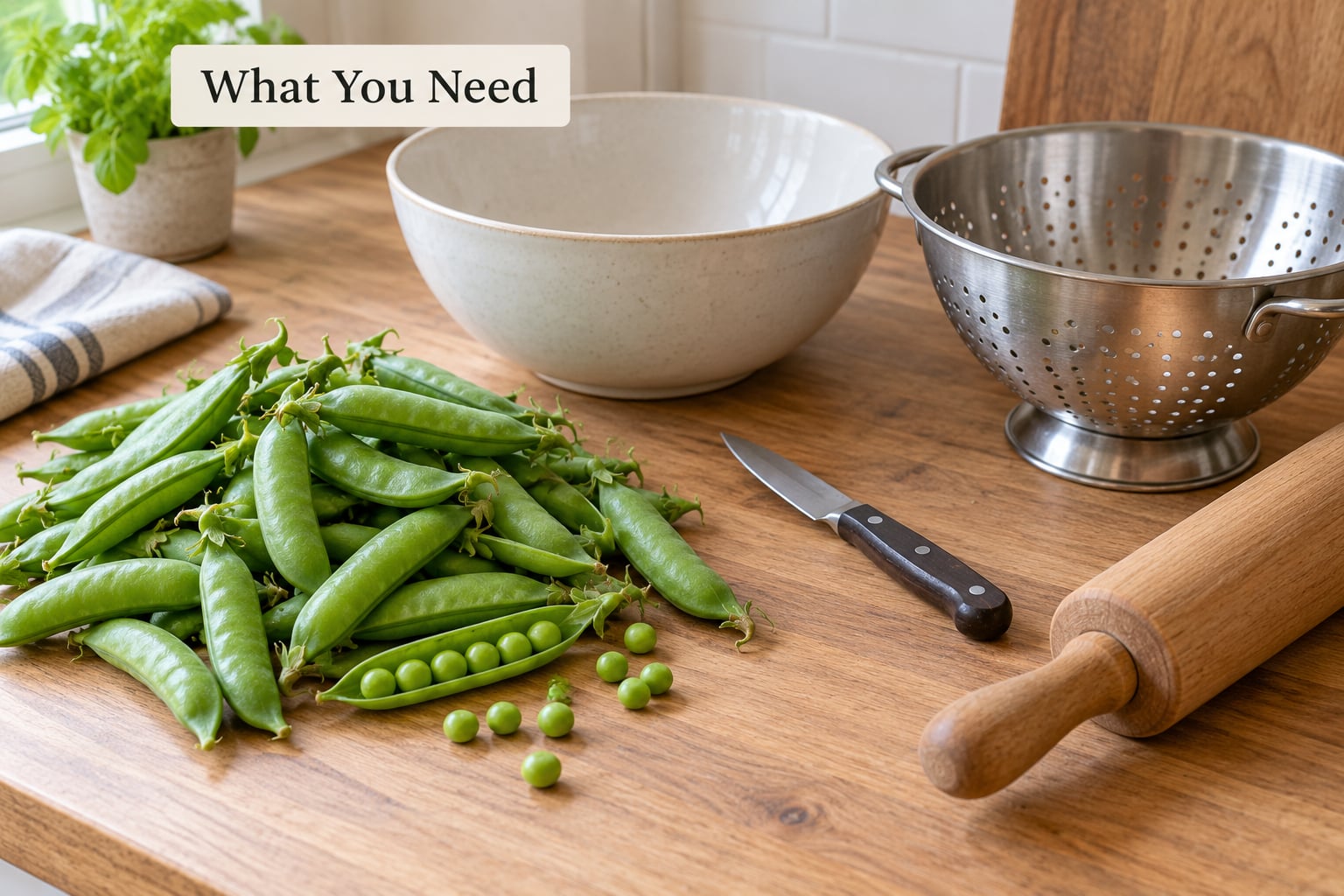
Very little. Field peas are not fussy, and none of the three methods below needs a special machine.
- Field pea pods — fresh ones still in the pod for all three methods, or a bag of loose shelled peas if you did not get to them in time.
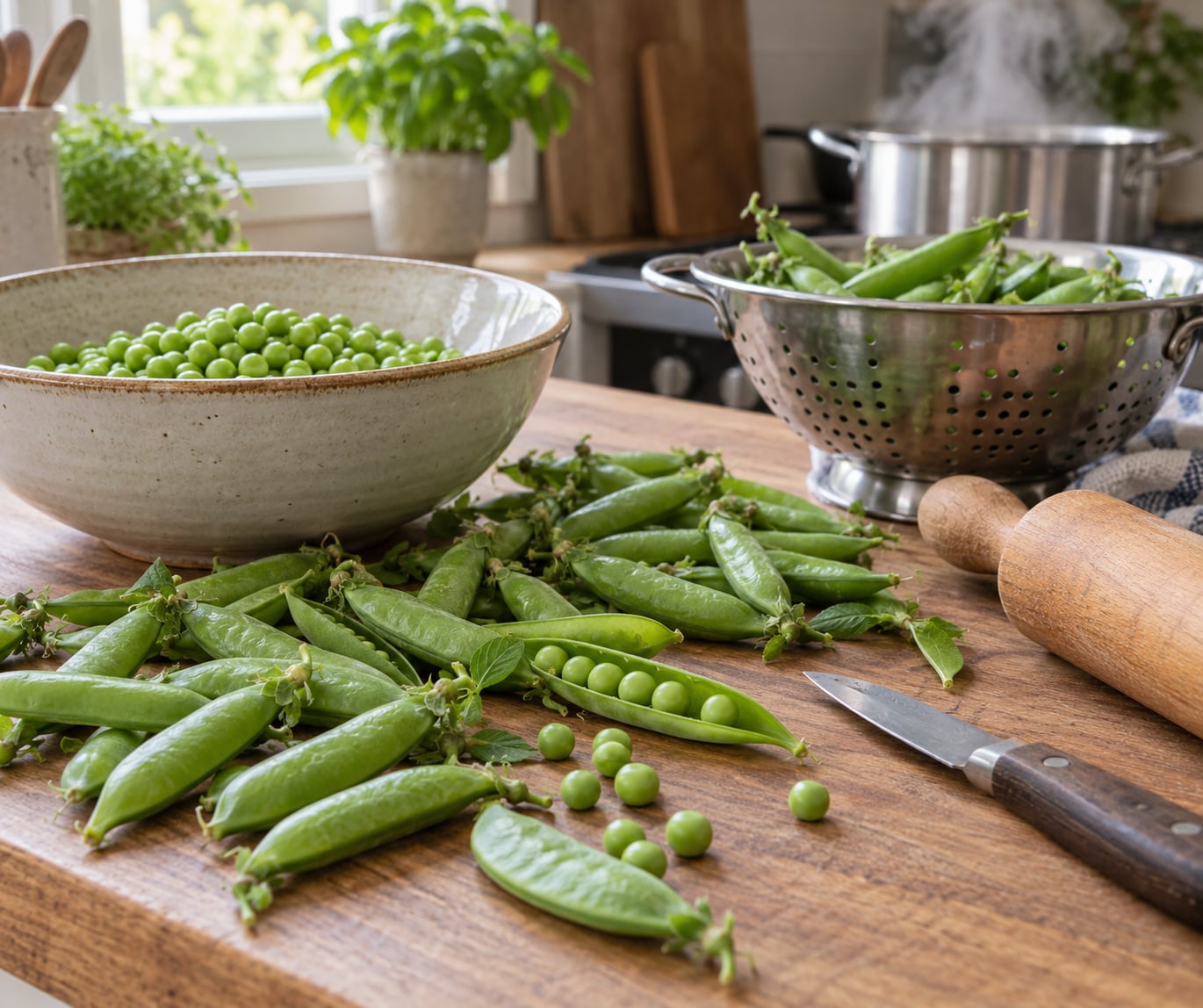
- A wide bowl to shell over, so nothing scatters across the counter.
- A colander for draining blanched pods and rinsing peas.
- A sharp paring knife for stubborn pods that refuse to split, mainly on older purple hull peas.
- A rolling pin for the palm-rolling method, or simply use bare hands, which work about the same.
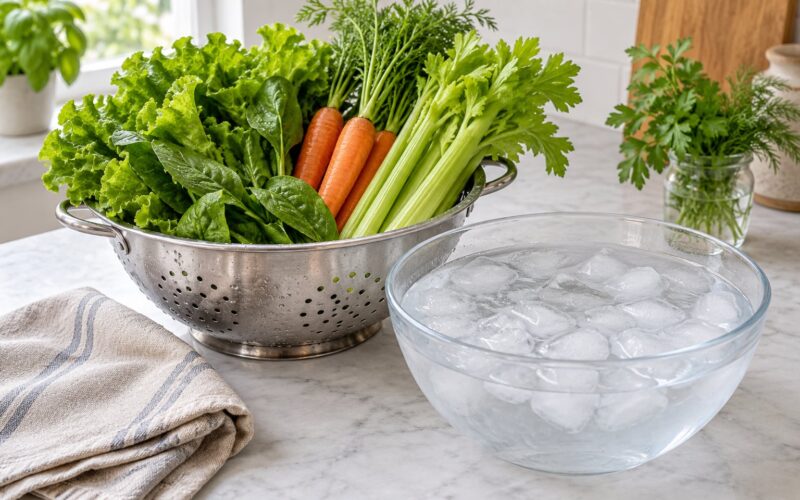
- A pot and a bowl of ice water if you plan to blanch, either to open pods or to freeze the peas afterwards.
A towel is worth having too. Young field peas are sticky, and wiping your hands between handfuls keeps the pods from tearing rather than opening.
Step-by-Step: How to Shell Field Peas Quickly
The fastest hands-on method, in four steps, is this:
- Lay a dry pod flat across both palms, seam down.
- Roll it back and forth under firm, even pressure for about two seconds.
- The seam splits and the peas loosen; open the pod with your thumbs.
- Tip the peas into a bowl and move to the next pod.
Why rolling works: friction and warmth from your hands dry the pod wall and make it flex. Once the seam loses its tight seal, the peas inside pop loose. Squeezing the pod lengthwise does something different — it presses on the seeds and bruises them, which is where the cracked, mushy peas come from.
Method 1: Hand-Shell Fresh Field Peas
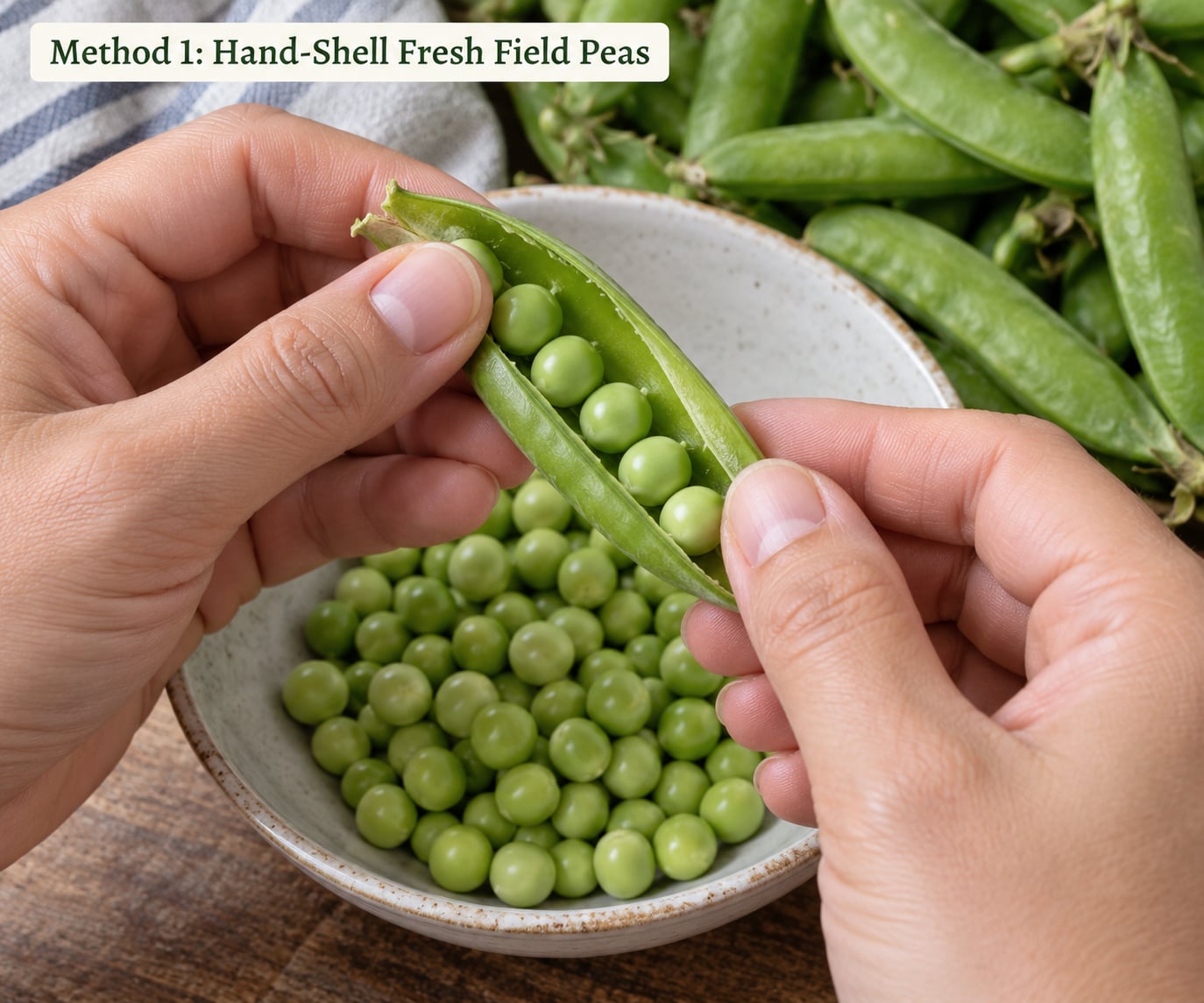
Hand-shelling is the fastest method for tender, freshly picked pods, and it is gentler than anything mechanical. Split the pod along its natural seam with your thumbs, then run one thumb down the inside of the pod to lift the peas free in a line. Most pods open in one pull.
Work over a bowl and keep your grip on the stem end rather than the middle, where the seeds sit. You will lose a few peas to the bowl rim; that is the trade for keeping the rest perfectly round. On a small basket of fresh pods — under a pound — expect a few minutes of work. On a market box, expect a seat and a podcast.
How to tell the pods are fresh enough for this: the pod should be matte green, plump, and snap rather than bend when you twist it. Inside, the seeds are bright green and firm. If the pod is leathery and the seeds have started to pale, go to Method 3.
Method 2: Use a Rolling Pin to Release the Peas
A rolling pin is the upgrade when you have a bowl of pods in front of you and want to move faster without hurting the peas. Put the pod seam-side down on the counter, lay the rolling pin across the middle, and roll it once or twice from the stem to the tip.
Pressure should be firm, not heavy. You are pushing the seeds out of their tight grip on the pod wall, not flattening them. If the pin bites into a seed, you have gone too far, and you will find a bruised spot in the finished dish.
Rolling the same direction each time matters more than it sounds. Back and forth works, but single-direction strokes keep the seeds sliding toward the tip instead of tumbling. After a roll, open the pod with your thumbs and the peas should lift out with almost no scraping.
For a lot of pods, dry them first. Spread them on a towel for an hour in a warm room and the pod wall loses a little moisture, which is exactly what your palms were trying to create. Drier pods roll faster and split more cleanly.
Method 3: Blanch and Shake the Pods
Blanching is the fastest route for a large batch, and it is the only reliable answer to pods that will not open. Bring a pot of water to a rolling boil. Drop in a single layer of whole pods and blanch for 60 to 90 seconds, no more. You are softening the pod wall while keeping the seeds firm.
Drain immediately in a colander and spread the pods out. Let them sit a minute so you do not burn your hands, then shake the colander over a bowl or tap the underside against a hard surface. Most of the peas fall out in a rush. Anything still clinging gets a paring knife or a second shake.
Longer blanching loosens the seeds beautifully and ruins them, so keep your eye on the clock. One minute leaves a slight bite in the center, two minutes and the seeds start to split and turn cloudy. That is the point where you cross from shelling into cooking.
If you want the same protection for hand-shelled peas before freezing, use the same pot later: blanch the shelled peas for 1 to 2 minutes, drop them into ice water, drain, and bag them.
Common Mistakes
Crushed peas. You squeezed the pod instead of rolling it. Rolling works along the pod; squeezing works across the seeds.
Stringy fibers left in the bowl. You split the pod raggedly or the peas were over-mature. Run the shelled peas through a colander under cold water and the loose hull fragments and fibers rinse straight through the holes.
Rolling too hard. Bruised seeds turn cloudy and cook into mush. Ease off the pressure and accept a second roll instead of one crushing roll.
Overblanching. Two minutes plus is cooking, not opening. Pull the pods at 90 seconds and test one.
Skipping the cool-down. Peas that go from hot water straight into a freezer bag turn soft and grainy. The ice bath is what keeps them bright.
Tips for Shelling Faster in Larger Batches
Never let picked pods sit wet. Spread them in a single layer rather than piling them in a bag. Surface moisture makes pods tear, and the tear is what ruins the seed.
Match the method to the pod. Young green pods for Sunday dinner hand-shell in minutes. Dry purple hull and brown crowder pods belong in the blanching pot.
Set up an assembly line. Piles of unshelled pods on one side, a bowl in the middle, a container for spent pods on the other. Assembly-line shelling is boring work done fast, and most of the speed gain people notice comes from removing the decisions, not from moving faster.
Switch hands halfway. Sore thumbs come from one hand doing all the pinching. Switching hands every few minutes is the cheapest fix there is.
Cook or freeze the same hour. Fresh field peas start turning their sugars to starch soon after picking, and that is when the sweetness drops off. A short delay is fine; an afternoon in the bowl is not.
Do not throw the pods away. Rinse them, dry them, and they make good garden mulch or go straight into a compost pile. Cookers with a big stock pot sometimes simmer a handful of cleaned pods to make a light vegetable base for soups and rice.
For shelled peas waiting to be used, refrigerate them in a covered container and cook within two or three days. For longer storage, blanch, chill, and freeze flat in bags so they freeze quickly and stay separate.
Frequently Asked Questions
Do field peas need to be cooked before shelling?
No, and shelling them first is the better order. Fresh field peas come out of the pod uncooked and go straight into a pot of salted water, where they cook in about 15 to 45 minutes depending on size and maturity. The only time peas are blanched first is when you plan to freeze them or want the thin skin to slip off each seed.
How do you shell field peas without breaking them?
Roll rather than squeeze. Lay the pod seam down across both palms and press firmly for a second or two, moving in one direction from stem to tip, then open it with your thumbs. Rolling loosens the seeds without pressing on them, so they slide out round instead of cracking. Older purple hull pods need the blanch-and-shake route instead.
Can you shell frozen field peas?
There is nothing to shell. Frozen peas are already loose, so the only job is thawing, and you can skip that by dropping them into a hot dish straight from the bag. Frozen peas thaw faster and hold their texture better if you spread them on a towel rather than microwaving them, and they cook in a few minutes once thawed.
How long should you blanch field pea pods?
Sixty to ninety seconds in water at a full boil, working in a single layer. The goal is to soften the pod wall while the seeds stay firm, so the peas pop out when you shake the colander. Anything past two minutes starts cooking the seeds, which split and go cloudy. Drain straight away and shake while the pods are still hot.
Should the skin come off the individual field peas?
Usually not. The thin skin on each seed is what holds its color and shape, and it comes off easily in the pot anyway. Remove it only when you want a smoother texture, such as for hummus or a blended soup, by blanching the shelled peas for 1 to 2 minutes, chilling them in ice water, and pinching or rubbing the skins loose.
Which shelling method is fastest for a large batch?
Blanch and shake. Whole pods go into boiling water for 60 to 90 seconds, drain into a colander, and the peas fall out when you shake it over a bowl, which handles several pounds in one round. Hand-shelling wins on tenderness for a small amount of fresh peas, and rolling wins for moderate batches where you want no heat involved.
Conclusion
Start by rolling the pod between your palms if the peas are fresh and the pods are still soft, then open it with your thumbs. Switch to a rolling pin when the basket gets big enough that two seconds a pod adds up. When the pods are dry, leathery, or stubbornly closed, blanch them 60 to 90 seconds and shake the colander. Whichever route you take, get the peas into the pot or the freezer the same hour and hold onto those pods for the compost pile.