Cooking collard greens from scratch means one thing: chopped fresh collards simmered low and slow in seasoned broth until they go silky and dark. Below is how to cook collard greens from scratch the Southern way, which is about 15 minutes of washing and chopping followed by 45 minutes to 3 hours of simmering you mostly walk away from. One pot, no special equipment, and a spoon of apple cider vinegar at the end.
The whole dish hangs on three things: getting the grit out, cutting the leaves small enough to soften, and keeping the heat low enough that nothing scorches. Get those right and the rest is seasoning you can taste and adjust.
The short version:
- Wash the bunches in cool water, changing the water until it runs clear.
- Pull the leaves off the stalks, roll them up, and slice into quarter-inch ribbons.
- Render bacon or a smoked meat, soften the onion and garlic, then add broth and seasonings.
- Pack in the greens, add liquid to come an inch up the sides, and bring to a boil.
- Cover, turn the heat to the barest simmer, and cook 45 to 90 minutes until the leaves fold under a spoon.
- Taste the pot likker, finish with salt and apple cider vinegar, and drain.
Table of Contents
- What You Need
- Greens
- Meat and fat
- Aromatics, liquid and seasoning
- Equipment
- Step-by-Step: How to Cook Collard Greens from Scratch
- Step 1: Choose and Wash the Collard Greens
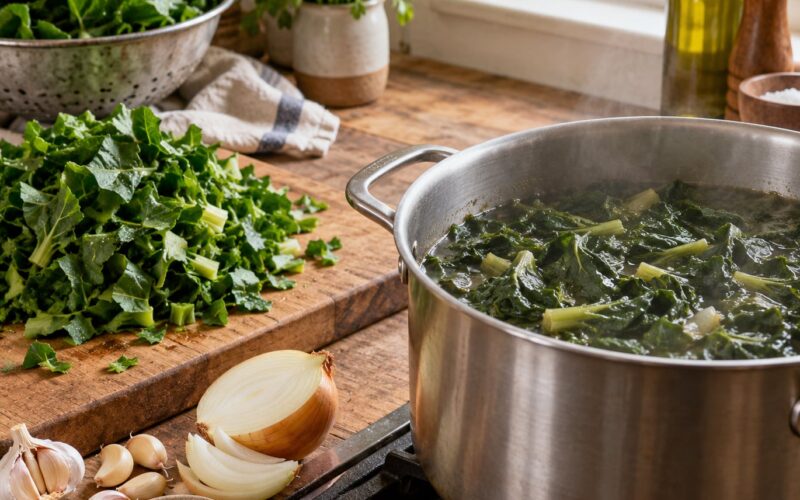
- Step 2: Remove the Stems and Cut the Leaves
- Step 3: Season the Greens and Choose Your Cooking Method
- Step 4: Braise the Collard Greens Until Tender
- Step 5: Season, Drain, and Serve
- Common Mistakes
- Frequently Asked Questions
- Do I need to remove all the stems from collard greens?
- Can I cook collard greens without pork fat or pepper?
- How long does it take to cook collard greens on the stove?
- Why are my collard greens bitter after cooking?
- Can I freeze cooked collard greens?
- Should I wash collard greens before or after chopping them?
What You Need
Here is the ingredient list for a pot that feeds about four as a side dish. Scale everything except the pot up or down together.
Greens
One bunch of fresh collards, roughly 8 to 12 leaves. A market bunch that feels heavy for its size will give you about 3/4 to 1 pound of trimmed greens once the ribs are gone, and that cooks down to roughly a cup and a half. Buy a second bunch if six people are eating, because these greens shrink more than you expect.
Meat and fat
The classic flavor comes from a smoked meat cooked down in the pot: a ham hock, a smoked turkey wing or drumstick, or a piece of bacon or a strip of country pork ribs. Readers who leave comments on the big Southern recipe sites swap the meat constantly and still get good results, so treat it as a starting point rather than a rule.
For the fat, bacon grease is what most cooks reach for, and rendered fat from the meat usually makes it unnecessary. If you are cooking without meat, use olive oil or butter, and add a spoonful of liquid smoke or a pinch of smoked salt to stand in for the smoke.
Aromatics, liquid and seasoning
- One small onion, diced
- 3 to 4 garlic cloves, smashed
- Red pepper flakes, or one small hot pepper sliced thin
- Chicken bouillon cubes or 4 cups of chicken broth
- Water, about 2 cups, to cover
- Salt and black pepper, plus 1 to 2 tablespoons apple cider vinegar at the end
Worcestershire sauce, smoked paprika, a pinch of sugar, or a spoonful of hot sauce all work as adjustments once the pot is done.
Equipment
A heavy-bottomed pot or a Dutch oven is worth having, because it holds heat evenly and forgives you when the liquid drops low. Kitchen shears or a paring knife for the ribs, a big bowl for washing, and a colander you can press with your hands. That is the whole list.
Step-by-Step: How to Cook Collard Greens from Scratch
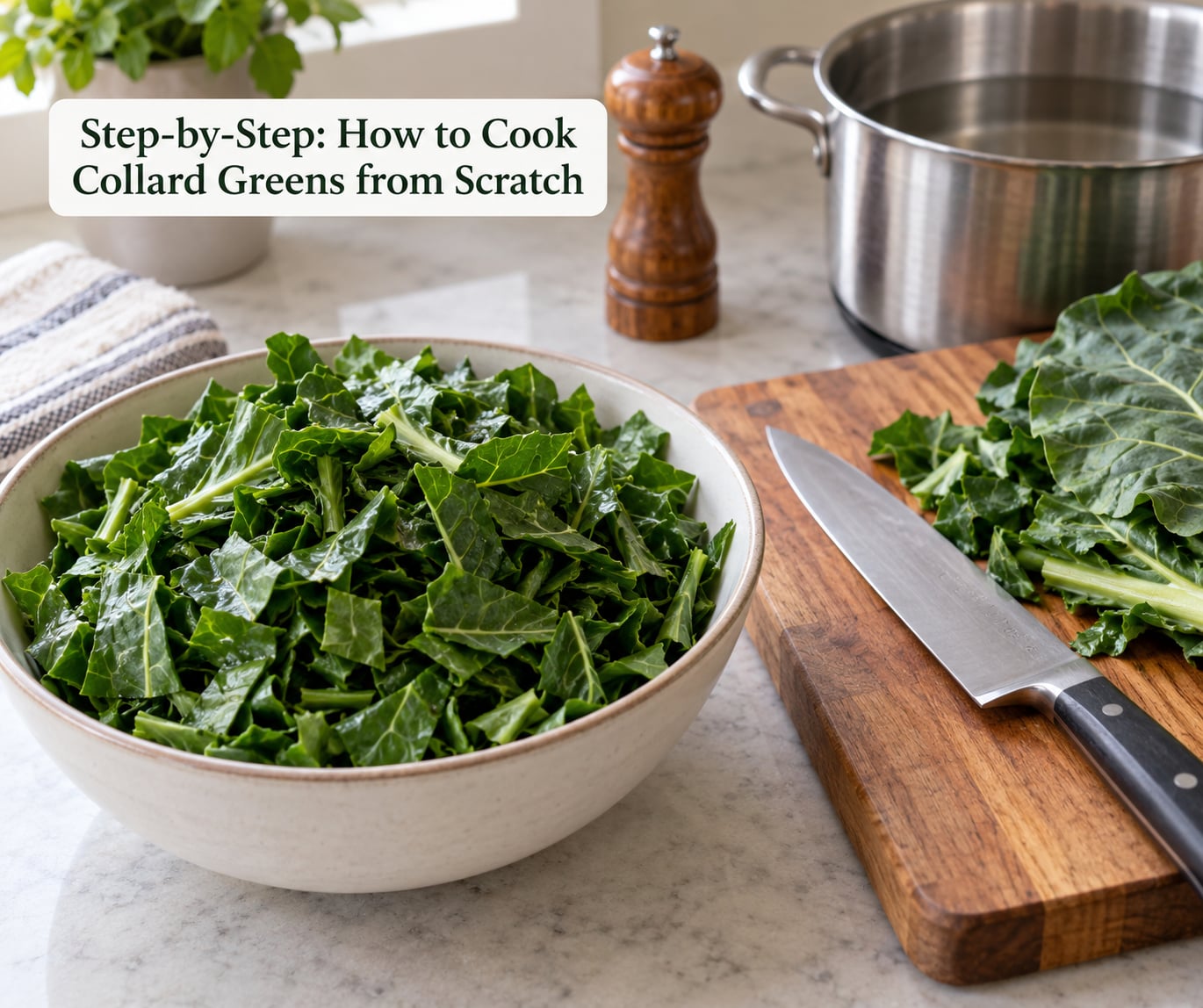
Step 1: Choose and Wash the Collard Greens
Pick bunches with leaves that are dark green, crisp, and heavy. Skip anything with yellowing edges, brown spots, or slimy patches, and ignore a few outer leaves that look tired, since the inner ones are usually fine.
Pull the leaves off the stalks, drop them into a sink or bowl of cool water, and swish them around. Grit hides in the rib where the leaf meets the stem, so run your fingers down that crease. Lift the leaves out, dump the water, refill, and repeat until the water stays clear. Grit is the most common rookie complaint on reader comments, and it always traces back to a rushed second rinse.
A ten-minute soak with a tablespoon of salt and a splash of vinegar or a cap of white vinegar in the water helps pull debris out of the leaves. Do not soak for an hour, though. Greens that sit in water lose flavor and start to turn dull, and baking soda is not a cleaning agent here, though a teaspoon of it in the cooking liquid will soften bitterness.
Spin or pat the leaves dry. Waterlogged greens steam instead of braising, which is how you end up with a watery pot.
Step 2: Remove the Stems and Cut the Leaves
Hold a leaf flat on the board and fold it in half, then pull the leaf away from the rib. The rib usually tears right out. For thick ribs, lay the leaf stem-side down, cut a shallow V along both sides of the rib, and slice the rib into thin coins to add to the pot separately if you like.
Stems are edible, they are just tough, and cutting them small and giving them more time turns them into a silky part of the dish. Discarding them is the easy route and nobody argues with it.
Stack the cleaned leaves, roll them into a loose cylinder, and slice across into ribbons roughly a quarter inch wide. Fine ribbons cook faster and go smoother; rough hand-torn pieces hold more texture and want a longer simmer. Either cut works, but the size is what sets your clock, which is why the table below ties time to cut.
Step 3: Season the Greens and Choose Your Cooking Method
Build flavor in layers. Brown the bacon or render the meat in the pot for a few minutes, add the onion and cook until soft, then the garlic, red pepper flakes, and any paprika for the last thirty seconds before the liquid goes in. Pour in the broth and water, add the bouillon or salt, and bring it to a boil before the greens go in. That order is the core Southern style: fat, aromatics, seasoned liquid, then greens.
Three methods work well, and the differences are about time and how much you can watch it.
| Method | Time | Result | Good to know |
|---|---|---|---|
| Stovetop braise | 45 minutes to 3 hours | Deepest flavor, silky greens | You can stir, taste, and add liquid when needed |
| Slow cooker | 6 to 8 hours on low | Smooth greens, hands-off | Hard to taste mid-cook, so season generously at the start |
| Pressure cooker | 20 to 30 minutes at high pressure, then 10 to 15 minutes natural release | Tender greens, thinner liquid | Watch the fill line and release carefully with the lid vented off |
| Skillet saute | 8 to 12 minutes | Bright green, everyday side | Uses a little oil and broth, no meat, no long cook |
For a first attempt, the stovetop braise is the most forgiving. It tells you what is happening and lets you fix things as they go.
Step 4: Braise the Collard Greens Until Tender
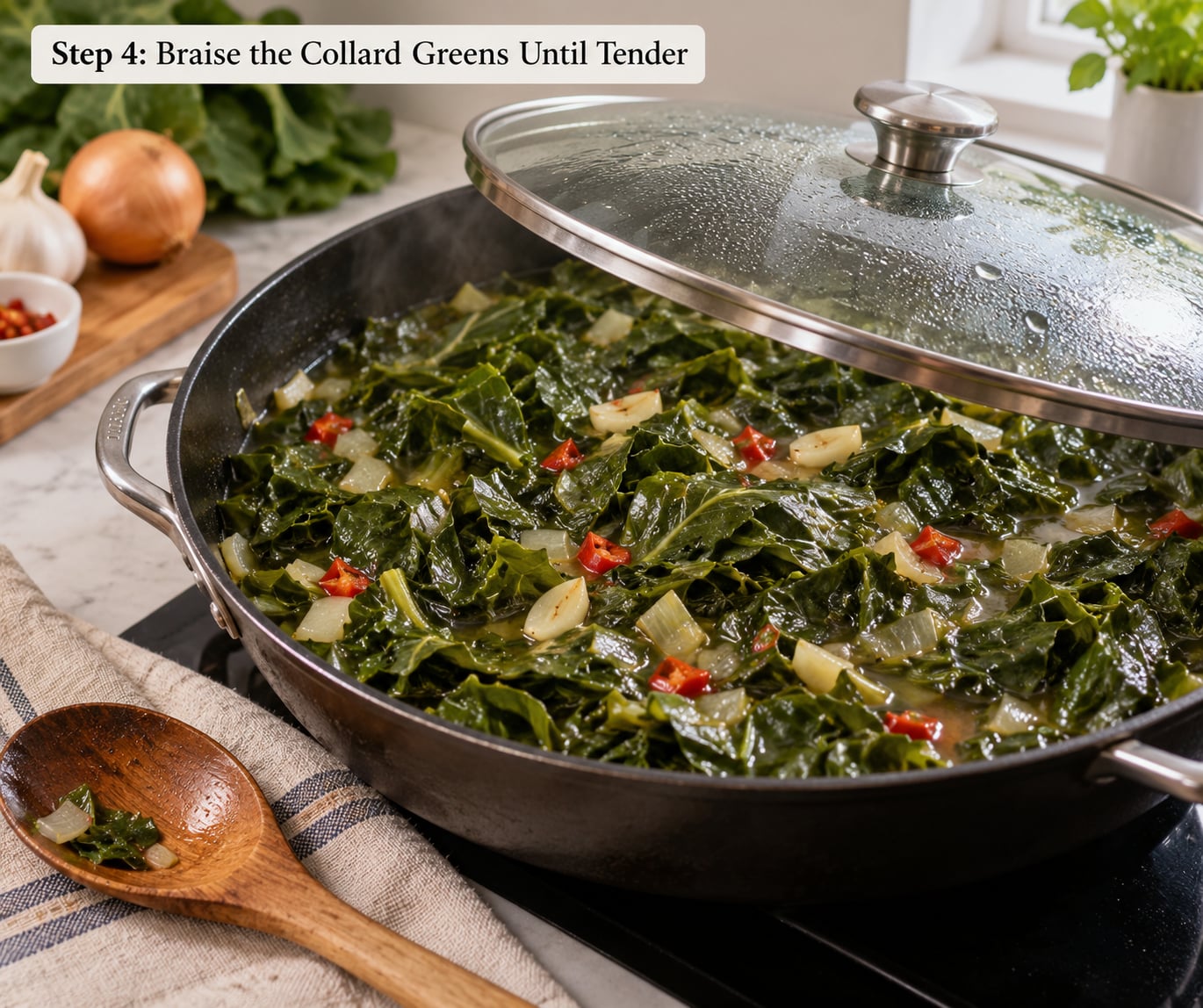
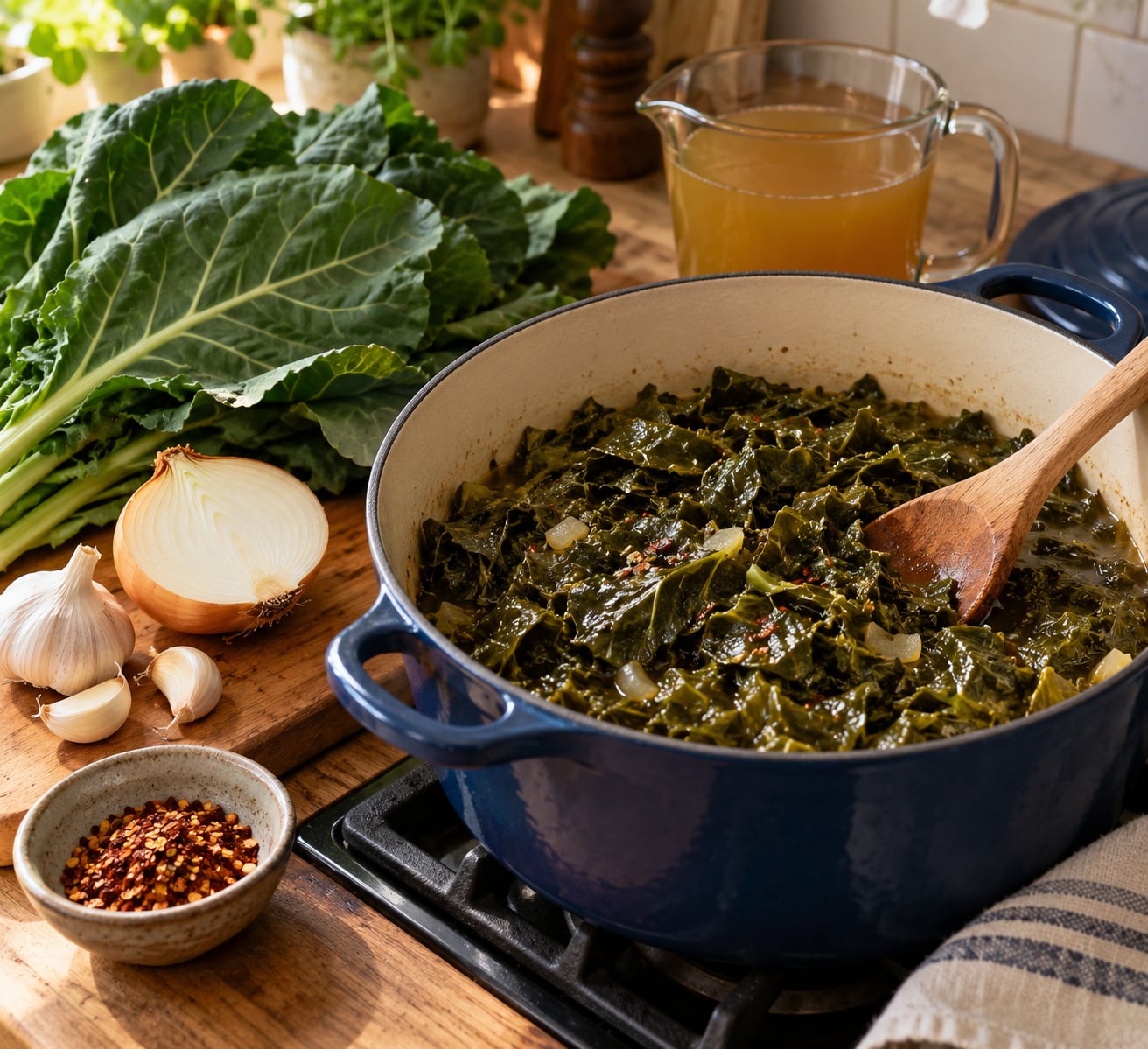
Add the chopped greens a handful at a time and press them down. They will look like more food than the pot can possibly hold, and they will collapse within a minute. Add enough broth and water to come about an inch up the sides of the pot, bring back to a boil, then turn the heat down until you see one or two bubbles and nothing more.
Cover and simmer. Timing depends almost entirely on how small you cut, so use this as your guide rather than a recipe line.
| Cut size | Approximate simmer time |
|---|---|
| Fine ribbons, quarter inch | 45 to 60 minutes |
| Rough ribbons or hand-torn pieces | 60 to 90 minutes |
| Large chunks | 90 minutes to 2 hours |
| Stems left in, sliced thin | Add 20 to 30 minutes |
| Frozen greens, straight from the freezer | 60 minutes without pre-thawing |
How do you know they are done? Stir down to the bottom of the pot and lift a spoonful. The greens should fold under the spoon with no resistance and the stems should give way when you press them, though the leaves still look green rather than gray. That is the window between tender and overcooked.
If the liquid drops low before the greens soften, add hot water a half cup at a time. Scorching is the one failure you cannot fix afterward, and it usually starts when a heavy pot goes dry on the bottom.
For a thicker result, take the lid off for the last ten minutes and let the liquid reduce. What is left is the pot likker, the concentrated broth at the bottom of the pot, and it is the best part of the dish. Spoon it over cornbread or use it to braise beans.
Step 5: Season, Drain, and Serve
Taste the pot likker and adjust. It usually wants more salt than you expect after the broth went in, a squeeze of apple cider vinegar for brightness, and more black pepper. Apple cider vinegar is the traditional choice because its softness suits the greens, though white vinegar works if that is all you have, and a small spoon of hot sauce is a matter of taste.
Drain the greens in a colander for a minute and let them drip. Press them down with the back of a spoon to push out the thick stems, but do not squeeze them dry, because that water is where the seasoning lives.
Serve them alongside cornbread, white rice, fried chicken, barbecue, black-eyed peas, or a baked ham. Long tables treat them as a side dish, so they rarely need a centerpiece.
For the fridge, cool the greens and the liquid in shallow containers and use them within three to four days. Reheat in a skillet with a splash of broth over medium heat for five minutes, or in the microwave on half power with a damp paper towel over the top, so they heat through without going rubbery.
To freeze them, blanch the greens in boiling water for two to three minutes, chill them in ice water, squeeze out the excess, and freeze in a freezer bag with the air pressed out. Cooked greens keep eight to twelve months frozen, and a few tablespoons of the frozen liquid are worth saving in a separate bag for soups.
Common Mistakes
Almost every bad pot of greens I have eaten came down to one of these.
Stems left in and uncut. A thick raw rib stays hard no matter how long you simmer the leaf around it. Slice ribs into thin coins and add them at the start, or take them out entirely.
A single rinse. One wash lifts the loose dirt off the surface while the grit stays in the rib creases. Rinse until the water stays clear, which usually takes three or four changes.
Heat too high. A rolling boil makes the leaves break apart into strings and dulls the color fast. Bring the pot to a boil once to get it going, then drop it to the barest simmer.
Liquid added too late, or not enough. Greens packed into a pot without room for liquid steam in their own moisture and come out watery and bland. Keep an inch of liquid above the greens the whole time and top it up when it drops.
Cooked past tender. The flavor and color start leaving after about two hours on a slow simmer, and somewhere after three hours you have mush. Take a bite at the forty-five minute mark even if the recipe says two hours, and trust your mouth over the clock.
Underseasoned at the finish. Salt and vinegar added at the beginning have been cooked away by the end. Taste the pot likker and season in the last ten minutes.
One habit covers most of these: taste at the thirty-minute mark, then again at sixty. That single habit catches bitterness, saltiness, and dryness before any of them become the version you serve.
Frequently Asked Questions
Do I need to remove all the stems from collard greens?
No, and most cooks eat them. The stems are edible but need to be treated differently from the leaves, because raw they are as tough as the rest of the plant. Slice them into thin coins and add them to the pot at the start so they get the full simmer, or cook them alongside the greens for the last half hour. If you want the easiest route, strip them out entirely and you lose very little flavor.
Can I cook collard greens without pork fat or pepper?
Yes. Skip both and use olive oil or butter instead of bacon grease, then add depth with liquid smoke, smoked salt, or smoked paprika, which carry the smoky note that pork usually provides. Season with garlic, onion, red pepper flakes if you like them, and a splash of Worcestershire sauce. The greens still need a long, low simmer, since that is about the vegetable rather than the meat.
How long does it take to cook collard greens on the stove?
Plan on 45 to 60 minutes for finely sliced ribbons and 60 to 90 minutes for rougher cuts. Larger pieces and sliced stems running in the same pot push it toward two hours. Bring the pot to a boil once, cover it, then keep it at the barest simmer for the rest of the time. You are looking for leaves that give way under a spoon while staying green.
Why are my collard greens bitter after cooking?
Three causes account for most bitter pots: raw thick stems left in, greens pulled off the heat before the fiber breaks down, and undercooking in general. Another culprit is under-salting, which makes the greens taste harsh. Remove the ribs, cut small, simmer low for a full hour, and salt generously. A teaspoon of baking soda in the cooking liquid softens bitterness, and a splash of vinegar at the end cuts the taste.
Can I freeze cooked collard greens?
Yes, and they freeze well. Cool them first, then blanch the greens in boiling water for two to three minutes, chill them in ice water, squeeze out the excess liquid, and freeze flat in a freezer bag with the air pressed out. Leave a little room in the bag for expansion. Cooked greens keep eight to twelve months in the freezer and reheat best in a skillet with a splash of broth over medium heat.
Should I wash collard greens before or after chopping them?
Wash first, then chop. Dirt sits in the rib creases and in the cupped center of the leaf, and loose leaves move around in water far more easily than a tight pile of ribbons. Use cool water, swish each bunch, and change the water until it runs clear, usually three or four times. Dry the greens well before chopping, since water left on the leaves steams them instead of braising.
Start tonight: strip and wash one bunch, cut it into ribbons, and put it in a pot with broth, garlic, red pepper, and a ham hock or a spoonful of liquid smoke. Bring it to a boil, drop it to a simmer, and check it in forty-five minutes. That is how to cook collard greens from scratch, and the pot likker at the bottom is the reward for waiting.