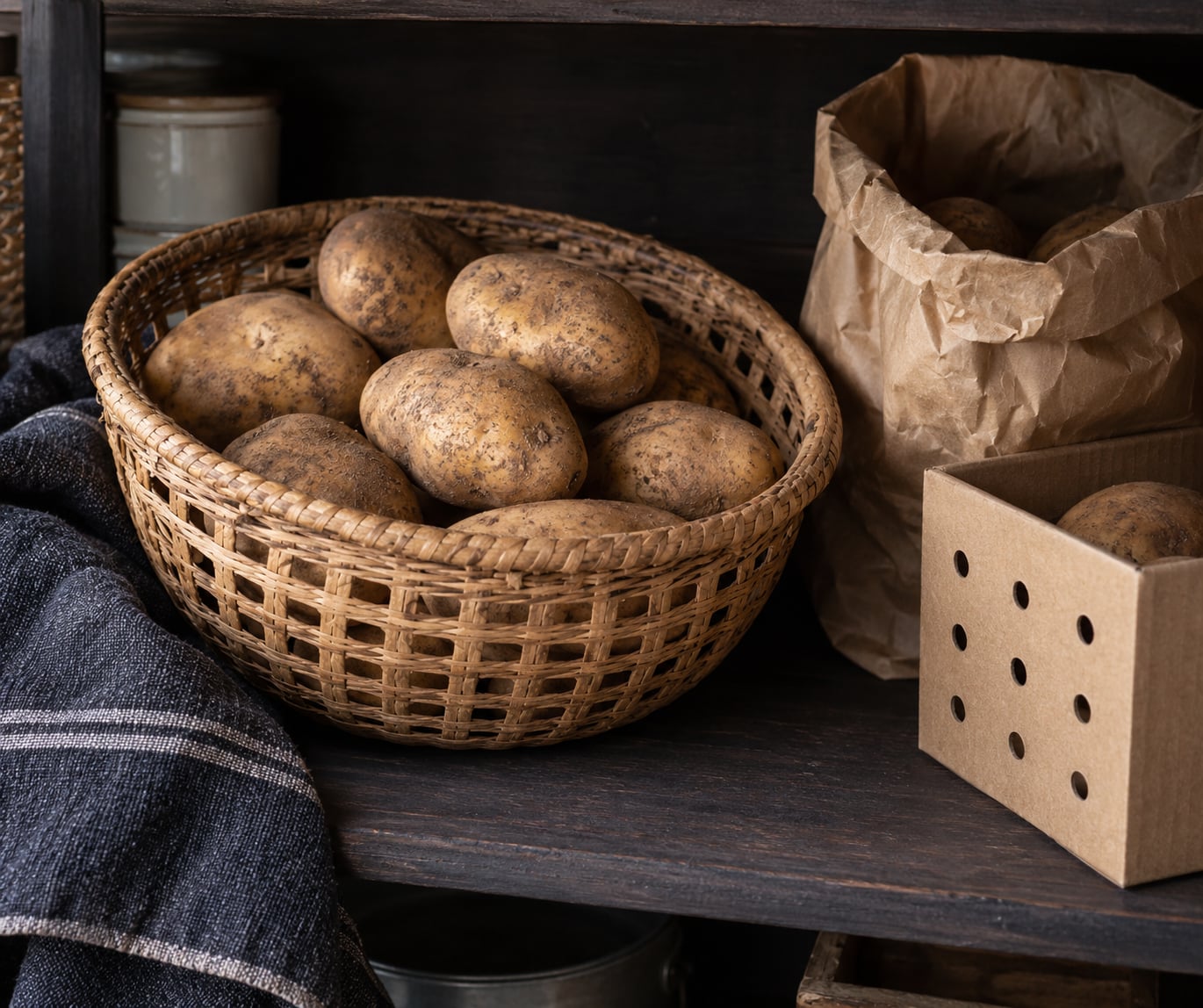
Store potatoes in a cool, dark, ventilated place at roughly 45-50°F (7-10°C), in a breathable container such as an open paper bag, mesh bag or wire basket. Keep them unwashed, out of light, and away from onions, and check the batch once a week. That is the whole trick, and it costs nothing.
I go through a five-pound bag most weeks and used to find a small nest of sprouts at the bottom every time. It turned out my kitchen cupboard was running warm and the bag was tied shut, so the potatoes were sitting warm and damp. A ventilated basket on the lowest shelf, away from the stove, fixed it without costing me anything.
Table of Contents
- What You Need for Storing Potatoes So They Do Not Sprout
- Step-by-Step: Storing Potatoes Without Sprouting
- 1. How to store potatoes so they do not sprout: start with the right potatoes
- 2. Cure potatoes before long-term storage
- 3. Keep them cool, dark and away from light
- 4. Provide airflow without trapping moisture
- 5. Check them weekly and use them in the right order
- Common mistakes to fix first
- Frequently Asked Questions
- Can you eat potatoes that have started to sprout?
- Why are my potatoes sprouting even though they are in a paper bag?
- Should potatoes be refrigerated to keep them from sprouting?
- What foods should I keep away from potatoes when storing them?
- How long can potatoes be stored at room temperature?
What You Need for Storing Potatoes So They Do Not Sprout
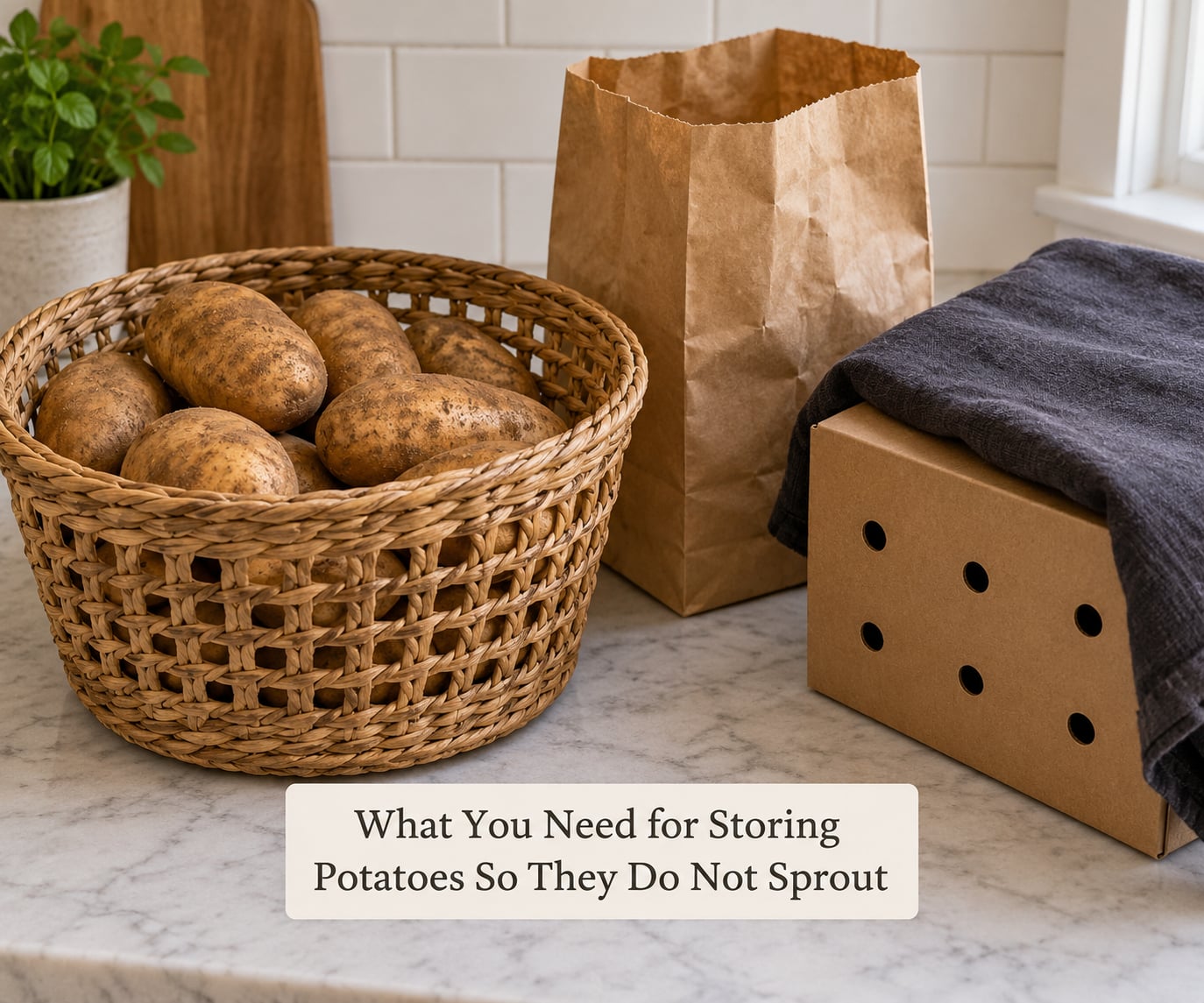
None of this is specialised equipment. If you have a potato, a dark cupboard and something with holes in it, you can store them properly today.
- Fresh, firm, dry potatoes. Unwashed, unbruised, with no existing sprouts or green patches.
- A cool dark spot. Aim for 45-50°F (7-10°C). A pantry, unheated basement, root cellar, cool garage or the back of a closet usually works.
- A ventilated container. A wire basket, mesh produce bag, open paper bag, burlap or hessian sack, or a cardboard box with holes punched in the sides.
- High humidity. Roughly 85-90 percent relative humidity keeps skins from shrivelling. A cardboard box in a closed cupboard usually gets closer to this than an open basket does.
- An opaque cover or a dim light source. A dark cloth, a paper bag turned over, or a cupboard you do not switch the light on in.
- A food-safe container for cut potatoes. Once you cut a potato, the cut surface oxidises and dries out, so it needs sealed refrigeration rather than pantry rules.
- An optional thermometer. Helpful in a garage or shed, where the difference between 50°F and 70°F is the difference between two months of storage and two weeks.
Step-by-Step: Storing Potatoes Without Sprouting
1. How to store potatoes so they do not sprout: start with the right potatoes
Choose potatoes that are firm, dry and free of bruises, soft spots and sprouts. Skin blemishes are where rot usually starts, and a potato that already has a sprout in the bag will keep going in your pantry.
Slightly green potatoes are not ideal for long storage. Greening means the tuber has been in light, and light drives both the chlorophyll and the glycoalkaloids that make green potatoes bitter. Use those up first, or cut them and cook them promptly rather than banking them for January.
Fresh-market and grocery-store varieties are both fine for pantry storage. Waxy varieties such as red and fingerling hold up less well than starchy ones like russets, mainly because waxy skins are thinner and lose water faster. Homegrown tubers behave differently again, which is why the next step matters for garden crops.
2. Cure potatoes before long-term storage
Freshly dug potatoes need a curing period before they will hold. Spread them in a single layer somewhere cool, dark and well ventilated, and leave them there for around two weeks at 50-60°F (10-16°C).
Curing lets the skin thicken and minor scrapes seal over, which cuts moisture loss and gives rot fewer doors in. You can tell it worked: the skin should feel slightly rougher and less slippery, and small scuffs should no longer look wet.
Be clear about the limit. Curing repairs surface damage in sound potatoes. It will not rescue tubers that were badly bruised, dug wet, or already soft, and it is not a step you need for grocery-store potatoes, which are usually shipped already cured.
3. Keep them cool, dark and away from light
Temperature is the lever most people get wrong. Between about 45°F and 50°F, potatoes stay dormant and barely respire. Above roughly 50°F, dormancy breaks, respiration speeds up and sprouts start forming within days.
Light is the second lever. Potatoes exposed to light produce chlorophyll, which is the green colour, along with solanine and related glycoalkaloids. That is why a potato that sat in a sunny pantry tastes sharp and unpleasant even after peeling.
Refrigeration is the third trap, and it is the rule most often repeated without explanation. Below about 40°F (4°C) the starch in a potato converts to sugar, which is why fridge potatoes taste sweeter and fry darker. Chilling is fine for a few cut pieces or for waxy potatoes you plan to boil, and it is a reasonable short-term move in a hot kitchen, but it is poor for long-term pantry storage.
If your kitchen is genuinely warm and you have no cellar, work down a list: the back of a closet, the bottom shelf of a cupboard away from the stove or dishwasher, a garage shelf in autumn and spring, a shaded windowless corner of a balcony. People without basements often get the best results from a cardboard box with punched holes, tucked in the coolest corner of the flat, with a damp cloth in the box for humidity.
4. Provide airflow without trapping moisture
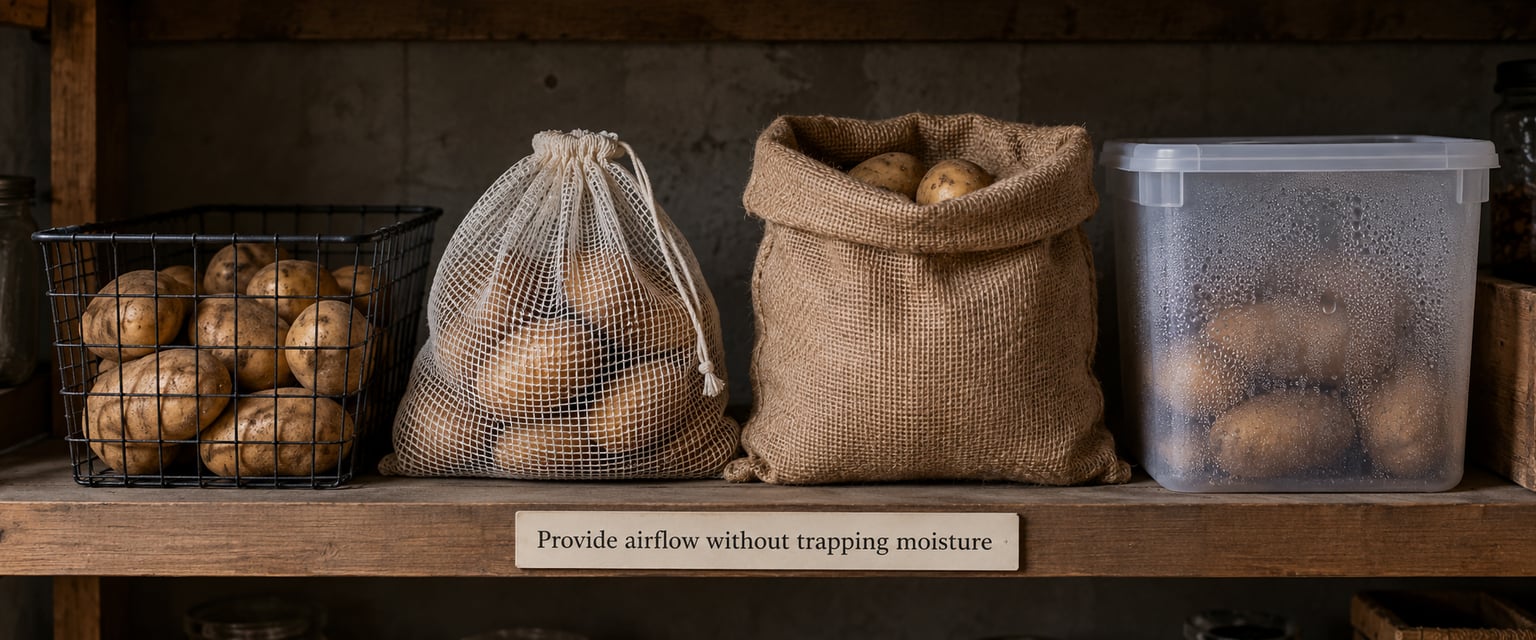
Airflow is what keeps skin dry. A wire basket, a mesh produce bag, an open paper bag, a cardboard box with holes punched in the sides, or a burlap or hessian sack all let moisture escape while holding humidity around the potatoes.
A paper bag is not automatically good. A folded-over or tied-shut paper bag traps the same condensation a plastic bag does, which is a common reason people watching careful method still find rot. Roll the top down loosely and stand the bag on a surface where damp can evaporate.
Never store potatoes in sealed plastic. A closed tote or the original grocery bag creates a warm, wet microclimate, and condensation dripping onto the skins is how a batch turns to mush in a couple of weeks. If you must use a bin, leave the lid cracked and never put freshly washed potatoes in it.
5. Check them weekly and use them in the right order
Once a week, take everything out and look at it. One soft potato touching six firm ones is the fastest way to lose a batch, and culling is the whole job. Throw out anything soft, leaking, mouldy or badly shrivelled.
Turn the rest so the eyes face different directions, and push the oldest potatoes to the front of the basket. Newest to the back, oldest to the front, and you will use them in the order they will not last.
For small white sprouts on an otherwise firm potato, peel and cut the sprout and a generous margin around it, then use the potato. If the sprouts are long, green or thick, or if the flesh is green inside, discard the potato instead. If you only need a small amount of potato for a dish, an old sprouty potato is fine to peel and shred; there is no reason to throw it out over one meal.
Common mistakes to fix first
- Washing before storage. Water left on the skin invites mould and soft rot. Store them unwashed and wash only right before you cook. This one comes up constantly in cooking forums and the answer is the same every time.
- Sealing potatoes in airtight plastic. Breathable every time. A closed tote or tied paper bag traps condensation.
- Storing them beside onions. Onions release ethylene gas, which breaks potato dormancy and pushes sprouting. Keep them in a separate bin or cupboard, and separate them from ripe apples and bananas too.
- Leaving them in the light. Any light means chlorophyll and glycoalkaloids. Line the basket with dark paper or drape a cloth over it.
- Crowding or bruising them. Rough handling bruises skin and rot follows the damage. Do not throw potatoes into a bin, and do not stack more than a few deep.
- Using the refrigerator for long-term storage. Chilled potatoes lose their starch profile and go sweet. Reserve the fridge for cut pieces and short holds.
- Forgetting the weekly look. Ten minutes on a Sunday is cheaper than replacing a bag.
A quick check before you close the cupboard: dark, cool, dry to the touch, breathing room around every potato, no onions within sight.
Frequently Asked Questions
Can you eat potatoes that have started to sprout?
Yes, usually, if the sprout is small and the flesh is firm and not green. Peel the potato, cut well past the sprout and any green tint, and cook it that day. Discard the potato if the sprouts are long, thick or green, if the skin is extensively green, if it is soft or hollow, or if the flesh tastes bitter. Green colour and sprouting both signal glycoalkaloids such as solanine, and heat does not destroy them.
Why are my potatoes sprouting even though they are in a paper bag?
Most often the bag is the problem, not the potato. A tied or folded paper bag traps the same condensation a plastic bag does, and any warmth above about 50 degrees F pushes tubers out of dormancy. Sprouts in four days usually mean the location is too warm, the batch sat next to onions or ripe fruit, or light is reaching the potatoes. Move them to a cooler dark spot in an open basket and check weekly.
Should potatoes be refrigerated to keep them from sprouting?
No, not for long-term storage. Refrigeration is reliable at holding potatoes, but below about 40 degrees F the starch converts to sugar, so chilled potatoes taste sweeter and fry darker. Chilling is useful for cut pieces that you want to keep a few days, and for a small batch during a heat wave. Whole pantry potatoes want 45-50 degrees F in the dark, not fridge cold.
What foods should I keep away from potatoes when storing them?
Onions are the main one, because they give off ethylene gas that breaks potato dormancy and accelerates sprouting. Ripe apples, bananas, avocados and pears also release ethylene, so keep those in a different part of the kitchen rather than the same cupboard. The apple trick works in the opposite direction too, in theory, since a small amount of apple slows sprouting, but the effect is small and inconsistent, so a separate bin is the more reliable fix.
How long can potatoes be stored at room temperature?
At cool room temperature around 60-70 degrees F, expect two to four weeks for most grocery-store potatoes, less if the room is warm. At 45-50 degrees F in the dark you will usually get two to three months, and well-cured main-crop tubers can hold four to six months in a proper root cellar. Waxy varieties such as red and fingerling spoil sooner than russets, and every soft potato you cull on schedule extends the life of the rest.
Start tonight, not after the next bag goes soft. Move your potatoes out of the plastic and into an open basket, find the darkest and coolest spot you have, separate them from the onions, and set a recurring weekly check. That is most of the work, and it costs you a basket and ten minutes a week.