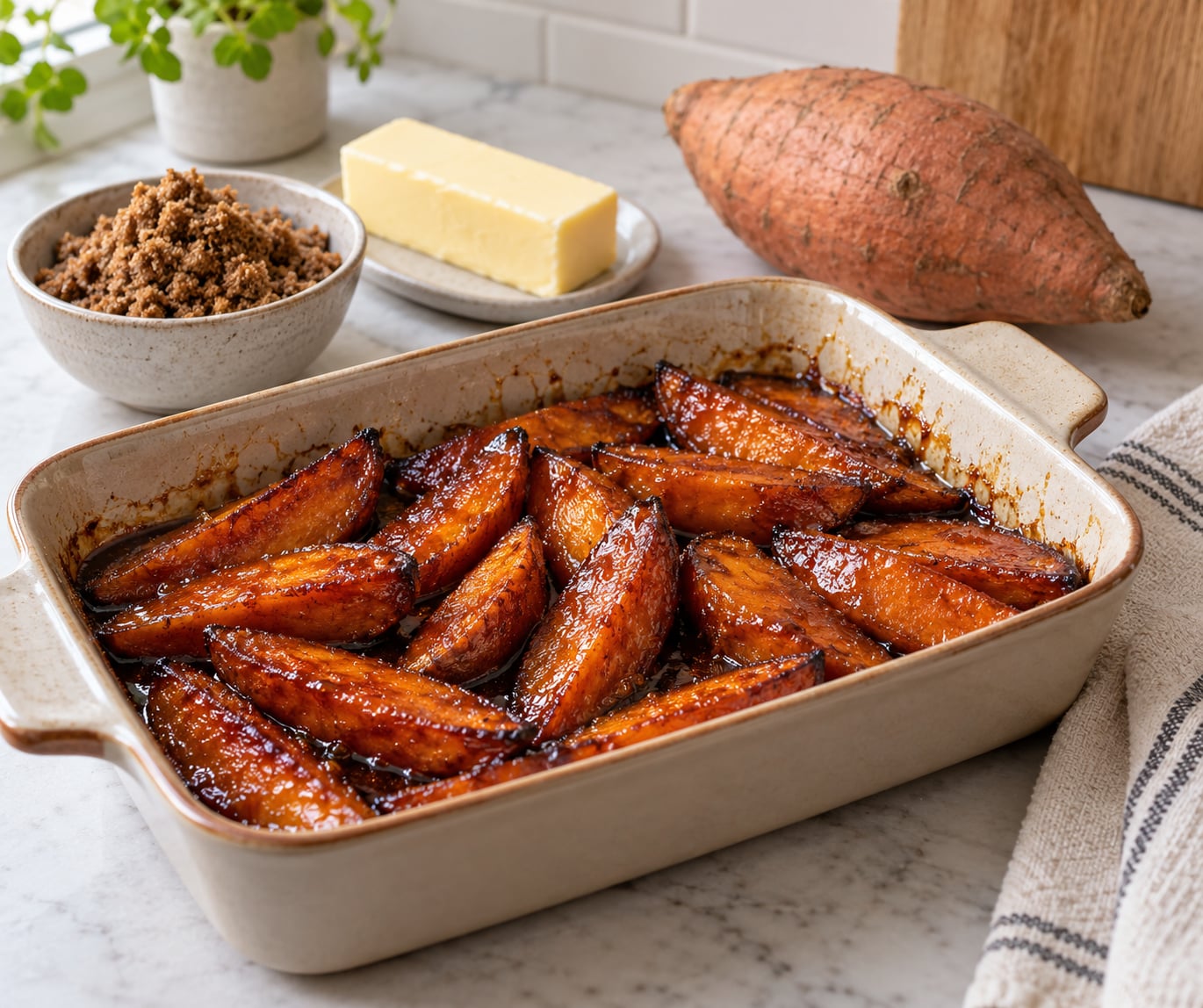
Candied sweet potatoes are thick slices or chunks of sweet potato baked uncovered in a buttery brown sugar syrup with warm spices, until the liquid reduces to a sticky caramelized glaze. Learning how to make candied sweet potatoes from scratch takes about 15 minutes of prep and 40 to 45 minutes in the oven, and the whole thing rests on one trick: getting the potatoes into the dish as dry as possible.
This is the baked side dish, not the mashed sweet potato candy that shows up in mashed-and-piped versions of this recipe. It is closer to a dessert than a vegetable, and it is the plate that disappears first on Thanksgiving, Christmas, Easter and Juneteenth alike.
The recipe below makes about 8 servings in a 9×13-inch baking dish. Every measurement is standard US, and there are no canned potatoes anywhere in it.
Table of Contents
- What You Need
- Step-by-Step: How to Make Candied Sweet Potatoes from Scratch
- Step 1: Choose and Cut the Sweet Potatoes
- Step 2: Mix the Sugar, Butter, and Spices from Scratch
- Step 3: Bake Until Caramelized
- Common Mistakes
- Frequently Asked Questions
- What type of sweet potatoes are best for candied sweet potatoes?
- Should I peel sweet potatoes before candying them?
- How do I stop the sugar from burning in the oven?
- How long does it take to make candied sweet potatoes from scratch?
- Can I add cinnamon, nutmeg, or other spices?
- How should I store and reheat candied sweet potatoes?
What You Need
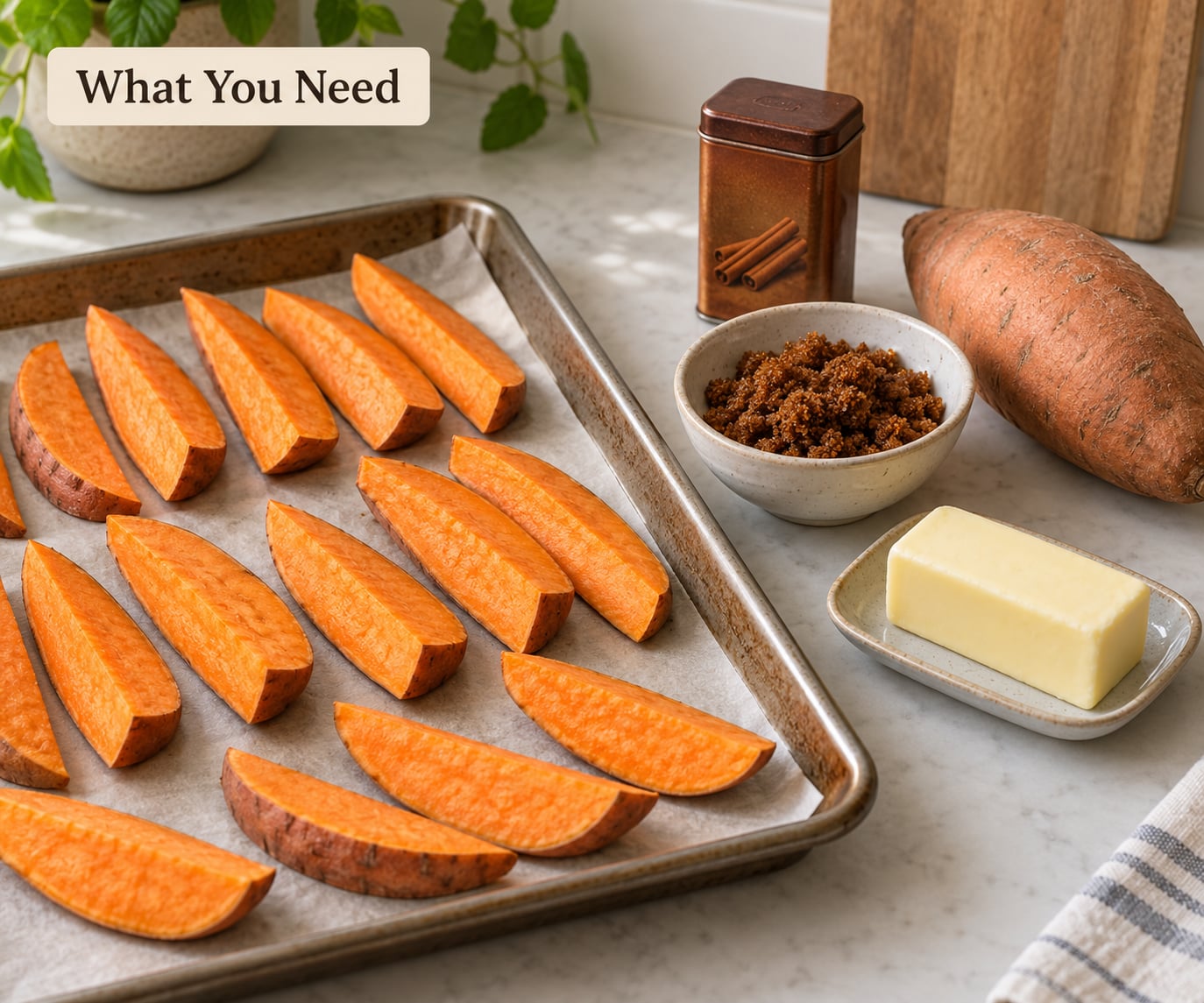
Nine ingredients cover the whole dish, and every one of them does a job you would miss if it were missing.
- 3 pounds sweet potatoes, about 4 to 8 ounces each
- 3/4 cup dark brown sugar, packed
- 6 tablespoons unsalted butter, plus more for the dish
- 1 teaspoon ground cinnamon
- 1/2 teaspoon ground nutmeg
- 1/2 teaspoon ground ginger
- 1 teaspoon vanilla extract
- 2 tablespoons orange juice, fresh
- 1 teaspoon kosher salt
Dark brown sugar carries the molasses depth that makes this taste like an old fashioned recipe instead of a sweet one. Light brown sugar works and gives a cleaner, less deep glaze, and 1/2 cup white sugar plus 1/4 cup light brown sugar is the move if you want less molasses.
Butter does two jobs. It fattens the slices so they brown, and it dissolves the sugar into a sauce that coats instead of just sitting on top. If you want to go further, brown the butter in a light-colored pan until the milk solids turn hazelnut brown and smell nutty, then cool it a few minutes before pouring.
The salt is not optional. A full teaspoon of kosher salt against 3/4 cup of sugar is what keeps a dish this sweet from tasting flat, and it is the single most common thing missing from home recipes.
Orange juice is the balancing act. It does not make the dish taste like citrus; it just gives the brown sugar somewhere to sit other than cloying. Lemon juice works the same way, and a tablespoon of bourbon or apple butter also fits in here nicely.
Choose firm, unblemished sweet potatoes that are heavy for their size. Small and medium ones, in that 4 to 8 ounce range, are sweeter and cook faster. Anything much larger tends to be starchier and will hold together after the sugar has gone.
If you are using sweet potatoes straight from the can, drain them and lay them on towels for 20 minutes before they go anywhere near the sugar. Canned yams are packed in syrup and carry a surprising amount of water, which is where most watery candied sweet potato casseroles come from. For this recipe, use two 40-ounce cans, cut the sugar to 1/2 cup, and drop the butter to 4 tablespoons.
Step-by-Step: How to Make Candied Sweet Potatoes from Scratch
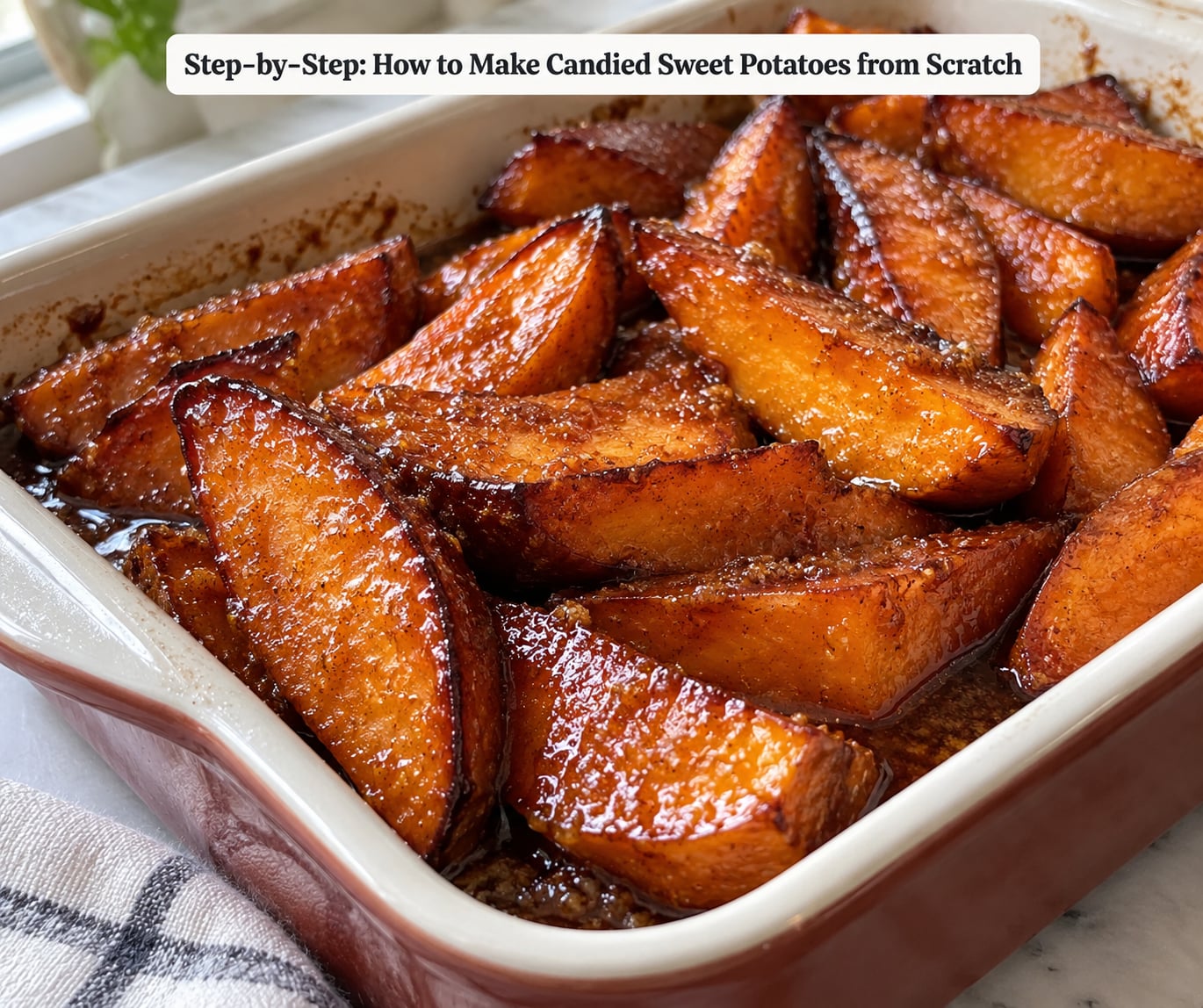
Heat the oven to 375°F and put a rack in the middle third of it. Lightly butter a 9×13-inch baking dish, then get the oven to temperature before the potatoes go in. The covered part of the cooking is 25 to 30 minutes; the uncovered finish is another 15 to 20 minutes and it is where the glaze forms.
Step 1: Choose and Cut the Sweet Potatoes
Scrub the potatoes well and trim any soft spots. Leaving the skin on is the better call: it holds the slices together in the hot oven and adds texture once the edges crisp.
Cut them into 1/4-inch-thick rounds or half-moon wedges and lay them in the dish in a single overlapping layer. Uniform thickness is the whole point here, because pieces that are twice as thick as their neighbors are still raw when the thin ones go dark.
Should you boil them first? You can, and it is the one disagreement in this recipe worth settling. A 10-minute parboil before slicing gives you a softer, more tender center and a shorter bake, which is what some cooks want. It also wets the surface of the potato, and wet surfaces make thin slices go soft rather than crisp. If you parboil, dry the slices thoroughly on paper towels before layering them.
I skip the boil. Straight into the dish gives firmer edges and a glaze that clings instead of sliding off.
Step 2: Mix the Sugar, Butter, and Spices from Scratch
Melt the 6 tablespoons of butter in a small saucepan over medium-low heat. Stir in the brown sugar, cinnamon, nutmeg, ginger, salt and orange juice, and cook just until the sugar melts and the mixture looks like loose caramel, about 3 to 5 minutes. Pull it off the heat and stir in the vanilla.
Pour the syrup over the potatoes and use your hands or a spoon to turn every slice so all sides are coated. Getting the sauce into direct contact with the potato is what produces candied rather than just sweet potatoes.
Then leave it alone. There is no resting time and nothing to baste at this point. Pouring a layer of dry brown sugar on top instead of melting it first works too, and gives a slightly crunchier top, but the melted version coats more evenly.
Step 3: Bake Until Caramelized
Cover the dish tightly with foil and bake at 375°F for 25 to 30 minutes, until a fork slides into the thickest pieces with just a little resistance. Then pull the foil off, raise the heat to 400°F, and bake another 15 to 20 minutes.
Turn the slices once halfway through this uncovered stretch. You are watching for the edges to go deep amber and the syrup to thicken until it coats the back of a spoon and barely moves. A thin amber glaze still runs off the potato, which means it needs more time.
If the sugar starts darkening before the potatoes are tender, tent a piece of foil loosely over the dish. It blocks the direct heat without trapping steam, and the center keeps cooking while the top stops creeping toward burnt.
At 400°F from the start you can run the whole thing uncovered in 35 to 40 minutes. That is the faster route, and it is the one to use when you are testing doneness for the first time, because you can see the edges the whole way through.
For a stovetop version, skip the oven entirely. Simmer the sliced potatoes in the butter and brown sugar sauce with 1/2 cup water, covered, for 20 to 25 minutes, until the liquid reduces and the potatoes are fork tender. Cookers insist the oven version is better, but the stovetop gives you a thicker, glossier glaze and a lot less scrubbing.
You can also assemble the whole dish a day ahead, refrigerate it covered, and bake it the next day. Let it sit at room temperature for 30 minutes before it goes in, and add 10 minutes to the covered bake time.
Common Mistakes
Most problems with this dish come down to water or heat, and both have straightforward fixes.
A watery casserole. This is the most common complaint, and it almost always means wet potatoes, a crowded dish, or both. Canned yams need that 20-minute towel rest. Fresh potatoes cut thin enough release their own moisture as they bake, so give them space in a single layer rather than two deep layers. If your dish looks soupy in the last 10 minutes, turn the heat up to 425°F and leave the oven door cracked so steam can escape.
Burnt edges with a raw center. Uneven thickness does this. When the thin slices are done, the thick ones are still hard. Cut everything to the same 1/4 inch and test the thickest piece, not the edge. If the sugar heads toward burnt anyway, tent with foil as described in step 3.
Hardened or grainy sugar. Sugar that crystallizes has either been stirred after melting or sat on a heat-safe surface too long as it cooled. Make the syrup fresh, stir only until the sugar dissolves, and pour it warm rather than reheating it later.
Mushy potatoes. Overcooking. Fork tender means the fork meets almost no resistance, not that the potato falls apart. Pull the dish the moment the thickest pieces give with no pushback.
A glaze that slides off. Not enough reduction, or slices that were too thick to hold it. Give the uncovered bake the full 15 to 20 minutes and check that the syrup is thick at the bottom of the dish before serving.
A cloying dish nobody finishes. Too much sugar and not enough acid. A tablespoon more orange juice, a squeeze of lemon, or a spoon of bourbon at the end will fix it faster than cutting sugar.
Store leftovers in an airtight container in the refrigerator for up to 4 days. Reheat in a 350°F oven for 10 to 15 minutes, loosely covered, or in a microwave at half power so the glaze does not scorch. Add a splash of orange juice or water before reheating if the pieces look dry. Do not freeze them; the glaze turns grainy when it thaws.
Candied sweet potatoes sit well next to anything salted and acidic. Glazed ham, roast turkey with skin, mac and cheese, collard greens and a sharp slaw all cut the sugar. On a non-holiday plate, they are good next to pork chops or with a scoop of vanilla ice cream.
Frequently Asked Questions
What type of sweet potatoes are best for candied sweet potatoes?
Any variety works, but small and medium sweet potatoes in the 4 to 8 ounce range are the best pick. They are sweeter, less starchy and cook through in the same time as the sugar needs to caramelize, so you get tender centers and caramelized edges at the same moment. Very large potatoes tend to be starchier and can stay firm long after the sugar has gone too dark. Choose firm potatoes with no soft spots or bruising, and use them within a week or two of buying.
Should I peel sweet potatoes before candying them?
Usually no. The skin holds thin slices together in a hot oven, where peeled slices often fall apart or curl before the glaze sets. Scrub the skin well and trim any soft spots. Peeling is worth it only if you are serving younger children, or if you are after a smoother, softer texture and do not care about getting crisp edges. If you do peel, cut a little thicker, about half an inch, so the pieces hold their shape.
How do I stop the sugar from burning in the oven?
Bake covered for the first 25 to 30 minutes so the potatoes soften without direct heat hitting the sugar, then uncover for the final stretch so the glaze can reduce. Turn the slices once during that uncovered time. If the edges go dark before the potatoes are tender, tent a loose piece of foil over the dish so it shades the top without trapping steam. Cutting every piece to the same quarter inch also stops thin slices from scorching ahead of the thick ones.
How long does it take to make candied sweet potatoes from scratch?
Plan on 15 minutes of prep and 40 to 45 minutes of baking for 3 pounds of potatoes, so about an hour from cutting board to table. Starting at 400u0026deg;F uncovered shortens the bake to 35 to 40 minutes. The stovetop version is faster still, roughly 25 to 30 minutes of simmering after the sauce comes together. Judge doneness by feel rather than the clock, since the size of your potatoes can shift the timing by a good ten minutes.
Can I add cinnamon, nutmeg, or other spices?
Yes, and that is where most of the flavor lives. Cinnamon, nutmeg and ginger are the classic warm trio, but ground cloves, star anise, allspice, pumpkin pie spice and even a pinch of chili heat all work. Vanilla is stirred in off the heat so it does not boil away. A tablespoon of orange or lemon juice cuts the sweetness without changing the character of the dish. Two-thirds of a cup of brown sugar and a tablespoon of bourbon is another good variation.
How should I store and reheat candied sweet potatoes?
Cool the dish uncovered, then refrigerate it airtight for up to 4 days. Reheat in a 350u0026deg;F oven for 10 to 15 minutes with the dish loosely covered, which keeps the glaze soft and stops it from scorching. A microwave works too, but use half power and stir once halfway through. Freezing is not recommended, since the glaze turns grainy as it thaws. If the potatoes look dry after reheating, a splash of orange juice or water brings the glaze back.
Start by heating the oven to 375°F and buttering that 9×13-inch dish before you touch anything else. Scrub 3 pounds of small sweet potatoes, slice them all to the same quarter inch, and lay them in a single layer. Melt the butter with the brown sugar, spices, salt and orange juice, pour it over, and cover the dish for 25 minutes. Uncover, turn once, and finish at 400°F until the glaze is thick and the thickest slice is fork tender.