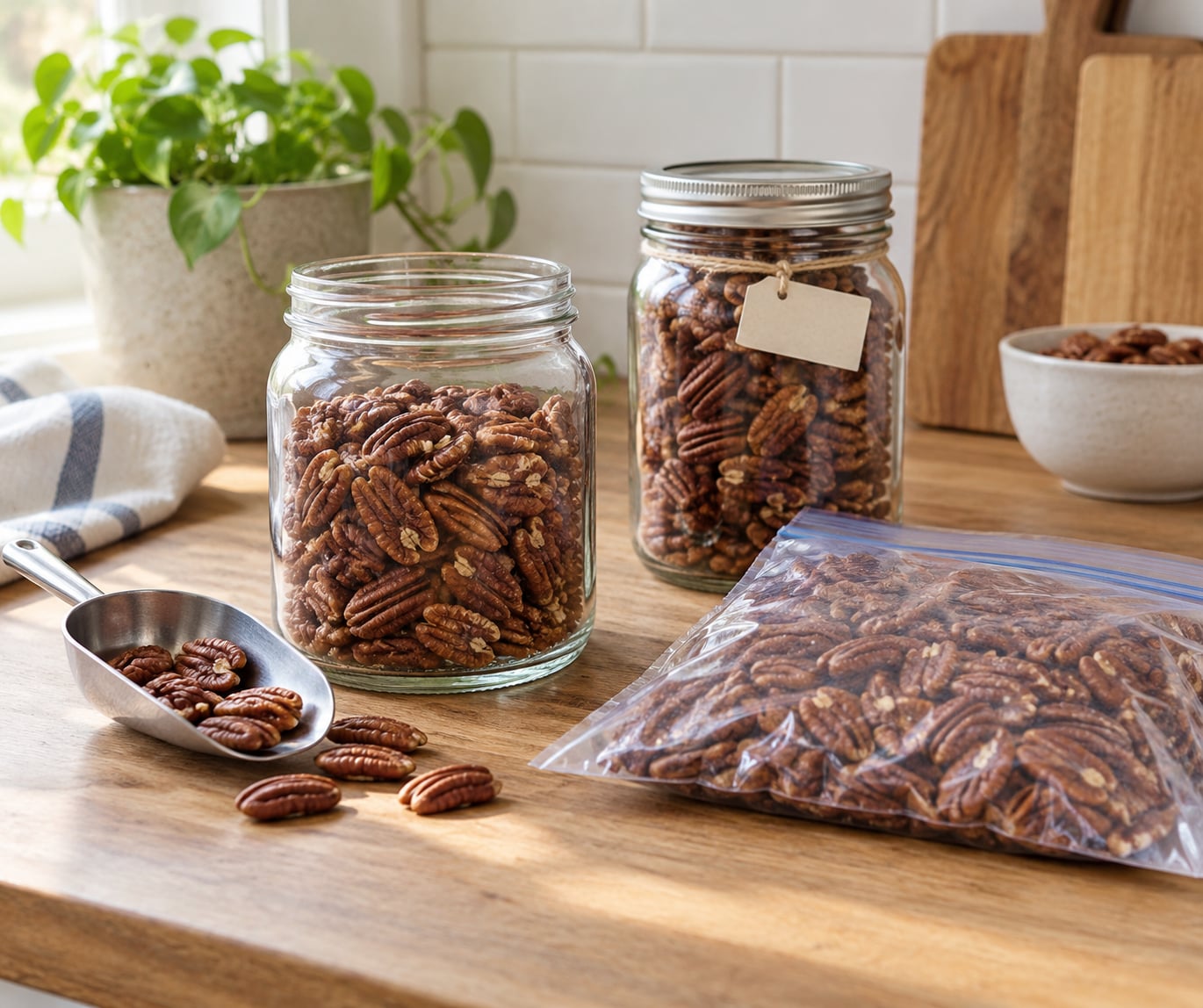
To store pecans so they do not go rancid, keep them airtight and cold. Once a package is open, plan on about 1 to 2 weeks at room temperature, roughly 2 to 3 months in the refrigerator, and 6 to 12 months in the freezer when the nuts are sealed properly.
The reason is chemistry, not carelessness. Roughly 93 percent of a pecan’s fat is unsaturated, and the kernel itself is about three quarters oil, with linoleic acid doing much of the work. That oil oxidizes when it meets oxygen, heat and light, and rancidity follows. Cold slows the reaction, air exclusion keeps it from starting, and darkness keeps light out of the picture.
Two details decide whether any of this works. Pecans need to be dry before they go into a container, and they need to be shut away from air each time you open the jar. Get both right and the nuts are still good when your pie calls for them.
Table of Contents
- How to Store Pecans So They Do Not Go Rancid: Step-by-Step
- Pecan shelf life by storage method and nut form
- Step 1: Start with Fresh, Dry Pecans
- Step 2: Keep Pecans Airtight and Protected
- Step 3: Refrigerate or Freeze for Longer Storage
- Step 4: Label Each Container With a Storage Date
- Step 5: Check for Rancidity Before Using Them
- Common Mistakes
- Tips for Keeping Pecans Fresh
- Frequently Asked Questions
- How long can pecans stay in the refrigerator?
- How do I tell if my pecans have gone rancid?
- Can I freeze pecans that are already a few months old?
- How long do unshelled pecans last compared with shelled ones?
- What do I do with pecans after picking them off the tree?
- Conclusion
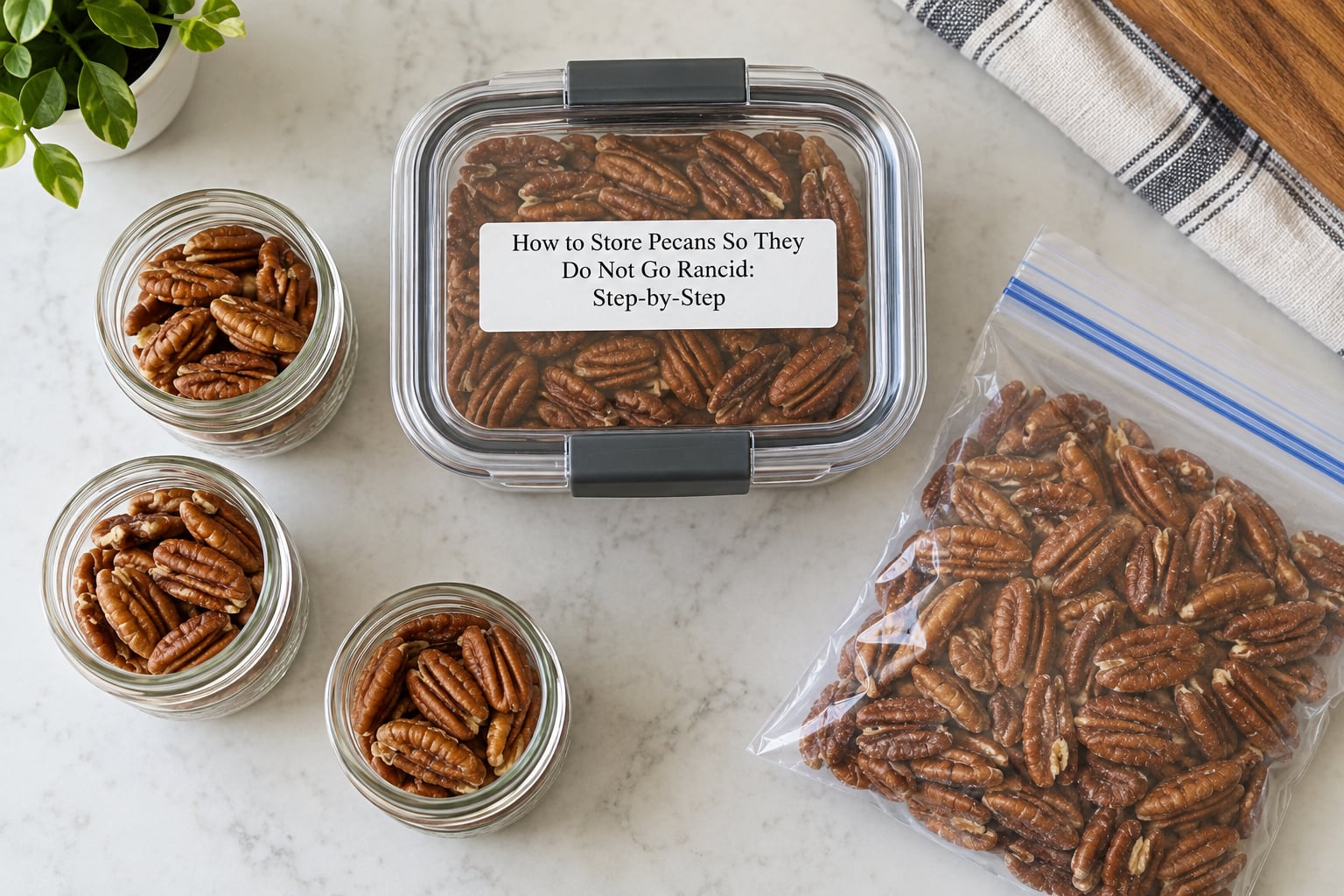
How to Store Pecans So They Do Not Go Rancid: Step-by-Step
Pecan shelf life by storage method and nut form
| Nut form | Room temperature, opened package | Refrigerator, airtight, 34 to 40 F | Freezer, airtight, 0 F |
|---|---|---|---|
| Shelled halves or pieces | 1 to 2 weeks | 2 to 3 months | 6 to 12 months |
| Chopped pieces | about 1 week | 2 to 3 months | 6 to 12 months |
| Unshelled in the hull | 1 to 2 months | 4 to 6 months | 12 months |
These are working figures for eating quality rather than a hard safety line, and they follow the storage research summarized in NMSU Extension Guide H-620 and the older Woodroof and Keaton work out of the Georgia Experiment Station. Nutshells act as a built-in barrier, which is why unshelled nuts always outlast shelled ones in the same conditions.
Step 1: Start with Fresh, Dry Pecans
Storage only slows rancidity down. It cannot reverse it, so sorting happens before anything goes into a jar. Taste one or two pieces raw if you are unsure, and set aside anything that smells stale, oily or paint-like.
Dryness matters just as much. Pecans are stored commercially at around 4 percent moisture, and anything damp going into a sealed container invites mold. If your nuts came straight from a tree or a market sack, spread them in a single layer somewhere airy and warm until they rattle dry, then let them cool before packing.
Step 2: Keep Pecans Airtight and Protected
Oxygen is the main thing you are blocking, and only a genuinely airtight container blocks it. Airtight glass jars with screw lids work well, as do quality plastic containers and freezer bags pressed flat before sealing. Freezer bags are the ones I keep coming back to for baking, since they hold a measured portion and lie flat in the freezer instead of rolling around.
Two more details matter. Light weakens nuts as it slowly fades the color and flattens the aroma, so an opaque bin or a cabinet beats a clear jar on the counter, and strong odors travel through plastic, which means keeping pecans away from coffee, onions and cleaning products. Then split large quantities into small portions, because every open-and-close cycle lets fresh air into the whole supply.
Step 3: Refrigerate or Freeze for Longer Storage
Refrigeration is the sensible middle option. It holds shelled pecans for a few months at 34 to 40 F, and it also protects color and aroma better than a pantry shelf. Skip the crisper drawer, though, since that drawer is the most humid spot in the refrigerator and humidity works against you.
Freezing is the answer for anything longer than that, and forum cooks agree: the most common advice on r/AskCulinary and r/nutrition is to freeze nuts in a dry airtight container and stop worrying about the date. Freezing does no real damage to the kernel, and you can refreeze nuts that have thawed.
Thaw only what you need. Move the container to the refrigerator overnight and let the nuts come up to cold temperature inside the sealed bag, which keeps condensation off the kernels. Thawing on a warm counter puts moisture on the surface of every piece, and that moisture shortens life faster than the thaw itself does.
Step 4: Label Each Container With a Storage Date
Write three things on the container with a piece of tape or on the bag with a marker: the purchase or storage date, the storage method, and the window you expect. A jar marked HALF 12 CUP, FRIDGE, USE BY FEBRUARY answers questions before you open the fridge at 9 p.m. on a Tuesday.
Put the oldest container at the front and the newest behind it. First in, first out is dull but it is exactly what prevents the half-used bag of holiday nuts from sitting in a pantry until spring, which is the most common way people end up with bitter pecans.
Step 5: Check for Rancidity Before Using Them
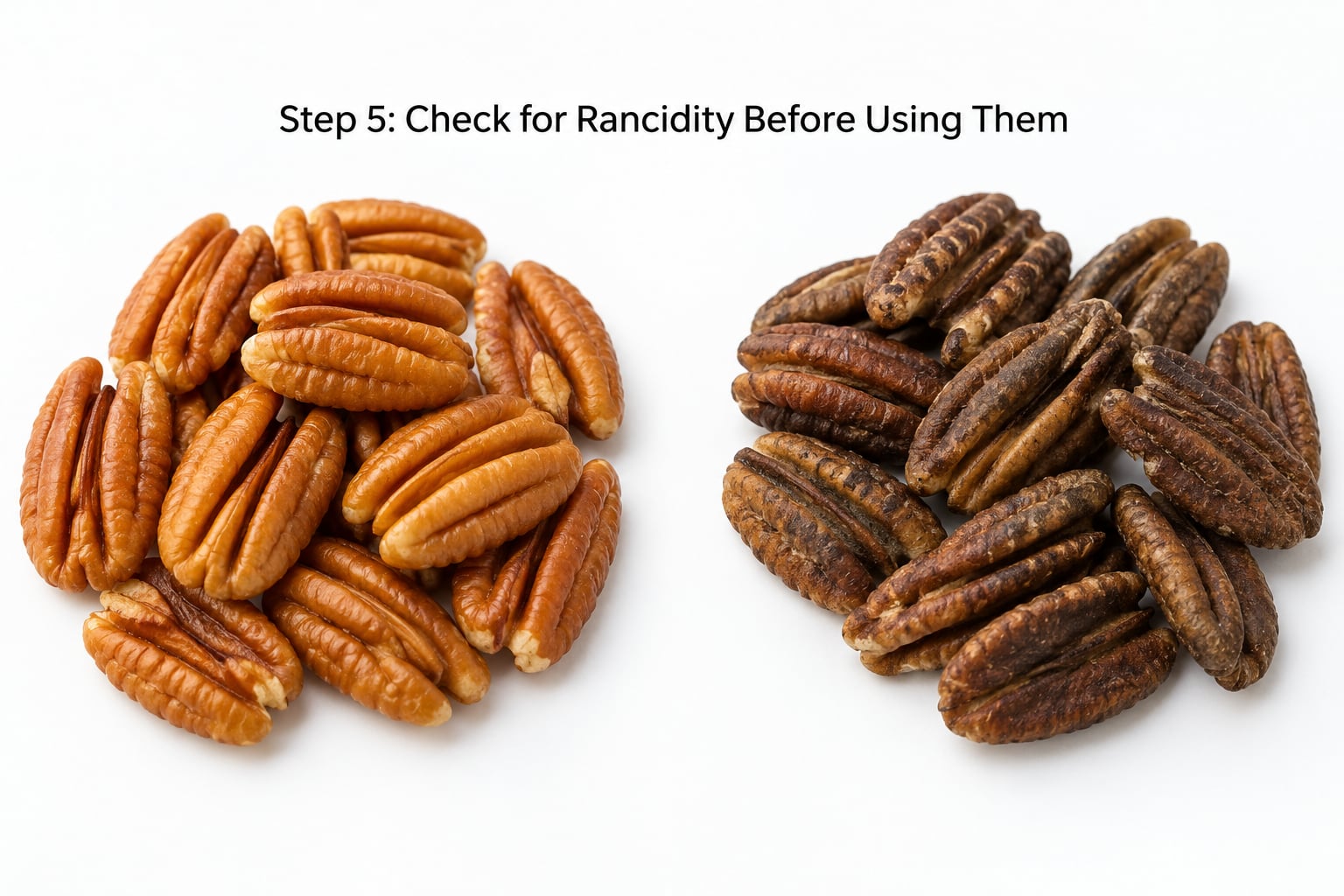
Rancid pecans smell waxy, greasy or faintly like old paint and pencil shavings, a clean example of the stale cardboard odor people describe when nuts have turned. Fresh pecan aroma is sweet and buttery, and there is a real difference when you have both in your hands to compare.
Taste tells you next. Fresh kernels are mild and sweet, while rancid ones are bitter, sharply astringent, or flat and dull with a lingering oily aftertaste. Look for dark or dull-looking kernels, a texture that feels waxy or greasy rather than crisp, and any sign of mold, webbing or a musty smell. The moldy ones go in the trash without a taste test.
Oxidized oil is not what anyone wants to eat regularly, and no amount of roasting or baking drives the bitterness out. If a bag smells off, it belongs in the trash.
Common Mistakes
The most common storage error is leaving the bag open on the counter, which exposes the entire supply to air every time you make a snack. Fix it by decanting the amount you actually reach for into a small jar on the counter and putting the rest back in the fridge.
Second is refrigerating in a loosely covered container, which cools the nuts while letting oxygen walk in. Use a sealed jar or bag, and press freezer bags flat so the air is out before the seal goes on.
Third is the crisper drawer, a humid compartment that shortens nut life rather than extending it. Store pecans on an upper or middle shelf, away from the vents and away from anything damp.
Fourth is freezing one bulk bag and thawing it every time a recipe calls for half a cup. Portion into flat bags at the measured amount you bake with, and only the bags in use ever touch the counter.
Fifth is placing nuts next to strong smells or in a warm spot such as a garage shelf or above the stove. Odors migrate, and heat starts oxidation early.
Sixth is keeping a package long past its window because the best before date says otherwise. That date is a quality marker from the packer, not a guarantee, and once the smell turns, the date is irrelevant.
Seventh is assuming an airtight container makes rancidity impossible. Air is the biggest driver, not the only one, so time and temperature still count.
Tips for Keeping Pecans Fresh
Buy smaller amounts more often if you bake casually. A two-pound bag that you finish in six weeks is a better deal than a five-pound bag that quietly goes bitter in the back of the pantry.
When you do buy in bulk at the market, freeze on the spot. Portion, label, and lay the bags flat in a single layer until they are solid, then stack them.
Avoid moving nuts back and forth between the counter, fridge and freezer. Every temperature swing brings condensation with it, and condensation brings mold.
Store candied, salted and praline pecans separately from plain ones. Sugar and salt draw moisture, their coating traps whatever is in the container, and they turn rancid sooner than raw or dry-roasted nuts.
Skip the idea that roasting locks in freshness. Heat pushes oil to the surface of the kernel, which makes roasted pecans fragrant and also gives oxidation more to work with. They need the same airtight cold storage as raw nuts, and a shorter window than frozen raw ones.
Frequently Asked Questions
How long can pecans stay in the refrigerator?
Shelled pecans kept in an airtight container at 34 to 40 F stay in good eating condition for roughly 2 to 3 months, and unshelled nuts hold up longer, closer to 4 to 6 months. Put them on a shelf rather than in the crisper drawer, which is the most humid part of the refrigerator. If you need longer than a few months, freeze instead.
How do I tell if my pecans have gone rancid?
Smell them first. Rancid pecans hit you with a waxy, greasy, stale or paint-like odor instead of the sweet, buttery smell of fresh nuts. Taste one piece, and expect bitterness, harsh astringency or a flat oily aftertaste. Dark dull color and a waxy texture point the same direction. Mold, webbing or a musty smell means discard them without tasting.
Can I freeze pecans that are already a few months old?
Yes, as long as they smell fresh and show no mold. Freezing does not repair nuts that have already started to turn, but it will stop or greatly slow further oxidation, so freezing a bag that is two or three months old is still worth doing. Portion it, press out the air, seal it, label it with the date, and keep using small amounts.
How long do unshelled pecans last compared with shelled ones?
The shell is a physical barrier to oxygen and moisture, so unshelled nuts last noticeably longer in identical conditions. Expect about 1 to 2 months at cool room temperature, 4 to 6 months refrigerated, and around a year frozen, compared with 1 to 2 weeks, 2 to 3 months and 6 to 12 months for shelled halves or pieces. Shell them only when you plan to use them.
What do I do with pecans after picking them off the tree?
Dry them first. Extension guidance calls for reducing nut moisture to around 4 percent as soon as practical after harvest, which in a home kitchen means spreading them in a single layer in a warm, airy, shaded spot until they rattle and feel dry rather than damp. Cool them fully, then store them airtight in the refrigerator or freeze them for the year ahead.
Conclusion
Start now: move the open bag into an airtight container today. Refrigerate it if you will use it within a few months, or freeze flat, labeled portions if you want supply that survives into next year’s holiday baking.
No storage method saves nuts that already smell off, so sniff them before every use and throw away anything waxy, bitter or moldy. Cold, dark and sealed is the whole trick, and it takes about five minutes.