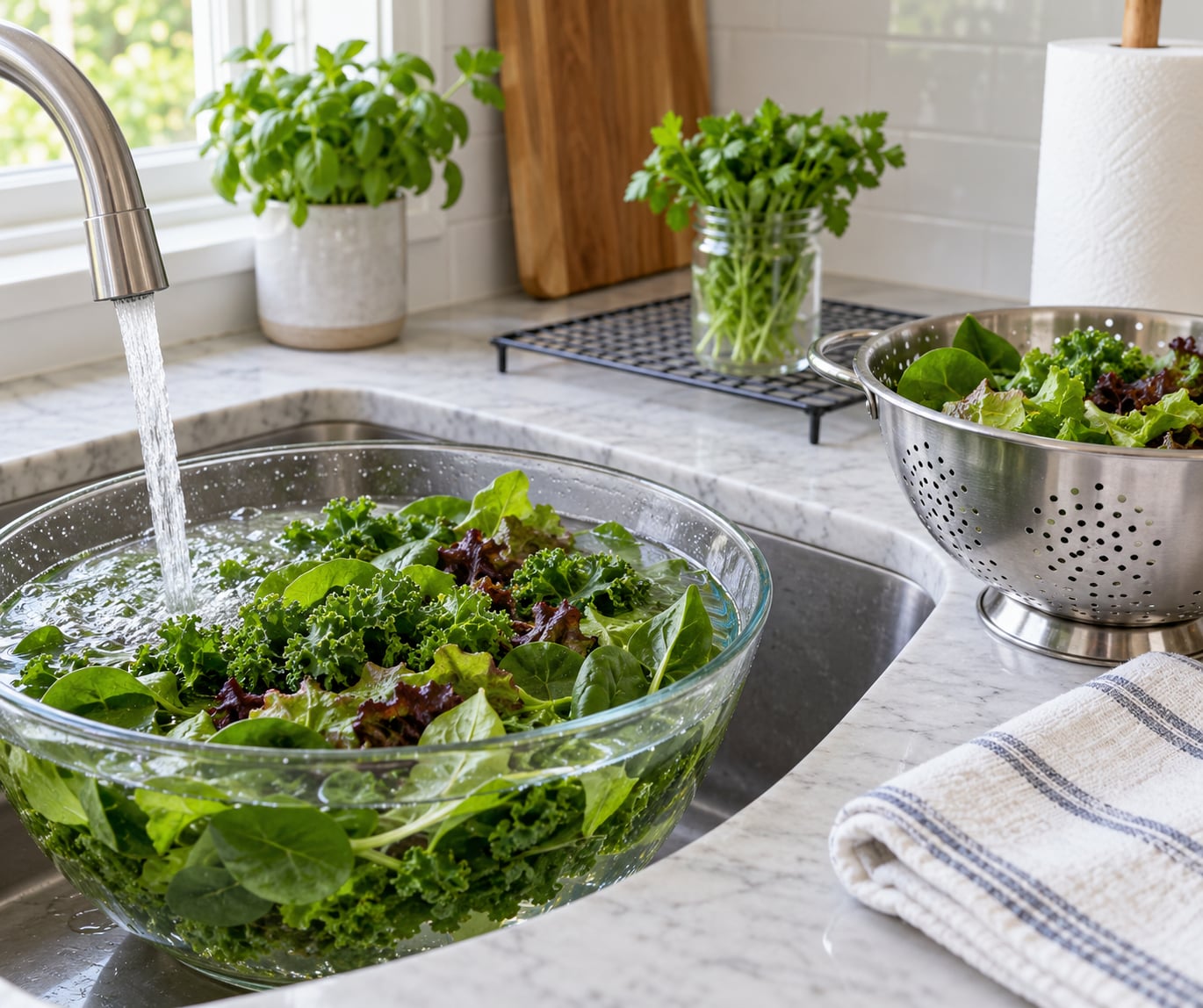
You do not need a salad spinner to clean leafy greens. Swish the leaves in a bowl of cool water, pour off the dirty water, repeat until it runs clear, then blot or air-dry them on a clean kitchen towel or a rack. A spinner is a hand-cranked centrifuge that saves you about five minutes. It changes nothing about safety and nothing about flavor.
The full job takes roughly 10 to 15 minutes for a week’s worth of greens, and the only real skill is getting them dry before they go back in the fridge. Wet leaves turn limp within a day and turn salad dressing watery.
Table of Contents
- What You Need
- Step-by-Step: How to Clean Leafy Greens Without a Salad Spinner
- 1. Sort and Separate the Greens
- 2. Soak or Swish the Leaves
- 3. Rinse Away the Dirty Water
- 4. Dry the Greens Without a Spinner
- 5. Store the Clean Greens
- Common Mistakes
- Frequently Asked Questions
- Can I clean salad greens with vinegar?
- Are store-bought produce washes better than plain water?
- Does a salt soak help get bugs out of greens?
- Can I use the same wash method for berries and strawberries?
- How do I get rid of insects and dirt in leafy greens?
- Should I dry greens before putting them in the fridge?
What You Need
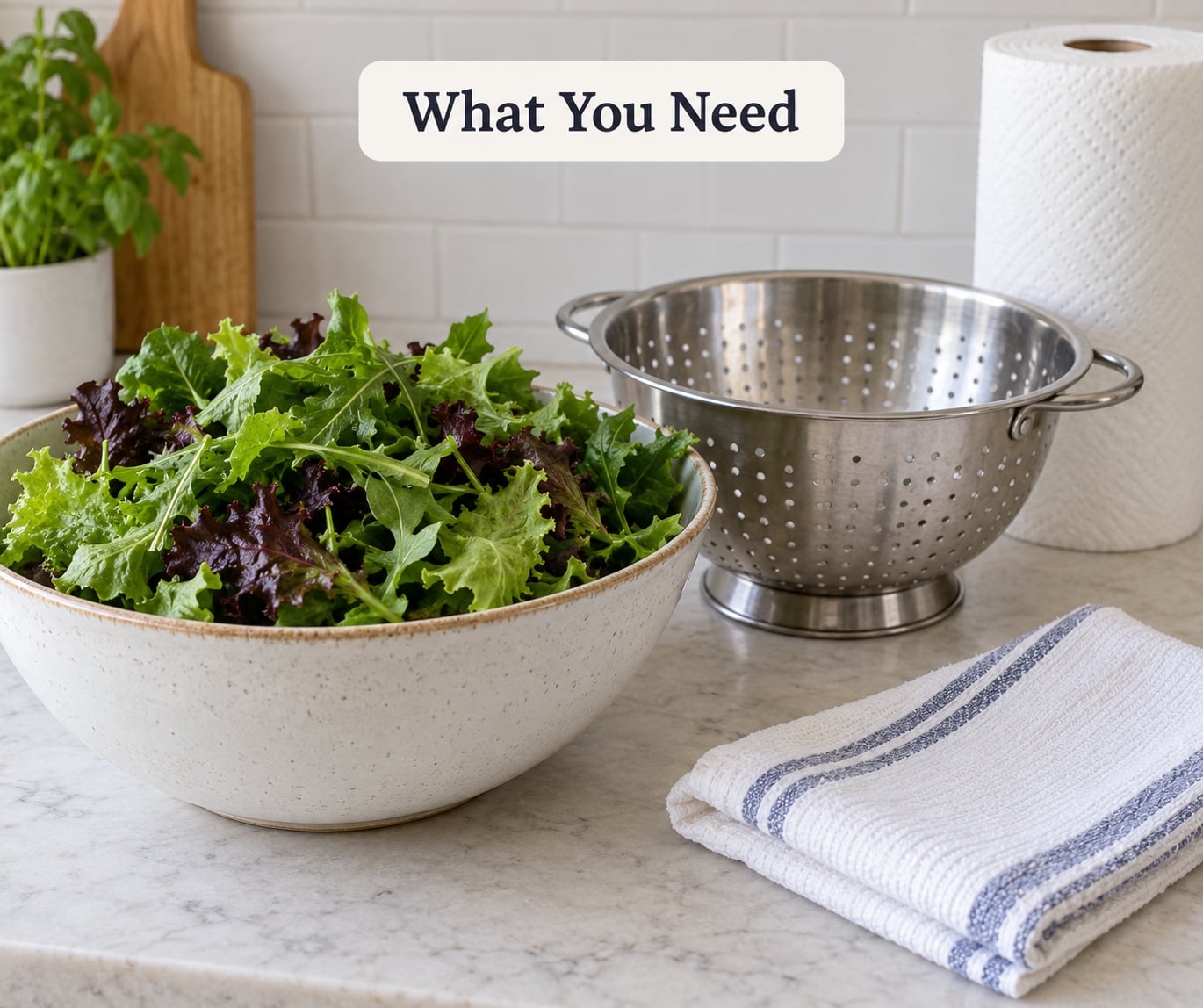
None of this is special equipment. Everything here is probably already in a drawer.
- A large bowl or basin that leaves room for the greens to float and move. A sink basin works too, which matters if you are cleaning garden or farmers market kale with dirt still on it.
- Cool running water. Not warm and definitely not hot. Leafy greens wilt fast in heat, and food-safety guidance from the Academy of Nutrition and Dietetics is blunt about leaving washed produce sitting at room temperature.
- A colander or strainer for lifting the greens out and draining them. A slotted spoon works if you have no colander.
- A clean kitchen towel. A dish towel you use for drying hands is fine as long as it is clean and has no grease or lint. Cotton or linen beats terry cloth, which holds onto water instead of wicking it.
- Paper towels for patting delicate leaves and for lining your storage container.
- A soft produce brush, optional, for sturdy greens such as kale, collards and chard with dirt in the creases.
- An airtight container with a lid for storage.
Step-by-Step: How to Clean Leafy Greens Without a Salad Spinner

1. Sort and Separate the Greens
Break the heads apart first. For kale, collards and chard, hold the stem at the bottom and pull the leaves off with your fingers rather than cutting, which bruises the flesh. Thick central ribs on mature kale can be sliced out with a knife and eaten separately.
Throw away anything yellow, wilted, slimy or chewed by insects. It will not recover, and it will spread decay through the rest of the batch in the fridge. That includes the outermost leaves of a head of romaine or iceberg, which sit against the crate or field and collect the most soil.
For a romaine heart, cut the stem end off and pull the leaves apart layer by layer. Dirt hides between the inner leaves and running water alone will not get in there.
2. Soak or Swish the Leaves
Fill the bowl about three-quarters full with cold water, drop in a loose handful of leaves, and press them under the surface. Swish the handful from side to side for 30 seconds or so, like you are washing your hands under a stream.
Then let the leaves sit for a minute or two. Dirt that was clinging to the surface loosens and settles to the bottom of the bowl instead of swirling around.
Work in batches rather than dumping an entire head in at once. When everything is crowded, leaves rub against each other and you end up moving dirt from one leaf to the next. Delicate greens like butter lettuce and mesclun need only a short soak; sturdy ones like kale and chard can take longer.
3. Rinse Away the Dirty Water
Lift the greens out with both hands, let the water drain back into the basin, and dump the water. Never pour the rinse water over your greens and leave the grit sitting at the bottom.
Refill with cool water and repeat. You are done when the water stays clear or nearly clear through a full swish, usually two or three rounds for store-bought lettuce and four or more for greens straight from a market stall or garden.
For produce that still feels sandy, rub the leaves gently between your fingertips under the water. Rinse the whole way through one last time so you are not sending loosened grit straight into your salad.
4. Dry the Greens Without a Spinner
This is the step people rush, and it is the one that matters most. Dressing slides off a wet leaf instead of clinging to it, and pooled water in a container makes the bottom layer go slimy within a day.
Towel roll. Lay the leaves in a single layer on a clean kitchen towel, roll the towel up, and twist it firmly over the sink for 30 to 60 seconds. This pulls out most of the water. Unroll, gather the leaves into the towel again, and repeat if they still feel heavy.
Paper towels. Pat rather than rub. Rubbing bruises the leaves. This is the gentlest method and the best one for baby spinach, arugula and soft herbs like basil.
Towel swing. Put the greens in a clean pillowcase, drawstring bag or pillowcase-style tote, close it, and whirl the bag in a circle over the sink for about 30 seconds. This is the trick people cooking for a crowd rely on, and it works on a surprising amount of water. Hold the ends away from your face when you swing.
Air dry. Spread the leaves in a single layer on a rack or a clean towel on the counter for one to two hours. Best for greens going straight into a salad, worst if you are in a hurry.
5. Store the Clean Greens
Store greens fully dry or not at all. Line a container loosely with a dry paper towel or a dry section of towel, lay the greens in, and cover loosely so air can move.
The towel does two jobs: it absorbs moisture that keeps dripping off the leaves, and it lets air reach the greens instead of trapping it against them. Change the towel when it goes damp, which for most people is every few days.
Refrigerate at 40 degrees F or below and use most greens within three to five days, or up to a week for sturdy kale, chard and collards. Some home cooks rinse the greens first and keep them submerged in water in a container in the fridge, then shake off the excess right before serving. It works, but change the water daily and treat it as a short-term trick rather than a storage method.
Common Mistakes
Using warm or hot water. Warm water wilts leaves and makes them limp out of the bowl. Cool water rinses just as well.
Washing every green in one crowded bowl. Grit gets pushed from leaf to leaf and the last rinse never comes clear. One loose handful per batch takes a minute longer and works far better.
Leaving greens soaking for an hour. Greens left in standing water lose crispness fast, and produce sitting at room temperature for more than two hours is a food-safety problem, or one hour if the kitchen is above 90 degrees F.
Tearing delicate leaves. Separate them by hand at the base while they are dry, before washing. Once a leaf is wet it is three times as easy to rip.
Drying on a towel that has seen better days. A greasy or grimy dish towel puts that film straight onto the leaves. Wash the towel, use it once, and put it in the laundry.
Storing greens while they are still wet. Wet leaves in a closed container turn into a warm, humid, bacterial-friendly box. Drying takes ten minutes and buys you three days.
Rewashing bagged salad mixes. Pre-cut and pre-washed greens are the most commonly contaminated produce in the fridge, but washing them again at home mostly adds moisture and shortens their life. Rinse them only if you want to, and dry them well.
For market or garden greens that arrive genuinely dirty, fill the sink or a large basin instead of using the tap over a colander. Swish, dump, refill, and the mess stays contained. A soft brush gets into the ridges of a chard stem where your fingers will not reach.
Finally, do not add soap, detergent, bleach or commercial produce wash. Residues from these stay on the leaf and are not meant to be eaten, and none of them are approved for washing produce. Vinegar and vegetable washes are no more effective at removing dirt than cool running water.
Frequently Asked Questions
Can I clean salad greens with vinegar?
You can, but it buys you almost nothing. Vinegar is not more effective than cool running water at removing dirt from leafy greens, and soaking greens in it can dull the flavor and soften the leaves. If you want to try, use one part white vinegar to about three parts cool water for no more than a minute, then rinse under running water. Never use it on leafy greens as a substitute for cleaning.
Are store-bought produce washes better than plain water?
No. Washing leafy greens in a detergent or bleach solution is unsafe, and commercial produce sprays sold for produce are not approved for cleaning produce by the FDA. None of these products remove more dirt or more bacteria than a thorough rinse under cool running water, so they are not worth the extra cost or the extra step. Cool water, a clean towel and some time do the whole job.
Does a salt soak help get bugs out of greens?
A short soak in cool salted water can dislodge small insects and larvae that are hiding in the folds of a leaf. Dissolve about a tablespoon of salt in a quart of cool water, submerge the greens for a few minutes, and then rinse thoroughly under running water. Salt is for flushing bugs out, not for killing bacteria, and soaking much longer than that just makes the greens limp and salty.
Can I use the same wash method for berries and strawberries?
Yes for the first step. Gentle swishing in cool water works for berries, strawberries, grapes and leafy greens alike, and the same fill-and-dump method in a bowl keeps the sink clean. Do not soak soft fruit any longer than a minute, though, since the waterlogged berries turn mushy and lose their bloom. Dry them on a paper towel rather than in a towel roll, since berries bruise easily.
How do I get rid of insects and dirt in leafy greens?
Separate the greens leaf by leaf so you can see both sides, then swish them in cool salted water for a few minutes. Grit from garden or market produce needs two or three full fill-and-dump rinses before the water runs clear, and a soft produce brush helps on sturdy kale and chard. After washing, float the leaves and pick off anything that floats or crawks before they reach your salad.
Should I dry greens before putting them in the fridge?
Yes, dry them completely. Moisture trapped in a container is what turns a head of washed romaine into a slimy mess in about two days. Blot or towel-dry everything until no surface water is left, line the container with a dry paper towel, and keep it in the fridge at 40 degrees F or below. Most greens keep three to five days that way, and sturdy greens like kale keep about a week.
Start at the sink, not the fridge. Sort the greens while they are dry, swish them a loose handful at a time in cold water, dump and refill until the water stays clear, then twist them hard in a clean towel before anything goes into a container. Ten minutes of that beats a spinner you do not own, and it beats washing pre-cut bagged mixes again at home. If you are picking greens up at a market stall this 2026, give them the water bath in a basin before you bag them up, and dry them on the ride home.