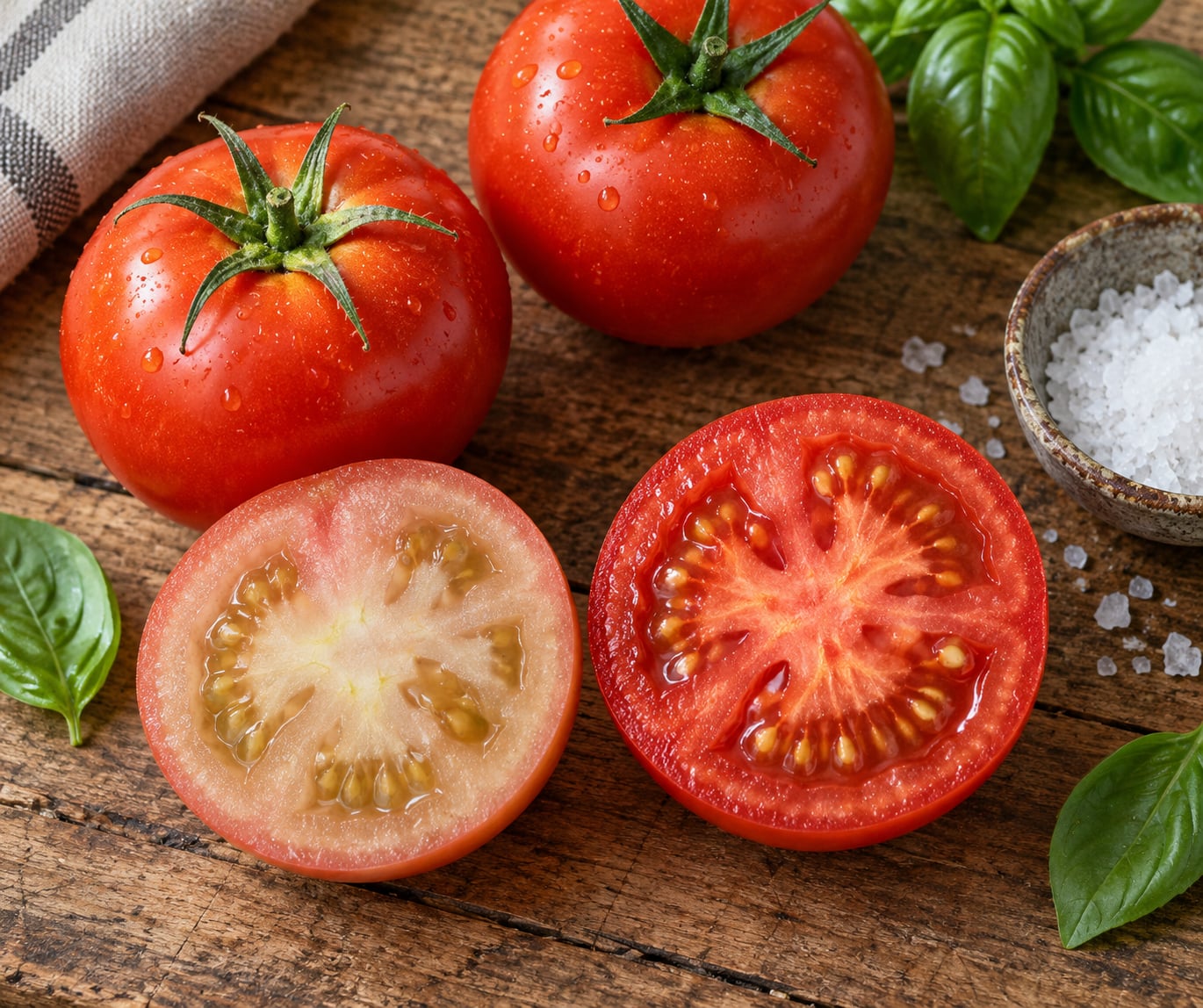
Why do store tomatoes taste bland? Mostly because supermarket tomatoes are picked before they are ripe, ripened after picking with ethylene gas or controlled heat, and bred for a long shelf life rather than for flavor. Color is the one thing they reliably deliver.
That is the short answer, but it is worth separating three complaints that get lumped together. Bland means there is not much aroma or sweet-acid balance at all. Watery means the fruit is diluted and your salad becomes a puddle. Mealy means the flesh has gone soft and grainy, usually after sitting in a cold case too long.
Each has a different cause, and each responds to a different fix. Here is what is actually happening to your tomatoes, then what you can do about it at the store and in your kitchen.
Table of Contents
- Why Do Store Tomatoes Taste Bland?
- What Makes Store Tomatoes Taste Like Nothing?
- Why Do Store Tomatoes Taste Bland After Refrigeration?
- Does the Tomato Variety Matter?
- How to Make Bland Tomatoes Taste Better
- How to Ripen Tomatoes Faster Without Making Them Spoil
- How Tomato Storage Affects Flavor and Safety
- Frequently Asked Questions
- Are pale supermarket tomatoes safe to eat?
- Why do my tomatoes taste watery as well as bland?
- Does adding salt actually make tomatoes taste better?
- Are Roma or grape tomatoes better for flavor?
- Can you restore flavor to tomatoes that have been refrigerated?
- Conclusion: Start with the Ripest Tomato You Can Find
Why Do Store Tomatoes Taste Bland?
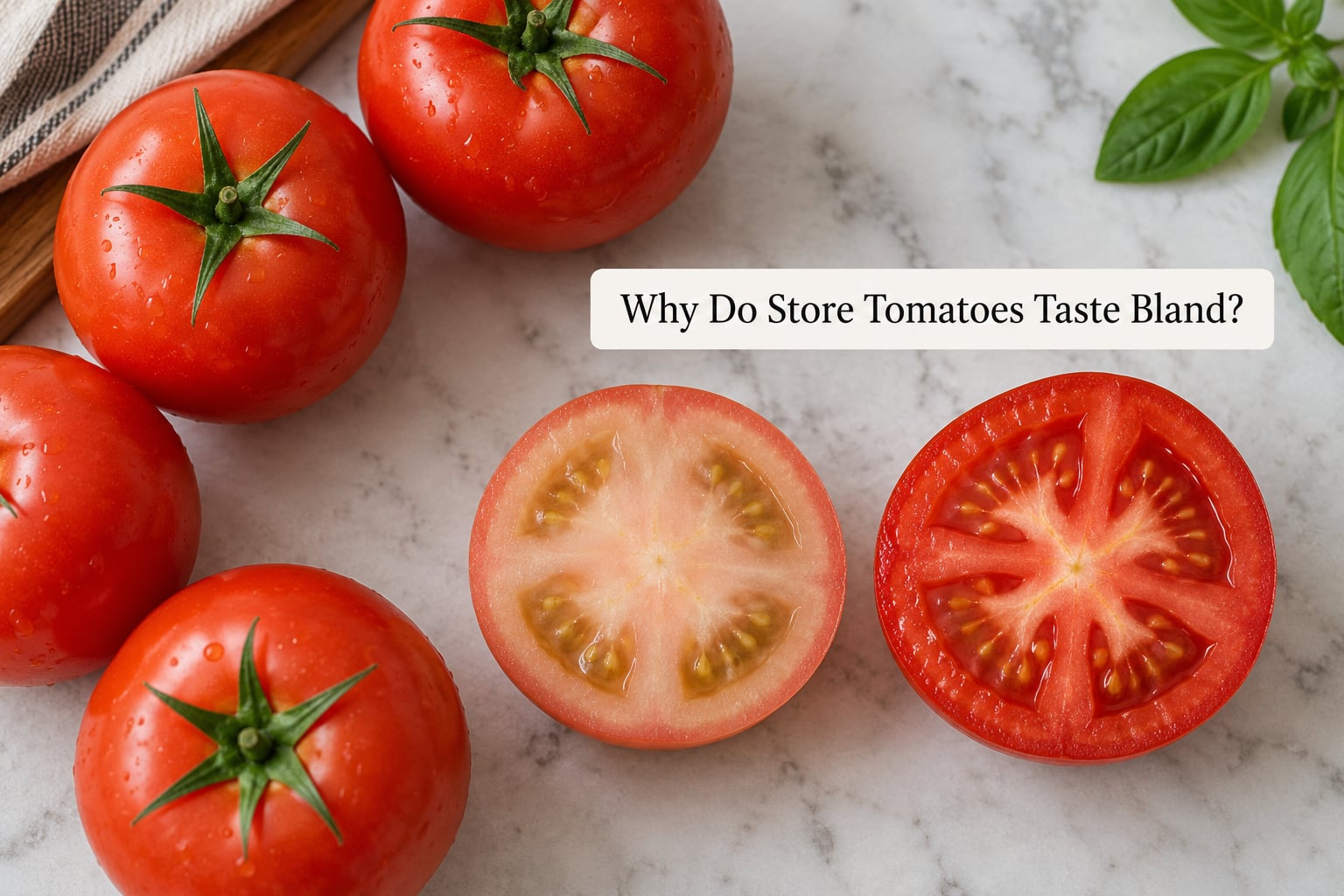
There are five causes that stack on top of each other, and they explain most of what people complain about.
1. They are harvested unripe. A field tomato for fresh sale is picked in the “green” or “breaker” stage, meaning still green or just starting to blush. Picking it early means it survives a truck trip of a thousand miles or more without bruising or splitting. Tomato plants grown for canning are picked even greener and machine-harvested, and those are not the ones you want to eat raw.
2. Ripening is finished off after picking. Ripeness is a race, and a picked tomato is losing. Growers and distributors finish the job in ripening rooms with ethylene gas, a plant hormone the fruit produces anyway, or by holding warm and humid and simply letting the fruit ripen on its own over several days.
3. Modern varieties were bred for the truck. Since the middle of the twentieth century, seed companies have selected tomatoes that hold their shape, resist disease, ripen evenly and survive handling. Farmers on garden forums note the proof is easy to run: save seed from a supermarket tomato, plant it, and the fruit comes back bland. The trait is genetic, not just a handling problem.
4. The variety is chosen for uniformity, not character. A chain needs tomatoes that all look the same on the same day. Big beefsteak round tomatoes are the classic case, bred for consistent size and shelf display life.
5. Long distribution drains what is left. Time in transit is time aroma and sugars are being spent, and by the time the fruit reaches you the flavor budget is thin.
One important nuance: ethylene changes color, not taste. A member of the National Gardening Association forum who has worked near ethylene chambers reports that grocery chains ask for different gas levels to land on different shades of pink and red, and that the gas is a coloring tool. If a tomato looks finished but tastes of nothing, the color was never the problem.
What Makes Store Tomatoes Taste Like Nothing?
Tomato flavor is a handful of things working together: sugars for sweetness, organic acids for brightness, volatile aroma compounds for the smell that makes you take a second bite, and savory glutamates that give the umami weight.
The balance matters more than the amount. A tomato picked early has had less time to load up sugar, and it never accumulates the full set of aroma compounds that switch on during the last stage of ripening on the plant.
A 2017 study published in Science looked at 398 tomato varieties and identified 13 flavor compounds associated with what people actually rate as good taste. When growers crossed modern varieties with heirloom lines carrying those compounds, the offspring scored noticeably better. The varieties that came out last were not exotic. They were ordinary supermarket types that had simply been narrowed for yield and durability and lost the chemistry along the way.
Why Do Store Tomatoes Taste Bland After Refrigeration?
Cold is not what makes a tomato flavorful, and cold is not what ruins it either. Chilling mutes your perception of a ripe tomato. Volatile aroma compounds are released less readily at low temperature, so you get less smell, and smell is most of what flavor is. Sweetness and acidity also register as flatter when everything is cold and damp on the tongue.
So the myth that refrigeration destroys tomato flavor is half right. It does not destroy the compounds, but it does make a ripe tomato less rewarding to eat straight from the fridge.
The practical split is simple. Use the refrigerator to slow down spoilage, not as a ripening step. Take a ripe whole tomato out an hour or so before you eat it, let it come toward room temperature, and slice it cold. Cut tomato goes back in the fridge straight away and stays there.
Does the Tomato Variety Matter?
Yes, more than almost anything else you can control at the store.
| Format | Flavor expectation | Best use |
|---|---|---|
| Vine-attached cluster | Best odds of a ripe, aromatic fruit | Salads, sandwiches, eating raw |
| Grape or cherry | Sweetest and most reliable in any format | Snacking, salads, roasting |
| Roma or plum | Meaty, less watery, mild raw | Sauces, soups, roasting |
| Round beefsteak | Uniform and durable, often the blandest | Slicing for burgers, cooked dishes |
| Greenhouse grown | Ripens evenly in low light, mildest | Out-of-season cooking |
| Canned San Marzano | Concentrated, reliably tomato-flavored | Sauce, soup, braises |
Heirloom tomatoes carry the flavor chemistry that modern hybrids gave up, and shoppers trust them for it. The catch is price, a short season, and fruit that is irregular, which is exactly what modern supply chains are built to avoid. Organic is a different category entirely: it describes how the tomato was grown, not how it tastes, and there is no consistent evidence that organic tomatoes are better in the mouth.
Format matters as much as the name. Vine-attached or truss tomatoes are widely reported as the freshest option because the fruit was picked with its stem intact. Cherry and grape types earn their reputation because they ripen faster and concentrate more sugar, which is one reason imported French cherry tomatoes get so much praise even though they travel a long way.
How to Make Bland Tomatoes Taste Better
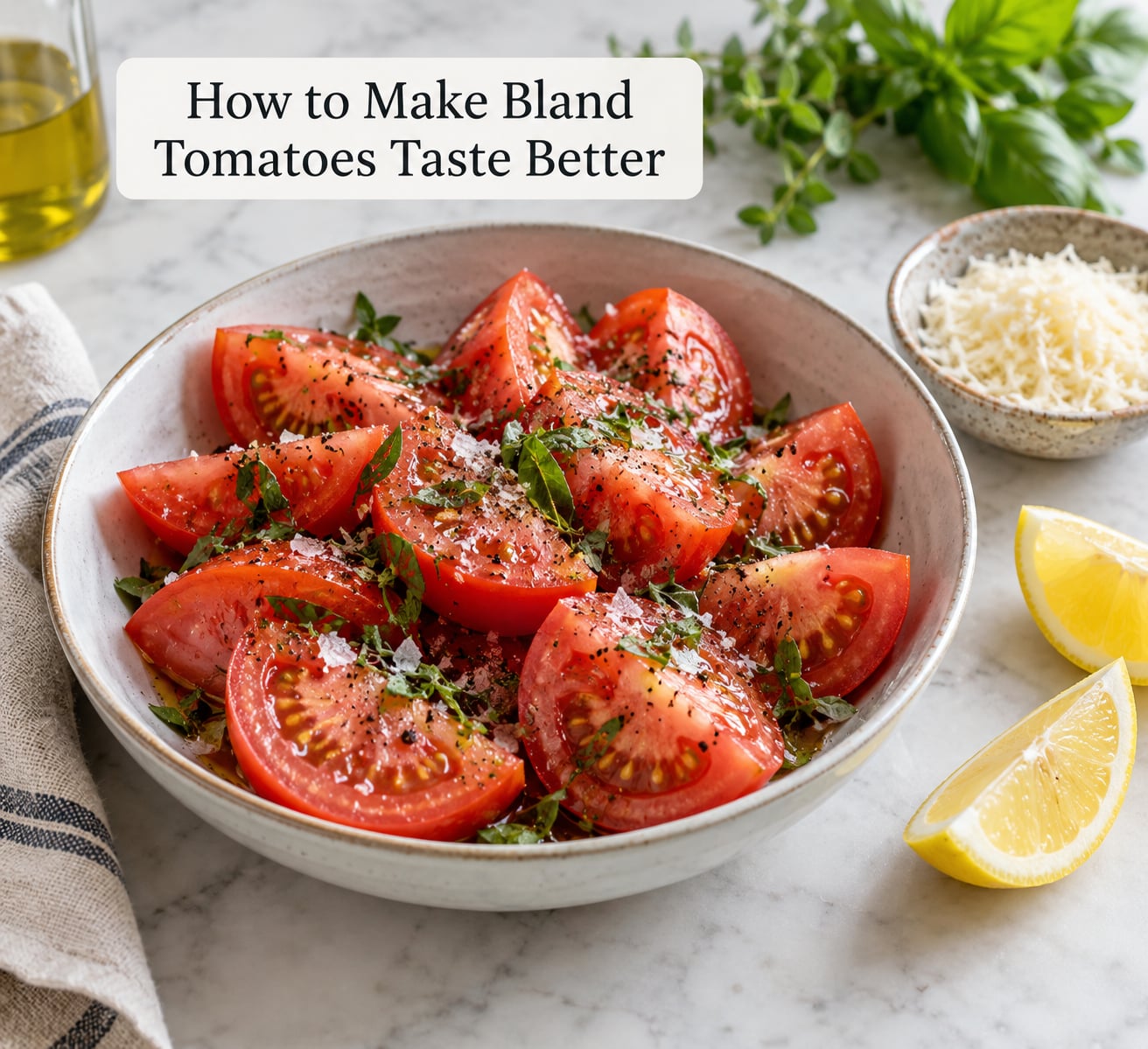
You cannot rebuild flavor that never developed, but you can push a mild tomato into something good. These are the adjustments that work, roughly in order of how much they change the dish.
1. Salt earlier than feels right. Salt does not just add salty, it makes sweetness and aroma read more strongly. Salt the cut surfaces and wait ten minutes before dressing.
2. Add acid. A squeeze of lemon, a splash of red wine vinegar, or a spoon of balsamic lifts a flat tomato instantly. Many people who think they need more salt actually need acid.
3. Add fat and savoriness. Olive oil, grated Parmesan, crumbled feta, a spoon of miso paste or a strip of bacon all fill in the missing umami.
4. Roast instead of eating raw. Heat drives off water and concentrates what sugar and acid remain. A low oven at around 375°F (190°C) turns a mealy supermarket tomato into something with real character in about 30 to 40 minutes.
5. Salt, drain, and repeat. Sliced, lightly salted tomatoes laid on a paper towel for 20 minutes shed water and concentrate. This fixes watery flesh and makes a salad that holds together.
6. Freeze and blend for cooked dishes. Roast or blanch the tomatoes, freeze them, and blend from frozen. Sauces and soups do not care about a missing aroma that raw eating would.
7. Skip fresh for cooked dishes when the tomato is weak. A can of San Marzano is picked ripe and processed within hours, which is why it tastes more like a tomato than most of what is on the shelf next to it. Long-time home cooks stopped buying store tomatoes for winter cooking for exactly this reason.
8. Pick a different tomato. If a salad is the whole point, buy grape tomatoes or a vine-attached cluster instead. At that point no seasoning trick beats choosing better fruit.
How to Ripen Tomatoes Faster Without Making Them Spoil
Ripening at home cannot add sugar, but it can finish a job the packer left incomplete, and it can rescue tomatoes that are firm and pale but not spoiled.
Whole tomatoes on the counter in a single layer, out of direct sun, will usually move along on their own in a few days. To speed that up, put them in a paper bag with a ripe banana or apple and leave the bag loose on the counter. The fruit gives off ethylene, the bag holds it around the tomatoes, and you usually see color within a day and usable ripeness in two to three.
Check progress by smell rather than color alone. A ripe tomato gives up a real tomato scent at the stem end. If it smells like a green tomato, it is not ready, no matter how red the shoulders look.
A few things go wrong in this routine. A closed plastic bag traps moisture and invites mold, so use paper or a loose opening. Overripe fruit in the bag speeds everything past the point you want, so add one banana, not four. And if the tomato is already soft, leaking, or smelling sour, ripening it will not save it.
If you must speed things up further, a warm kitchen helps, and a shallow oven at about 100°F (38°C) will ripen a tomato in a day or two. Watch it, because the same heat that ripens will cook it if you forget.
How Tomato Storage Affects Flavor and Safety
Store whole tomatoes at room temperature until they are ripe, stem side down on a counter or in a bowl, and use them within about a week. Once they are fully ripe and you cannot get to them, refrigerate them. Cold slows decay and molds over, and the flavor cost is small if you bring them out before eating.
Never refrigerate tomatoes that you still want to ripen. Below about 50°F (10°C) the fruit can suffer chilling damage, going mealy and losing flavor instead of finishing.
Cut or sliced tomatoes are a different food. Refrigerate them within two hours, keep them in a covered container, and use them within three to four days. Whole tomatoes that sit on the counter past about a week, or that show mold, leaking, a sour or fermented smell, or a slimy surface, should go in the bin rather than in the salad. Blandness is a quality problem. Odor and slime are a safety problem, and they are not the same thing.
One last storage note: keep tomatoes away from ethylene-producing fruit if you want them to ripen on schedule. Bananas, apples and avocados all release it, which is useful in a controlled paper bag and unhelpful on a shelf next to a week-old carton.
Frequently Asked Questions
Are pale supermarket tomatoes safe to eat?
Usually yes. A pale or green-shouldered tomato that is firm, smells like a tomato and has no mold is simply under-ripe, not dangerous. It will not develop full flavor but it is safe to eat, and ripening it at room temperature is fine. Toss it if it is soft, leaking, slimy, or smells sour or fermented, because those signs point to spoilage rather than immaturity.
Why do my tomatoes taste watery as well as bland?
Wateriness comes from dilution, not just missing flavor. Fruit harvested early or grown in low light has had less time to load up sugar and solids, so the flesh is mostly water. Tomatoes can also be diluted at the plant level by heavy watering. Salting cut slices and draining them for about 20 minutes pulls out surface water and concentrates what is left.
Does adding salt actually make tomatoes taste better?
Yes, and it is the single cheapest fix. Salt suppresses bitterness and sharpens the perception of sweetness and aroma, so a mild tomato reads as more itself. Season the cut surfaces first and wait ten minutes before adding dressing or oil. If it still tastes flat after salting, the next thing to reach for is acid, usually lemon or vinegar.
Are Roma or grape tomatoes better for flavor?
Grape and cherry tomatoes are usually the sweeter and more reliable option raw, because they ripen faster and concentrate more sugar. Roma and plum tomatoes are meatier and less watery, which makes them better for sauces, soups and roasting even though they are mild when eaten raw. For a salad, go grape or cherry. For a cooked dish, go Roma.
Can you restore flavor to tomatoes that have been refrigerated?
Only partially. Chilling dulls aroma release and flattens the perception of sweetness and acid, but it does not destroy the compounds themselves. Let the tomato sit at room temperature for about an hour before cutting it and the difference is real but modest. If it has gone mealy or water-soaked, chilling damage is permanent and cooking will do more for it than waiting.
Conclusion: Start with the Ripest Tomato You Can Find
Why do store tomatoes taste bland comes down to a short supply chain of losses: fruit picked green, ripening finished with ethylene or warm air, varieties selected for shipping instead of eating, and days of transit after that. Color tells you almost nothing, so shop by smell and a gentle squeeze instead.
Start there, then season with salt and acid before you reach for anything else. Roast the weak ones, use canned tomatoes for cooked dishes, and buy a vine-attached cluster or a punnet of grape tomatoes when you actually want flavor in a salad.