Bacon fat works as a stand-in for butter, oil, or shortening in most savory cooking, and a spoonful adds a smoky, salty richness that plain vegetable oil never will. The whole job takes about five minutes of prep and a jar in the fridge, so if you make bacon even occasionally, you already have the hardest part done.
I keep a jar in the fridge year round. It gets used for eggs, for potatoes, and for the vegetables nobody wanted until the pan got hot.
Table of Contents
- What You Need to Use Bacon Fat in Cooking
- Step-by-Step
- Step 1: Collect and Melt the Bacon Fat
- Step 2: How to Use Bacon Fat for High-Heat Cooking
- Step 3: Roast Vegetables and Proteins With Bacon Fat
- Step 4: Crisp Potatoes and Other Small Foods
- Step 5: Season Popcorn, Vegetables, and Baked Goods
- Step 6: Grease Pans, Trays, and Pizza Crusts
- Step 7: Cool and Store Extra Bacon Fat
- Common Mistakes
- Tips for Using Bacon Fat Successfully
- Frequently Asked Questions
- What is the best way to use bacon fat in cooking?
- Can I use bacon fat instead of butter or oil?
- How much bacon fat should I use in a recipe?
- How long does bacon fat last in the refrigerator?
- Is bacon fat safe to use for frying?
- Can I use bacon fat on vegetables and baked goods?
- Conclusion
What You Need to Use Bacon Fat in Cooking
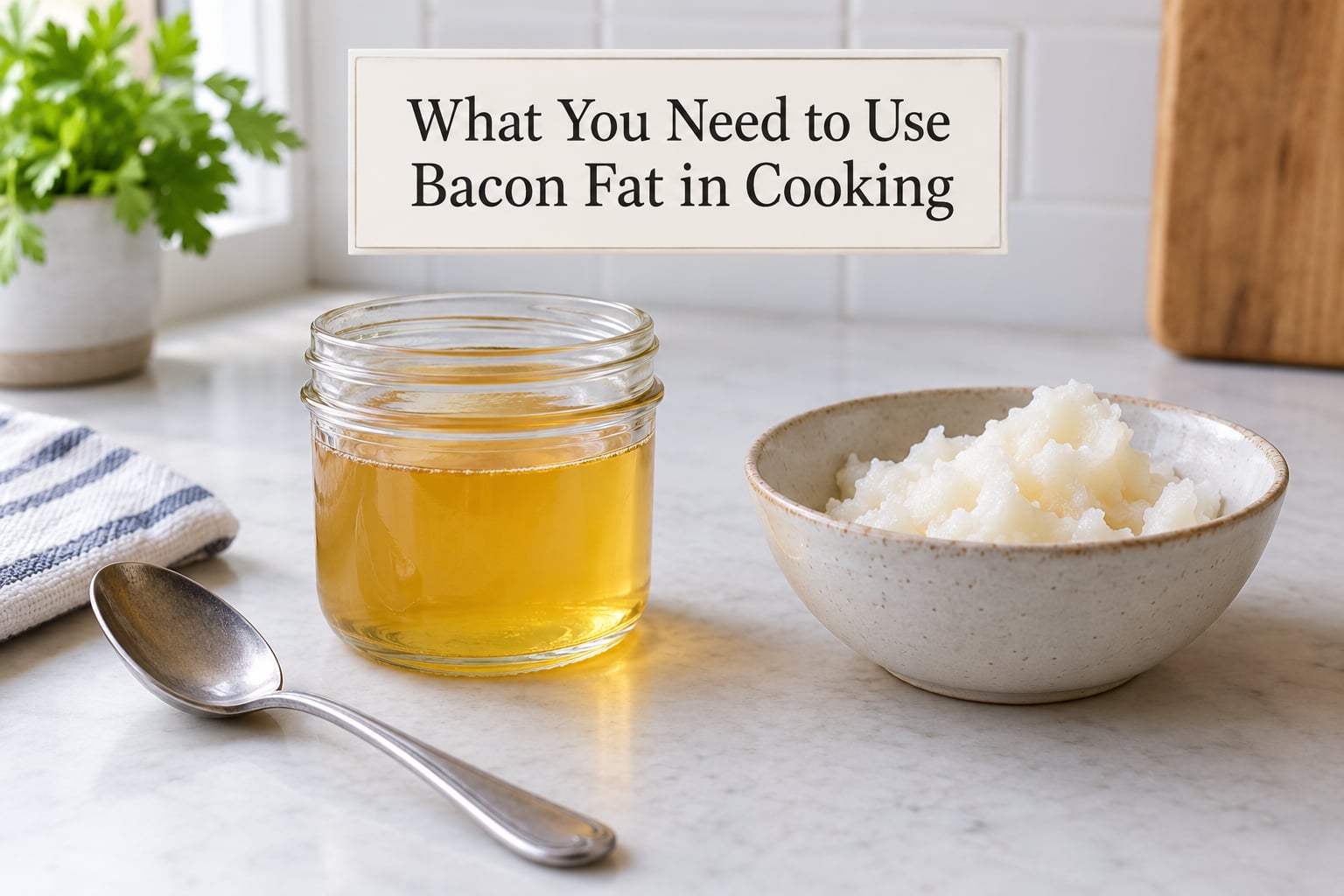
Bacon fat comes in two forms and both work. Straight from the pan it is hot drippings with browned bits floating in it. Stored and cooled, it is a solid, pale, spreadable fat that scoops out of the jar like shortening.
For most cooking you want it strained, because the flecks burn on the first contact with a hot skillet and turn bitter fast. What you need to get started:
- The rendered fat itself, saved from your last batch of bacon
- A heat-safe container with a lid, such as a mason jar or a wide-mouth glass jar
- A fine-mesh strainer, a paper towel in a funnel, a coffee filter, or a piece of cheesecloth for the clean version
- A small spoon or scoop for the solid fat
- An ice cube tray if you make a lot of bacon and want freezer portions
One tablespoon of bacon fat carries roughly 115 calories and about a gram of sodium, so it is a flavor and seasoning ingredient as much as a cooking fat. That is worth remembering before you add it to something that is already salted.
Step-by-Step
Step 1: Collect and Melt the Bacon Fat
While the bacon is still hot, pour the fat through a fine-mesh strainer set over a jar. A paper towel folded into a funnel does the same job and is what people on cooking forums reach for first, because it catches the fine particles a strainer lets through.
Let it cool until it turns opaque and thick. If you skipped the strain, warm the fat gently over low heat until it melts, then ladle it into a clean jar. You know it worked when the jar holds a smooth, even layer with no dark flecks floating in it.
Skip the burner. You can melt it in a microwave-safe bowl in 20-second bursts instead, which takes the scorching risk out of it entirely.
Step 2: How to Use Bacon Fat for High-Heat Cooking
Put a teaspoon or two of the fat into a skillet and let it melt until the whole pan is slick before anything else goes in. That is the entire method for eggs, and it is also the start for searing anything.
For eggs, medium heat is the right call. Too hot and the fat smokes before the whites set, which is the single most common complaint from people learning to cook with it. A spoonful of fat per two eggs is plenty.
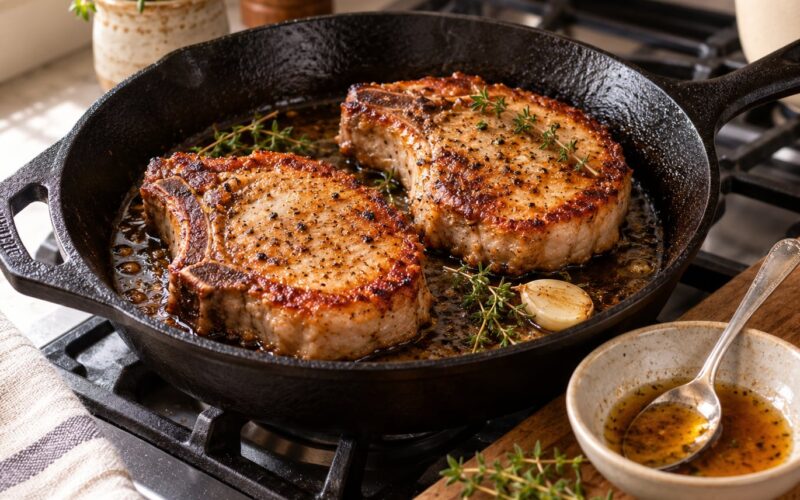
For searing meat, raise the heat. Bacon fat handles a hot pan better than butter does, because butter has milk solids in it and those solids brown and burn before the fat is done working. Look for the same cues you would use with any oil: the food should release from the pan without sticking.
Step 3: Roast Vegetables and Proteins With Bacon Fat
Coating is the move here. Toss your vegetables or protein with a small amount of melted fat, or drizzle it over after they go in the oven. Half a tablespoon per pound of vegetables is a good starting point; more than a tablespoon per serving and the smoke flavor takes over.
Roast at your recipe’s usual temperature, around 425 F for most vegetables, and let the fat do the basting that you would otherwise do with oil. Broccoli, potatoes, cabbage, and chicken thighs all take this well.
If you are cooking poultry, pull it at 165 F internal temperature and let it rest. Whole cuts of beef, pork, and fish come off at 145 F, and ground meat needs 160 F. The fat does not change those numbers, it only changes the browning.
Step 4: Crisp Potatoes and Other Small Foods
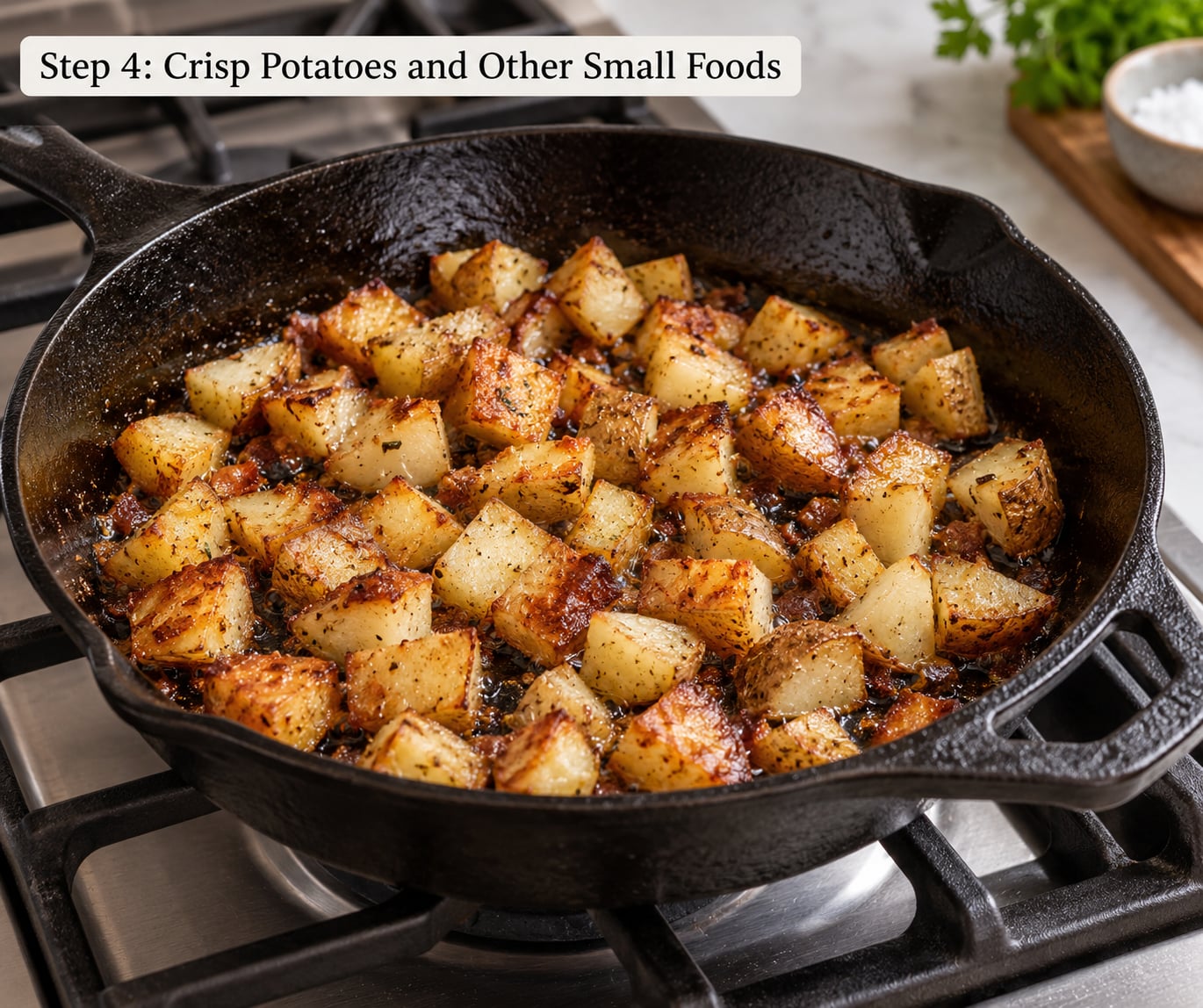
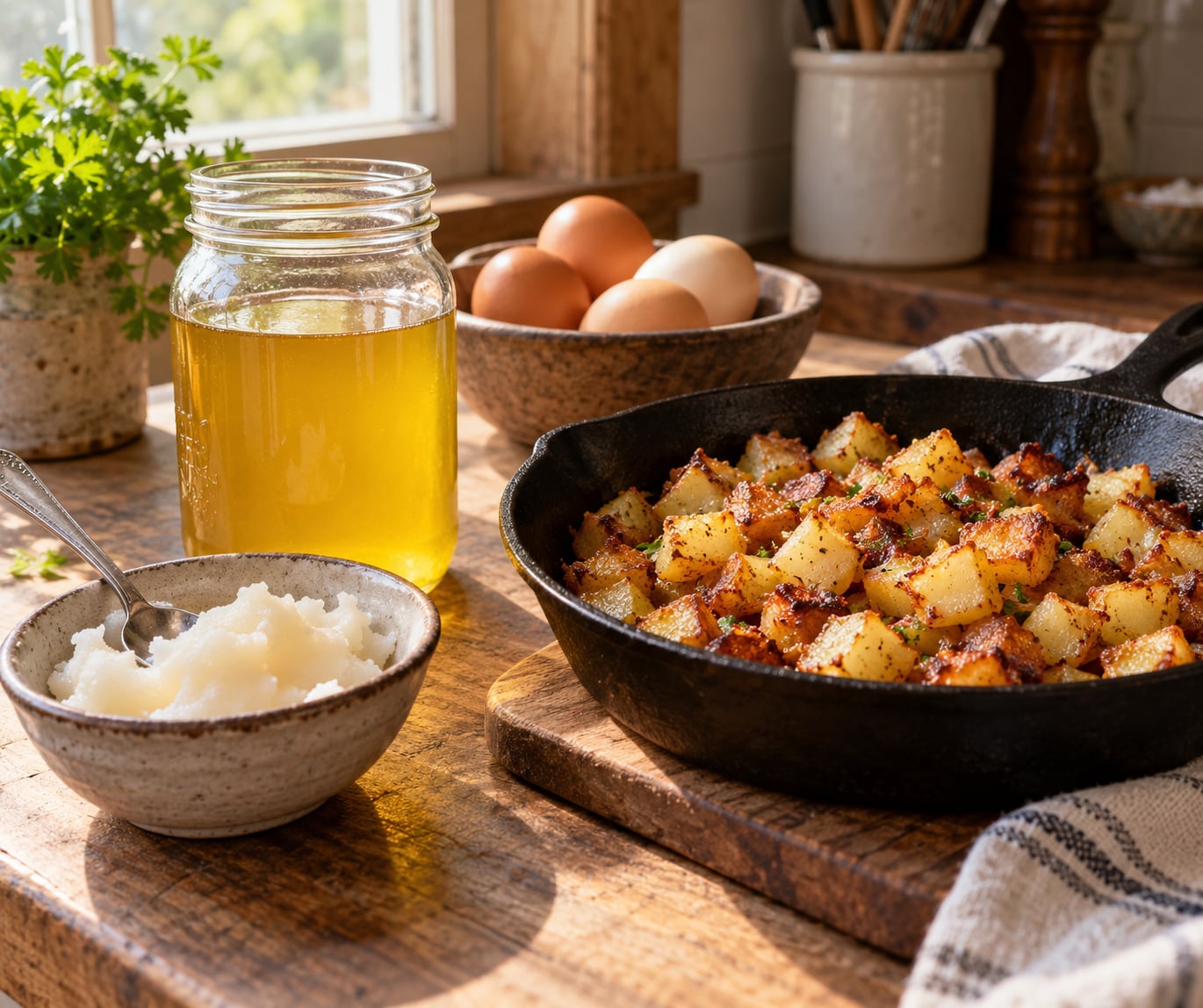
Cut your potatoes small, about half-inch cubes, and dry them well before they touch the fat. Wet potatoes steam instead of browning, and that is the whole reason a beautiful pan of hash browns turns greasy.
Fry them in a thin layer over medium-high heat, then lower the heat once the outsides take color so the centers can cook through without the fat scorching. Leave them alone for a few minutes at a time instead of stirring constantly. You will know it worked when the potatoes release from the pan on their own with a light push.
The same approach works for hashed patties, fried chicken, and small fish fillets. Keep the pieces small and the heat steady.
Step 5: Season Popcorn, Vegetables, and Baked Goods
Melted bacon fat is a good drizzle for popped popcorn because it lands as a thin, even coating instead of sitting in one heavy spot. A teaspoon over a large bowl is right. Toss it while the popcorn is still hot and unsalted.
In baking, it goes anywhere butter does in a savory bake. Cornbread, biscuits, scones, savory muffins, and bread dough all take a 1:1 swap, and some bakers use a mix of butter and bacon fat for the best of both.
Watch the salt. Bacon fat carries sodium, so if you are using it in cornbread or biscuits, pull back the salt in the recipe by a small pinch rather than leaving it alone.
Step 6: Grease Pans, Trays, and Pizza Crusts
Greasing a pan is one of the easiest uses and the one people forget. Rub a thin layer of solid bacon fat on a cast iron skillet, a biscuit tray, or a cake pan before the dough goes in, and bread and biscuits release far more cleanly than they do with a floured pan.
For pizza dough, brush the base and the sides lightly before topping. Leave the rim plain so it stays crisp and chewy rather than short and tender.
For cast iron seasoning, wipe a very thin film of the fat over the pan and put it in the oven at 450 F for about an hour, then cool with the burner off. Repeat as needed. The film needs to be thin; a thick coat runs down the sides and makes smoke.
Do not use bacon fat to season food that should taste delicate. A plain seared scallop, a light fish sauce, or a lemon dessert will not benefit from a smoky note.
Step 7: Cool and Store Extra Bacon Fat
Let the strained fat cool on the counter only until it turns opaque, then refrigerate it. Cooling it fully on the counter invites condensation, and condensation is how flavor goes flat.
Seal the jar and keep it in the back of the fridge where the temperature is steadiest. In the fridge it will keep about three months, and many home cooks report using sealed jars at three to six months without trouble. Frozen in an ice cube tray, the same fat keeps indefinitely, so portion it at one tablespoon per cube and bag the cubes for easy grabbing.
Toss the fat if it smells sour or nail-polish sharp, darkens noticeably, foams when you scoop it, or has grown fuzzy spots or mold on top. A thin gray film is oxidation; any of the rest means the jar goes out.
Never pour it down the sink. Warm fat solidifies inside the pipe and binds to whatever else is there, which is an expensive plumber visit over a tablespoon of drippings. Seal it in the trash instead, or set the jar aside and let it solidify before you bin it.
Common Mistakes
Using too much at once. A heavy pour coats the food in a flavor that flattens everything else. Start with a teaspoon per serving and add more only after tasting.
Overheating it. Bacon fat browns fast once it passes about 350 F and the flavor goes acrid. Medium heat for eggs and greens, medium-high for potatoes and searing, and keep the pan moving.
Saving fat with bits in it. The brown particles from the pan burn on contact with a hot skillet and turn the dish bitter. Strain hot, every time.
Storing it warm. Fat stored straight off the stove and sealed while hot will collect moisture and go off faster. Cool it to a cloudy, thickened state first.
Seasoning twice. Bacon fat is salted. If you are using it in a recipe that already calls for salt, cut the salt rather than reaching for the shaker afterwards.
Reaching for it in delicate dishes. Fruit desserts, light vinaigrettes, and mild white fish taste better with butter or a neutral oil.
Tips for Using Bacon Fat Successfully
Blending it with neutral oil softens the flavor when you want the crisp without the smoke. Half bacon fat, half vegetable oil works well for large batches of potatoes or for frying that will take more than a few minutes.
Cook in bacon butter when you want the flavor in both the fat and the dish. Soften one stick of butter, beat in two tablespoons of warm bacon fat, and spread it on toast or spoon it over vegetables. It keeps about a week refrigerated.
Always taste before adding more salt, and reach for pepper, paprika, or vinegar to lift the dish rather than more fat. Saved fat also seasons garden soil, which adds a little organic matter and does not attract pests the way raw meat scraps would.
Frequently Asked Questions
What is the best way to use bacon fat in cooking?
The best use is as a 1:1 swap for butter, oil, or shortening in savory dishes. Put a teaspoon or two in a hot skillet for eggs, or melt it and toss potatoes and vegetables in it before roasting. It seasons the food while it browns, which is what plain oil does not do.
Can I use bacon fat instead of butter or oil?
Yes, in most savory cooking, at equal amounts. Use it in place of butter for frying eggs, greasing pans, or baking cornbread and biscuits, and in place of oil for searing and roasting. Leave butter for delicate baking and plain oil for light dishes where a smoky flavor would cover the ingredient.
How much bacon fat should I use in a recipe?
For eggs, about one spoonful per two eggs. For roasting vegetables, half a tablespoon per pound is a good start. For a cake pan or skillet you are greasing, you need only enough to coat the surface. Since bacon fat adds salt as well as fat, taste before adding any more.
How long does bacon fat last in the refrigerator?
Sealed in a jar and kept in the back of the fridge, strained bacon fat stays good about three months. Many home cooks report using jars at three to six months without a problem. If the fat smells sour or sharp, darkens, foams, or shows fuzzy spots, discard it without tasting.
Is bacon fat safe to use for frying?
Yes. Bacon fat has a high smoke point and holds up well in a hot pan, which makes it a good frying fat for potatoes, chicken, and small fish. Keep the heat at medium-high rather than screaming hot, and lower it if the fat starts smoking, since smoke means it is burning and turning bitter.
Can I use bacon fat on vegetables and baked goods?
Both work well. Toss vegetables in melted bacon fat before roasting to get browned edges and a smoky flavor, and swap it in for butter at a 1:1 ratio in cornbread, biscuits, and bread dough. Reduce the salt slightly in the recipe, and keep it out of fruit desserts and plain steamed vegetables.
Conclusion
Start with eggs. A spoonful in the pan for a Sunday batch is the fastest way to find out how you like the flavor, and it takes less effort than any other use on this list. Once that feels normal, move to roasted vegetables, which is where the fat does the most work for the least effort.
Then strain what comes out of the pan, jar it, and keep it cold. Three months in the fridge, or as long as you like in the freezer, and you will never have to pour good fat down the drain again.