Cook whole cuts of pork to 145°F (63°C) and let them rest three minutes before cutting. Ground pork and fresh pork sausage need 160°F (71°C). That is the short answer to what temperature to cook pork to, and it is the same for every whole cut: chops, tenderloin, loin, and fresh ham.
The number gets more complicated once you care about texture rather than safety. A pork shoulder pulled at 145°F is safe and terrible. Pulled pork needs 195-205°F (90-96°C) because collagen has to break down. Knowing the safe minimum keeps you from overcooking a chop; knowing the best-eating temperature is what separates a dry dinner from a good one.
Table of Contents
- What Temperature to Cook Pork To?
- USDA-Safe Pork Temperatures at a Glance
- What temperature to cook pork to changes with thickness
- How to Measure Pork Temperature Correctly
- Best Temperature for Pork Chops, Tenderloin, and Loin
- The 6-2-2 rule for pork chops
- Best Temperature for Ham and Pork Shoulder
- Ground Pork and Sausage Temperature
- Pork Ribs, Pork Belly, and Other Thick Cuts
- Resting Pork and Carryover Cooking
- Why Pork Color Is Not a Reliable Safety Test
- Safe Pork Cooking Checklist
- What to do when the pork comes out wrong
- Frequently Asked Questions
- Can pork chops still be pink at 145 degrees?
- Is pork done at 165 degrees?
- What is the 6-2-2 rule for pork?
- What temperature should pork ribs be pulled off the heat?
- How long does pork need to be at 145 to be safe?
- What temperature do I reheat cooked ham to?
- What to Do First
What Temperature to Cook Pork To?
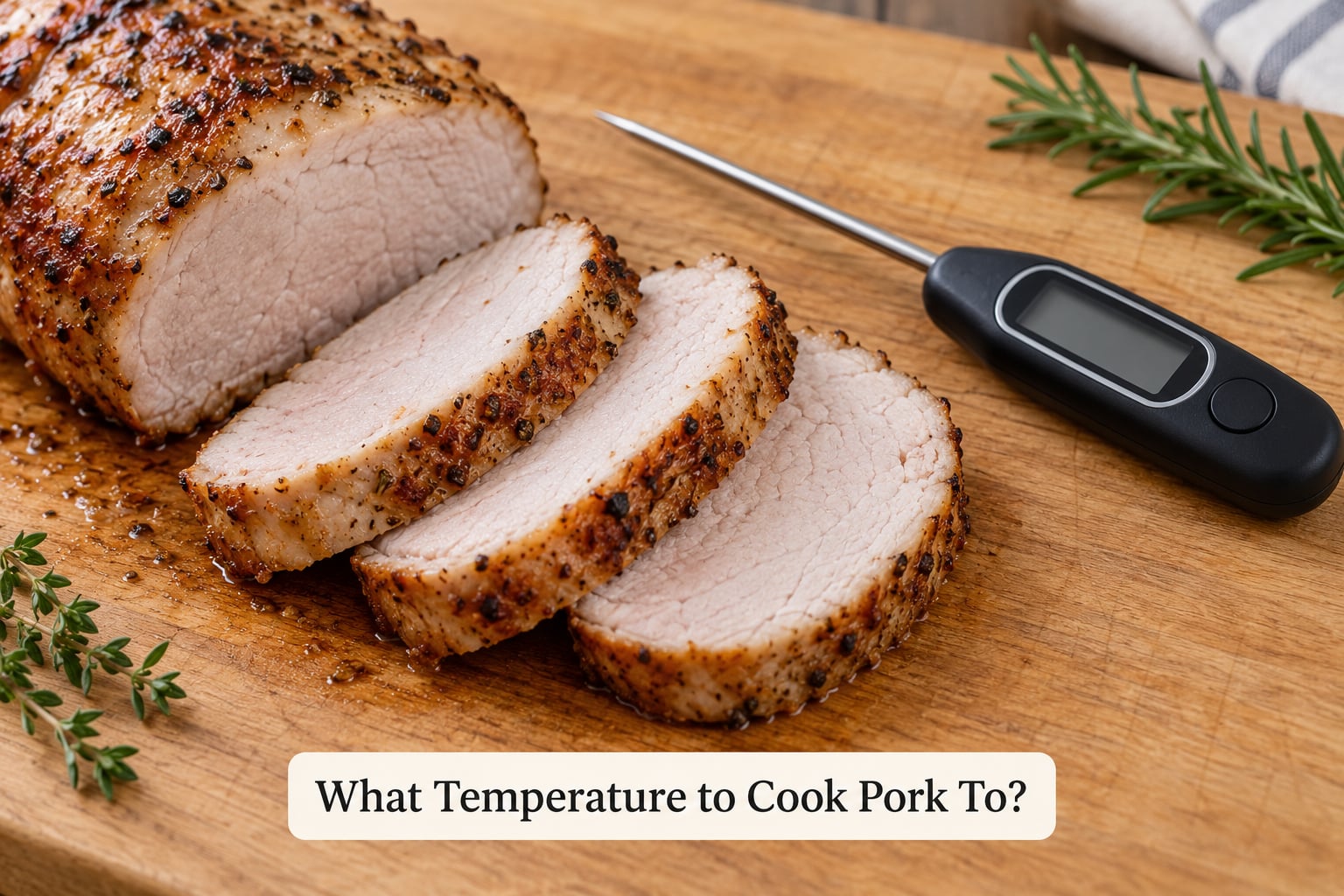
The USDA safe minimum internal temperature for whole cuts of pork is 145°F (63°C) with a three-minute rest. For ground pork and pork sausage it is 160°F (71°C). Those are the numbers that kill Salmonella, Toxoplasma, and Trichinella, which is why they matter more than anything you see on the outside.
Two different questions hide behind one keyword. Safety asks whether the pathogens are gone, and 145°F answers that for a whole cut. Quality asks when the meat tastes best, and that number moves depending on how much collagen and fat the cut carries.
Lean cuts are the easy case. Pork loin, tenderloin, chops, and sirloin have very little connective tissue, so they are tender at 145°F and turn dry and rubbery somewhere past 155°F. Taking them any higher buys you nothing but cooking time.
Tough cuts work the opposite way. Shoulder, butt, ribs, and belly are loaded with collagen, which is a tough protein that starts converting to gelatin somewhere around 140°F and keeps going well past 190°F. That is why a shoulder at 145°F tastes like rubber and the same shoulder at 200°F pulls apart.
Color tells you almost nothing about safety. Pork that hits 145°F can still show pink in the center, and a chop seared dark on the outside can be raw in the middle. The thermometer answers the only question that matters.
USDA-Safe Pork Temperatures at a Glance
Here is the full chart. The safety column is the USDA minimum, and the best-eating column is where cooks actually pull the meat.
| Pork cut or product | Safe minimum (°F) | Safe minimum (°C) | Rest | Best eating temp (°F / °C) |
|---|---|---|---|---|
| Whole cuts: loin, chops, tenderloin, sirloin, fresh ham | 145°F | 63°C | 3 minutes | 145-150°F / 63-66°C |
| Ground pork, fresh pork sausage, sausage meat | 160°F | 71°C | Not required | 160-170°F / 71-77°C |
| Boneless pork roast | 145°F | 63°C | 3 minutes | 145-150°F / 63-66°C |
| Pork shoulder, pork butt for slicing | 145°F | 63°C | 3 minutes | 190-195°F / 88-91°C |
| Pork shoulder, butt for pulled pork | 145°F | 63°C | 3 minutes | 195-205°F / 90-96°C |
| Baby back ribs | 145°F | 63°C | 3 minutes | 190-200°F / 88-93°C |
| St. Louis style ribs or spare ribs | 145°F | 63°C | 3 minutes | 195-205°F / 90-96°C |
| Fully cooked ham sold ready to eat | Reheat to 140°F | 60°C | Not required | 140-145°F / 60-63°C |
| Fresh or uncured ham roasted whole | 145°F | 63°C | 3 minutes | 145°F / 63°C |
| Cured ham baked from a packaged ham | 145°F | 63°C | 3 minutes | 140-145°F / 60-63°C |
Notice how often the safe minimum repeats at 145°F. That is not an accident of this chart. The USDA sets one rule for all whole cuts and a second rule for anything ground, and everything else on the page is about texture.
What temperature to cook pork to changes with thickness
Thin cuts and thick cuts share the same target temperature but behave nothing alike in the pan. A three-quarter-inch chop can go from raw to overcooked in under a minute on a hot skillet, so it needs constant attention. A two-inch roast can sit ten degrees away from done for ten minutes, so it is forgiving.
This is the real reason people overcook pork. They use a thick-cut method on a thin piece and then wonder why it is dry.
How to Measure Pork Temperature Correctly
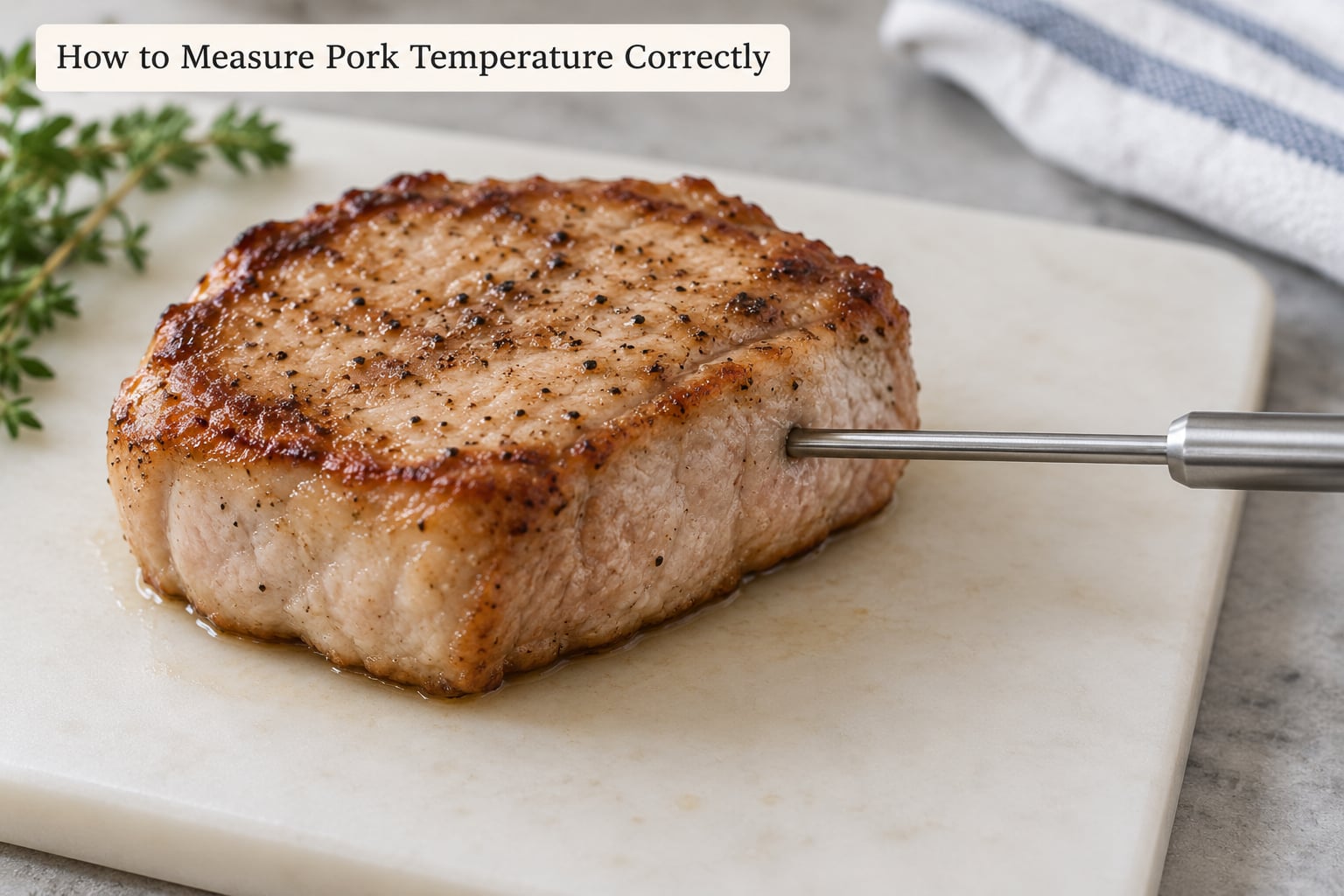
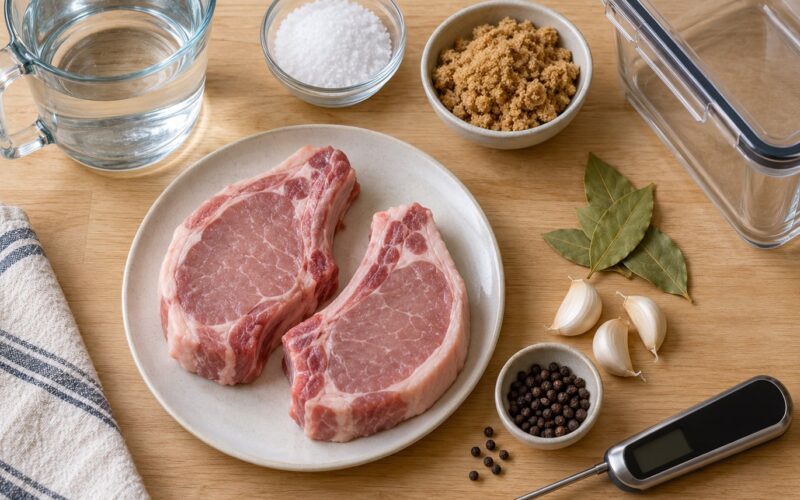
Push the probe into the thickest part of the meat, aiming straight in from the side, and read it without touching bone, gristle, or the pan. On a bone-in chop, slide the tip in from the edge and stop just past the bone rather than driving it into the center.
Bone conducts heat faster than muscle, so a probe touching bone reads low and makes you keep cooking a piece that was already done. Fat and connective tissue hold heat differently from muscle too, which is another reason the thickest lean spot is the spot that counts.
A common beginner mistake is reading right after the probe goes in. The tip needs a few seconds to catch up to the surrounding meat, and on a cold pan or a piece just off the heat the first number can run ten degrees low or high. Let the reading settle before you act on it.
Check more than one spot on large or uneven cuts. A rib rack has thin meat over the bones and thick meat between them, and a single reading from the wrong part can be off by 20°F. Two or three probes give you the cold spot and the hot spot at once.
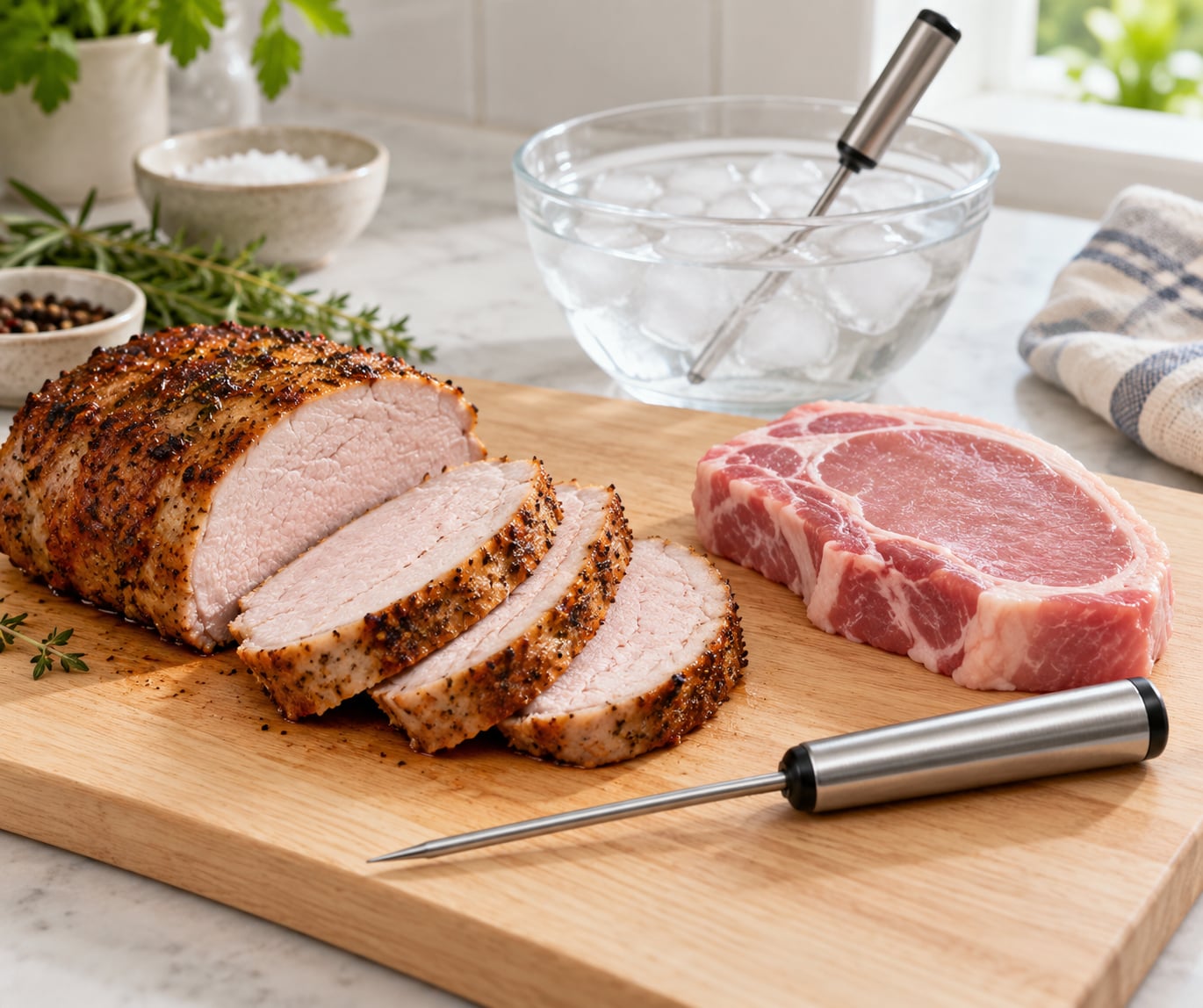
Verify your thermometer before you trust it. Fill a cup with ice and water, stir it, and submerge the tip. A thermometer that is working correctly reads 32°F (0°C) in that slush. Throw away the ones that are off by more than a couple of degrees.
Instant-read thermometers suit chops, steaks, and thin roasts where you want a quick check. Leave-in probes suit roasts, ribs, and shoulders because they stay in the meat the whole time. A wired leave-in probe with a read on your phone is the one I would buy first if cooking pork were a weekly habit.
Best Temperature for Pork Chops, Tenderloin, and Loin
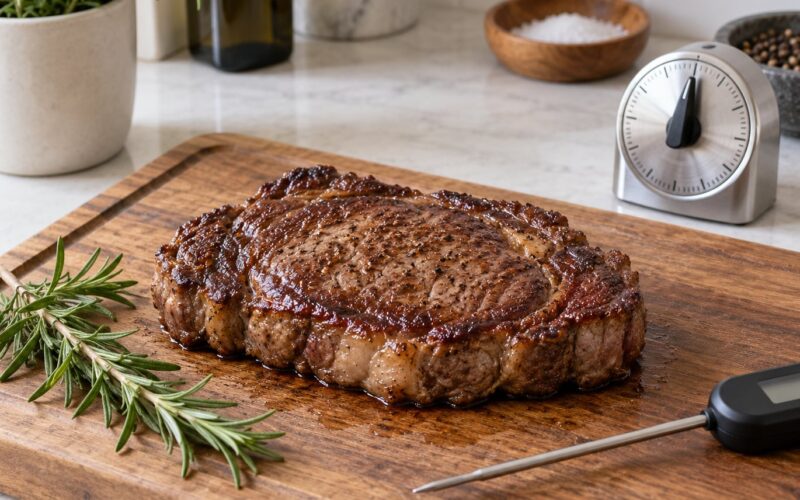
Pull lean cuts at 140-143°F (60-62°C) and let carryover cooking take them the rest of the way to 145°F while they rest. A thermometer read mid-cook will run several degrees below the temperature in the finished meat, so trusting the number on the grill means dry chops.
For a 1.25-inch bone-in chop in a hot skillet, roughly three to four minutes per side followed by a rest gets you there. Thick boneless chops run closer to four to five minutes per side. Tenderloin is small and fast: two minutes per side, then rest, because it loses heat fast and dries out faster.
Whole pork loin roasts follow the same target. Roast at 325-350°F (163-177°C) until a probe in the thickest part reads 140-143°F (60-62°C), then rest ten to fifteen minutes before slicing.
The 6-2-2 rule for pork chops
The 6-2-2 rule is a time-based method: six minutes per inch of thickness, two minutes per side, and two minutes of resting. It gets passed around as if it were as precise as a thermometer.
It works okay on chops around an inch thick and falls apart on everything else. It cannot tell you whether your oven actually runs hot, and it cannot tell you how well the chop was trimmed. The honest version is that time is a rough guide and a thermometer is a measurement.
Best Temperature for Ham and Pork Shoulder
Ham comes in three forms and each one cooks differently. Fully cooked, ready-to-eat ham only needs reheating to 140°F (60°C) for food safety. Cured ham that you bake in the oven goes to 145°F (63°C). Fresh, uncured ham is a whole cut and behaves like a roast: 145°F (63°C) with a rest.
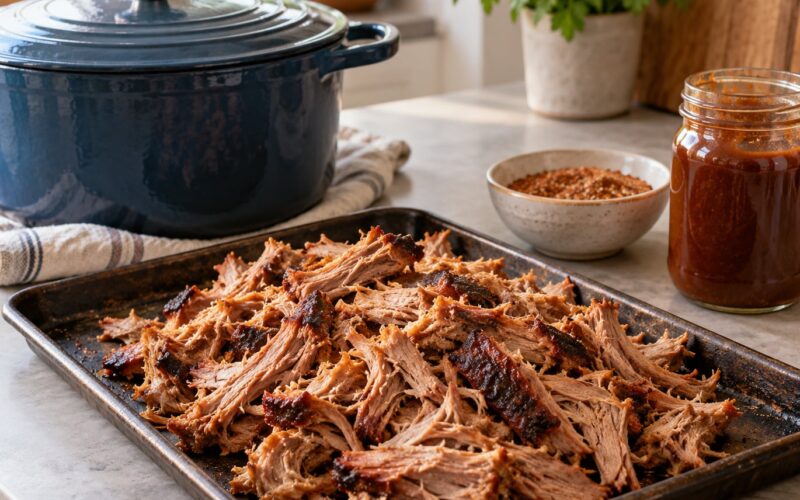
Shoulders split the same way depending on what you want. Pull at 190-195°F (88-91°C) for slices you can serve like brisket. Go to 195-205°F (90-96°C) for pulled pork, and keep going while the probe slides into the meat with almost no resistance, which BBQ cooks call probe tender.
Once collagen has converted, temperature stops being the useful signal. At that stage the texture is the measurement, and no single number covers a whole shoulder.
For sous vide pork, chops and tenderloin sit at 140°F (60°C) for one to two hours with a nice edge and plenty of time for seasoning to work into the meat. Shoulder cooks much higher and much longer, around 165°F (74°C) for 18 to 24 hours, to get collagen conversion without drying the meat out.
When reheating leftover ham or pulled pork, bring it to 165°F (74°C) so hot and cold spots both pass safely, and cover anything going in the microwave so it does not dry out on the edges.
Ground Pork and Sausage Temperature
Loose ground pork and fresh pork sausage need 160°F (71°C). No rest is required at that temperature, which is why the rule is different from whole cuts. Bacterial contamination is mixed through the meat rather than sitting on the surface, so every bit of it has to reach the number.
Meatballs and sausage patties are the hard case because the center lags well behind the browned outside. Press the tip into the center of a meatball, or into the thickest part of a patty, and check a couple of them rather than the one you think is done.
Cooking ground pork to 170-175°F (77-79°C) dries it out badly, which is where the old advice to fry it until it looks like gray hamburger came from. Brown the outside for flavor if you like, then take the temperature in the center to 160°F (71°C) and stop.
Sausage links and patties are a hybrid case. Pre-cooked sausage links are sold ready to eat and only need reheating to 140°F (60°C), while fresh sausage made from raw ground pork has to reach 160°F (71°C). Check the label rather than assuming from the packaging.
If you are cramming a lot of ground pork into one pan, the temperature problem gets harder fast. Crowded pans drop in temperature when the meat hits them, so the outside browns before the center catches up. Give the meat room, or cook it in batches.
Pork Ribs, Pork Belly, and Other Thick Cuts
Ribs, belly, and other uneven cuts resist a single temperature number. They have fat and lean and bone in the same piece, and those materials heat at different rates.
Baby back ribs want to be tender around 190-200°F (88-93°C), and spare ribs need more time and more heat, closer to 195-205°F (90-96°C). That is a starting point rather than a finish line. The check that matters is the one pitmasters use: slide the probe between the rib and the membrane, and when it slips through with no resistance, the ribs are done no matter what the display says.
Bacon and pork belly are a different problem. The meat between the fat layers rarely gets past 160°F (71°C), so safety is straightforward and the work is all about rendering fat evenly. Cut cold, cook low and slow, and turn often.
Resting Pork and Carryover Cooking
Meat keeps cooking after it leaves the heat. A thick roast can climb 5-10°F (3-6°C) on the cutting board, a chop climbs a few degrees, and a large shoulder or a whole hog climbs 15-20°F (8-11°C) because of the sheer mass of it.
That is why you pull early. Pull a chop at 140°F (60°C), rest it three minutes, and it finishes at 145°F (63°C) while the juices redistribute. Pull a whole shoulder at 190°F (88°C) and let carryover push it through 195°F (90°C) inside a resting bag while you shred it.
Rest times by cut: three minutes for chops and small roasts, ten to fifteen minutes for a whole pork loin, thirty to forty-five minutes for a shoulder, and at least thirty minutes for ribs or belly. Resting is not about continuing the cook. It is about letting the muscle fibers relax so they hold onto juice when you slice.
Cutting a pork loin the moment it hits the oven puts the juice on the board instead of in the meat. Ten minutes of patience is the cheapest improvement in this whole guide.
Why Pork Color Is Not a Reliable Safety Test
Pork can be pink at 145°F (63°C) and fully cooked. The old rule required pork to reach 160°F (71°C) or cook until well done because whole-muscle pork used to carry Trichinella, a parasite now largely eliminated from commercial herds in the United States. The USDA revised that guidance after testing showed whole cuts at 145°F kill the pathogen.
There are ordinary kitchen reasons a properly cooked chop still looks pink. A hot pan pushes juice and myoglobin to the outside fast, leaving the center under pressure and tinted. Marinades with acid or sugar can also hold the color back.
The opposite mistake happens too. Soy sauce, honey glazes, and charring on a grill can leave a chop deep brown all the way to the bone while the center is still raw. Color answers appearance. Only temperature answers safety.
Cured ham is a special case because it contains nitrites that keep the meat pink or even slightly translucent before cooking. That color comes from curing, not from undercooking, and those products carry their own cooking instructions.
Safe Pork Cooking Checklist
A short routine covers almost everything that goes wrong with pork at home.
- Pick the cut first. Lean cuts come off the heat at 145°F (63°C); shoulder, ribs, and belly need 195-205°F (90-96°C).
- Use a thermometer you have checked in ice water, and use it every time.
- Measure the thickest part, away from bone, gristle, and pan.
- Take more than one reading on large or uneven cuts to catch the cold spot.
- Pull before the number you want, and let carryover cooking finish the job.
- Rest before cutting, longer for bigger cuts, and skip the slicing early.
What to do when the pork comes out wrong
Dry pork usually means it went past its target, not that the heat was too high. Resting the same piece for another ten minutes will not put moisture back in it, but it will make it noticeably better, and slicing thin against the grain helps more than people expect.
Tough pork at a temperature that should have worked is usually a tough cut taken to a lean temperature. A shoulder at 160°F (74°C) is neither safe-and-tender nor worth eating, and the fix is time or a wetter method, not more heat in a hot oven.
Pork that is browned outside and raw in the middle means the thermometer never got used. Slice it and check the center, then finish it in a low oven or in the pan with a splash of liquid while you figure out where the probe should have gone.
Frequently Asked Questions
Can pork chops still be pink at 145 degrees?
Yes. Pork that has reached 145°F (63°C) can still look pink in the center, and that is safe. A hot pan pushes juices to the outside, which keeps the center pink, and acid or sugar in a marinade can hold the color back too. Judgment is not the test. Take the temperature in the thickest part of the chop, away from bone, and let the thermometer decide.
Is pork done at 165 degrees?
It is safe, but for lean cuts it is past the point you want. Chops, tenderloin, and loin are tender and juicy at 145°F (63°C) with a three-minute rest, and by 165°F (74°C) they have dried out. 165°F is the right target for reheating cooked ham and pulled pork, where there is no tenderness left to protect.
What is the 6-2-2 rule for pork?
The 6-2-2 rule is a time-based method: six minutes of cooking per inch of thickness, two minutes per side, and two minutes of rest. It works reasonably on chops close to an inch thick and fails on thin chops, thick roasts, and bone-in cuts. Because it cannot tell you how hot your pan or oven really is, it makes a decent estimate and a poor substitute for a thermometer.
What temperature should pork ribs be pulled off the heat?
Baby back ribs are tender around 190-200°F (88-93°C), and spare ribs need closer to 195-205°F (90-96°C). Then check texture rather than temperature: slide the probe between the rib and the membrane, and when it passes through with no resistance, the ribs are done. Large racks heat unevenly, so take a reading from the thickest meat between the bones.
How long does pork need to be at 145 to be safe?
Whole cuts of pork need three minutes at 145°F (63°C) to be safe, which is why resting time is part of the USDA guidance rather than an optional extra. That applies to chops, tenderloin, loin, fresh ham, and any other whole cut. Ground pork and fresh sausage follow a different rule at 160°F (71°C) and do not require the rest.
What temperature do I reheat cooked ham to?
Bring fully cooked ham to 140°F (60°C) for serving, which is the USDA guideline for ready-to-eat cured ham. For leftover ham or pulled pork from the fridge, reheat to 165°F (74°C) so uneven hot and cold spots both reach a safe temperature. Cover it while reheating, and warm it gently in a pan or oven so the edges do not dry out.
What to Do First
Put a thermometer in the thickest part of the pork and read it. That single habit answers the question this whole guide is built around. For chops, tenderloin, and loin, pull at 140-143°F (60-62°C) and rest three minutes so carryover cooking lands on 145°F (63°C). For shoulder and ribs, keep going until the probe gives way, which usually lands somewhere between 195°F (90°C) and 205°F (96°C).