To make a cottage food business legal, you work inside your state’s cottage food exemption: check the allowed product list, register with the right agency, label every item correctly, sell only through permitted channels, and stay under your state’s annual sales cap. It takes a weekend of paperwork to get a simple home bakery into order, then a few hours a month keeping it there.
This guide is for US home bakers, cooks, jam makers and small producers. Every one of the 50 states plus DC has a cottage food law, and no two are identical, so treat the state details as a starting point and confirm them with your own agency. Rules change, so check the statute before you sell. This is general information, not legal advice.
Last reviewed: October 2026.
Table of Contents
- What You Need to Make Your Cottage Food Business Legal
- Step-by-Step: How to Make a Cottage Food Business Legal
- 1. Confirm your product list so your cottage food business stays legal
- 2. Register with the correct state or local agency
- 3. Follow food-safety and sanitation requirements
- 4. Create compliant labels and records
- 5. Set permitted sales channels and limits
- 6. Separate personal finances and business records
- Common Mistakes That Get Cottage Food Businesses Shut Down
- Frequently Asked Questions
- Do I need a business license to sell cottage food?
- What foods can I legally make in a cottage food business?
- Can I sell cottage food online or mail it to customers?
- How much money can a cottage food business make?
- Do cottage food businesses need kitchen inspections?
- Can I sell homemade food at farmers markets?
What You Need to Make Your Cottage Food Business Legal
Gather these before you file anything. Most failed applications come back because a piece was missing, and bakers report the same story repeatedly: they submit recipes and get them returned for revision. A complete packet the first time saves weeks.
- Your state’s statute and official form. Start at your state department of agriculture, health department or environmental agency, not a blog. The statute text tells you the product list, the cap and the channels.
- The allowed product list for your state. Print it. Non-potentially hazardous foods such as breads, cookies, shelf-stable jams and dry confections are the usual core, but each state words it differently.
- Recipe records with measured ingredients. Some states require you to submit recipes, and acidified products can require pH or water activity testing. Write them down as you test.
- Ingredient sourcing notes. Keep supplier names and receipts. Buy from approved sources rather than reselling food prepared somewhere else.
- Two thermometers. One for your oven verification and one for cooling and storage temperatures.
- Food handler training, where required. Some states require an approved course or card before registration. It is the cheapest compliance item you will buy.
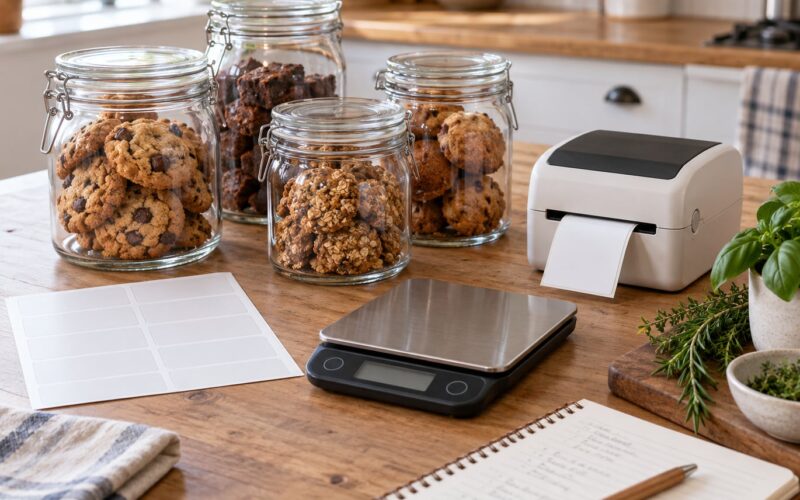
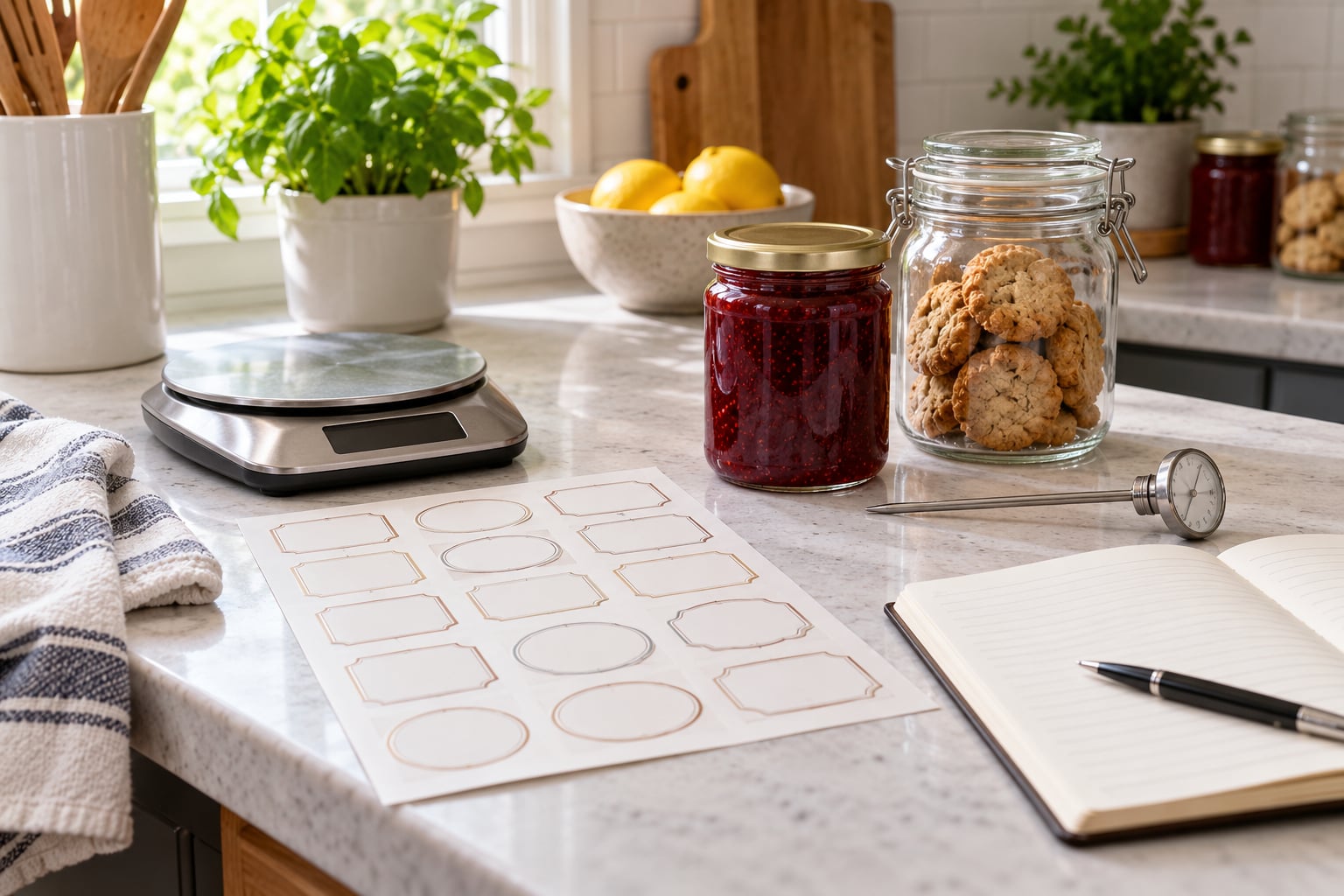
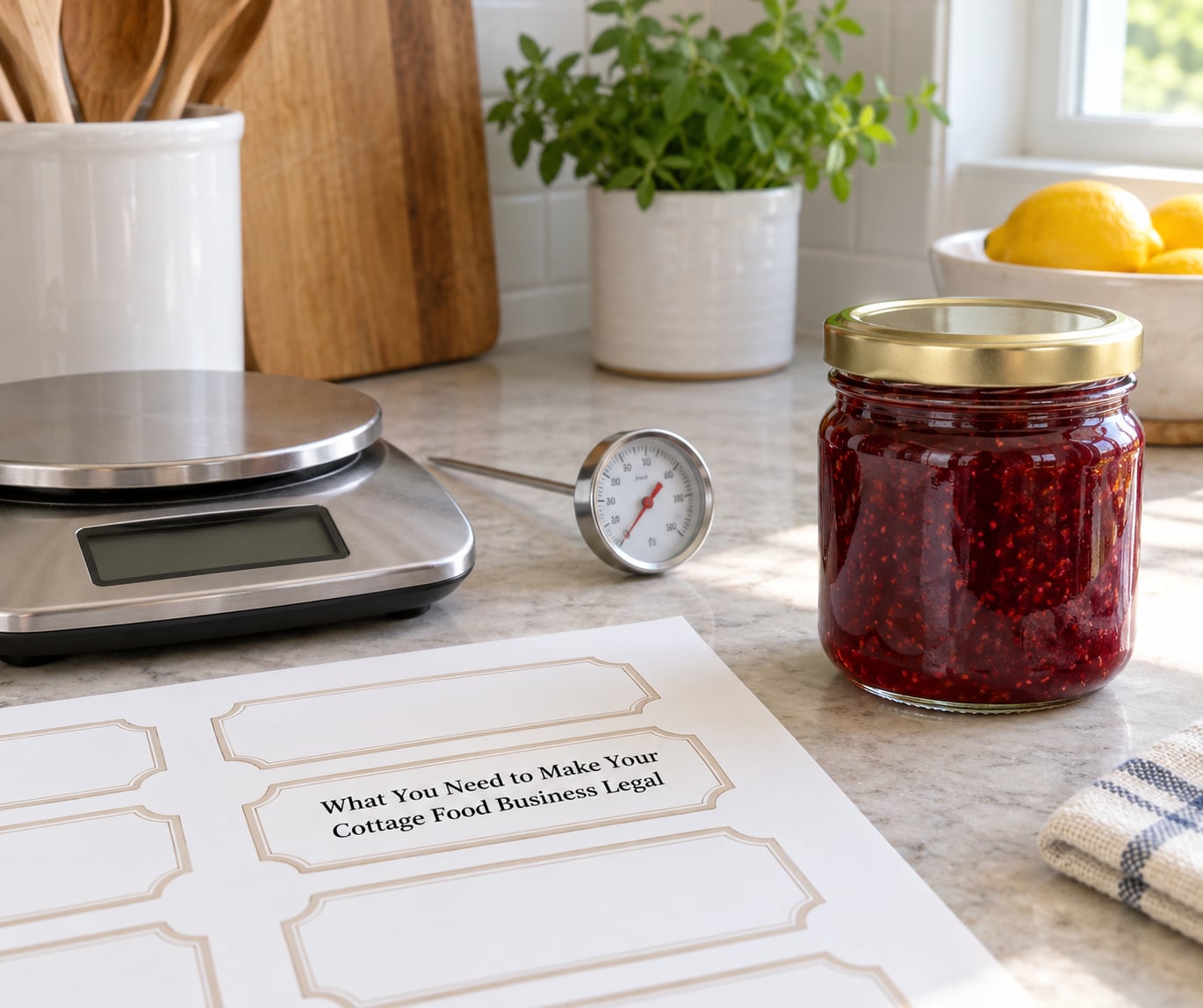
- A legal-for-trade scale and label supplies. Net weight has to be accurate. You can print your own cottage food labels as long as the required elements are present and legible.
- A revenue log. Gross sales, by date and channel. This is how you know you are approaching your cap before you cross it.
- Insurance options. Compare a product liability policy built for cottage food operations with a business owners policy and with your homeowners or renters coverage. Homeowner policies often exclude food produced for sale.
- Zoning, lease and HOA answers. Confirm your local zoning allows a home food business and that your lease or association does not prohibit one. This is the surprise blocker that shows up late.
If you rent, or run a short-term rental in the same home, get written permission from the property owner before you start. A tenant without permission can be ordered to stop on top of any food violation.
Step-by-Step: How to Make a Cottage Food Business Legal
1. Confirm your product list so your cottage food business stays legal
Every cottage food law is built around one distinction: non-potentially hazardous food versus time/temperature control for safety food, often called TCS. Shelf-stable breads, cookies, cakes, jams, jellies, candies and dry snack mixes usually qualify. Anything that needs refrigeration, hot holding, or that is not shelf-stable usually does not.
Why it matters: a product outside your list is not a small paperwork problem. It puts your whole operation outside the exemption, which means licensing and inspection you have not budgeted for. Meals cooked to order and reheated for sale are the classic mistake. One Texas news report described an operator selling fresh hot tamales under the cottage law, and state or local health departments can shut an operation down on that basis alone.
How to verify it worked: pull your product list against the statute, and if an item is borderline, ask your state agency in writing and keep the reply. When a product needs tested shelf life, pH or water activity data, get the test before you sell, not after a complaint.
2. Register with the correct state or local agency
Cottage food registration is not uniform. Some states require a permit, some only an annual registration or a fee, and some ask for a basic food handler course plus a home kitchen questionnaire. The filing body is usually the state department of agriculture or the state health department, though a few states route it through a local environmental or public health office.
Why it matters: registration is how the state knows you exist. An unregistered operator has no exemption to fall back on, and the paperwork is also where the agency records your approved product list and your address. Renew it on schedule, because an expired registration is the most common reason a compliant baker gets a letter.
How to verify it worked: you receive a registration or permit number, and that number appears on your labels. If your state issues one, write it down in your file with the renewal date. A number in hand is the single clearest proof you are operating inside the exemption.
A few real examples of how different this is. Florida’s Department of Agriculture states that cottage food operations there do not require a license or permit, while still capping gross sales. Texas requires no license and caps income. Other states charge a permit fee and expect a kitchen inspection. A r/cottagebakery poster already held a ServSafe certificate and food handler card and still faced a state permit fee plus an inspection they did not want in a small kitchen, which tells you the training and the permit are separate things in many states.
3. Follow food-safety and sanitation requirements
Run your home kitchen like a small food operation: clean work surfaces, wash hands, keep raw and finished food apart, control time and temperature, and store finished products in a cool dry place. Know the safe minimum internal temperatures and treat them as non-negotiable, since most state rules reference standard temperature guidance for any product that involves cooking or cooling.
Why it matters: the exemption is a lower regulatory burden, not a lower standard. An illness claim lands on you personally, and one commenter in a cottage food community put it plainly, that people get sued over anything from a chipped tooth to death due to an allergen whether or not you did anything wrong.
How to verify it worked: log temperatures during a full production run, then check your logs weekly for a month. Most states require records of what you produced, when, and in what quantity, and some require you to pass a food safety test before approval.
4. Create compliant labels and records
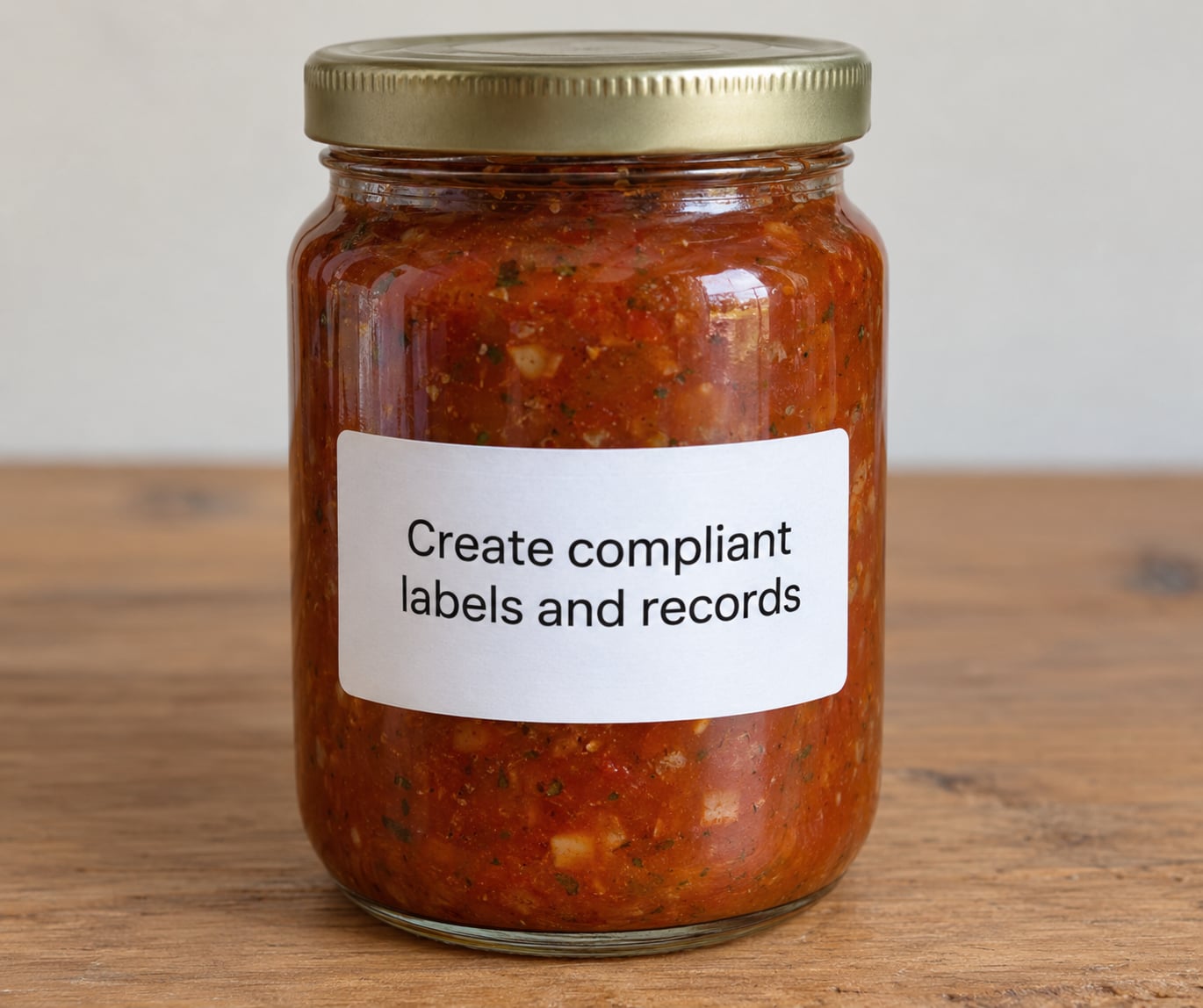
Print a label template and check it against your state’s required elements list. The near-universal set is: name of the food, ingredients in descending order by weight, allergen declaration, net quantity in the units the state requires, the name and address or registration number of the operation, the state cottage food disclosure statement in the state’s exact wording, and a best-by or use-by date. Many states set a minimum font size and require the label to be firmly affixed and not cover required information.
Why it matters: the disclosure statement is the legal line that says this food was made in a home kitchen not inspected by the state. Missing it is the most cited violation, and label wording is the top fear in every forum thread about starting.
How to verify it worked: photograph a finished label and compare it line by line with the statute, then confirm the disclosure wording matches character for character. A second set of eyes is worth more than you think here, and a state extension office can review a mock-up for free.
5. Set permitted sales channels and limits
Check the channels your state allows. Direct-to-consumer sales, farmers markets, farm stands, local pickup from your home, and orders taken through social media or a marketplace site are commonly permitted. Sales to a retailer for resale are usually not, and sending food to customers in other states is restricted or not covered at all. Online ordering in your own state is different from delivering a box to another state.
Why it matters: the channels rule and the revenue cap are checked together, because many states define the cap as the total sold through all direct-to-consumer channels combined. Wholesale or internet sales can push a transaction outside the exemption even when the food itself is fine.
How to verify it worked: write your allowed channel list at the top of your sales log, and check every new sales idea against it before you take the order. If a channel is not on the list, treat it as not allowed until the agency says otherwise.
6. Separate personal finances and business records
Open a separate bank account for the business, get an employer identification number from the IRS, and keep a single bookkeeping system with four buckets: business expenses, household expenses, sales by date, and taxes collected. Set aside the sales tax portion of every sale from the day you take it, since remitting quarterly with money you already spent is how small operations end up owing more than they expected.
Why it matters: the revenue log is your evidence about the cap, and it is also your income tax record. Business formation, the federal tax number and a seller’s permit for sales tax are separate steps that most guides skip, and a baker who sells for a season before registering with the state tax agency inherits a backlog.
How to verify it worked: in an evening, you can reconcile the bank account to the sales log and produce the total gross sales for the year. If that number is comfortably under your state’s cap and rising slowly, you are fine. When it is within roughly 80 percent of the cap, start reading about your next tier. Speak to an accountant about your own tax situation, since this article cannot advise on it.
Common Mistakes That Get Cottage Food Businesses Shut Down
Most of these are not exotic. They are small decisions made in a hurry, and they are the ones agencies and complainants actually use.
Selling a food your state does not allow. Meals, fresh dairy items, cut produce and anything refrigerated are usually outside the exemption. The fix is to drop the item, not to argue about it, and to check the statute before you develop a new recipe rather than after.
Missing or reworded label elements. A paraphrased disclosure statement, a missing allergen line, or tiny type are all common. The fix is a checklist on the wall above your label printer, plus a monthly audit of ten random finished items.
Going over the annual cap without noticing. The cap counts gross sales, not profit, so a big corporate order can cross it in a week. The fix is a monthly running total, tracked against the same number the statute uses.
Using a kitchen or setup the state does not allow. A home kitchen is the point of the exemption, so cooking in a shared church hall, a rented commercial kitchen or someone else’s house can disqualify the production run. Kitchen equipment questions come up constantly, and the answer is usually about the location, not whether a stand mixer carries a professional label.
Assuming another state’s rules apply to you. Someone on Reddit put it best, that cottage laws really only apply when you are selling out of your own home, and all bets are off when you are working in another person’s territory. If you produce at a shared or commercial space, the exemption likely does not apply. Selling your own product in a neighboring state is not the same thing, and interstate sales are rarely covered.
Zoning, HOA and landlord conflicts. A cottage food business in a residential zone, a rented home, or a short-term rental can run into rules that have nothing to do with food. A legal answer service notes that in North Carolina it is permissible to run a cottage food business alongside a short-term rental in the same unit, which is exactly the kind of fact that varies by state, lease and local ordinance. The fix is a written answer from your city before your first market.
Selling through channels your state does not permit. Retail shops, restaurants and other resellers are usually outside the cottage exemption. The fix is to sell direct, or to become a licensed food manufacturer and sell wholesale under different rules.
Frequently Asked Questions
Do I need a business license to sell cottage food?
Usually not a full business license. Most states let you operate under a cottage food registration or permit, sometimes paired with a food handler course, and some states charge nothing but a notification fee. You will still need a business tax registration and a seller’s permit for sales tax. Because every state handles this differently, check with your state department of agriculture or health department before your first sale, and renew your registration on schedule.
What foods can I legally make in a cottage food business?
Generally non-potentially hazardous foods that are shelf-stable at room temperature: breads, cookies, cakes, muffins, pies, puddings that do not require refrigeration, jams, jellies, fruit butters, candies, granola, dried snacks and coated pretzels. Meals, fresh dairy, cut produce and anything needing time and temperature control are usually excluded. Some states split products into Class A and Class B lists, so check your own list before you develop a recipe.
Can I sell cottage food online or mail it to customers?
In many states you may take orders on a website or through social media, but delivery or mailing is often limited to customers in your own state. Some states restrict internet sales further, and sales through a marketplace site are treated differently from direct orders. Sending food to a customer in another state generally falls outside the cottage food exemption entirely. Read the sales channel section of your statute, and get a written answer from the agency before offering anything at a distance.
How much money can a cottage food business make?
Each state sets its own annual gross sales cap, and the number changes as laws are amended. Michigan uses a limit of $75,000 for products priced at $250 or more, while Florida’s Department of Agriculture caps cottage food gross sales at $250,000 and Texas caps income at $150,000. The cap is based on gross sales rather than profit, and it usually covers every direct-to-consumer channel combined. Track your running total monthly so you know well before you reach the ceiling.
Do cottage food businesses need kitchen inspections?
That depends on your state. Some agencies require a home kitchen questionnaire or a full inspection before approval, and some require a food safety test. Many bakers describe the approval process as lengthy, with recipes returned for revision, and at least one home baker declined to pay for an inspection in a small kitchen. Ask your state agency specifically whether a walk-through happens, because it affects your preparation time and your chances of approval.
Can I sell homemade food at farmers markets?
Farmers markets are one of the most commonly permitted channels, but the market manager and your state may both require proof of compliance first. Bring your registration or permit documentation, your approved product list, and your labels, because many markets check before you set up and some charge a vendor fee. Selling to individual consumers at a market is different from selling to a store for resale, which is usually outside the exemption. Ask the market manager what documentation they require.
Start with the product list, because everything else depends on it. Read your state’s statute this week, confirm your recipes sit inside the exemption, and gather the paperwork before you sell a single item. Once the registration number is on your labels and your revenue log is running, the rest is a short weekly habit rather than a mountain.