Judging a bake off fairly means scoring every entry against the same published criteria, in the same order, by more than one judge who scores anonymously and independently before anyone talks. Get those four things right and the result holds up when an entrant asks why they lost. Get them wrong and the winner is decided by who the judges liked most.
Most disputes about a baking result come down to preference, not process. Someone prefers a sweeter cake, someone else prefers a plainer one, and neither preference has anything to do with how well the bake was made. A written rubric takes the preference out of the room. For a market stall, a school fundraiser or a county fair, that rubric is a single page, and it takes about twenty minutes to write before any entries arrive.
Here is the full process: what you need on the table, the five-step judging session, the mistakes that quietly swing results, and a scoring sheet you can copy onto paper tonight.
Table of Contents
- What You Need
- Step-by-Step: How to Judge a Bake Off Fairly
- 1. Establish the judging criteria before entries arrive
- 2. Prepare entries for equal, anonymous tasting
- 3. Taste in a controlled order
- 4. Score each category using the rubric
- 5. Review scores and handle disagreements
- Common Mistakes and How to Fix Them
- Tips for Fair, Practical Judging
- Frequently Asked Questions
- What are the judging criteria for a baking competition?
- Should bake-off judging be anonymous?
- How many judges does a bake-off need?
- How do you break a tie in a baking contest?
- How should judges handle allergens and food safety?
- What should judges do when entries are very different?
- Conclusion
What You Need
Everything below is cheap and mostly already in a market kitchen. Lay it out before the first entry is coded, because the setup is the part that gets rushed.
- A written rubric. One page, identical copies for every judge, with each criterion, its weight and the scale printed on it. Judges who improvise criteria are judging something different from each other.
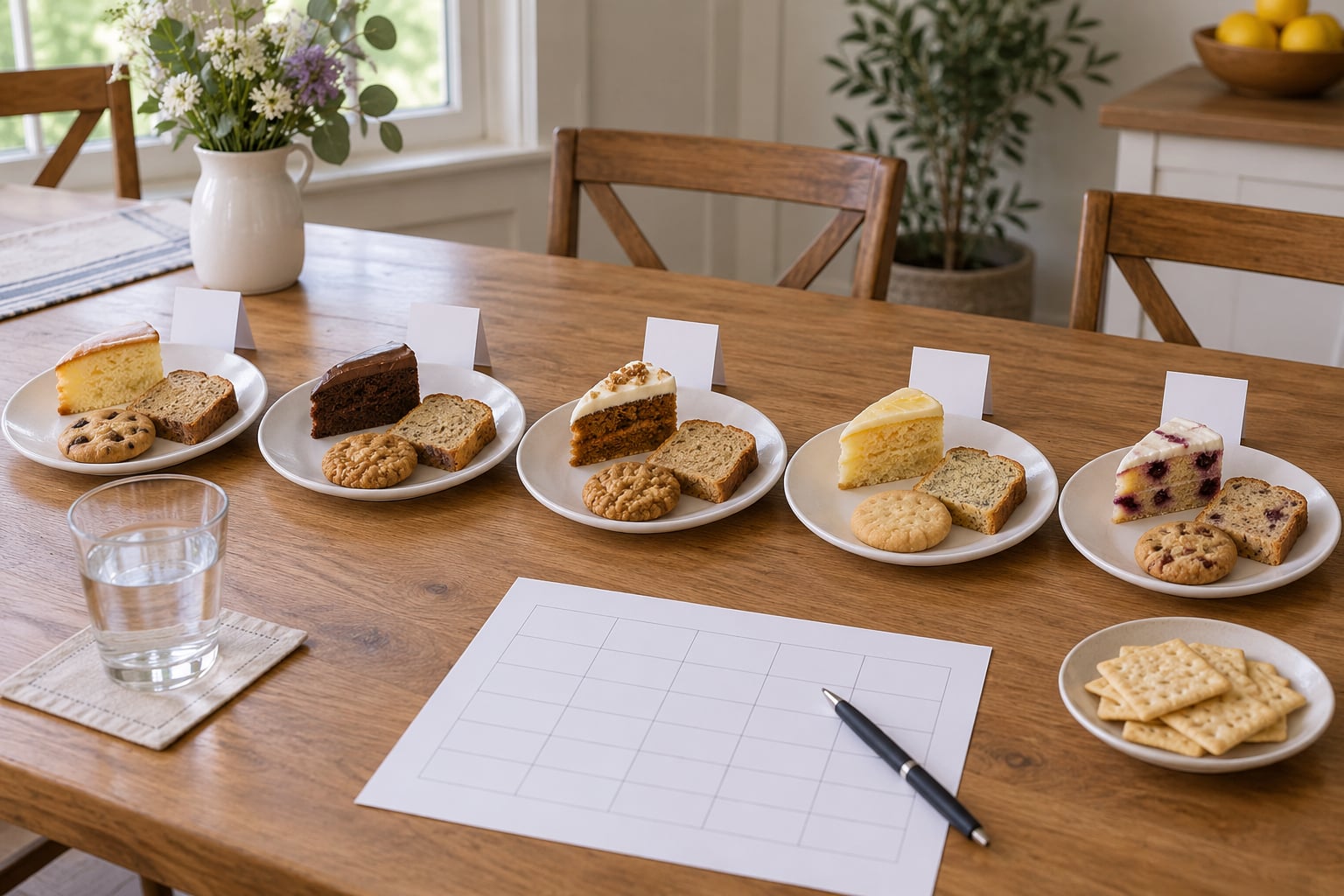
- Identical tasting plates. Plain white, same size, one per entry per judge. No patterned plates, since decoration on a plate pulls attention you meant to spend on decoration on a cake.
- Neutral palate cleansers. Plain crackers, bread, or a sip of water between entries. Water alone leaves sweetness behind, and the third cookie of the afternoon tastes different from the first because of it.
- Score sheets and pens. One per judge per entry, with the entry number written at the top. Pens, not pencils, so nothing gets quietly adjusted later.
- A timer. To keep the tasting interval short and roughly equal for every entry.
- Gloves and tongs for handling, plus separate plates and utensils so nothing is carried from one entry to the next.
- Ingredient and allergen records from each entrant, coded to match the entry number rather than the name.
- A secure way to collect sheets. A sealed box or a folder judges hand in before anyone sees anyone else’s marks.
Add a knife that cuts cleanly and a cutting board per judge. Judges who squeeze a cake instead of cutting it end up describing a guess.
Step-by-Step: How to Judge a Bake Off Fairly
1. Establish the judging criteria before entries arrive
Write the rubric first, publish it to entrants, and only then accept bakes. Five criteria cover almost every home bake-off: taste and flavour, texture and bake, appearance and finish, creativity and theme, and overall impression. Weight them so no single one decides the result on its own.
| Criterion | What the judge looks for | Weight | Score (1-10) |
|---|---|---|---|
| Taste and flavour | Balance of sweet and savoury, spice that reads rather than burns, no raw or scorched notes | 35% | |
| Texture and bake | Crumb structure, moisture, spring, doneness, proofing, flakiness | 25% | |
| Appearance and finish | Even bake colour, clean edges, decoration that holds, no cracks or sinking | 15% | |
| Creativity and theme | Fit to the stated theme, a deliberate idea rather than decoration for its own sake | 15% | |
| Overall impression | Would you eat this again, would you buy it, consistency across the entry | 10% |
Scoring taste more heavily than appearance is deliberate. A beautiful showstopper with a dry crumb should not beat a plain loaf that is baked properly, and weights are how you make that rule true rather than aspirational.
Fix the scale before the day too. A 1-to-10 scale with half marks works; a “good, better, best” scale does not, because judges drift into the same three answers. State that 1 is unusable and 10 is the best bake the judge has had this year, so the ends of the scale mean the same thing to everyone.
Send the rubric to entrants when you open the contest. Entrant anxiety about an unknown standard is one of the most common complaints about small bake-offs, and a published page settles it before anyone spends money on ingredients.
2. Prepare entries for equal, anonymous tasting
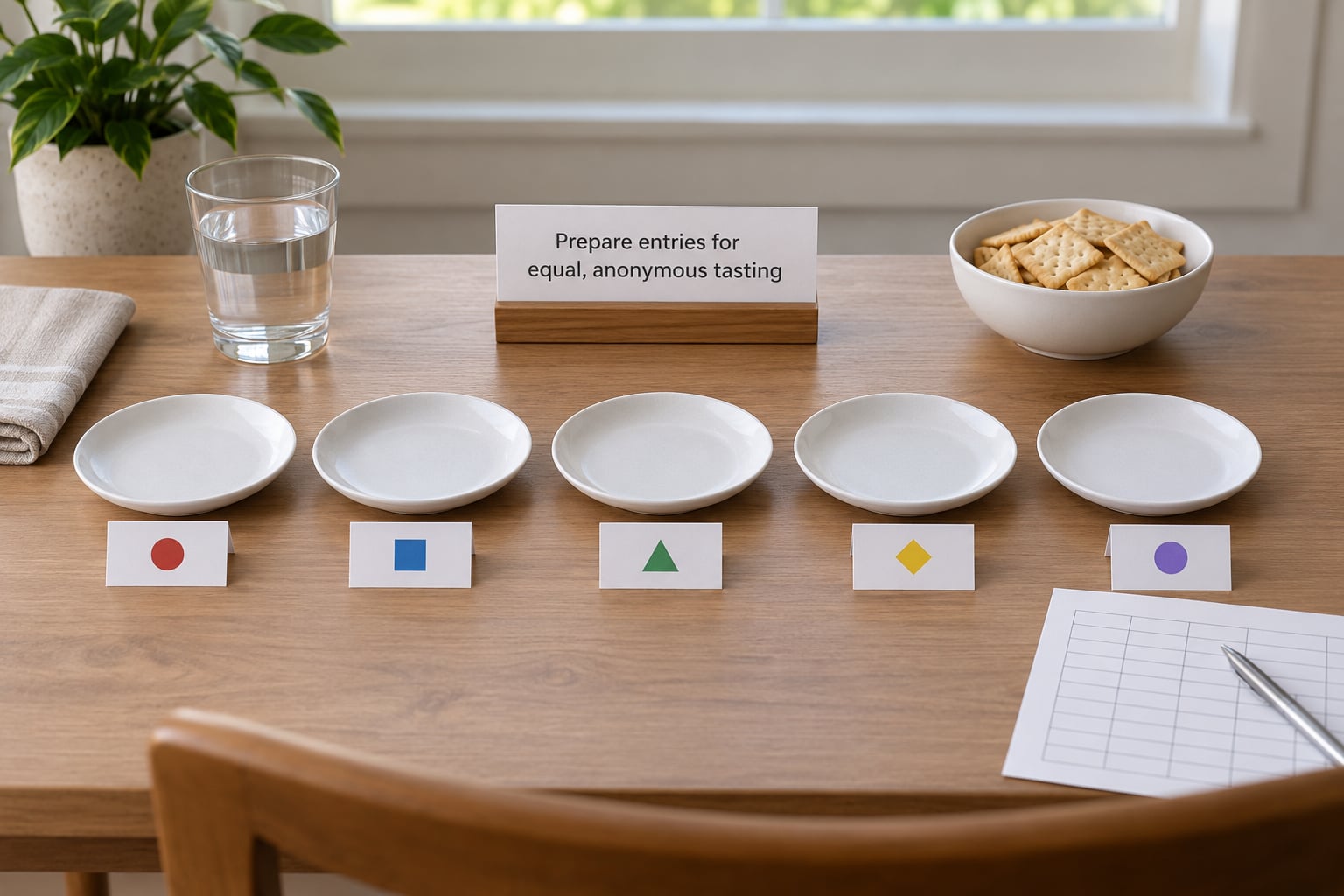
Standardise the samples so the only variable left is the bake. Each judge should get the same shape and weight of sample, cut from the same part of the entry every time. One judge tastes a corner piece, another tastes a slice through the middle, and you have introduced a difference nobody wrote on the score sheet.
Strip the identity of every entry. Use a plain number on a folded card with no name, no bakery and no category label, and keep the code-to-name key with the organiser, away from the tasting table. If the contest is public and people know who baked what, that knowledge travels with the plates whether you intend it or not, which is exactly why coded numbering matters.
Label the allergen sheet with the same numbers, so a judge who cannot taste an entry containing nuts records that on the sheet instead of guessing. Fairness includes judging every entry on the same footing, and an untasted entry scored blind by a judge who did not know it was there is not a fair comparison.
3. Taste in a controlled order
Draw lots for the tasting order, and use that same order for every judge. Eating in the order the tables are arranged hands the first entries a fresher palate and the last entries a tired one, which quietly decides the result for a five-entry contest.
Take small bites and taste each entry twice, at two points in the sample. The first bite tells you about flavour; the second, after a cleanser, tells you about texture. Tasting an entry only once tends to over-weight whichever impression arrived first.
Write your numbers down straight away, before you say anything to anyone. Talking about an entry out loud turns your impression into a group opinion within about thirty seconds, and once that happens the independent scores that make the process defensible are gone.
4. Score each category using the rubric
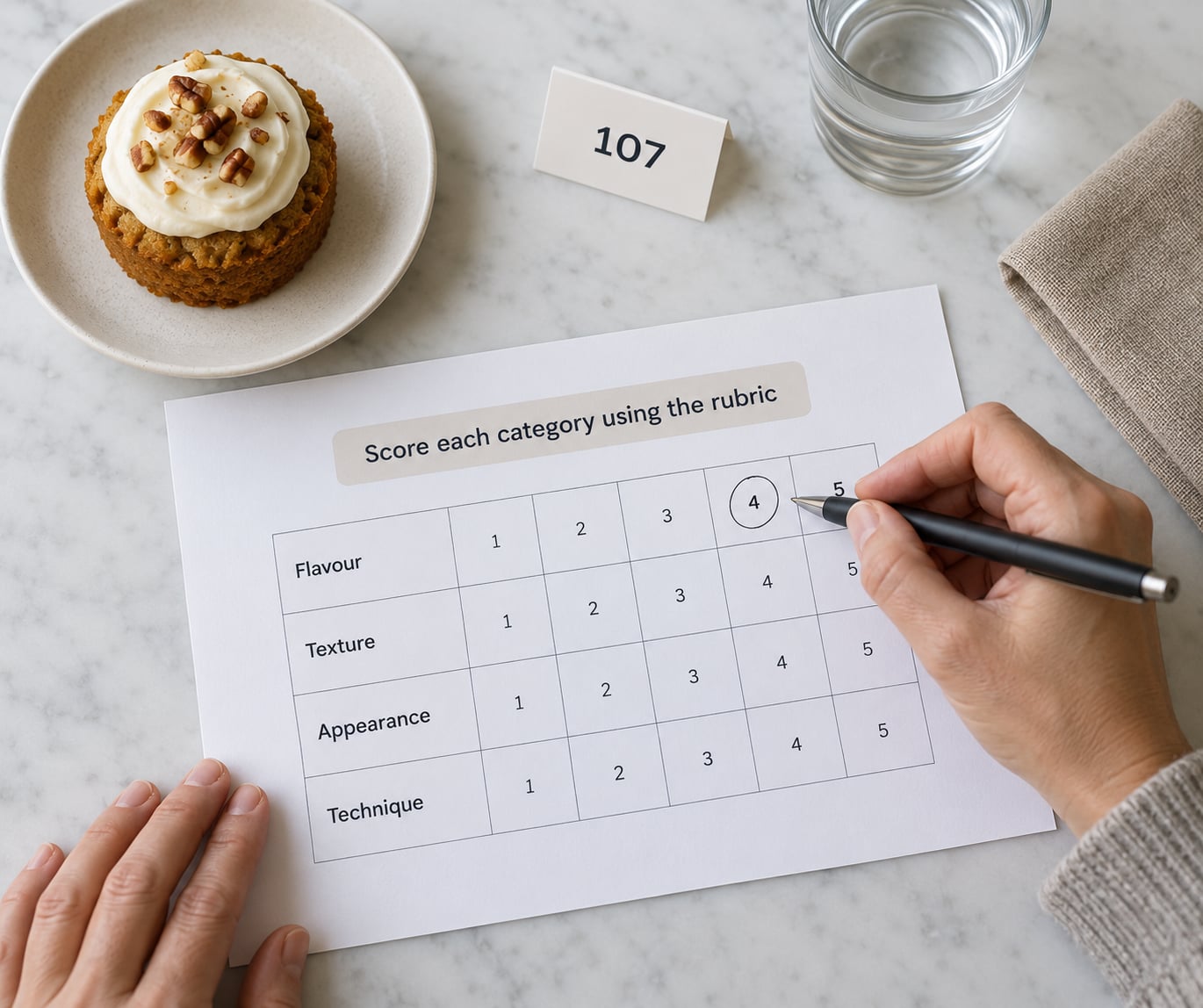
Fill in every category before you compute a total, and score them one at a time. Scoring appearance last, after the flavour is fixed, keeps the shine of a glaze out of the taste number. The most common error in home bake-offs is letting a well-decorated bake raise the taste score too, which double-counts the same visual impression twice.
Use evidence rather than adjectives, because “moist” and “moist” can mean two very different things to two different judges. Write what you actually found: a tight, even crumb; a gummy base two millimetres under the crust; raspberry that tastes of raw seeds rather than fruit. Judge in specifics and the scores can be compared and defended later.
Texture has its own vocabulary depending on the bake, and using the wrong word wastes a judge. For a cake, cut a clean slice and look at the crumb for evenness and tunnels, then press the crumb to see whether it springs back. For a loaf, check the slice for a tight, even crumb and a moist feel without gumminess. For cookies and biscuits, listen for a clean snap rather than a soft bend. For bread, check the crumb and crust colour and whether the loaf kept its shape. For cupcakes, press the surface for a velvety feel and check the grain from top to bottom when cut, which is the check baking groups most often describe. For pastry, look for visible flaky layers and an even bake without wet spots at the base.
Take notes during the first entry and reuse the same note format for every entry after that. Consistency of record is worth more than any individual judge’s palate.
5. Review scores and handle disagreements
Collect the sealed sheets first, then open them. Total each sheet independently, then average across judges for each entry. Averaging is what makes a panel worth having: three judges who disagree by half a point settle to a stable number, while one confident judge and one hesitant judge average into a result nobody would defend.
Decide tie-breakers in advance, not during the announcement. A workable order is highest taste score first, then highest texture score, then the score of the most senior judge, with the written sheet as the record in every case.
When judges disagree, go back to the written criteria rather than to the bake itself. Ask each judge which line of the rubric their number came from, and check the sheet for evidence in the notes. Sometimes the disagreement resolves immediately because one judge scored on a hunch and another wrote “uneven bake colour on one side, 5/10”. An average should smooth out honest differences of taste, not quietly erase a specific, documented concern about under-baking or spoilage.
Keep the sheets. If an entrant queries the result, the honest answer is the criterion, the mark and the note behind it, not a reassurance that everyone thought their bake was lovely.
Common Mistakes and How to Fix Them
Judging the decoration before the crumb. A polished glaze buys goodwill that leaks into the taste column. Fix: make taste the highest-weighted criterion and require every sheet to be completed before totals are calculated.
Serving unequal portions. The entry cut from the middle and the entry cut from the edge are not the same bake in front of the judge. Fix: cut every sample to the same size and shape, from the same position, and hand them out in plate order that does not change.
Hearing the baker’s story first. The entrant who explains the significance of the cake gets judged by a different panel. Fix: interview, photograph and record the story separately from the tasting, and never let it near the table.
Changing the rubric on the day. A criterion added at 10 a.m. is usually one a judge cares about and others have not thought about. Fix: publish it with the entry form and refuse changes after entries close.
Double-counting flavour and overall impression. “Overall” is a summary, so if it is weighted heavily it just repeats taste with extra steps. Fix: keep overall impression at 10% and tell judges to use it for consistency across the entry, not as a second opinion on flavour.
Ignoring allergens and food safety. Judges tasting twenty entries handle shared tongs, shared boards and shared air. Fix: hand-washing and a cleanser between entries, gloves or tongs for handling, no one returning a partially eaten sample to a plate, and a written allergen record matched to the entry code. Bakes that need refrigeration should be held cold and judged promptly.
Debating before scoring. The table reaches a verdict by volume, and the quiet judges stop thinking. Fix: silent scoring first, discussion afterwards, with the sheets already handed in.
Tips for Fair, Practical Judging
Run a calibration session. Hand every judge one sample slice from an identical loaf and score it together, then talk about why the marks differ. Twenty minutes removes more inconsistency than any other step, because it makes “what does a 7 in texture actually mean” concrete.
Use three to five judges. One judge is a preference. Three is enough for an averaging process to be meaningful, and more than five makes the session long enough that late entries get tired palates and the last slots get punished.
Keep the written score as the decision. The panel’s discussion is useful for catching a judge who wrote something inconsistent, not for re-opening scores on the day. If a discussion changes a number, record why.
Keep intervals short. Twenty entries tasted in one sitting will produce twenty near-identical scores at the end. Break the session into blocks of five or six with a few minutes off, and reset the palate properly rather than rinsing with coffee.
Judge blind where you can. Even coded numbers only work if judges do not learn who baked what during the day. Ask entrants to label the entry, not the box, and hold the key yourself.
Give feedback that is kind and specific. “Lovely sponge, but the crumb was tight near the base” tells someone what to change. “Beautiful cake” tells them nothing and is the reason half of all entrants stop entering.
One last note on scale. TV bake-offs run on a very different process, where judges taste one technical bake per episode, weigh the showstopper heavily and carry an impression of a contestant’s whole season. A one-day market bake-off has no such history to draw on, which is why the written process matters even more at small events than on television.
Frequently Asked Questions
What are the judging criteria for a baking competition?
Most baking competitions score five things: taste and flavour, texture and bake quality, appearance and finish, creativity and theme fit, and overall impression. A typical weighting gives taste the most points at 35 percent, texture 25 percent, appearance and creativity 15 percent each, and overall impression 10 percent. Publish the criteria and their weights before entries are accepted so every baker knows what is being measured.
Should bake-off judging be anonymous?
Yes, whenever the event allows it. Number every entry so judges see only a code, keep the code-to-name key with the organiser, and never let names reach the tasting table. In public events, people know who baked what anyway, which is exactly why coded numbering matters: it keeps the panel arguing about bakes rather than reputations.
How many judges does a bake-off need?
Three to five is the practical range. One judge is a preference, not a process. Three is enough for averaging to smooth out small differences in palate, and going above five makes the session long enough that fatigue flattens the late scores. Use a mix of experienced bakers and first-time tasters, and hold a short calibration session with the same sample before the day begins.
How do you break a tie in a baking contest?
Decide the rule before the contest opens and put it in the entry form. A workable order is highest taste score, then highest texture score, then the score of the most senior judge. Whatever you choose, apply it to the written sheets rather than to a discussion in the room, because tie-breaks argued aloud tend to favour whoever spoke last.
How should judges handle allergens and food safety?
Collect a written ingredient and allergen record from every entrant and match it to the entry code, so judges know what they are about to taste. Use gloves or tongs for handling, separate boards and plates per entry, and a palate cleanser between bakes. Nobody should return a partially eaten sample to a plate, and anything needing refrigeration should be held cold and judged promptly.
What should judges do when entries are very different?
Judge each entry against the rubric, not against the best entry tasted so far. Comparing a rustic loaf to a six-layer cake on one score sheet produces a number that means nothing. If the contest mixes categories, score each entry within its own category and let category winners be decided separately, with an overall award judged on the same criteria across all of them.
Conclusion
Fair judging is a process before it is an opinion. Write the rubric and its weights before the entries arrive, publish them to entrants, code the samples and cut them identically, score in silence on the same scale, average across three or more judges, and keep the sheets.
If you do only one thing this year, write that one-page rubric. It settles most disputes before they start, and it tells every baker exactly what the panel is measuring.