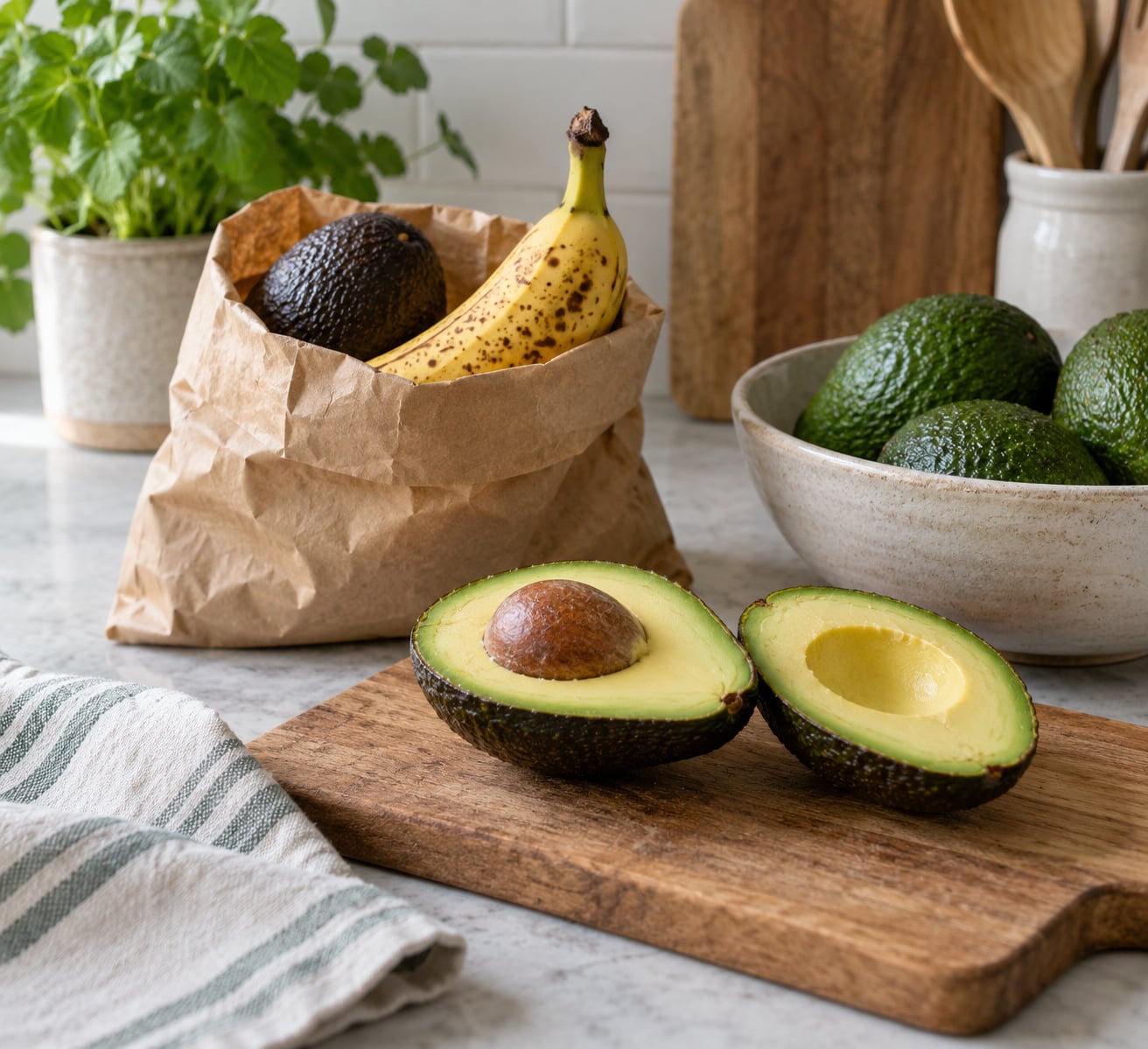
How to ripen avocados fast? Put them in a brown paper bag with a ripe banana, close the bag loosely, and leave it on the counter at room temperature for 24 to 48 hours. The banana releases ethylene gas, and the bag traps it around the fruit. Nothing at home turns a rock-hard avocado into a soft one in ten minutes, so plan a day ahead.
The frustrating part is how often avocados arrive hard. Even fruit labelled ripe and ready can need another two days on your counter, which is exactly what happens to shoppers who buy a bag at the market on Saturday and want guacamole on Sunday.
Table of Contents
- What You Need
- Step-by-Step: How to Ripen Avocados Fast
- 1. Use a Paper Bag and Ripe Fruit to Ripen Avocados Fast
- 2. Leave Avocados at Room Temperature
- 3. Warm an Unripe Avocado in the Oven
- 4. Check for Ripeness Before Cutting
- Common Mistakes
- Sealing avocados in a plastic bag
- Putting avocados in direct sunlight
- Trusting colour alone
- Microwaving or baking in foil
- Leaving ripe avocados on the counter
- Confusing soft with spoiled
- Frequently Asked Questions
- How soft should an avocado be before you use it?
- Can you ripen an avocado in the microwave?
- How long does it take to ripen avocados fast?
- How do I ripen an avocado fast with no paper bag?
- What do I do if I already cut an unripe avocado?
- How can I soften an avocado in 10 minutes?
- Conclusion
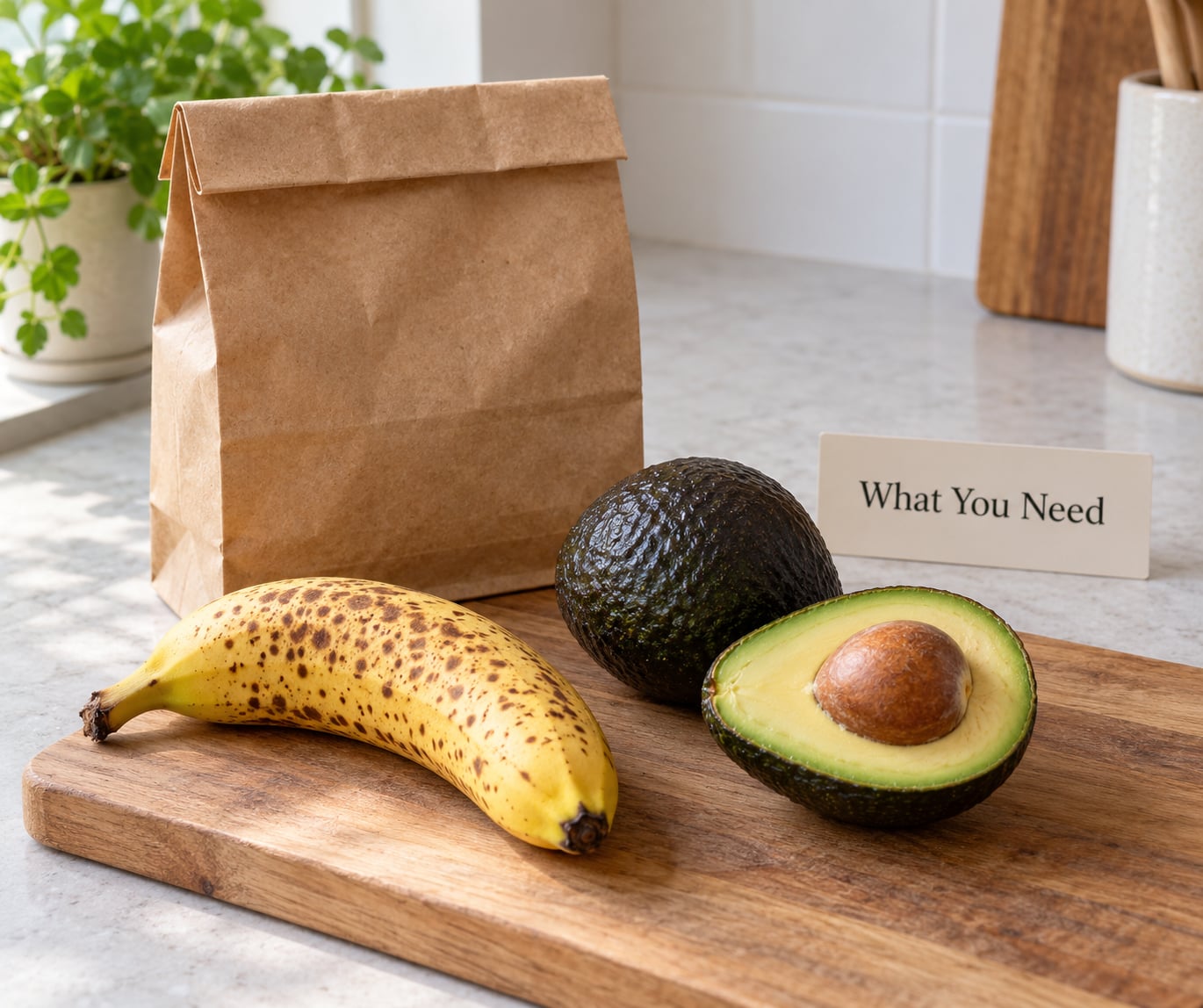
What You Need
Nothing special. Every method here uses things most kitchens already have, and the only item you might need to buy is a banana.
- A ripe banana, apple, pear, or kiwi — the ethylene source. A speckled banana works fine.
- A brown paper bag — the lunch bag or the bag your apples came home in. A paper grocery bag rolled down works too.
- A bowl or basket — for the room-temperature and no-bag methods.
- Your fingers — the pressure test is the only ripeness check worth trusting.
- An oven — optional, and only if you have decided to soften rather than ripen. More on that below.
Step-by-Step: How to Ripen Avocados Fast
There are four approaches, and only the first two genuinely ripen the fruit. The oven softens without ripening, and the pressure test tells you when to stop waiting.
1. Use a Paper Bag and Ripe Fruit to Ripen Avocados Fast
This is the method that works, and it is the one professional kitchens use when a case of hard fruit turns up. Restaurant cooks throw a bunch of bananas into the box and let the whole thing sit overnight.
- Get a brown paper bag. A lunch bag or the paper bag from the grocery store is perfect. Skip plastic entirely — see the mistakes section below.
- Add an ethylene producer. One ripe banana is enough for two or three avocados. A red apple or a ripe pear works, and a kiwi is unusually strong for the amount of gas it gives off.
- Close the bag loosely. Roll the top down a couple of times or fold it over. You want the bag to breathe while holding the gas in, not sealed airtight.
- Leave it at room temperature, around 65 to 75F. A closed cupboard or a warm corner of the kitchen is better than a cool shelf.
- Check every 12 hours. Feel for softness rather than trusting the clock. Squeeze gently near the stem end, then move the avocado to the fridge once it gives slightly.
A one- or two-day-old banana is enough gas to do the job. You do not need a black one, and a banana going soft and sticky is past its best as an ethylene source.
2. Leave Avocados at Room Temperature
When you have three or four days and no bag, the countertop alone does the job. Put the avocados in a bowl with the stem end up, somewhere out of direct sun and away from the oven or stovetop.
This is slower, usually three to five days, and it is the method most people are already doing without realising it. If your kitchen runs cool, move the bowl to the warmest spot you have. Tested recipes put the realistic range at two to three days for fruit that is nearly there, and up to four or five for fruit that is rock hard.
Heat is not the accelerator people think it is. A warm windowsill speeds things unevenly: the side facing the glass softens while the rest stays hard, and the skin can wrinkle before the flesh gives.
3. Warm an Unripe Avocado in the Oven
Be honest about what this does. Oven heat does not ripen an avocado, it softens the outer flesh and leaves the centre rock hard, so you end up with hot, uneven avocado that tastes flat and slightly cooked.
If you need soft avocado for a sauce tonight and have no time, set the oven to its lowest setting, put the whole uncut avocado on a tray, and give it 20 to 30 minutes. Check with the pressure test. Anything beyond that and you are cooking it.
This is fine for guacamole, where lime and salt cover a lot of ground. It is not fine for avocado toast, where the texture is the whole point.
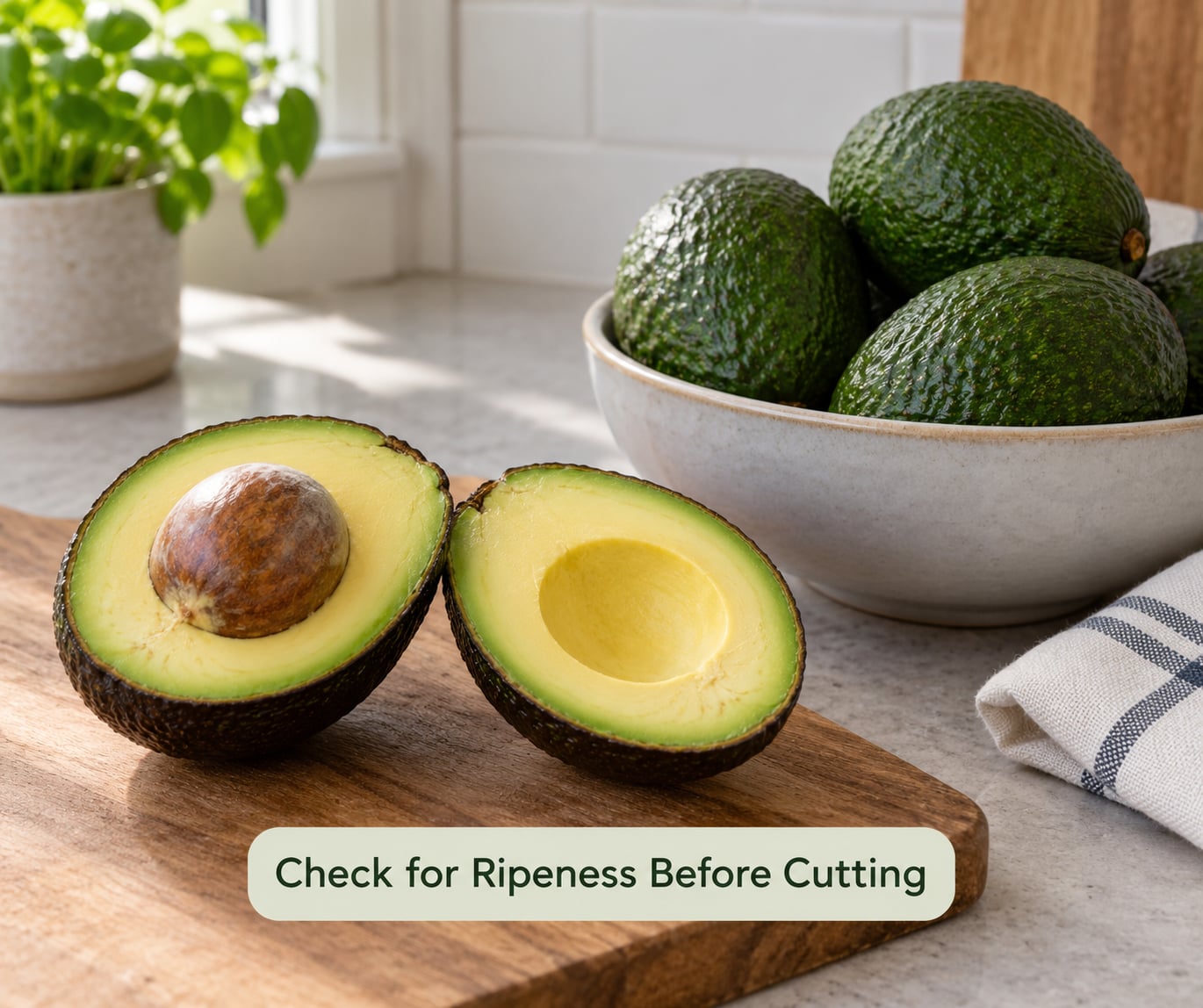
4. Check for Ripeness Before Cutting
This is the step that saves the disappointing half an avocado with a hard, chalky ring around the pit. Do it before you cut, every time.
- Look at the skin. Green means unripe, near-black usually means ripe, and dark patches can mean either ripe or spoiled. Colour is a hint, never a verdict.
- Press gently near the stem. Rock hard means wait. A slight give means use it today. Mushy or dented means eat it now.
- Peel back the stem cap. Lift it with a knife tip. Bright green flesh means ready. Brown or dry flesh underneath means keep waiting.
- Cut and look. The flesh should be creamy from the skin to the stone, with no green edge. That thin green ring is the last thing to soften.
How long does it take to ripen avocados fast? Realistically 24 to 48 hours in a paper bag with ripe fruit, and three to five days on the counter alone. Nothing beats that.
Common Mistakes
Most failed attempts come down to six fixable habits.
Sealing avocados in a plastic bag
Plastic holds moisture as well as gas, and the trapped damp turns the skin mouldy in a day or two. Paper breathes and keeps the ethylene in. If the paper bag goes musty, change it rather than leaving the fruit in it.
Putting avocados in direct sunlight
Sun heats the outside of the fruit faster than the inside, so you get soft patches and a hard core, plus skin that puckers. A warm, shaded counter gives an even result.
Trusting colour alone
A Hass avocado goes from green to near-black as it ripens, but a dark skin also appears after a rough few days in storage. Pressure and the stem cap are the reliable checks.
Microwaving or baking in foil
Both soften the fruit, neither ripens it, and heat breaks down the texture into something watery and slightly bitter. The viral foil-and-boiling-water trick produces an avocado that looks usable and tastes ruined. If you want fast, use gas, not heat.
Leaving ripe avocados on the counter
Once an avocado is ripe, the counter is the wrong place. Move it to the fridge, where whole ripe avocados hold for three to five days. Peeled and sliced fruit keeps about a day, and the cut surface browns fast unless you press plastic wrap against it.
Confusing soft with spoiled
Soft flesh with a clean, fresh smell is ripe and good. Soft flesh with a sour or musty smell, blackened skin, or grey-brown watery streaks has gone off and should be discarded.
A few things worth knowing if you buy in bulk. To ripen a whole bag for guacamole for a crowd, stagger them: put a third in the bag today, a third tomorrow, and leave the rest on the counter. To slow ripening down, refrigerate whole unripe avocados and bring one out at a time. And those brown streaks running through the flesh are vascular leaching, a harmless oxidation reaction that happens in storage and has nothing to do with how you treated the fruit.
Frequently Asked Questions
How soft should an avocado be before you use it?
It should yield to gentle pressure near the stem end without feeling mushy. The skin will usually be darker too, and the flesh under the stem cap should be bright green rather than brown or dry. If the fruit dents under a light touch or the skin is wrinkling, it is past ripe and best used today. Remember that the thin layer of green flesh right under the skin is always the last part to soften.
Can you ripen an avocado in the microwave?
No. A microwave does not ripen an avocado, it cooks the outside of the fruit and leaves the centre hard. Thirty seconds will not help, and a full minute leaves you with hot, watery flesh that tastes slightly bitter. It is a texture problem, not a timing problem, so more heat never fixes it. If you need soft avocado in minutes, use a warm oven for twenty to thirty minutes and go in knowing you are softening, not ripening.
How long does it take to ripen avocados fast?
A brown paper bag with a ripe banana gets a nearly-ready avocado to eating condition in 24 to 48 hours, and a rock-hard one in about two to three days. On the counter alone the same fruit usually takes three to five days. Warmth helps slightly, but no home method compresses this below roughly a day, because ripening is a biological process driven by ethylene gas and it takes what it takes.
How do I ripen an avocado fast with no paper bag?
Put the avocado in a bowl next to a bunch of bananas or a ripe apple and leave it on the counter. It works, just more slowly, because the gas disperses into the room instead of staying around the fruit. Expect three to five days rather than two. You can nudge it along by keeping the fruit in the warmest spot you have and grouping all the ethylene producers together in one bowl rather than spreading them around the kitchen.
What do I do if I already cut an unripe avocado?
Put the halves back together with the pit still in place, wrap them in plastic wrap or a sealed container, and refrigerate for a few hours to overnight. Reassembling the halves slows the browning and lets the softest parts absorb moisture. If they are still firm, blend them into a dip and add lemon or lime to cut any grassy taste. Baking works well too, since heat turns firm flesh soft and creamy.
How can I soften an avocado in 10 minutes?
You cannot ripen one that fast, but you can soften it. Slice the unripe avocado and toss the pieces with a little lemon or lime juice, which softens the texture slightly and keeps it from browning. For a sauce, blend the firm flesh with lime, salt and olive oil until smooth, which hides the stringiness. Warming it in a low oven for twenty to thirty minutes also helps, though heat cannot fix flavour the way ripening does.
Conclusion
Start with a brown paper bag and one ripe banana, keep it closed but loose at room temperature, and check every twelve hours instead of guessing by the calendar. Once the avocado gives slightly at the stem end, move it straight to the fridge and use it within three to five days.