To use up a big bunch of kale, wash and dry it thoroughly, strip the leaves from the stems, then split the chopped leaves across three base preparations instead of one: a cooked batch, a blended soup or sauce, and a raw dressed portion. One market bunch yields roughly 8 to 10 cups chopped, and it starts wilting within days, so the plan matters more than the recipes.
I learned this the hard way. I came home from the Saturday market with two bunches because they looked beautiful and cheap, and then cooked one tired sauté a week later. The other bunch went slimy in the crisper drawer. Now I treat kale like a short countdown clock, and nothing goes to waste.
Table of Contents
- What You Need
- How to Use Up a Big Bunch of Kale Step by Step
- 1. Inspect, Wash, and Dry the Kale
- 2. Separate Leaves and Stems for Different Uses
- 3. Make Three Quick Base Preparations
- 4. Cook One Big Batch and Freeze the Extras
- 5. Turn the Remaining Kale into a Complete Meal
- Quick Ways to Use Up Extra Kale
- Common Mistakes
- Frequently Asked Questions
- How long does chopped kale last in the fridge?
- Can I freeze fresh kale for later use?
- Should I remove the stems from kale before cooking?
- What is the fastest way to cook a big bunch of kale?
- How do I keep kale from getting soggy after washing?
- What foods pair well with kale when I want to use up a large bunch?
- Conclusion
What You Need
The only required item is the kale itself. Everything else is optional and mostly something you already own.
- A large bowl and a colander for washing and draining.
- A salad spinner, or a clean towel for getting the leaves properly dry.
- A sharp knife and cutting board for stripping and slicing stems.
- A wide skillet or a stock pot-sized pot so a big batch cooks down rather than steams itself.
- A blender or food processor for soup, pesto or a smoothie base.
- A baking sheet and parchment paper if chips are on the list.
- Freezer bags and a marker for portioning the surplus.
Tools that genuinely help with a big volume are the wide pan and the towel. A cramped pan wilts kale into a slimy grey mass, and kale that goes into a bowl wet carries water straight into your dressing or soup.
How to Use Up a Big Bunch of Kale Step by Step
1. Inspect, Wash, and Dry the Kale
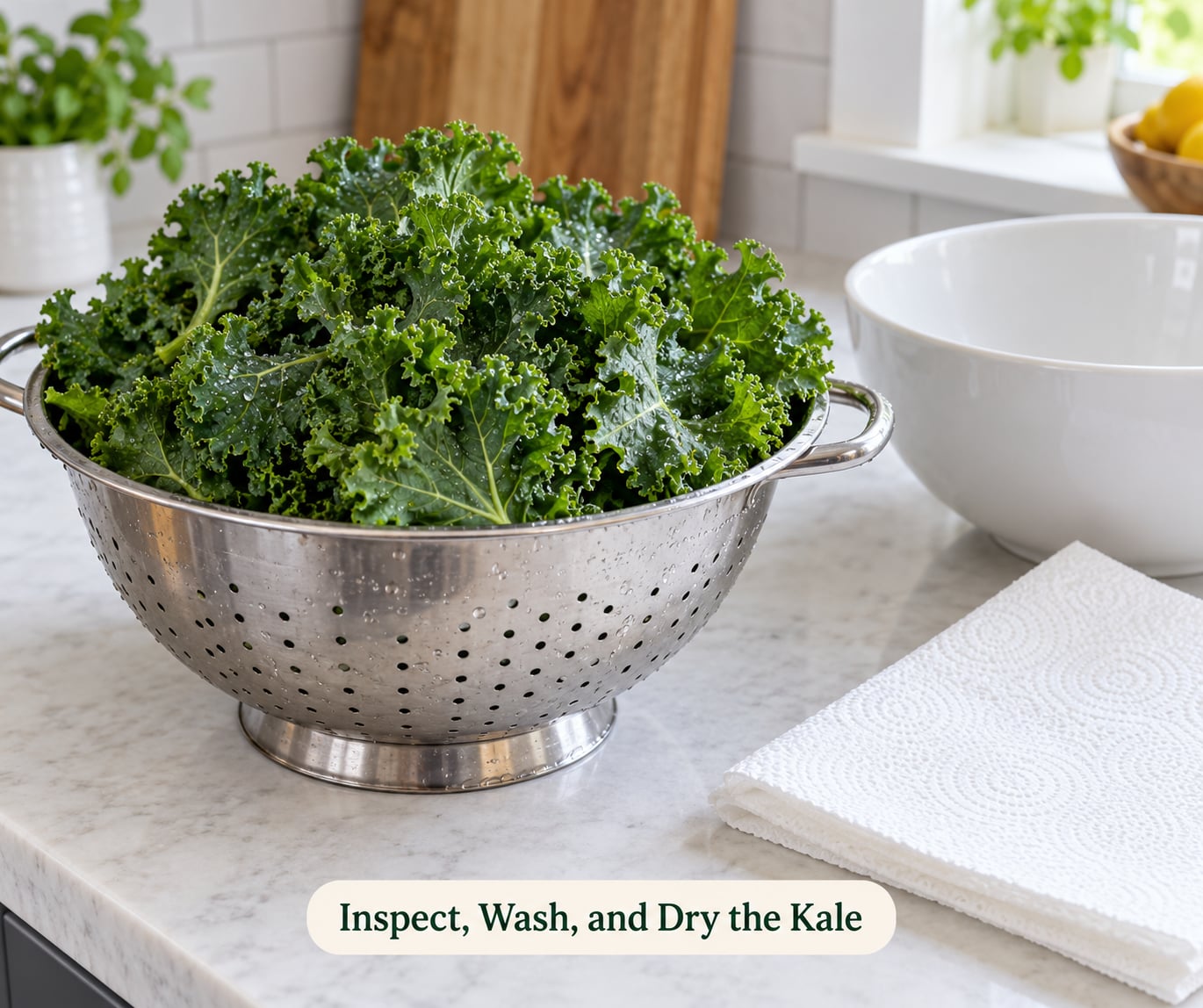
Start by pulling off any leaves with brown spots, holes or a slimy feel. Those turn the whole pile within a day, and one bad leaf at the bottom of a bag is enough to ruin the rest.
Rinse the leaves in cold water and swish them through the bunch rather than just pouring water over the top. Check the stems for grit too. Then dry them well, in a salad spinner if you have one, or by rolling them in a towel and pressing.
You want the leaves dry to the touch before anything else happens. Water left on kale dilutes salad dressing and thins out a soup, and it is the main reason chips turn limp instead of crisp.
2. Separate Leaves and Stems for Different Uses
Hold the bunch at the base of the stem and pull the leaf upward along the rib. The leaves come away cleanly, and that job takes about ten seconds for a whole bunch.
Slice the stems crosswise into thin coins, thinner than you think they need to be. They cook down like carrots and go into soups, sautés, egg dishes and sauces with no trouble at all. Discarding them is the most common waste in a bunch of kale, and they are maybe a fifth of the weight.
Stems that are too woody for a dish can still go into the pot with your chicken broth and simmer. Save the boiling water too, which is a free pot of vegetable broth for the next soup.
3. Make Three Quick Base Preparations
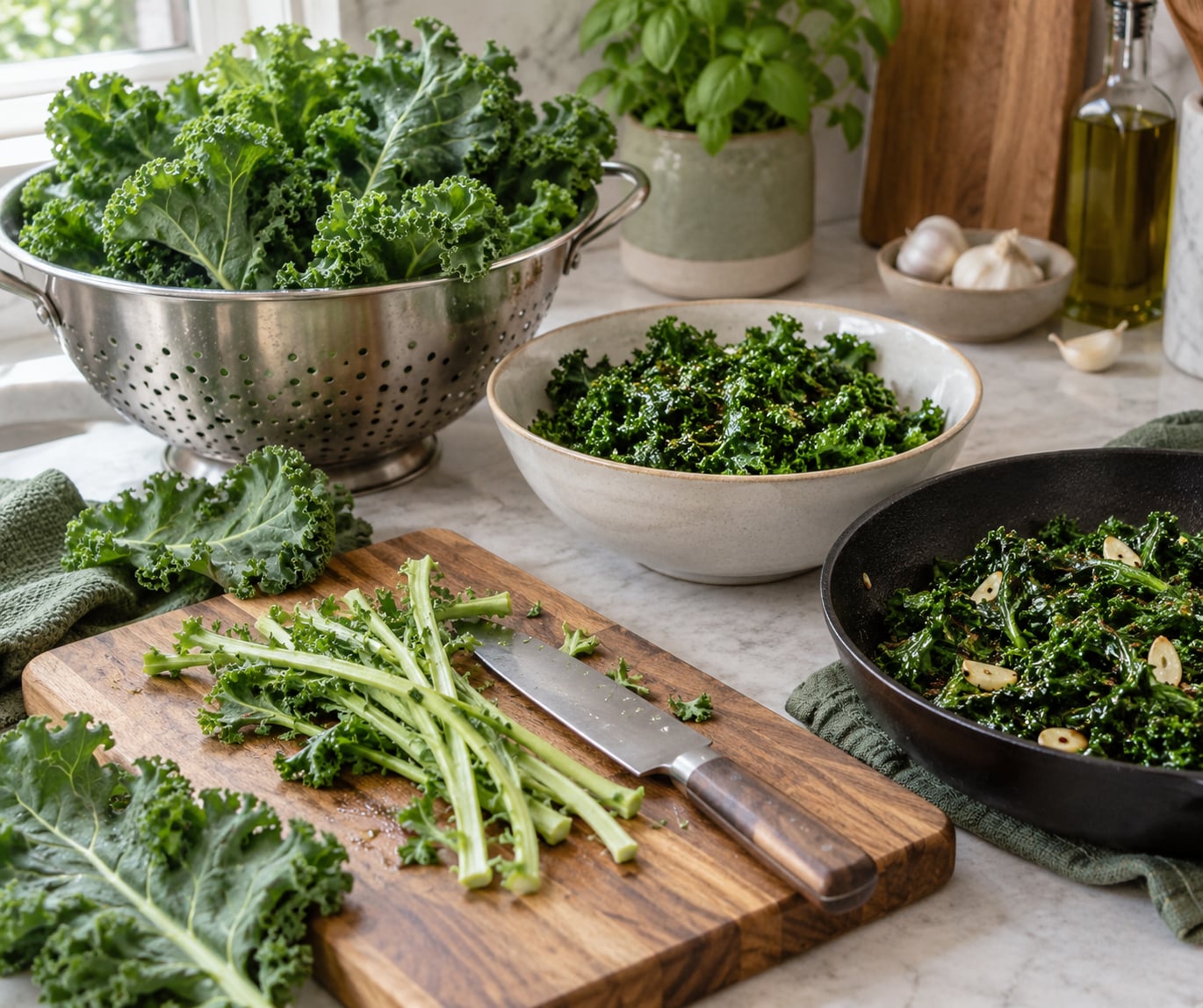
Roughly chop the leaves and put them into three containers, then treat each one differently. This is the step that stops a big bunch from becoming one boring side dish, and it is the heart of how to use up a big bunch of kale without cooking the same thing twice.
Container one gets a cooked component: about a third of the chopped leaves go into a pan with garlic and olive oil. Container two goes in the blender with broth for a smooth soup, or with garlic, olive oil, parmesan and lemon for a pesto that works on kale already starting to soften. Container three stays raw, chopped and ready for a salad you will dress later.
That gives you three different meals’ worth of prepared greens from a single bunch, and each one is a short job rather than a project.
4. Cook One Big Batch and Freeze the Extras

Make one generous cooked batch, because cooked kale holds and freezes far better than raw. Heat olive oil in a wide skillet, add a lot of sliced garlic for about a minute, then add the chopped leaves and stems with a splash of water. Cook until the leaves collapse and darken, about 8 to 10 minutes, seasoning near the end with salt, pepper and a squeeze of lemon or a spoon of smoked paprika.
Eat what you need for dinner. What remains, cool to room temperature, then scoop into freezer bags in portions you will actually eat, about a cup and a half per person. Press the air out, label with the date and freeze flat on a tray first. Once firm, stand the bags up in the freezer so you can pull out a portion instead of thawing a brick.
If you build the batch on a broth that came from cooked poultry, cool it promptly and reheat until steaming all the way through, which means 165F. Cooked kale is also a good freezer gift for a neighbor who keeps complaining about their own crisper drawer.
5. Turn the Remaining Kale into a Complete Meal
Raw chopped kale on its own is a side dish, and a forgettable one. Add something with protein and starch and it becomes dinner. The combination does all the work of convincing a picky eater.
Warm a skillet, cook sliced stems for two minutes, then toss in canned cannellini beans, a handful of cooked quinoa or a cup of rice, and the chopped leaves. Season with garlic, smoked paprika, parmesan and a squeeze of lemon. That is a fast one-pan dinner and it uses a large volume.
Other combinations worth trying: chopped kale folded into scrambled eggs or a frittata, cooked eggs to 160F; kale massaged with a little olive oil and layered onto a pizza or folded into a tortilla wrap with beans and cheese; or kale blitzed into a pasta sauce with garlic, anchovy and parmesan, which handles bitterness better than almost anything else. Blended and cooked, kale turns sweet and savory instead of grassy.
Quick Ways to Use Up Extra Kale
When the leaves are already softening, these five jobs move faster than planning a meal. Each one eats a meaningful share of a bunch.
- Massaged salad – Rub 2 cups chopped leaves with a tablespoon of olive oil or lemon juice for one minute. The leaves soften and lose most of their bitterness.
- Oven chips – Toss dry leaves with a little oil and salt, spread in one layer on a lined baking sheet, and bake at 325F for 15 to 20 minutes until crisp. A crowded pan steams instead of browning.
- Green soup – Simmer leaves and sliced stems with onion, a potato and chicken broth for 20 minutes, then blend until smooth.
- Smoothie – Blend two cups leaves with one cup milk, one cup frozen mango and half a banana. Fruit covers bitterness completely.
- Kale pesto – Blend leaves and stems with olive oil, garlic, parmesan and lemon until smooth. It freezes for three months and the flavour improves.
Common Mistakes
Storing wet kale. Moisture trapped in a bag turns leaves slimy and grey within a few days. Dry them thoroughly before they go in the fridge drawer, and leave the bag slightly open rather than sealed tight.
Waiting too long to decide. Chopped kale lasts about 3 to 4 days in the fridge in a paper towel-lined container. Whole leaves in the drawer last closer to a week. Freeze the day you would have thrown the pile out.
Discarding stems out of habit. Slice them thin and cook them. They are perfectly edible and there are usually plenty.
Using one flavor profile for a big volume. Plain sautéed kale, three meals in a row, is how families start refusing it. Garlic, citrus, nuts, cheese, sausage and bacon each take a large batch somewhere completely different.
Freezing one undivided block. A wet bag of kale freezes into a single solid mass you cannot break off. Freeze flat in a single layer first, then bag it once firm.
Crowding the chip pan. Overlapping leaves never get dry heat, so they stay limp in the middle. Bake in batches, and if your oven runs hot, drop to 300F and add a few minutes.
Frequently Asked Questions
How long does chopped kale last in the fridge?
About 3 to 4 days, which is much shorter than whole leaves. Keep it in a container lined with a paper towel so the leaves stay dry and turn a faint yellow rather than going grey and sour. If you cannot eat it in four days, freeze it at the end of day one instead of cooking it.
Can I freeze fresh kale for later use?
Yes, and blanching first gives the best texture. Boil the leaves and sliced stems for two minutes, drop them into an ice bath, then pat them dry. Freeze them flat in a single layer on a tray, and once firm move them into freezer bags or containers so you can break off single portions. Frozen kale suits soups, sautés and smoothies best.
Should I remove the stems from kale before cooking?
Not unless you want to. Strip the leaves from the ribs and slice the ribs into thin coins, then cook them with the leaves. In soups, egg dishes and sautés they soften and add texture, and in a blender they disappear entirely. Only skip them on very mature plants, where the ribs have turned genuinely woody and fibrous.
What is the fastest way to cook a big bunch of kale?
A garlicky skillet saute is the quickest route. Heat olive oil, cook sliced garlic for a minute, add the chopped leaves and stems with a splash of water, and cook 8 to 10 minutes until the leaves collapse and darken. Season with salt, pepper and a squeeze of lemon. For volume, a soup or blended pesto uses more leaves in less time.
How do I keep kale from getting soggy after washing?
Dry it properly before it goes anywhere. A salad spinner works well, and otherwise roll the leaves in a clean towel and press until they feel dry to the touch. Store them in the fridge drawer in a container lined with a paper towel rather than a sealed bag, and never refrigerate them still dripping, because trapped moisture is what causes sliminess.
What foods pair well with kale when I want to use up a large bunch?
Anything with protein and starch turns a large amount of kale into a real meal. Try cannellini beans and quinoa with smoked paprika, sausage and onions, kale in a frittata, or greens blended into a pasta sauce with garlic and anchovy. Citrus, parmesan, toasted nuts and chili heat all help, and cooked kale absorbs strong flavors instead of competing with them.
Conclusion
Start tonight rather than tomorrow: wash the bunch, dry it properly and strip the stems. Split the chopped leaves into three containers, cook one big garlicky batch and freeze the surplus flat, and you have turned an oversized bunch of kale into four or five servings instead of one sad side dish and a bag of slime. If you only remember one thing from how to use up a big bunch of kale, remember this: dry leaves first, and everything after that gets easier.