To tell if a pineapple is ripe, smell the base first. A sweet, floral aroma means it is ready within a day or two, almost no smell means it needs more time on the counter, and a sharp or vinegary smell means it is already fermenting. After that, look at the eyes and skin, press once for a slight give, and lift it to check how heavy it feels for its size.
That order matters. A pineapple usually gives you several signals at once, and aroma is the one that rarely lies. Color lies constantly, and the leaf-pull tip people repeat has a habit of failing exactly when you need it. The whole check takes about thirty seconds once you know what to look for.
Table of Contents
- What You Need
- Step-by-Step: How to Tell if a Pineapple Is Ripe
- 1. Check the color of the skin
- 2. Look at the leaves and crown
- 3. Use your sense of smell
- 4. Check the weight and feel
- 5. Look for small signs of readiness
- How to Choose a Pineapple at the Market
- What If the Pineapple Is Not Quite Ripe?
- Common Mistakes When Checking Pineapple Ripeness
- Frequently Asked Questions
- How can I tell if a pineapple is ripe without squeezing it?
- Does a pineapple need to be yellow to be ripe?
- What color should a ripe pineapple be?
- Are green leaves on a pineapple a sign it is not ripe?
- How long does it take for a pineapple to ripen after buying?
- How should I store a ripe pineapple?
- Start With the Smell and the Weight
What You Need
Nothing to buy and nothing to plug in. Every check in this guide works with your nose, your eyes and one free hand.
- Your nose, for the base of the fruit where the aroma is strongest.
- A free hand, for lifting, pressing and comparing two fruits against each other.
- A sharp knife, only if you plan to cut the fruit on the spot. Scoring a shallow nick into the base is the one optional check in the list.
- A phone flashlight, useful in a dim market aisle, because soft patches and mold hide in shadow.
Two minutes is a realistic budget at a busy public market stall. Pick up two or three pineapples and compare them with each other instead of judging a single fruit in isolation, since one fruit tells you nothing about what stage the shop’s usual delivery is at.
Step-by-Step: How to Tell if a Pineapple Is Ripe
Work down these five checks in order. They run from the outside of the fruit inward, which is why smell sits third: you have to flip the pineapple over to reach the base, so it fits naturally once you are already handling it.
1. Check the color of the skin
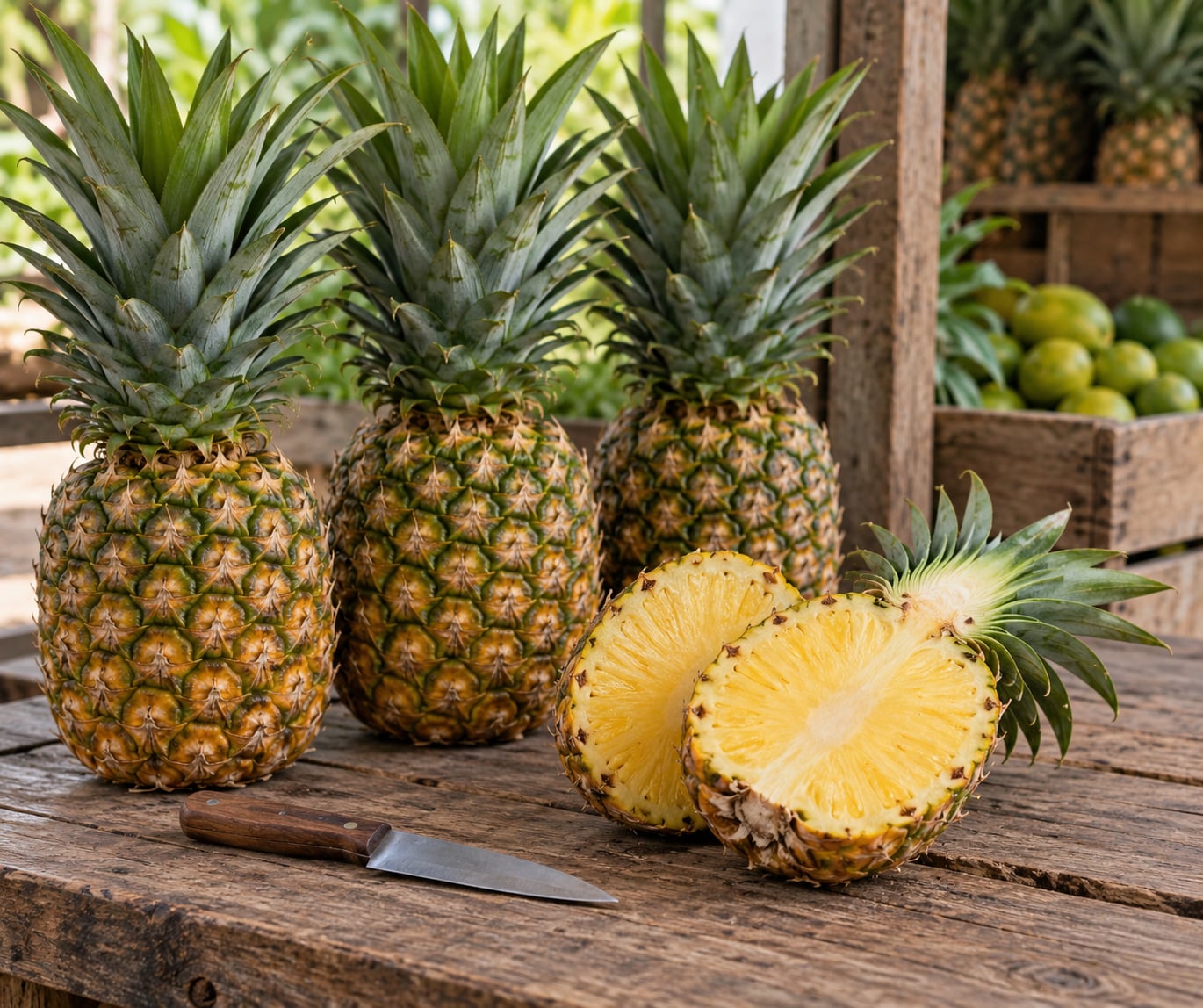
Look for a shell that has moved from green toward light or medium yellow, with the change strongest near the bottom. A little green remaining on the shoulders and top is normal and does not mean underripe. Fruit that is dark green all the way around was usually picked early.
Variety changes the range, though. Some red Spanish and Hilo types stay pale even when they are ready to eat, and growing conditions shift the shade from lot to lot. A fruit that has gone past yellow into deep gold or orange is losing its acidity balance and heading toward fermenting.
Color narrows the field, but it does not pick the winner. Shoppers on produce forums keep describing bright yellow fruit that tasted sour and green fruit that was sweet, so treat any color rule as a starting point.
2. Look at the leaves and crown
Green crown leaves mean the fruit is reasonably fresh, because the crown keeps drawing moisture after harvest. Leaves that have relaxed, faded to a paler green or sit a little looser usually point to fruit that has been off the plant for a while.
You will also notice the whole pineapple gets lighter over several days at room temperature, which is normal. The leaves themselves say very little about sugar content. Fruit picked green can hold bright leaves for weeks and still taste blunt, so check the crown for condition rather than ripeness.
3. Use your sense of smell
Flip the pineapple and put your nose near the base, the flat end where the stem used to attach. This is the most reliable test on the list, and it is the one experienced growers point to first.
Sweet and floral means ripe and good within a day or two. Fruity and strong means eat it now. Almost nothing means give it more time. Vinegary, boozy or plainly fermented means the fruit is past its best and converting.
The base is the right spot because pineapples fill with sugar from the bottom up, so sweetness and aroma concentrate down there. Homegrowers posting in r/gardening use the same test, putting their nose to the fruit and trusting fragrance over any chart. It is also why the fruit softens from the bottom first.
4. Check the weight and feel
Lift two pineapples of similar size and compare them. The heavier one for its size is juicier, and juicier usually tracks with sweeter. Light-for-size fruit is what turns up sour.
Then press gently with a thumb through the skin near the base. You want firm with a slight give, like a peach that is ready. Rock solid usually means underripe. A dent that stays, or a soft watery patch, means overripe or breaking down. Press once and press gently, because bruising turns brown within an hour and looks worse than the fruit actually is.
Look at the eyes as well. Those diamond scales flatten as the fruit fills out, so flat, barely raised eyes signal a riper pineapple while sharply raised, spiky eyes signal a less ripe one. It is a subtle read, but it is the same scale-curvature change that growers watch before harvest.
5. Look for small signs of readiness
Check the base for any dark, wet or leaking area. Juice pooling underneath means fermentation has started, and that fruit will not recover. Look for mold near the crown or in the creases between scales, and for softness that has spread upward from the base.
Then ask when you will actually eat it. Pineapples do not get meaningfully sweeter after harvest, so a fruit meant for Thursday evening should be picked with a real aroma today rather than a pale one. That single question resolves most of the guessing.
How to Choose a Pineapple at the Market
Pick up several fruits and compare them. Three pineapples judged side by side teach you far more than one inspected alone, because you learn what stage the shop’s usual delivery is at that week.
Ask the vendor whether the fruit was harvested ripe or picked green for travel. Stallholders usually buy by the case, so they often know the harvest date and which fruit will be best in three days rather than today. It is the fastest honest answer you will get.
Then sort by timing. For eating today or tomorrow, choose the most fragrant heavy fruit with flat eyes. For a cake three days out, a firmer one works, because sugar will not improve but the texture holds. Skip anything leaking at the base.
Fruit growing on a plant follows different rules. A homegrown pineapple colors up before it is ready and will not ripen once you cut it, so use aroma across the whole body and noticeably flattened eyes rather than the peel. Most gardeners wait for the fruit to smell sweet at the top as well as the base.
What If the Pineapple Is Not Quite Ripe?
Realistically, not much changes after picking. Pineapples are harvested mature and ripen slowly off the plant, so the skin may shift over several days while the sweetness stays roughly where it was.
Put it on the counter at room temperature, out of direct sun, rather than in the fridge. Cold slows ripening, which is fine once you want to hold the fruit but is the wrong place to start. Some people stand the fruit upside down so any liquid moves toward the crown and away from the base; no measurement backs that up, but it costs nothing.
Pairing it with a banana or a ripe apple in a paper bag speeds up softening, since those fruits give off ethylene gas that nudges nearby fruit along. Pineapples respond to ethylene weakly compared with bananas or avocados, so expect softening over several days rather than overnight.
Cook it. Grilling, roasting, or a short soak in salted water both soften firm flesh and take the sharp edge off acidity. Underripe chunks work fine in salsa, curry, baking and smoothies.
Plan storage based on the form. A whole uncut pineapple sits comfortably at room temperature for a day or two, then moves to the refrigerator, where it holds roughly three to five days. Cut fruit goes into a sealed container in the fridge and is best used within three to four days. You cannot ripen pineapple after cutting it, so buy it ripe and freeze anything already soft and fermenting for smoothies rather than eating it.
Common Mistakes When Checking Pineapple Ripeness
Judging by color alone. A shopper in r/fruit described a bright yellow pineapple that was still sour, and plenty of green fruit turns out sweet. Varieties differ too, so a color rule borrowed from one type fails on the next.
Pulling a leaf to test it. If one comes away easily, that says more about variety and time since harvest than about sugar. It is the most repeated tip in forums and the least consistent, so a leaf that will not budge proves little and a leaf that does not guarantee sweetness. Use your nose.
Assuming heavy always wins. Weight signals juice, and juice tracks with sweetness, but a very heavy fruit can also be overripe and fermenting inside where you cannot see it. Pair weight with smell before deciding.
Squeezing hard. Pressing leaves a dent that browns in minutes and makes the fruit look damaged when it is not. Press once, gently, near the base.
Refrigerating an unripe pineapple. Cold holds ripe fruit well and stalls an unripe one. Ripen at room temperature first, refrigerate after.
Tasting to decide. Cutting into a fruit to check wastes the part you cannot re-seal, and once the flesh is exposed it starts browning. Decide with smell and feel, then cut once.
Frequently Asked Questions
How can I tell if a pineapple is ripe without squeezing it?
Smell the base. Flip the fruit and check for a sweet, floral aroma, then lift it and compare against another pineapple of the same size, since the heavier one for its size holds more juice and usually more sugar. Add a look at the eyes: flat, barely raised scales mean a fuller fruit, while sharply raised eyes point to a less ripe one. No pressure and no knife needed.
Does a pineapple need to be yellow to be ripe?
No. Color is the least reliable of the five checks, and varieties differ, with some staying pale green or pale yellow even when they taste sweet. Fruit picked for travel is often still partly green and turns yellow over several days, which is why a green pineapple is not automatically underripe. Trust the aroma at the base, the weight for its size, and a slight give.
What color should a ripe pineapple be?
Light to medium yellow, with the shift strongest near the base because the fruit ripens from the bottom up. A little green on the shoulders or top is fine. Entirely dark green usually means it was picked early, while deep gold or orange means it has gone past the window you want and is shifting toward fermentation. Even perfect color still needs smell to confirm.
Are green leaves on a pineapple a sign it is not ripe?
Green crown leaves mean the fruit is fresh and still drawing moisture, which is a good sign, but they say almost nothing about sugar. Fruit picked green can hold bright leaves for weeks and still taste blunt. Relaxed or faded leaves usually mean more time off the plant. Judge sweetness at the base rather than from the crown.
How long does it take for a pineapple to ripen after buying?
Expect several days rather than hours, and expect very little change in sweetness. Pineapples are harvested mature and ripen slowly after picking, so skin color can shift over three to five days on the counter while the taste stays largely the same. Keep it at room temperature out of direct sun, and pair it with a banana in a paper bag if you want faster softening.
How should I store a ripe pineapple?
A whole uncut pineapple keeps about a day or two at room temperature, then roughly three to five days in the refrigerator. Cut pineapple goes into a sealed container in the fridge and is best used within three to four days. Cut fruit cannot ripen further, so buy it ripe in the first place, and freeze anything already soft and fermenting for smoothies instead of eating it.
Start With the Smell and the Weight
Start at the base. If it smells sweet and floral, eat it soon. If it smells like nothing at all, leave it on the counter for two or three more days, away from the fridge.
Then lift it. Heavy for its size means juicier fruit, and a single gentle press near the base should give slightly without sinking. Flat eyes are another good sign that the fruit has filled out.
Use color and crown leaves as background rather than a verdict. That combination, plus knowing how to tell if a pineapple is ripe in about thirty seconds, beats any chart on the internet.