Banana pudding from scratch is a layered no-bake dessert: a thick vanilla custard cooked from real eggs and milk, fresh banana slices, buttery vanilla wafer cookies, and a blanket of whipped cream or meringue on top. It takes about 30 minutes of hands-on work plus a few hours in the fridge, and the finished result is firmer and more fragrant than anything that comes out of a box.
Nobody needs a stand mixer or a pastry bag for this. A whisk, a heavy-bottomed saucepan, and a casserole or trifle dish will carry the whole thing. Read through the whole method once before you start, because the custard needs your attention for a solid eight minutes and the rest of the recipe is mostly waiting.
Table of Contents
- What You Need
- Step-by-Step
- 1. Prepare the Bananas and Baking Dish
- 2. Mix the Custard
- 3. Cook the Custard
- 4. Assemble and Chill the Banana Pudding
- 5. Add the Cookie Topping and Serve
- Common Mistakes
- Frequently Asked Questions
- Do I need to use very ripe bananas for banana pudding?
- Can I make banana pudding without eggs?
- How long does banana pudding take to set?
- Can I make banana pudding ahead of time?
- Why is my banana pudding runny?
- Can I use a different topping instead of cookies?
What You Need
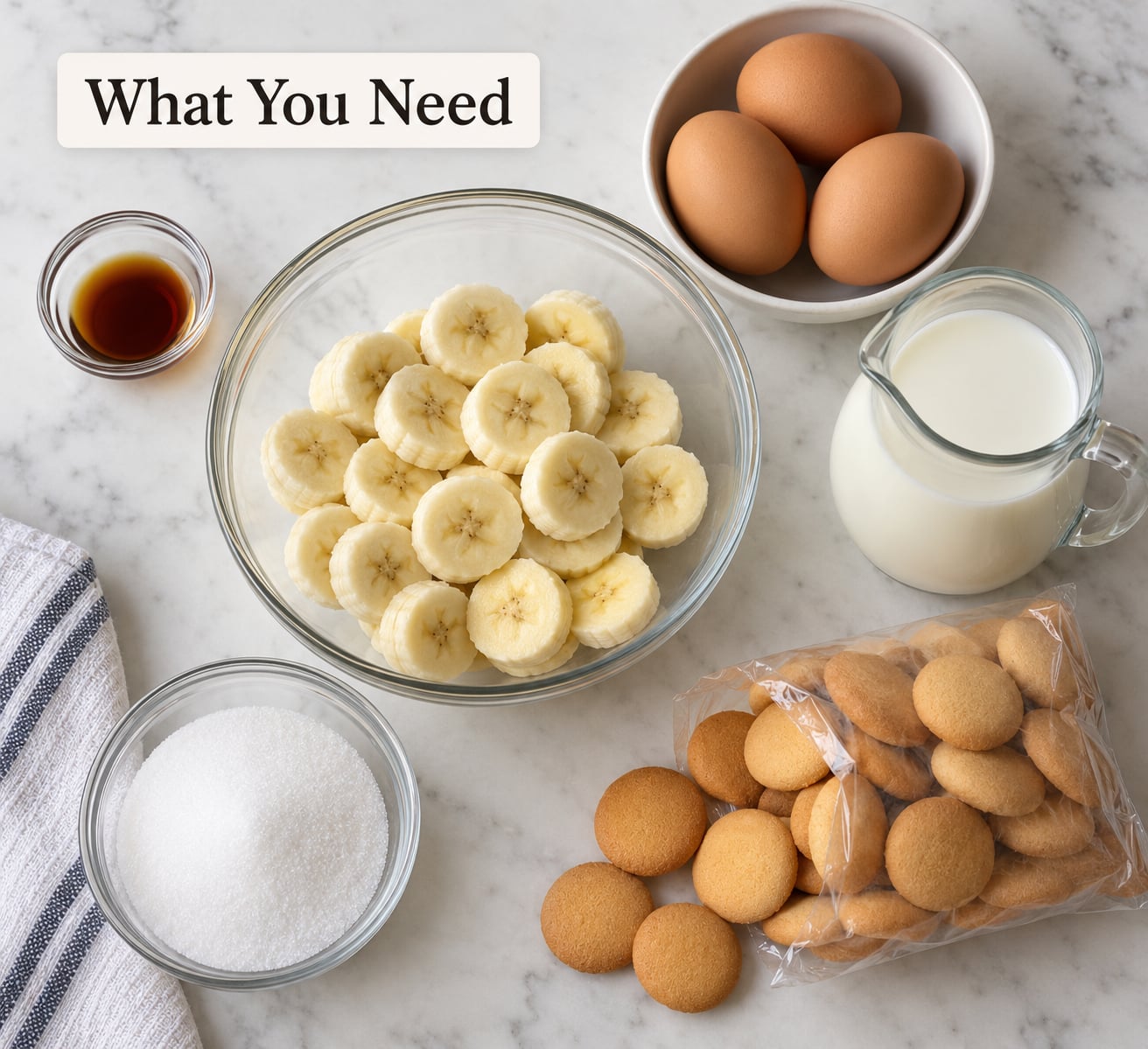
Eight ingredients make the pudding itself, and most of them sit in your pantry already.
- Ripe bananas, 5 to 6 — spotted yellow with a few brown flecks. The flecks mean more sugar, and sugar means more banana flavor in the finished custard.
- Granulated sugar, 3/4 cup — dissolves into the custard and balances the tartness of the milk.
- Egg yolks, 5 — the structure. They coagulate into a fine network that gives the pudding its body.
- Whole milk, 3 cups — the liquid base. Half-and-half makes it richer, whole milk keeps it lighter.
- Cornstarch, 3 tablespoons — the thickener. It dissolves on heat into a clear gel that stays silky as it cools.
- All-purpose flour, 1 tablespoon — optional, but a little flour alongside the cornstarch gives a softer, more tender set.
- Kosher salt, 1/4 teaspoon — not for flavor on its own. Salt sharpens the banana so the pudding tastes like banana and not just sugar.
- Vanilla extract, 2 teaspoons — go real here. Two teaspoons of the real thing reads as warm and floral; imitation reads as candy.
- Vanilla wafer cookies, roughly 36 — Nilla wafers, Chessmans, or store-brand vanilla snaps. Chessmans hold their shape in the fridge.
- Heavy cream, 1 cup — for the topping. Chilled, it whips to stiff peaks in about three minutes.
- A pinch of nutmeg — optional, but a genuinely old-fashioned note. Use less than you think.
Two pieces of equipment matter more than the rest. Use a heavy-bottomed saucepan so heat spreads evenly instead of scorching the milk on the bottom, and use a 3-quart trifle dish or casserole so you get visible layers rather than one flat slab of pudding.
On banana ripeness: skip the green ones, which taste starchy and stay firm in a way that reads as raw, and skip the all-black ones, which collapse into slime by the second day. Yellow bananas freckled with brown are the sweet spot for this recipe. If yours are sitting on the counter and going soft, use them today.
Step-by-Step
1. Prepare the Bananas and Baking Dish
Peel the bananas and slice them into half-inch rounds, about 24 slices total. Toss the slices with a tablespoon of lemon juice to slow browning, and set them aside while you cook the custard. Do this first so the fruit isn’t sitting out for the entire cook time.
Toast about half the cookies for five minutes at 350°F until they smell like butter and the edges turn pale gold. Toasted cookies hold their crunch for a day or two in the fridge, which matters more than you’d think.
2. Mix the Custard
Whisk the sugar, cornstarch, flour, and salt together in a medium saucepan. Add the egg yolks and whisk until the mixture turns pale yellow and pasty, about a minute.
Now temper the eggs. Pour in about a cup of milk and whisk it in slowly until the mixture is smooth, then add the remaining milk and whisk again until you see no white streaks and no lumps at the bottom of the pan. This slow start is what keeps the eggs from scrambling when heat hits — it raises the yolk temperature gradually instead of shocking it.
3. Cook the Custard
Set the pan over medium heat and whisk constantly. Keep it moving along the bottom, not just around the edges, and never let it boil — a hard boil is the fastest way to get a grainy, broken custard.
The mixture is done when it coats the back of a spoon and a line drawn with your finger stays visible for a second or two. That usually takes eight to ten minutes. When you see it, pull it off the heat immediately and stir in the vanilla and nutmeg.
The pudding will look thinner in the pan than it will in the dish. Starch keeps swelling as it cools, and egg proteins set further during chilling, so the finished pudding firms up considerably. Pour it into a shallow bowl, press a piece of plastic wrap directly onto the surface so no skin forms, and chill for at least two hours.
4. Assemble and Chill the Banana Pudding
Whip the chilled heavy cream with a couple of spoonfuls of powdered sugar until you hit stiff peaks that hold when you flip the bowl. Keep it in the fridge.
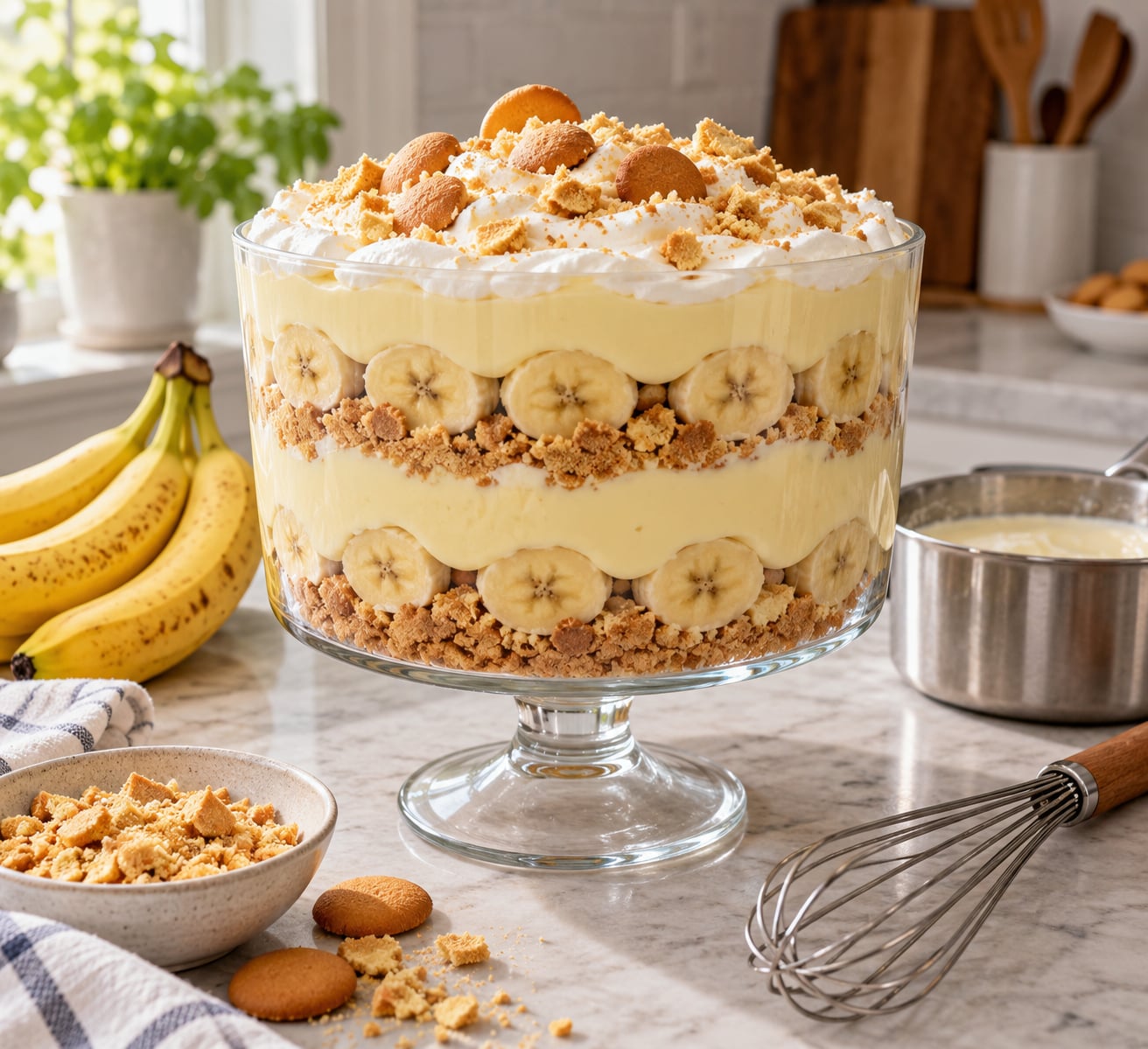
Now layer in a trifle dish or a 9×13 casserole. A third of the cookies goes down first, then a layer of pudding, then half the banana slices. Repeat once, and finish with the last third of pudding so the top layer is smooth custard rather than a banana slice that browns in the fridge.
Cover with plastic wrap and refrigerate at least four hours, or overnight. Cut into squares with a warm, clean knife so each slice comes out clean, and wipe the blade between cuts.
5. Add the Cookie Topping and Serve
Crush the reserved cookies in a zip-top bag with a rolling pin and scatter the coarse crumbs over each serving right before you eat. Adding them in advance is what turns the topping into pudding sludge at the bottom of the dish.
Dollop the whipped cream on each square. If you want the Southern finish, make a French meringue instead: whip three egg whites with a quarter teaspoon of cream of tartar to stiff peaks, fold in three tablespoons of sugar, and toast it under the broiler for two minutes until the tips are brown.
For a no-cookie version, skip the crumbs and go straight to whipped cream with a few thin banana slices laid on top. Add them just before serving, not before.
Common Mistakes
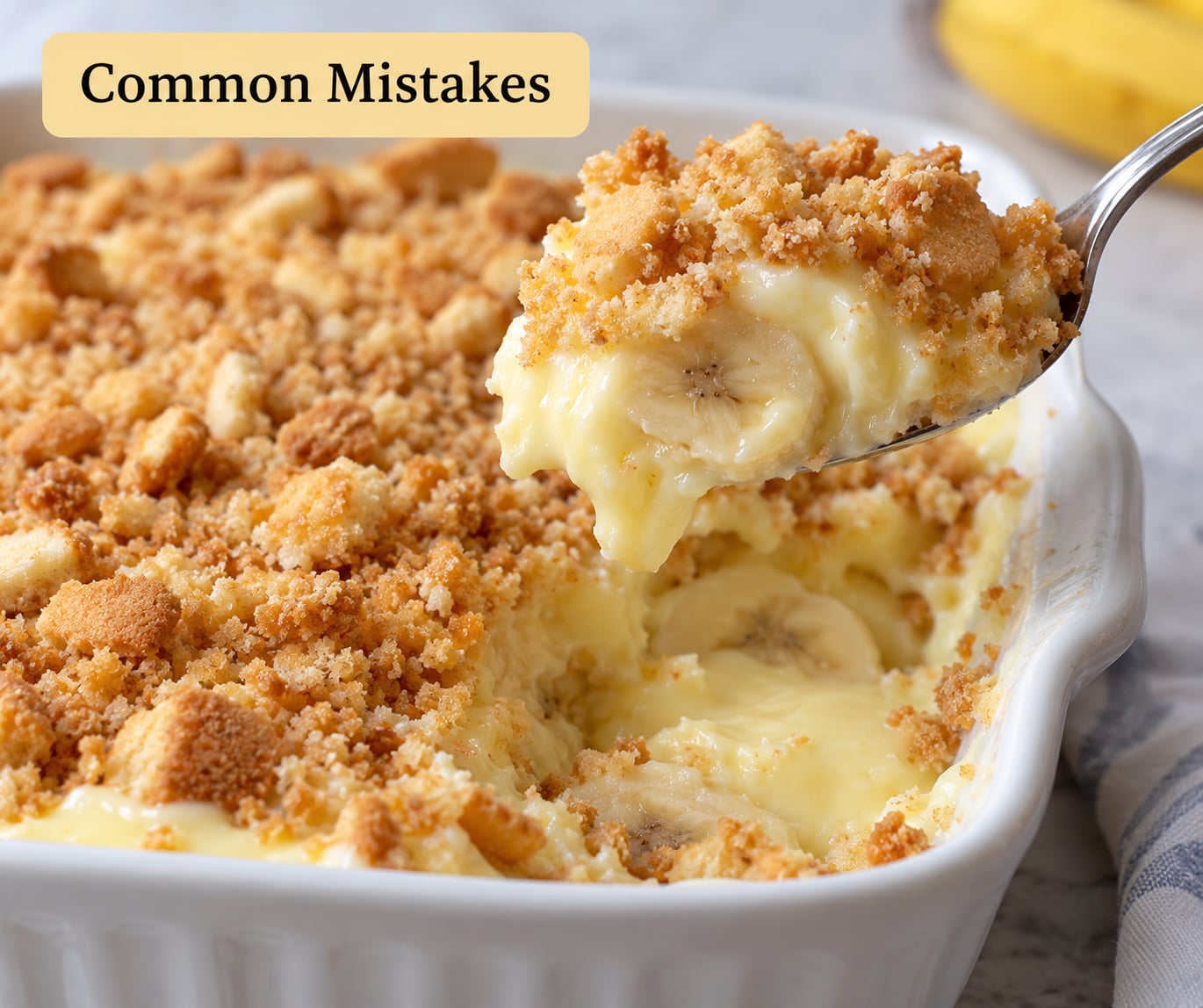
The pudding is still runny. This is by far the most common failure. It almost always means the mixture was not brought to a full simmer, or it was not left at temperature long enough for the cornstarch granules to break down. Cook it two minutes longer than you think you need to, and stir for thirty seconds more at the end. If you are using a thinner milk, or have doubled the recipe, add an extra tablespoon of cornstarch.
Scrambled egg bits in the custard. You poured the milk in too fast. Temper properly: one cup of milk whisked in slowly at room temperature, whisked until smooth, then the rest of the milk added. Also make sure your yolks are whisked into the dry ingredients first so there are no raw pockets left to seize.
Lumpy filling. Cornstarch dumped in after the milk will clump and stay clumped. Whisk the sugar, cornstarch, flour, and salt together dry, then whisk the eggs into that. If lumps do appear, strain the hot custard through a fine mesh sieve before it goes in the dish.
The pudding is firm enough to stand on a spoon. You cooked it too long. It should be soft-set and gently jiggly, not paste-thick. Extra cooking tightens the egg proteins further and gives the pudding a rubbery, gummy quality that some people love but most don’t. Pull it the moment it coats the spoon.
Soggy wafers. Use the toasted cookies, and layer the pudding no more than about an hour before serving for the best crunch. Individual cups chill faster and stay drier than one big trifle, which makes them the better option if the pudding is sitting out at a party.
Brown, mushy bananas. Toss the slices with lemon juice the moment you cut them, and add them after the custard is cool. Never layer warm pudding over fruit; the heat accelerates browning and the slices go translucent. If the bananas were already black when you started, expect a darker, more caramel-heavy pudding and cut the sugar in the custard by a couple of tablespoons.
A make-ahead schedule that works: cook and chill the custard one day ahead, whip the cream the morning you serve, and assemble about four hours before. The whole thing holds three to four days in the fridge, tightly covered. Do not freeze it — the cream splits and the bananas turn to paste on thawing.
One last habit worth keeping: taste the custard before it leaves the pan. If it is sweet, a small pinch of salt fixes it. If it is flat, another half teaspoon of real vanilla will bring it back.
Frequently Asked Questions
Do I need to use very ripe bananas for banana pudding?
Spotted yellow bananas are the target. Brown freckles mean more sugar in the fruit, which is exactly what you want because the pudding is already sweet. Green bananas taste starchy and stay firm, and fully black ones break down into mush within a day. If your bananas are past peak, use them and cut two tablespoons of sugar from the custard.
Can I make banana pudding without eggs?
Yes, and the result is a lighter, looser pudding rather than a creamy one. Whisk 3 tablespoons of cornstarch with 2 tablespoons of flour into the sugar and salt, cook it in the milk until it coats the back of a spoon, and chill it. Without egg protein the pudding sets from starch alone, so it firms up as it cools but never reaches the dense, spoon-standing texture of the classic version.
How long does banana pudding take to set?
The custard needs two hours in the fridge to cool through and firm up, and the assembled dessert needs about four hours before it holds clean slices. Chilling overnight is better and is what I do for Sunday dinners. An hour is not enough; the layers will slump and the first slice will never come out intact.
Can I make banana pudding ahead of time?
Yes, and it is one of the best make-ahead desserts there is. Make the custard up to two days ahead and keep it under plastic wrap pressed directly against the surface. Assemble the layers no more than four hours before serving so the wafers stay crisp, and whip the cream the morning you serve it. Cover tightly and it keeps three to four days.
Why is my banana pudding runny?
Nearly always under-cooking. The mixture has to reach a gentle boil while you whisk, then keep cooking until it coats the back of a spoon, and most people pull the pan too early. Under-cooked starch stays thin and the pudding never firms. Cook two extra minutes, stir for thirty seconds at the end, and let it cool completely before assembling to see the real texture.
Can I use a different topping instead of cookies?
Yes. Graham cracker crumbs, shortbread, ginger snaps, and even crushed toffee all work in the layers, though only the toastable buttery ones survive overnight. For the top, skip cookies entirely and use whipped cream, a French meringue toasted under the broiler, or a thin layer of salted caramel. Add any fresh banana slices only just before serving.
Start with the custard: whisk the sugar, cornstarch, salt, and egg yolks together, temper in the milk slowly, then cook it while you whisk until it coats the back of a spoon. Chill that for two hours, whip the cream, layer everything in a trifle, and leave it in the fridge for four hours or overnight. Crush the extra cookies over each serving right before you eat and skip the box entirely.