You do not need a root cellar to keep winter squash through winter. If you have ever wondered how to store winter squash without a cellar, the answer is simple: keep it cool, dark, dry, and ventilated, above freezing, with air moving around it. A pantry closet, a spare cabinet, an under-bed bin, or an insulated box in an unheated room will all work, because most home kitchens never hit 50°F anyway. Budget about two weeks of curing plus a few minutes each week checking on the stash.
Winter squash stores well precisely because a cured rind is a moisture barrier, and that only matters if you stop the squash from sitting in warm, damp, still air. Get those four conditions right in an ordinary room and you will get a surprising number of months out of a single butternut. Ignore them and a squash that felt heavy in the market turns to mush in three weeks.
Table of Contents
- What You Need
- Step-by-Step: How to Store Winter Squash Without a Cellar
- Step 1: Choose Dry, Undamaged Winter Squash
- Step 2: How to Cure the Squash Before Storing It
- Step 3: Where to Store Winter Squash Without a Cellar
- Step 4: Arrange the Squash for Good Airflow
- Step 5: Check It and Use It in the Right Order
- How Long Do Winter Squash Varieties Last?
- Common Mistakes
- Tips for Small Kitchens and Warm Climates
- Frequently Asked Questions
- Can you store winter squash in the refrigerator?
- Which winter squash should not be refrigerated?
- How can you tell if stored winter squash has gone bad?
- Can winter squash be frozen for long-term storage?
- How do I keep winter squash from freezing in an unheated garage?
- Should winter squash be washed before storing it?
- Conclusion
What You Need
Whole squash needs almost nothing. A clean floor or shelf, a crate or open cardboard box, and a few sheets of plain paper are enough. Add a kitchen thermometer, because the difference between a good closet and a bad one is ten degrees and you cannot feel ten degrees.
- The squash — mature, dry-skinned, no soft spots or cracks.
- A clean, dry surface — a counter for curing, a shelf or bin for storage.
- Breathable materials — plain paper, newspaper, paper towels, straw, or a slatted crate. Never plastic wrap for whole squash.
- Space for a single layer — airflow matters more than square footage, so stack nothing on top of the squash.
- A refrigerator thermometer — for closets, cabinets, garages, and mudrooms, not just the fridge.
- Airtight containers — only if you cut into squash, because cut flesh needs refrigeration and holds about four days.
Skip the dehydrator and pressure canner unless you have a harvest far bigger than a market haul. Most readers are storing a handful of squash, and those keep fine with paper and patience.
Step-by-Step: How to Store Winter Squash Without a Cellar
Step 1: Choose Dry, Undamaged Winter Squash
Pick squash that feels heavy for its size with a hard, matte rind and a dry stem still attached. The fingernail test tells you more than the sticker: press a thumbnail into an area of skin you would not eat. If it marks the skin, the squash is not mature enough to keep, and it will disappoint within weeks.
Walk away from anything with a soft spot, a crack, leaking liquid, fuzzy mold, or a stem snapped off at the fruit. That last one matters more than most people think, because the stem is the plug that seals the wound, and a squash without one loses moisture and invites rot through the top.
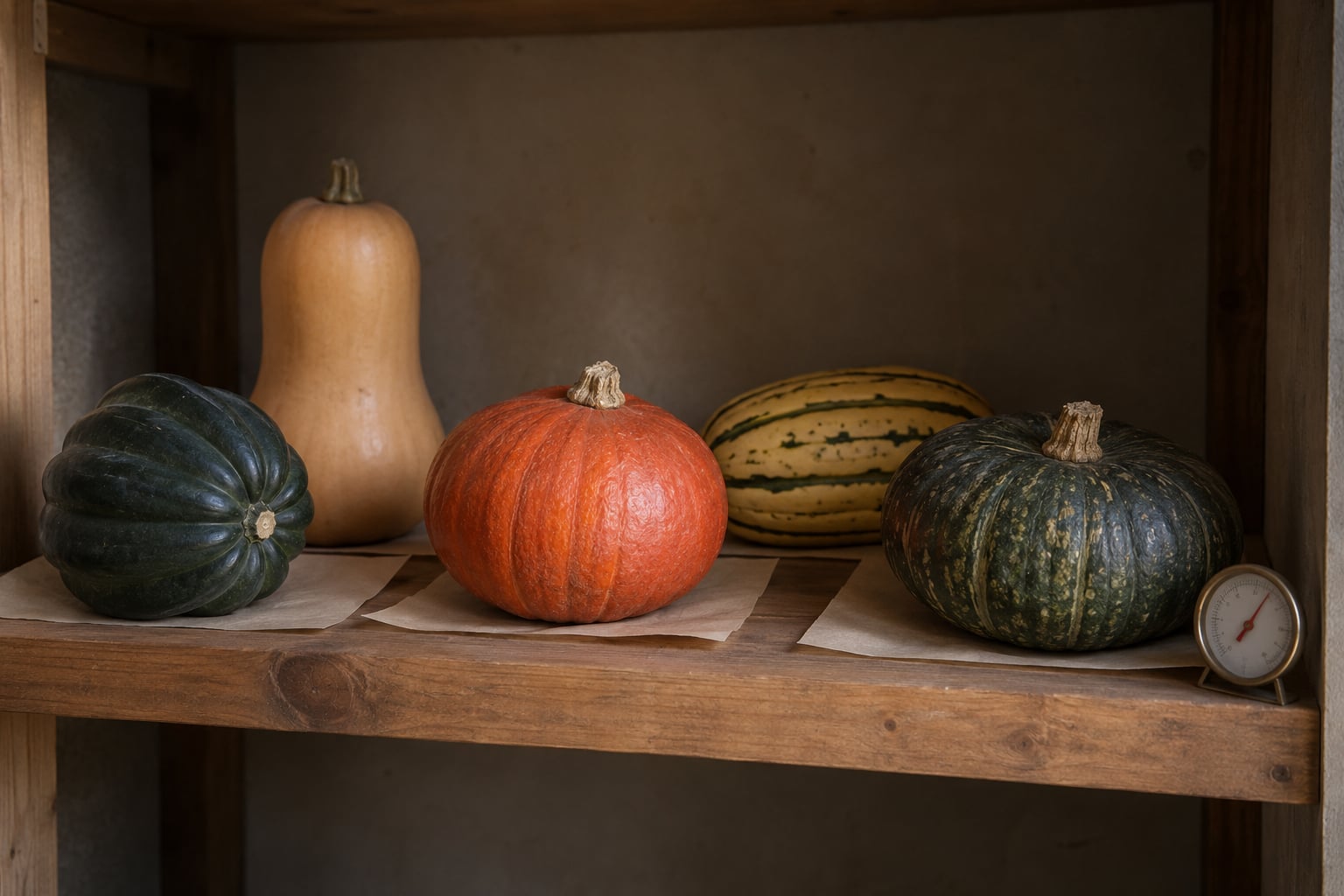
Variety sets your expectations. A dense, hard-shelled hubbard or butternut is built to keep, while acorn and delicata are thinner-skinned and shorter-lived. Grocery-store squash may already be several months past harvest, so it deserves a shorter window than a home-grown one.
Step 2: How to Cure the Squash Before Storing It
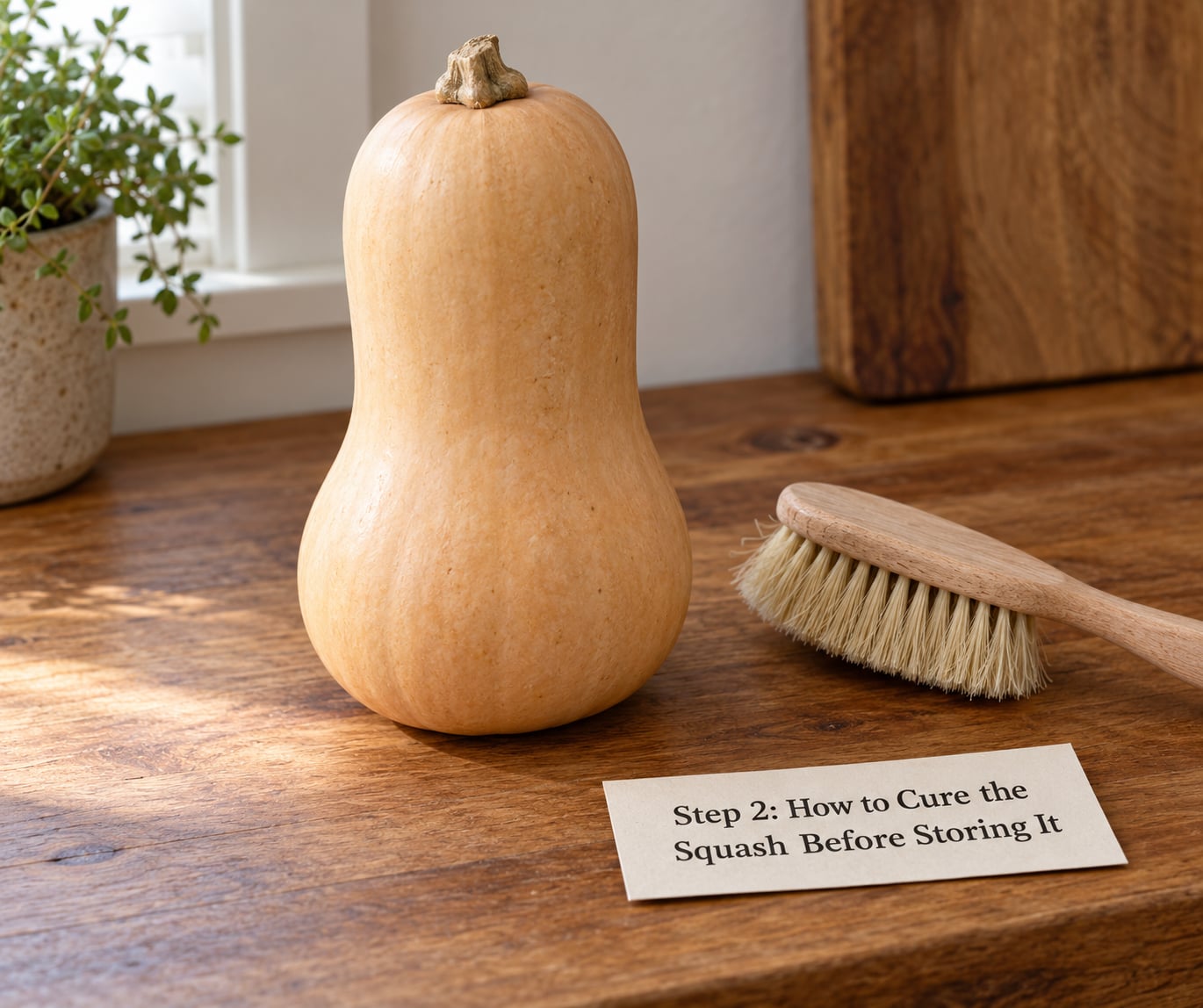
Curing is the step people skip and later regret. For 10 to 14 days, put squash in a warm, dry, well-ventilated spot around 80-85°F with good airflow and plenty of sun if you have it. Single layer, no stacking, no plastic. Curing is not storage. The squash sits in the warmest, driest, airiest spot you have for these two weeks, and only then moves to a cool dark place for the months that follow.
You know it is done when the skin hardens and a thumbnail will not mark it in several places, and the stem area feels corky rather than damp. Wipe off field dirt with a dry cloth as you go; do not scrub or wash.
Not everything needs a warm cure. Acorn, delicata, and spaghetti squash have thin skins that do not benefit, and acorn squash is the standard exception, going straight to storage after harvest. Cure them anyway and you shorten their life rather than extend it.
Step 3: Where to Store Winter Squash Without a Cellar
Aim for 45-60°F with 50-70% relative humidity, airflow, darkness, and no contact with freezing temperatures. Squash stored below about 45°F can suffer chilling injury even without a hard frost, and freezing at 32°F turns the flesh to watery mush. A typical finished basement that sits at 65-70°F all winter is too warm, not too cold.
Rather than guess, spend a few dollars on refrigerator thermometers and check closets, the hall closet, under the stairs, the mudroom, the inside corner of the garage, and the bottom shelf of a cabinet. The coolest dark spot in the house wins, and the results are often surprising.
| Storage spot | Typical temperature | Expected shelf life | What to watch for |
|---|---|---|---|
| Interior closet or hall closet | 55-65°F | 3-5 months for butternut and hubbard | Heat that builds up on an exterior wall |
| Pantry shelf or cabinet | 60-68°F | 2-4 months | Humidity from the dishwasher and stove |
| Under-bed bin | 60-68°F | 2-4 months | Dust, weight limits, damp floors |
| Unheated mudroom or enclosed porch | 40-55°F | 5-8 months | Freezing nights, mice, wet floors |
| Insulated garage or shed | 35-50°F | 5-8 months | Chilling injury below 45°F, rodents |
| Warm kitchen, cool corner | 68-72°F | 1-3 months | Direct sun, odors, ethylene from ripening fruit |
| Insulated cooler with a thermometer | 45-55°F | 5-7 months | Condensation, sun on the lid |
Keep squash off the floor, out of direct sun, and away from household chemicals, paint fumes, and gasoline. Skip the damp shed or the humid porch. A warm dry closet beats a cool wet cellar for this crop, because squash wants dry air and good air circulation rather than the damp, steady cold of a traditional root cellar.
Step 4: Arrange the Squash for Good Airflow
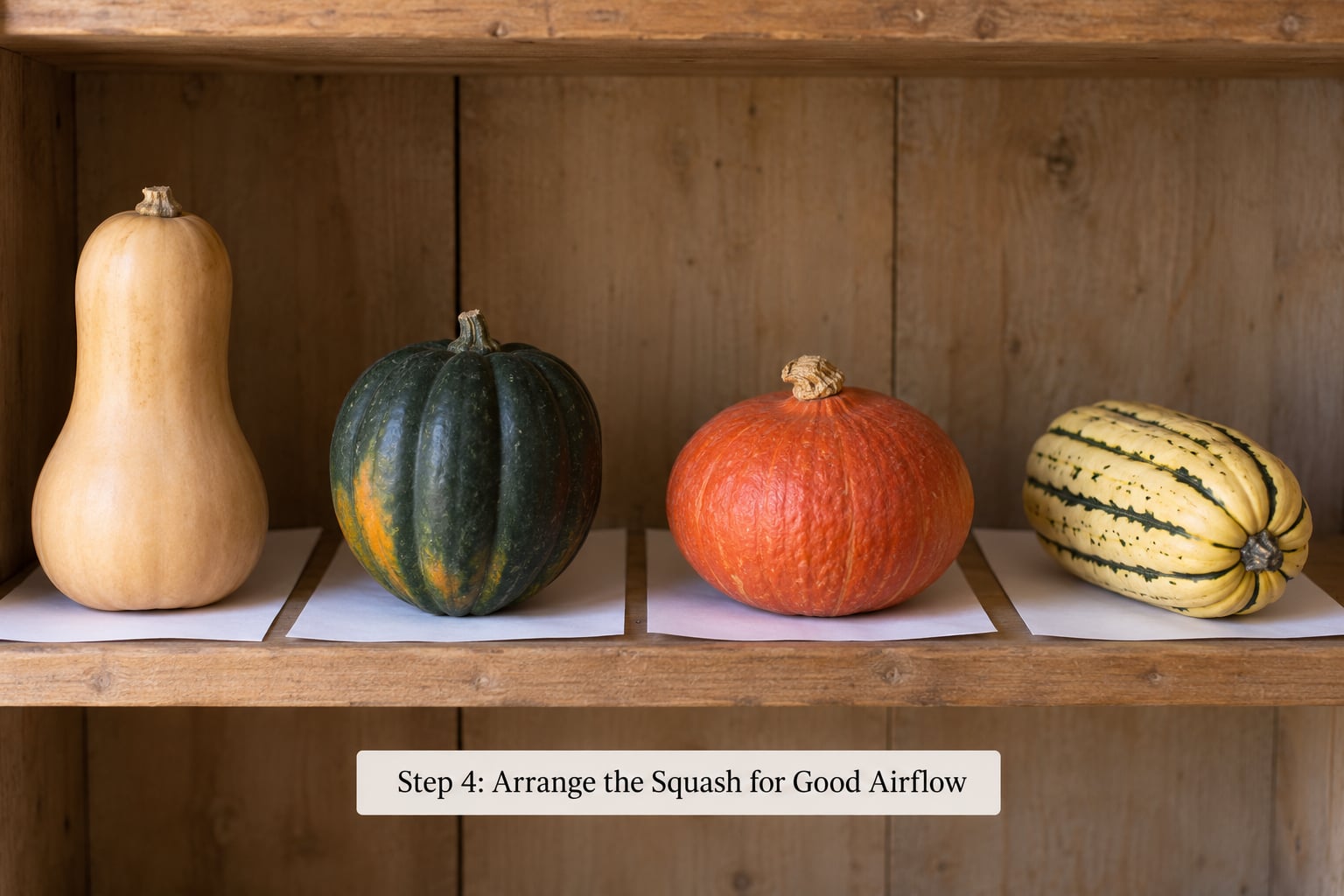
One layer, no contact. A milk crate, a slatted shelf, a wire basket, or a sturdy open cardboard box all work; solid-sided plastic bins do not, because they trap condensation. If you must stack, use a crate so air passes through the pile, and put a layer of paper or straw between the squash and the box floor.
Line surfaces and separate squash with plain paper, newspaper, or paper towels, and swap out any paper that picks up dampness. Avoid sealed plastic bags, sealed containers, and shrink wrap for whole squash, since trapped moisture invites mold faster than a warm kitchen does. Keep squash away from apples and pears, which give off ethylene gas that speeds ripening and softens squash faster than temperature alone.
Two habits help more than any container. Turn or lift a few squash each week so the same side is not pressed against a shelf forever, and label your crates with a marker so you eat the oldest first.
Step 5: Check It and Use It in the Right Order
Set a weekly reminder and pick up every squash. Look for soft spots, sunken areas, fuzzy mold, leaking liquid, insect holes, and stems going dark and slimy. Press the rind where you would not eat it. Any give means that squash goes to the front of the queue or gets used within days, and mold spreading from a fruit into a neighbor is the main way a good stash collapses.
Cull lightly. A squash with one soft patch can still be trimmed and roasted, cubed for soup, or pureed. A leaking or moldy one comes out of the room immediately, and clean the shelf before you set the next crate there.
Once you cut into squash, the rules change completely. Wipe the cut face, wrap it tightly or seal it in an airtight container, and refrigerate for up to four days. Cooked squash keeps about three to four days in the fridge or three months in the freezer. Cut squash left out on the counter is a food-safety problem, not a storage shortcut.
How Long Do Winter Squash Varieties Last?
These are approximate durations in a cool, dry, ventilated room, and they assume sound fruit that was harvested mature and cured properly. Damaged, immature, or overripe squash spoils sooner in every column.
| Variety | Curing needed | In a cool room (50-55°F) | In a warm home (65-70°F) |
|---|---|---|---|
| Hubbard, buttercup, kabocha | Yes, 2 weeks | 5-7 months | 3-4 months |
| Butternut | Yes, 2 weeks | 4-6 months | 2-3 months |
| Acorn | No, or very short | 2-3 months | 1-2 months |
| Delicata | No | 1-2 months | 4-6 weeks |
| Spaghetti squash | No | 1-2 months | 4-6 weeks |
| Pie pumpkin | Yes, until the stem corks | 3-4 months | 2-3 months |
Worth knowing: squash flesh is mostly starch at harvest and converts to sugar as it sits, which is why butternut baked in January tastes better than the same squash baked in October. If a stash ages past its window and the fruit still feels heavy and firm, eating it later is not a problem.
Common Mistakes
Washing squash before storing it. Moisture on the rind becomes mold in storage. Wipe off soil with a dry cloth and leave the skin alone.
Sealing whole squash in plastic. Airtight bags and sealed tubs trap condensation. Use a crate, a slatted shelf, or a box lined with paper.
Leaving it in a warm, humid kitchen. Heat shortens life and dampness brings mold. Move it to the coolest dark space you can find, and check a thermometer rather than guessing.
Stacking delicate squash directly on other squash. Acorn, delicata, and spaghetti squash bruise and collapse under weight. Keep them single layer or in a separate crate.
Crowding. Squashed-together fruit has no airflow, so a single bad spot spreads. A little extra shelf room is cheaper than losing a crate.
Storing in a shed or garage that freezes. Damage happens below 45°F and real ruin at 32°F. Use a small insulated cooler with a thermometer as a buffer, or bring the crate indoors on freezing nights.
Keeping cut squash at room temperature. Cut flesh needs airtight containment and refrigeration, and it lasts about four days that way, not months.
Tips for Small Kitchens and Warm Climates
In an apartment with no basement, no garage, and no pantry, an interior closet, the top shelf of a linen cupboard, or a labeled bin under the bed all beat the kitchen counter. Warm homes shorten the table above, so plan on finishing short-storage varieties such as delicata and spaghetti squash first and keeping the long keepers in bigger quantities.
With no cellar, no basement, and no garage, how to store winter squash without a cellar becomes a question of which corner runs coolest. An insulated beverage cooler is the most useful trick for hot climates and freezing garages. Set a thermometer inside, leave the lid cracked for air, keep it out of direct sun, and swap any paper that dampens. In high humidity, running a dehumidifier in a closed closet for a few hours a week does more good than any container change.
Buy less at once. Three squash in a cardboard box on a closet floor are easier to rotate, easier to check, and finish long before a crate you have to move twice. For large hauls, freeze the surplus: cook, mash or cube, and freeze in measured portions, which turns weeks of work into a few hours on one Sunday.
Frequently Asked Questions
Can you store winter squash in the refrigerator?
Whole winter squash should stay out of the refrigerator. Chilled fruit develops chilling injury, and the flesh softens and decays within about a week. Use the fridge for cut or cooked squash only, wrapped tightly or sealed in an airtight container, where it keeps roughly four days. Frozen cooked squash keeps around three months.
Which winter squash should not be refrigerated?
All of it, as whole fruit. Butternut, acorn, hubbard, buttercup, kabocha, delicata, spaghetti squash, and pie pumpkins all lose quality below about 45°F, and refrigerator air is cold enough to do that within days. Chilling shows up as watery, grainy flesh and a soft rind. Keep every whole squash cool, dark, and ventilated instead.
How can you tell if stored winter squash has gone bad?
Press the rind firmly, especially near the stem and any end that touched a shelf. Sound squash is hard everywhere. A soft spot, sunken patch, leaking liquid, fuzzy mold, dark slimy stem, or insect damage means that one has to go. Small blemishes can be trimmed away, but mold spreading from a fruit to its neighbor usually ends the whole crate, so remove it right away.
Can winter squash be frozen for long-term storage?
Yes, and cooked squash freezes better than raw. Cook it until soft, then mash it or cut it into cubes, cool it, and freeze in airtight containers or bags with the air squeezed out. Raw squash can be blanched and cubed first, but the texture softens noticeably. Thaw in the refrigerator and use within three months, dating from when it was frozen, not when it was harvested.
How do I keep winter squash from freezing in an unheated garage?
Watch a refrigerator thermometer in the garage for a few autumn days and learn its cold spots. If it drops below 45°F, bring the crate into a closet, or stage it in an insulated cooler with a cracked lid and a thermometer inside. Add a candle or a small water-filled jug to slow temperature swings, and never let fruit sit directly on a concrete floor, which is colder than the air above it.
Should winter squash be washed before storing it?
No. Washing adds surface moisture, and that moisture turns into mold within days. If the rind has field dirt on it, wipe it off with a dry cloth or brush the soil away, and skip the sink entirely. Also skip the refrigerator and any sealed plastic bag for whole squash; what you need is dry skin, airflow, and a cool dark spot around 50°F, above freezing.
Conclusion
Start by sorting your squash and throwing out anything soft, cracked, or missing its stem. Cure the thick-skinned keepers for 10 to 14 days in a warm dry spot, skip the cure for acorn and delicata, and then put every squash in the coolest dark dry space you have, single layer with air on all sides.
Check the stash once a week, label your crates, and eat in first-in, first-out order. A closet shelf and a weekly look is genuinely all it takes to store winter squash without a cellar.