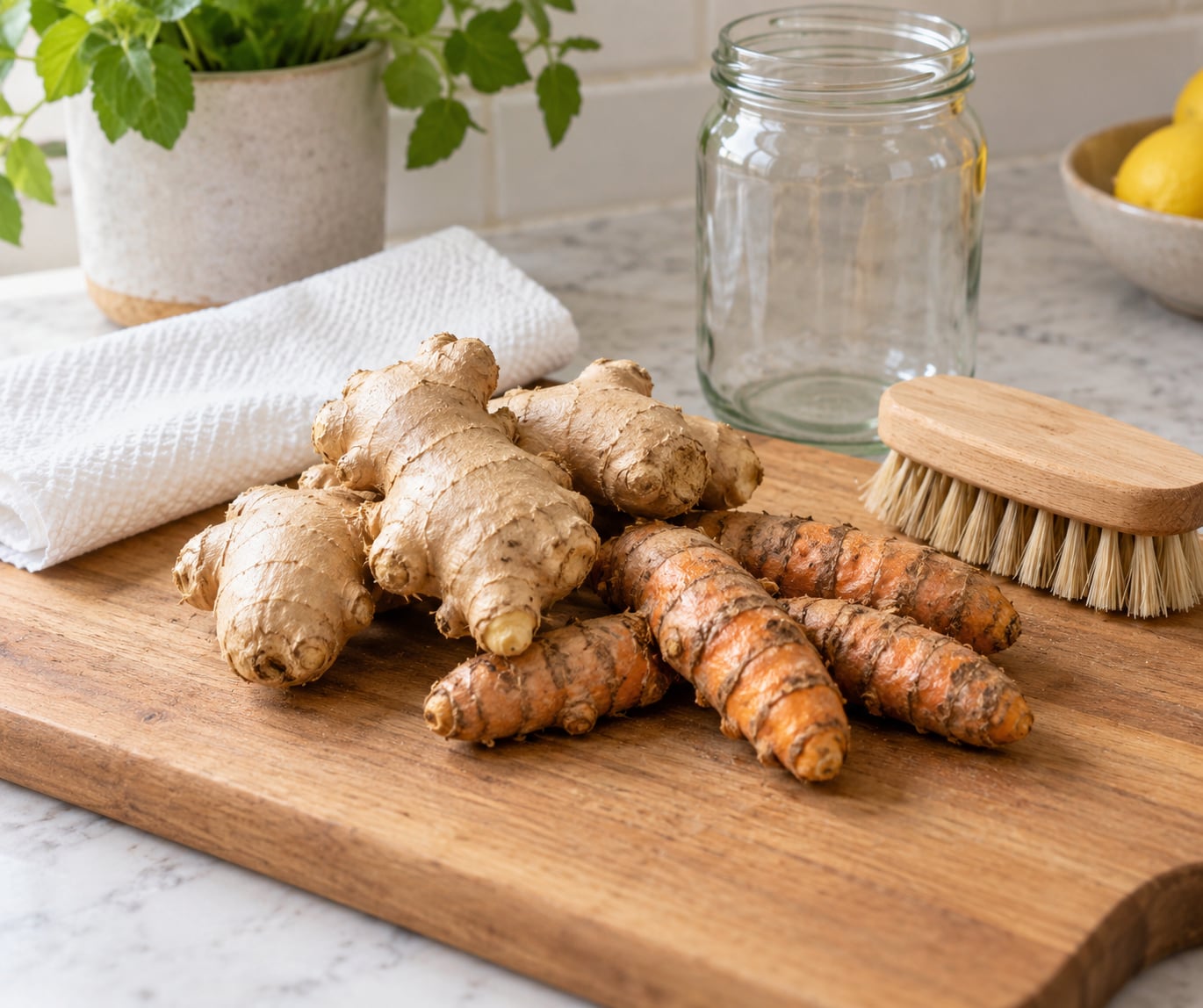
Yes, fresh ginger and turmeric root should be refrigerated. Unpeeled and completely dry, they keep about two to three weeks in the crisper drawer, and frozen pieces stay good for up to six months. The whole difference is the form the root is in when you put it away.
Ginger and turmeric are rhizomes, which means they are underground stems rather than true roots. The skin is a protective barrier that slows water loss and keeps moisture in, so leaving it on buys you time. Cut surfaces do not have that barrier, which is why cut pieces have a much shorter window than whole ones.
A grower on growingfruit.org put the failure mode neatly: cold plus wet is what kills these roots, in the ground and in your kitchen. That is why drying matters as much as chilling.
Table of Contents
- What You Need
- Step-by-Step: How to Store Fresh Ginger and Turmeric Root
- Step 1: Choose Fresh Roots
- Step 2: Clean and Dry the Roots
- Step 3: Keep Whole Roots Refrigerated
- Step 4: Store Peeled or Cut Pieces of Fresh Ginger and Turmeric Root
- Step 5: Freeze Roots for Longer Storage
- Common Mistakes
- Frequently Asked Questions
- Can fresh ginger and turmeric root be stored together?
- Should I peel ginger and turmeric before storing them?
- How long do fresh ginger and turmeric root last in the refrigerator?
- Why does my fresh turmeric turn dark or look rubbery?
- Can I freeze fresh ginger and turmeric root?
- How can I tell if ginger or turmeric has gone bad?
- Conclusion
What You Need
The supplies are ordinary, and most households already have all of them.
- Fresh whole ginger and turmeric roots
- A clean vegetable brush for stubborn soil in the crevices
- Paper towels or a clean tea towel
- Airtight containers or glass jars for cut roots
- A resealable freezer bag or freezer-safe container
- Optional: a little lemon juice or water to slow discoloration
- Optional: a microplane grater for grating straight from frozen
Pick your container based on the form. Whole unpeeled roots want something breathable, like a paper towel inside a loosely closed bag. Peeled, sliced or grated pieces want a genuinely airtight container, because exposed cut surfaces dry out and pick up smells fast. Frozen pieces are happy in a flat freezer bag, which stacks more neatly than a jar.
Step-by-Step: How to Store Fresh Ginger and Turmeric Root
Step 1: Choose Fresh Roots

Pick roots that feel heavy for their size and have firm, smooth skin. Skip anything with soft spots, deep wrinkles, dark bruising, mould, or dried-out tips. KQED advises the same thing when buying fresh turmeric: bright, smooth peels, nothing collapsed or bruised.
Smaller roots are easier to work through quickly, and larger ones are worth keeping for months. Buy small roots if you use a thumb-sized piece every few days, and go big only if you plan to freeze or preserve. If the market root is still dirty, that is fine as long as the skin is intact.
Step 2: Clean and Dry the Roots
Rinse the roots under cold running water and brush the crevices gently. Do not soak them, since waterlogged skin is exactly what encourages mould.
Dry the surface thoroughly before the roots go anywhere. Pat with a towel, then let them sit on a rack or a dry board for a while if you have time. The same advice goes for cut pieces. Every drop you leave behind is moisture someone has to remove later.
Step 3: Keep Whole Roots Refrigerated
Leave the skin on wherever you can. Wrap each root loosely in a paper towel or a clean towel, then place it in a breathable container or a loosely closed bag in the crisper drawer. Expect two to three weeks of good shelf life for ginger, and slightly less for turmeric, which tends to dry out and wrinkle faster.
Wrapping too tightly is a common mistake. Airtight wrapping traps condensation against the skin, and that is where grey or white fuzz starts. A paper towel gives the surface somewhere to wick moisture to.
Ginger holds up better than turmeric at the same temperature, which is the main practical difference between the two. A turmeric root that feels soft and shrivelled after two weeks has usually been sitting in drier air than the ginger next to it.
Step 4: Store Peeled or Cut Pieces of Fresh Ginger and Turmeric Root
Move peeled, sliced or grated pieces into an airtight container and refrigerate them straight away. Line the container with a paper towel when you are storing grated pieces, since they release moisture faster than a solid chunk.
Plan on about a week in the refrigerator for cut or grated root, maybe ten days if the pieces are large and you have kept them very dry. A cut root loses weeks compared to a whole one, so this is the form worth freezing if you know you will not use it in time.
Freshly cut surfaces turn brown and dull quickly from oxidation. A light coating of lemon juice, or a thin layer of water over the pieces, slows that noticeably. Drain anything stored under water before you cook with it, or the final dish will taste diluted.
Step 5: Freeze Roots for Longer Storage
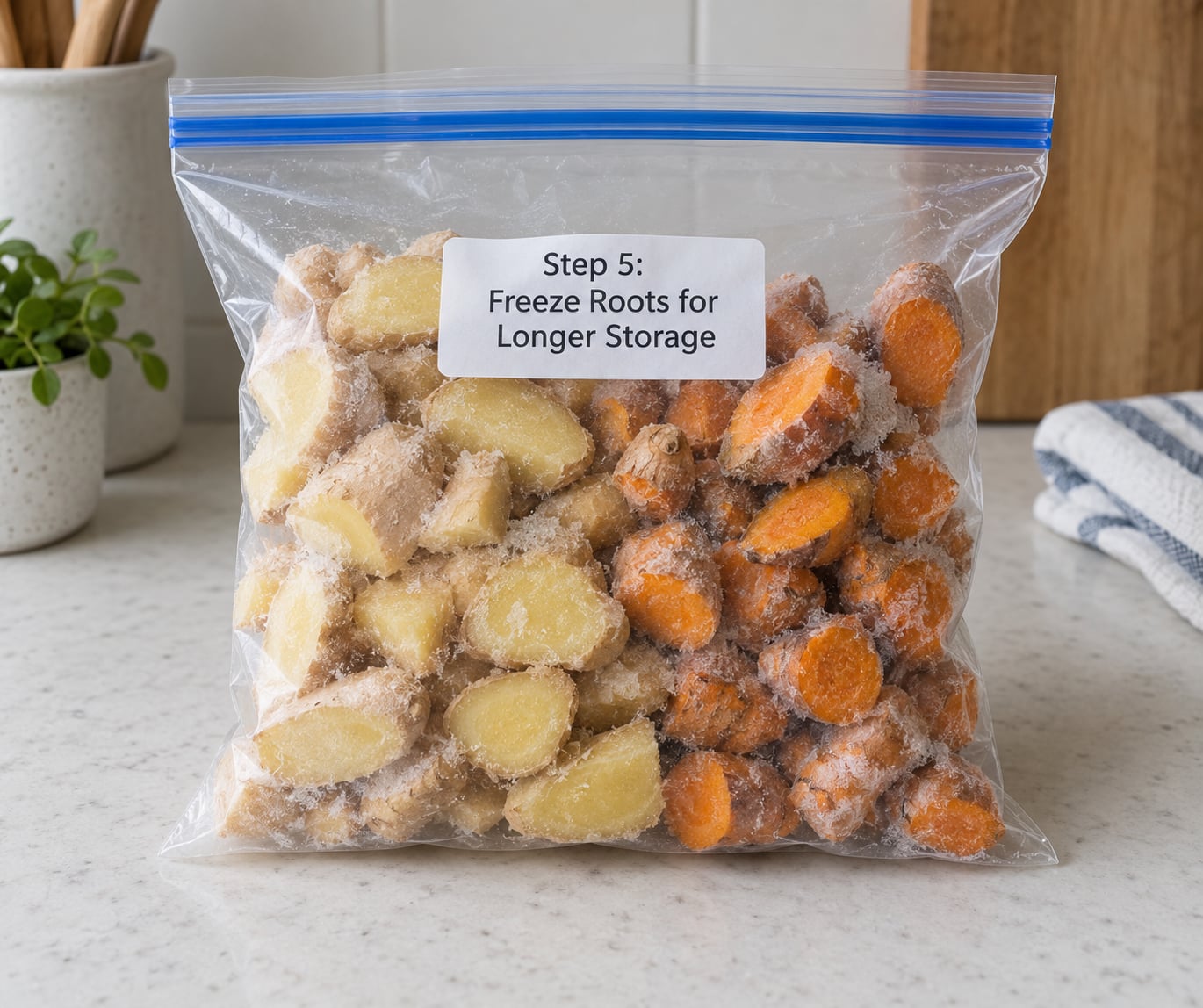
Cut the roots into portions you would actually use, then spread them on a tray so they do not touch. Leave them until firm, which stops the pieces clumping into one solid block. Transfer them to a freezer bag or airtight container, press out the air, seal, and label with the date.
Frozen is for cooking, not for presentation or slicing neatly. A frozen turmeric root goes soft and rubbery when thawed, and a whole frozen root takes a while to break down with a knife. Cookers on the Mamta’s Kitchen forum freeze both roots regularly precisely because grating them frozen with a microplane works so well, no peeling required.
Freezing costs you some aroma rather than flavour potency, and the texture changes permanently. That trade is worth it whenever two or three weeks of fridge life would leave you throwing the root away.
Common Mistakes
- Washing and storing damp. The single most common failure. Roots go back into storage dry every time, even if you just rinsed them.
- Sealing damp roots in plastic. Plastic holds the moisture in, and you get mould within days. Paper towel or a breathable bag for whole roots; airtight only for cut pieces.
- Wrapping whole roots too tightly. Skin needs a little airflow in the fridge. Loose wrapping slows moisture loss without creating a damp surface.
- Leaving cut pieces exposed. Cut surfaces seal into an airtight container, or they dry out and take on the smell of whatever is next to them.
- Freezing one large unportioned root. You will thaw the whole thing to use a thumb-sized piece. Portion before freezing, not after.
- Ignoring softness, mould or off smells. Smell first, then look. Anything sour or fermented goes in the bin regardless of how it looks outside.
One more to avoid: storing grated ginger or ginger-garlic paste submerged in oil in the refrigerator. Oil creates an oxygen-free environment where botulism bacteria can grow, and refrigeration does not stop it. If you want paste ready to use, the safe version is frozen paste in an airtight container without the oil layer, and you should treat that as the only reliable long-term option.
Keep the two roots in separate containers if you work with them often. They will happily share a crisper drawer, but turmeric stains everything it touches, and ginger gives off a strong aroma that leaks through paper towels.
Frequently Asked Questions
Can fresh ginger and turmeric root be stored together?
Yes, they can share the crisper drawer as long as both are unpeeled and dry. Keep them in separate containers or bags, because turmeric stains and ginger gives off a strong aroma that soaks through paper towel. Store them side by side rather than touching, and check turmeric more often since it dries out and wrinkles faster than ginger.
Should I peel ginger and turmeric before storing them?
Leave the skin on for storage whenever possible. The skin slows water loss and protects the flesh, so an unpeeled root keeps weeks longer than a peeled one. Peel only the amount you plan to use in the next few days, and store that portion airtight in the refrigerator. Frozen roots can be grated unpeeled with a microplane, so peeling before freezing is unnecessary work.
How long do fresh ginger and turmeric root last in the refrigerator?
Whole unpeeled roots last about two to three weeks in the crisper drawer, with ginger outlasting turmeric slightly. Peeled or cut pieces keep roughly a week, and grated root closer to five days. Cooler, drier parts of the refrigerator help, but keeping the roots dry matters far more than the exact drawer you use.
Why does my fresh turmeric turn dark or look rubbery?
Turmeric oxidises at every cut surface, so exposed flesh darkens from bright orange to dull brown within hours. Light coating with lemon juice or storing the pieces under water slows the colour change. The rubbery texture comes from freezing and thawing, and it will not go back to firm. Darkness alone is not spoilage; smell and texture tell you whether it is still usable.
Can I freeze fresh ginger and turmeric root?
Yes, and it is the best method for anything you will not use within three weeks. Portion the roots, spread the pieces on a tray until firm, then move them to a freezer bag or airtight container and label with the date. Use them straight from frozen without thawing, or grate them with a microplane. Expect up to six months of good quality.
How can I tell if ginger or turmeric has gone bad?
Use your nose first. A sour, fermented or chemical smell means discard, no matter what the outside looks like. Wrinkled skin on its own is fine, and a soft root can still be usable for cooking. Fuzzy grey, green or black mould, a slimy surface, or liquid pooling in the bottom of the container all mean the root goes in the bin.
Conclusion
Start by keeping the roots dry, lightly wrapped in a paper towel, and in the crisper drawer with the skin still on. Anything you cut goes into an airtight container and gets used within a week. Portion and freeze the rest on a tray before it goes in the bag, and grate it straight from frozen when a recipe calls for it.