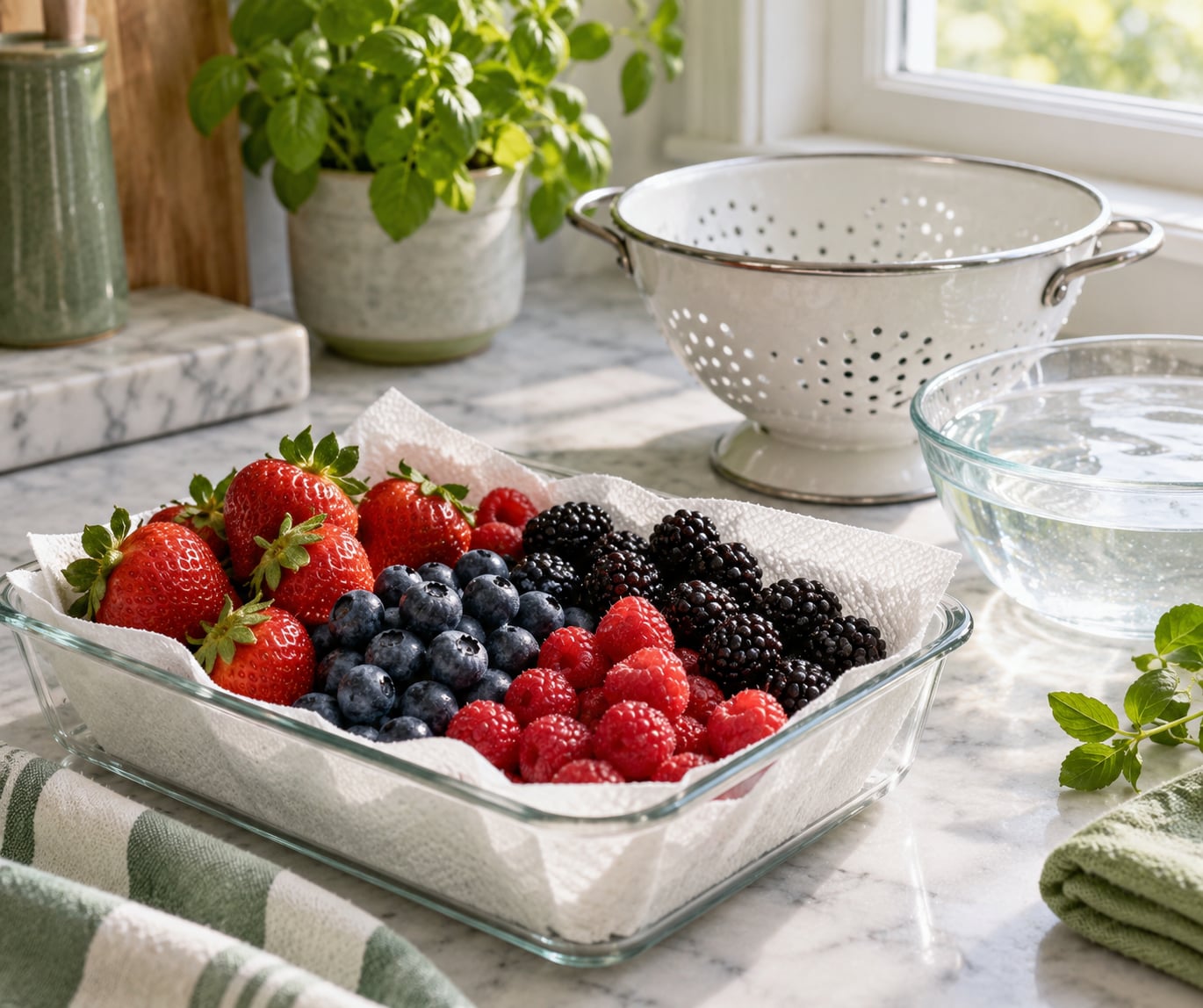
To store fresh berries so they do not mold, keep them unwashed and completely dry, sort out anything already soft or leaking, and refrigerate them in a shallow container lined with paper towel. Washing them ahead of time adds the surface moisture mold needs. If you will not eat them within two or three days, freeze them instead.
Most moldy berry batches I have come across started with one wet berry sealed into a lidded box at the back of the fridge. Nobody can see it, it goes fuzzy in silence, and two days later the whole punnet smells like a cellar.
Strawberries, blueberries, raspberries and blackberries all spoil the same basic way, but their skins and shapes change what works. Raspberries fall apart if you pile them. Strawberries bruise if you stack them. Blueberries are toughest and mostly just need airflow and to stay dry.
Below is the method I use at home, plus the mistakes worth skipping.
Table of Contents
- What You Need
- Step-by-Step: How to Store Fresh Berries So They Do Not Mold
- 1. Sort the berries before storing them
- 2. Wash berries only when you are ready to use them
- 3. Dry the berries thoroughly
- 4. Store different berries correctly
- 5. Freeze berries for longer storage
- Common Mistakes
- Frequently Asked Questions
- Should fresh berries be washed before storing?
- Why do my berries mold so quickly in the refrigerator?
- How long can fresh strawberries, blueberries, raspberries, and blackberries last?
- What is the best container for storing fresh berries?
- Can I freeze berries that are already slightly soft?
- Conclusion
What You Need
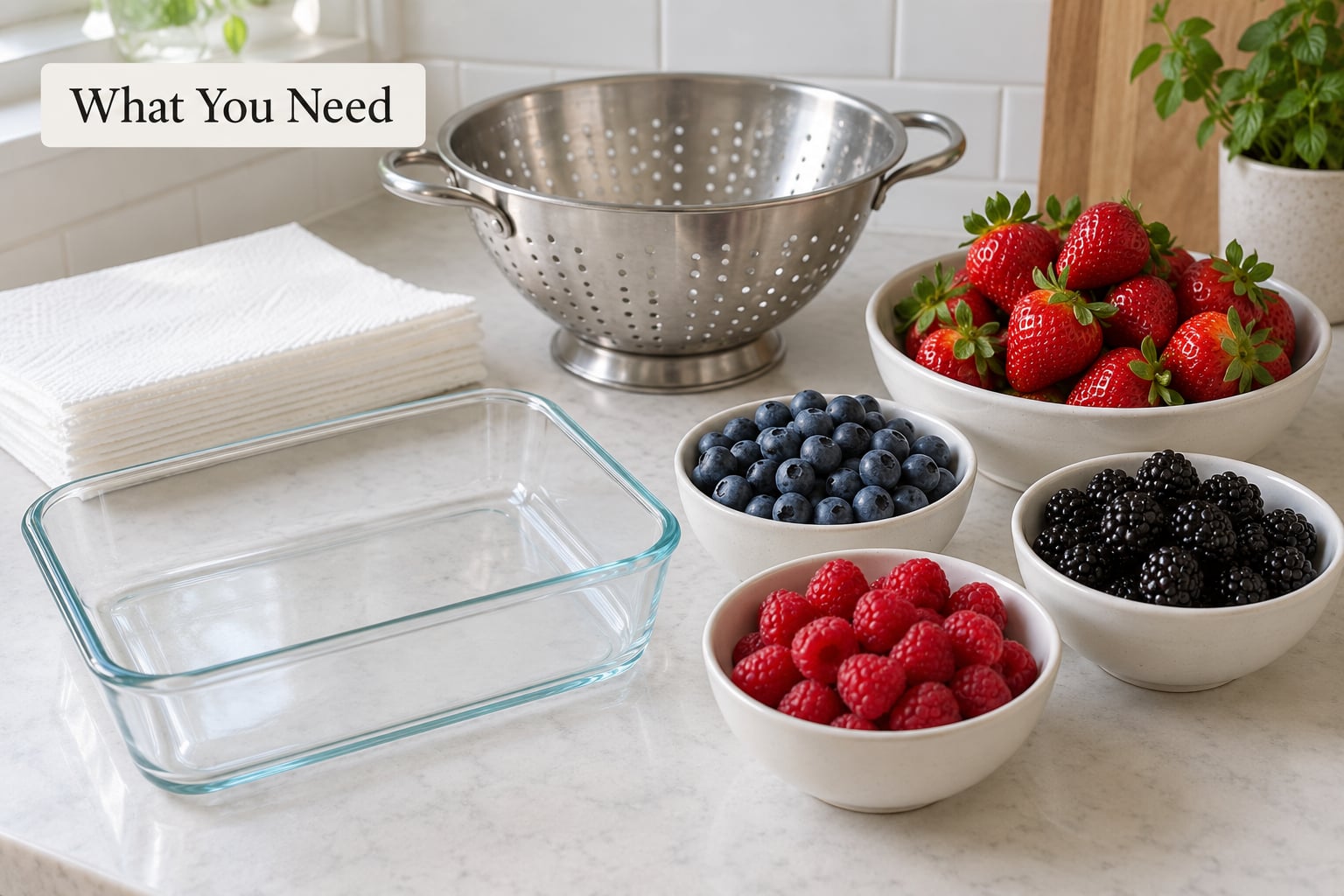
None of this is specialized equipment. Everything on this list probably already lives in your kitchen, and a plastic deli container works about as well as anything you can buy.
- A shallow container with a loose lid. A deli container, a hinged glass box, or a dedicated berry keeper. Shallow beats deep because a single layer stays dry and undamaged.
- Paper towels. One or two sheets lining the bottom of the container, replaced every day or two when they turn grey.
- A colander or salad spinner. For draining after a wash and for drying berries completely.
- White vinegar. For a quick diluted rinse that knocks back surface mold spores. Lemon juice works similarly at the same dilution.
- Cool water and a large bowl. Only for the wash, and only just before you plan to eat the berries.
- Freezer bags or airtight containers. For freezing, plus a baking sheet for the pre-freeze tray stage.
- A marker or masking tape. Two seconds of labelling with the date tells you at a glance whether the punnet is still worth eating.
A paper towel that starts white and ends damp has done its job. If it is soaking through, the berries are releasing more water than they should, which usually means they were washed before storing.
Step-by-Step: How to Store Fresh Berries So They Do Not Mold

1. Sort the berries before storing them
Set the berries out in a single layer and pick through them by hand. Anything squashed, leaking juice, or already showing grey or white fuzz goes straight in the bin. A moldy berry sitting next to healthy ones will not stay on its own.
Check the underside of strawberries, where the calyx meets the fruit. That pocket holds moisture and is the usual place the first fuzzy patch appears.
You will know the sorting worked when the fruit left behind is firm with a bit of spring and no sticky spots.
2. Wash berries only when you are ready to use them
Dry, unwashed berries last longer in the refrigerator. The moisture from washing gives mold spores exactly what they need, and the sugar on the skin means the fruit goes soft and slippery long before it dries out.
There are good reasons to wash ahead. If you are buying organic berries and want to rinse off surface residue, or you are prepping for smoothies and pancakes, a gentle wash is fine. Use cool running water, avoid a long soak, and treat raspberries and blackberries with extra care since they fall apart under a stream of water.
The key rule is simple: if berries get washed, they get fully dried before they go back in the fridge.
3. Dry the berries thoroughly
Tip the berries into a colander for a minute to shed surface water, then roll them gently in a clean, dry paper towel or lint-free cloth. A salad spinner handles a large batch in seconds and is the fastest option I use.
Do not leave them in a closed tub with a wet towel. That combination traps humidity against the fruit and gives condensation, which is a mold starter of its own.
Berries feel dry when the skin no longer feels slick and the towel comes away without leaving a wet patch.
4. Store different berries correctly
Strawberries. Store unwashed in a single layer on a paper towel, with the lid cracked rather than sealed. Move any berries that develop a soft spot immediately, because strawberries mold fastest of the bunch.
Blueberries. Leave the bloom and the dry surface alone. They do not need a vinegar wash and they do not want to be washed at home. A ventilated clamshell or a loosely covered shallow container keeps them in good shape for the longest time.
Raspberries. These stay completely dry until the moment you eat them. Line a rigid shallow container with a paper towel, lay the raspberries in a single layer, and never stack a lid full on top of them.
Blackberries. Same approach as raspberries, and check them daily. A dark shiny berry that has begun to leak or collapse should be pulled out on sight.
Wherever they sit, keep the fridge at 40F or below and put the container toward the back, where the air is coldest and most stable. Keep berries away from bananas, apples and ripe avocados, which give off ethylene gas and speed up ripening and decay.
5. Freeze berries for longer storage
Freezing is the answer for berries you will not get to. Rinse them first, dry them properly, then spread them in a single layer on a baking sheet and freeze until solid, usually an hour or two.
Move the frozen berries into freezer bags or airtight containers, press out the air, label with the date, and keep them in the coldest part of the freezer. Most frozen berries keep their character for six months and stay usable for a year.
Frozen berries are usually better in smoothies, sauces and baking than eaten straight from the container. Thaw them in the fridge if you want to eat them as fresh fruit, and try not to refreeze fruit that has already thawed, since it gets soft and watery.
Common Mistakes
Washing too early. This is the big one. If berries must be washed, wash them the day you intend to eat them.
Storing them wet. Even after a rinse, surface moisture left on the fruit speeds up mold. Paper towel and airflow fix it.
Sealing damp berries in an airtight container. A tight lid traps condensation on the lid and on the fruit. Leave a crack unless the berries are bone dry and going straight into a freezer.
Crowding the container. Heavy berries on top bruise the ones below, and bruises turn into mold spots. Single layers, more containers.
Leaving one bad berry in the batch. Store managers and home cooks both learn this the hard way. Sort twice: once at the shop and again at home.
Cramming the fridge. When a fruit bin is packed, warm air circulates and moisture collects. Leave room around the container for air to move.
None of this needs any store-bought gear. The right container, dry fruit and a short gap between fridge shelves do most of the work.
Frequently Asked Questions
Should fresh berries be washed before storing?
No. Dry, unwashed berries last longer in the refrigerator, because rinsing leaves moisture on the skin that gives mold spores a place to start. Wash them instead, right before you eat them, under cool running water and gently. The exception is berries you are prepping ahead for smoothies or baking. Either way, dry them thoroughly on paper towels or in a salad spinner before they go back in the container.
Why do my berries mold so quickly in the refrigerator?
Usually one of four things: they were washed before storing, they went back damp, they were sealed tightly while wet, or they were crushed in an overcrowded container. Berries carry mold spores naturally, and moisture plus a warm spot lets them take over within a day or two. Keep fruit dry, leave the lid cracked, sort out damaged berries immediately and keep the fridge at 40F or below.
How long can fresh strawberries, blueberries, raspberries, and blackberries last?
Strawberries usually stay good for three to five days in the refrigerator, and blueberries last the longest at around a week. Raspberries and blackberries are the shortest, generally two to three days, sometimes only one if they were already soft at the shop. These are untreated whole fruit; any bruising, heat or leftover moisture on top of them shortens the window. Freezing puts a stop to the countdown.
What is the best container for storing fresh berries?
A shallow container with a loose or cracked lid, lined with a paper towel, is the most reliable option. A hinged glass box or a deli container both work. Avoid stacking berries in a deep sealed tub, and do not use a mason jar for unwashed fruit, since the sealed lid traps condensation. A dedicated berry keeper does the same job as a lined deli container, with the vents already built in.
Can I freeze berries that are already slightly soft?
Yes, and freezing is usually the right call rather than eating them in a few days. Soft berries freeze well for smoothies, sauces, jams and baking, where the softer texture does not matter. Skip anything already moldy, leaking or fermented. Rinse and dry the good berries, freeze them on a tray until solid, then move them into airtight bags or containers and keep them for up to a year.
Conclusion
Start by keeping the berries unwashed and dry. Sort out anything soft or leaking, lay the rest in a single layer in a shallow container lined with paper towel, leave the lid cracked, and put it at the back of the fridge where it stays cold.
If you bought too many to eat in the next few days, freeze them. Rinse, dry, freeze on a tray until solid, then bag them. That single habit stops most of the mold I used to find at the back of the crisper.