How to make shrimp and grits from scratch takes about 40 minutes and just two vessels: a heavy pot for the grits and a wide skillet for the shrimp and the sauce. You simmer stone-ground cornmeal slowly in stock and milk until a spoonful falls slowly off the spoon, then sear seasoned shrimp for two minutes a side and deglaze that same pan for the sauce. No boxed grits mix, no jarred sauce, no standing at the stove the entire time.
That last part surprises people. Most home cooks believe grits demand constant stirring for 30 straight minutes, which is why so many pots of grits scorch on the bottom before they turn creamy. The method below stirs often at the start to keep lumps out, then drops to a lazy stir every few minutes and finishes covered off the heat.
The dish itself is a Lowcountry staple, born in the kitchens of Charleston and the Sea Islands and rooted in West African cooking traditions carried over by enslaved people. It shows up at breakfast tables and at dinner tables, and the version we make here follows the market cook’s logic: seasoned shrimp folded into the grits, one pan sauce poured over the top, nothing that needs more than a last-minute stir.
Table of Contents
- What You Need
- For the grits
- For the shrimp and the sauce
- Which grits to buy, and what each one gives you
- Step-by-Step
- Make the Grits Creamy
- Season and Cook the Shrimp
- Bring It Together
- Common Mistakes
- Frequently Asked Questions
- Do shrimp and grits have to be made from scratch?
- What kind of grits are best for shrimp and grits?
- How do I know when shrimp are fully cooked?
- Can I make grits ahead of time?
- What can I serve with shrimp and grits?
- How long do shrimp and grits keep in the refrigerator?
- What to Do First
What You Need
The equipment list is short. A 4-quart heavy-bottomed pot or Dutch oven holds the grits and keeps heat even across the base, which is the whole game against scorching. A 10- to 12-inch skillet gives the shrimp room to sear rather than steam. Beyond that you need a whisk, a box grater, a wooden spoon, measuring cups, and an instant-read thermometer if you want to stop guessing at shrimp doneness.
For the grits
- 1 cup stone-ground white or yellow corn grits
- 4 cups low-sodium chicken stock, or water, or a mix of the two
- 1 cup whole milk or half-and-half
- 2 tablespoons unsalted butter, divided
- 1 teaspoon kosher salt, plus more to taste
- 1 cup grated sharp cheddar, optional
For the shrimp and the sauce
- 1 pound large or jumbo shrimp, peeled and deveined
- 3 slices thick-cut bacon, or 1 link andouille sliced into coins (optional)
- 1 tablespoon bacon fat or butter for the pan
- 2 cloves garlic, minced
- 1 teaspoon smoked paprika, or a pinch of Old Bay or Cajun seasoning
- 1/2 cup chicken stock or dry white wine, for deglazing
- 1 teaspoon lemon juice
- 3 green onions, white parts sliced, greens sliced thin
- Hot sauce, salt, black pepper, and lemon wedges for serving
Which grits to buy, and what each one gives you
The type of grits matters more than anything else in this dish. Stone-ground grits cook long, release their starch slowly, and give you the creamy, loose-but-thick texture the dish is built around. Quick-cooking grits are a middle option that cooks in about 5 minutes and works fine when you are short on time. Instant grits rehydrate in boiling liquid and turn gluey fast, which is why almost nobody uses them for shrimp and grits.
| Grits type | Liquid per cup of grits | Cook time | Resulting texture |
|---|---|---|---|
| Stone-ground | 4 to 5 cups | 20 to 30 minutes | Creamy and loose, holds shrimp |
| Quick-cooking (hominy) | 3 to 4 cups | 5 to 8 minutes | Softer, slightly gluey, very forgiving |
| Instant | 1 to 2 cups | 1 to 2 minutes | Pasty, holds no sauce, not recommended |
Two ingredient choices move the texture more than the rest. The ratio of liquid to grits decides whether you end up with soup or a thick spoonable porridge, and dairy added at the end is what makes the finished bowl taste rich rather than merely thick. Cheese stirred in early tightens the mixture and can make it stringy, so add yours after the grain is tender.
As for the shrimp, peeled and deveined is the sane call. Peeling a pound of shrimp by hand costs you about 20 minutes of prep for no flavor gain, and the shells have already been flushed with brine by the processor. Frozen shrimp that has been thawed on ice in the refrigerator cooks almost as well as fresh, and most fishmongers will tell you honestly which came off a boat that day and which did not.
Finally, the Holy Trinity of bell pepper, celery and onion is optional. It belongs more to Cajun cooking than to the Lowcountry original, but a small amount of diced pepper and onion cooked in the bacon fat will not hurt anything if you like the extra aromatic base.
Step-by-Step
Make the Grits Creamy
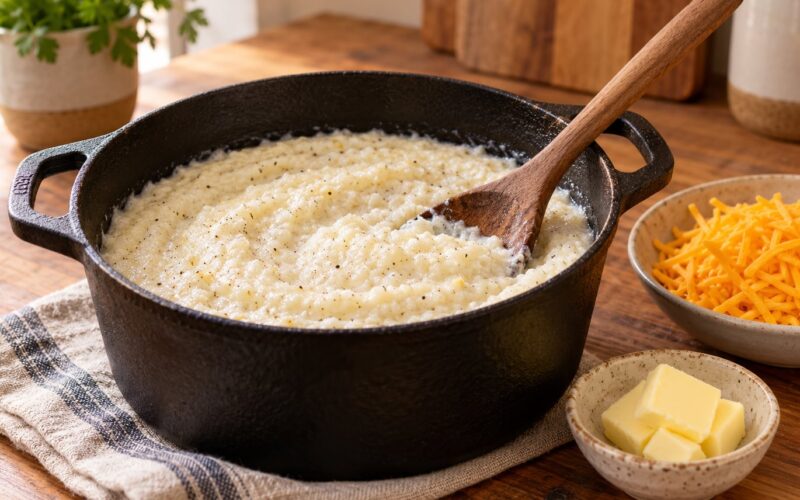
Knowing how to make shrimp and grits from scratch starts with the grits, and the grits start with the liquid. Whisk the 4 cups of stock or water and the 1 cup of milk together in your pot with 1 tablespoon of the butter and the teaspoon of salt, then bring it to a full boil over medium-high heat.
While it heats, toast the grits if you have a minute: put them in the now-empty pot over medium heat and stir until they smell nutty, about 60 to 90 seconds. This step is optional, but it takes the raw edge off and costs you nothing.
Now the part that matters. Pour in the grits a handful at a time, whisking constantly as they hit the liquid. Dump the whole cup in at once and you will spend the next ten minutes hunting lumps. Once the pot returns to a boil, turn the heat down to the lowest setting your stove allows.
Stir every 30 seconds for the first five minutes, then every two or three minutes after that. A spoon resting on the rim of the pot is a perfectly good whisk stand-in for the stretches in between. Keep the liquid at a lazy simmer, not a rolling boil, or the grits will scorch on the bottom before the starch has a chance to release.
How to make shrimp and grits from scratch is mostly this: cook the grits slowly with liquid, whisk often early, add butter, cream or cheese only after the grains are tender. At around the 20-minute mark, do the spoon test. Tilt the spoon and let the grits fall. They should drop in a slow, thick ribbon and hold their shape for a second on the back of the spoon. Running off the spoon like soup means it needs more time and more heat. Sitting in a stiff mound that does not move means you need a splash more liquid.
When the grains are tender and the texture passes the test, pull the pot off the heat and cover it. Let it sit 5 minutes, then stir in the remaining butter and the cheddar if you are using it. The residual heat finishes the creaminess without any more stirring on your part.
Season and Cook the Shrimp
While the grits rest, get the shrimp going. Pat the pound of shrimp thoroughly dry with paper towels; wet shrimp will never brown, they will just boil in their own liquid. Season them with salt, black pepper, the minced garlic and the smoked paprika.
If you are using bacon, render it in a 10- to 12-inch skillet over medium heat until the fat runs clear and the edges crisp, about 4 minutes. Lift the bacon onto a plate and leave the fat in the pan. If you are skipping the bacon, add a tablespoon of butter or oil instead and let it get hot enough to shimmer.
Turn the heat to medium-high and lay the shrimp in in a single layer. Leave them alone for 90 seconds to 2 minutes per side. You are looking for the first flush of pink, an opaque flesh, and edges that curl inward. The USDA safe minimum internal temperature for shrimp is 145F (63C), which the flesh reaches at exactly that blush.
Then pull them out. Carryover cooking means the shrimp keep firming up for a minute after they leave the heat, so the shrimp you plate are already past done. This is the single most common failure in the dish: leaving shrimp in the pan while you finish the grits turns them into pink rubber in under three extra minutes.
Bring It Together
Keep the skillet with the shrimp in it and drop the heat to medium. Add a tablespoon of butter, then the garlic if it is not already on the shrimp, and let it soften for 30 seconds without browning.
Pour in the 1/2 cup of chicken stock or dry white wine and scrape the bottom of the pan with a wooden spoon to lift the browned bits. That fond is where the flavor lives. Simmer for a minute or two until the liquid drops by about half and smells more concentrated than watery.
If you like a thicker sauce, whisk 1 tablespoon of cornstarch into 1 tablespoon of cold butter to make a quick roux, then stir it into the simmering liquid and cook for another 30 to 60 seconds until glossy. Return the shrimp to the pan, add the lemon juice and a few shakes of hot sauce, and turn off the heat.
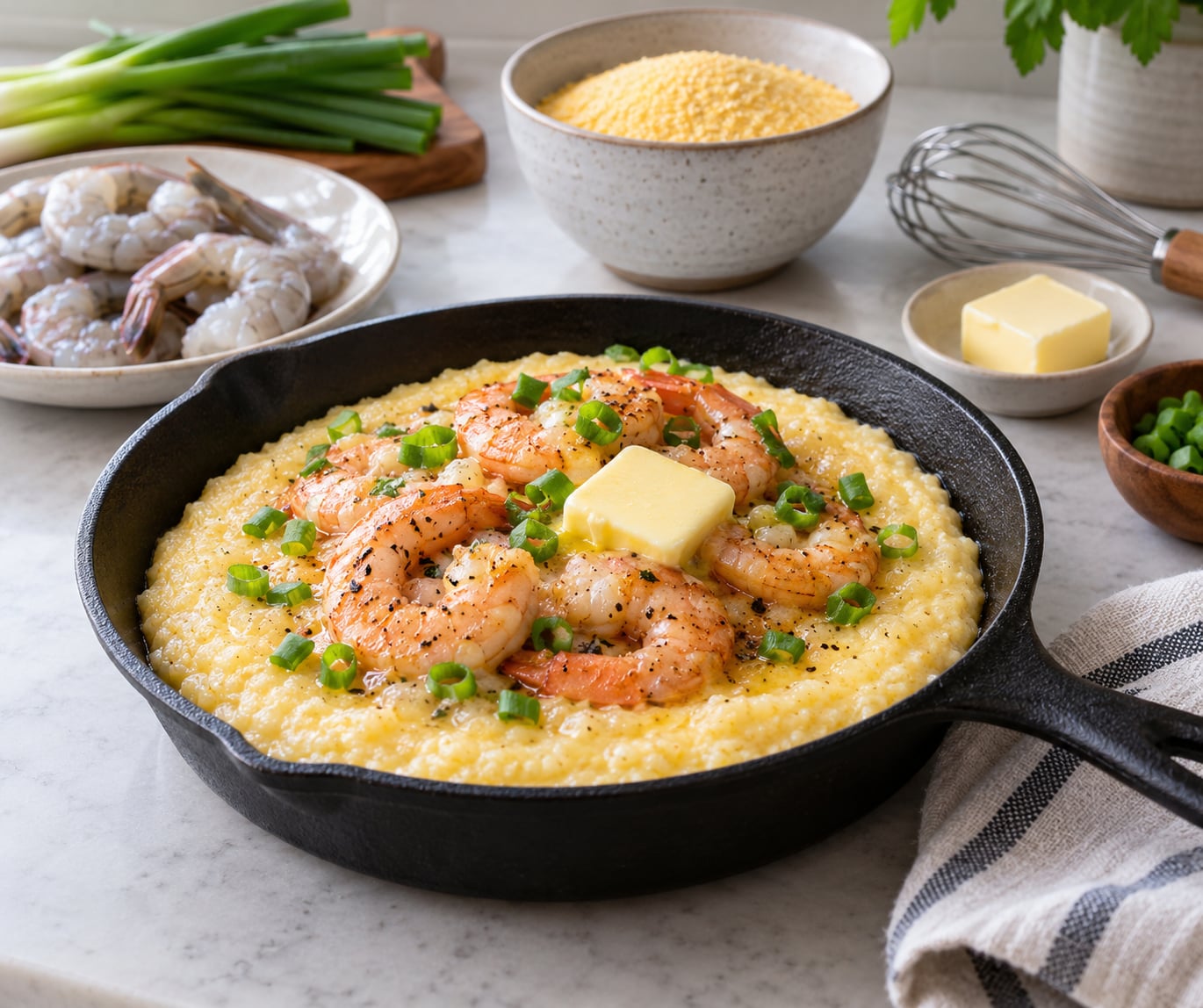
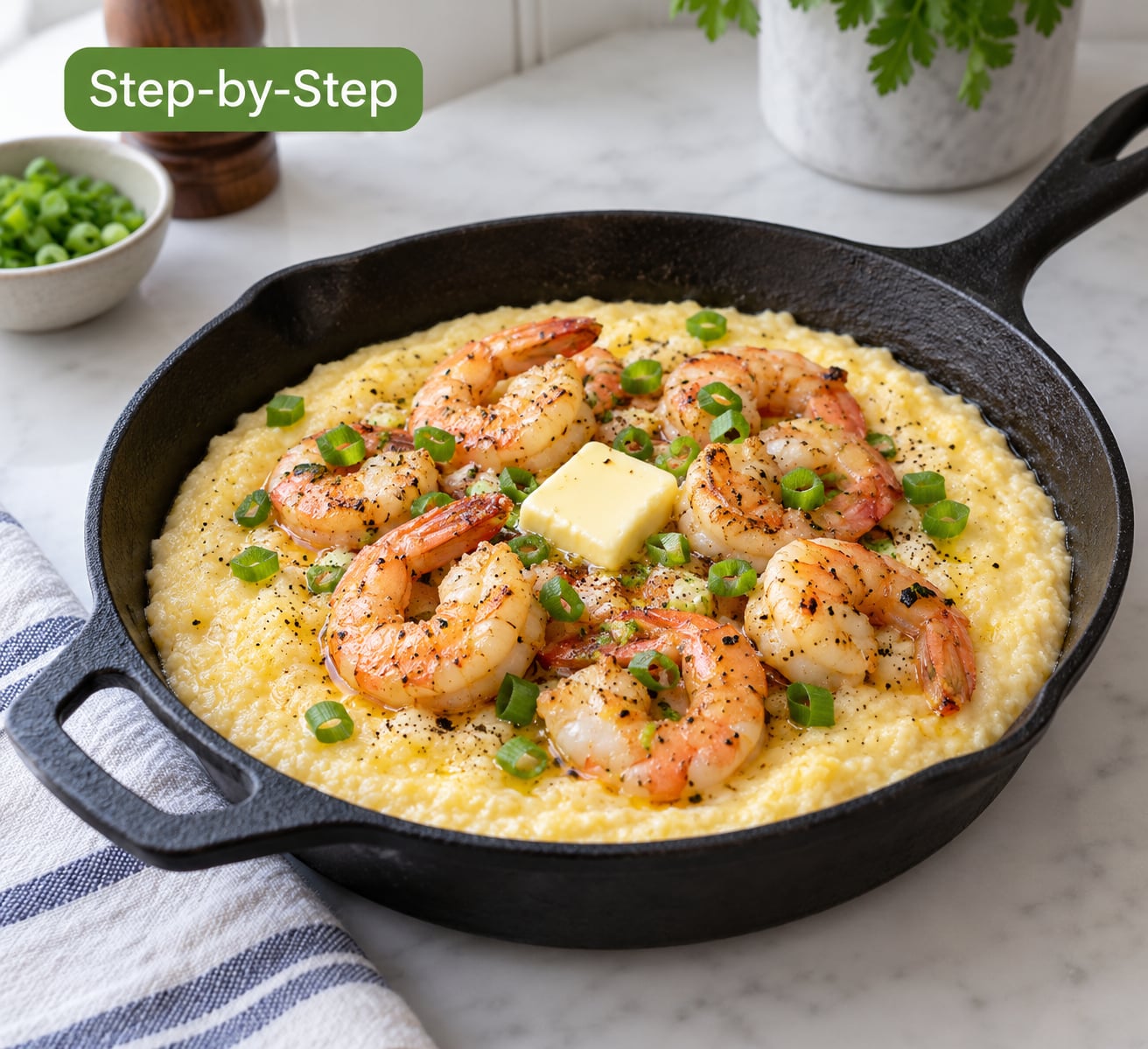
Loosen the finished grits with a splash of stock or cream if they tightened while resting, then fold in most of the shrimp and all of the sliced green onion whites. Taste and season. A spoonful should be creamy but hold its shape on the plate, closer to thick porridge than to soup.
Spoon the grits into warm bowls, arrange the remaining shrimp on top, and pour the pan sauce over. Finish with cheese, crisp bacon, more green onion greens, hot sauce and a squeeze of lemon. Serve it right away, because grits wait for nobody.
Common Mistakes
Most problems with this dish trace back to three places, and each has a specific fix rather than a vague instruction to stir more.
Grits stay grainy or taste like oatmeal. Almost always the liquid ratio or the cook time. Stone-ground grits need 4 to 5 cups of liquid per cup of grits and a full 20 to 30 minutes at a low simmer. Too little liquid or too much heat cooks the outside of each grain before the center hydrates, and no amount of butter will fix the texture afterward. Add hot liquid a quarter cup at a time and give it another five minutes.
Grits come out watery. You did not stir in the grits gradually, or you are cooking them too fast so the starch has not released. Turn the heat up and cook for another five to ten minutes, stirring more often than feels necessary. A final splash of cold milk or cream stirred in off the heat also tightens and softens in one move.
Grits turn gluey and stretchy. Too much aggressive stirring and too much cheese, both of which break the grain structure. Loosen them with warm stock and skip the cheese on the next batch. Over-stirring is not the secret to creaminess here, despite what a lot of recipes claim.
Shrimp are rubbery. They sat too long in the pan, or the pan was crowded and they steamed instead of seared. Cook in a single layer with room around each shrimp, pull them at the first blush, and trust carryover cooking. Remember the thermometer: 145F (63C) internally, not a color impression.
Sauce is too thin or breaks apart. A thin sauce needs reduction; simmer it a minute or two longer or finish it with the cornstarch-butter roux. A broken or greasy sauce means the butter went in too hot or too fast. Take the pan off the heat, whisk a cold tablespoon of butter in a few pieces, and stir until the emulsion comes back together.
The bottom of the pot scorches. The heat is too high or the stir gaps are too long. Use the lowest simmer your stove produces, stir every two or three minutes, and use a pot with a thick base. If you have one, a light coat of butter on the bottom of the pot helps but does not replace low heat.
For advance preparation, cook the grits a day ahead to a slightly firmer consistency, refrigerate them, and loosen with milk or stock over low heat when you reheat, adding a splash of liquid until they soften. Hold the cooked shrimp separate from the grits until serving, then fold them in at the last minute so they never overcook. Refrigerated leftovers, shrimp included, keep 3 to 4 days in the fridge; freeze plain grits without the shrimp if you want to keep them longer.
Frequently Asked Questions
Do shrimp and grits have to be made from scratch?
No. Boxed grits and jarred sauce work in a pinch, but the texture is different. From scratch means stone-ground cornmeal simmered in stock and milk for 20 to 30 minutes, and a sauce built in the same skillet from butter, garlic and the browned bits under the shrimp. That starch release is what makes the grits creamy and able to hold the sauce. Pre-cooked grits reheat fast but never reach the same texture.
What kind of grits are best for shrimp and grits?
Stone-ground white or yellow corn grits are the right choice. They cook long enough to release their starch and turn genuinely creamy, which is what carries the shrimp and the sauce. Quick-cooking hominy grits are a workable substitute if you are short on time, needing about 5 minutes and slightly less liquid. Instant grits turn gluey and are not worth using here.
How do I know when shrimp are fully cooked?
Look for the first flush of pink, opaque flesh, and edges curling inward. The USDA safe minimum internal temperature for shrimp is 145F (63C), reached right at that blush, so an instant-read thermometer removes all guesswork. Pull them the moment they hit it. Shrimp keep cooking after they leave the heat, so anything past that point is heading straight toward rubber.
Can I make grits ahead of time?
Yes, and it is the best fix for a crowded brunch. Cook the grits a day ahead to a slightly firmer texture, refrigerate in a sealed container, and loosen with warm milk or stock over low heat while you cook the shrimp. Hold the cooked shrimp separate from the grits and fold them in at the last minute, since reheating them alongside the grits is what turns them rubbery.
What can I serve with shrimp and grits?
Keep the sides simple so the dish stays the center of the table. A squeeze of lemon and hot sauce on top is the classic move, along with extra grated cheddar, crisp bacon or andouille, and sliced green onion. Alongside, a green salad with a sharp vinaigrette, collard greens, or a bowl of fruit works well. For drinks, a cold beer, iced tea, or a sparkling wine all hold up to the richness.
How long do shrimp and grits keep in the refrigerator?
Refrigerated leftovers keep 3 to 4 days, shrimp included. Cool them in shallow containers rather than one deep bowl, cover them, and refrigerate within two hours of serving. Reheat the grits on the stove with a splash of milk or stock, stirring, until they loosen and steam again. Warm the shrimp separately in the pan for 30 to 60 seconds and add them at the last moment.
What to Do First
Start the grits before you touch anything else. They take the longest, and if you start them first the shrimp, the sauce and the plating all line up at the same time instead of you standing there holding a hot skillet while grits finish in the pot. Season the shrimp while the liquid comes to a boil, keep the shrimp out of the pan until the last two minutes of the grits, and taste the finished bowl before it leaves the kitchen. That is the whole difference between shrimp and grits that people remember and the kind they quietly forget.