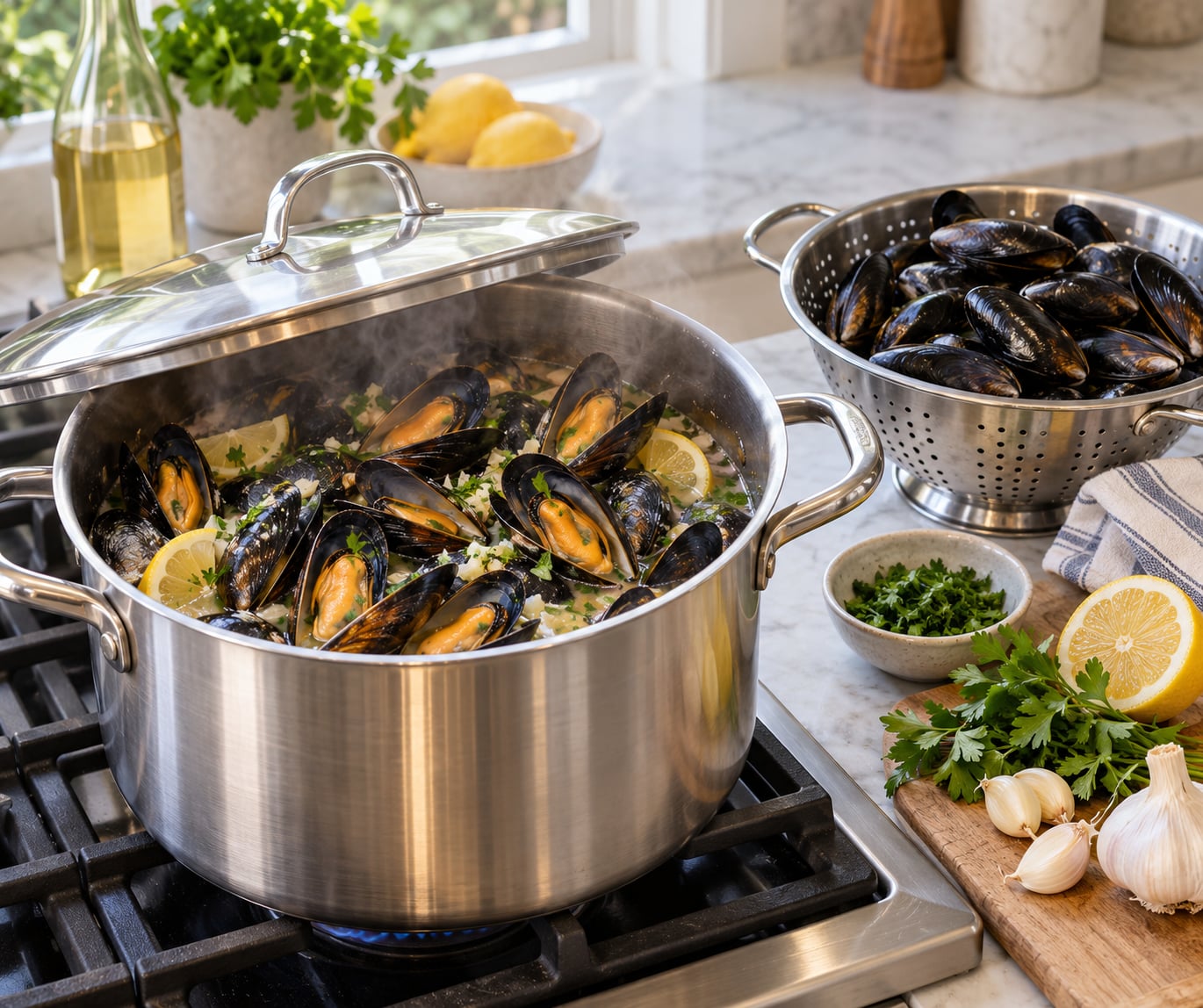
To steam mussels at home, put a pound of fresh live mussels in a covered pot with garlic, a splash of dry white wine or broth, and steam over medium-high heat for 5 to 7 minutes, until every shell pops open. Serve them straight from the pot with lemon wedges, parsley, and crusty bread for the broth. Total time is about 20 minutes, and the skill is mostly in the shopping and the pot you choose.
Mussels go from done to rubbery in a very short window, and that is the only thing that makes beginners nervous. Steam under a tight lid for the last few minutes and the shells do the work for you. You are not guessing at doneness by the clock, you are watching for the shells to open, which happens fast once the liquid hits a boil.
The other thing worth knowing up front: any mussel that stays shut after cooking was dead before it went in the pot, so it goes in the bin, not on the plate. That single rule explains almost every question people have about mussels, including the ones I get asked most.
Table of Contents
- What You Need
- Step-by-Step: How to Steam Mussels at Home
- 1. Choose and Inspect Fresh Mussels
- 2. Rinse and Scrub the Mussels
- 3. How to Steam Mussels at Home Without Overcooking
- 4. Check the Doneness and Serve
- Steam vs Boil: Which One Should You Use?
- Common Mistakes
- Frequently Asked Questions
- What if my mussels do not open while steaming?
- How long should I steam fresh mussels?
- Can I steam frozen mussels instead of fresh ones?
- Can I steam mussels in a microwave?
- How should I store leftover cooked mussels?
- Conclusion
What You Need
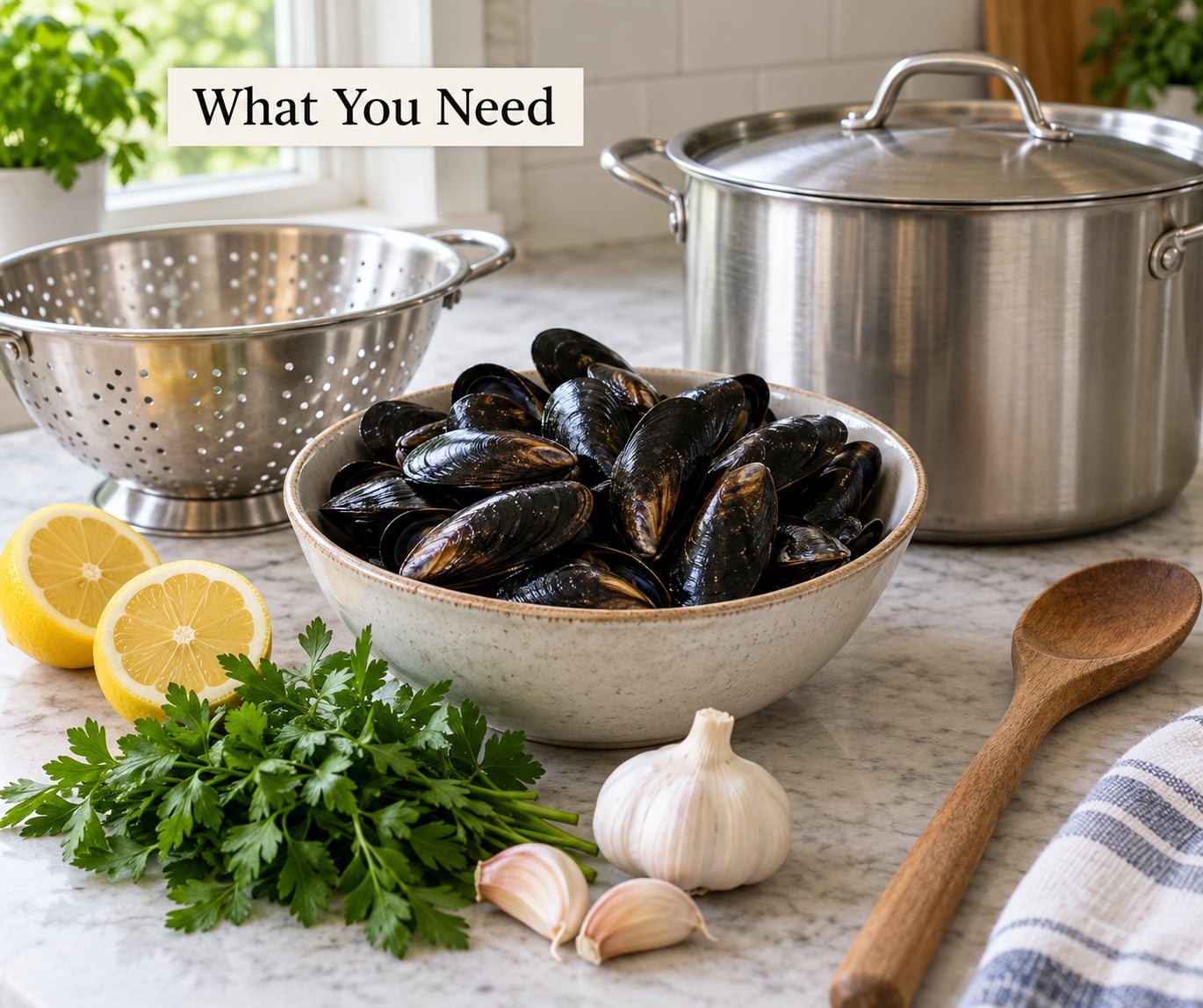
Buy fresh live mussels that smell like clean ocean air and nothing sour. Their shells should be closed, or just barely gaping with the two halves still attached at the hinge. Any mussel with a cracked shell, a shell held shut with rubber band, or a wet and gaping interior was already dead on the counter, so skip it.
- Fresh live mussels. About 1 pound (450 g) per person as a main course, or half a pound per person as a starter with a salad.
- A large pot with a tight-fitting lid. Four to six quarts works for two pounds. Whatever you use, the lid has to seal.
- A colander or strainer for rinsing, and a sturdy serving bowl, since a full bowl of mussels and broth is heavier than it looks.
- A steaming liquid. Dry white wine, clam juice, seafood stock, or plain water with aromatics all work.
- Aromatics and finishing touches. Garlic, shallot or onion, a bay leaf, red pepper flakes, flat-leaf parsley, butter, and lemon wedges.
The pot matters more than people expect. Mussels need room to open, and a crowded pile jams together so the shells cannot spring apart. If you have five pounds, that is two or three separate batches rather than one deep pot, and the second batch cooks exactly as well as the first.
Step-by-Step: How to Steam Mussels at Home
The whole method is four moves: sort and scrub the mussels, build a small amount of aromatic liquid in the pot, cover tightly and steam until the shells pop, then check the meat and serve. Most of the ten minutes of work happens before the pot goes on the stove.
1. Choose and Inspect Fresh Mussels
Mussels should be alive in the bag or the display, which means the shells are shut or nearly shut. Tap any slightly open shell firmly with your finger and watch a few seconds. If it snaps closed, the mussel is alive and good. If it stays gaping, it is dead and gets discarded, no questions asked.
Look at the meat through a cracked shell, if you can, and skip anything dry, shrunken, or discolored. Fresh mussels are plump and glossy with a bright orange-tan color. Mussels cook in minutes and lose nothing in the process, so there is no reason to cook a batch with a few bad ones in it.
2. Rinse and Scrub the Mussels
Tip the mussels into a colander and run cold tap water over them, rubbing the shells with your fingers or a stiff brush until the dark mud comes off. If they taste sandy, soak them in a bowl of cool clean water for 20 minutes or so and the grit will settle out. Do not soak for hours, because mussels are filter feeders and they lose condition in still water.
Skip the tap-to-close test here too, because the ones that will not close have already been discarded. Pull the tough black beard off each mussel if you can see it, pinching it and twisting toward the hinge. It is fiddly for a first timer and almost nobody notices when you leave one on.
3. How to Steam Mussels at Home Without Overcooking
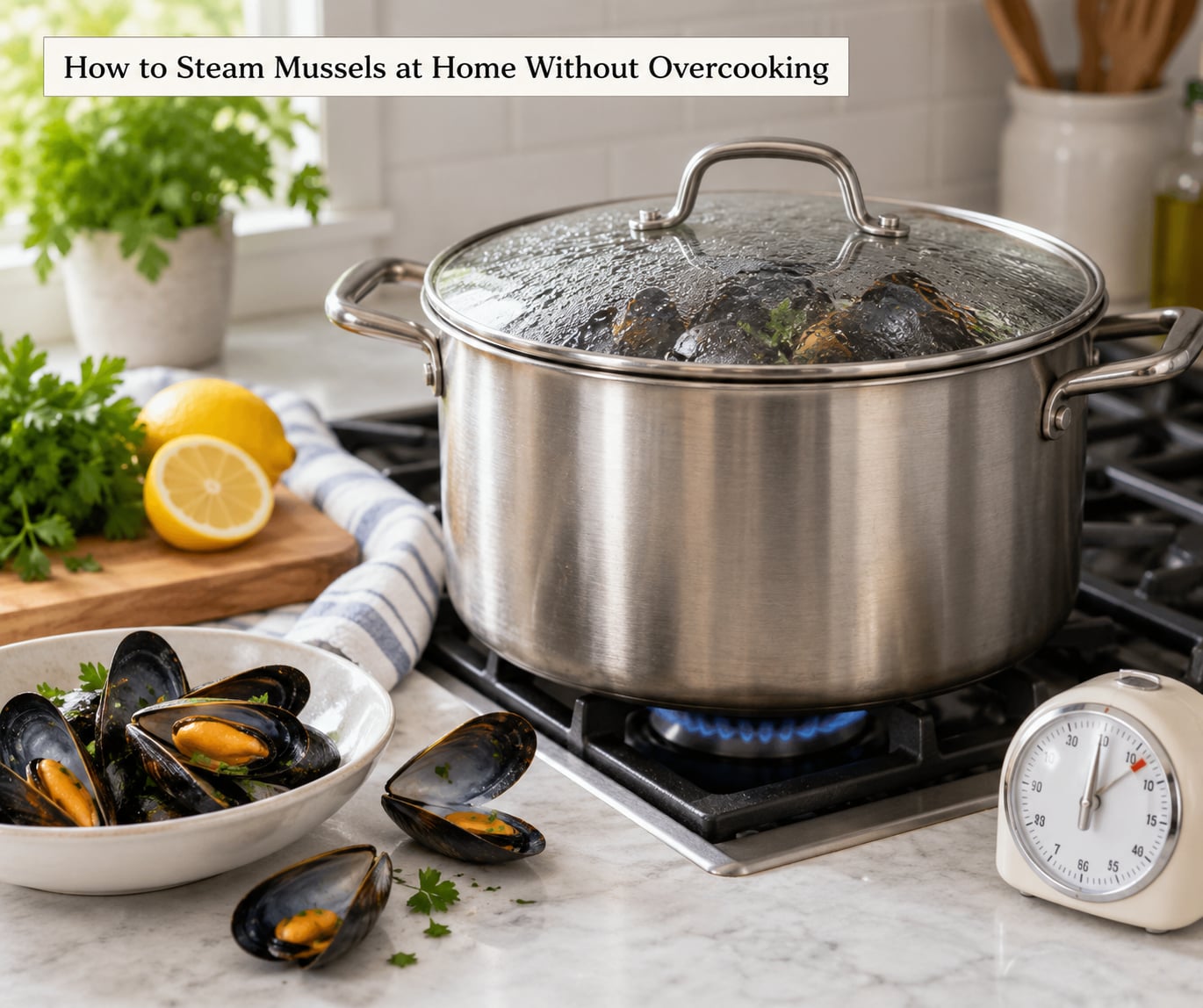
Start by sweating the aromatics. Melt a couple of tablespoons of butter in the pot over medium heat, add sliced garlic and shallot, and let them soften for a minute without browning. Add the bay leaf and a pinch of red pepper flakes, then pour in about half a cup (120 ml) of dry white wine, clam juice, or seafood stock. Let that come to a boil.
Turn the heat to high, add the mussels in a single layer, and cover immediately. This is the step where people go wrong, because every second the lid is off is a second of lost steam, and steam pressure is what makes the shells pop. Give the pot a good shake once to settle the mussels, then leave the lid alone for about one minute at a full boil.
Drop the heat to medium or a steady simmer and keep the lid on. Most mussels open within 4 to 6 more minutes, and large ones can take another minute or two. Larger shellfish and more liquid push toward the 7 minute mark, which is why the clock matters less than the shells.
4. Check the Doneness and Serve
When the shells pop, pull the pot off the heat and take the lid off at the table rather than over the sink, because a heavy burst of steam will scald anyone leaning over it. Pick through the pile and remove any mussel whose shell is still shut. Those are the dead ones, and they go straight into the trash.
Open one mussel and look at the meat. It should be firm, plump, and opaque all the way through, with a bright color. If it is rubbery, chalky, or dry, it cooked a minute or two past done, which happens when the shells open early and the pot keeps going. Ladle the broth over the top, scatter chopped parsley, and add a knob of cold butter that melts on contact.
Serve with lemon wedges and torn bread for dipping. For a fuller meal, pour the broth over linguine or rice, or turn it into a quick soup with a splash of cream and a handful of the cooked mussels dropped back in.
Steam vs Boil: Which One Should You Use?
There is no meaningful difference in the finished dish, and the argument for steaming is mostly about control. Both methods cook in a closed pot with liquid, and both stop when the shells open. Here is where they differ.
- Liquid in the pot. Steaming uses about half a cup (120 ml), so the broth stays concentrated. Boiling needs enough to cover the mussels, which dilutes it.
- Texture. Steamed mussels come out tender, since there is less liquid movement against the shells. Boiled ones are slightly firmer and sometimes a bit tougher.
- Cook time. Steaming runs 5 to 7 minutes under a tight lid. Boiling runs 6 to 9 minutes.
- Best for. Steaming suits weeknight dinners and starters where the broth matters. Boiling suits large batches when the sauce is not the point.
If you only remember one thing about the liquid, make this your rule: enough to keep the pot from burning, not so much that the broth turns thin. Half a cup for a pound and a half of mussels is the sweet spot.
Common Mistakes
Rinsing the mussels under running water in a bowl is not the problem, but soaking them in fresh water for hours is. They filter that water straight in and end up bloated and watery. A quick scrub under the tap, or a short soak if they are gritty, is all they need.
Crowding the pot is the mistake that makes people give up. Mussels expand as they open, and a tight pile cannot move. If shells are pressing against each other, split the batch, and the second pot cooks while the first one sits on the table.
A low flame is the other one. Simmering from a cold start gives you pale shells and uneven cooking, and the ones on the bottom overcook before the ones on top get warm. Bring the liquid to a boil first, then let it work. Lift the lid once at the end, never in the middle.
Overcooking after the shells open turns mussels chewy, which is the complaint I hear most. Once they pop, the heat comes off. Serving closed shells is not a mistake of cooking but a sign that the mussels were not alive to begin with, and they should never reach the table.
For a different flavor in the same method, swap the wine for a coconut curry broth with a little lime, or a creamy broth made with cream, garlic, and a splash of fish stock. Cider works in place of wine, and a tomato and fennel broth gives you something closer to a cioppino. Each one follows the same rule: about half a cup of liquid, covered, shells open, serve immediately.
Do not throw the broth away. Strained, it makes a clean base for a bisque or a chowder, and it is better than store-bought clam juice for cooking the next batch.
Frequently Asked Questions
What if my mussels do not open while steaming?
Mussels that stay shut were dead before cooking, so discard them rather than prying them open. Give the batch two extra minutes at a steady simmer before you give up, but if a shell is still sealed after that, it will never open. Do not force the shells or serve the meat, because dead shellfish can carry toxins that cooking does not destroy.
How long should I steam fresh mussels?
Count 5 to 7 minutes after you cover the pot with a tight-fitting lid. Large mussels, a full pot, or more liquid can stretch that to about 9 minutes. Use the shells, not the clock, as your real signal: they pop open within seconds of being ready. Once a shell opens, pull the pot off the heat, because they go from tender to rubbery fast.
Can I steam frozen mussels instead of fresh ones?
Yes, and this is a good option if you buy shellfish in bulk. Thaw them in the refrigerator overnight, then pour off the thawed liquid, which is mostly water, before steaming. Frozen mussels are already shucked or partially shucked, so they cook faster than fresh ones and shell texture varies. Check the packaging for whether they are whole in shell or loose meat.
Can I steam mussels in a microwave?
Technically yes, but the results are uneven. Microwaves heat from the outside in, so the outer shells open while the ones in the middle stay shut, and the texture comes out inconsistently chewy. You also lose the aromatic broth, which is half the reason to cook mussels this way. A covered pot on the stove takes five extra minutes and gives you a far better plate.
How should I store leftover cooked mussels?
Refrigerate the cooked mussels in a sealed container for no more than two days, keeping the broth in a separate jar so the shells do not go soggy. Reheat gently in a covered pan for a few minutes rather than in a microwave, which dries the meat out. If you want to keep them longer, freeze the meat without the shells and use it within a couple of months.
Conclusion
Put a pound of fresh mussels in a pot with garlic and half a cup of white wine, cover it, and steam 5 to 7 minutes until the shells pop. Pull the pot off the heat the moment they open, throw away anything that stayed shut, and bring it to the table with lemon wedges, parsley, and bread for the broth. That is the whole method, and once you have done it once you will never go back to a pot without a lid.