If you want the short version of how long meat really lasts in the freezer: it stays safe indefinitely as long as it has never thawed. The timelines everyone quotes are quality windows, meaning how long the meat keeps tasting good, not a spoilage date.
That distinction trips people up constantly, and it is why a package of ground beef that sat in a working freezer for two years is usually fine while a fresh tray of beef that sat on a warm counter for an afternoon is not. Freezing drops the water activity in meat below the level bacteria need to grow, so microbes pause instead of multiplying. They are not killed, which matters later, but nothing rots while the meat stays solid.
The USDA publishes recommended freezer times for every major cut, and those numbers are the closest thing to an answer you will find anywhere. I use them here with a second column for refrigerator time, because half the questions I get start with a fridge mistake, not a freezer one. The 2026 tables below are built straight from the USDA Food Safety and Inspection Service chart, plus the practical notes that chart leaves out.
One more thing to say up front. Freezer burn is not spoilage. Grayish, dry, papery patches mean quality loss from air exposure, and the meat inside is still perfectly safe to cook. Smell after thawing is the number one decision criterion, which surprises a lot of first-time freezer owners who judge by color alone.
Table of Contents
- How Long Meat Really Lasts in the Freezer at a Glance
- Freezer Safety Time vs. Best Quality Time
- What Determines How Long Frozen Meat Stays Good?
- How Long Does Beef, Pork, and Lamb Last Frozen?
- How long do beef steaks, chops, and roasts last frozen?
- How long does ground beef last frozen?
- How long do pork chops, roasts, and lamb last frozen?
- Why do cured meats like bacon and ham get a shorter window?
- How Long Does Chicken and Turkey Last Frozen?
- How long does a whole chicken or turkey last frozen?
- How long do chicken parts, breasts, and drumsticks last frozen?
- How long does ground poultry last frozen?
- How Long Does Ground Meat and Sausage Last Frozen?
- How Long Does Fish and Shellfish Last Frozen?
- How Long Does Deli Meat and Cooked Meat Last Frozen?
- How to Freeze Meat for the Longest Storage Life
- How to Tell If Frozen Meat Is Still Good
- What Is the Safest Way to Thaw Frozen Meat?
- Refrigerator thawing: the slow, safest method
- Cold water thawing: the fastest method with a container
- Microwave thawing: for cooking immediately
- Frequently Asked Questions
- Is meat still good after 2 or 4 years in the freezer?
- Is meat frozen for 10 years or 20 years safe to eat?
- How long can chicken stay in the fridge?
- How long should I store fish in the fridge or freezer?
- Does freezer burn make meat unsafe?
- Why do people put a penny in the freezer?
- Conclusion
How Long Meat Really Lasts in the Freezer at a Glance
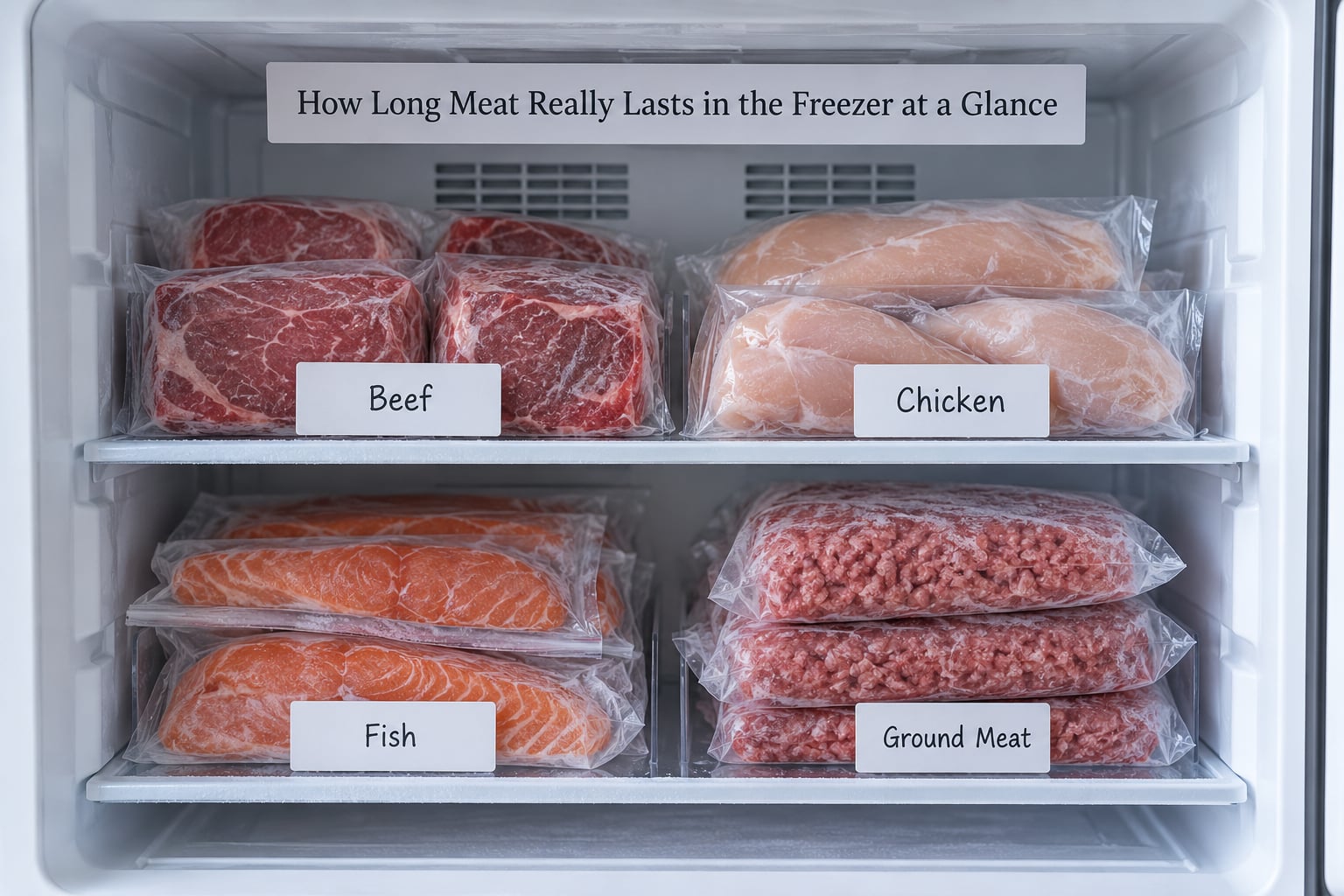
These are the USDA FoodSafety.gov recommended freezer months at best quality, with refrigerator days alongside so you can see how quickly the clock moves once meat thaws. Freezer times assume the meat has stayed at 0°F and never thawed.
| Meat or seafood | Freezer (best quality) | Refrigerator |
|---|---|---|
| Beef steaks, chops, roasts | 4 to 12 months | 3 to 5 days |
| Ground beef | 3 to 4 months | 1 to 2 days |
| Lamb chops and roasts | 4 to 12 months | 3 to 5 days |
| Ground lamb | 3 to 4 months | 1 to 2 days |
| Pork chops and roasts | 4 to 12 months | 3 to 5 days |
| Ground pork | 3 to 4 months | 1 to 2 days |
| Cured pork, ham, bacon (unopened) | 1 to 2 months | 3 to 5 weeks |
| Whole raw chicken or turkey | 12 months | 1 to 2 days |
| Chicken or turkey pieces | 9 months | 1 to 2 days |
| Ground poultry | 3 to 4 months | 1 to 2 days |
| Fresh sausage | 3 to 4 months | 1 to 2 days |
| Fresh fish, steaks and chunks | 3 to 8 months | 1 to 2 days |
| Shrimp and scallops | 3 to 18 months | 1 to 2 days |
| Cooked fish | 3 to 4 months | 3 to 4 days |
| Cooked meat and poultry | 2 to 4 months | 3 to 4 days |
| Sliced deli meat, unopened | 1 to 2 months | 3 to 5 weeks |
Read the table twice. A thick beef roast is good for a year, ground beef for three or four months, and cured pork for one to two. That spread is why general advice like “frozen meat lasts forever” leaves people guessing on a Saturday afternoon with a package in their hand.
Freezer Safety Time vs. Best Quality Time
Safety has no expiration date. Quality does. A vacuum-sealed steak kept solid for a decade is still safe to cook, but the surface fibers take on a dry, grainy texture and the flavor fades long before that decade is up.
The USDA labels its freezer chart “optimal quality,” and that wording matters. The chart is telling you when meat tastes its best, not when it becomes dangerous. Nobody prints a use-by date on a package of ground beef that has been sitting in a freezer since the year it was wrapped, because the labeler knows freezing already did the dangerous part.
Three things erode quality inside that window. Ice crystals grow slowly in the muscle fibers and rupture them, so the meat loses moisture when it thaws. Surface water sublimates, which is the white or gray dry patch most people call freezer burn. Air and light cause mild oxidation on the surface, which is why vacuum-sealed meat holds color and texture far better than a tray wrapped loosely in cling film.
Freezer temperature is the biggest variable most households control poorly. USDA guidance is a steady 0°F (-18°C). A chest freezer holds close to that, while a frost-free upright freezer cycles through warm periods to shed ice on its walls, sometimes climbing above 20°F for an hour at a time. Regular home freezers all have a cycle, though, so temperature swings are not automatically dangerous. They do speed up moisture loss.
Partial thawing is a different story. Once meat enters the 40°F to 140°F danger zone, bacteria resume growing and the clock switches from quality rules to safety rules.
What Determines How Long Frozen Meat Stays Good?
Cut and thickness decide most of it. A whole rib roast has thick interior muscle that stays usable for a year, while a thin sirloin steak has more surface area per pound, so more of the freezer burn reaches the part you eat. Compare a 3-pound standing rib roast with a 6-ounce strip steak and the difference in surface-to-volume ratio explains most of the gap in quality between four months and a year.
Fat and connective tissue help in an unexpected way. Marbled cuts keep moisture during cooking, and a well-trimmed eye of round can turn dry and gluey long before a rib roast does. Leaner, heavily trimmed cuts are more exposed to surface oxidation than fatty ones.
Ground products have no such advantage. Grinding breaks the muscle into small pieces with a large combined surface area, so ground beef and ground turkey sit at the short end of the quality window even under perfect conditions. Freshness at the moment of freezing is the one factor that cannot be improved later. Meat that was already aging on the counter when it went into the freezer will come out of the freezer aging, no matter how tight the packaging.
Packaging is the factor you can actually change. Double wrapping, vacuum sealing, or pushing the air out of a freezer bag all slow moisture loss. Leaving a package loosely wrapped or half open lets dry freezer air sit against the surface, and that is what produces the papery look.
A final, less obvious one: a freezer that is only half full cycles harder and holds a less stable temperature than a full one, because there is less cold mass buffering each cycle. Packing the freezer more completely is one of the cheap ways to improve storage life.
How Long Does Beef, Pork, and Lamb Last Frozen?
Intact cuts of beef, pork, and lamb get the longest windows in the freezer, and the reason is simple. Nothing has been broken open or spread out, so the surface stays protected and the interior muscle keeps its texture.
How long do beef steaks, chops, and roasts last frozen?
The USDA gives 4 to 12 months for beef steaks, chops, and roasts. Aim for the far end of that range with roasts and thick-cut steaks, and closer to four or five months with thin steaks and strips. Ribs and tenderloin handle the full year well. Tougher cuts like chuck and flank still taste fine but are best used sooner, since the texture advantage of freezing fades with time.
How long does ground beef last frozen?
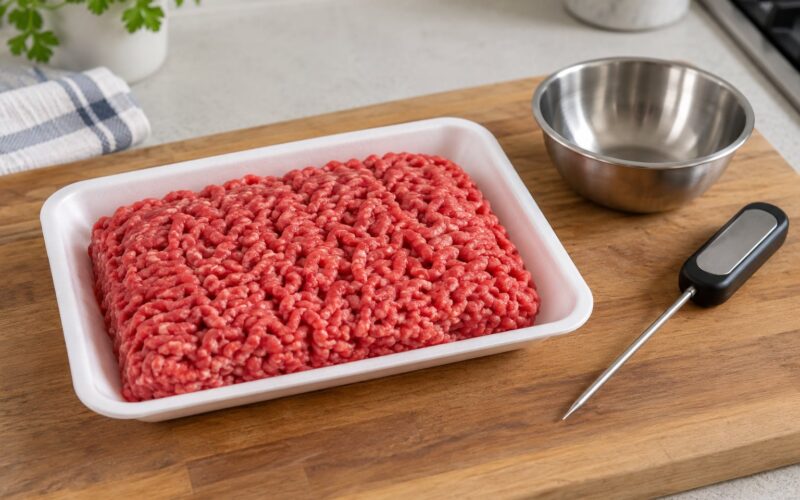
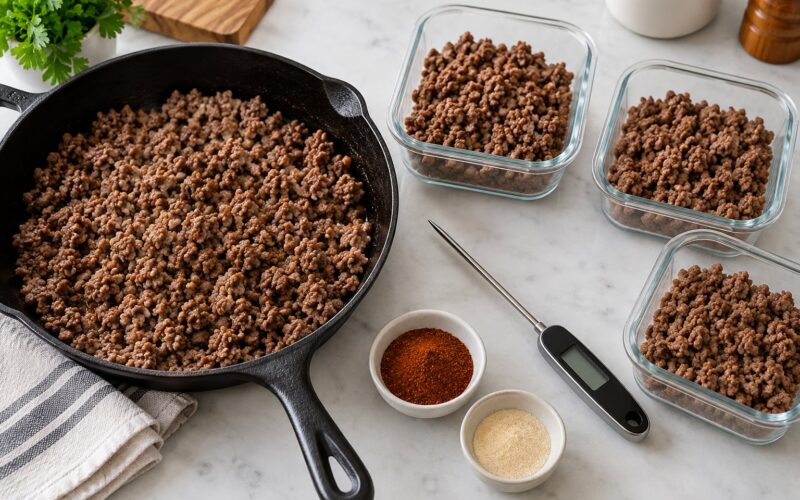
Three to four months, and this is the number most worth memorizing. Ground beef is the single most wasted protein in American freezers, because a large family buys a bulk tray, freezes it, and finds the tub in the back nine months later. Freeze ground beef in one-pound portions instead. They thaw in about ten minutes and you only lose what you plan to cook.
How long do pork chops, roasts, and lamb last frozen?
Pork chops and roasts follow the same 4 to 12 month window as beef, as do lamb chops and roasts. Ground lamb, like ground beef and ground pork, gets 3 to 4 months. When you buy a large cut at a market, cut it into meal-sized portions before freezing rather than planning to break it down later, because a hard-frozen roast does not section cleanly on a cutting board.
Why do cured meats like bacon and ham get a shorter window?
Salt and smoke already pull water out of the product and change its texture. Bacon and unopened ham get 1 to 2 months frozen, which is far shorter than fresh pork. The good news is that cured meat is well protected by its own salt content, so many people keep sealed bacon and vacuum-sealed ham well past the recommended window without any safety problem, at the cost of a drier, chewier texture. Vacuum packing and double wrapping make a measurable difference here, more than with fresh meat.
How Long Does Chicken and Turkey Last Frozen?
Poultry gets the longest recommended freezer windows of any raw meat, and that is the first thing most people get wrong. They assume chicken spoils fast, then freeze a whole bird and assume it goes bad next month.
How long does a whole chicken or turkey last frozen?
A whole raw chicken or turkey gets a full 12 months at best quality, according to USDA guidance. This is the number that lets people buy a holiday bird months ahead without worry. Just keep the bird in its original sealed packaging, or a freezer bag pressed flat to remove the air.
How long do chicken parts, breasts, and drumsticks last frozen?
Poultry pieces get 9 months. That covers boneless chicken breast, bone-in thighs, drumsticks, wings, and turkey parts. Most cooks in practice run out of chicken long before nine months, which is a budgeting problem rather than a safety one. The usual fix is portioning: bag individual breasts or thighs in single-serve quantities so you pull out what you need that week.
How long does ground poultry last frozen?
Ground turkey and ground chicken get 3 to 4 months, same as ground beef. One rule for any poultry, whole or ground: keep it in a sealed package in the freezer or on the lowest shelf of the refrigerator so raw juices cannot drip onto produce or ready-to-eat food below.
None of this changes the cooking rule. Frozen time does not make undercooked poultry safe. Poultry still has to reach 165°F (74°C) in the thickest part, checked with a thermometer in the breast and the thigh for a whole bird.
How Long Does Ground Meat and Sausage Last Frozen?
Everything that has been ground or minced shares the short window: ground beef, ground pork, ground lamb, and ground poultry all get 3 to 4 months at best quality. Grinding multiplies the exposed surface area, so more of the meat sits close to the cold dry air than in an intact roast.
Fresh sausage follows the same rule. A farm-market pork sausage bought in bulk gets 3 to 4 months frozen and only 1 to 2 days in the refrigerator, which is short enough that you should freeze it the day you get home unless you plan to cook it that night. Breakfast links, brats, and chorizo are the same animal, so they get the same window.
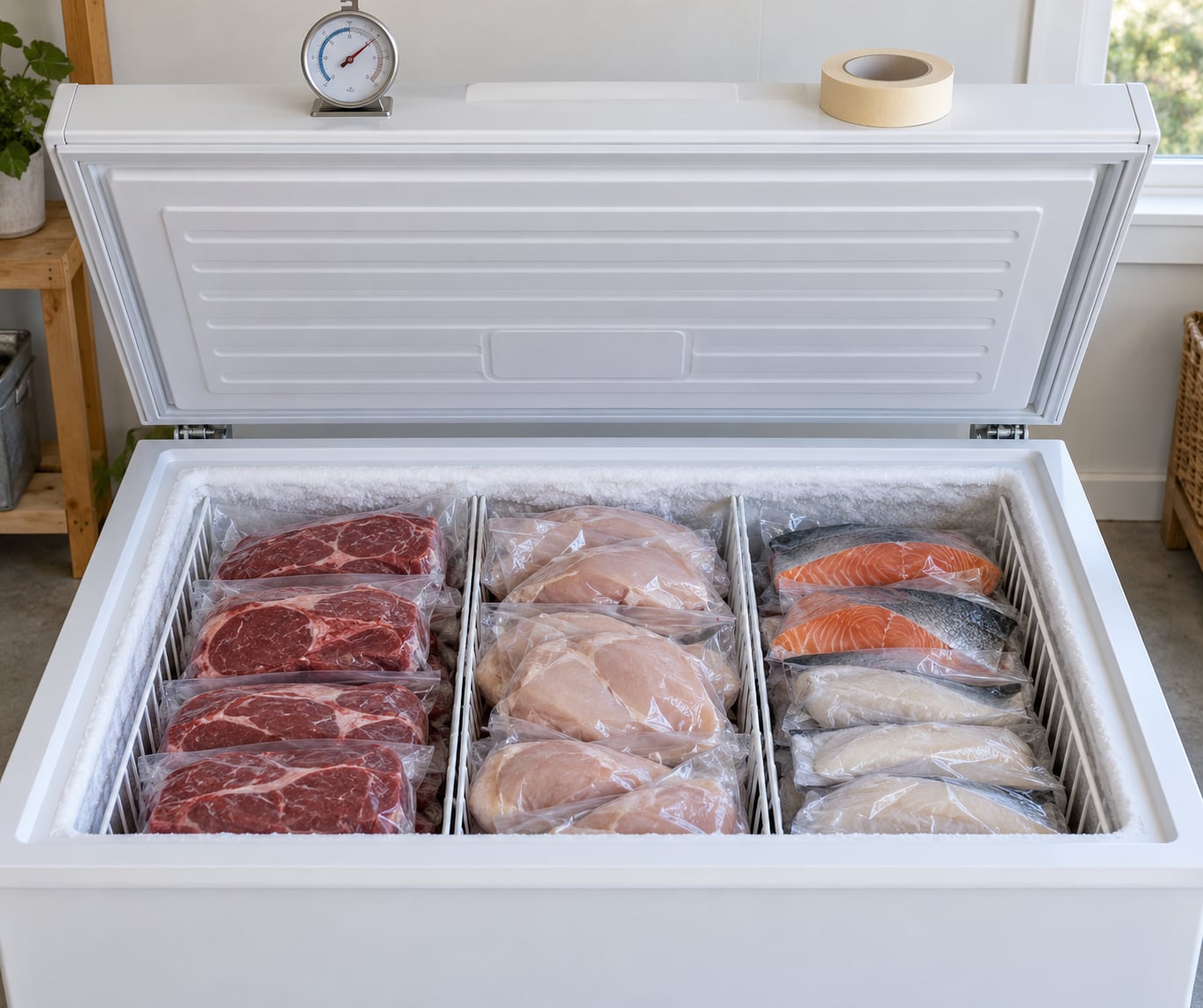
For a household that buys in bulk, labeling is the whole game. Write the meat type, the cut, and the freeze date on the bag with a marker or a printed label, and put a piece of masking tape on the outside so you can read it without pulling the freezer drawer apart. Then pull from the front and push new packages to the back. Most of the freezer waste I see comes from packages nobody could date, not from packages that aged badly.
Cured and smoked sausage is a different category. Fully cured, shelf-stable sausage and summer sausage are safe unrefrigerated, and once sliced they behave like deli meat rather than fresh sausage.
How Long Does Fish and Shellfish Last Frozen?
Fish is the one category where the rule is use it promptly. USDA guidance gives fresh fish steaks and chunks 3 to 8 months frozen, with fillets in the same range, and only 1 to 2 days refrigerated. Even the optimistic end of that window rarely produces a fish that tastes like the day it was caught.
Shrimp and scallops are the exception and can do very well frozen: 3 to 18 months. They also spoil faster than most people assume in the refrigerator, so buying frozen shrimp is often the safer choice rather than the compromise. Cooked fish gets 3 to 4 months frozen and 3 to 4 days refrigerated, which makes it a good use for a leftover fillet.
Moisture control does more for fish than it does for red meat because fish flesh is delicate and dries out quickly. If you froze a fillet in a bag with a lot of air in it, expect a dry result. Pat the fish dry, lay it flat in a freezer-safe bag, press out the air, and lay the package flat on a tray to freeze solid before stacking it.
Freezing is a pause, not a fix. A fish that was already breaking down before it froze will not come back, and strong smells in the freezer usually trace back to fish rather than to a freezer fault.
How Long Does Deli Meat and Cooked Meat Last Frozen?
Deli meat gets its own row because the number is genuinely short. Unopened sliced deli meat gets 1 to 2 months frozen and 3 to 5 weeks refrigerated. Once you open a package, the refrigerator window drops to 3 to 5 days and the frozen window drops to about 3 to 4 weeks. Freezing opened deli meat is reasonable, but do it early in the package’s life rather than when the last three slices look tired.
Hot dogs and sausages sold as refrigerated deli items follow the same pattern, and they freeze better than most people expect. Users on food forums consistently report that a vacuum-sealed, hard-frozen pack is fine after a year or more, which matches the salt content acting as a preservative. Treat that as an anecdotal experience with a smell check rather than a rule.
Cooked meat and poultry get 2 to 4 months frozen and 3 to 4 days refrigerated. Freeze cooked food in shallow airtight containers, get the air out, and let the container chill completely before the lid goes on, so you do not trap steam. Frozen cooked meat is a very efficient way to use up a large roast: slice it, freeze it flat, then reheat portions in a skillet with a splash of liquid.
Freezing does not rescue food that was already unsafe. Meat that spent hours in the 40°F to 140°F range, or cooked meat that sat out at a party, is not made better by a freezer. The same applies to food that was already moldy or slimy.
How to Freeze Meat for the Longest Storage Life
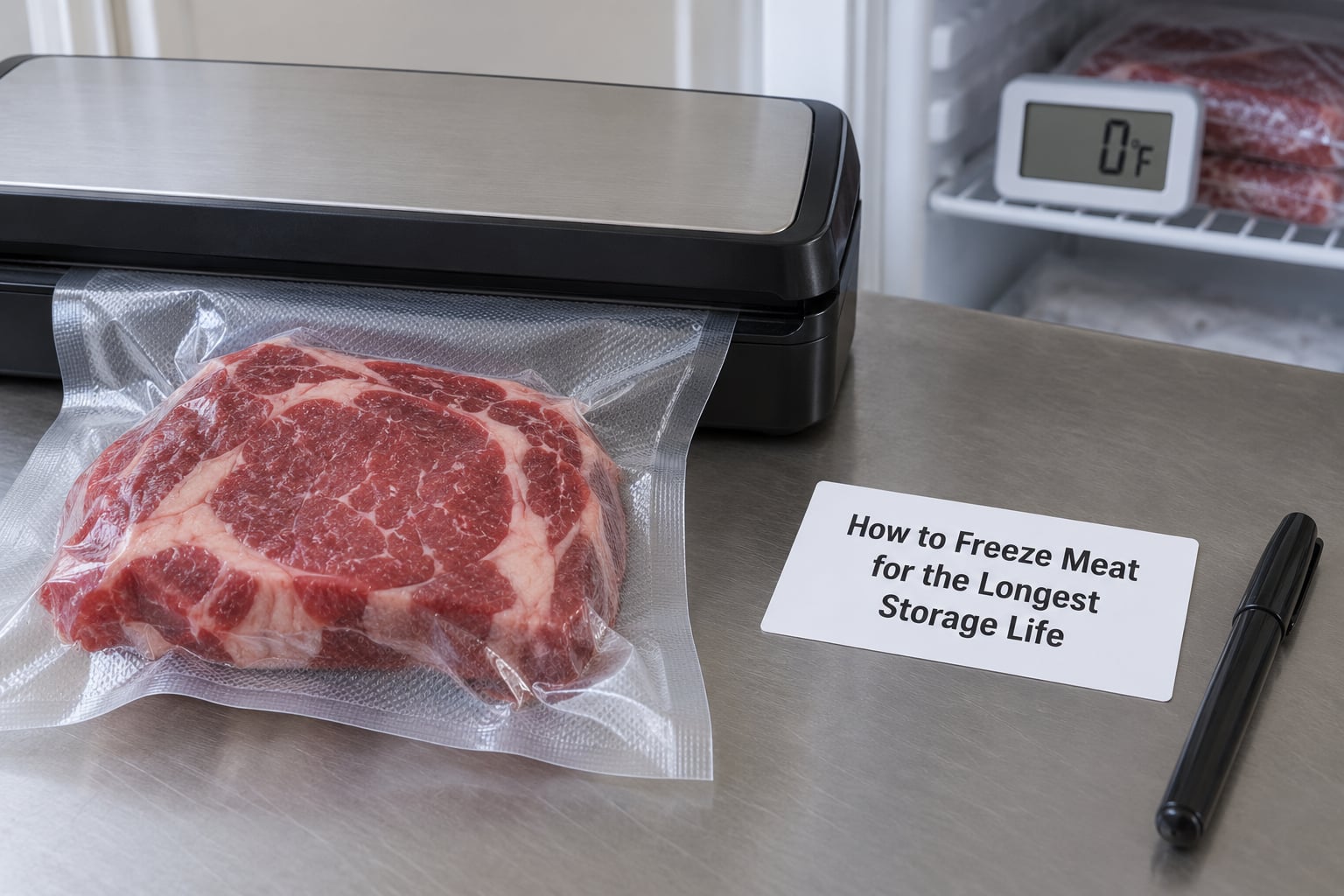
The steps below take about five minutes per package and are the difference between eating a steak in month seven and in month eleven. Work in this order.
- Chill the meat first. Freeze food that is already cold. Meat sitting at room temperature for two hours before going into the freezer is a safety question, not a storage question, and freezing warm meat also raises the temperature of everything around it in the freezer.
- Portion it. Divide bulk buys into meal-sized pieces, and divide those into single servings if the meat is ground. Stack flat so each portion freezes quickly and individually.
- Pat off excess moisture. Surface water becomes ice crystals and then drips during thawing. Blotting the surface and pressing liquid out of the bag removes that water before it ever freezes.
- Remove the air. Vacuum sealing is the strongest option. Without a machine, use freezer bags with most of the air squeezed out and sealed flat, or double-wrap: plastic wrap or foil first, then a freezer bag on top.
- Label and date. Write the meat type, the cut, and the freeze date on the outside of the package. Six months from now, future-you will not want to guess whether that gray tub is ground turkey or beef.
- Freeze flat, then stack. Lay packages on a tray so they freeze solid before you pile anything on top, and leave small gaps so cold air can move around them.
- Keep the freezer at 0°F and reasonably full. A full freezer holds a steadier temperature than a half-empty one, and a cooler, fuller freezer means less quality loss across the board.
How to Tell If Frozen Meat Is Still Good
You cannot judge frozen meat by sight alone, so judge in this order: the history, then the package, then the smell after thawing.
Start with the history. An unopened package that never thawed at a steady 0°F is safe no matter how old the date. A package you found thawed, or one from a freezer that lost power for a day, is a different problem entirely.
Then look. Ice crystals scattered across the surface are normal and harmless. A dry, whitish or grayish, papery patch is freezer burn, which is a quality issue. Bright red beef can also be explained by the airtight package doing its job, so color alone is not a reason to discard anything.
Package integrity matters. If a bag is split, torn, or leaking colored liquid into the freezer, throw the meat out even if it still looks and smells fine, because the surface has been exposed to other food and to the freezer air.
Then thaw it, ideally in the refrigerator, and smell it. A spoiled smell is a clear sign of a problem. Sour, pungent, or ammonia-like odors mean discard. Sliminess and a sticky or tacky surface confirm it. Do not taste test any meat that seems off, and do not cook anything with a bad smell hoping the heat will fix it.
And cook to temperature regardless of how good it looks. Poultry to 165°F, ground meat to 160°F, and whole cuts and fish to 145°F.
What Is the Safest Way to Thaw Frozen Meat?
Thawing method changes how fast the outside of the meat enters the 40°F to 140°F danger zone while the inside is still frozen. All three methods below are safe if you time them correctly. The counter is not one of them.
Refrigerator thawing: the slow, safest method
Put the meat on a tray or in a pan in the refrigerator and let it thaw there. A one-pound package of ground meat takes roughly a day, a 1 to 2 pound steak about a day, and a large roast or whole bird can take two to four days. Keep raw meat on the bottom shelf and keep the package sealed until the meat is flexible.
Cold water thawing: the fastest method with a container
Seal the meat in a leak-proof bag, then submerge it in cold water and change the water every 30 minutes. About 30 minutes per pound, so a 2 pound roast takes an hour. Thawing sealed in cold water is a lot safer than a hot-water bath, which warms the outside of the meat while the center is still frozen.
Microwave thawing: for cooking immediately
The microwave thaws in minutes and puts the outer layers in the danger zone fastest, so cook the meat right away. For a large roast, defrost in short bursts and flip the piece between each one.
Never thaw on the counter. It is the most common cause of foodborne illness in the home, and it is faster than cold water, which is why the myth persists.
After thawing, cook poultry to 165°F, ground meat to 160°F, and whole cuts and fish to 145°F. Once thawed in the refrigerator, meat can be refrozen, though quality drops and ground meat loses noticeably more moisture than intact cuts. Thawed by cold water or microwave, it should be cooked rather than refrozen, and never refrozen a second time.
Frequently Asked Questions
Is meat still good after 2 or 4 years in the freezer?
If the package has stayed frozen solid at 0°F the whole time, it is safe after 2 or 4 years. What degrades is quality: ice crystals form, surface moisture dries off, and the texture turns grainy. Thaw it in the refrigerator and judge by smell. An off or sour odor means discard; a dry, grayish surface is just freezer burn and can be trimmed and cooked.
Is meat frozen for 10 years or 20 years safe to eat?
Theoretically yes, if it never thawed, though nobody should promise you it will taste good. USDA guidance is clear that frozen meat stays safe indefinitely at 0°F because freezing stops bacteria from multiplying rather than leaving a countdown clock. Ten- to twenty-year-old packages are usually leathery and pale. If the odor after thawing is normal, most cooks cook it in a stew or braise where texture matters less.
How long can chicken stay in the fridge?
Raw chicken, whether a whole bird, pieces, or ground, keeps for only 1 to 2 days in a refrigerator held at 40°F or below. Ground poultry is the one to watch, since it should never be used after the second day. Freezing is the better plan: whole raw poultry holds 12 months at best quality, pieces hold 9 months, and ground poultry holds 3 to 4 months.
How long should I store fish in the fridge or freezer?
Fresh fish only keeps 1 to 2 days refrigerated, which is short enough that most cooks should buy it frozen. In the freezer, fresh fish steaks and fillets hold 3 to 8 months at best quality, cooked fish holds 3 to 4 months, and shrimp and scallops hold an unusually long 3 to 18 months. Keep fish sealed with the air pushed out, and freeze it as soon as you get home.
Does freezer burn make meat unsafe?
No. Freezer burn is moisture loss and mild surface oxidation caused by air exposure, and it is purely a texture and flavor problem. The safety question is entirely separate and depends on whether the meat ever thawed, not on how dry it looks. Trim the dry or discolored layer, and if the meat inside smells normal you can cook it. If it smells off, that is a spoilage signal rather than a freezer burn signal.
Why do people put a penny in the freezer?
It is a cheap outage detector. Put a coin on a cup of water in the freezer and leave it there; if the cup thaws and the coin ends up sitting in wet ice after an outage, the freezer rose above 32°F and the food is in question. It is not exact and it does not replace a thermometer, but a simple cup of water with a coin costs almost nothing and tells you whether the frozen food needs attention.
Conclusion
Do three things before you close the freezer door tonight. Put a label with the meat type and the date on every package you cannot identify, check that the freezer is holding 0°F, and pull the oldest package forward so it becomes the next one you cook.
After that, work from the quality window in the table rather than the calendar anxiety. How long meat really lasts in the freezer is a safety question first and a quality question second, and those two answers stop being the same the moment something thaws. Frozen food can stay safe for years while its texture fades month by month, which is why a labeled, well-sealed package is worth far more than one you forgot about and had to guess at.