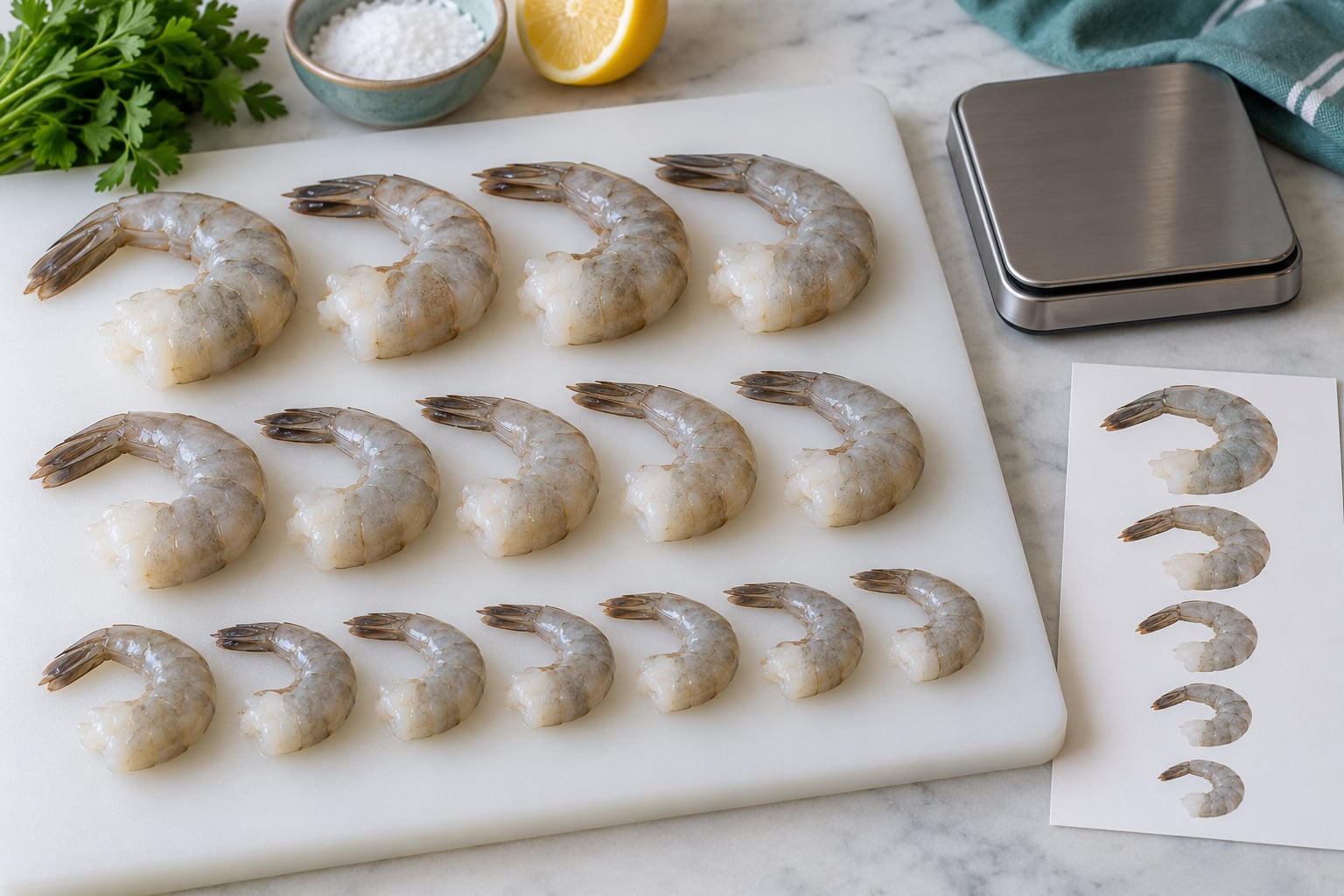
Shrimp is sold by weight, but sized by count, which tells you how many pieces land in one pound. A 21/25 count means roughly 21 to 25 shrimp per pound, and the lower the number, the bigger each shrimp. That single rule is the whole trick behind how to buy shrimp by count size without overpaying for size names that mean nothing. It takes about five minutes at the counter or in the freezer aisle.
Table of Contents
- What You Need Before You Shop
- Step-by-Step: How to Buy Shrimp by Count Size
- How Shrimp Count Size Works
- Common Count Sizes and Best Uses
- Convert Count Size to a Serving Amount
- Choose Shrimp for Your Recipe
- Check Freshness and Packaging
- Read the Rest of the Label
- Common Mistakes When Buying Shrimp
- How to Store Shrimp After Buying
- Frequently Asked Questions
- What does U-10 mean when buying shrimp?
- Is a lower shrimp count better for cooking?
- How many shrimp are in a pound?
- Should I buy shell-on or peeled shrimp?
- How can I tell if shrimp is fresh?
- Which is bigger, 16/20 or 21/25 shrimp?
What You Need Before You Shop
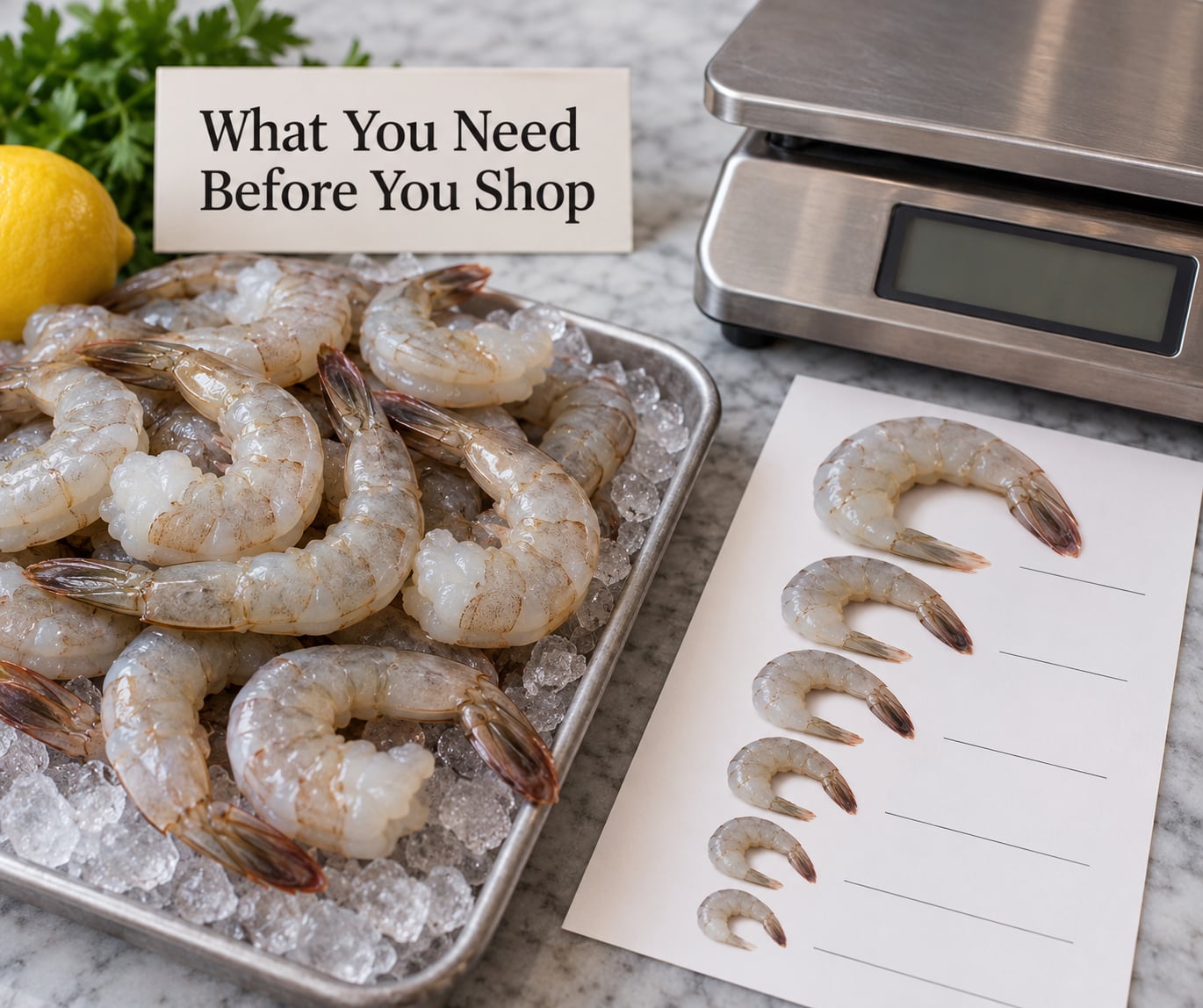
You do not need equipment to read a shrimp label. You need a rough idea of how many people you are feeding and whether the shrimp is the main event or one ingredient in something else.
Bring a simple plan. Twelve shrimp per person works as an appetizer or a starter; fifteen to twenty per person works for a main course where shrimp is the centerpiece. Write that number down before you walk in, because the freezer aisle is a bad place to do arithmetic.
Know which form you want, too. Shell-on keeps more moisture and flavor and looks better on a platter. Peeled and deveined saves a surprising amount of prep time on a weeknight.
Most shrimp sold in the United States is farmed, though wild-caught options exist. Read the country of origin line either way, and note whether the shrimp is “previously frozen,” which is a quality marker rather than a red flag.
Step-by-Step: How to Buy Shrimp by Count Size
How Shrimp Count Size Works
The count is an estimate, not a guarantee. Because shrimp vary in length even within one pound, sellers grade them by weight class and print a range or an “under” figure on the package.
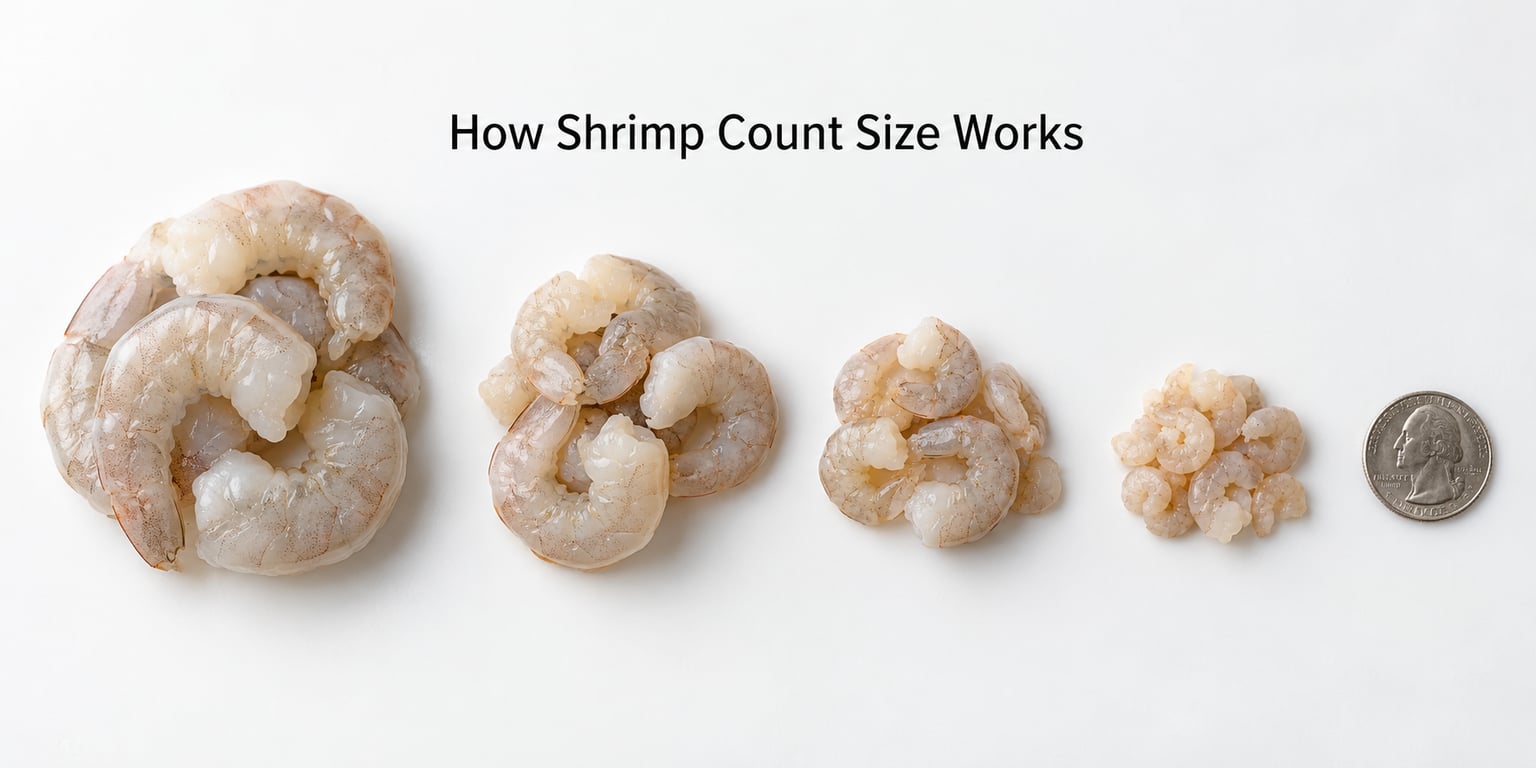
A U-10 label means under ten shrimp in the pound, so each piece is very large. U-12 and U-15 sit a step or two down. A slash count like 21/25 gives a low and a high bound instead, so 21/25 means between 21 and 25 pieces. Actual pieces in the tray may fall slightly outside the printed range, which is normal.
One wrinkle catches people: shell-on shrimp is counted with the shell and head on. Peeled and deveined shrimp is counted the same way, meaning the stated count of peeled shrimp is roughly what a shell-on pound at that count would yield. Count is a weight-based estimate either way, not a length.
Common Count Sizes and Best Uses
Size names are not standardized, so trust the count over the word on the bag. Here is how the ranges most often line up.
| Count | Often called | Shrimp per pound | Per serving | Best dishes |
|---|---|---|---|---|
| U10 (under 10) | Colossal | 6 to 10 | 1 | Big skewers, dramatic grilled platters, whole shrimp presentations |
| U15 (under 15) | Extra large | 10 to 15 | 2 | Scampi, shrimp and grits, kebabs |
| 16/20 | Large or jumbo | 16 to 20 | 2 | Cocktails, boils, fried shrimp |
| 21/25 | Large | 21 to 25 | 3 | Pasta, tacos, stir-fry |
| 26/30 | Large | 26 to 30 | 4 | Stir-fry, salads, tacos |
| 31/35 | Medium | 31 to 35 | 5 | Stir-fry, soups, shrimp pasta |
| 36/40 | Medium | 36 to 40 | 6 | Fried rice, soups, salads |
| 41/50 | Medium | 41 to 50 | 8 | Boils, popcorn shrimp, ceviche |
| 51/60 | Small | 51 to 60 | 10 | Soups, sauces, shrimp rolls |
| 61 to 70 | Small | 61 to 70 | 12 | Chilies, soups, fried rice |
| 71 and up | Tiny | 71+ | 15 | Ceviche, soups, garnish |
To answer the question that trips up most shoppers: 16/20 shrimp is bigger than 21/25 shrimp. Fewer shrimp per pound always means larger individual pieces.
On price, a simple pattern holds. Colossal and extra large counts cost more per pound than medium and small counts, but they do not automatically deliver more food. You are buying a pound either way, and a pound is a pound. Big shrimp is worth the premium for a dish where each piece stands alone on the plate, and poor value for a stir-fry where the shrimp is mixed through a dozen other ingredients.
Convert Count Size to a Serving Amount
The math is simpler than it looks: multiply the count by the pounds you are buying to get an approximate piece total, then divide by the pieces per person you want.
For about 10 shrimp, one pound of 16/20 does it, or one pound of 21/25 if you want the pieces a little smaller. For about 20 shrimp, buy one pound of 21/25 or two pounds of 36/40. For about 30 shrimp, one pound of 31/35 covers it. For about 40 shrimp, reach for one pound of 41/50.
A worked example for four people: two pounds of 21/25 gives you roughly 42 to 50 shrimp. Divide by four and each person gets about 11 to 12 pieces, which is a solid main course with rice or bread alongside. If the same four people are eating shrimp tacos, two pounds of 31/35 is the better call because smaller pieces fill a tortilla without tearing it.
Shell-on pounds lose weight once you peel them. A pound of head-off shell-on shrimp generally peels down to about 10 to 12 ounces of meat, and head-on drops nearer 8 ounces. If you need a pound of peeled meat, plan on buying roughly a pound and a half to two pounds of shell-on.
Measure portions on raw shrimp rather than cooked. Shrimp shrinks noticeably, often by a quarter of its length and a good share of its weight, so a cooked count always understates what you started with.
Choose Shrimp for Your Recipe
Match the count to how the shrimp is used. When each piece is the centerpiece, size matters for looks and for even cooking.
For grilling and skewers, go with U15 to 16/20. Large pieces hold up to a quick sear without turning rubbery, and they photograph well. Salads, ceviche and cold applications look better with 21/25 or 26/30, where you can taste the shrimp in a single bite.
For pasta, soups and stir-fries, 26/30 through 36/40 is the sweet spot. The pieces stay tender under a short cook and mix evenly through sauce. Fried shrimp and popcorn shrimp also work best in that middle range, because smaller pieces stay crisp before the batter darkens.
Tacos and tortillas favor 31/35 and smaller. Overly large shrimp makes a taco hard to fold and hard to eat. If you are simmering a low country boil or a shrimp soup, 41/50 down to 71+ is plenty, since long cooking tenderizes small shrimp quickly.
Home cooks tend to land in the same place after a few trials: buy the medium counts for weeknight cooking and save the jumbo shrimp for a weekend dish where the size is the point. That matches what happens in the pan.
Check Freshness and Packaging
Read the package before you read the count. Form, handling and freezing status change how the shrimp cooks.
Shell-on and head-on shrimp hold moisture best. Peeled shrimp is more convenient, while peeled and deveined saves the fiddly step of picking out the vein. EZ-peel shrimp have a cut down the back that lets you pull the shell off in one piece, which is genuinely useful for a casual shrimp cocktail.
Frozen shrimp labeled IQF, individually quick frozen, is usually higher quality than block frozen. A block is thawed, processed and refrozen, which costs you texture. If you can find IQF, take it.
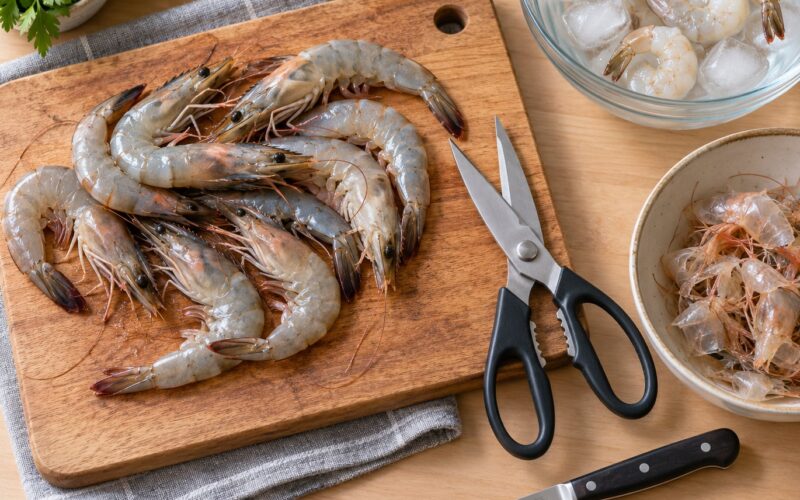
Look for shrimp that are grayish-blue and translucent in the raw state, sometimes called “uncooked appearance” on the label. Bright white raw shrimp has usually been treated with a brine or soak. That treatment holds water, adds weight, and dulls flavor, though it keeps the shrimp moist.
Fresh shrimp at a counter should smell clean and briny with no sour or ammonia note. The flesh should be firm and springy rather than soft or gaping, and the tail should still be attached if the package says tail-on.
Check the date labeling. A “best by” date on frozen shrimp reflects quality, not safety, so a package past that date may still be perfectly usable if frozen solid. Fresh shrimp at the counter should have been delivered within the last one to two days.
Read the Rest of the Label
Two more words decide how a package performs in the kitchen. “Previously frozen” tells you the shrimp was thawed and refrozen, usually on board, which is normal for imported seafood and generally fine. “Farm-raised” and “wild-caught” tell you the source, and while farm-raised shrimp tends to be more uniform in size and readily available year round, wild-caught varieties carry a firmer texture and a more pronounced sweetness.
Country of origin matters for how long the product has been in transit. Shrimp that traveled from overseas may carry a brine to keep it stable. Nothing wrong with it, but worth knowing if you prefer flavor over yield.
Common Mistakes When Buying Shrimp
Trusting the size name over the count. “Jumbo” on one supplier’s bag may sit next to “extra large” on another’s, and the two could even describe the same count. Read the number, not the adjective.
Assuming the count is exact. A 21/25 pack may hold 19 or 27 pieces. The number is a grading estimate based on weight, so treat it as a guide for planning rather than a promise.
Buying small shrimp for a dish that needs big pieces. A shrimp cocktail built on 51/60 shrimp looks sparse and eats fast. If each piece is meant to stand alone, move up a count or two.
Buying large shrimp for everything. Jumbo shrimp in a stir-fry costs more per pound and turns rubbery faster than a medium count, because large pieces take longer to cook through before the outside burns.
Confusing peeled pounds with shell-on pounds. A pound of peeled and deveined shrimp is not the same usable yield as a pound of shell-on. Buy extra shell-on if you are peeling your own.
Ignoring thawing instructions. Thawing at room temperature is where shrimp texture gets ruined. Move the package to the refrigerator the night before, or seal it and run it under cold water for 20 to 30 minutes.
How to Store Shrimp After Buying
Buy shrimp you can cook within a day or two, and keep it cold the whole time. On ice in the coldest part of the refrigerator, fresh shrimp holds about 1 to 2 days. If you are not cooking immediately, freeze it.
For longer storage, portion the shrimp into serving-size bags and freeze flat, which makes thawing one meal at a time easier. Frozen shrimp keeps quality for about 3 to 4 months, and 6 to 8 months in a proper freezer.
Thaw in the refrigerator overnight for large counts like U15 or 16/20, which need the extra time. Smaller shrimp thaw faster. Cold water thawing takes 20 to 30 minutes in a sealed bag, and a microwave on the defrost setting works in short bursts if you are cooking right away.
Cook shrimp to an internal temperature of 145°F. It is done when the flesh is opaque and firm, which usually takes just a few minutes per side on a hot skillet. Overcooked shrimp turns chalky fast, so pull it the moment it turns pink and curls into a loose C. Shrimp that curls into a tight O has gone past its best moment.
Frequently Asked Questions
What does U-10 mean when buying shrimp?
A U-10 count means under 10 shrimp in one pound, which makes them among the largest you can buy. U-10 shrimp usually carry names like colossal or jumbo depending on the supplier. Because each piece is so large, one or two per person is plenty. They work best in dishes where the shrimp is the centerpiece, such as grilled skewers or a presentation platter.
Is a lower shrimp count better for cooking?
Lower count means bigger shrimp, but bigger is not automatically better. Jumbo counts suit cocktails, boils and skewers where each piece stands alone. Medium counts around 26/30 to 36/40 are usually the better weeknight choice, because they cook fast, stay tender and cost less per pound. Buy the size that fits the dish rather than reaching for the largest count every time.
How many shrimp are in a pound?
It depends on the count. A 16/20 package holds roughly 16 to 20 shrimp per pound, a 21/25 pack holds about 21 to 25, and a 41/50 pack holds about 41 to 50. The U counts sit at the large end, so U-10 means fewer than 10 pieces in the pound. Counts are grading estimates, so actual numbers can fall slightly outside the printed range.
Should I buy shell-on or peeled shrimp?
Shell-on shrimp keeps more moisture and flavor and looks better on a platter, so it suits cocktails, boils and anything presented whole. Peeled and deveined shrimp saves real prep time on a weeknight. A pound of shell-on generally peels down to about 10 to 12 ounces of meat, so buy one and a half to two pounds of shell-on if you need a full pound of peeled meat.
How can I tell if shrimp is fresh?
Fresh shrimp smells clean and briny with no sour or ammonia note. The flesh should be firm and springy rather than soft, and the color should be grayish-blue or translucent, though some brine-treated shrimp look whiter. At a counter, ask when it arrived. At home, check the label for a best-by date and cook it within one to two days of purchase.
Which is bigger, 16/20 or 21/25 shrimp?
16/20 shrimp is bigger. Both labels are counts per pound, so the set with fewer pieces per pound holds larger shrimp. Sixteen to twenty pieces in a pound means each one weighs more than shrimp from a 21/25 package, which holds 21 to 25 pieces. The general rule holds everywhere on the label: the lower the number, the bigger the shrimp.
Start with the count, not the name on the bag. For most weeknight cooking, 21/25 through 31/35 hits the sweet spot for texture, timing and portion control, and one pound usually feeds three to four people as a main course. Pick the range that matches your dish, check that the package says IQF and previously frozen, then get it into the pan quickly.