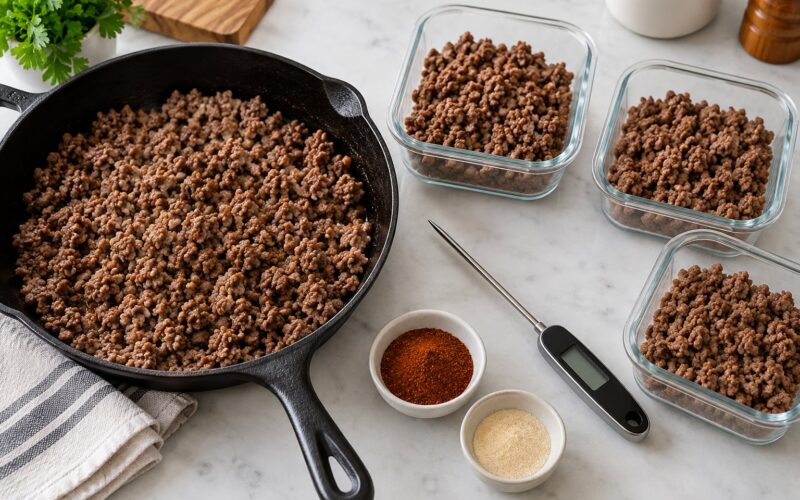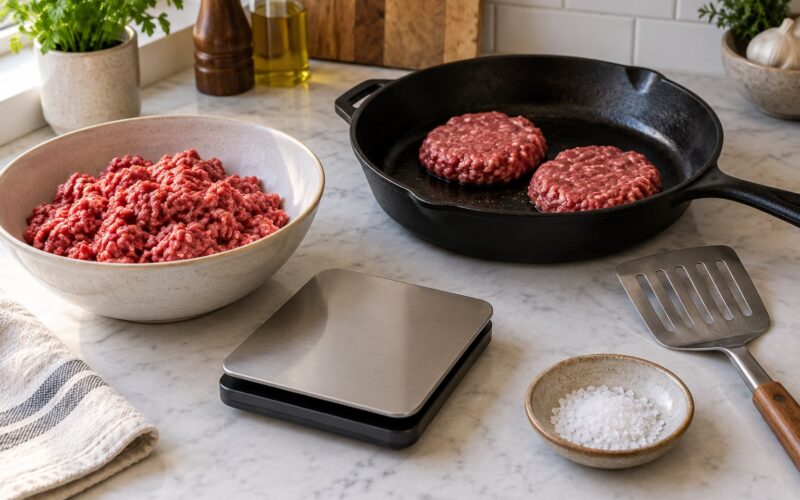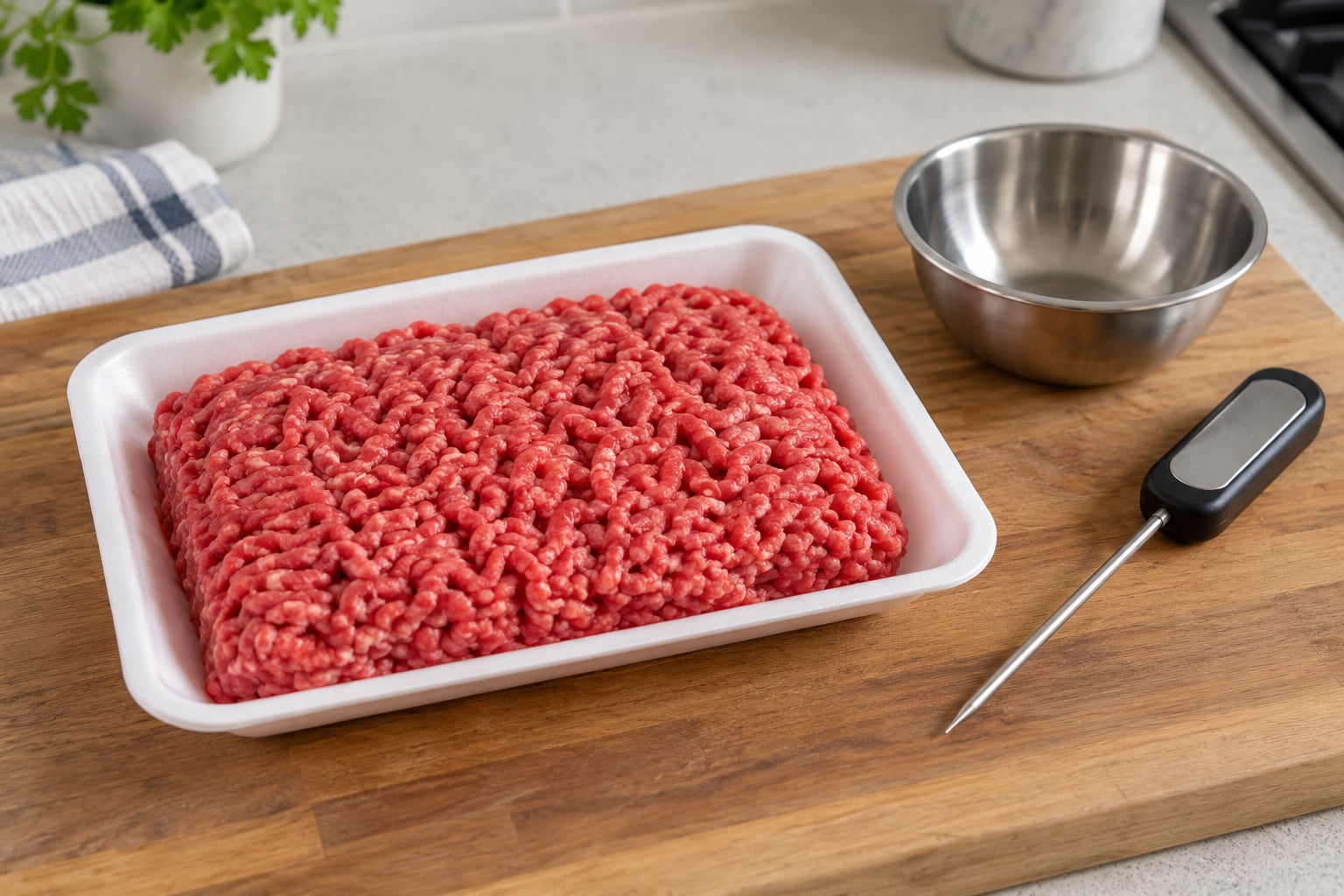
Smell it, then feel it. Ground beef that has gone bad usually gives off a sour, ammonia-like, or rotten odor and turns sticky or slimy to the touch, and those two signals matter far more than color. Knowing how to tell if ground beef has gone bad takes about two minutes and saves you from cooking something you will not want to eat.
Color alone is the worst way to judge it. Fresh beef regularly goes grey or brown from oxygen exposure alone, and throwing away good meat over color is the most common mistake I see at the market counter.
Table of Contents
- What You Need
- Step-by-Step: How to Tell If Ground Beef Has Gone Bad
- 1. Check the package and storage history
- 2. Smell the ground beef before opening it
- 3. Look for color, texture, and moisture changes in ground beef
- 4. Decide whether it is safe to cook
- Common Mistakes
- Frequently Asked Questions
- Can ground beef smell bad but still be safe?
- How long can ground beef stay in the refrigerator?
- Does ground beef turn brown or gray when it has gone bad?
- Is frozen ground beef safe if it has freezer burn?
- Can cooking ground beef kill bacteria and make spoiled meat safe?
- What should I do if I ate ground beef that tastes or smells off?
- Conclusion: What to Do First
What You Need
You do not need any special equipment. Just the package the beef came in, or whatever airtight container you are storing it in, and a clear memory of when it was bought and ground.
Wash your hands and clear the counter before you open the tray. Keep a light on so you can judge color accurately, and have cold water ready if you want to rinse the outside of a disposable package before throwing it away.
One thing to keep in mind before you start: refrigeration slows spoilage, it does not reverse it. Cold meat that has already gone off stays gone off.
Step-by-Step: How to Tell If Ground Beef Has Gone Bad
Work through these four checks in order. Storage history first, then odor, then appearance and texture, and finally whether cooking can rescue it.
1. Check the package and storage history
Start with the outside. A package that is swollen, puffed, leaking, or torn has almost certainly been compromised, and ground beef should not puff up on its own.
Read the date. A use-by date is the one the manufacturer considers a safety boundary, while a best-by date is about quality and flavor. Both are useful signals, and neither is a guarantee that beef handled badly on the way home is fine.
Then ask the harder question: was this beef kept at or below 40°F (4°C)? For ground beef bought at a market or butcher, the clock starts the day it was ground, not the day the animal was slaughtered. Freshly ground beef from a busy Saturday market has a much shorter life than a sealed pack from a factory line.
If you cannot say how long it sat out or what temperature it was kept at, treat that as a reason to discard. Unknown history is itself a warning sign.
2. Smell the ground beef before opening it
Your nose is the most reliable tool you have. Open the package and smell it before you look at it, because sight expectations color how you read everything else.
Fresh ground beef has a mild, clean, faintly meaty aroma. Some butchers describe a clean iron note, and packaged beef can carry a faint metallic tang from the packaging itself. None of that is off.
Spoiled ground beef smells sour, ammonia-like, sulfurous, or outright rotten. Raw beef also has a naturally faint odor, so the test is not whether it smells like something, it is whether the smell has become something you would not want in a pan.
Never taste it to check. That is the one rule with no exceptions.
3. Look for color, texture, and moisture changes in ground beef
Color on its own is weak evidence. Pink, bright red, and dark red are all normal for fresh ground beef. So is grey and brown, because when meat is exposed to oxygen the pigment myoglobin oxidizes and the surface loses its red color. Frozen beef thawing grey with no off smell is usually that reaction, not spoilage.
Texture tells you more. Fresh ground beef is firm, slightly damp, and loosely crumbly. Ground beef that has gone bad turns sticky, tacky, or slimy, feels mushy, or leaves a wet film on your fingers. Grey-green patches, an iridescent sheen, or cloudy liquid pooling in the tray point the same way, especially alongside an off smell.
Dried-out edges and dark spots along the packaging rim are usually oxidation from air exposure. Dry does not mean spoiled, but dry plus off-smelling does.
4. Decide whether it is safe to cook
Cooking kills most bacteria on and in ground beef when you hit 160°F (71°C) at the thickest part. Use an instant-read thermometer, push it into the center of the thickest piece, and check more than one spot.
That temperature handles fresh, properly stored beef. It does not turn spoiled beef into safe food. Some bacterial byproducts, including the toxins behind staph and Clostridium botulinum, are heat-stable and survive cooking temperatures, and spoilage that has run for days means the fat and protein have broken down in ways no pan fixes.
So the decision is simple. If any of the first three checks raised a flag, the beef goes in the bin. You cannot smell your way around the problem by frying it.
Common Mistakes
Judging by color only is the most common error, and it goes both ways. People throw out perfectly good beef for being grey inside, then keep beef that is slimy and sour because the color still looks red.
Treating the printed date as a guarantee is the second one. Dates are produced under good handling assumptions, and they say nothing about the three hours the beef sat in a warm car.
Tasting questionable meat is the mistake with real consequences. You would be eating a small dose of whatever you are trying to detect.
Rinsing raw beef before cooking spreads bacteria across your sink, counters, and splashes, and it does not make the meat safer. Skip the rinse.
Storing ground beef on the counter or in the fridge door is the quiet habit behind a lot of cases. Keep it on the lowest shelf, in its original packaging, at or below 40°F, and freeze it within one to two days if you will not cook it in time.
Thawing on the counter is the version people regret most. Move frozen beef to the refrigerator and let it thaw there over one to two days for a standard package, or use the microwave on a plate and cook it straight away.
When you do discard spoiled meat, seal it in a bag or wrap it tightly, put it in the bin, and wash your hands and the bin lid. Never rinse it down the sink or pour the tray liquid into the drain.
Frequently Asked Questions
Can ground beef smell bad but still be safe?
Usually not. A sour, ammonia-like, or rotten odor in ground beef points to spoilage bacteria breaking down fat and protein, and no cooking temperature reliably makes that beef safe. Fresh ground beef has a mild, clean, faintly meaty smell, so anything sharp or rotten is a discard.
How long can ground beef stay in the refrigerator?
Raw ground beef keeps for one to two days in the refrigerator at or below 40°F, and three to four months in a freezer at 0°F. Freshly ground beef starts that clock on the day it is ground, which is often a day or two after the meat was slaughtered.
Does ground beef turn brown or gray when it has gone bad?
Not on its own. Grey and brown are usually just myoglobin reacting to oxygen, which happens to fresh beef in an open tray and to frozen beef during thawing. Spoilage shows up as grey-green patches, an iridescent sheen, or cloudy liquid pooling, and only alongside an off smell or slimy texture.
Is frozen ground beef safe if it has freezer burn?
Freezer burn is air reaching the surface, which dries and lightens the meat without making it dangerous. Check the smell after thawing. If it smells normal and the texture is not sticky or slimy, it is fine, even if the surface looks dry or pale.
Can cooking ground beef kill bacteria and make spoiled meat safe?
Cooking to 160°F kills most bacteria in fresh, properly stored ground beef, but it does not reverse spoilage. Heat-stable toxins from some bacteria survive high cooking temperatures, and badly deteriorated meat has broken down past the point where heat helps. Spoiled ground beef should be discarded, not cooked.
What should I do if I ate ground beef that tastes or smells off?
Stop eating it and drink water to replace fluids. Symptoms of bacterial food poisoning from beef often start within one to three days and can include diarrhea, vomiting, cramps, and fever. Contact a doctor or urgent care for bloody stools, persistent vomiting, high fever, signs of dehydration, or symptoms in someone pregnant, elderly, or immunocompromised.
Conclusion: What to Do First
Do not taste it. If the odor is off, the texture is sticky or slimy, the color has gone grey-green with a cloudy liquid, or you simply do not know how long it has been sitting where it has been sitting, put it in the bin and buy a fresh package.
From there, keep raw ground beef on the lowest refrigerator shelf at or below 40°F, use it within one to two days or freeze it, and cook it to 160°F before it reaches the plate. Learn what fresh beef smells like once, and you will never need a stranger’s opinion in a forum thread again.