How to make breakfast sausage patties from scratch is a fifteen-minute job once you know the two things that matter: the fat ratio of your meat and how gently you mix it. You need a pound of ground pork, a small handful of spices, wet hands, and a hot skillet. No casing, no sausage press, no stuffing machine.
Learning how to make breakfast sausage patties from scratch is mostly about seasoning, shaping, and not overcooking. The whole batch comes together before the coffee finishes brewing, which makes it one of the cheapest proteins you can keep in the freezer for weekday mornings.
What gives breakfast sausage its particular flavor? Sage, coarse black pepper, a little salt, and a small amount of sweetness from maple syrup or brown sugar, all carried by meat with enough fat to stay juicy. The sweetness is not maple flavor. It is there to round off the pepper and make the patties taste like breakfast instead of like dinner.
Table of Contents
- What You Need
- The meat
- The seasoning blend for one pound of meat
- Equipment
- A seasoning blend you can jar
- Step-by-Step
- Choose and Season the Ground Meat
- Mix Until the Seasoning Is Even
- Rest the Mixture Before Shaping
- Shape Uniform Breakfast Sausage Patties
- Chill or Freeze the Patties for Later
- Cook the Patties Until Properly Done
- Common Mistakes
- Patties that fall apart in the pan
- Patties that shrink into rounded pucks
- Dry, rubbery patties
- Greasy result
- Bland or gamey flavor
- Skipping the thermometer
- Frequently Asked Questions
- Do I need sausage casings to make breakfast sausage patties from scratch?
- Can I use a pork and beef blend for breakfast sausage patties?
- Why are my homemade breakfast sausage patties dry?
- Should I add breadcrumbs or another binder to breakfast sausage patties?
- Can I freeze uncooked breakfast sausage patties?
- What internal temperature should breakfast sausage patties reach?
What You Need
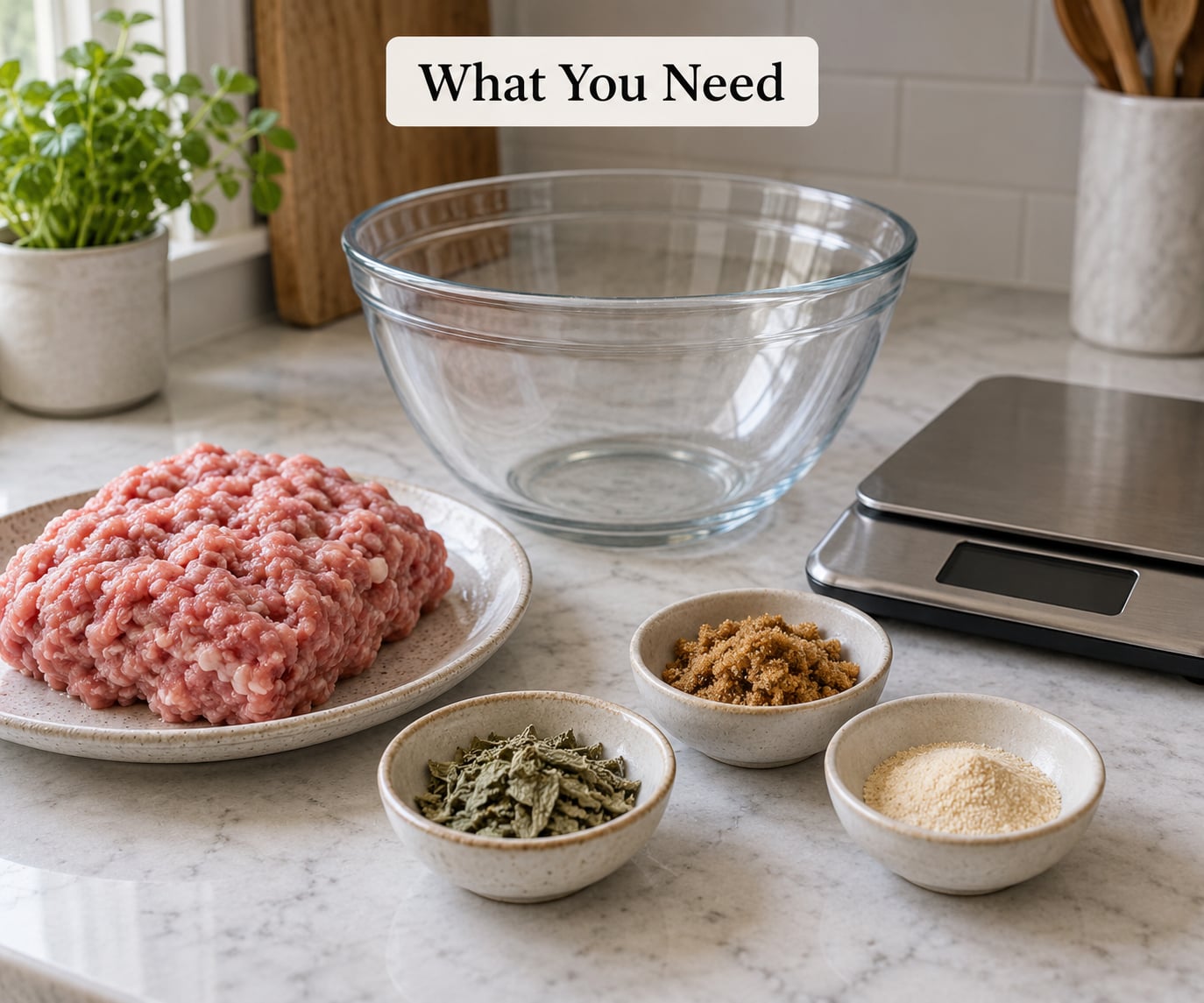
The meat
Ground pork sold as 80/20 is the easiest starting point. That 20 percent fat is what keeps a patty from turning dry and rubbery, and it is the number most home cooks get wrong by buying the 90/10 lean stuff because it looks cleaner in the tray.
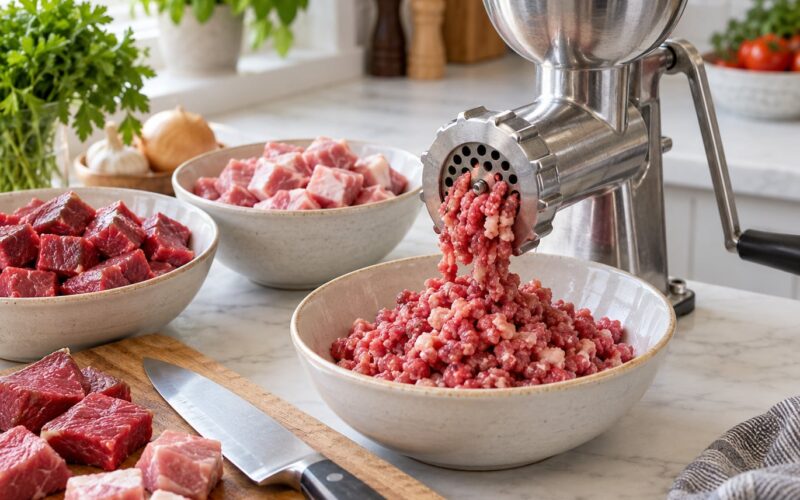
Pork shoulder ground coarse works even better, and you can grind your own if you have a meat grinder. Coarse grind gives you more surface area for the seasoning to cling to, so the flavor spreads further with each bite. If you are buying pre-ground, look for a coarse grind rather than a fine one.
You can also grind your own pork at home from a chunk of shoulder. Cut the meat into cubes, chill them for 20 minutes, and grind on the coarse setting. People on sausage forums ask about this constantly, and the answer is that a home grinder gives you control over both the fat ratio and the texture in a way the store cannot.
The seasoning blend for one pound of meat
- 1 pound ground pork, 80/20 or 70/30
- 1.5 teaspoons rubbed sage or 4 to 5 fresh sage leaves, minced
- 1 teaspoon kosher salt
- 1 teaspoon coarse ground black pepper
- 1 teaspoon dried thyme
- 1 teaspoon garlic powder
- 1 teaspoon onion powder
- 2 teaspoons light brown sugar or 2 teaspoons maple syrup
- 0.5 teaspoon red pepper flakes, optional
- 0.25 teaspoon ground nutmeg, optional
The ratios are forgiving. If you like more heat, double the pepper and add the red pepper flakes. If you want a smokier patty, a half teaspoon of smoked paprika replaces half the garlic powder without making the batch taste like a barbecue joint.
One pinch of maple syrup is enough. Several recipes call for a tablespoon, and at that level you start tasting maple in every bite, which is a different food entirely.
For the onion, grate a quarter of a small onion on a microplane and mix the pulp into the meat. You get the flavor of fresh onion with no visible pieces, which is the trick that makes restaurant breakfast sausage look smoother than anything you can buy in a supermarket case.
Equipment
A mixing bowl, a digital scale or measuring spoons, a nonstick or cast iron skillet, a spatula, and a sheet pan for shaping. An instant-read thermometer is the one tool that changes the result most, because it takes the guesswork out of the one step people get wrong.
A seasoning blend you can jar
Multiply the dry spices by five and mix them in a jar with a label. That is roughly one tablespoon of blend per pound of meat, and it turns a Tuesday-night recipe into something you can do at 6 a.m. without a list. Keep it sealed somewhere dark and use it within a few months for the brightest flavor.
Step-by-Step
Choose and Season the Ground Meat
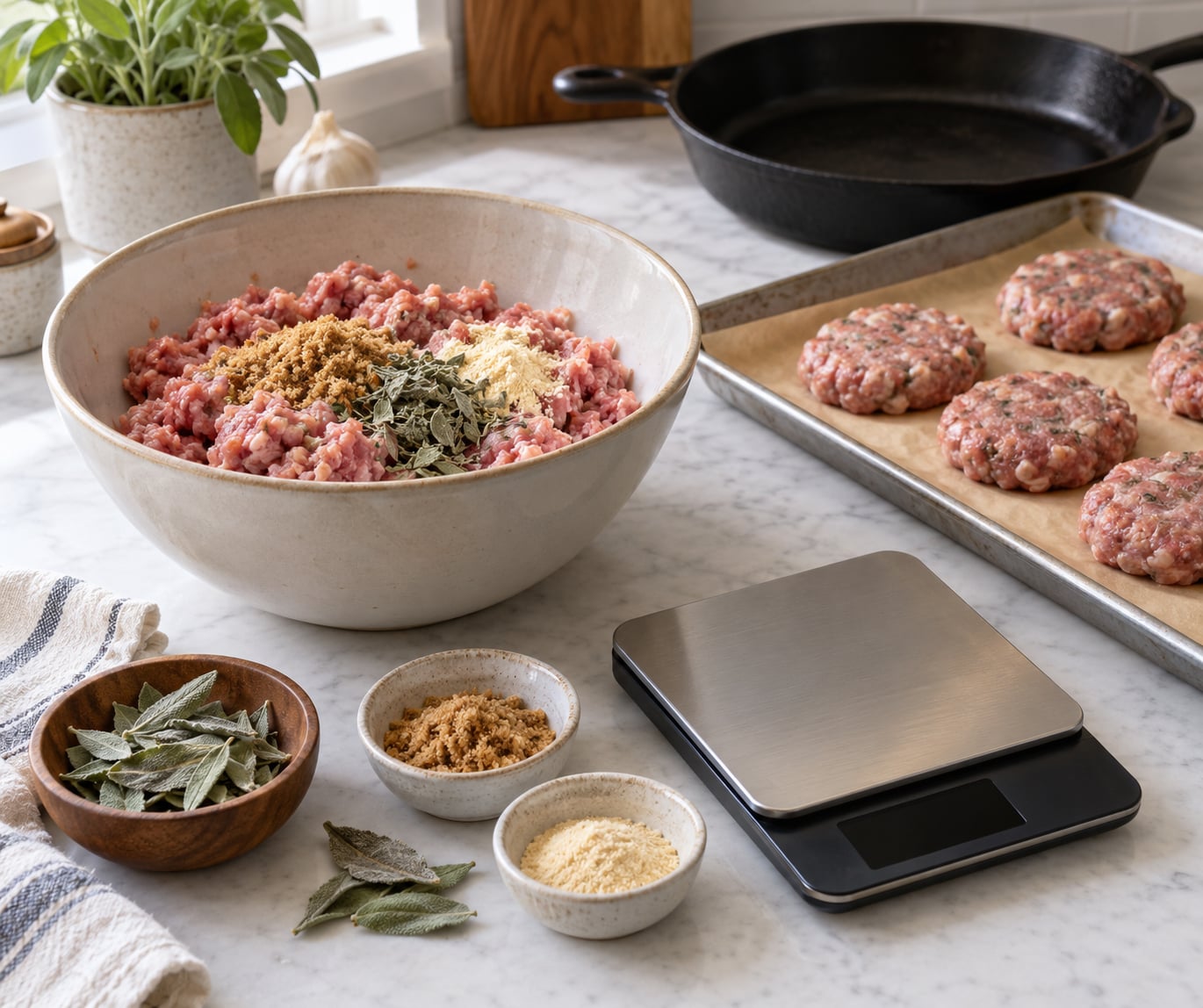
Weigh your meat rather than eyeballing it. Put the bowl on the scale, tare it, and add the pork until you hit a pound. Every seasoning in the list above is calibrated to that weight, and doubling the meat without doubling the spices gives you a bland patty.
Add the salt, pepper, herbs, sweetener, and any optional spices directly onto the meat. Do not toss them into a bowl on their own first, because seasoning blend clumps and you end up with one salty spot and one bland spot.
Mix Until the Seasoning Is Even
Use your fingertips, not a wooden spoon, and work the mix for about 60 to 90 seconds. You want to feel the strands of meat separate and then come back together as you pinch and turn. That is the binding step, and it is the whole secret to patties that hold together.
The mixture should feel tacky and slightly sticky when you are done. If it looks like loose crumbs, keep working it. If it turns into a dense paste, you have gone too far and squeezed out the fat that was about to make the patty juicy.
Some cooks use a hand mixer with a paddle attachment for this. The stretching and weaving it does between paddles is genuinely effective on a large batch, though your hands do the same thing for a pound of meat.
Rest the Mixture Before Shaping
Put the bowl in the fridge for 15 to 30 minutes. Cold meat is firmer, so it holds a shape instead of slumping onto the board the moment you touch it, and the salt has a few minutes to start dissolving into the meat.
Skip the rest and your patties spread, and you will reach for more flour or egg to fix it, which is exactly the wrong direction. Chilling solves the problem for free.
Shape Uniform Breakfast Sausage Patties
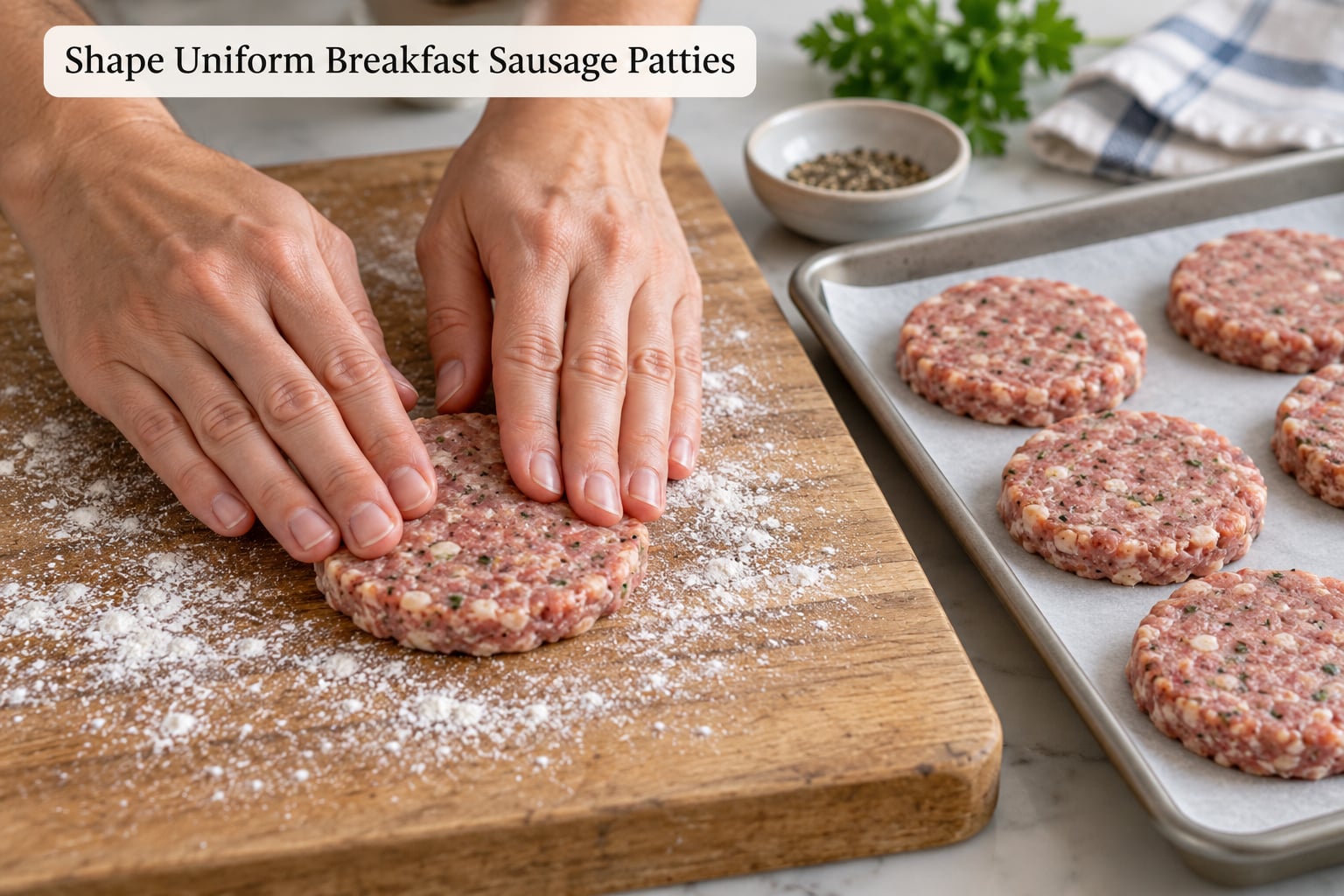
Wet your hands before you touch the meat. Moisture on your skin is the only anti-stick method you need, and it works better than dusting the surface with flour, which dries the outside of the patty.
Pull off a walnut-sized piece, about 2 to 3 ounces, and roll it into a ball first. Then press it once, firmly but quickly, into a patty about a third of an inch thick. One press is better than three slow ones, since repeated pressing compacts the meat and squeezes out fat.
Press a shallow indent into the center with your thumb. Patties shrink toward the middle as they cook, and the indent makes them curve slightly instead, which is how you get a flat seared face rather than a rounded puck. A thin edge and a thick center cook at different rates, and matching them up is the simplest trick to even cooking.
A pound of meat makes eight to ten patties. Line them on a parchment-lined sheet pan so they are not touching each other.
Chill or Freeze the Patties for Later
Once shaped, patties can stay in the refrigerator for up to two days before cooking, covered so they do not pick up odors.
For freezing, lay the patties in a single layer on a sheet pan and put the pan in the freezer until they are solid, usually about an hour. Transfer them to a freezer bag or a rigid container with parchment between the layers so nothing sticks. Keep the air out as much as you can.
Uncooked patties keep well frozen for about three months. Cook from frozen in a cold skillet, or thaw them in the refrigerator overnight if you are planning a brunch.
To reheat cooked patties, use a skillet over medium heat for about 4 minutes per side, or a 350 F oven for 10 to 12 minutes. A microwave works, but it leaves the patty rubbery and damp, so I only use it when nothing else is available.
Cook the Patties Until Properly Done
Heat a nonstick or cast iron skillet over medium-high heat and give it a minute before the patties go in. A cold pan is why patties stick and tear.
Add the patties and leave them alone for 3 to 4 minutes. Do not press them, do not move them, and do not flip them early. You are waiting for a crust to form, and the crust is what releases from the pan. Pressing at this stage pushes the juices out of the meat and gives you the dry patty everyone complains about.
Flip once, cook another 3 to 4 minutes, and check the thickest part with your thermometer. Ground pork needs to reach 160 F, or 71 C, measured in the center without touching the pan. Pull leaner patties the moment they hit it, since they carry no buffer and keep cooking off the heat.
Transfer to a paper towel for a minute so the excess fat drains, and serve.
For a bigger batch, the oven is easier. Bake at 400 F for 18 to 22 minutes, flipping once at the halfway mark, and check temperature the same way. The crust is less aggressive than a skillet sear, so patties come out tender rather than crisp, which is the better trade when you are cooking for a crowd.
An air fryer at 400 F for 9 to 11 minutes works well too, with a similar texture trade to the oven.
One more method deserves mention. If you have a cast iron skillet, cook the patties until almost done, then rest them on a hot sheet pan in the oven at 375 F for 10 minutes. The indirect finish cooks them evenly without drying out the edges, which is a good trick when your pan only fits four patties at a time.
Common Mistakes
Patties that fall apart in the pan
Under-mixed meat is the usual cause. If the seasoning is not fully distributed and the strands have not been worked, there is nothing holding the patty together. Mix longer, and check that the texture is tacky rather than crumbly before you shape.
Patties that shrink into rounded pucks
You skipped the center indent. Also make sure the thickness is even from edge to edge, because a thin edge and a thick middle cook at different rates and the thin part curls. Press the thumb indent and keep the thickness consistent.
Dry, rubbery patties
Three causes, in order of likelihood: lean meat, a crowded pan, and overcooking. Use 80/20 pork rather than 90/10, give each patty room to sear, and take them off the heat at 160 F instead of chasing browning.
Grinding your own at 70/30 also solves this, and it is the fix that changes the texture most noticeably.
Greasy result
Patties sit in their own rendered fat and the liquid has nowhere to go. Press gently, drain on a paper towel, and if you are cooking a full batch in one pan, do two batches rather than crowding. Greasy patties are the most common result of an overcrowded skillet, because the trapped fat keeps the temperature low and steams instead of sears.
Bland or gamey flavor
Usually a seasoning ratio problem, not a meat problem. Double the sage and pepper before you double the salt. Turkey, in particular, needs more sage and pepper than pork to taste seasoned, and lean beef needs more sweetness to balance its ironiness.
If your homemade sausage tastes different from the store-bought version, that is expected. Commercial breakfast sausage is seasoned with curing salts, added binders, and a lot more salt than any home recipe. Fresh, lightly salted sausage is the goal here, not a clone of the tube.
Skipping the thermometer
Color is an unreliable signal, especially on a thick patty where the outside browns long before the center cooks through. A two-dollar instant-read thermometer removes the guesswork, and it is the single upgrade I would make first.
Frequently Asked Questions
Do I need sausage casings to make breakfast sausage patties from scratch?
No, and this is the part that trips people up. Patties are loose-ground and shaped by hand, so there is nothing to stuff or fill. A casing is only needed for links, where you want the sausage to hold its own shape on a stick. Skip the press, skip the plastic, and keep your hands damp instead.
Can I use a pork and beef blend for breakfast sausage patties?
Yes, and a half pork, half beef blend is a common choice for people who like a deeper, beefier patty. Watch the fat ratio: if your beef is lean, the blend may end up drier than either meat on its own. Season it the same way, and let a little extra brown sugar round out the iron flavor.
Why are my homemade breakfast sausage patties dry?
Lean meat is the number one reason, and a hot pan with no fat in it is the second. Aim for 80/20 ground pork, or grind your own at 70/30 from shoulder. Third, take the patties off the heat at 160 F and drain them on a paper towel. Pressing them with a spatula while they cook squeezes out the juices you were trying to keep.
Should I add breadcrumbs or another binder to breakfast sausage patties?
Usually not. Breadcrumbs soak up moisture and make the patty crumbly rather than springy. A tablespoon of egg white or a splash of milk is the classic binder if your meat is very lean, since it gives the proteins something to grab onto. With 80/20 pork you do not need either one.
Can I freeze uncooked breakfast sausage patties?
Yes, and freezing them uncooked is the better option because you cook them fresh when you need them. Freeze in a single layer on a sheet pan until solid, then bag them with parchment between the layers. Cook from frozen in a cold skillet, allowing extra time, and use them within about three months.
What internal temperature should breakfast sausage patties reach?
Ground pork and ground beef both need to reach 160 F, or 71 C, measured in the thickest part of the patty without touching the pan or bone. Ground turkey sausage also reaches 165 F, or 74 C, because poultry carries a higher risk. Take lean patties off the heat at temperature, since they keep cooking and dry out fast.
Start with one pound of 80/20 ground pork, the sage and pepper blend above, and a pound of mixed meat. Rest it twenty minutes while you make coffee, press a thumb indent in each patty, then cook three to four minutes a side over medium-high heat without touching them. Take them off the heat at 160 F, and freeze the rest before you have time to regret the batch size.