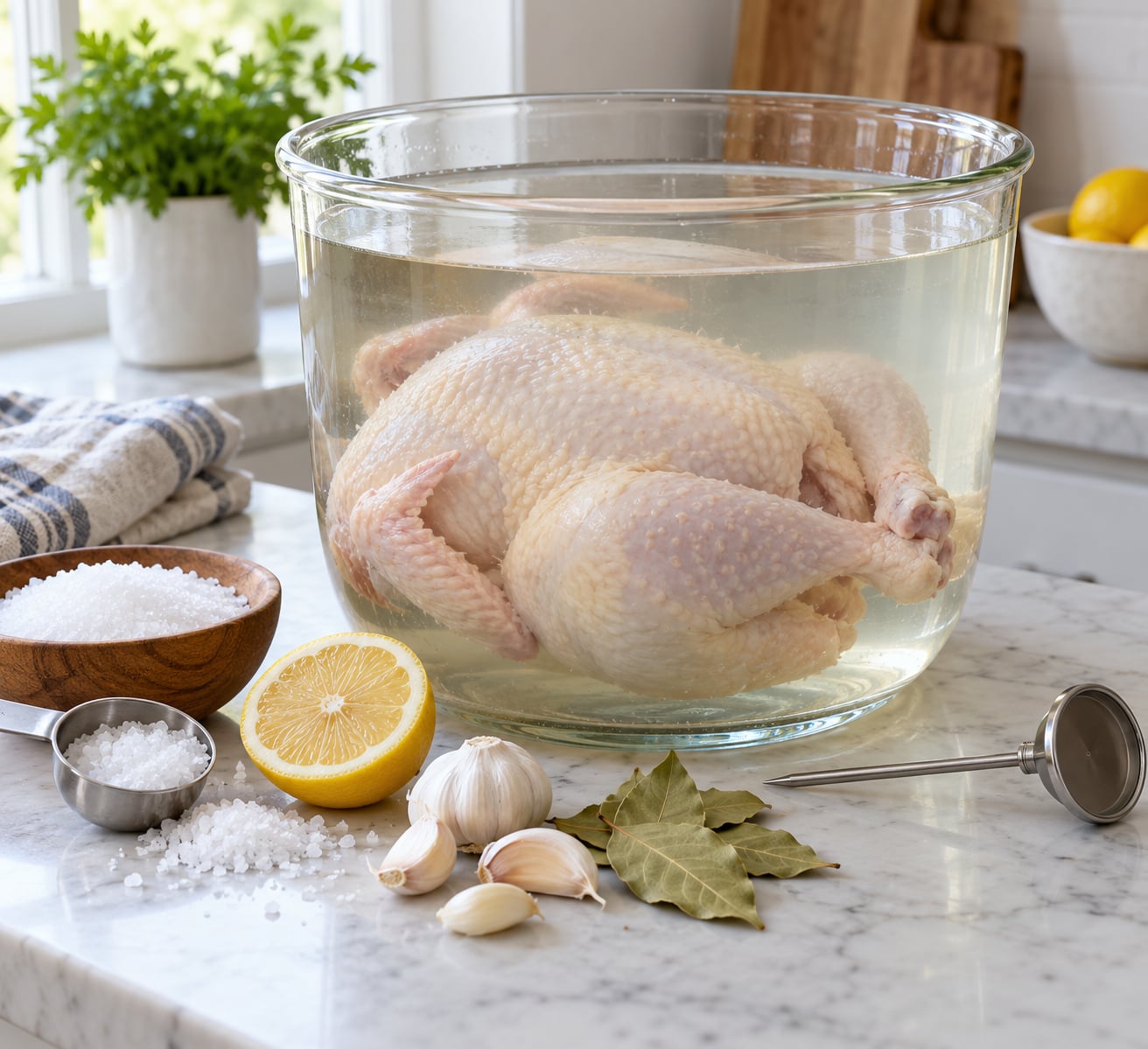
Brining a whole chicken takes five minutes of work plus 12 to 24 hours in the refrigerator. For a 4-pound bird, dissolve 1/3 cup kosher salt in 2 quarts of water, add 1/4 cup honey or sugar with garlic, bay leaves, peppercorns and a halved lemon, cool the brine completely, submerge the chicken, and refrigerate it overnight.
That is genuinely all the method is. The reason it works is simple: salt pulls moisture out of the muscle and then, through osmosis, helps the proteins hold that moisture back in during cooking. The breast is the part that usually turns dry, and brining is the fix for it.
I brined whole chickens most Sunday dinners for years and skipped this step until I roasted one without it, cut into the breast, and found two tablespoons of juice in the pan for a bird that should have produced much more. The brined bird the following week leaked a puddle. Nothing else in my roasting routine moved the result that far.
Table of Contents
- What You Need to Brine a Whole Chicken
- Step-by-Step: How to Brine a Whole Chicken
- Choose the Right Chicken Size
- Make and Cool the Brine
- Submerge and Refrigerate the Chicken
- Remove, Dry, and Season the Chicken
- Roast Until It Reaches 165°F
- Wet Brine or Dry Brine: Which One to Use
- Common Mistakes
- Frequently Asked Questions
- How long should I brine a whole chicken?
- What is the basic brine ratio for a whole chicken?
- Do you rinse a chicken after brining?
- Can I brine a chicken in a plastic bag?
- How does brining affect the chicken skin?
- Can I brine a frozen chicken?
What You Need to Brine a Whole Chicken
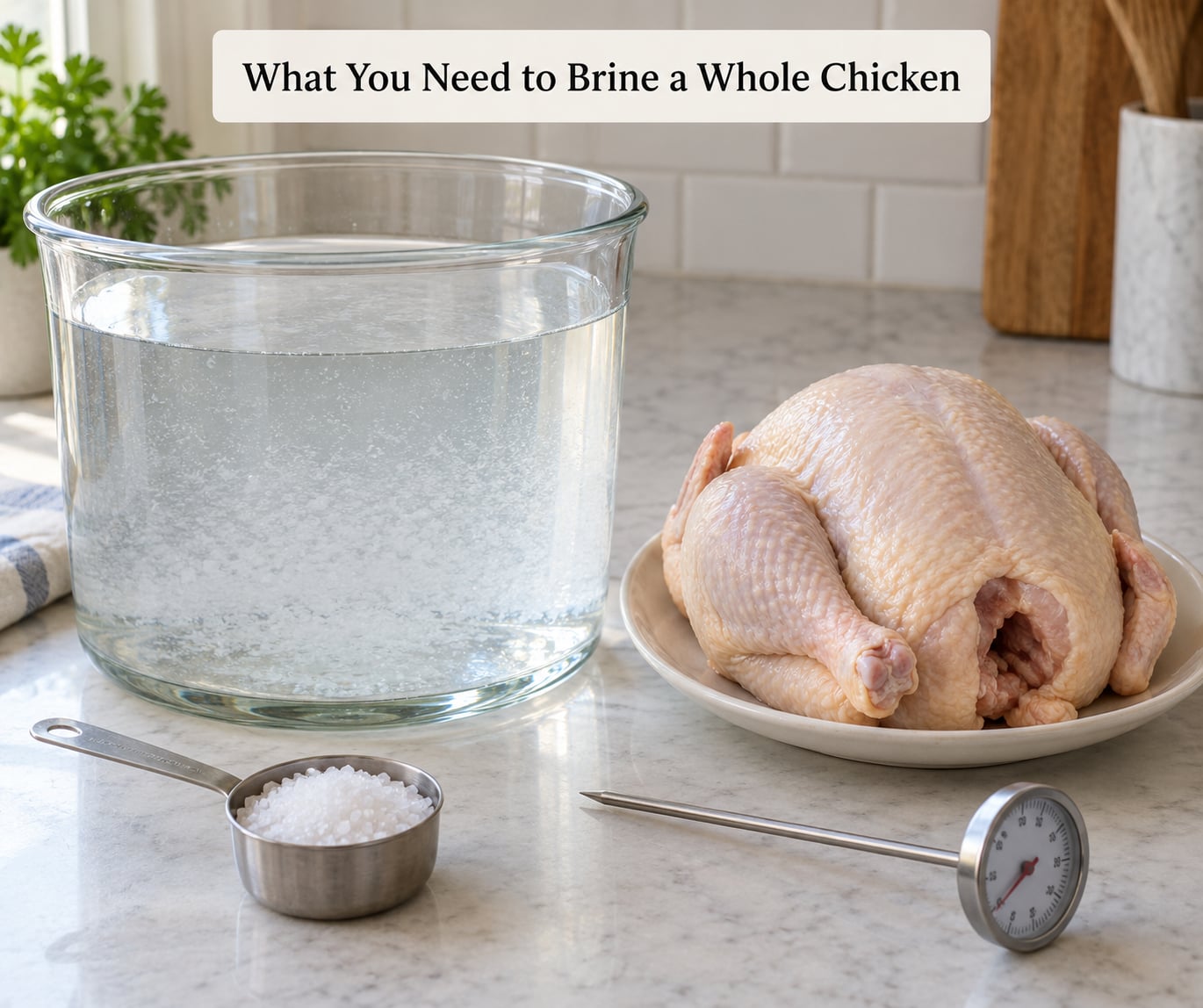
The ingredient list is short, and most of what people buy for a brine never gets used.
- Coarse kosher salt — 1/3 cup for a 4-pound bird. Diamond Crystal and Morton kosher are both fine. If you only have table salt, use 1/4 cup, because table salt packs roughly twice the salt into the same volume.
- Water — 2 quarts (about 8 cups) for a 4-pound bird. Room-temperature tap water is fine.
- A sweetener — 1/4 cup honey, brown sugar, or white sugar. Sugar softens the meat and browns the skin; honey adds a little floweriness.
- Aromatics — 4 to 6 garlic cloves, smashed; 3 bay leaves; 1 tablespoon peppercorns; 1 lemon or orange, halved. Thyme, rosemary, or parsley sprigs work too.
- A container that seals — a food-safe zip bag, a lidded stockpot, a plastic tub with a lid, or a cooler.
- An instant-read thermometer — for the brine temperature and, later, the bird.
The basic brine is salt, water and a little sugar. Aromatics are optional and change the flavor profile, not the technique, so add them once you have the basic method down.
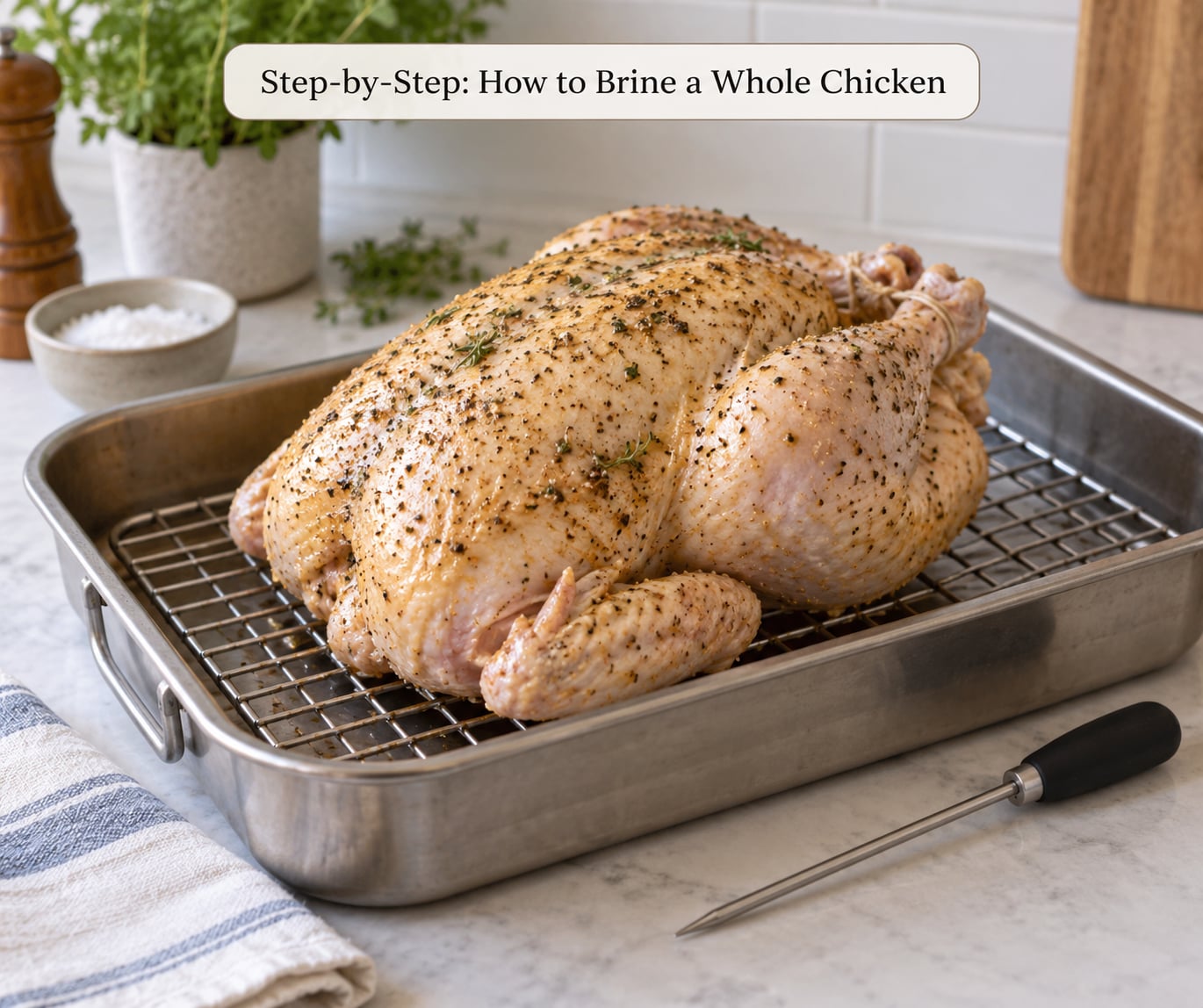
Step-by-Step: How to Brine a Whole Chicken
Choose the Right Chicken Size
Most home brines are written for a 4-pound bird, and the recipe scales cleanly by weight. Use about 2 tablespoons of kosher salt and 2 cups of water per pound, then add a tablespoon of honey or sugar per pound.
| Bird weight | Kosher salt | Table salt | Water | Honey or sugar |
|---|---|---|---|---|
| 3 lb | 1/4 cup | 3 tbsp | 6 cups | 3 tbsp |
| 4 lb | 1/3 cup | 1/4 cup | 8 cups | 1/4 cup |
| 5 lb | 1/2 cup | 1/3 cup | 10 cups | 1/3 cup |
| 6 lb | 1/2 cup | 1/3 cup | 12 cups | 1/2 cup |
| 8 lb | 2/3 cup | 1/2 cup | 16 cups | 1/2 cup |
You need the bird fully submerged with a couple of inches of brine above it, and the container needs room to hold that bird plus those extra inches. A 6-pound chicken will not fit in a 2-quart bag. If your container is too small, brine it in two stages, or use a clean stockpot in the coldest corner of the fridge.
For a bird over about 8 pounds, switch the base to stock or buttermilk. A whole turkey is a different volume problem, and a brine built for a chicken will not cover one.
Make and Cool the Brine
Warm the water with the salt and sweetener, stirring until everything dissolves completely. Salt that sits on the bottom of the pot has not dissolved, and that undissolved layer is how you end up with a bird that is salty in some spots and bland in others.
Heat just until the sugar dissolves — a light simmer, roughly 3 to 5 minutes. Do not let it boil hard. A longer simmer evaporates water and concentrates the brine, which is a fast route to meat that tastes like salt rather than chicken.
Then cool it. Pour the hot brine into a container, add ice or very cold water, and stir until the center of the liquid is at or below 40°F (4°C). Testing the middle of the container catches the hot core that a quick taste on a spoon misses.
You can shortcut this the way many do: make a concentrated brine in 2 cups of simmering water, then pour it into a bucket with 6 cups of cold water and 2 cups of ice. The ice does the cooling in about five minutes, and the result is the same as the slower route.
Submerge and Refrigerate the Chicken
Wash your hands and the sink area before you touch the raw bird, and put the container on the lowest shelf of the refrigerator where nothing drips onto it. Place the chicken in the brine breast-side up, then weigh it down with a small plate, a gallon bag filled with iced water, or a sealed jar of ice.
Full submersion is the part people skip. If the top of the breast sits above the liquid, that section is unseasoned and it dries out first. Weighting the bird solves it.
| Bird or cut | Wet brine time | Dry brine time |
|---|---|---|
| Whole bird, 3 to 4 lb | 12 to 24 hours | 4 to 24 hours |
| Whole bird, 5 to 6 lb | 12 to 24 hours | 4 to 24 hours |
| Spatchcocked bird | 4 to 8 hours | 4 to 12 hours |
| Bone-in breasts | 2 to 4 hours | 1 to 4 hours |
| Thighs or drumsticks | 2 to 6 hours | 1 to 12 hours |
| Wings | 1 to 4 hours | 1 to 4 hours |
Twelve to 24 hours is the range most cooks land on for a whole bird, and overnight sits right in the middle of it. Going past 48 hours does not season the chicken any deeper; it starts changing the protein structure, and the meat turns rubbery and spongy.
For a dry brine, salt the bird all over, put it uncovered on a wire rack set over a sheet pan, and refrigerate. Uncovered matters — a covered bird sweats and the skin never dries out, which is where the soggy-skin complaint comes from.
Keep the brine and the bird at or below 40°F the whole time. If your refrigerator runs warm, a cooler packed with ice works as well. Never reuse brine that has touched raw chicken; pour it out once the bird is out.
Remove, Dry, and Season the Chicken
Lift the chicken out and let it drain for a few minutes. Most cooks do not rinse, and I do not either — rinsing washes surface flavor into the drain and splashes raw-chicken liquid around the sink. If your brine was unusually salty, a quick rinse under cold running water and an immediate pat-dry is a reasonable move.
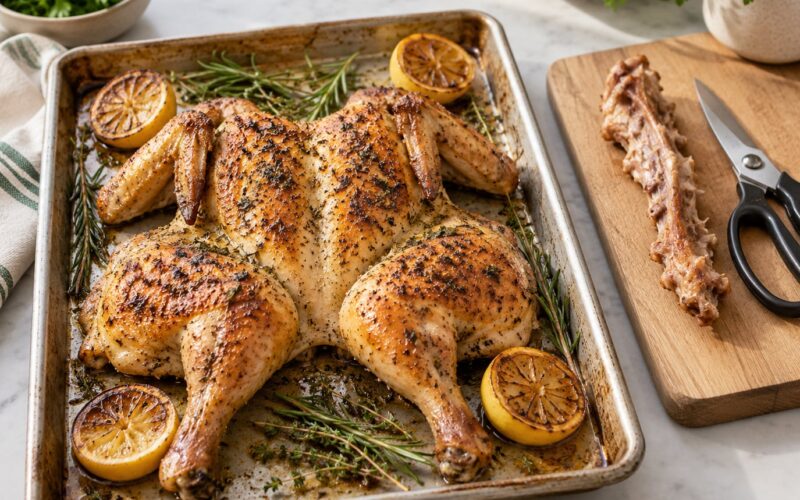
Blot the skin thoroughly with paper towels, then let the bird sit uncovered in the refrigerator for 30 to 60 minutes. Drying the surface is what produces crisp, blistered skin, and it takes far less effort than trying to crisp wet skin in a hot oven.
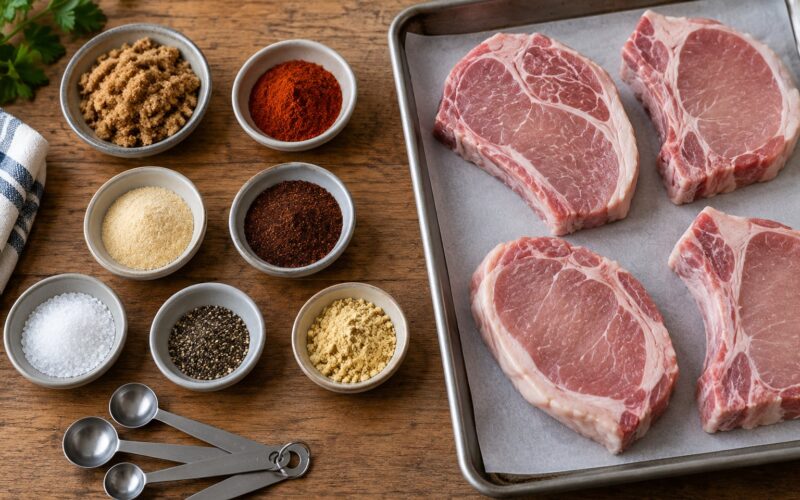
Apply your rub after the brine, not before, since anything added to the brine dissolves instead of forming a crust. Pepper, smoked paprika, garlic powder, and poultry seasoning all go on now, along with butter or oil worked under the skin and onto the breast. Salt the cavity lightly and add a halved lemon and a few herb sprugs.
Roast Until It Reaches 165°F
Heat the oven to 450°F (230°C), put the bird breast-side up on a wire rack over a roasting pan, and roast for 15 to 20 minutes. Drop the temperature to 350°F (175°C) and continue until the thermometer says the bird is done.
Expect roughly 60 to 75 minutes total for a 3-pound bird, 75 to 90 minutes for a 5-pound bird, and 90 to 110 minutes for a 6-pound one. Those are estimates for an oven that actually holds temperature; a stuffed bird or a crowded pan runs longer.
Check the thickest part of the breast without touching bone, and the meaty part of the thigh. The USDA safe minimum internal temperature for poultry is 165°F (74°C) in both spots, and many cooks pull the bird at 160°F (71°C) in the breast and let the carryover heat finish it. Rest the bird 15 to 20 minutes before carving.
Wet Brine or Dry Brine: Which One to Use
Both methods salt the meat ahead of cooking and both make a lean chicken noticeably better. They differ in what you are storing in the refrigerator and what the skin does.
| Factor | Wet brine | Dry brine |
|---|---|---|
| Time | 12 to 24 hours for a whole bird | 4 to 24 hours, uncovered |
| Salt | Dissolved in water, hard to overshoot | Applied directly, easier to overdo |
| Flavor | Seasoning reaches deep into the breast | Seasoning stays closer to the surface |
| Skin | Can turn soft or rubbery if it goes in wet | Dries in the fridge, crisps better |
| Fridge space | A full shelf or a cooler | One sheet pan |
| Best for | Roasting, breasts, lean whole birds | Grilling, smoking, frying, wings |
If you are roasting a whole chicken on a rack, dry brining gives you the crispest skin and it takes almost no fridge space. If flavor penetration is your priority, or the bird is on the lean side, wet brine it.
Common Mistakes
The brine is too salty. Table salt in a kosher-salt recipe is the usual cause, and so is a 48-hour soak. Use about half the volume of table salt, and pull the bird at 24 hours. If it still tastes salty, serve it with unsalted sides and skip the rub.
Salt sits undissolved at the bottom. Heat the brine and stir until clear. A gritty layer under the bird means patches of over-salting and patches of nothing.
The brine is warm or at room temperature. Warm brine encourages bacterial growth and cooks the outside of the bird. Cool it fully and keep it below 40°F (4°C) for the entire soak.
The bird is only partly submerged. The upper breast stays unseasoned and turns dry first. Weigh it down with a plate or a bag of ice until liquid covers it with a couple of inches to spare.
The bird goes into the oven wet. Wet skin steams instead of browning. Pat it dry, then refrigerate it uncovered for 30 to 60 minutes.
Rub goes on before brining. Pepper and paprika dissolve in the brine and lose their bite. Season after the soak, right before cooking.
You skip the thermometer. Color is a poor doneness test on breast meat. Cook to 165°F (74°C) and rest the bird before carving.
You brine a very lean cut for a long time. Brining works best on whole birds, thighs, and drumsticks. Long soaks on boneless breast can go mealy, so keep those under 4 hours.
Two safety habits matter more than any ratio: keep everything cold, and never reuse brine that has touched raw poultry.
Frequently Asked Questions
How long should I brine a whole chicken?
Twelve to 24 hours is the range most home cooks use for a whole bird, and an overnight soak of about 12 hours sits right in the middle of it. Longer is not better: past 48 hours the muscle proteins change and the meat turns rubbery. Spatchcocked birds and individual cuts need far less, usually 2 to 8 hours, because more surface area is exposed to the brine.
What is the basic brine ratio for a whole chicken?
About 2 tablespoons of kosher salt and 2 cups of water per pound of bird, plus a tablespoon of honey or sugar per pound. That means a 4-pound chicken gets 1/3 cup kosher salt, 8 cups of water, and 1/4 cup honey. If you use table salt instead, halve the volume, since it packs roughly twice as much salt into the same cup.
Do you rinse a chicken after brining?
Usually not. Patting the bird dry keeps the seasoning on the surface where you want it, and rinsing sends flavor down the drain while splashing raw-chicken liquid around your sink. If your brine was saltier than planned, a quick rinse under cold running water followed by immediate patting is fine. Dry the skin well either way, since moisture is what stops it crisping.
Can I brine a chicken in a plastic bag?
Yes, and it is the easiest method for fridge space. Use a food-safe zip-top bag, add the cooled brine and aromatics, seal out the air, and lay the bag flat in a dish so nothing leaks. A bag also handles large birds better than a rigid tub, since it fits around the shape of the chicken. Never use a bag that is not rated for food or that is punctured.
How does brining affect the chicken skin?
A wet brine leaves the surface damp, and damp skin steams in the oven instead of browning, which is where the soggy or rubbery complaints come from. Pat the bird dry and refrigerate it uncovered for 30 to 60 minutes before it goes in. Dry brining avoids the problem entirely, because the bird sits uncovered in the fridge and its skin loses moisture on its own.
Can I brine a frozen chicken?
Not safely in a home refrigerator, and the salt concentration makes a frozen bird briny in a way you cannot control. Thaw it first, ideally in the refrigerator over a day or two, and then brine. If you brine a thawed bird and find yourself wondering about timing, start it in the morning so the 12 to 24 hour soak finishes when you plan to cook.
Start the brine the day before you plan to cook. Mix 1/3 cup kosher salt with 2 quarts of water and a spoonful of honey, cool it to below 40°F, submerge the bird completely, and put it in the refrigerator. Take it out the next day, dry it well, season it, and roast to 165°F. Once you do it once, you will not go back to roasting an unbrined bird.