How to make hamburger patties that stay juicy comes down to four things: 80/20 ground beef, a light hand when mixing, an even patty with a dimple in the middle, and a very hot cooking surface used for a short time only. Skip any one of those and the burger dries out. It takes about 20 minutes of prep and 6 to 8 minutes at the grill.
The mistake almost everyone makes is pressing down on the patty with a spatula. You are pushing out the exact juice you want in the burger. Everything below is about protecting that juice until the moment you take the first bite.
Here is the short version, and the sections below go into each one:
- Buy ground beef with 80 or 85 percent lean, or blend chuck with sirloin yourself
- Mix with your fingertips just until the seasoning disappears, then stop
- Make every patty the same weight and the same thickness, roughly 3/4 inch
- Press a shallow dimple in the center of each one so they cook flat
- Chill the formed patties 15 to 20 minutes before they hit heat
- Get the surface genuinely hot, then cook fast and stop at 160F
- Rest the finished patties 5 minutes, loosely covered, before serving
For the record, the number most home cooks are missing is temperature. Color is not a doneness test on ground meat, and it is the reason so many patties go past juicy into dry and grey. An instant-read thermometer costs less than a change of oil and settles the question every time.
Table of Contents
- What You Need
- Step-by-Step
- How to Make Hamburger Patties That Stay Juicy: Choose the Right Meat
- How to Make Hamburger Patties That Stay Juicy: Mix Gently
- How to Make Hamburger Patties That Stay Juicy: Shape Without Squeezing
- How to Make Hamburger Patties That Stay Juicy: Cook and Check the Center
- Common Mistakes
- Frequently Asked Questions
- What ground beef is best for juicy hamburger patties?
- What can I put in hamburger patties to keep them moist?
- Why are my burger patties dry?
- Should I salt burger patties before cooking?
- Is it better to cook hamburgers in the oven or a frying pan?
- How do I stop hamburger patties from falling apart?
What You Need
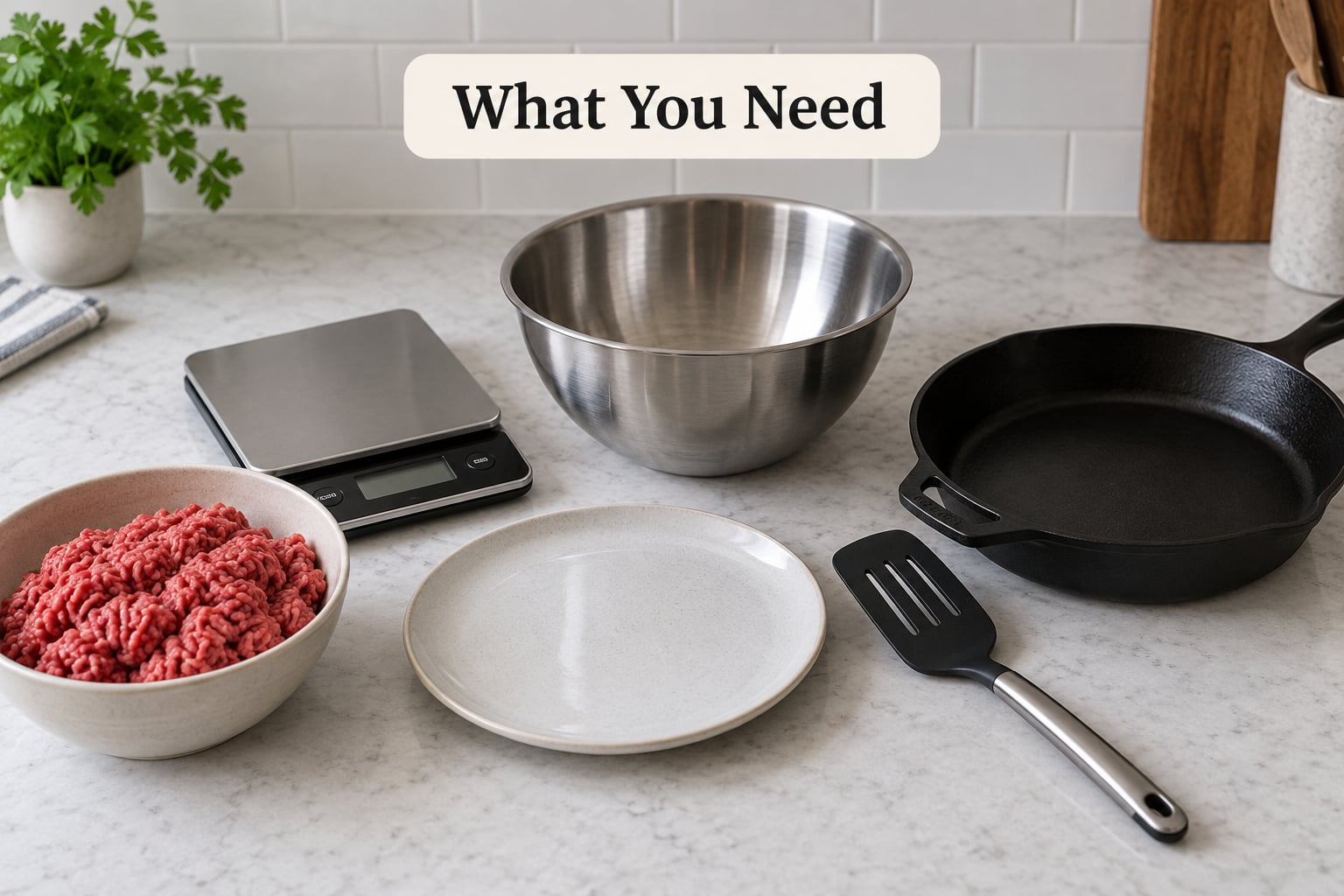
Ground beef is the whole foundation, so start there. You want 80/20 or 85/15: enough fat to stay moist through the cook, enough meat to still taste like beef. Anything at 90 percent lean or leaner needs help, and help is what the mix-ins below are for.
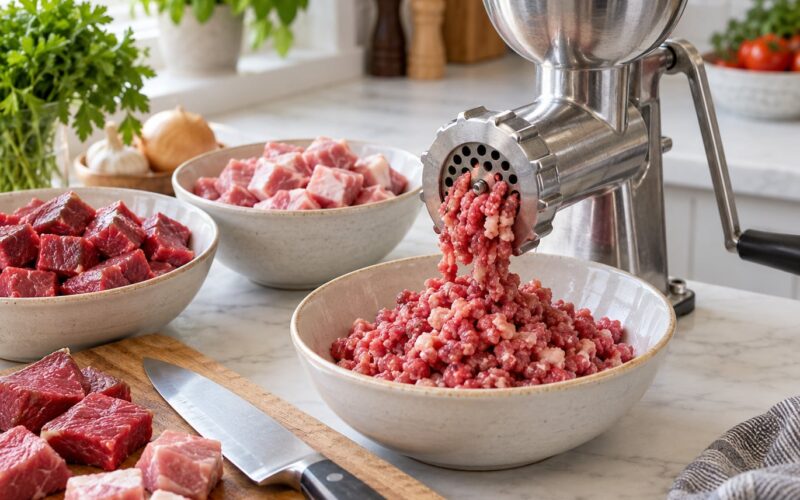
Chuck carries the most flavor and the most fat. Sirloin is leaner and cheaper. A chuck and sirloin blend gives you control, and many butchers will grind the mix for you right in the shop if you ask.
Beyond the meat you want coarse salt and black pepper, Worcestershire sauce, a garlic clove or garlic powder, and a neutral oil with a high smoke point for the grill grates or the pan. Keep the oil to a light film, it just needs to stop the sticking.
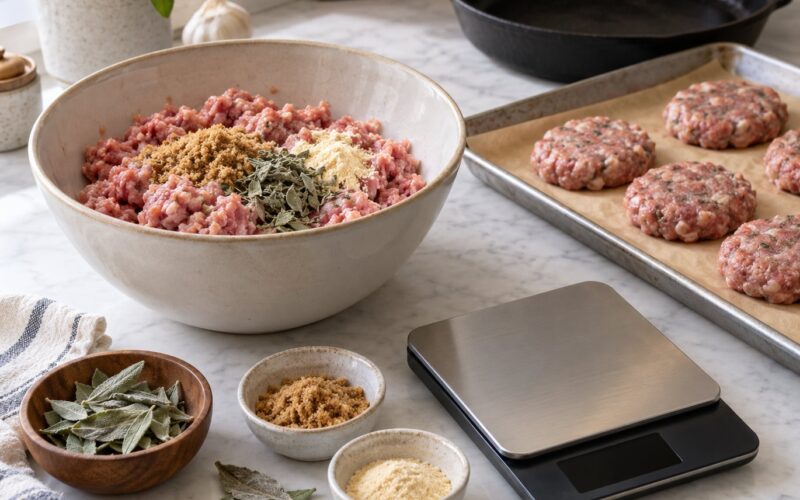
On the tool side: a digital scale, a wide mixing bowl, a plate or tray for the shaped patties, a thin spatula with a wide head, a cast-iron skillet or grill grates, and an instant-read thermometer. The scale is the one people skip and the one that fixes uneven cooking better than anything else on this list.
On burgers specifically, a few substitutions work well. Ground turkey stays moist at a 85/15 ratio and takes the same seasoning. Pork and beef blended half and half is forgiving and very tender, and gives you a fattier option for guests who do not eat beef. A tablespoon of Worcestershire sauce in place of salt adds moisture and a lot of savory flavor, so use it before you reach for the salt shaker rather than after.
Step-by-Step
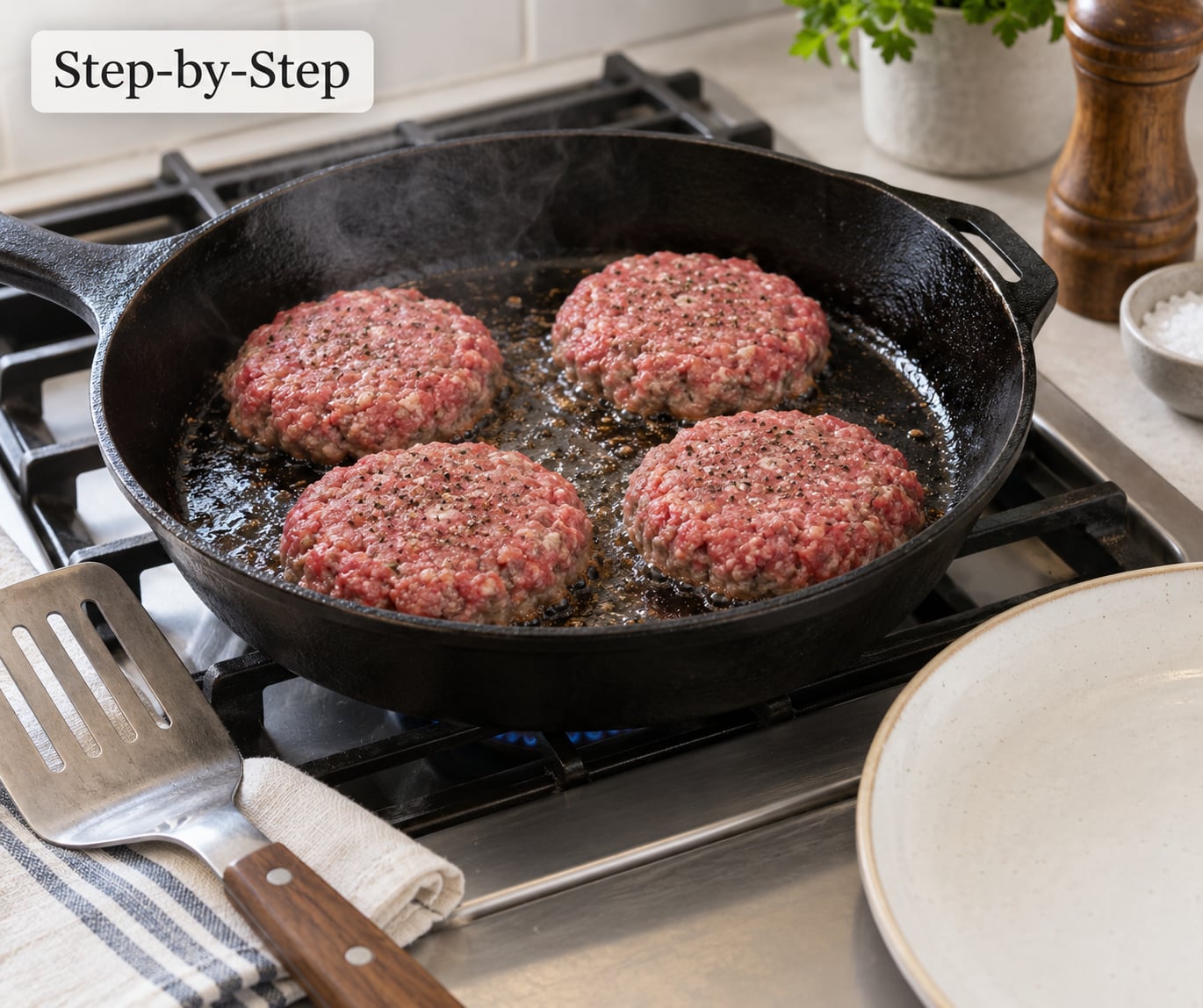
How to Make Hamburger Patties That Stay Juicy: Choose the Right Meat
Fat is what carries flavor and moisture in a ground patty, so treat the fat percentage as the main decision rather than the brand of beef. At 80/20 the patty renders a little fat during cooking and keeps enough inside to stay juicy. At 90/10 there is not enough to give back what the heat drives out.
Leaner beef is not a lost cause, but it needs a wet addition. A tablespoon of Worcestershire sauce per pound, a spoonful of barbecue sauce, or a couple of tablespoons of grated cheese will carry the difference. My preferred lean-meat move is a 90/10 blend with Worcestershire and a little extra fat rendered from a strip of bacon chopped fine, though a straight 80/20 needs none of it.
How to Make Hamburger Patties That Stay Juicy: Mix Gently
Put the beef in a bowl, add the salt, pepper, Worcestershire and any wet mix-in, then use your fingertips. Turn the meat over and over just until every bit of meat looks the same colour and no streaks of seasoning remain. That is the stop point, and it takes about 30 seconds.
Kneading it further is the single most damaging thing you can do. Handling breaks down the loose protein network that holds water, and the pieces start linking into each other the way they do in a sausage. A squeezed patty like that cooks like a dense rubber disc: it will not fall apart, and it will not be juicy either. If you have ever had a burger that bounced off the plate, this is why.
One optional step helps texture: cover the bowl and refrigerate the mix for 15 to 30 minutes before forming. Cold meat is far easier to shape and it firms up enough to hold a clean edge.
How to Make Hamburger Patties That Stay Juicy: Shape Without Squeezing
Weigh the meat and divide it into equal portions. That is the whole trick to even cooking, and a scale does it in seconds. For a standard 4-inch bun, aim for a patty a little wider than the bun at about 3/4 inch thick, because ground beef shrinks roughly a quarter of its width as it cooks.
Handle each portion lightly, cup it, and set it on the tray. Do not roll it between your palms and do not press it flat with the heel of your hand. A gently cupped, slightly ragged edge is exactly right, and it is what you want for a fryer or grill where the loose edge turns crisp.
Then press a shallow dimple into the center with one fingertip, maybe a quarter inch deep. Patties dome and curl as they cook, and the dimple gives them room to stay flat. Without it the center rises and the edges shrink inward, which is why so many home patties end up shaped like a bowl and no longer fit the bun.
Chill the formed patties on the tray for 15 to 20 minutes in the refrigerator. Slightly firmer meat holds together on a hot grill and loses less moisture in the first minute of cooking, which is when most of the drying happens.
How to Make Hamburger Patties That Stay Juicy: Cook and Check the Center
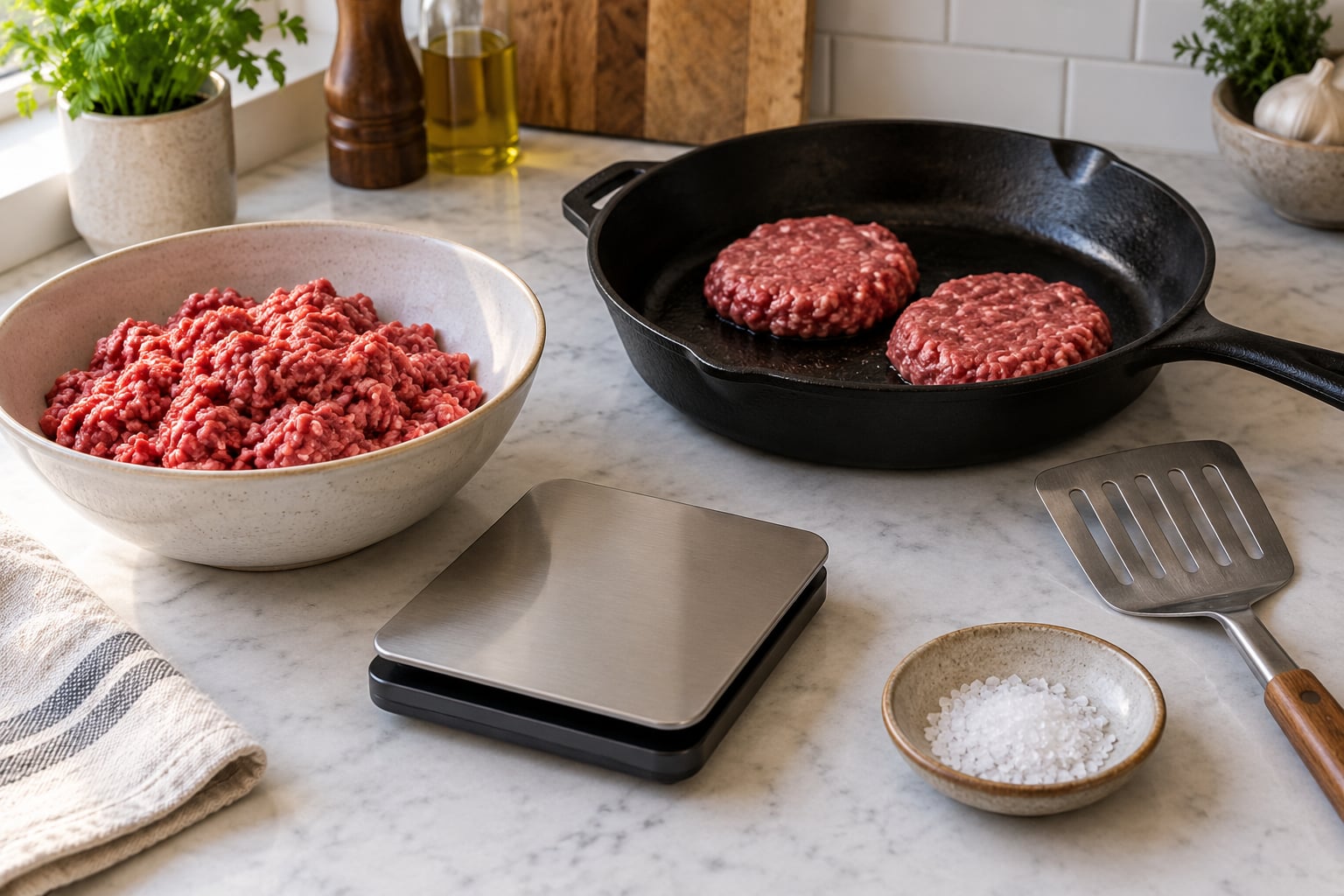
Heat is the last lever. A grill grate, griddle or cast-iron skillet needs to be genuinely hot before the patty touches it. Give a cast-iron skillet 4 to 5 minutes on high heat, or until a drop of water skitters and vanishes. For a grill, wait until the coals or gas are at full heat and the grate is just beginning to smoke.
Season right before cooking. Salt the top surface lightly and add the rest of the pepper there, rather than working more salt into the mix now that it has already rested.
Lay the patties down and leave them alone. Cook 2 to 3 minutes on the first side until the surface is browning and releasing from the surface on its own, turn once, and cook another 2 to 3 minutes. Flip only when it releases easily. A patty that needs to be scraped or pried has been cooking too long on that side.
Check the temperature at the thickest point, aiming into the side rather than the center. Rare sits around 125F, medium around 140F, medium-well around 150F, and the USDA safe minimum for ground beef is 160F. Aim for 145F to 155F for a well-done patty that still tastes like beef, and know that the safe minimum is the floor, not the target.
Rest the finished patties 5 minutes on a plate under a loose tent of foil. Five minutes sounds short but it lets the muscle fibres relax and reabsorb juice instead of letting it all run onto the board the second you cut in.
Common Mistakes
Using lean meat. Anything at 90 percent lean or leaner dries out before it flavors. Fix: buy 80/20, or blend chuck with sirloin, or add a tablespoon of Worcestershire sauce per pound to whatever lean beef you already have.
Overmixing the meat. Working the blend for a minute or more links the proteins and makes a dense patty that turns rubbery. Fix: mix with fingertips for about 30 seconds, until the colour is even, then stop.
Making patties too thick. A patty over 1 inch thick takes 10 to 14 minutes to cook through, and by the time the middle reaches safe temperature the edges are long past juicy. Fix: keep patties around 3/4 inch thick and even, or split the difference and cook them gently over indirect heat with a lid nearby.
Pressing down with a spatula. This is the most repeated mistake in home burger technique and it squeezes fat and juice straight onto the grill. Fix: press only at the start of cooking to make full contact, then lift your hand and leave the patty alone.
Flipping repeatedly. Every flip restarts the browning and lets more moisture escape. Fix: flip once, or at most twice, and only when the patty releases on its own.
Overcrowding the grill. Too many patties drops the surface temperature and the meat ends up sitting in its own steam, grey and wet rather than browned. Fix: leave a finger’s width between patties and cook in batches when you are making more than four.
A cold pan. Meat placed on a cold or lukewarm surface spends its first minutes warming up and steaming instead of searing, and it loses moisture before any crust forms. Fix: preheat until the surface is shimmering and lightly smoking.
Salting the mix too early. This one gets argued about constantly, so here is the practical version. Salt mixed into meat and left for more than about 20 minutes does draw moisture to the surface and can leave the patty tacky and weeping. Seasoning the formed patty just before it hits heat gives you the same flavor with none of that. Salting at formation and cooking within a few minutes is fine.
Two more worth naming. Never poke holes in a patty to let the juices out, you are simply opening drains for the fat you want to keep. And skip the ketchup-as-moisture habit, because it burns on the grill long before the patty is done.
Frequently Asked Questions
What ground beef is best for juicy hamburger patties?
An 80/20 or 85/15 ground beef is the reliable choice for juicy hamburger patties, because the fat renders during cooking and stays inside to keep the meat moist. Chuck is the most flavorful part to start with, and blending chuck with sirloin lets you hit that ratio yourself. If you can only find 90/10, add a tablespoon of Worcestershire sauce per pound and keep the cook time short.
What can I put in hamburger patties to keep them moist?
Ranked by how much they actually help, Worcestershire sauce is the strongest single addition at about a tablespoon per pound. Barbecue sauce works and adds sweetness. Grated cheese adds fat and flavor and melts into the patty. Evaporated milk at a quarter cup per pound is a real technique worth trying. Egg and breadcrumbs bind well and help a lean blend hold together, but on an 80/20 patty they mostly add texture.
Why are my burger patties dry?
Dry patties usually come from four causes: lean meat, overworking the mix, pressing the patty with a spatula while it cooks, or taking it well past medium. Overmixing links the proteins into a dense mass, pressing pushes out rendered fat and juice, and cooking to well-done drives off water. An instant-read thermometer is the fastest fix, since color alone will not tell you when you have gone too far.
Should I salt burger patties before cooking?
Season the formed patty right before it hits the grill rather than salting the mix and leaving it. Salt applied well ahead of cooking draws moisture to the surface, which is why early-salted patties often feel tacky and weep onto the grill. Salting at formation and cooking within a few minutes is fine. Either way, salt the top surface lightly and put the pepper on just before cooking.
Is it better to cook hamburgers in the oven or a frying pan?
A hot cast-iron skillet or griddle gives you more browning and less drying than the oven, since the heat hits the whole surface at once and the cook is shorter. An oven set to broil is the next best option and needs about the same timing. A conventional oven at 400F works but takes roughly 15 to 18 minutes, which is long enough for the edges to dry out. An air fryer at 400F is close to broiling in speed and color.
How do I stop hamburger patties from falling apart?
Patties fall apart when the meat was overworked, when the patties were formed too loosely, or when they went on a grill that was not hot enough. Mix just until the colour is even, cup the meat lightly rather than squeezing it, keep the dimple in the center, and chill the formed patties for 15 to 20 minutes before cooking. A hot surface also sets the outside quickly, which is what holds the shape.
Start with the one change that makes the biggest difference, which is usually the fat in the meat. Buy 80/20, mix it for 30 seconds, press a dimple in the center, and pull the patty off the heat at 150F instead of cooking it through to grey. If you do nothing else, get a thermometer and stop trusting the color.