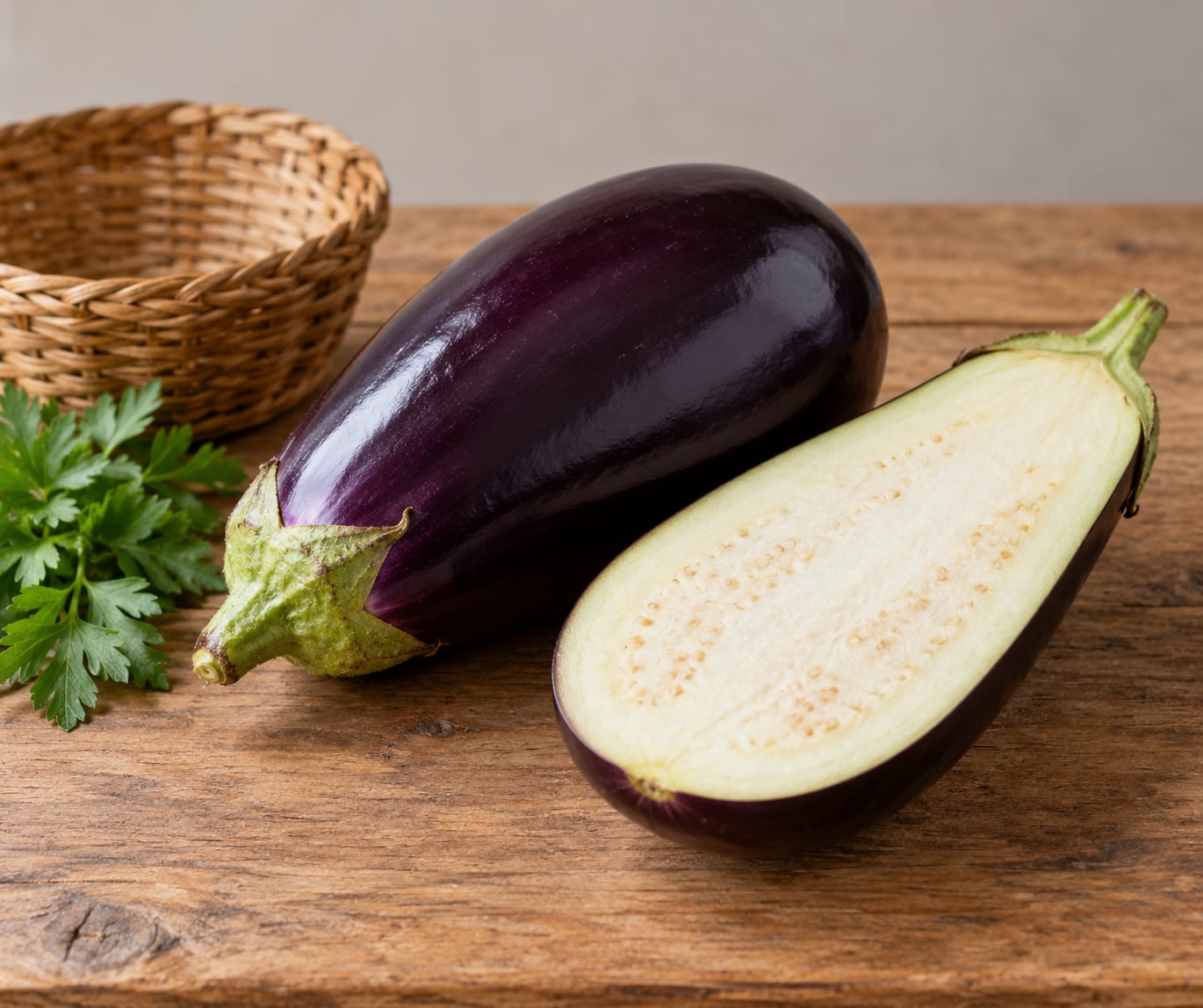
If you want to know how to tell if an eggplant is fresh, use your senses in a fixed order: look at the skin, lift the fruit, press it gently, smell it, then check the stem. A fresh eggplant has smooth taut glossy skin, feels heavy for its size, gives slightly under a thumb before springing back, and carries a clean earthy smell with no sour note. The whole check takes about thirty seconds per fruit.
Color alone tells you almost nothing. Eggplants range from near-white to deep aubergine to glossy black, and freshness shows up in sheen, weight, and give rather than hue. That distinction matters more than most shoppers realize, because eggplant flesh is porous enough to soak up whatever it is cooked with, including bitterness.
One more thing worth separating up front: freshness means condition on arrival, and ripeness means eating quality. A fruit can be perfectly fresh and still be under-ripe, and it can be fresh but past its prime. Gardeners mix these two constantly, and they end up browning perfectly good eggplants out of pure suspicion.
Table of Contents
- What You Need
- Step-by-Step: How to Tell If an Eggplant Is Fresh
- Step 1: Check the Skin for Gloss and Firmness
- Step 2: Pick Up the Eggplant and Check Its Weight
- Step 3: Gently Squeeze for a Little Give
- Step 4: Smell the Eggplant
- Step 5: Inspect the Stem and Cap
- Common Mistakes
- Fresh Eggplant vs Past Prime: What Each Check Tells You
- How to Store a Fresh Eggplant
- Frequently Asked Questions
- Does a darker eggplant mean it is fresher?
- Is a slightly wrinkled eggplant still good to eat?
- How long does fresh eggplant keep in the refrigerator?
- Can I use eggplant with a few small soft spots?
- Should I wash eggplant before storing it?
- What color eggplant is freshest?
- Conclusion
What You Need
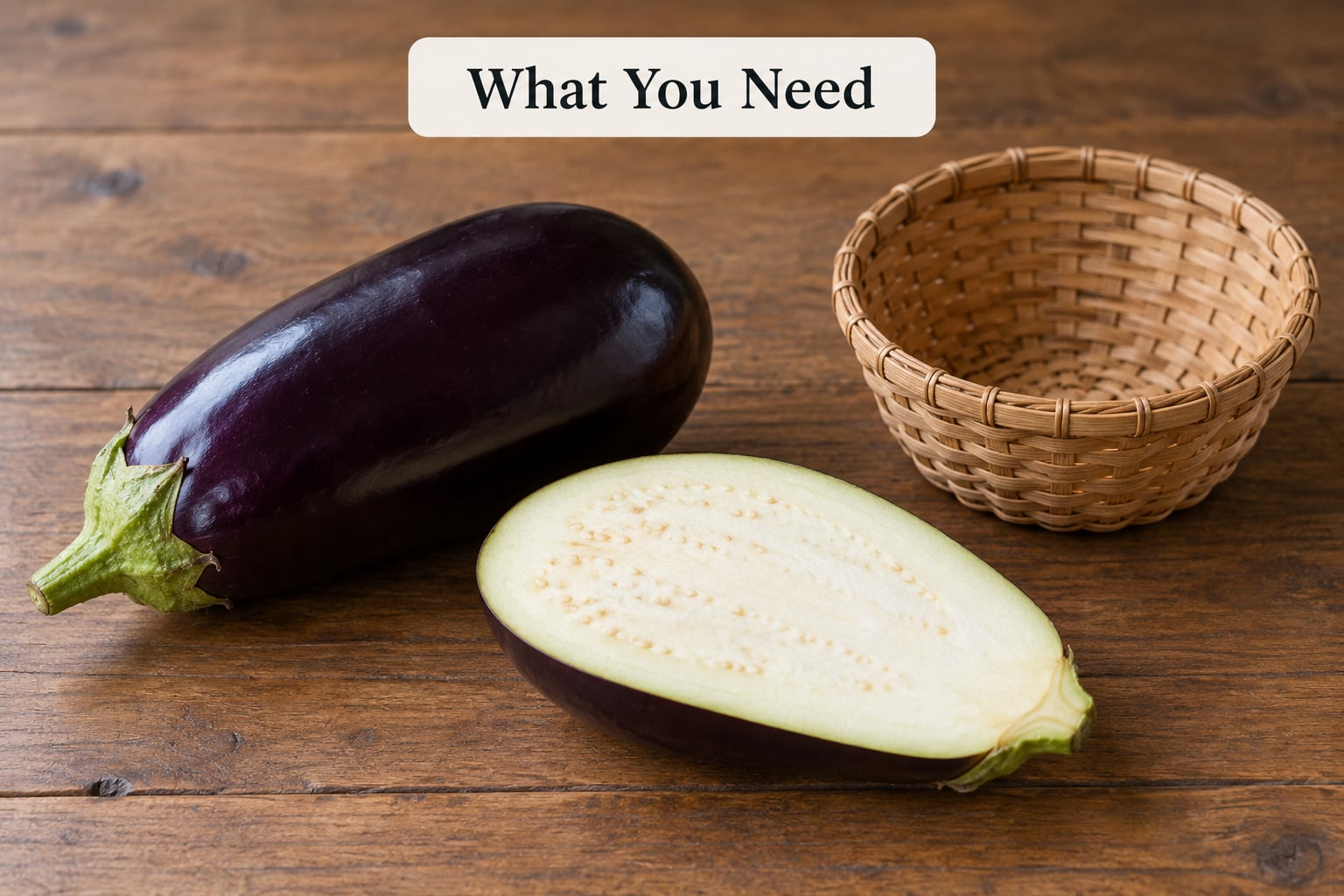
Nothing to buy and nothing to set up. Bring your hands, use your eyes and nose, and if the stall allows it, pick the fruit up rather than judging it through the crate.
Two optional things help. A damp cloth catches the condensation you do not want on a wet eggplant, and your kitchen scale settles any argument about weight between two candidates. Otherwise, your own hand is the only instrument involved.
Step-by-Step: How to Tell If an Eggplant Is Fresh
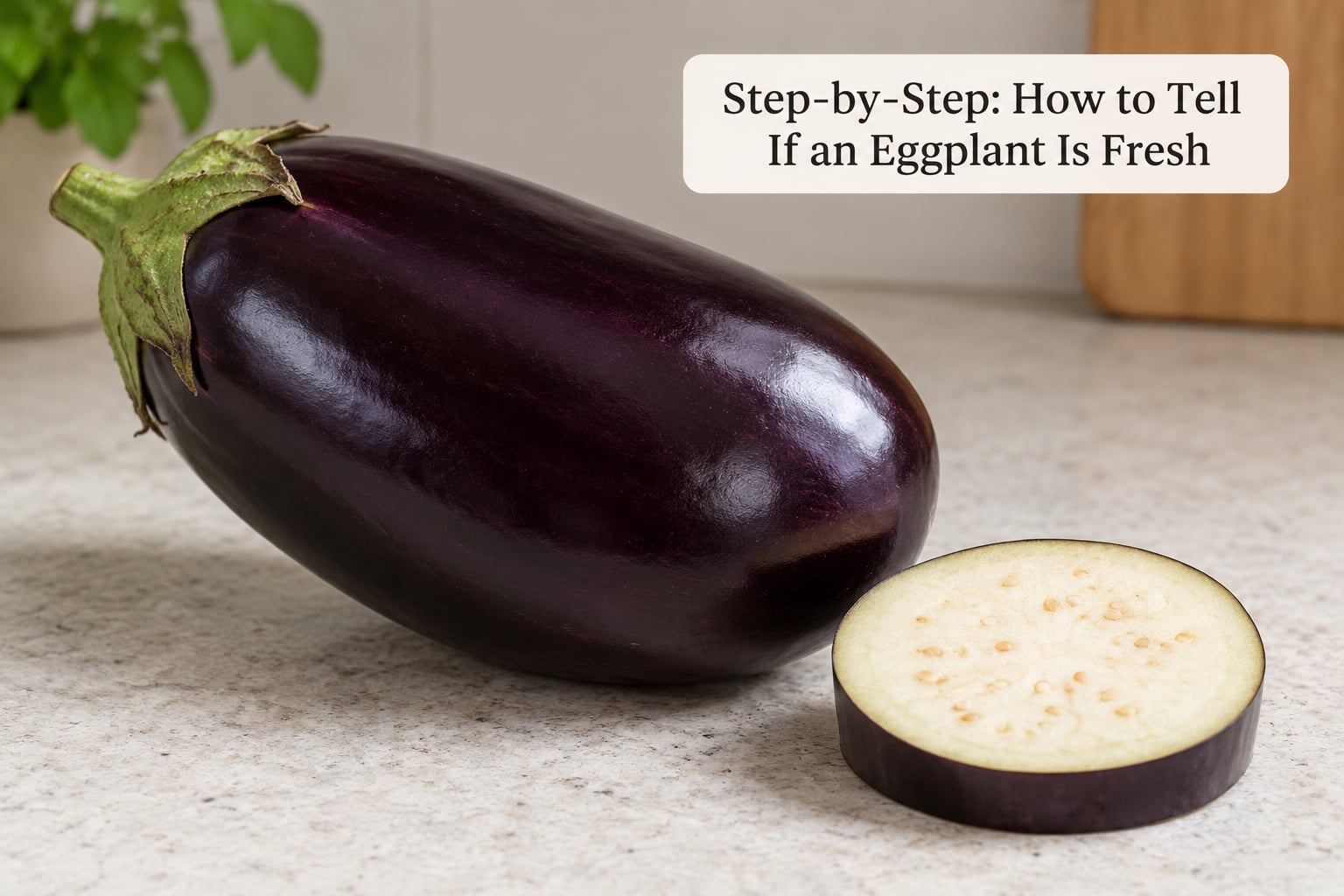
Step 1: Check the Skin for Gloss and Firmness
Look for skin that is smooth, taut, and evenly colored, with a visible sheen when you tilt it under the light. That gloss is moisture still inside the fruit. Dull, matte skin means the fruit has lost water.
Wrinkles are the warning sign people misread most often. Fine creasing on a skin that is still taut elsewhere is a different animal from a fruit that has collapsed into loose, papery folds. Pass on deep scars, punctures, sunken soft spots, fuzzy white or green patches of mold, and any area where the skin has split or dried out. Check the underside too, since bruises hide where the fruit rested in the crate.
Step 2: Pick Up the Eggplant and Check Its Weight
Pick it up. Fresh eggplant is dense and solid for its size, and among a crate of similar-looking fruit, the heaviest one is usually the freshest, because it has held onto the most water. Lift two and compare. The difference is often obvious once you feel it.
A light one with a rubbery or shriveled surface has been sitting a while, and that same lost water is why the skin has gone slack. On long Japanese and Thai eggplants, weight is an even more useful signal than it is on a fat Italian globe, since those varieties lose moisture quickly and look acceptable while feeling wrong.
Step 3: Gently Squeeze for a Little Give
Press with your thumb, not your fingers, and for a second or two rather than a hard squeeze. A fresh, ready-to-eat eggplant dents slightly and then springs back. That small give is the difference between ripe and under-ripe, since an under-ripe fruit is rock hard and a past-prime one dents and stays dented.
What you are looking for is the absence of collapse. If the flesh feels mushy, gives at the stem end, feels hollow, or leaks water when you press, it is past its prime regardless of how good the color looks. Home growers use the same test at harvest time and scale it by color: glossy skin means the fruit is not fully mature yet, and dull skin means it stayed on the plant too long.
Step 4: Smell the Eggplant
Bring it to your nose. Fresh eggplant smells clean and neutral with a faint earthy, almost grassy note, strongest right at the stem end.
Any sour, fermented, musty, or vinegar-like odor means it has gone past eating quality. Yellowing skin often travels with that odor, and growers in the r/vegetablegardening community describe yellowed fruit as past its prime because of the smell rather than the color. Smell last in the sequence, but never skip it. It is the one check that reliably catches spoilage the eyes miss.
Step 5: Inspect the Stem and Cap
Flip it over and look at the green leafy cap. On a fresh eggplant the cap is firm, moist-looking, and vividly green, and it sits flat and snug against the shoulder without dried, curled edges.
A stem that is dry, brown, blackened, shriveled, or fuzzy signals an older fruit, and growers on r/gardening call the dried cap their most reliable age tell. The stem also tells you about handling: if it pulls loose from the fruit or tears at the shoulder, the fruit has been sitting since it was picked. Skip anything with mold on the stem, and check under the cap where moisture collects.
Common Mistakes
- Judging by color alone. Deep purple does not mean fresh, and pale does not mean old. Judge sheen and tautness instead. Fix: tilt the fruit toward the light and look for a reflective surface.
- Reading wrinkles as ripeness. Wrinkled skin signals water loss, not sweetness. Fix: press it. If it springs back and smells clean, use it soon; if it collapses, pass.
- Reaching for the biggest one. Large fruit carries more mature seeds and tends toward bitterness, and it takes longer to cook through. Fix: choose a small to medium heavy fruit for the best flavor per bite.
- Ignoring soft spots. A bruise that is merely discolored and firm can be trimmed off. A soft spot that yields to the nail or feels wet has broken down. Fix: press each suspect area before you decide.
- Buying a week of eggplants in one trip. A fresh whole eggplant is at its best within a few days, and a store-bought one can already be soft by day four. Fix: buy what you will cook this week, and use the storage method below for the rest.
Fresh Eggplant vs Past Prime: What Each Check Tells You
| Check | Fresh | Past prime or spoiled |
|---|---|---|
| Skin | Smooth, taut, glossy, evenly colored | Dull, deeply wrinkled, split, scabbed, moldy |
| Stem and cap | Firm, moist, vivid green, snug at the shoulder | Dry, brown, blackened, shriveled, fuzzy with mold |
| Weight | Heavy for its size, solid in the hand | Light, rubbery, shriveled |
| Firmness | Slight give under a thumb, then springs back | Rock hard with no give, or soft and collapsing |
| Smell | Clean, neutral, faintly earthy | Sour, fermented, musty, vinegary |
| Inside, once cut | Cream or pale flesh with small soft pale seeds | Slimy or watery flesh, hard dark seeds, dark brown spreading flesh, off smell |
A light browning of the cut surface within a few minutes is just air exposure and is harmless. Tan to brown spotting around the seeds is also normal and edible. Trouble signs are flesh that is slick, dark brown throughout, or carrying an off smell.
If a fruit is only partly compromised, cut the bad section away completely and use the rest the same day. Cookers on r/foodhacks and r/gardening generally prefer that to binning a mostly sound eggplant, which is reasonable advice as long as nothing slimy or foul-smelling is involved.
How to Store a Fresh Eggplant
Keep it whole and unwashed. Moisture on the skin invites mold, so do not rinse an eggplant until the moment you cut it. Store it in the crisper drawer or in a perforated bag that lets air move, and keep it away from ethylene-producing produce like apples and bananas, which speed things up.
Warmth is the enemy. Eggplants kept in a cool room around 50 to 55°F hold their quality far longer than fruit pushed into a refrigerator set colder than that, where they pick up chilling injury and an off flavor that does not go away when you cook them. A refrigerator is fine for a few days in a pinch. A cool, dry spot on the counter is better.
Once you cut into an eggplant, cover the exposed flesh with plastic wrap or seal it in a container, and use it within a day or two. Cut surfaces dry out and brown quickly, and that browning is cosmetic rather than a safety problem.
Frequently Asked Questions
Does a darker eggplant mean it is fresher?
No. Color is a variety trait, not a freshness signal. Deep black Italian globes, pale lavender Japanese types, and small striped Thai eggplants are all normal when fresh. Judge instead by a taut glossy skin that reflects light, weight for size, a slight give under the thumb, and a clean earthy smell. A dark eggplant that is dull, soft, or light in the hand is past its prime no matter how rich the color looks.
Is a slightly wrinkled eggplant still good to eat?
Often yes. Light wrinkling with firm flesh underneath usually means the fruit is older and losing water, not spoiled. Press it: if it dents a little and springs back and smells clean, slice it, salt the cut surfaces for about 20 minutes to draw out moisture and bitterness, then cook it. If the skin is deeply folded, the flesh collapses under pressure, or there is any sour odor, throw it out.
How long does fresh eggplant keep in the refrigerator?
Plan on three to five days for a whole eggplant in the crisper drawer, and less if it was already soft when you bought it. Eggplants are damaged by temperatures below roughly 50°F, so a very cold refrigerator can make them develop an off flavor they never recover from. A cool room around 50 to 55°F holds quality longer than the fridge does. Cut eggplant should be covered and used within a day or two.
Can I use eggplant with a few small soft spots?
Yes, if the damage is limited and dry. Trim away a bruise or soft spot that is only discolored and firm underneath, then cut one centimeter of flesh around it and use the rest the same day. A spot that feels wet, sinks under the nail, is slimy, or sits next to fuzzy mold means rot has spread through the flesh. In that case the whole fruit goes in the bin, not just the spot.
Should I wash eggplant before storing it?
No. Water sitting on the skin encourages mold and speeds up softening at the refrigerator end. Keep the fruit dry and unwashed in a breathable bag or on the crisper shelf, and wash it right before you cut it. The exception is a cut piece, which should be wrapped or sealed and refrigerated, since exposed flesh browns within minutes and dries out within a day.
What color eggplant is freshest?
Freshness shows in sheen and firmness, not in any particular hue. What you want across varieties is a smooth glossy surface with no dull patches, a firm vivid green cap, and flesh that gives slightly under a thumb. Yellowing skin usually signals over-maturity rather than freshness, and greenish-purple shoulders or a hard, pale, seedy interior point to a fruit that was picked too early and will be bitter.
Conclusion
Start at the crate, not the color swatch. Pick the fruit up, press it with your thumb, and check the cap. If it is heavy for its size, gives a little and springs back, and smells clean, take it home and keep it whole, dry, and out of the coldest part of the fridge.