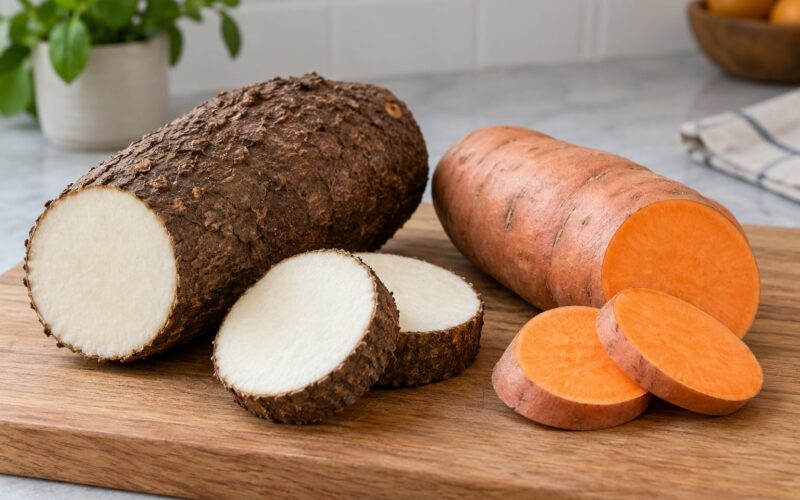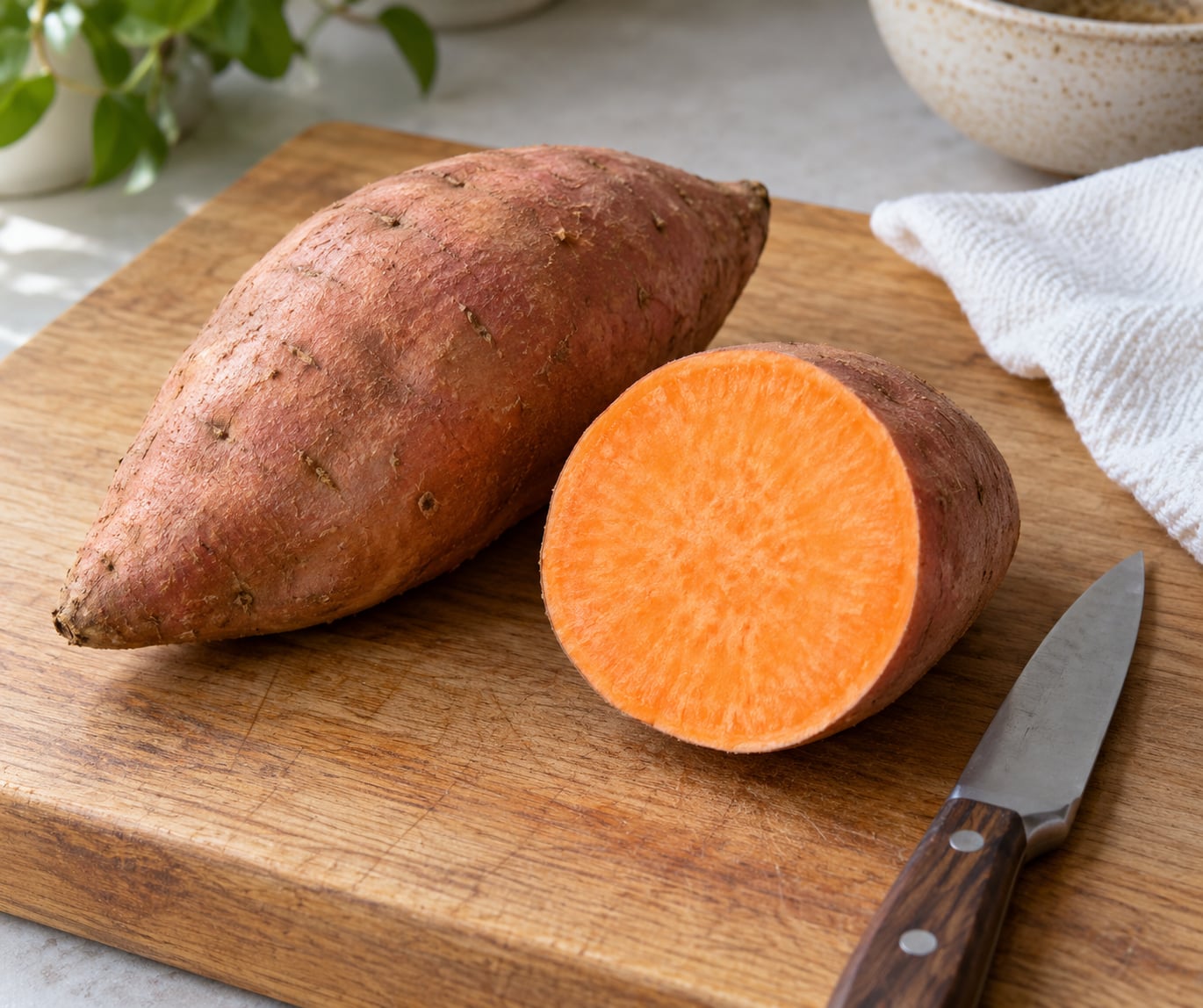
To tell if a sweet potato has gone bad, check four things: how it feels, how it smells, what the skin and cut flesh look like, and whether it is leaking or slimy. A good sweet potato is firm with smooth skin and a neutral, earthy smell. Mushy spots, sour or musty odors, fuzzy mold, black decay and sticky liquid mean toss it.
I buy sweet potatoes most Saturday mornings at the curb market, and the same question comes up every week: is this one still good? Wrinkled skin sends people straight to the bin, and most of those potatoes were perfectly fine. Here is how I actually check, in the order I check it.
Table of Contents
- What You Need
- Step-by-Step: How to Tell if Sweet Potatoes Have Gone Bad
- How to Tell if Sweet Potatoes Have Gone Bad: Check the Outside
- How to Tell if Sweet Potatoes Have Gone Bad: Smell the Potato
- How to Tell if Sweet Potatoes Have Gone Bad: Inspect the Flesh
- How to Tell if Sweet Potatoes Have Gone Bad: Check Texture and Storage
- Common Mistakes
- Frequently Asked Questions
- Can cooked sweet potatoes be frozen after they have been cooked?
- Is a sweet potato bad if the skin is dark?
- Can you eat a sweet potato that is soft but smells normal?
- Does mold on a sweet potato mean the entire potato must be discarded?
- How long should cut sweet potatoes stay in the refrigerator?
- Can cooking get rid of mold or bacteria in sweet potatoes?
- Conclusion
What You Need
The whole inspection takes about two minutes and needs almost nothing. You want clean hands, a cutting board and a sharp knife, a paper towel, and an airtight container for anything you decide to keep.
Cut-resistant gloves are worth wearing if you are cutting a potato you already suspect. No thermometer, no testing kit, no special equipment. Your nose and a knife do the job.
Step-by-Step: How to Tell if Sweet Potatoes Have Gone Bad
How to Tell if Sweet Potatoes Have Gone Bad: Check the Outside
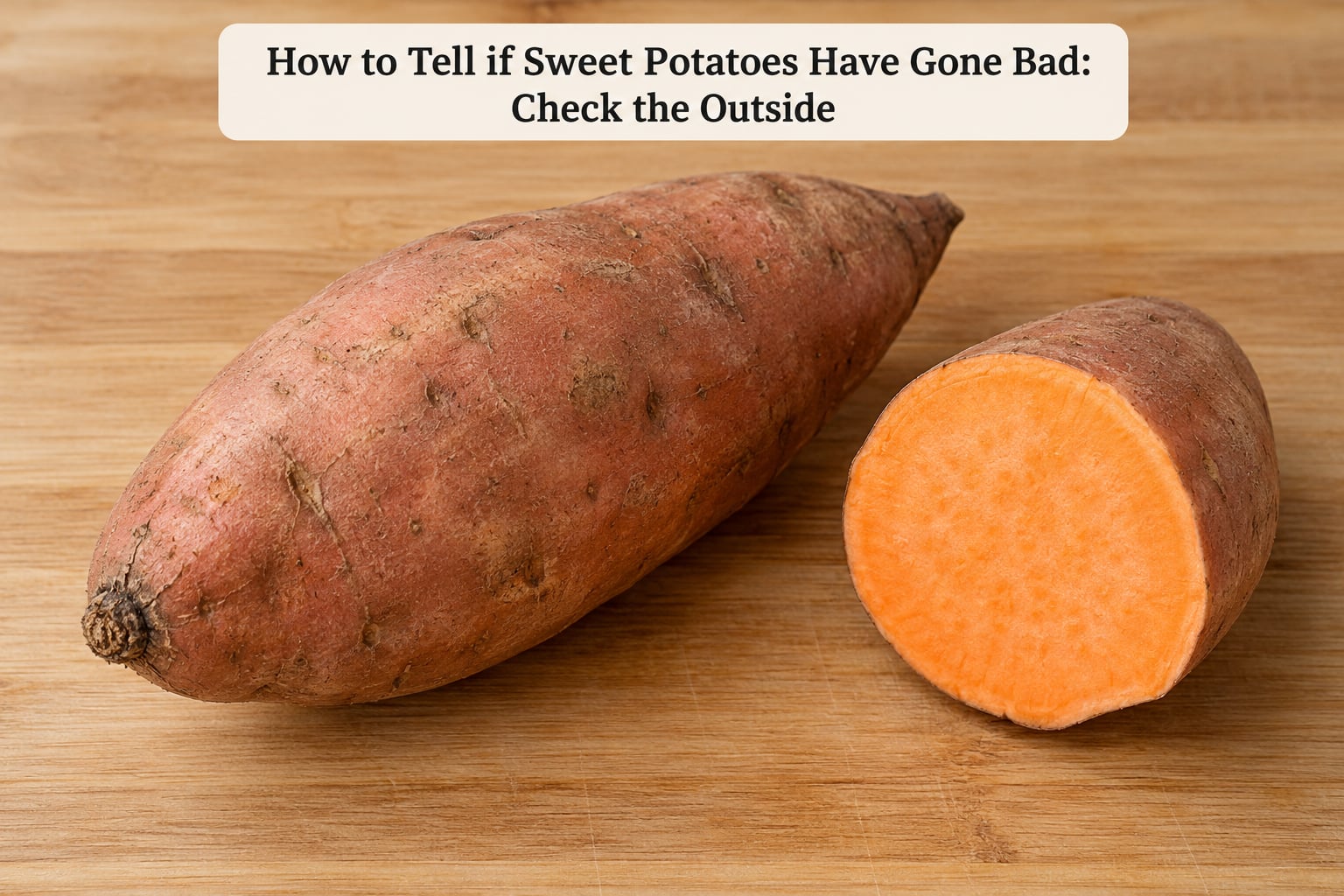
Start with the skin. Run your thumb over the whole surface and press firmly in a few places. Firm skin with no give means the potato is fine, however old it looks.
Discard the potato if you find fuzzy white, grey or green mold, black soft decay that sinks under pressure, wet rot, or skin that leaks sticky liquid. Deep black patches that are hard and dry usually mean bruising or cold damage, not mold, but cut them away.
Wrinkles on their own are not spoilage. A sweet potato that has lost water in a dry pantry looks leathery and thin-skinned, and it is still good if the flesh inside is firm and the smell is clean.
- Small scuffs and field scars: harmless, cut or peel around them.
- Slight wrinkling: fine if the potato is still firm inside.
- Fuzzy mold, wet rot, leaking liquid: discard the whole tuber.
How to Tell if Sweet Potatoes Have Gone Bad: Smell the Potato
Smell is the fastest test there is. Hold the potato close and smell the skin, then smell a freshly cut end. A fresh sweet potato smells faintly sweet and earthy, like a raw potato, with nothing added to it.
Sour, fermented, musty, or ammonia-like odors mean it is going bad. So does anything that smells like old compost or a damp basement. The smell changes as it decays: sweet first, then sour, then rotten.
Smell works on cooked sweet potatoes too, and it matters more there. Cooked potatoes are high in moisture and bacteria can grow without any visible change, so if a baked or roasted sweet potato smells off, skip it no matter how it looks.
How to Tell if Sweet Potatoes Have Gone Bad: Inspect the Flesh
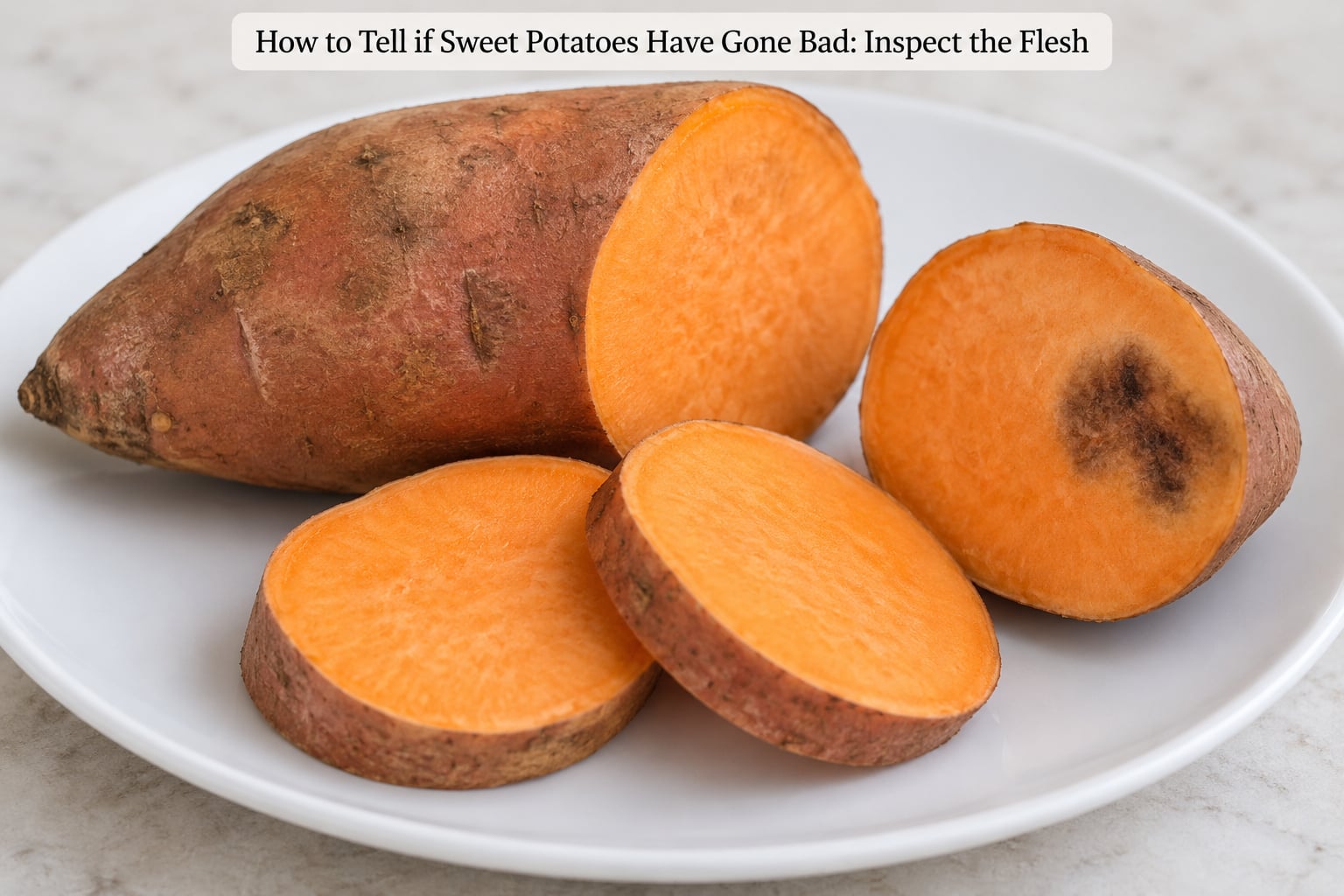
Cut a small slice off one end, or cut into the suspicious area, and look. Bright, even orange flesh with a firm, dry feel is exactly what you want. Stringy white fibers running through the flesh are normal, not mold.
That milky white liquid that runs out when you cut a fresh sweet potato is latex sap, a natural starch. It dries on the cut surface and turns tacky, which alarms people who expected orange juice. It is not spoilage.
Discard the potato if the dark area is extensive or soft, if you see grey or black flesh spreading outward, if the inside is mushy or wet, or if a green tint appears where the potato met light. Small brown spots from bruising can be cut out with a generous margin of clean flesh around them.
Varieties read differently too. Korean and Japanese sweet potatoes have purple skin with purple-streaked flesh, and purple skins redden when chilled. Garnet varieties go deep red when cooked. None of that is spoilage.
How to Tell if Sweet Potatoes Have Gone Bad: Check Texture and Storage
Squeeze it. A raw sweet potato should feel solid and heavy for its size, with no give at the ends. Mushy, collapsing or slimy flesh means rot has taken hold, even if the outside still looks reasonable.
Cooked sweet potatoes get soft when you bake, boil or mash them, so softness alone means nothing there. Judge cooked sweet potatoes by smell and moisture instead. Slippery, glossy surfaces and liquid pooling in the bottom of the dish are the warning signs.
Storage history helps you guess. Sweet potatoes keep about three to five weeks in a cool, dark, dry pantry, away from the ethylene that apples and bananas give off, and they last longer unwashed and out of the fridge. Cut pieces belong in the refrigerator in a sealed container for about three to four days. Cooked sweet potatoes get the same three to four days, and cooked portions freeze well for several months.
Reheat leftovers until they reach 165°F, and use food that has sat out for more than two hours within a couple of hours. Home-canned sweet potatoes are the one case to skip entirely if a seal is loose or the jar is bulging, because improper canning brings botulism risk.
Common Mistakes
Judging only by appearance. Skin can look fine while the inside rots. Always cut, smell, and squeeze.
Reading dark flesh as spoilage. Deep orange, reddish, and purple tones are the normal color of many varieties. Spoilage goes grey-black, mushy, or wet.
Trying to cook your way out of mold. Soft, moist vegetables grow mold and bacteria through the tissue. Cooking kills much of it but leaves heat-stable toxins behind, so moldy sweet potatoes go in the bin.
Tossing every shriveled potato. Mild wrinkling means lost moisture. Steam it whole, or soak it for 20 minutes before baking and it comes back to life.
Storing potatoes next to fruit. Bananas, apples, and pears speed things up. A paper bag in a cool closet works well for a market haul.
Frequently Asked Questions
Can cooked sweet potatoes be frozen after they have been cooked?
Yes. Cool the cooked pieces completely, spread them on a tray to freeze solid, then move them to an airtight container or bag. Frozen cooked sweet potatoes keep around six months and thaw in about 20 minutes. Mash or puree works too, though a little extra liquid keeps it from drying out.
Is a sweet potato bad if the skin is dark?
It depends on the kind of darkness. Skin that has gone hard, dark brown or black from bruising or cold storage is usually fine once you cut the damaged layer away. Skin that is soft, wet, fuzzy with mold, or leaking sticky liquid means rot. When you cut in and find grey or black flesh spreading, discard the whole potato.
Can you eat a sweet potato that is soft but smells normal?
If it is a cooked sweet potato, soft is exactly what you asked for, so smell and moisture are what matter. If it is a raw potato that has gone soft, shrink-wrapped, or squishes under pressure, that is water loss and breakdown, even with a clean smell. Peel it, cut generously around any soft area, and use it soon.
Does mold on a sweet potato mean the entire potato must be discarded?
For sweet potatoes, yes. The flesh is soft and high in moisture, so mold threads travel well past what you can see. Cutting back to clean-looking flesh does not reliably remove the hyphae or the mycotoxins they leave behind. Trim-only advice is reasonable for firm, dense vegetables like rutabaga, but not here.
How long should cut sweet potatoes stay in the refrigerator?
Cut raw sweet potatoes keep about three to four days in the refrigerator when they are wrapped or sealed, so you are not better off leaving them on the counter. Cooked sweet potatoes, roasted, boiled, or mashed, also last three to four days in a covered container. If you will not eat them in that window, freeze them.
Can cooking get rid of mold or bacteria in sweet potatoes?
No. Heating kills a lot of live bacteria, which is why cooked leftovers should still be reheated to 165°F, but mold and the toxins some molds produce are heat-stable. A potato with any mold on it should be discarded rather than cooked through. When in doubt about whether a sweet potato has gone bad, do not eat it.
Conclusion
If there is mold, extensive internal decay, a sour or compost-like smell, or leaking slimy moisture, throw it out. No need to agonize over the rest. Smell it, cut it, squeeze it. If the answer is still unclear, leave it out of the meal, and if anyone ate it and feels unwell, contact a healthcare provider.