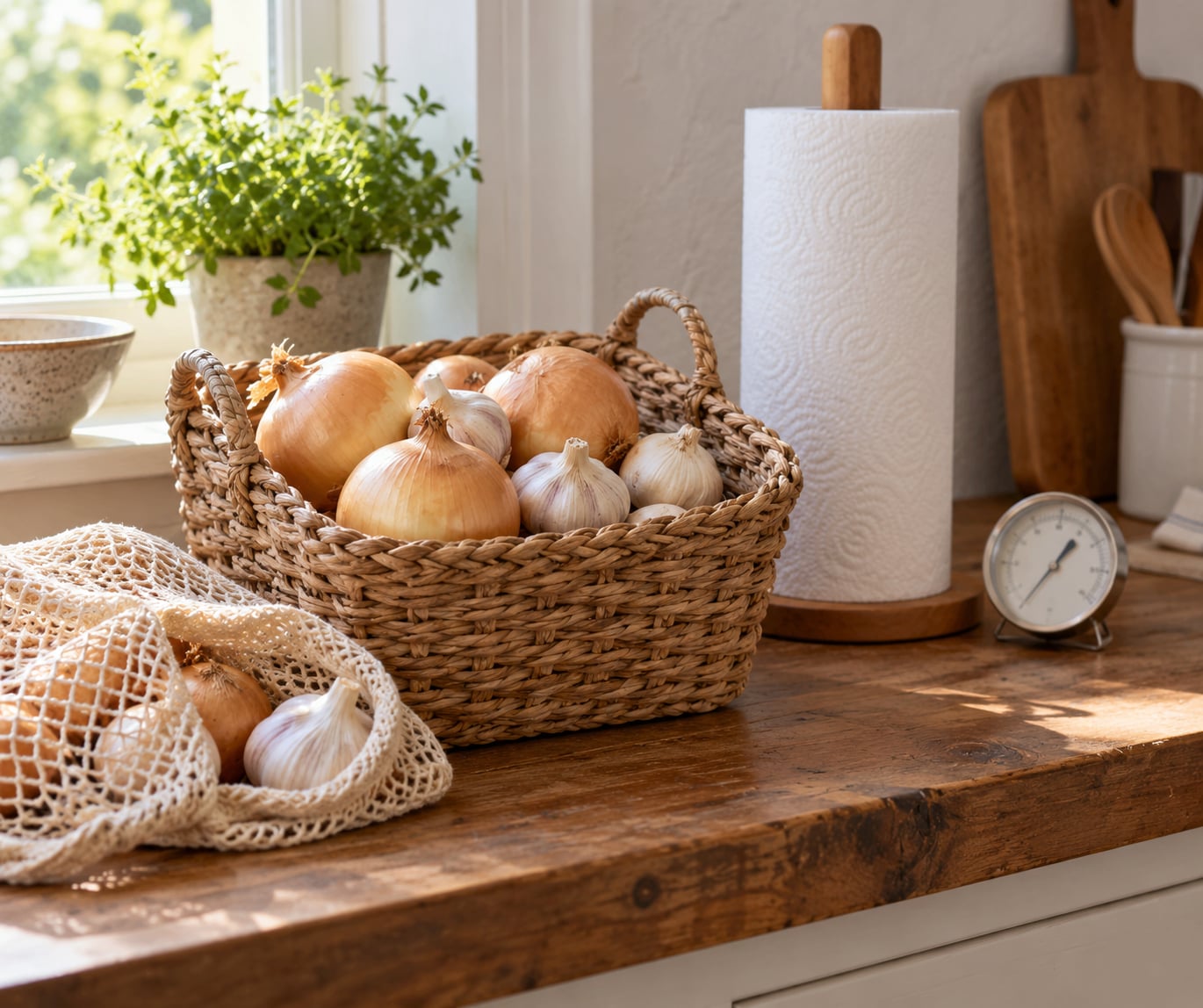
Learning how to store onions and garlic at home comes down to four words: cool, dark, dry, and ventilated. Whole cured bulbs kept in a breathable container in a pantry, cellar, closet, or unheated space stay sound for months, while the same bulbs sealed in plastic or parked in the fridge usually turn soft within weeks. The whole job takes about ten minutes plus a curing window, and it is easy enough for a first-timer.
What most guides leave out is that onions and garlic are not the same problem. Onions want colder conditions than garlic, they bruise more easily, and they rot in a different order. Below is the method I use, built around the same temperature and humidity figures university extension services and food-safety bodies publish.
If you buy in bulk at the market or grow your own, a separate note on curing comes first, because fresh-picked bulbs have a very short life until their skins dry.
Table of Contents
- What You Need
- Step-by-Step: How to Store Onions and Garlic at Home
- Step 1: Sort onions and garlic and pull out anything damaged
- Step 2: Cure whole onions before storage
- Step 3: Choose the right storage location
- Step 4: Store garlic in breathable containers
- Step 5: Store cut or peeled onions and garlic in the fridge
- Step 6: Check stored bulbs regularly
- Common Mistakes That Shorten Storage Life
- Frequently Asked Questions
- Should onions and garlic be stored together?
- How long do whole onions and garlic last at room temperature?
- Why are my onions sprouting or growing mold?
- Can peeled onions and garlic be stored in the refrigerator?
- Should onions and garlic be washed before storing?
- What is the best container for storing onions and garlic?
- Conclusion
What You Need
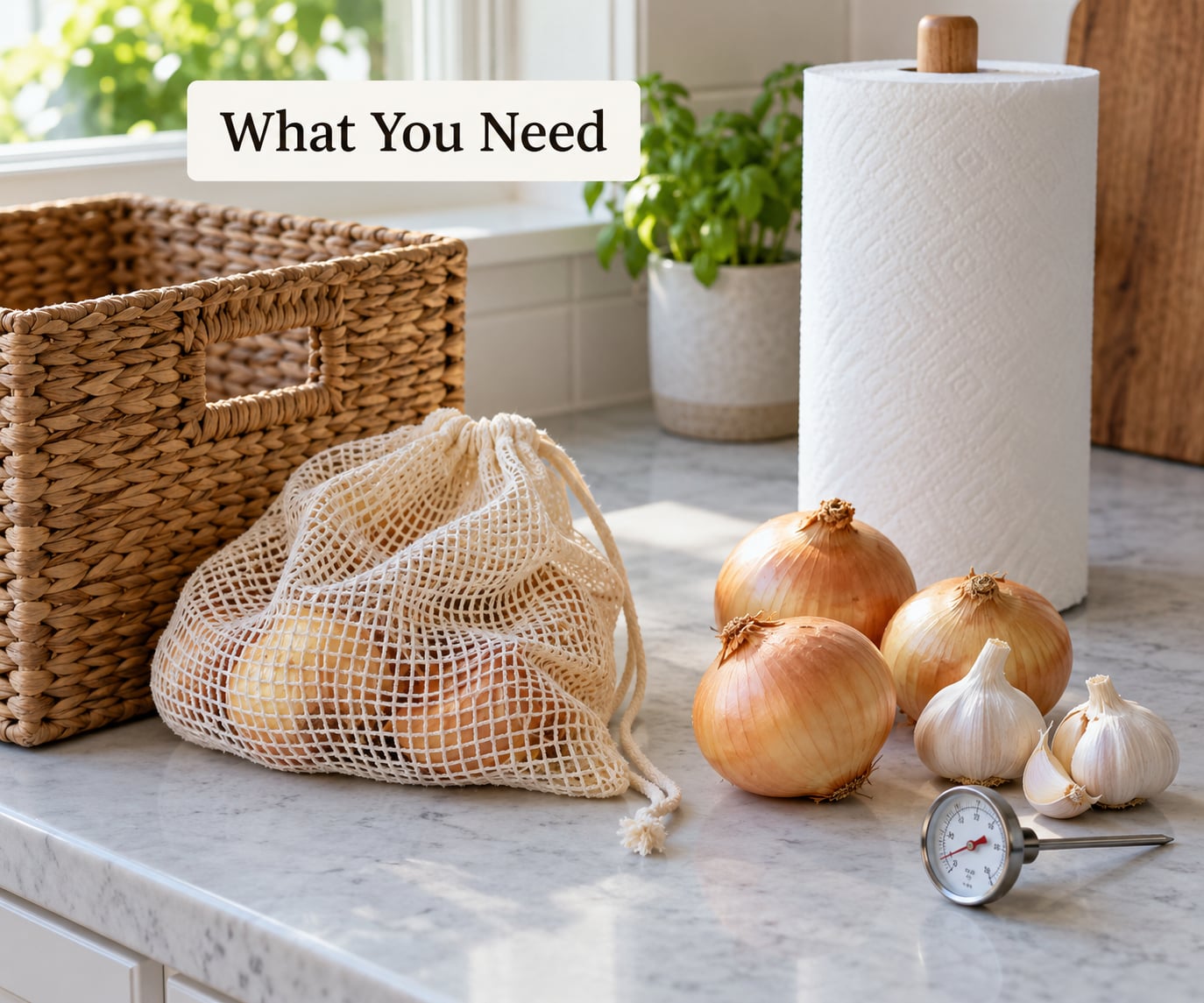
You need almost nothing, which is why this storage method survives contact with real kitchens. The tools are optional in a way most kitchen gear is not.
- A breathable container. A mesh produce bag, an open paper bag with holes punched in it, a wire or wicker basket, or a slatted drawer bin. All of them let air move around the bulbs.
- A cool, dark, dry spot. A pantry, root cellar, unheated closet, basement shelf, or garage that never freezes. Somewhere between 45 and 60 F is the sweet spot.
- Paper towel or a sheet of newspaper. Useful for lining a basket or crisper when you want a little extra wicking without sealing anything.
- A small thermometer, if you are guessing at a garage or closet. Knowing the actual temperature tells you whether that space works or whether you need to rethink it.
No dehydrator, no vacuum sealer, no special crisper drawer. If you have one of those, they extend storage later in the season, but they are not how you start.
One thing worth deciding before you move a single bulb: where your potatoes are. Onions and garlic stored next to potatoes spoil faster because the potatoes give off moisture and gases that the bulbs absorb, and neither group keeps long in the same space.
Step-by-Step: How to Store Onions and Garlic at Home
Step 1: Sort onions and garlic and pull out anything damaged
Spread everything out on the counter, one layer deep, and go through it bulb by bulb. Put aside anything with a soft spot, wet feel, split papery skin, or an odor that makes you pull your hand back.
Mold spreads through a pile faster than you think, and one compromised bulb can take three neighbors with it. Discard anything fuzzy or dark on the surface rather than cutting the damage off, because the fungus reaches the interior before you can see it.
Sort what remains into two groups. Onions and garlic with damage, cuts, or a torn neck go in the fridge and get used first. Sound bulbs of similar size go into long-term storage, and keeping sizes separate means you open the bag of small onions before the big ones.
Step 2: Cure whole onions before storage
Curing is simply drying the bulb until the outer skin turns papery and the neck seals shut. For store-bought onions with dry, flaky skins, this may already be done. For anything homegrown or freshly pulled, it is not optional.
Spread the bulbs in a single layer somewhere warm, dry, and airy with good air movement. An attic, garage, screened porch, or spread-out on a table in a warm room all work. Leave them two to three weeks for onions, longer if the weather is humid.
You know they are done when the skins rustle like dry paper, the necks are thin and dry, and no green shoots are pushing out of the top. Do not wash them during curing or storage. Moisture on the surface is the single fastest route to rot, and the papery skin is the barrier that keeps the inside protected once everything is dry.
Garlic cures the same way. Softneck garlic with a braided or trimmed stalk is ready to hang once the wrappers are dry and the cloves rattle. Hardneck types need the scape cut off and a few more weeks.
Step 3: Choose the right storage location
Whole bulbs want cool, dark, dry, and ventilated, and the temperature numbers matter more than most people expect. University extension guidance puts onions at roughly 45 to 55 F with low to moderate humidity, and garlic warmer, closer to 55 to 60 F with a bit more dryness. Stored together, somewhere around 50 to 60 F is the workable compromise.
That is warmer than a refrigerator and cooler than most countertops, which is exactly why a closet or pantry shelf works and a kitchen counter does not.
Some specific situations come up constantly, so let us take them one at a time. In an apartment with no pantry or cellar, the best real option is a wire basket or slatted bin in the coolest, darkest room you have, often a lower shelf in a closet or the bottom of a cabinet away from the stove. A regular kitchen drawer around 65 to 70 F works too, and store-bought onions in that setup routinely last two to three months rather than a few weeks. A drawer only fails when it is packed solid and the bulbs cannot breathe.
An unheated garage often lands in the 40s F in winter, which is nearly ideal as long as it stays above freezing. Watch two things: bulbs freeze and turn mushy below about 32 F, and a garage that hits 80 F on a summer afternoon will push garlic into sprouting early. In most climates, moving bulbs indoors before the first hard frost is the safer habit.
A basement works if it is dry. A damp cellar is worse than a countertop because humidity feeds mold on the outer skin, and mold is what turns a good bulb into a compost pile. If your basement smells musty, store elsewhere and use a lidded bin of dry sand or vermiculite in a crate to buffer humidity.
Sunlight is never fine. Light turns onion tops green and triggers sprouting, and green onion tops are bitter and unpleasant to eat. Darkness is doing real work here, not just aesthetic.
Step 4: Store garlic in breathable containers
Garlic needs the same four conditions as onions, but slightly warmer and slightly drier, so keeping the two in separate containers is a small task with a real payoff.
For garlic, work down this list in order of preference. A mesh produce bag or vegetable net gives the best airflow and takes up no shelf space. A wire or wicker basket on a pantry shelf handles larger bulbs and lets you spot problems by sight and feel. An open paper bag, or a brown paper lunch bag with a hole punch through the sides, is a cheap and effective single-batch option. Softneck garlic with long dried stalks can be braided and hung in a cool room, which is traditional, tidy, and genuinely effective as long as the braid is made after curing and not before.
What to avoid is airtight plastic. Ziploc bags, sealed bins, and closed containers trap humidity, and garlic in a sealed bag goes soft, then moldy, faster than garlic on the counter. A loosely closed plastic bag in the fridge is a different case and works well for peeled cloves, but whole unpeeled bulbs in the fridge have two problems.
First, home refrigerator humidity is high enough that whole bulbs can develop mold and peeling skin. Second, chilling is exactly what a bulb needs to think it is spring, so onions and garlic kept in the fridge tend to sprout in the crisper drawer. Cold storage is for cut or peeled produce only.
Step 5: Store cut or peeled onions and garlic in the fridge
Once a bulb is cut or peeled, the protective papery skin is gone and the clock starts. Cover cut surfaces with plastic wrap, a lid, or a clean airtight container, label it with the date, and refrigerate.
Cut onions hold about 10 days in the fridge. Peeled cloves and chopped garlic keep roughly a month sealed in the fridge, and using them is better than storing them. If you will not touch garlic for more than a month, freeze it.
Freezing changes the texture, so frozen garlic and onion are for cooking only, never for raw eating or for anything where you want the pieces to stay distinct. Chopped onion freezes well for about a year. Chopped or grated garlic keeps about three months. Spread pieces in a single layer on a tray, freeze them, then bag them so they do not clump into one solid block, and label with the date.
For shelf-stable storage that keeps the flavor of both, a dehydrator wins. Garlic dries at around 105 to 115 F for roughly nine hours, and onions at about 125 F. Ground powder clumps over time unless you add an anti-caking agent, and honestly, a pinch of cornstarch does the job.
One safety note that catches people every year: garlic cloves submerged in oil at room temperature can grow Clostridium botulinum, and the botulism risk is real enough that you should refrigerate garlic-in-oil or make it shelf-stable through a tested acidifying recipe instead. Salt water has the same problem. Do not improvise here.
Step 6: Check stored bulbs regularly
Storage is not a set-and-forget job. Two minutes a week, sorting a small basket of bulbs and feeling each one, prevents a lost haul.
Rotate the bulbs so older ones move to the front and get used first. Remove anything soft, leaking, or showing white, blue-green, or black fuzzy growth immediately, and take its neighbors with it, because rot moves by contact.
Sprouting is different from spoiling, and the distinction is easy to get wrong. A green shoot pushing out of an onion, or cloves swelling inside a garlic head, means the bulb is still alive and still safe to eat. The bulb is using stored energy to grow. Trim the sprout, slice across the center where the green is thickest, and take the pieces from the outside. The same goes for garlic: a sprout emerging from a clove is harmless, and you can pull it or cut below it.
Mold is the opposite ruling. If you see fuzzy growth, root-like threads inside the flesh, black spotting, or a sour smell, the bulb is done. Food-safety consensus on this is firm: discard it rather than cutting around the bad part.
Soft, watery bulbs with no smell are usually past their window. Cheesy or slimy texture, or a powdery white film on the outer skin that wipes away to leave a clean surface, is mold and needs the bin.
You can also plant your sprouted bulbs. Set them in soil with the sprout facing up and they will grow, though onion bulbs bought for eating are often treated with a growth inhibitor, so they may not regrow.
Common Mistakes That Shorten Storage Life
Almost every ruined bag of onions traces back to one of these. They are worth a quick scan of your current setup.
Washing whole bulbs before storing them. Washing adds moisture to the surface, and moisture sits at the neck and base where rot starts. Store onions and garlic dry as they come, and wash them right before you use them.
Sealing them in plastic. A closed Ziploc or airtight bin is the most common mistake in a kitchen that has no pantry. Condensation collects, humidity stays near 100 percent, and mold follows within a few weeks. Paper, mesh, or wicker instead.
Refrigerating whole bulbs. The fridge is too humid and too cold for unpeeled onions and garlic. Fridge humidity encourages mold on the outer skin, and the cold triggers sprouting, so you get limp bulbs that also want to grow. Cold storage belongs to cut, peeled, or blanched produce only.
Storing onions and garlic next to potatoes. Potatoes release moisture and gases that onions and garlic absorb, which shortens the life of both groups and pushes the bulbs toward mold and sprouting. Give potatoes their own separate, dark, ventilated spot.
Keeping peeled or cut produce in the pantry. Peeled garlic, sliced onion, and chopped onion have no protective skin left. They belong in a sealed container in the fridge, used within about a month, or frozen.
Packing containers too full. Even breathable containers need room. Fill a paper bag halfway so air moves between bulbs and between bags, and never stack a second closed bin on top.
Bulbs on the counter in the open. A countertop is warm and often lit, and warm plus light is the sprouting combination. Even a few weeks on the counter is enough to shrink a bulb noticeably.
Ignoring variety differences. Sweet onions such as Vidalia and Walla Walla hold less sugar and generally have shorter storage lives than pungent yellow and red onions. Hardneck garlic keeps longer than softneck in most kitchens. Buy accordingly if you want onions and garlic through February.
Waiting too long to braid onions. Farmers market and home gardeners ask this constantly. Stringing works only in a narrow window: braid after curing while the necks are still pliable, and leave the stalks a few inches longer than you think you need. Too early and the bulbs fall off while curing, too late and the necks are brittle and snap mid-braid.
One more that is not a mistake but a surprise: if the tops of your onions yellow before you ever store them, curing was not finished. Those bulbs will not keep long no matter how good your storage spot is.
Frequently Asked Questions
Should onions and garlic be stored together?
Yes, but not ideally. Stored together they need roughly 50 to 60 F with airflow, while onions alone prefer 45 to 55 F and garlic prefers 55 to 60 F with lower humidity. Keeping them in separate breathable containers lets each one sit at its best temperature and stops a spoiled bulb taking out the whole batch. A single cool, dark pantry shelf works fine if you check them often.
How long do whole onions and garlic last at room temperature?
Expect about one to two months for whole onions and three to five months for whole garlic in good home conditions. Cooler, drier, darker spaces stretch those numbers, and a 65 to 70 F kitchen drawer is on the short end. Properly cured bulbs from a bulk market buy can carry most of the household through winter if you check them weekly and use the oldest first.
Why are my onions sprouting or growing mold?
Sprouting comes from three things: low light, a warm spot, or age. Bulbs that have been through a cold spell also sprout once they move somewhere mild. Mold comes from moisture, poor airflow, humidity, or a damaged bulb sitting in a sealed bag. Fix the airflow first, then move the container somewhere darker and cooler, and discard anything fuzzy rather than trimming around it.
Can peeled onions and garlic be stored in the refrigerator?
Yes. Peeled or cut onions and garlic have lost their papery skin, so they need sealed protection. Put cut onion in an airtight container in the fridge for about ten days, and keep peeled garlic cloves chopped or whole, sealed, for roughly a month. Both freeze well for cooking, but texture changes after thawing.
Should onions and garlic be washed before storing?
No. Washing wets the outer skin, and that moisture sits at the neck and base where rot starts. Store them dry, exactly as they came from the market or garden, and peel and rinse them right before you cook. If a bulb is muddy, brush off the loose soil rather than rinsing the whole bulb. Curing works the same way, which is why homegrown onions are left out for weeks rather than rinsed.
What is the best container for storing onions and garlic?
Something breathable with airflow and darkness. Mesh produce bags and vegetable nets are the top choice, followed by wire or wicker baskets, slatted bins, and paper bags with holes punched in the sides. Braided softneck garlic hung in a cool room also works. Avoid airtight plastic bags and sealed bins for whole bulbs, since trapped humidity is what causes mold and soft skin.
Conclusion
Start tonight, not this weekend. Take the bag of onions and garlic out of its plastic, discard anything soft or fuzzy, and leave the sound bulbs in one layer somewhere warm and airy until the skins go papery.
Then put the cured onions and garlic into separate breathable containers somewhere cool, dark, and dry between 45 and 60 F, away from potatoes and out of sunlight. Keep the fridge for cut or peeled produce only, and give the whole basket two minutes a week so one soft bulb never spreads.
Storage conditions quoted here follow the ranges published by UC ANR, the National Onion Association, and food-safety guidance compiled by EUFIC, with home conditions differing from the controlled-atmosphere rooms commercial growers use. Garlic stored in oil needs refrigeration or a tested acidified recipe, never shelf storage at room temperature.