If you are searching what to do with too many zucchini, the short answer is three moves: cook the bulk in high-volume dishes this week, preserve the rest so it lasts into winter, and hand off whatever neither can absorb. One zucchini plant can hand you 10 to 20 pounds of summer squash over a season, so a single week of good intentions is never going to clear the pile on the counter.
I grew three plants that hit me with about 14 pounds in six weeks. Bread handled maybe a fifth of it. Everything below is what actually moved the needle for us, including the two squash that got away from me and came back the size of a baseball.
Table of Contents
- What to Do with Too Many Zucchini at a Glance
- 1. Make Zucchini Fritters
- 2. Roast the Zucchini
- 3. Make Zucchini Soup
- 4. Add Zucchini to Pasta Sauce
- 5. Bake Zucchini Muffins or Quick Bread
- 6. Make Zucchini Cookies
- 7. Stuff the Zucchini
- 8. Make Crispy Zucchini Chips
- 9. Pickle the Zucchini
- 10. Freeze the Zucchini
- 11. Add Zucchini to a Frittata or Omelet
- 12. Make Zucchini Fritta or Galette
- Frequently Asked Questions
- How long does zucchini last in the refrigerator?
- Should I peel zucchini before using it?
- Why are my zucchini fritters soggy?
- Can I freeze zucchini without blanching it first?
- What is the best way to cook zucchini that is too large?
- How can I tell whether zucchini is still fresh?
- Start With the Soft Ones and Preserve the Rest
What to Do with Too Many Zucchini at a Glance
Here is the short version. Match the row to how much time you have and how firm the squash still feels.
| Use | Best for | Prep effort | Cooking method | Freezes well? |
|---|---|---|---|---|
| Fritters | Weeknight side or brunch | Medium, includes squeezing | Pan-fried | Cooked only |
| Roasted | Fastest side dish | Low | Hot oven or air fryer | Yes, slices |
| Soup | Using squash past prime | Low | Stovetop, blended | Yes, blended |
| Pasta sauce | Stretching a jar of sauce | Low | Stovetop simmer | Yes, raw diced |
| Muffins and quick bread | Freezer baking stock | Medium, includes squeezing | Baked | Yes, baked |
| Cookies | Kid-friendly baking | Medium | Baked | Yes, baked |
| Stuffed boats | Feeding a crowd | High | Baked | Better cooked fresh |
| Crispy chips | Snacking | Low | Baked or air fried | Yes, raw slices |
| Pickled | Months of keeping | Low | No heat, vinegar | No |
| Frozen | Winter soup and baking | Medium | Blanch, then freeze | This is the freeze |
| Frittata or omelet | Breakfast and dinner | Low | Stovetop | Cooked only |
| Fritta or galette | Using a whole garden haul | High | Baked | Better cooked fresh |
1. Make Zucchini Fritters

Fritters are the fastest way to move a surprising amount of squash in one pan. Grate four medium zucchini on the coarse holes, salt them, wait ten minutes, then squeeze them in a clean towel until your arms hurt. Four zucchini give you roughly one cup of squeezed pulp.
That squeezing is the whole trick. Raw summer squash is roughly 95 percent water, and if you skip it the batter turns into a wet pancake that falls apart the second you flip it. I got this wrong twice before I made it a habit.
Fold the dry pulp with two eggs, half a cup of flour or breadcrumbs, and a spoonful of grated Parmesan. Pan-fry in a thin layer of oil over medium heat, about three minutes a side, until the edges are brown and the center springs back. Feta and dill on top is the version my kids ask for; grated potato mixed in at 50/50 gives you a crispier shell.
2. Roast the Zucchini
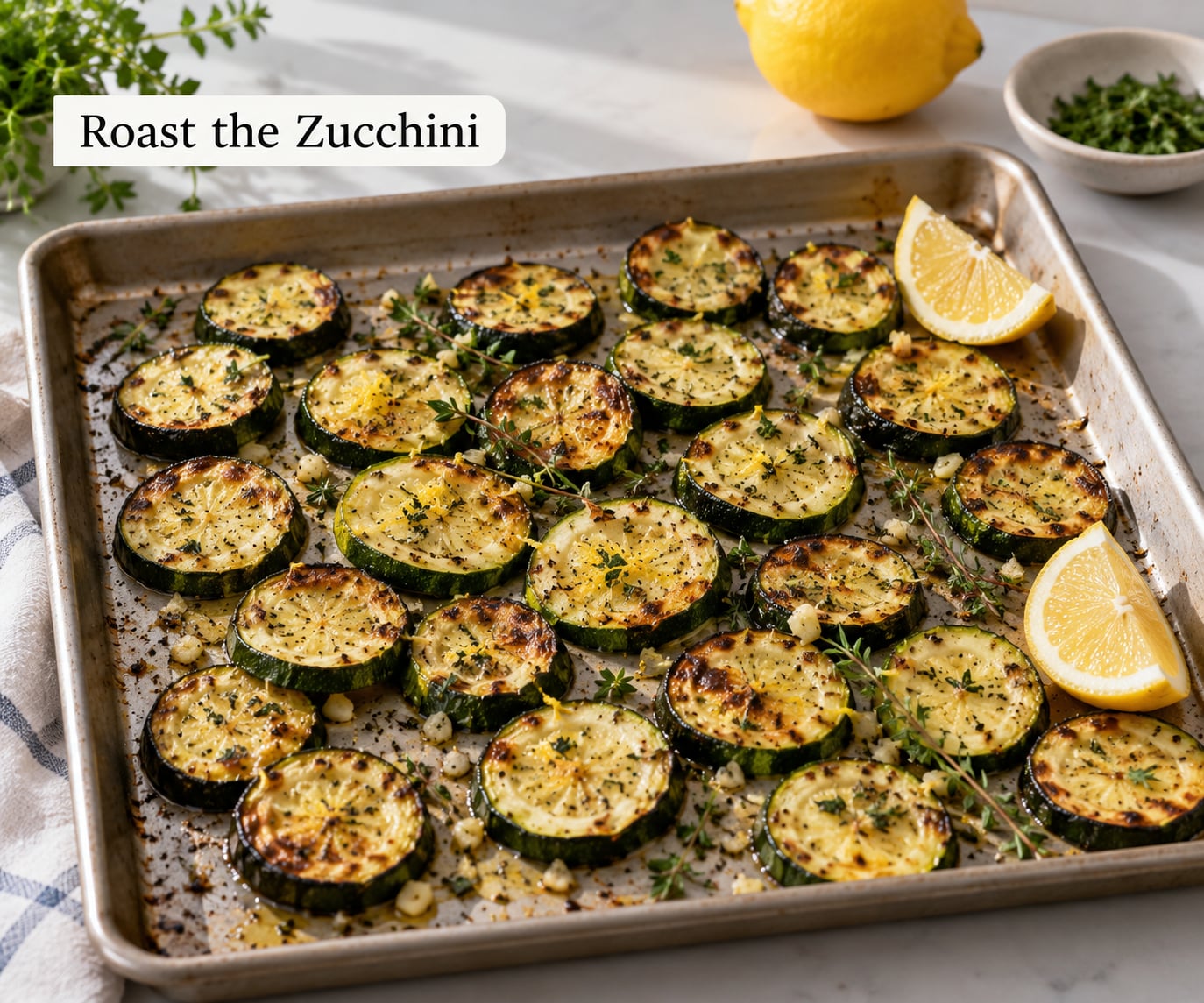
Roasting is what I do when I have more squash than patience. Heat the oven to 425°F, cut the zucchini into half-inch slices or one-inch cubes, toss with oil and salt, and spread them in a single layer with space between. A crowded pan steams itself soggy.
Pull the pan when the edges are deeply browned and the centers give easily to a knife, roughly 20 to 25 minutes for slices and 30 for cubes. Three seasoning routes I rotate: garlic powder, paprika and thyme; lemon zest, olive oil and black pepper; or cumin and chili with a honey drizzle in the last five minutes.
Roasted zucchini also freezes without blanching because the cooking already did the work. Spread the slices on a tray to cool, then pack them flat.
3. Make Zucchini Soup
Soup is where the ugly squash should go. Slice the skin on, soften a chopped onion in butter for five minutes, add the zucchini and enough broth to cover by an inch, then simmer 20 to 25 minutes until a knife slides into the stems with no resistance.
Blend until smooth with a splash more broth. A squeeze of lemon, a handful of basil, or a snowfall of grated Parmesan all work as the finishing move, and the lemon is the one that lifts a whole pot of mild squash into something that tastes deliberate.
Cool it before you jar it, refrigerate in shallow containers, and eat it inside three to four days. If you want it in February, freeze the blended soup in pint containers with a half-inch of headspace, leaving the lid loose until it is solid.
4. Add Zucchini to Pasta Sauce
Dice two zucchini small and add them to a simmering tomato sauce for the last 30 minutes. Zucchini brings water, which is exactly what a jar of sauce that tastes flat and salty is usually missing.
Dice rather than grate. Grated zucchini breaks down into the sauce and makes it cloudy, and the small dice keeps enough shape to read as vegetables. Add it after the sauce has already reduced a bit so the liquid soaks in rather than thinning the whole pot.
One zucchini per person is plenty. Any more and the sauce turns thin, which no amount of simmering will fix once the pasta water is in there.
5. Bake Zucchini Muffins or Quick Bread
The formula is simple: squeeze first, measure second, then write the number of cups on the bag or in your notes because nobody remembers it. Two medium zucchini make about one cup of dry grated flesh. Use that in place of a cup of the flour in any standard quick bread or muffin recipe.
Check doneness with a skewer in the center; it should come out clean or with a couple of damp crumbs, never wet. Loose crumbs fall away from the center in a well-baked loaf, and the bottom crust should be firm enough to lift off the pan.
Variations that work: walnuts and cinnamon, chocolate chips and vanilla, or lemon zest with a thin glaze. If you want to cut the oil, substitute an equal weight of applesauce.
If your zucchini bread turns out dense and gummy, it almost always means the pulp was too wet, not that the oven was too cool. You can fix a loaf that is wetter than you like by baking it in a loaf pan with a cake strip, or by slicing it and letting it crisp in the oven at 325°F for another 15 minutes.
6. Make Zucchini Cookies
Cookies are the trick for picky eaters because you can replace only part of the flour. Grate and squeeze one zucchini, drain it in a sieve for five minutes, then use about half a cup of the damp flesh in place of half a cup of the dry flour in your favorite soft chewy cookie recipe.
Going past half a cup is where the dough gets sticky and unworkable. Chill the dough for 30 minutes, scoop with a cookie scoop, and bake at 350°F for 10 to 12 minutes, until the edges are set and the centers still look slightly underdone.
The texture lands closer to a brownie edge than a crisp cookie, which is fine with a glass of cold milk. Nobody in this house has ever complained about it.
7. Stuff the Zucchini
Cut four zucchini in half lengthwise and scoop out the seeds with a teaspoon so you leave a shell about a half-inch thick. Salt the shells and let them sit for 15 minutes, then blot them dry. That step keeps the boats from leaking into a puddle on the baking sheet.
Fill with a breadcrumb mixture of garlic, grated Parmesan, chopped parsley, lemon zest and olive oil, or with cooked rice, peas and mozzarella. Bake at 375°F for 30 to 40 minutes until the shells are fork-tender and the cheese is bubbling and browned at the edges.
Four zucchini makes a generous side for four people or a light dinner with a salad. If you are using a meat or rice filling, cook it before stuffing so the center is hot all the way through rather than relying on the oven to cook raw filling through a thick shell.
8. Make Crispy Zucchini Chips
Slice into rounds as thin as you can manage, about an eighth of an inch, and hold your breath while cutting. Thickness matters more than seasoning. Thick rounds turn soft in the middle no matter how long you bake them.
For oven chips, toss with a little oil and salt, spread on a lined sheet pan and bake at 400°F for 15 minutes, flipping once, until crisp and golden. An air fryer does it faster: 380°F for 8 to 10 minutes with a shake halfway through, with barely any oil needed.
These do not keep. Plan to eat them within a couple of days and store them in a single layer, because stacking traps steam and softens the batch. They are best with a thick yogurt dip, salsa, or the leftover soup from item three.
9. Pickle the Zucchini
Refrigerator pickles are the fastest preservation method on this list and they need no special equipment. Slice into spears or half-inch rounds, salt them, let them sweat 20 minutes, and drain.
Boil a brine of equal parts vinegar and water with a tablespoon of pickling salt per cup, plus garlic cloves, peppercorns, dill seed or a few dill heads. Pour it hot over the zucchini, leave headroom in the jar, and refrigerate at least 40°F. They are good after 24 hours and keep three to four weeks in the fridge.
Keep this distinction straight: refrigerator pickles stay in the fridge and are not shelf stable. Zucchini is a low-acid vegetable, and plain water-bath canning is not a safe way to store it because the acid level is too low to prevent botulism risk. Shelf-stable pickled zucchini requires acidification with tested lemon juice or citric acid, or pressure canning, following a current tested recipe from a source like the National Center for Home Food Preservation or the Ball brand, rather than anything improvised.
10. Freeze the Zucchini
Yes, you can freeze zucchini, and shredding is the cut that earns its keep. Wash, trim the ends, slice or grate, then blanch in boiling water for three minutes, drain, spread on a towel to cool, and squeeze out as much water as you can. Blanching kills the enzymes that turn frozen squash mushy in storage.
Measure the squeezed portion into labeled freezer bags, write the cup count and the date on each, and press out the air before you seal it. Flat-packed bags stack and freeze faster than lumps. Plan on one cup of dry shredded zucchini per bag, which is roughly two medium squash.
Keep soup portions, such as one-inch cubes, in separate bags from baking portions, because the cut decides what they are good for. Cubes go into stews and soups; slices go into frittatas and chips; shredded goes into breads, muffins, cookies and quick breads. Shredded zucchini thaws badly into cakes and custards, so do not plan a zucchini cheesecake from a freezer bag.
Thaw in the refrigerator overnight inside a towel to catch the drip, or drop frozen pieces straight into a soup or stew while it simmers. Freezing will not rescue squash that was already watery or overripe, so freeze the good stuff first.
11. Add Zucchini to a Frittata or Omelet
Sauté diced zucchini in a hot skillet with a little oil until it is browned and the water has cooked off, then add it to the eggs. Skipping that step is the single reason most disappointing zucchini omelets exist, because the pan releases water straight into the curds and the whole thing goes rubbery.
Salt the cooked zucchini in the pan, then fold in anything quick: soft onions, chopped herbs, a spoon of ricotta, or crumbled feta. Cook the eggs until they are set at the edges but still have a slight wobble in the middle, 3 to 4 minutes for an omelet.
The same pan of cooked zucchini works for a full skillet frittata or for a crustless quiche, so it doubles for a Saturday breakfast that will eat all week.
12. Make Zucchini Fritta or Galette
This is the answer to a full table of medium squash rather than a leftover handful. Slice four zucchini thin, salt them in a colander for 30 minutes, and blot every slice dry. Skip this and the crust goes soft underneath.
Layer the slices with cooked onions, crumbled cheese, herbs and black pepper on a sheet of rolled pastry, fold the border in, and bake at 400°F for 35 to 40 minutes. For a skillet version, use an ovenproof pan with the same layers and bake 30 minutes until the filling bubbles and the base is set.
Do not skip pre-cooking the onions either. Raw onion in the filling releases its own water, and you have enough moisture problems in this vegetable already.
Frequently Asked Questions
How long does zucchini last in the refrigerator?
Whole unwashed zucchini keeps about a week in the fridge at 40°F or below, stored loose in the crisper drawer. Cut zucchini lasts 3 to 4 days, and blanched frozen portions keep 9 to 12 months. Skip washing before refrigerating, since the moisture encourages mold on the skin. If the skin has started to dull and the flesh gives easily to a thumbnail, move to the freezer or the compost.
Should I peel zucchini before using it?
Usually not. The skin holds most of the moisture, it is tender on young garden squash, and it carries most of the fiber. Peel oversized squash that have tough or bitter skin, or use a vegetable peeler in thin strips on large ones. For soups and sauces you can leave it on entirely since the whole thing gets blended.
Why are my zucchini fritters soggy?
Almost always too much water. Grate the zucchini, salt it, wait ten minutes, then squeeze it in a clean towel until the pulp feels dry rather than damp. Weigh the squeezed pulp and use that amount in the recipe. Also avoid overcrowding the pan, which drops the oil temperature and starts steaming instead of frying.
Can I freeze zucchini without blanching it first?
You can, but the texture suffers. Blanching for three minutes in boiling water stops the enzymes that break down cell walls over time, which is what turns frozen zucchini into freezer mush. Skipping it works in a pinch for slices headed straight into soup. Shredded zucchini for baking should always be blanched, squeezed and measured before freezing.
What is the best way to cook zucchini that is too large?
Oversized squash has tougher skin, bigger seeds and more water. Peel it if the skin feels rubbery, cut around the seed core, and salt the sliced flesh in a colander for 30 minutes, then blot it dry. That salting draws out enough water for the squash to actually brown in the oven or skillet instead of steaming itself. Roast it, or use it in soup and sauce where the texture matters less.
How can I tell whether zucchini is still fresh?
Fresh zucchini feels heavy for its size and the skin is glossy with a slight bloom. The skin should resist a thumbnail. If the squash feels light, the skin has wrinkled or dulled, or the stem end has gone brown and dry, it is losing moisture and will not hold up to roasting. Soft spots mean the flesh is already breaking down, so cook it first or freeze it rather than saving it.
Start With the Soft Ones and Preserve the Rest
If you are still staring at a counter full right now, sort the pile once. Anything that already feels soft goes into soup or the compost tonight. Everything firm gets salted, blanched and frozen in measured, dated bags while you still have energy for it.
That is really the whole answer to what to do with too many zucchini: sort it, preserve the firm ones, then cook through two dishes before the pile outgrows you. And if you are still sitting on five pounds of the stuff, take a box to a neighbor. Food pantries and community fridges generally welcome fresh produce, and it beats watching it go soft in the drawer.