To fry fish with cornmeal coating, pat the fillets bone dry, press them into seasoned cornmeal until the coating sticks on every side, then fry them in oil held between 350°F and 375°F until the crust is golden brown and the fish flakes easily with a fork. Total time is about 25 minutes for a batch of four fillets, and the whole thing works in one skillet.
The cornmeal coating is not a batter. It is a dry dredge, and the crust forms because moisture on the fish glues the meal down while the hot oil turns that moisture into steam. Get those two things right — a dry surface and a hot pan — and the coating stops sliding off and starts crunching.
Cornmeal for fried fish is not a shortcut or a substitute when you run out of flour. Regulars on cooking forums treat seasoned yellow cornmeal as the traditional choice for a Southern fish fry, and the same people who ask whether cornmeal belongs on fish at all are usually the ones deep-frying it every Friday. Anglers are even blunter about the one rule that matters: the oil should never drop below 350°F.
Table of Contents
- What You Need
- The coating
- The fish
- The oil and the tools
- Optional extras
- Step-by-Step
- Prepare the Fish and Coating
- How to Fry Fish with Cornmeal Coating
- Drain and Serve the Fish
- Common Mistakes
- Frequently Asked Questions
- What type of fish works best for frying with cornmeal coating?
- Should I use yellow cornmeal, white cornmeal, or a flour mixture?
- How hot should the oil be before adding the coated fish?
- How do I know when fried fish is fully cooked?
- How do I keep fried fish crispy until serving?
- Can I make cornmeal-coated fried fish without gluten?
- Conclusion
What You Need
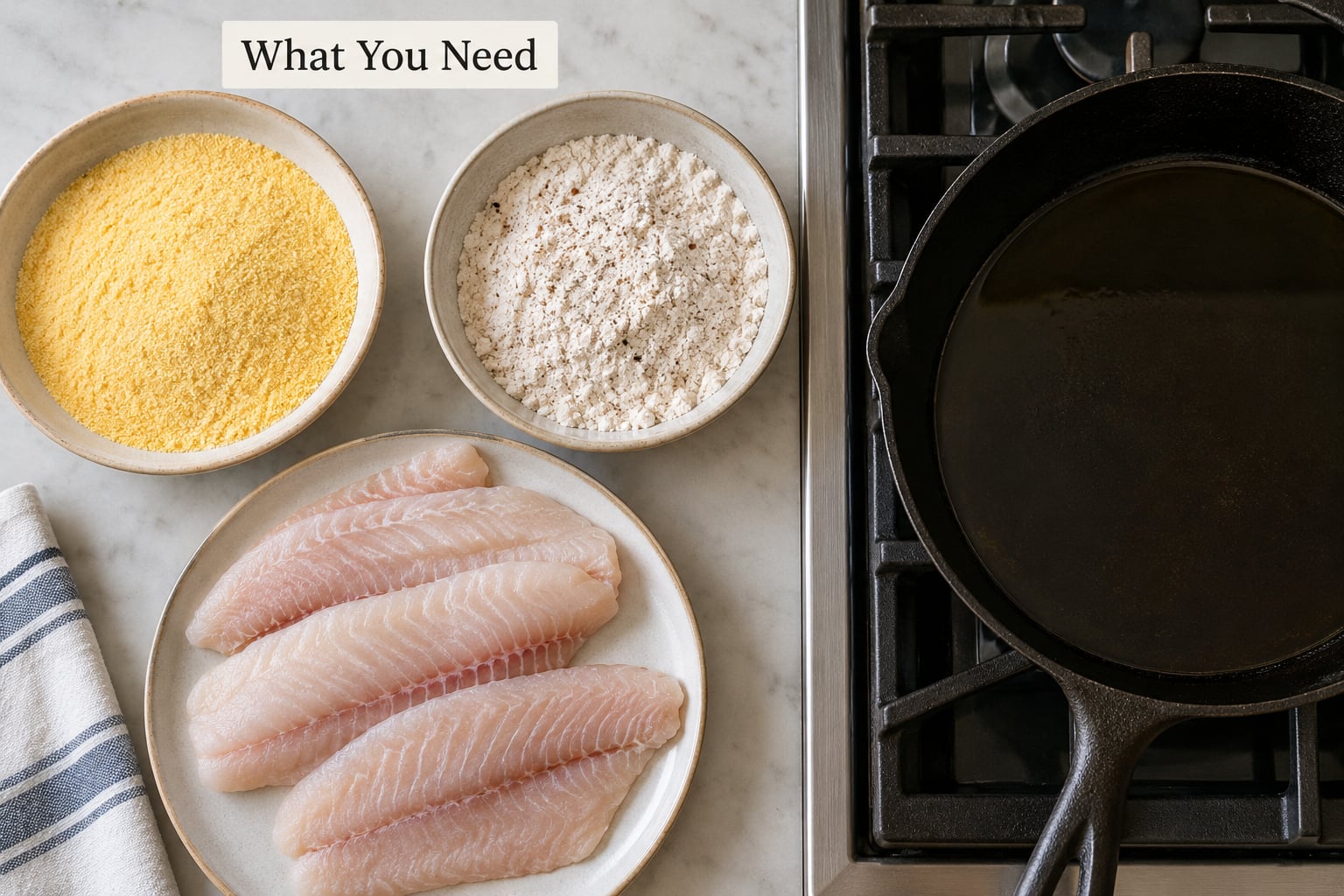
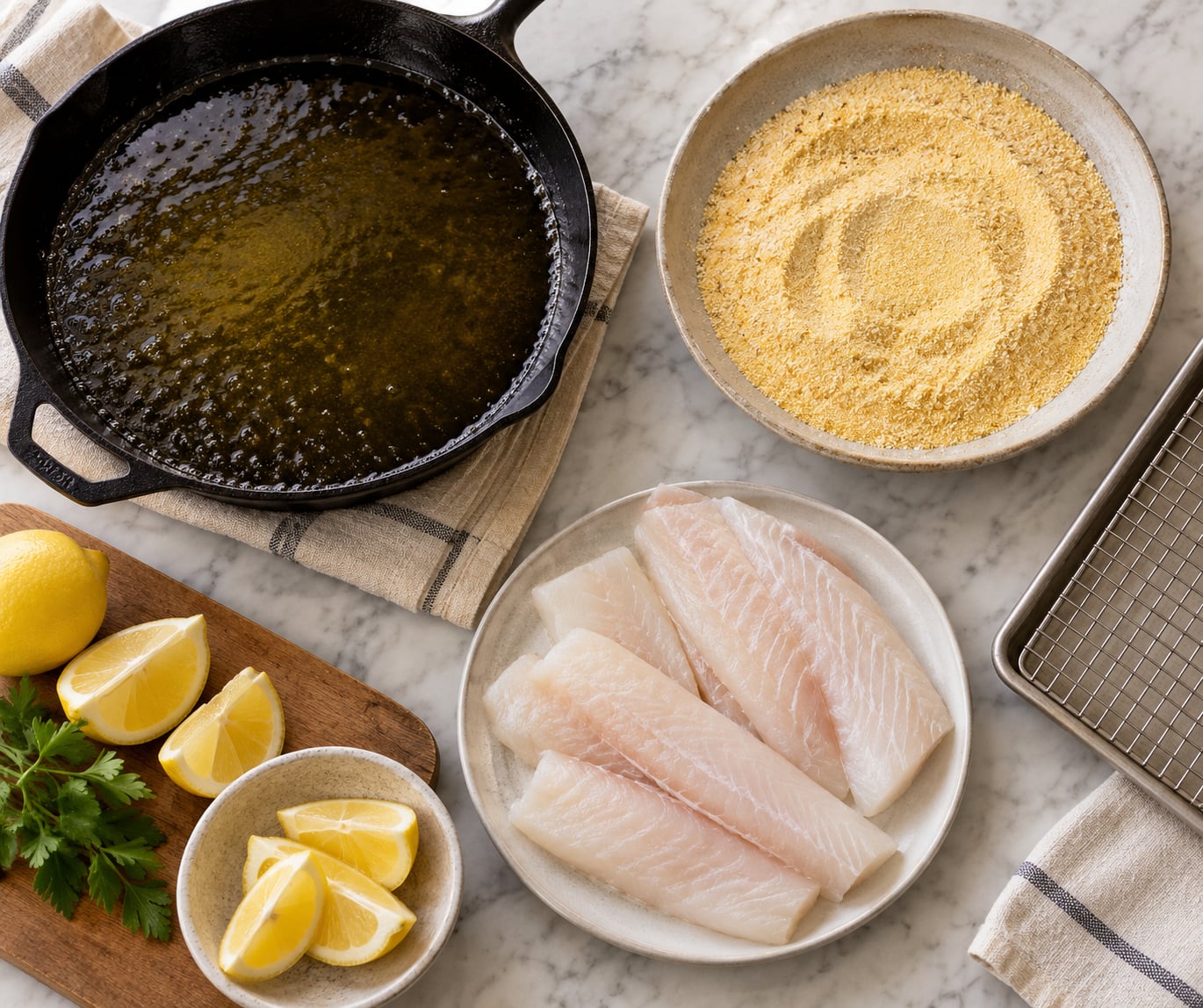
Everything below covers four fillets, roughly 1 to 1.5 inches thick. That is enough for a weeknight dinner for two to three people, and it is the right amount for a first attempt because a crowded cast-iron skillet is the fastest route to a soggy crust.
The coating
- 1 cup yellow cornmeal, medium or coarse grind
- 1 teaspoon salt
- 1 teaspoon black pepper
- 1 teaspoon smoked paprika or plain paprika
- 1/2 teaspoon garlic powder
- 1/4 teaspoon cayenne, optional
That is a Louisiana-style seasoned cornmeal mix, and it is the profile most fish fry cooks use. Two cups of cornmeal with two tablespoons of salt, one tablespoon of pepper and one teaspoon of smoked paprika works just as well if you are scaling up for a crowd.
The fish
Cod, haddock, tilapia, catfish, pollock and salmon all fry well. Whichever you pick, buy fillets cut to an even thickness. Thin, uniform pieces cook at the same rate, and that is how you avoid the dark crust with a raw center that forum cooks complain about most.
The oil and the tools
- Peanut, canola, sunflower or vegetable oil for deep frying
- A cast-iron skillet for shallow frying, or a Dutch oven or electric deep fryer for deep frying
- An instant-read thermometer, which matters more than any other tool on this list
- Two shallow dishes for the dredging station
- A wire rack set over a sheet pan for draining
- A wide spatula or spider
Skip olive oil for deep frying. Its smoke point is low, it flavors the fish, and it will smoke before the cornmeal browns.
Optional extras
Buttermilk for a soak, an egg for a second coat, lemon wedges, tartar sauce, pickles, slaw, hot sauce, and a cast of people who suddenly want to help you eat.
Step-by-Step
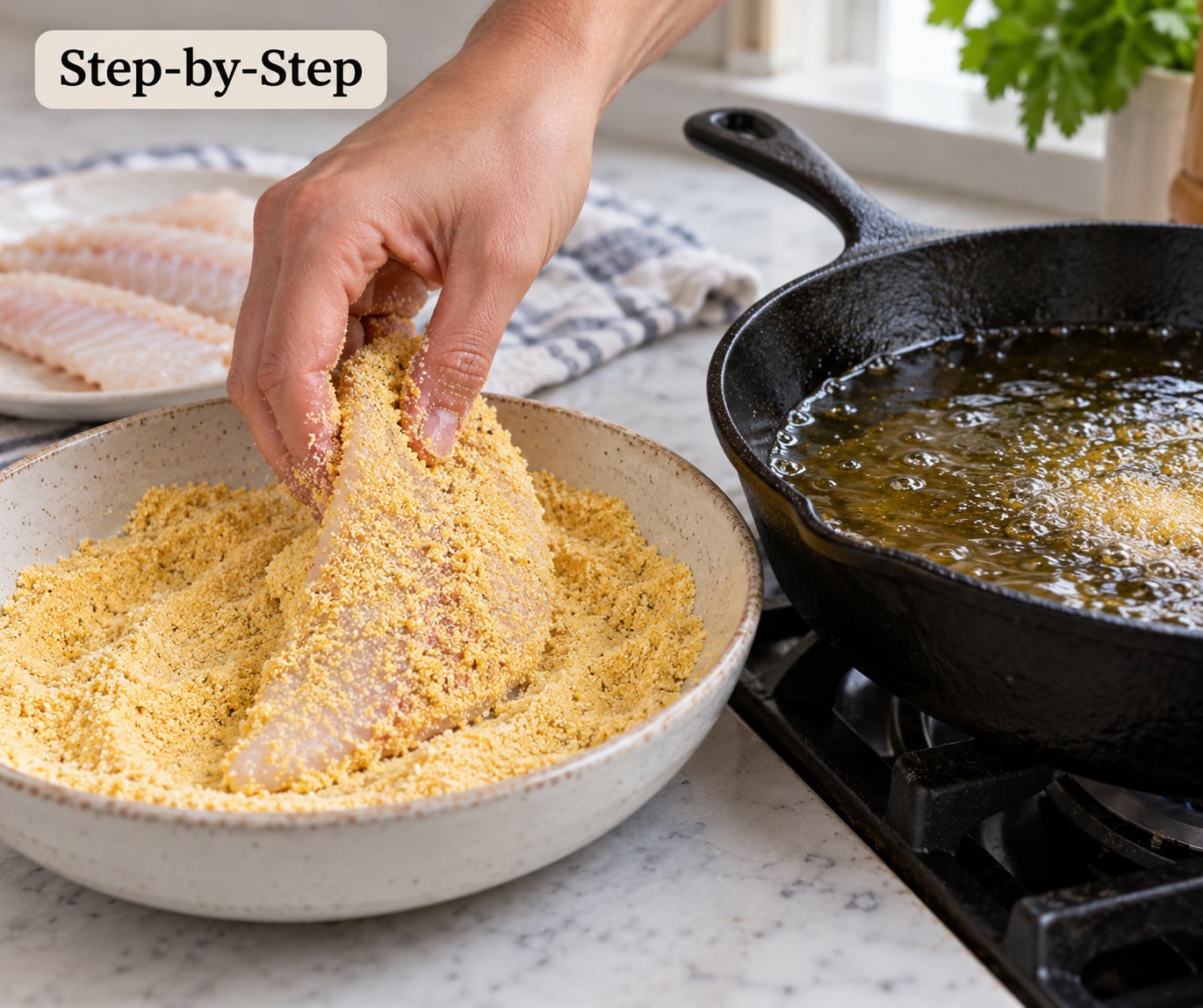
Prepare the Fish and Coating
Start with the step that most recipes bury and that decides everything after it: drying the fish. Lay the fillets between sheets of paper towel and press down until the surface feels dry to the touch, all the way to the edges. Surface water turns to steam in the oil, and steam pushes the coating off into the pan.
Then combine the cornmeal and the seasonings in a wide shallow dish, mixing them with your fingers so the salt and spices are evenly distributed. A second, empty shallow dish sits beside it for finished pieces, so you are not dropping coated fish back into loose cornmeal.
Whether to add flour comes down to what you want. Cornmeal alone gives the roughest, most craggy crust and contains no gluten, but it is less adhesive. Most table recipes I trust use roughly two parts cornmeal to one part flour all-purpose, which gives the crust more grip without turning it heavy.
| Coating | Crispness | Adhesion | Gluten-free | Best for |
|---|---|---|---|---|
| Cornmeal only | Craggy, corn-forward crunch | Fair — needs a dry fish | Yes | A true Southern fish fry crust and gluten-free cooking |
| Cornmeal plus flour, 2 to 1 | Even golden brown | Strong | No | The most forgiving option for a first fry |
| Cornmeal plus cornstarch | Very light, shattering | Strong | Yes | A lighter crust that resists greasiness |
| Double dip with egg | Thickest, crunchiest | Very strong | No | Fish sandwiches and thick fillets |
How to Fry Fish with Cornmeal Coating
Set up the dredging station in this order: fish on the left, cornmeal in the middle, the waiting dish on the right. Then heat the oil before you touch anything. A half-inch of oil in a cast-iron skillet over medium-high heat, or a Dutch oven filled one-third of the way up, both work.
Fish frying starts when a cornmeal speck dropped into the oil sizzles immediately. For a shallow pan fry, that is about 350°F. For a deep fry where the pieces float, aim for 375°F. The oil temperature should never fall below 350°F at any point during cooking, because a cool fryer soaks oil into the crust instead of sealing it.
Dredge each fillet by laying it in the cornmeal, pressing it down firmly with your palm so the coating reaches the edges, then lifting it, shaking off the excess, and setting it on the waiting dish. Turn it once and repeat on the second side. Press firmly and rest: a loose dusting of cornmeal blows off in the oil, and a rested coating has time to hydrate and glue itself to the fish.
Fry in small batches. Leave real space between the pieces, or the oil temperature crashes, the crust drinks the oil, and the pieces steam each other instead of browning. A thermometer clamped to the pan edge or a fryer basket you do not overcrowd are both ways to keep control.
| Method | Oil temperature | Fish thickness | Time per side | Total time |
|---|---|---|---|---|
| Shallow pan fry | 350°F (175°C) | 1/4 inch | 2 to 3 minutes | 4 to 6 minutes |
| Shallow pan fry | 350°F (175°C) | 1/2 inch | 3 to 4 minutes | 6 to 8 minutes |
| Shallow pan fry | 350°F (175°C) | 3/4 inch or thicker | 4 to 5 minutes | 8 to 10 minutes |
| Deep fry | 375°F (190°C) | 1/4 to 1/2 inch | 2 to 3 minutes | 3 to 5 minutes |
| Deep fry | 375°C (190°C) | 3/4 inch or thicker | 4 to 6 minutes | 8 to 12 minutes |
Turn the fish once, and only once, and use a wide spatula or a spider rather than tongs, which tear the crust off. Lower each piece away from you so the oil splashes back and not forward. Gentle lowers also stop the violent spatter that comes from dropping wet fish into hot oil.
The fish is done when the crust is deep golden brown, the coating feels firm to the touch, and the thickest part flakes easily with a fork and reads 145°F on an instant-read thermometer. That is the USDA safe minimum internal temperature for fish, and it is a two-second check worth doing every time.
Drain and Serve the Fish
Lift the fish out onto a wire rack set over a sheet pan, not onto a plate. A plate traps steam underneath and softens the crust you just spent twenty minutes building. A paper towel underneath the rack catches the drips without touching the bottom of the fish.
Season immediately while the crust is hot. Salt, a squeeze of lemon, hot sauce, or the tartar sauce and pickles you set out earlier. Fried fish sandwiches, fish tacos and hush puppies made from the same seasoned cornmeal all pair well with it.
For a batch cooked ahead, hold the rack in a single layer inside an oven set to 200°F. Fifteen to twenty minutes is the limit before the crust starts to give up its crunch. Never stack the pieces, and skip the microwave unless you have to; it makes the crust soft and leathery.
Common Mistakes
Almost every disappointing fried fish comes down to one of eight things, and all of them have a straightforward fix.
- The fish was wet. Pat it dry again, all the way to the edges. Steam is what lifts coating off.
- The coating slid off in the oil. Press the cornmeal on with real pressure, let it rest five minutes before frying, and consider a light buttermilk dip first to give the meal something to grab.
- The crust is greasy and pale. The oil was not hot enough. Heat it to 350°F or 375°F and confirm with a thermometer, not a guess.
- The crust is dark but the center is raw. The pieces were too thick for the time. Cut fillets to an even three-quarter inch or drop the oil to medium heat and give it longer.
- The fish stuck to the pan or to itself. It went in wet, or the pieces touched. Dry more, and leave space between each piece.
- Oil splattered everywhere. Lower the fish slowly and away from you, pat it dry, and skip the wet step for pieces you are about to lower.
- The crust turned gritty instead of crisp. Fine cornmeal powders into the oil. Coarse or medium grind, sometimes called stone-ground or polenta-style, stays crunchy.
- Coating debris clogged the fryer. Fish fry operators call this out more than home cooks do. Shake off excess cornmeal before lowering, and let loose crumbs settle out of the oil before the next batch.
A note on safety, since this method involves a lot of hot oil. Let the oil cool completely before you strain or dispose of it, pour it into a container rather than the drain, and keep a lid and a metal sheet pan next to the burner. Never leave oil unattended while it heats.
Frequently Asked Questions
What type of fish works best for frying with cornmeal coating?
Cod, haddock, pollock, tilapia, catfish and salmon all take a cornmeal crust well. The deciding factor is even thickness, not the species: buy fillets cut to about three-quarter inch so they cook at the same rate as the crust browns. Thinner pieces at a quarter inch need only two to three minutes a side.
Should I use yellow cornmeal, white cornmeal, or a flour mixture?
Yellow cornmeal gives the classic golden color and a slightly sweet flavor, and it is the traditional choice for a Southern fish fry. White cornmeal fries paler and milder. Mixing about two parts cornmeal to one part all-purpose flour makes the coating stick more reliably, while plain cornmeal alone is coarser and gluten-free.
How hot should the oil be before adding the coated fish?
Use 350°F for a shallow pan fry and 375°F for a deep fry where the pieces float. A cornmeal speck dropped into the oil should sizzle right away. Watch the thermometer the whole time: if the oil drops below 350°F during cooking, the crust soaks up oil instead of sealing and turns greasy.
How do I know when fried fish is fully cooked?
Look for a deep golden brown crust that feels firm, then press a fork into the thickest part. It should flake apart easily and read 145°F on an instant-read thermometer, which is the USDA safe minimum internal temperature for fish. If the center is still translucent or resists the fork, give it another minute.
How do I keep fried fish crispy until serving?
Drain on a wire rack set over a sheet pan so steam escapes from underneath instead of softening the crust. Season right away while hot. For a batch cooked ahead, hold the rack in a single layer in a 200°F oven for no more than fifteen to twenty minutes, and skip the microwave.
Can I make cornmeal-coated fried fish without gluten?
Yes. Use fine or coarse cornmeal with salt, pepper and spices, and skip the flour entirely. The crust stays craggier and crunchier than a flour blend, though it needs a bone-dry fish and a firm press to adhere. For an even lighter result, swap in a small amount of cornstarch, which is also gluten-free.
Conclusion
Start with the first three things that decide the result: pat the fillets bone dry, set up a bowl of seasoned cornmeal and press the coating on firmly, and get the oil to 350°F or 375°F before anything goes in. Keep the oil from dropping below 350°F, fry in small batches, and drain on a wire rack so the crust keeps its crunch until it reaches the table.