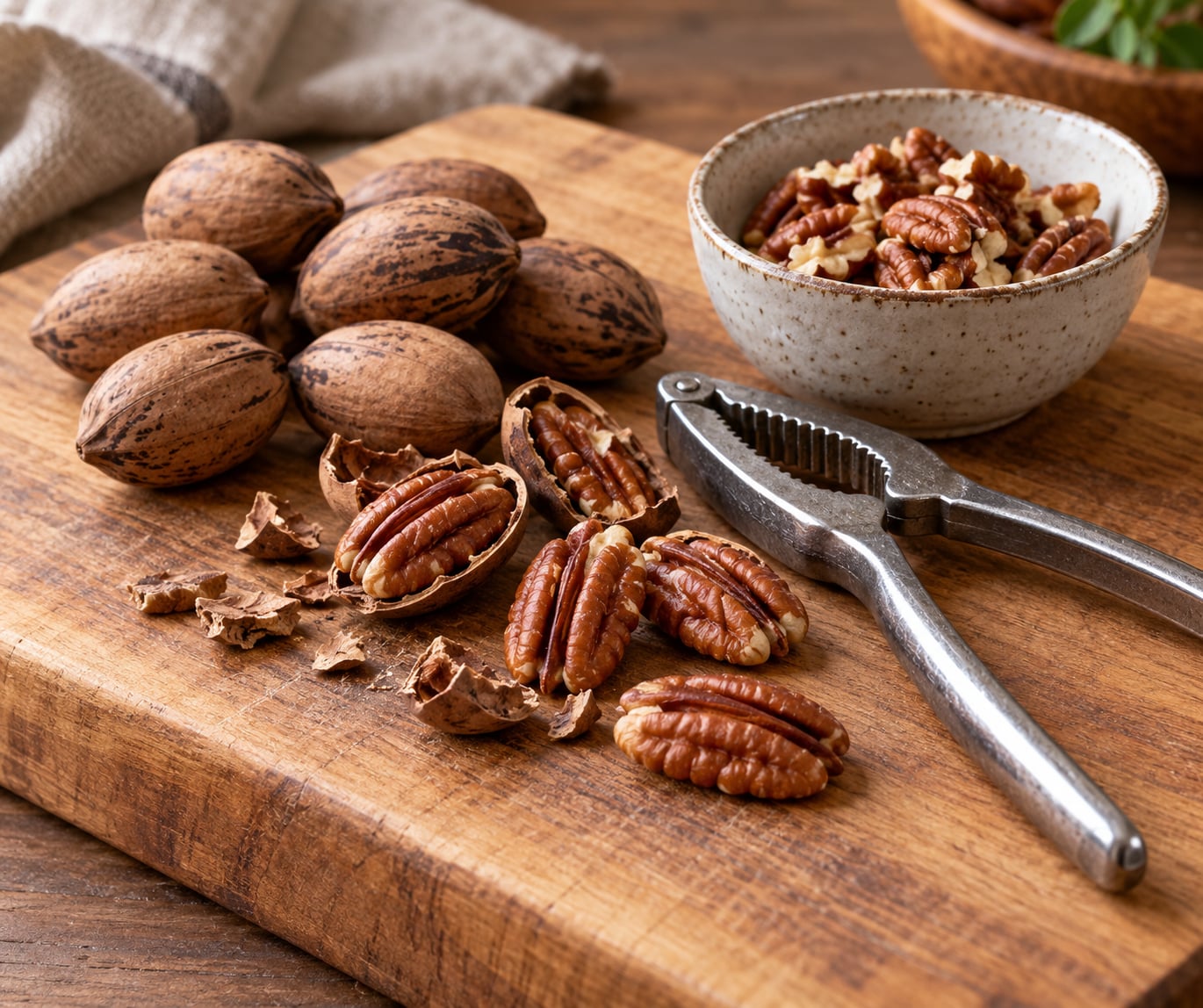
If you only need a cup or two of chopped pecans, the fastest way to crack them at home is a nutcracker and a couple of quiet minutes on the counter. For bigger baking days, a rolling pin beats a hammer on mess and breakage, and a knife handle covers the odd handful with no tool at all. The whole job takes five minutes; the fiddly part is keeping the nut meat in pieces instead of crumbs.
Most people over-crack. They hit a pecan hard enough to hear it, then find powder in the bowl and dust all over the counter. A pecan shell is hard but thin, and the kernel inside is softer and a touch smaller, so it only takes a controlled squeeze rather than a swing.
Table of Contents
- What You Need
- How to Crack Pecans at Home: Step-by-Step
- Method 1: How to Crack Pecans at Home With a Nutcracker
- Method 2: Roll Pecans Under a Rolling Pin
- Method 3: Use a Knife or Heavy Pan for Small Batches
- How to Remove Pecan Skins Without Damaging the Nuts
- How to Choose the Right Method for Your Recipe
- Common Mistakes and How to Fix Them
- Frequently Asked Questions
- Should pecans be roasted before cracking?
- How do you remove the skins from pecans?
- What is the best tool for cracking pecans at home?
- How do you keep pecans from becoming bitter?
- How should cracked pecans be stored?
- Can you crack pecans without a nutcracker?
What You Need
You do not need anything exotic. Here is the honest list.
- In-shell pecans. Buy them raw if you plan to roast them yourself, since roasting in-shell locks moisture inside the kernel.
- A nutcracker, pliers, or a rolling pin. Any of the three works; they differ mostly in how much control you get.
- A cutting board. Big enough that shell fragments stay on it instead of bouncing onto your floor.
- A sharp paring knife. Its real job is scraping skin and shell fragments out of the crevices, not cracking.
- A clean towel or two. One under the board to catch crumbs, one folded over the rolling pin to stop pieces shooting sideways.
- A wide bowl and a fine strainer or colander. For shaking out shell dust once the nuts are cracked.
Airtight containers matter only if you are not using the pecans the same day. Get those ready before you start, because once the nuts are cracked they go everywhere.
How to Crack Pecans at Home: Step-by-Step
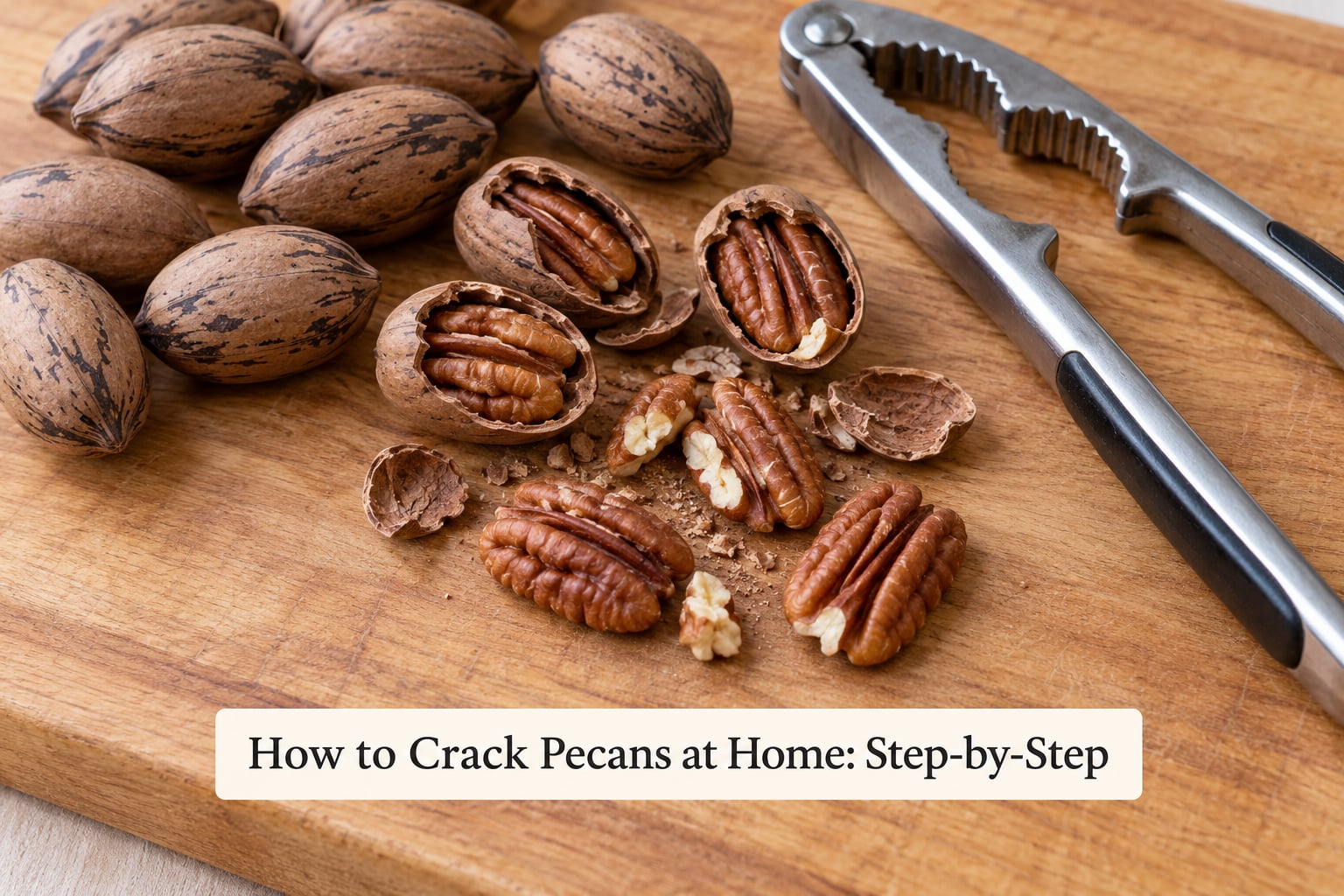
Every method below shares the same frame. Once you know the workflow, switching tools takes seconds.
- Sort the pile. Shake the pecans in a bowl or roll them between your palms. Anything that rattles loudly is mostly shell with a shriveled kernel inside. Pull out anything with deep cracks or a rusty-brown, powdery spot on the shell.
- Set up before you crack. Towel under the board, bowl to catch kernels, another bowl for shells. Cracking first and cleaning later is how shell ends up in the pie.
- Crack five, not fifty. Do a small test batch and check the result. If the pieces are crumb-sized, slow down or change tools.
- Tap out the shell fragments. Hold each kernel over the colander and tap it, or rub it gently with the flat of the paring knife. Ridges catch pieces of shell that look invisible but turn up bitter.
- Dust off loose skin. Most of it peels away with the shell. Leave the rest unless the recipe calls for skinless nuts.
- Store or use the same day. Cracked pecans go slightly soft faster than whole ones, so plan to use them within a week or freeze them.
Method 1: How to Crack Pecans at Home With a Nutcracker
A nutcracker gives you the cleanest, most consistent halves, one nut at a time. This is what to reach for when a recipe calls for whole pecan halves to sit on top of a pie or a candied batch where appearance matters.
Put a single pecan in the cracker with the seam running lengthwise between the jaws, not across them. Squeeze until you hear one clear crack, then stop. That single fracture is usually all it takes. Turn the nut ninety degrees and give it a much lighter tap to release the other side.
Two habits separate good results from crumbs. Never squeeze harder because the first crack sounded disappointing, and always open the nut with your fingertips rather than pulling the halves apart. The kernel usually lifts straight out of the shell.
For stubborn, thick-shelled nuts, hit the two pointed ends only. That is the weakest point of the shell, and a couple of light taps there usually frees the meat without touching the center.
Method 2: Roll Pecans Under a Rolling Pin
The rolling pin method trades precision for speed, and it is the right call when a recipe wants chopped pieces rather than display halves. Put a dozen pecans in a freezer bag, seal it, or lay them between two sheets of parchment. Both keep the shells from shooting across the kitchen.
Roll back and forth over the bag with light pressure. You want the shells to fracture and separate, not the kernels to pulverize, so slow down the moment you start hearing a softer, less crackly sound. In practice that takes three or four passes per batch.
Pulse in short bursts instead. Ten quick taps then a check beats one long roll, because you can see the moment pieces turn from halves into fragments. Expect a mix of halves and smaller pieces, which is exactly what a pecan sandy, a banana bread, or a pecan butter wants.
Pour the batch into a bowl when it is done, then pick out the larger halves first if the recipe needs them for decoration.
Method 3: Use a Knife or Heavy Pan for Small Batches
When you need four pecans and you do not own a nutcracker, a knife does the job. Lay the pecan seam-side down on the board, hold it steady with the pads of your fingers, and tap the flat side of the knife across the pointed ends. Two light taps crack the ends; the shell then peels back and you lift the kernel out whole.
A heavy pan works the same way. Put the pecans under it, press down gently with your palm on the handle, and check after each press. You are looking for a shell that opens without a kernel that splits.
Neither trick is fast, which is why they suit a garnish or a single pie rather than a holiday baking marathon. Keep your fingers flat and curled slightly inward, and never tap a knife toward your palm.
How to Remove Pecan Skins Without Damaging the Nuts
The bitterness in pecans comes from the thin brown membrane and skin clinging to the ridges of the kernel, not from the nut meat itself. Pull off every fleck and the nut tastes sweet and clean; leave them and it turns sharp.
Most skins come off with the shell if you roll or pick the kernel while it is still warm, which is why a batch warmed briefly or cracked straight from the freezer sometimes peels better. For stubborn patches, warm the cracked kernels in a dry skillet over low heat for a few minutes, then rub them between your thumb and forefinger. The skin loosens as the surface goes dry and slightly oily.
For a soak, cover the cracked kernels with hot water for a few minutes, drain, and rub. Peels come away more readily. Be aware it washes off some surface oils, so pat them dry thoroughly before roasting.
Now the part most recipes get wrong: for pecan pie, cookies, and bread, leaving a little skin on is fine because the pieces go into a batter that hides it. Peeling every kernel before making candied pecans is usually wasted effort, and it costs you flavor.
How to Choose the Right Method for Your Recipe
All three methods produce edible pecans. They differ in what you get out of them, so pick based on how the nuts will be used.
- Nutcracker gives even halves, one nut at a time, with the least broken meat. Slowest of the three and the most consistent. Best for pie toppings, candied pecans, and anything you want to look at.
- Rolling pin gives mixed sizes, from halves to coarse crumbs, in a fraction of the time and almost no flying shell. Best for chopped nuts in batters, breads, granola, and pecan butter.
- Knife or pan gives clean kernels for a small batch with no equipment beyond what you own. Best for a garnish, a test batch, or a kitchen with no nutcracker.
A rough rule I use: if the pieces will be visible, crack them by hand. If they will be stirred into something, roll them.
If you are shelling more than a few pounds at a time, the workflow changes completely. Work in batches of about a dozen so the pieces stay consistent, keep two bowls going so you never sort shell from kernel at the end, and take breaks. Hands get sore well before the pile runs out.
Common Mistakes and How to Fix Them
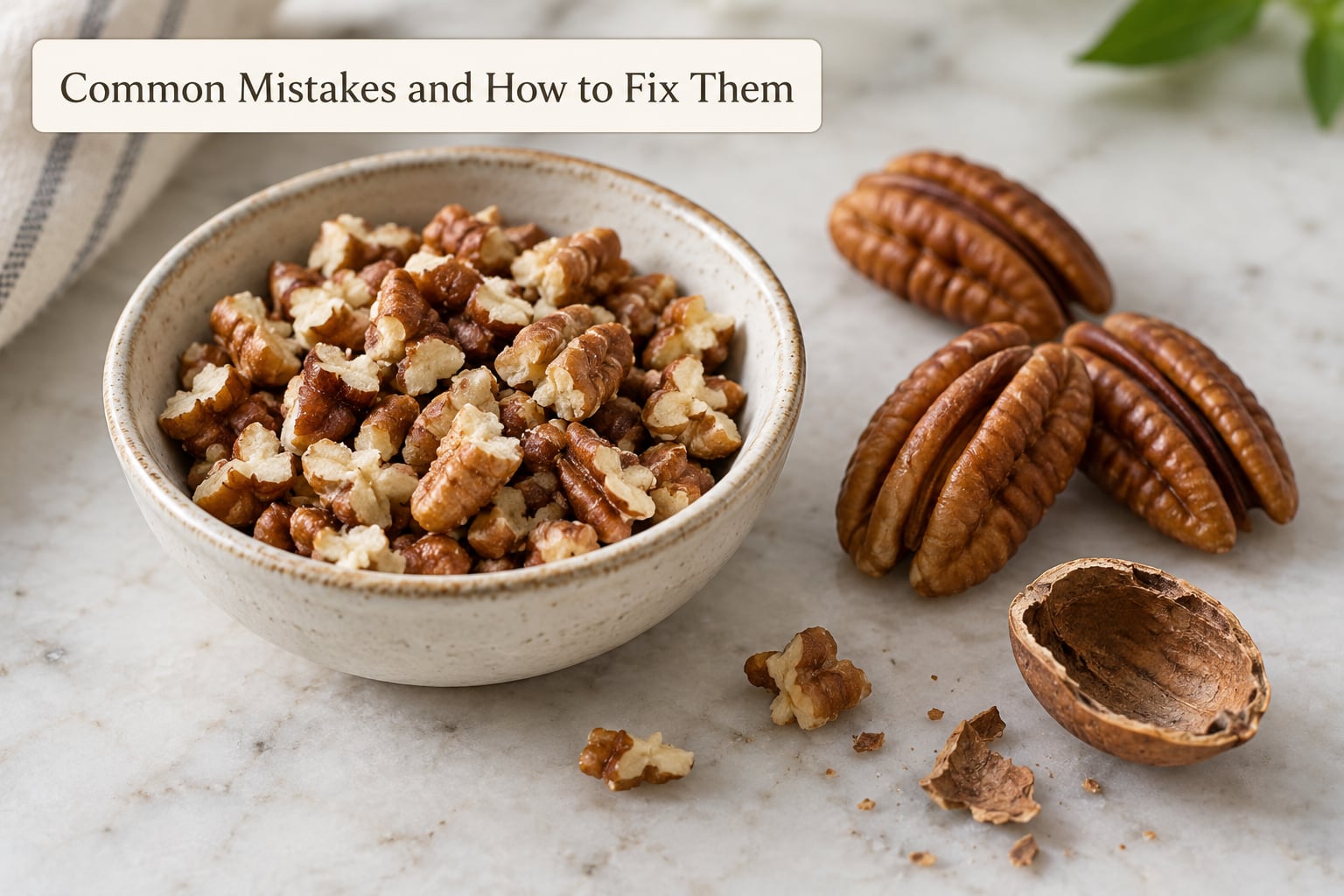
The kernels came out as crumbs. You squeezed too hard. A pecan shell fractures after one firm squeeze; anything past that is force applied directly to the nut meat. Slow down and stop at the first sound.
You hit the middle of the nut. The thickest part of the shell crosses the center of the kernel. Aim for the pointed ends or the seam instead, and rotate the nut rather than hitting the same spot twice.
Shell fragments keep turning up in the bowl. You are not checking. Tap each kernel over a colander and run the flat of a knife along the ridges, then pick out what catches the light. Watch for brown grit inside a piece you thought was clean.
The pie tastes bitter. A piece of shell or a patch of brown membrane went into the batter. Pull the nuts back out and pick them over, and next time peel while the kernels are still warm.
Your pieces are all different sizes. You cracked them in one big batch. Smaller batches mean you can stop each batch at the right moment instead of guessing about the nuts at the bottom of the pile.
The nuts are sticky and hard to handle. Pecans get tacky as their natural oils come to the surface, and warm kitchens make it worse. Keep them in the fridge during a long session and wipe your fingers on a dry towel instead of rinsing them.
The cracked nuts went soft overnight. Moisture from the shells gets into the exposed kernel. Store them airtight and they will hold their crunch, or freeze anything you will not bake within a week.
Frequently Asked Questions
Should pecans be roasted before cracking?
No, and roasting them in-shell is usually a mistake if you want to crack them later. Heat drives moisture into the kernel and the nut meat gets softer and more likely to crumble. Roast after cracking, at 325 degrees F for 10 to 15 minutes, stirring twice. If your nuts are dried-out or old, five minutes in a warm skillet before cracking makes the shells easier to split.
How do you remove the skins from pecans?
Crack the nut, then rub the warm kernel between your thumb and forefinger; most of the brown membrane peels away while the nut is still warm. For patches that stay put, toast the cracked kernels briefly in a dry skillet until the surface looks slightly oily, then rub again. A few minutes in hot water also loosens the skins, though it rinses off some of the natural oils.
What is the best tool for cracking pecans at home?
A nutcracker for most people. It gives the most consistent halves, breaks the shell without touching the kernel, and is fast enough for a few pounds. Pliers or side cutters work nearly as well and are usually already in a drawer. A rolling pin wins when you want chopped pieces rather than halves, and costs almost nothing.
How do you keep pecans from becoming bitter?
Bitterness comes from the brown membrane inside the shell and from any fragment of shell that gets left in the kernel, not from the nut meat. Check every piece after cracking by tapping it over a colander and running a knife along the ridges. Peeling is optional for most baking since the pieces disappear into a batter, but it matters if you are eating them straight from the bowl.
How should cracked pecans be stored?
Keep them airtight at room temperature for about a week, in the refrigerator for several weeks, or in the freezer for up to a year. The more surface area a nut has, the faster it loses texture, so crack only what you need for the next bake. Toast them again at 325 degrees F for 8 minutes if they turn soft in storage.
Can you crack pecans without a nutcracker?
Yes. Put the nuts in a sealed freezer bag or between parchment sheets and roll them with a rolling pin, three or four light passes per batch. A heavy pan pressed gently on top of a single pecan also opens the shell. Both approaches suit chopped nuts for baking rather than display halves.
Start with five pecans in a nutcracker. If the halves come out clean, keep going; if they crumble, drop to a gentler squeeze before you work through the whole bowl.