Two weeks is realistic for leaf lettuce, but only when you wash it at home, dry it hard, and store it in a paper-towel-lined container in the crisper drawer. Bagged pre-washed greens rarely clear five days. So how to keep lettuce fresh for two weeks comes down to one thing: controlling moisture.
Store-bought bags lose the fight early because the leaves reach your kitchen damp from the processing line. That trapped water is what turns lettuce slim, limp and brown, not the fridge.
Below is the full routine, what to expect at day 5 versus day 14, and how to tell the difference between lettuce that is merely past its best and lettuce you should throw out.
Table of Contents
- What You Need
- Step-by-Step: How to Keep Lettuce Fresh for Two Weeks
- 1. Choose Fresh Lettuce and Inspect the Leaves
- 2. Wash the Lettuce Only When Needed
- 3. Dry the Lettuce Thoroughly
- 4. Store the Lettuce in the Right Container
- 5. Keep the Lettuce Cold and Separate From Heavy Odors
- 6. Check and Rewrap the Lettuce During Storage
- Common Mistakes
- Frequently Asked Questions
- Should I wash lettuce before storing it for two weeks?
- How long does lettuce stay fresh in the refrigerator?
- What is the best container for keeping lettuce fresh longer?
- Can I store lettuce in a sealed plastic bag?
- Can lettuce be frozen instead of refrigerated?
- How do I tell if stored lettuce has gone bad?
- Conclusion
What You Need
None of this is specialist gear. Everything below is either already in your kitchen or costs almost nothing.
- A salad spinner, or a clean kitchen towel and a colander
- Plain absorbent paper towels
- A rigid container with a lid that is not airtight all the way around, or a large resealable bag
- Cool running water and a large bowl or sink basin
- Access to your crisper drawer, and the humidity setting if your fridge has one
The one item worth buying is a rigid container. A floppy bag has no structure, so the leaves get crushed under their own weight, and crushed spots brown fast. Glass and clear plastic containers are easier to eyeball for condensation than any bag.
Step-by-Step: How to Keep Lettuce Fresh for Two Weeks
1. Choose Fresh Lettuce and Inspect the Leaves
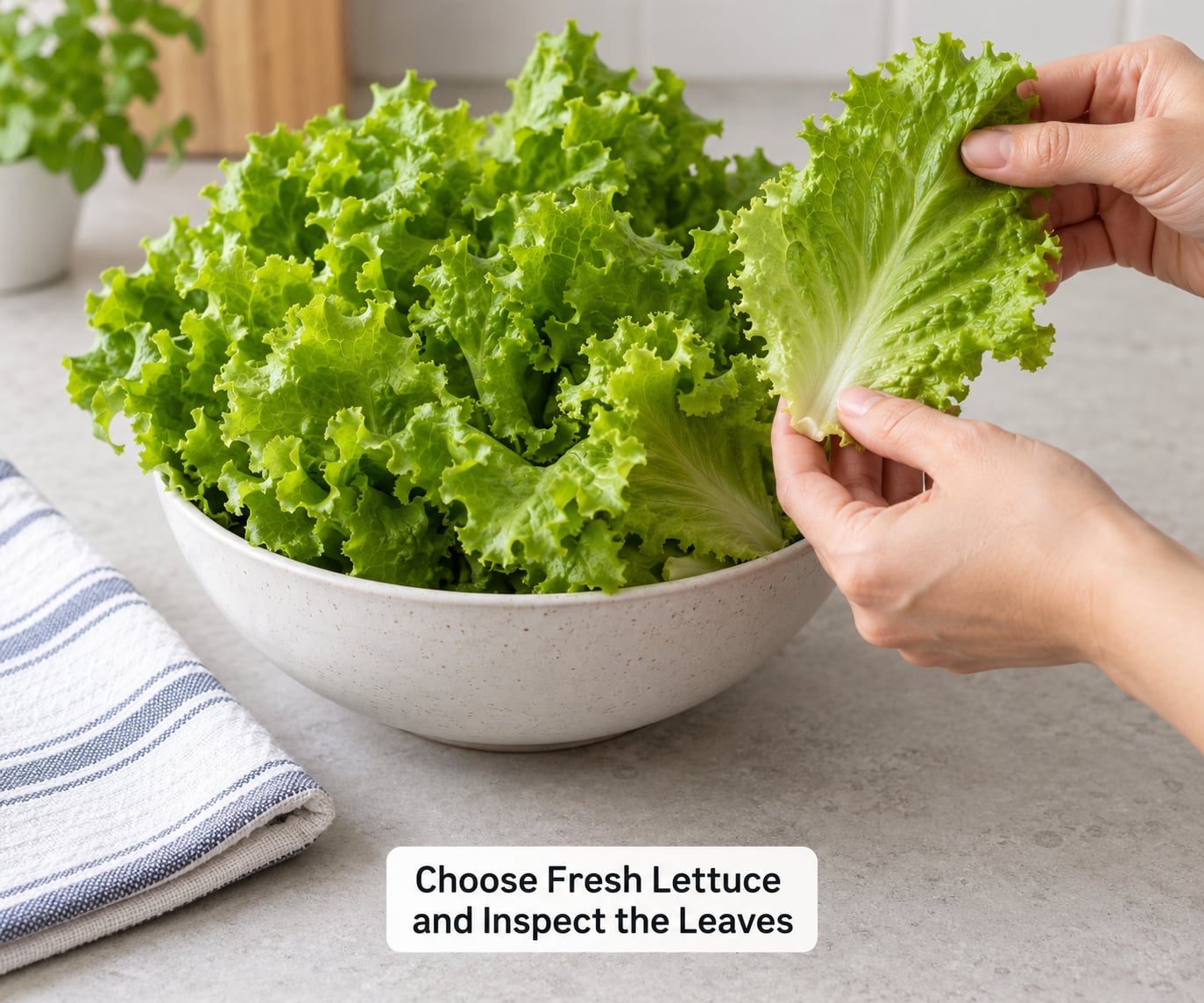
Buy it cold and keep it cold. Pick heads that feel firm and heavy for their size, with leaves that look matte and dry rather than glossy with surface water.
Strip off the two outermost leaves before anything else. They have taken the most handling, and any dirt or bruising there spreads to the rest of the head within days.
Reject anything already soft at the core, browning at the edges, or slimy to the touch. Smell it. A slightly sour or fermented smell means the leaves are done, no matter how they look on the outside. Refrigerate the good heads right away, before you finish unpacking the rest of the shop.
2. Wash the Lettuce Only When Needed
For loose leaves you are about to eat within a few days, prewashing is optional and storing them dry gives you the longest runway. Skip it, refrigerate the whole head, and wash at the moment you use it.
If you want washed leaves ready to grab, separate them one at a time under cool running water and swish gently. No soap, no warm water, and no soaking. Warm water softens the tissue, and a five-minute soak lets water push into the cut edges.
The one exception is lettuce straight from a garden or farmers market stall, which usually carries soil. That gets rinsed straight away, then dried immediately.
3. Dry the Lettuce Thoroughly
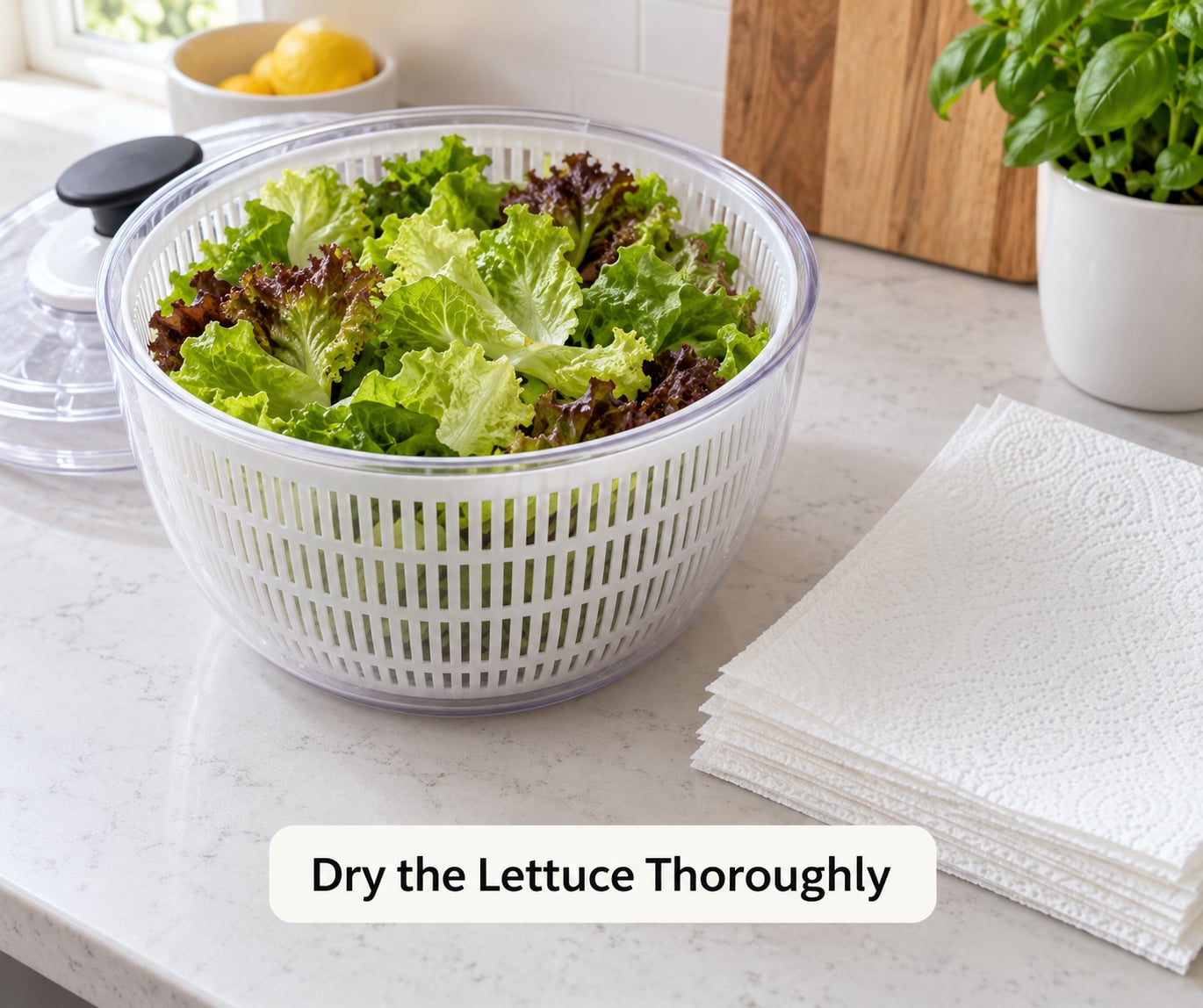
This is the step people rush, and it is the step that decides whether you get two weeks or two days. Surface water sitting against the leaf accelerates both moisture loss and cell breakdown, so the leaves go limp, develop an off smell, and eventually turn to slime.
Use a salad spinner and spin in batches you can actually feel through, usually two or three pulls per batch. Piling a whole head in at once defeats the purpose.
No spinner? Lay the leaves in a single layer on a clean towel, roll it up and press firmly, then repeat with the opposite side. Do not pat with a damp cloth; you will just push water around.
4. Store the Lettuce in the Right Container
Whole, unwashed heads want breath. Wrap the head loosely in a dry paper towel, drop it in a bag or the crisper, and do not seal it tight.
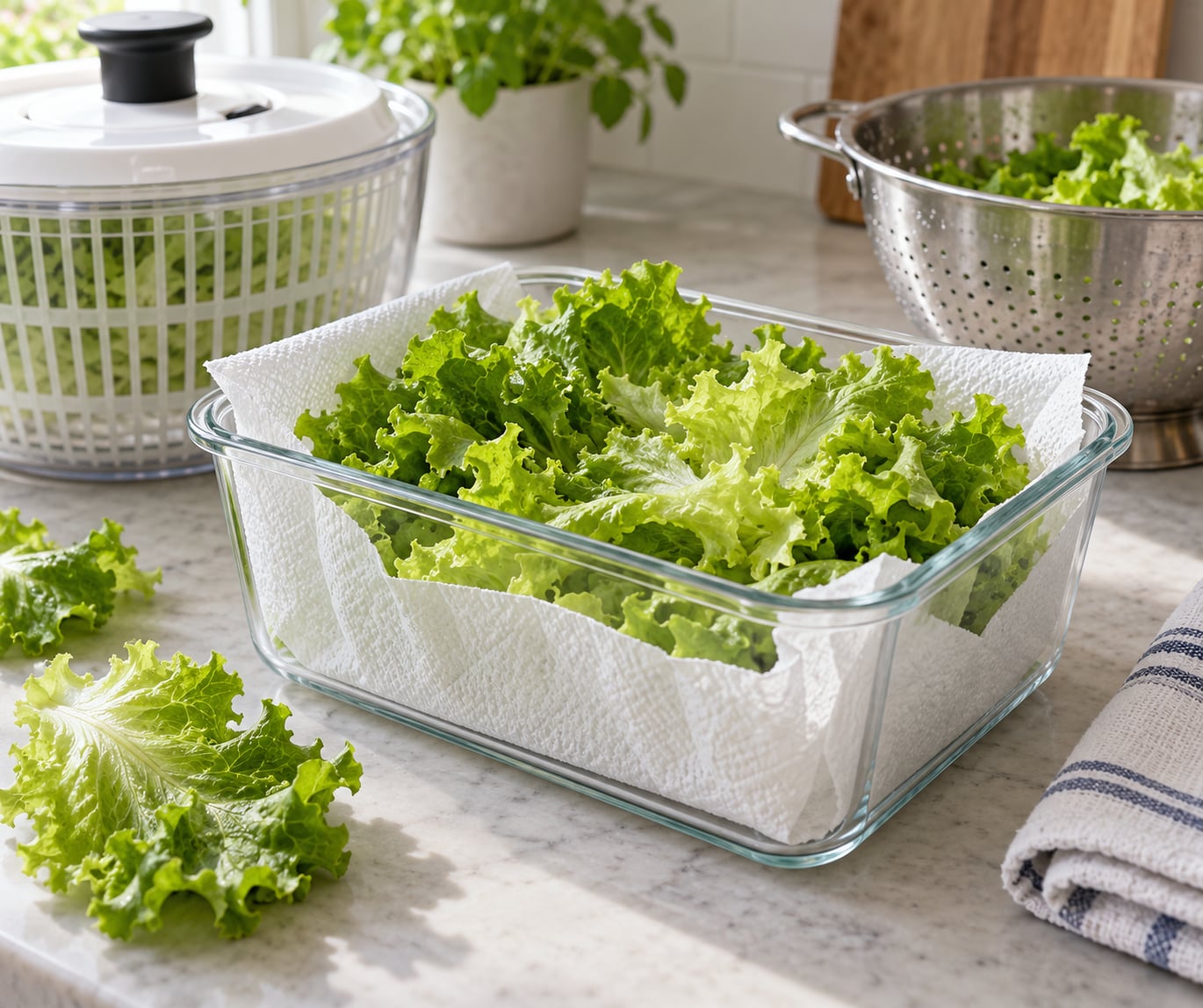
Cut or loose leaves want structure. Line the bottom of a rigid container with two paper towels, add the dried leaves without packing them down, lay a double layer of towel on top, and close the lid. The towels wick up escaping moisture and give you something to swap out.
Leave a small gap rather than a hermetic seal. Lettuce needs a little air moving around it, and a container sealed airtight traps condensation on the leaves and on the container walls.
On the dry versus damp towel argument: a dry towel is safer for store-bought washed leaves, because any extra moisture feeds decay. Gardeners who use a lightly damp towel tend to be working with lettuce that has thick, unwashed leaves and lots of soil, and they change that towel every day.
5. Keep the Lettuce Cold and Separate From Heavy Odors
The crisper drawer is the right home. It runs slightly warmer than the rest of the fridge and holds a steadier humidity, which is exactly what a leaf wants. If your fridge has a humidity control, set the crisper to high.
If you have no crisper, use the least cold corner you have, usually the back of the bottom shelf, rather than a spot near the freezer compartment.
Keep lettuce away from strong smells. Onions, garlic, and strongly seasoned prepared meats will all migrate into the leaves through the airflow, and a container that once held raw onion is a bad place to keep salad greens.
The same goes for ethylene-producing produce. Apples, bananas, ripe tomatoes and pears give off a gas that speeds up aging in leafy greens, and it is one reason a salad bag stales from the top down. Store lettuce on its own shelf, not tucked in beside the fruit bowl.
6. Check and Rewrap the Lettuce During Storage
Plan on a three-minute check every three or four days. Open the container, pull out any leaf that feels limp or has a brown patch, and replace the towels if they are damp.
Here is roughly what you should see if the method is working:
- Day 3: leaves are still crisp and bright, no slime or sour smell
- Day 7: still usable, outer leaves may soften but the core is fine
- Day 10: texture is noticeably less crisp, good for soup, slaw or a quesadilla
- Day 14: often past eating raw, but not yet risky if there is no slime or odor
That day 10 stage is where most people throw food away unnecessarily. Soft but clean-smelling lettuce is perfectly safe; it just will not hold its shape in a salad.
Common Mistakes
- Washing a whole head and storing it wet. Prewashing without a hard dry is the single most common reason lettuce dies early.
- Packing leaves too tightly. A crammed container has no air gaps, which means warmth and moisture collect in the middle.
- Sealing the container airtight. The condensation that forms will sit on the leaves all week.
- Storing lettuce beside fruit or strong-smelling foods. Ethylene speeds aging, and odors soak straight into the leaves.
- Trusting a bag of pre-washed greens for two weeks. Those arrive damp from the line and are usually finished within five days.
- Expecting every variety to hit two weeks. Romaine hearts and butterhead tend to outlast loose iceberg and red leaf, which bruise and brown faster.
Safety line for a fridge-stored leaf: browning at the outer edges is cosmetic and can be trimmed away. Slimy texture, a sour smell, mould, or a mushy warm core means it goes in the bin.
One more mistake worth naming is the vacuum sealer. Sucking out air removes the oxygen leaves need and bruises them against the plastic, which is why sealed bags go limp faster, not slower. A partially sealed container is doing more for your lettuce than any vacuum machine.
Frequently Asked Questions
Should I wash lettuce before storing it for two weeks?
For store-bought leaf lettuce, store it unwashed and wash it when you eat it. Washing early adds moisture, and any water left behind shortens the life of the leaves. If you want washed greens ready to use, wash them under cool running water and dry them thoroughly in a salad spinner before they go in the container. Lettuce from a garden or farmers market should be rinsed right away because of the soil it carries.
How long does lettuce stay fresh in the refrigerator?
Whole unwashed heads usually keep 7 to 10 days in the crisper, and washed loose leaves stored in a paper-towel-lined container can reach two weeks. Shredded lettuce keeps a little less, usually around a week, because more cut edges mean more exposed tissue. Pre-washed bagged greens from the shop are the shortest case, often only 3 to 5 days.
What is the best container for keeping lettuce fresh longer?
A rigid container with a lid beats a plastic bag, because it keeps the leaves from being crushed and gives you room to line it with absorbent paper towels. Line the bottom, add the dried leaves loosely, add a double layer of towel on top, and close the lid without sealing it airtight. A large bag works fine for whole heads, but only if it is not packed shut.
Can I store lettuce in a sealed plastic bag?
You can, but only with an unwashed whole head and a loose seal. A bag that is packed full and sealed airtight traps condensation directly onto the leaves, and that moisture is what turns them slimy and brown. If you want to use a bag for loose leaves, line it with paper towel, leave a gap at the top for airflow, and expect the leaves to last less time than they would in a container.
Can lettuce be frozen instead of refrigerated?
Yes, and it is a useful backup for cooked dishes, but freezing ruins the texture. Blanch the leaves for about 30 seconds, drain them well, spread them on a tray to freeze solid, then move them to a bag. Use them in soups, sauces and cooked dishes. Never freeze raw lettuce expecting to eat it in a salad, because thawed leaves go soft and watery.
How do I tell if stored lettuce has gone bad?
Smell it first. A sour, fermented or musty smell means it is gone, and so does visible slime, mould or a mushy warm core. Browning along the outer edges is not spoilage; trim it and use the rest. Leaves that are merely soft with no odor are still safe, they are just better in a soup or slaw than in a salad bowl.
Conclusion
Do one thing tonight: put the lettuce you already have in the fridge before it warms up on the counter, keep it dry, and skip the bag if you have a container. Dry leaves, a paper towel on the bottom and top, and a lid left slightly open is the setup that gives you a real shot at two weeks.
Swap the towels every three or four days, and when day 10 arrives with soft but clean-smelling leaves, turn them into slaw or soup instead of the bin.