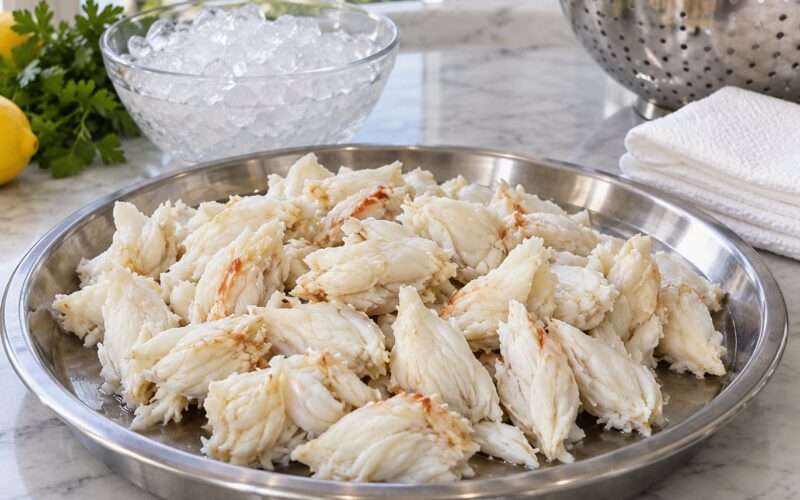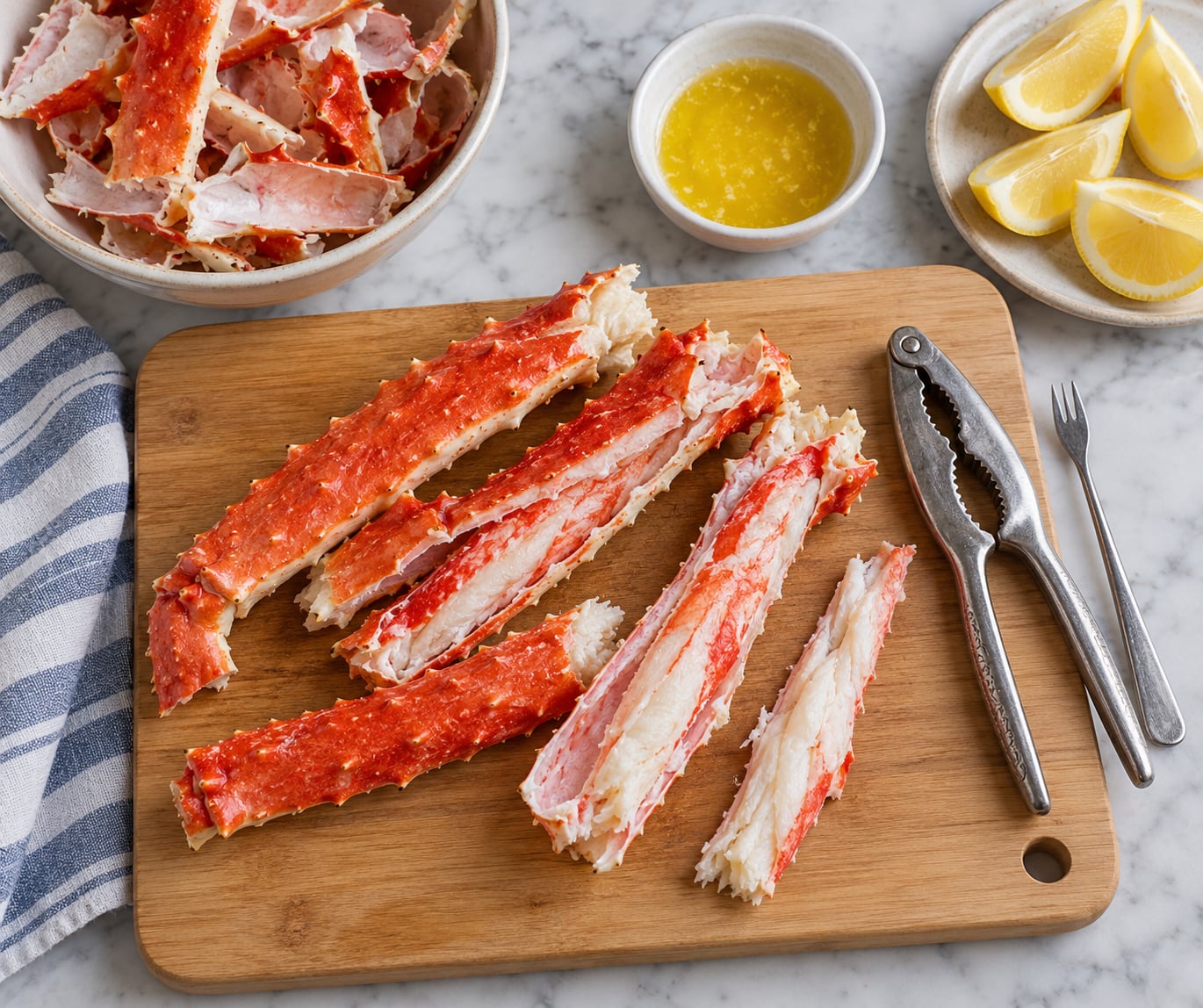
Cracking and picking crab legs works best when you go with the shell instead of against it: cut through the shell only, peel the top back, then pull the meat out in a single piece. A cluster takes about five minutes with kitchen shears and a seafood pick, and picking already-cooked crab meat takes seconds. The mistake almost everyone makes first is cutting too deep, which sends shell shards straight into the meat.
The other surprise is how much of the work happens before anyone eats. Set up a shell bowl, a damp towel and plenty of napkins, and the whole thing stays mostly on the table. Updated for 2026, the steps below cover frozen pre-cooked clusters, crabs you boiled or steamed yourself, and a container of picked meat.
Crab is a shellfish, so if anyone at the table has a shellfish allergy, that is the entire conversation rather than a footnote.
Table of Contents
- What You Need
- Step-by-Step: How to Crack and Pick Crab Legs
- Prepare the Crab Legs
- Cut the Crab Cluster Open
- Lift the Shell and Locate the Meat
- Remove the Leg Meat and Cartilage
- Check the Body and Serve
- Common Mistakes and How to Fix Them
- Frequently Asked Questions
- Do I need to crack every crab leg before picking it?
- Should I use a knife or kitchen shears to crack crab legs?
- How do I remove crab meat without leaving the white cartilage behind?
- What should I do with the crab body after removing the leg meat?
- How long can cooked crab legs and picked crab meat be kept in the refrigerator?
- Can I freeze picked crab meat for later use?
- Conclusion
What You Need
A seafood cracker and a seafood pick handle nearly all of the work. Everything else on this list makes the job faster or keeps it off your tablecloth.
- Seafood cracker — the notched pincers that bite a leg shell without crushing what is inside. Reach for this on claws and thick segments.
- Seafood pick or a dinner fork — clears meat out of knuckle sections and shoulder pockets where fingers cannot reach.
- Kitchen shears — the easiest tool on a cluster. Cut the sides and top of the shell and stop there.
- Small mallet, meat tenderizer or rolling pin — for king crab claws and knuckles a cracker will not open.
- A wide bowl or tray — shells go here instead of onto the carpet.
- Paper towels or a damp cloth — legs drip from the first cut to the last bite.
- Lemon wedges and a dipping sauce — lemon butter, garlic butter or a small dish of Old Bay-style seasoning.
- Liner, bibs and wet wipes — parchment or newspaper under the platter, bibs for the serious eaters.
Already-picked crab meat needs none of this. Open the container, portion it out, and get to eating.
Serving a group? Put one cracker and one pick per person on the table with a big bowl for the shells, and nobody fights over the tools.
Step-by-Step: How to Crack and Pick Crab Legs
The easiest way to crack crab legs is to break them at the joints first, cut the shell down the sides and top of each segment, then peel and pull. Working joint to joint keeps the shell in large pieces instead of shards, and pulling the meat rather than cutting it leaves you one long piece instead of a handful of chunks.
Prepare the Crab Legs
Thaw frozen legs in the refrigerator, usually overnight, rather than on the counter. Take them out of the plastic, check for leaks or a broken seal, and keep them cold until you are ready. Rinse the clusters only when the package or the seafood counter tells you to, since most flash-frozen pre-cooked legs are already rinsed and seasoned.
Pat the clusters dry before cutting. A wet shell slips, and a dry one snaps where you want it to.
For a container of picked crab meat, skip all of that. Check the seal and the date, portion out what you need, and keep the rest cold. Picked meat dries quickly once it meets air, so cover the container tightly.
Cut the Crab Cluster Open
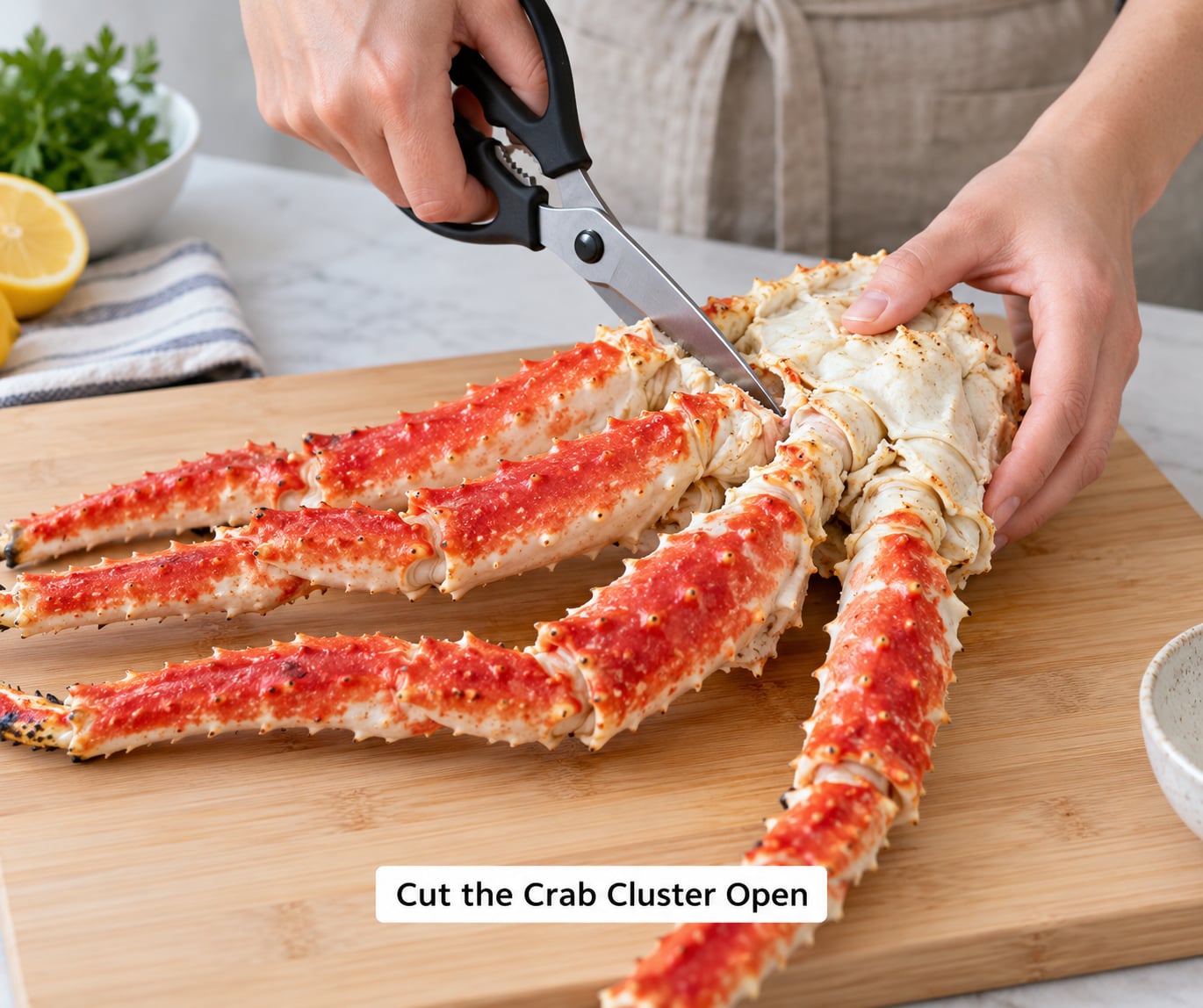
Sit the cluster joint-side down on the cutting board. Use kitchen shears to cut down the sides and across the top of the shell, turning the leg slightly as you go, and stop as soon as the shears reach meat.
Cut through the shell, not into it. Deep cuts shred the meat and leave you picking shell flakes out of dinner. Working a few sections at a time instead of the whole cluster makes the depth much easier to judge.
No shears are needed for picked meat, and none are needed for loose single legs that already twist open.
Lift the Shell and Locate the Meat
Peel the cut top shell back like a lid and set it aside. If the shell will not lift, twist the segment sideways or flex it gently opposite the natural bend of the joint. Thin snow crab shell usually pops open this way, while king crab tends to need a second pass with the cracker or a light tap from the mallet.
The meat is opaque white or cream, firm, and runs the full length of the segment. Ignore the translucent flexible strip beside it, the thin membrane wrapping the piece, and the yellowish material underneath. None of that is meat and none of it tastes like it.
Remove the Leg Meat and Cartilage
Slide a seafood pick or a fork under one end, lift slightly, and pull with the other hand. Pull steadily along the length of the segment and most of the time the meat comes out whole, still attached along its long edge.
Turn each piece over before eating. The firm white cartilage runs the length of the leg and feels rubbery rather than flaky, so peel it away with your fingernail or the tip of the pick. Small knuckle sections hide more cartilage than the big ones, so give those a second look.
Keep your fingers clear of the flexing side of a shell and of the pincer joint on a claw. Crab cracks can snap shut faster than you expect.
Check the Body and Serve
Plenty of clusters still hold meat in the shoulder and body where the legs join, and that part is often the sweetest meat on the crab. Lift the top shell of the body, pull the shoulder section free, and check the flaked meat underneath before you discard anything.
Move the cleaned pieces to a platter. Serve crab hot, or chill it and eat it cold with a squeeze of lemon. Pre-cooked legs only need reheating until they are steaming hot, about 165°F, since the crab is already fully cooked.
Keep cooked legs and picked meat in the refrigerator no more than three to four days, covered tightly. Fresh or raw legs belong on a plate on the lowest shelf of the fridge, away from everything else.
One tip from the fishing forums is worth stealing: steam or boil crabs right side up so the innards settle into the shell rather than the body, and eat them the same day you cook them. Picked meat left overnight goes tacky and dry, which is the complaint that comes up most often in the same threads.
Common Mistakes and How to Fix Them
Most disappointing crab traces back to the same short list of errors. Here is what goes wrong and what to do instead.
- Cutting too deep. You slice into the meat and fill it with shell flake. Stop at the first resistance and turn the leg as you cut.
- Hammering the claw. A mallet on a king crab claw shatters the shell into shards. Use a cracker first, then light taps only if the shell still will not open.
- Tearing instead of pulling. Pulling along the length of the segment gives you one clean piece. Tearing sideways shreds it.
- Leaving cartilage in. Knuckles and the shoulder hide the most of it. Check every piece against the light before it goes in your mouth.
- Throwing away the body. Many clusters carry more meat in the shoulder than in the tips. Open it before you bin it.
- Squeezing the meat. Handling it firmly is fine, crushing it turns it watery and mushy.
- Thawing on the counter. The outside goes warm and slimy while the middle is still frozen. Refrigerator only, on a plate.
- Storing picked meat loosely. A tight lid or sealed container keeps it from drying out overnight.
- Having no shell plan. Tip shells into a bowl as you go and eat with your hands. It is faster and it halves the mess.
If a shell shatters anyway, fish the fragments out before anyone eats and watch for the small ones. Nobody wants to find a shell chip in a bite.
Frequently Asked Questions
Do I need to crack every crab leg before picking it?
No. Once a cluster is fully cooked and the shell has been opened, the meat pulls out by hand. You only need shears or a cracker for sections that will not open with a twist and a gentle pull, which is usually the thick king crab claws and the shoulder meat. Loose picked crab meat needs no tool at all.
Should I use a knife or kitchen shears to crack crab legs?
Shears, every time. They cut the shell without any downward force, so the leg stays where you left it instead of shooting across the counter the way it does under a mallet. A knife works too, but cut down toward a board and away from your other hand, and never toward your fingers.
How do I remove crab meat without leaving the white cartilage behind?
Pull the meat out in one piece, then hold it up to the light before eating. Cartilage is the firm white strip running the length of the leg, and it feels rubbery rather than flaky. Peel it off with your fingernail or a seafood pick, and check the small knuckle sections twice, since that is where most of it hides.
What should I do with the crab body after removing the leg meat?
Many clusters still have meat in the shoulder and body where the legs join, and it is the sweetest part of the crab. Lift the top shell, pull the section free from the body, and check the flaked meat underneath. Set aside the hard shell, the feathery gills, and the soft innards unless your seafood counter advised otherwise.
How long can cooked crab legs and picked crab meat be kept in the refrigerator?
Cooked crab legs and picked crab meat last three to four days in the refrigerator at 40°F or below, in a sealed container or a bowl covered tightly with plastic wrap. Keep raw legs on a plate on the lowest shelf so nothing drips onto other food, and eat them within a day or two.
Can I freeze picked crab meat for later use?
Yes. Freeze picked crab meat in a sealed container or a freezer bag with the air squeezed out, in the portions you will use at once. It keeps for roughly two to three months and thaws overnight in the refrigerator. Cooked crab also freezes well, though the meat loses a little sweetness once thawed.
Conclusion
Crack only the shell, open each segment, pull the meat, and check it for cartilage before it reaches your mouth. That is the whole method, and everything else is setup and cleanup.
If this is your first time, open one cluster a section at a time. Once that feels ordinary, you will wonder why you worried about it.