When you pick lump crab meat for crab cakes, judge it by smell first and color second. Plain lump from the body of the crab is the right buy for most home cooks, while jumbo lump is worth it only when the crab is the whole point of the dish. It takes about ten minutes at a seafood counter to sort this out.
The part that trips people up is that fresh and frozen crab look almost nothing alike, and a pale piece of meat is not automatically a bad piece of meat. Below is the routine I use: check the grade, then the smell, then the texture and liquid, then the label.
Table of Contents
- What You Need
- Step-by-Step
- How to Pick Lump Crab Meat for Crab Cakes
- Check Whether It Is Lump, Backfin, or Claw Meat
- Compare Fresh and Frozen Crab Meat
- Avoid Excess Moisture Before Mixing
- Keep It Cold and Cook It Safely
- Common Mistakes
- Frequently Asked Questions
- Is lump crab meat the best choice for crab cakes?
- What is the difference between lump, backfin, and claw crab meat?
- Is fresh lump crab meat better than frozen for crab cakes?
- Why is my lump crab meat watery after I open the package?
- How can I tell if lump crab meat has gone bad?
- Can I use pasteurized lump crab meat without cooking it again?
- Conclusion
What You Need
No special equipment is required. You need well-labeled lump crab meat from a clean, cold counter, a colander or fine sieve, a cooling tray or bowl of ice, paper towels, a mixing bowl, and mild aromatics like Old Bay, celery, egg, and a splash of hot sauce.
A skillet or a baking sheet is all you need for cooking, though a wide skillet lets you fry four cakes at a time without crowding them.
The bigger decision happens before you get home, and it comes down to which part of the crab you are buying:
- Jumbo lump comes from the largest body pieces, holds together in whole chunks, and shows off in a chilled platter or a crab salad.
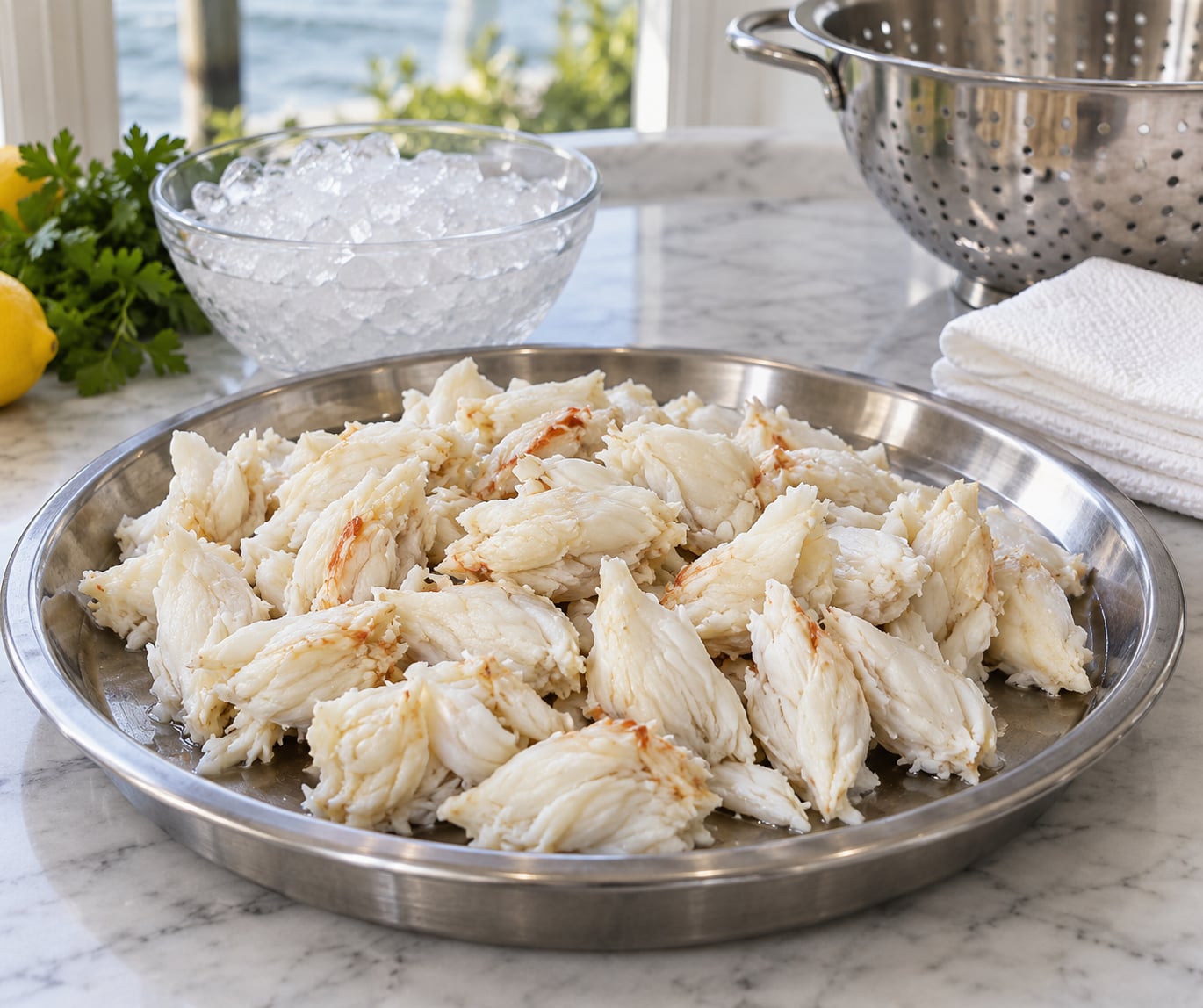
- Lump is the same body meat broken into smaller but still distinct pieces. This is the workhorse for crab cakes.
- Backfin is body meat too, in fine shreds, usually blended with a bit of claw meat. It is the best value pick for cakes.
- Special grade is broken body meat that has lost its piece shape. It works, but the texture is less interesting.
- Claw meat is darker, firmer, and more strongly flavored. It is fine in a cake, but it can read as chewy.
Lump and backfin differ in piece size, not in flavor, since both come from the body. More experienced cooks generally tell home cooks to stay with regular lump or a lump and backfin blend, and to save jumbo lump for a dish where nothing is mixed into it.
Step-by-Step
Here is the order I work through at the counter. Smell, then look, then read.
How to Pick Lump Crab Meat for Crab Cakes
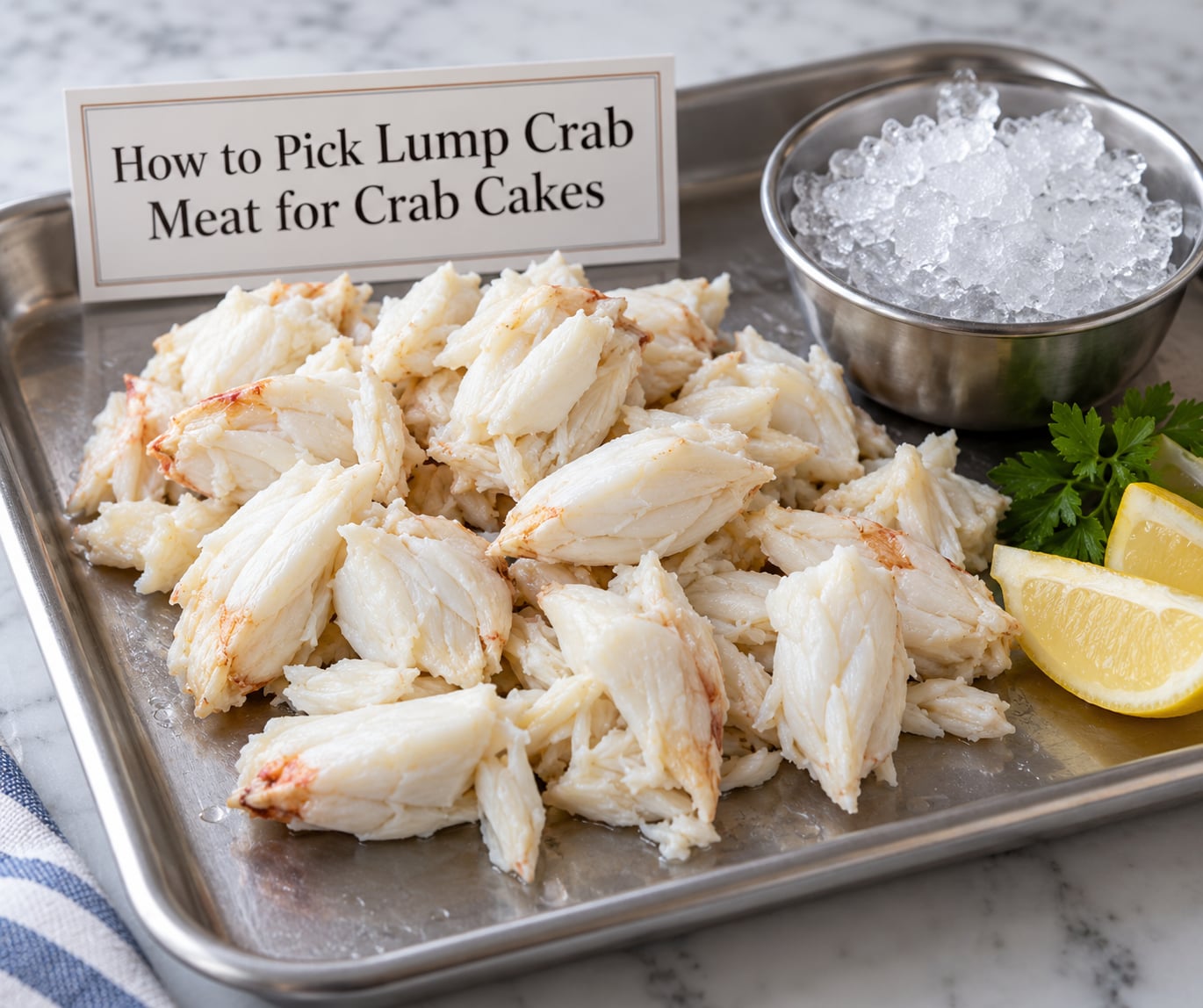
Pick meat with distinct, firm pieces sitting in a small amount of liquid. A clean marine aroma is what you want. Some red or pink color is completely normal in blue crab, so do not reject a piece for being pink.
Walk away from anything sour, ammonia-like, or unusually strong. Those smells come from the meat breaking down, and they do not wash out in cooking.
Then look at the liquid. Chilled or pasteurized meat should look moist, not waterlogged, and a puddle of pink-tinted water in the tray is a reason to put the package back.
Texture matters as much as sight. Good meat is firm and slightly springy, with meaty pieces rather than papery flakes.
Finally, ask two questions: when did this arrive, and has it been sitting out? A high-turnover counter answers both without hesitating.
Check Whether It Is Lump, Backfin, or Claw Meat
On a counter, the grade usually appears on the sign above the tray. On a package, look for words like jumbo lump, select lump, backfin, or special grade in the product name, and check which body part the ingredient list names first.
Pay attention to the liquid, because the label language is where the real cost hides. A can states net weight and drained weight, and the drained figure is the amount of actual meat you get after the liquid. If a can lists 16 ounces net and 12 ounces drained, you are buying a pound of liquid at the price of a pound and a quarter of meat.
Skip highly emulsified or broken crab when texture matters. Meat that has been processed into a paste with added binders will not fold into cakes the way distinct pieces will.
Both lump and claw can carry stray shell and cartilage, though it shows up far less often in jumbo lump. A few flecks in backfin are normal and worth picking out as you go.
Compare Fresh and Frozen Crab Meat
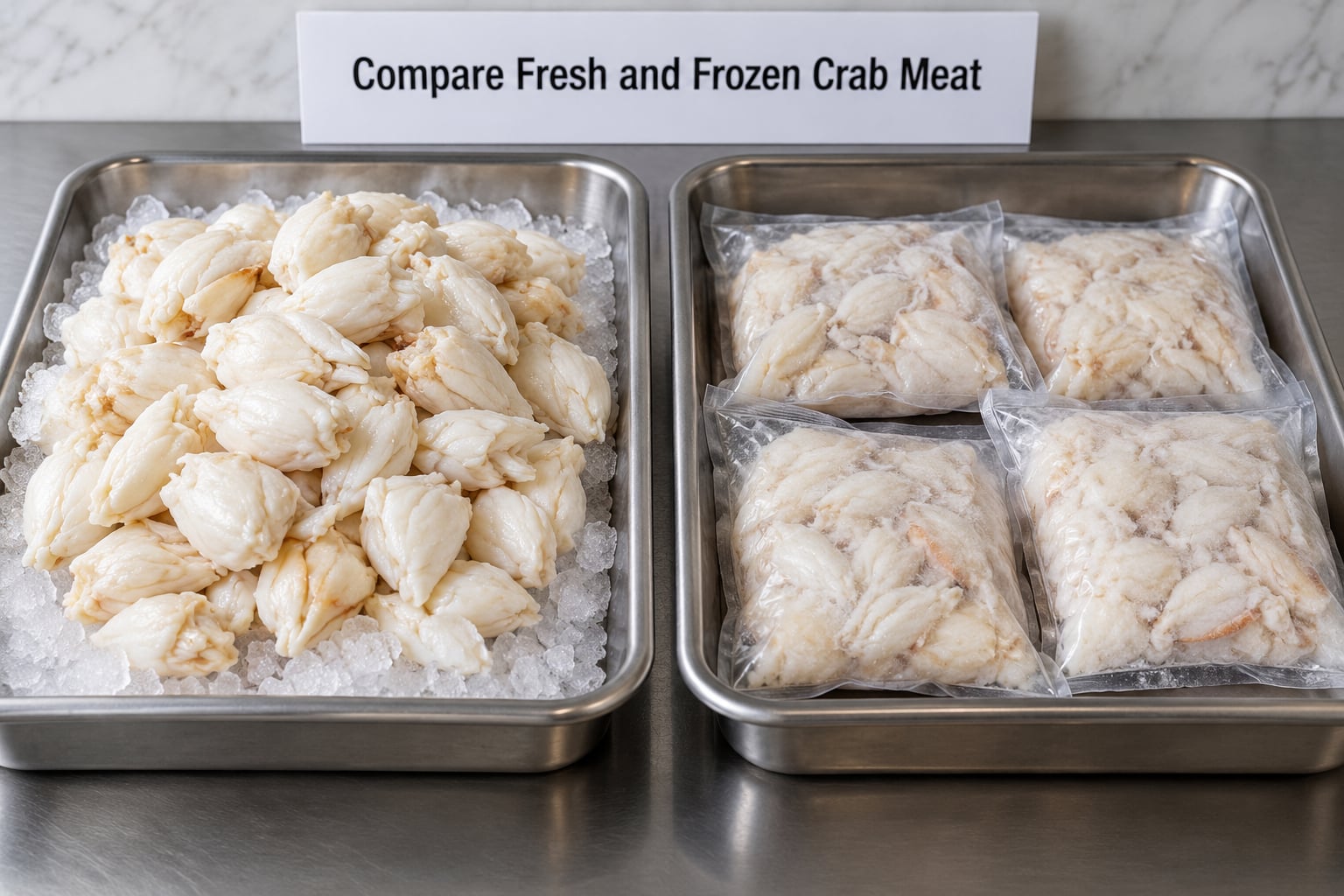
Fresh or raw chilled meat and pasteurized refrigerated meat are the two best options, and frozen is a perfectly good third. Fresh picked meat is seasonal and regional, and when the counter has it, the texture is noticeably better.
Pasteurized meat is cooked, packed, and refrigerated. It keeps longer and works well in cakes, which is why plenty of experienced cooks treat it as the default rather than a downgrade.
Frozen portions are usually pasteurized, portioned, and frozen at the plant. They thaw under refrigeration overnight or in cold water within about 15 minutes.
Expect color variation in all three. Frozen meat can look greyer or paler than fresh, and that is not a defect. Judge freshness on odor, handling, date, storage temperature, and source rather than color alone.
Packaging ice or brine in a fresh tray is normal. Excess ice that has melted into a large pool of water is not, because it means the tray sat too long.
Avoid Excess Moisture Before Mixing
Tip the chilled crab into a colander and let it drain for a few minutes, then blot the top with paper towels. That is the whole technique.
Draining rather than pressing is the point. Squeezing or wringing the meat pushes out the flavor you paid for and turns tender pieces into fibrous shreds.
Wet crab is the single most common reason crab cakes fall apart in the pan. It loosens the binder, makes the mixture hard to shape, and leaves the finished cake pale and fragile.
The same gentle treatment works for pasteurized meat and for already-cooked crab. Neither needs any more than a colander and a towel.
Keep It Cold and Cook It Safely
Refrigerate cooked or pasteurized crab and use it within one to two days. Keep it in a sealed container below 40 F, on the bottom shelf where it cannot drip onto anything else.
For raw crab bought from a counter, keep it at or below 40 F in a leakproof container set on ice, and cook it within one to two days. Frozen portions thaw under refrigeration or in cold water, never on the counter.
Cook crab to an internal temperature of 145 F, whether it was sold raw or precooked, and use a thermometer in the thickest cake. It should come apart into opaque flakes, not spring back.
Blue crab season runs roughly May through October in the Chesapeake and May through September on the Pacific side. Outside that window, pasteurized meat from a cold counter is the sensible choice.
Common Mistakes
Choosing claw meat for a tender texture. Claw is darker and firmer by nature. Use it when you want a bolder crab flavor, and stay with lump or backfin when tenderness is the goal.
Judging freshness by pink color. Pink and red streaks are normal in blue crab. Smell tells you far more about a package than color does.
Overmixing the crab. Fold the meat into the binder gently and stop while the pieces still look distinct. Large lumps break apart under vigorous stirring, and the cake turns grainy.
Adding too much filler. Too many crumbs and the finished cake tastes of nothing but seasoning. Season lightly, use the minimum binder that holds the cake together, and chill the shaped cakes for about an hour before they hit the pan.
Draining by squeezing. Squeeze the crab and you lose both flavor and texture. Colander, then towels.
Buying a large amount from a slow counter. Fresh picked crab is perishable, and freshness drops the longer it sits on ice. Buy a small amount from a high-turnover seafood counter, and taste a cooked sample first if one is offered.
Two habits help more than any other. Ask the fishmonger when the product arrived, and pick through the meat at home in a shallow bowl so shell fragments sit on top instead of hiding in the mixture.
Frequently Asked Questions
Is lump crab meat the best choice for crab cakes?
Yes, for most home cooks. Plain lump gives you distinct, tender pieces that stay recognizable in the finished cake. Backfin works nearly as well and usually costs less. Save jumbo lump for chilled platters and crab salad, where the meat is not mixed or fried.
What is the difference between lump, backfin, and claw crab meat?
Lump and backfin both come from the crab’s body, and they differ in piece size: lump is broken into larger chunks, backfin into fine shreds, usually with some claw meat mixed in. Claw meat comes from the claws, is darker and firmer, and has a stronger flavor. It works in cakes but can feel chewy.
Is fresh lump crab meat better than frozen for crab cakes?
Fresh picked meat is the most flavorful option when your counter has it, and season matters here. Frozen portions are typically pasteurized and are a good choice outside blue crab season. How you pick lump crab meat for crab cakes comes down to smell, texture, and label, not color, so pasteurized meat can make excellent cakes.
Why is my lump crab meat watery after I open the package?
Most packs are packed in liquid or brine, and some leak when the seal is broken. Drain the meat in a colander for a few minutes and blot the top with paper towels before mixing. If the meat itself looks mushy or smells sour, it is a different problem and that package should be discarded.
How can I tell if lump crab meat has gone bad?
Your nose is the fastest test. Good meat smells clean and briny, like the ocean. Reject anything sour, sharp, or ammonia-like. Texture and color confirm it: mushy flesh, papery flakes, or gray, yellow, or green patches mean the meat has broken down. Freezing does not reverse it.
Can I use pasteurized lump crab meat without cooking it again?
Yes, pasteurized meat is already cooked and is ready to eat once chilled. Crab cakes made from it are typically fried to 145 F internal anyway. If you are serving it without further cooking, keep it refrigerated and use it within one to two days of opening.
Conclusion
Start with well-labeled lump meat from a clean, cold seafood counter, choose it by smell and texture rather than color alone, and drain it gently in a colander before mixing. Frozen portions thaw safely under refrigeration or in cold water, and everything reaches the pan at 145 F internal. Pick through the meat in a shallow bowl, fold rather than stir, and chill the shaped cakes for an hour before frying.