If you want to know how to tell if an oyster is bad, check three things in about sixty seconds: the shell should be closed and snap shut when tapped, it should not smell of ammonia or sulfur, and the meat should be plump and glossy in a clear, briny liquor. Those tests catch obvious problems, and they take almost no time. They do not, however, promise safety, and that gap is the part most guides skip.
Two different failures get confused here. A dead oyster is a quality problem: its shell no longer closes, the meat is dry, and it is bland or unpleasant. A contaminated oyster is a safety problem: bacteria such as Vibrio vulnificus, norovirus or Salmonella may be present, and the CDC notes they can be there without changing how the oyster looks, smells or tastes. So the practical rule is simple. Use your senses to screen, cook anything questionable, and follow the guidance below, updated for 2026.
Table of Contents
- What You Need
- Step-by-Step: How to Tell if an Oyster Is Bad
- Step 1: Check Where and When You Bought It
- Step 2: Check Storage and Refrigeration
- Step 3: Examine the Shell
- Step 4: Check the Odor and Appearance
- Step 5: Know When to Discard It
- Common Mistakes
- Frequently Asked Questions
- Can I tell if an oyster is bad just because its shell is closed?
- What does a bad oyster smell like?
- Can I get sick from one bad oyster?
- How long after eating a bad oyster will you get sick?
- How long should fresh oysters be kept refrigerated?
- Can I eat seafood that smells like ammonia?
- Conclusion
What You Need
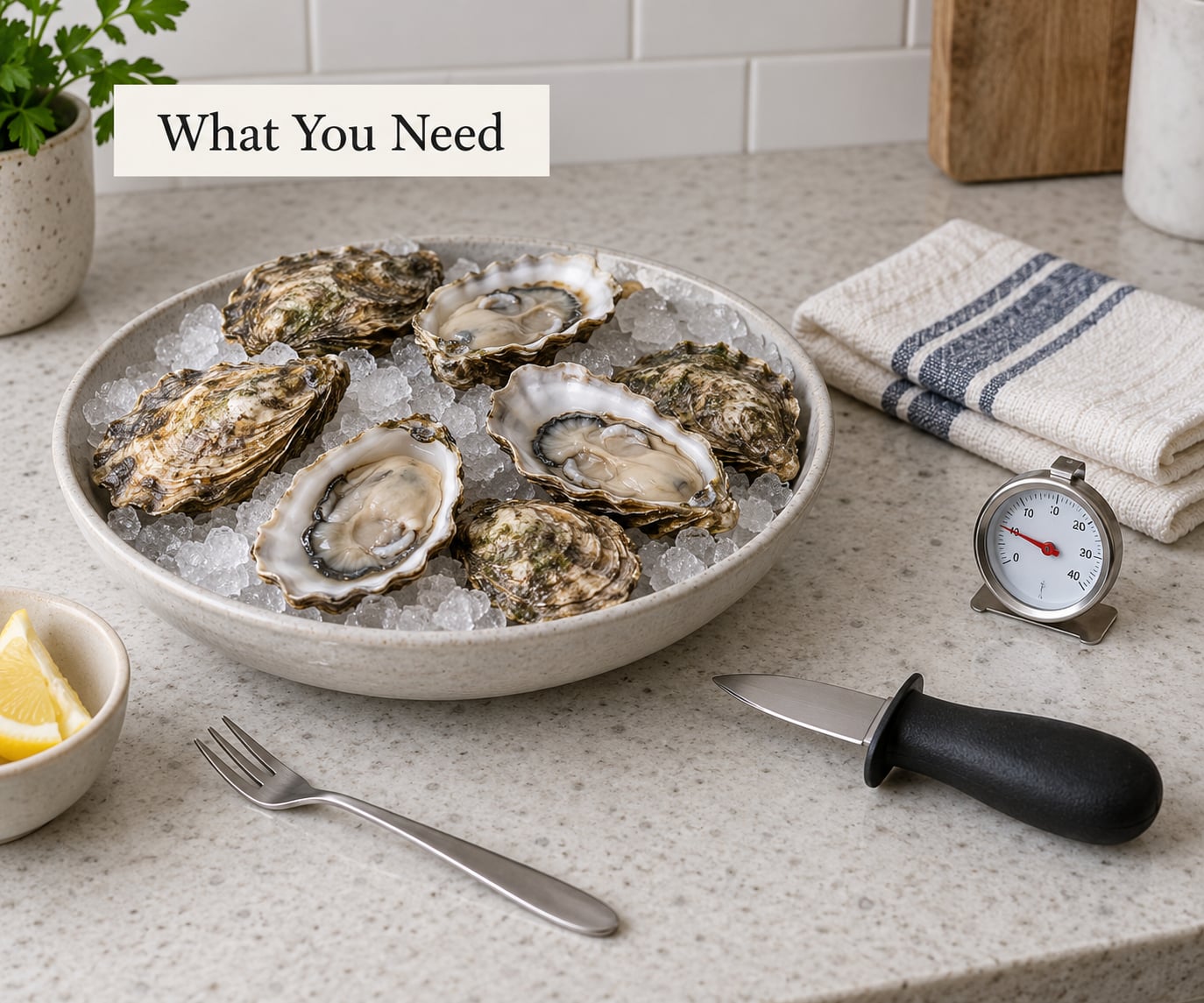
The whole check runs on the counter with almost nothing. You need a fork or another empty shell for the tap test, a towel to hold the oyster steady, and a blunt knife if you plan to open it. A refrigerator thermometer is genuinely useful if you buy oysters often, since home fridges drift.
You also need information, and it is the part people skip. Find the harvest tag or the seller’s packing slip and note the date the oysters were harvested or packed. Keep the receipt. If you bought them at a raw bar or market, remember whether they sat over ice or on a warm tray.
Finally, be honest about where they came from. A dealer who will tell you the harvest area, the harvest date and how the product was kept cold is worth a lot more than a bargain you cannot trace. For anything from a cooler you have had for more than a day, assume nothing until you check.
Step-by-Step: How to Tell if an Oyster Is Bad
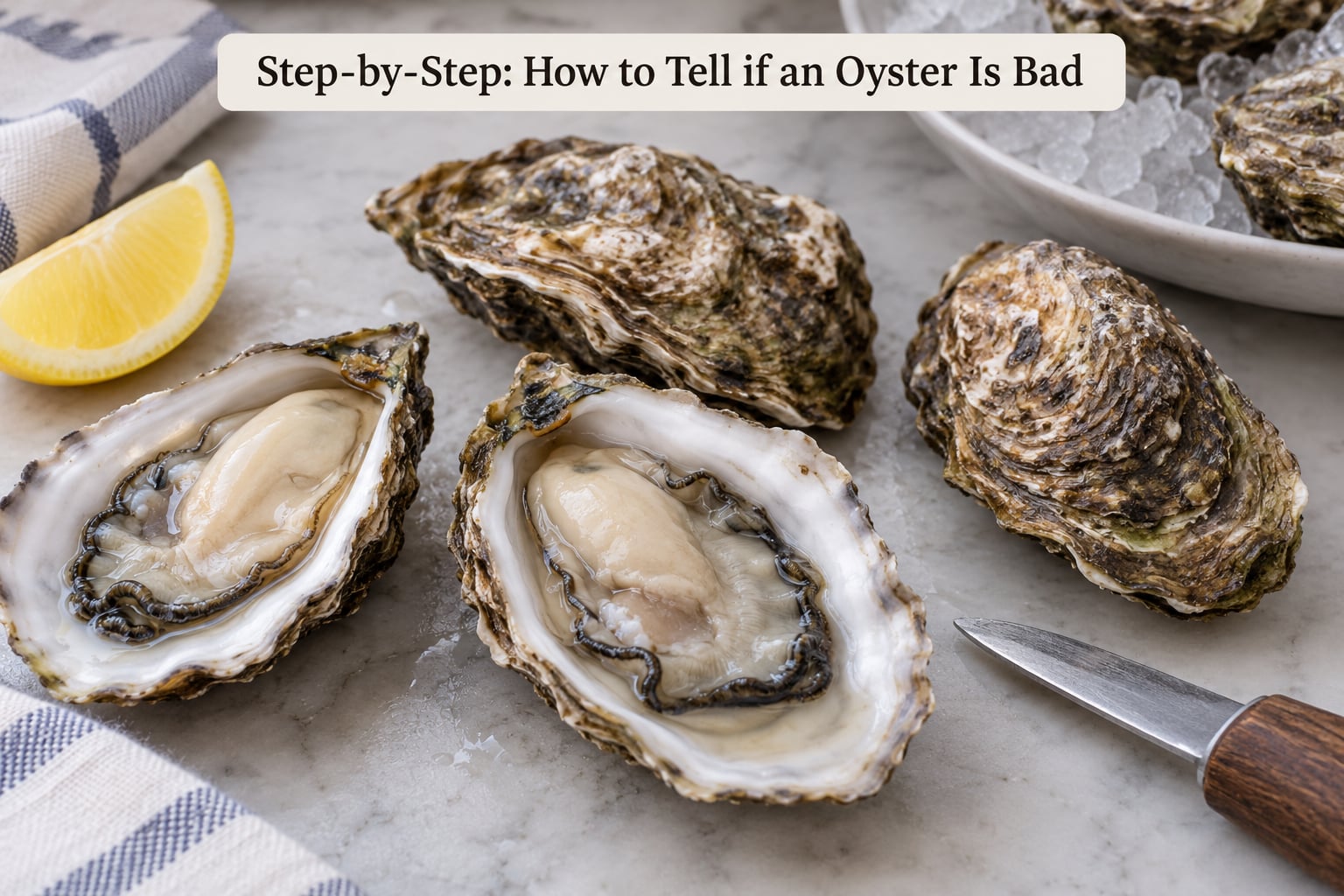
The five steps below run in the order that actually saves oysters, starting with paperwork and cold chain and ending with the decision to throw one away. Work through them in order rather than picking the smell test first, because a clean smell on a warm oyster tells you very little.
Step 1: Check Where and When You Bought It
Source beats inspection. Oysters from a reputable seafood seller, fish market or direct farm are harvested, tagged and cold-chained in a way you cannot replicate at home, and the tag tells you the water they came from and the date they were taken out. That record is worth more than squeezing a shell in your kitchen, because it tells you about the hours before you ever opened the box.
If there is no tag, no date and no seller who will answer questions, treat that as its own warning sign rather than a minor gap. Live oysters held above roughly 40°F for long stretches, or left sitting out during transport, are the ones most likely to have been handled badly, whatever the shell looks like on arrival.
Step 2: Check Storage and Refrigeration
Oysters are alive when you buy them, and they stay edible only while they stay cold. The FDA and seafood sellers generally point to a refrigerator range of about 34°F to 40°F (2°C to 4°C), with crushed ice or a sealed container holding the chill. Shucked oysters need to stay on ice, not floating in melted water, and a fridge is not a substitute for a proper cold box for multi-day storage.
Here is the realistic picture for home cooks, based on standard seafood handling guidance rather than a single rule for every product.
| Form | Keep it at | Usual window at home | Discard if |
|---|---|---|---|
| Live, in-shell oysters | 34-40°F (2-4°C), covered, cup-side down | About 5-7 days from the seller’s date | Ice fully melted, smell of ammonia, shells open and staying open |
| Shucked oysters | On ice, below 40°F, in a sealed container | About 3-5 days | Slimy texture, grey-brown flesh, sour dairy-like smell, sat out past 2 hours |
| Cooked oysters | Covered and refrigerated within 2 hours | 3-4 days | Left at room temperature for hours, off smell |
Melted ice is the giveaway most home cooks ignore. If the oysters arrive on a bed of ice that has fully collapsed into water, ask for a replacement or assume those are no longer fresh. The same rule applies at a raw bar: oysters sitting on a platter with no ice underneath, or a server carrying an unrefrigerated tray around a warm room, are a reason to send them back rather than eat them.
Never store live oysters submerged in tap water or a container of freshwater. Freshwater kills them, and they will not survive it. A damp towel over the cup side is enough.
Step 3: Examine the Shell
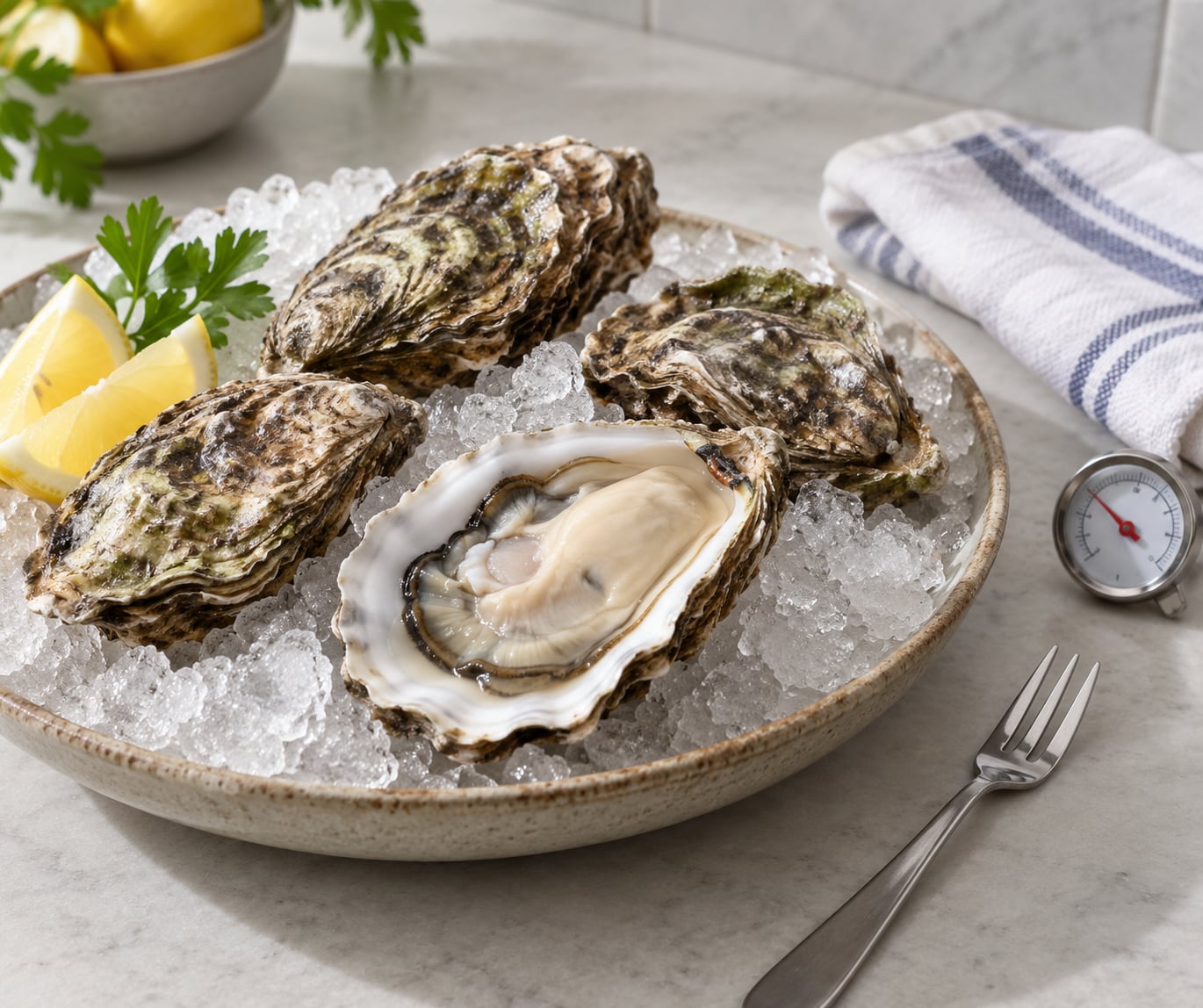
Take one oyster and tap the flat top shell firmly with a fork or another shell. A live oyster clamps shut. That snap is the single most reliable field test you have, because a live oyster seals its two halves with a strong adductor muscle, and a dead one cannot.
Watch for the failure modes: a shell that is already gaping and does not close after a tap, a cracked or broken shell, one that sounds hollow, one that leaks liquid, and one that looks dry and light for its size instead of weighty in the hand. An oyster that is sticking to the cup, that has lost its liquor, or that has gone leathery and shrunken away from the shell has clearly been sitting too long.
And here is the honest limit: a closed shell does not prove freshness. It proves the oyster is alive or was recently alive. Dead oysters can sit closed for hours, and a live-looking oyster can still be carrying bacteria. A closed shell gets you past the first gate, not out of the kitchen.
Step 4: Check the Odor and Appearance
Open the oyster over the sink. A good one smells like clean sea air and cold brine. A questionable one smells sour, putrid, ammonia-like or sulfurous, and that smell gets stronger the longer the shell sits open. Never taste an oyster to test it. That is the advice the CDC repeats, and it is the fastest way to turn a small question into a real illness.
Then look at the meat and the liquor. Fresh oysters have plump, glossy, creamy meat and a clear, faintly briny oyster liquor pooled in the cup. Bad ones have meat that is dull and dry or unnaturally soft and slick, grey-brown discoloration instead of cream, and liquor that is cloudy, milky or missing entirely.
| What to look at | Fresh oyster | Bad oyster |
|---|---|---|
| Shell | Closed, heavy for its size, snaps shut when tapped | Gaping and stays open, cracked, hollow-sounding, leaking, dry and light |
| Smell | Clean sea air, cold brine | Sour, rotten, ammonia-like or sulfurous |
| Meat texture | Plump, firm, glossy, springy | Dry and shrunken, or slimy and slick |
| Meat color | Creamy beige | Grey-brown or dull, darkened edges |
| Oyster liquor | Clear, briny, enough to fill the cup | Cloudy, milky, or nearly absent |
One thing worth separating from spoilage: an oyster can taste briny, muddy or strongly of its home water and still be perfectly safe. That is terroir, not danger. Spoilage is about odor, texture, color and cold chain, not about whether you enjoy the flavor.
Step 5: Know When to Discard It
Discard without hesitation if any of these are true: the shell is cracked or gaping and will not close, the smell is sour or ammonia-like, the meat is slimy, dry or discolored, the liquor is cloudy or gone, the ice melted and the cold chain broke, or the temperature went above 40°F for more than a couple of hours. When you are unsure, throw it out. A single oyster is cheap next to a day of illness, and that is exactly how the CDC frames the decision.
Cooking helps and cannot help at the same time. Heat kills Vibrio vulnificus, so cooking oysters to an internal temperature of 145°F (63°C) removes that risk. It does not bring back a spoiled oyster, and it will not reliably neutralize toxins from bacteria that have already multiplied, so a fishy-smelling oyster is still a discard.
If you have liver disease, diabetes, hemochromatosis, cancer, HIV or a weakened immune system, or you are pregnant, the CDC advises skipping raw oysters and cooking them instead. Not every infection is dangerous for every person, but those groups have far less margin.
Finally, what to do if you already ate one that worries you. Food poisoning from oysters can appear on very different timelines, and knowing them helps you decide whether to call a doctor.
| Possible cause | Typical symptoms | Reported onset window |
|---|---|---|
| Norovirus | Vomiting, watery diarrhea, stomach cramps | 12-48 hours |
| Vibrio vulnificus (bloodstream) | Fever, chills, skin redness or swelling, low blood pressure | 24-48 hours |
| Salmonella | Diarrhea, fever, cramps, sometimes vomiting | 6 hours to 6 days |
Keep the shell, the tag or the packaging, and write down when you ate them and when you ordered them. Contact a healthcare professional if symptoms are severe or you fall into one of the higher-risk groups above, and mention the raw oyster consumption. If the oysters came from a restaurant, market or farm, report it to your local health department, because outbreaks get tracked that way and other people need the warning.
Common Mistakes
The most common error is treating a closed shell as a safety certificate. It tells you the oyster was alive recently. It says nothing about handling, and plenty of foodborne illness comes from oysters that passed every visual check. Check the source and the cold chain too.
The second is reaching for lemon juice, hot sauce or horseradish. Sauces make oysters taste good; they do not make them safe. Acid on the surface is not the same thing as an internal temperature of 145°F, and the same goes for a quick sear that leaves the middle cold.
The third is ignoring storage time because the oysters smell fine. Smell is a late signal, not an early one. A four-day-old box of live oysters is already past a comfortable window, and shucked oysters go faster than live ones. When in doubt about how long something has sat, treat the date as the answer.
The fourth is assuming a bad oyster always smells bad. Some spoiled oyster has never developed an odor you would notice, and some perfectly safe oyster tastes muddy or strongly briny. That is why odor is one input, not a verdict, and why the CDC treats appearance checks as risk reduction rather than permission.
The fifth is trying to rescue questionable shellfish: cutting away the soft part, rinsing in cold water, soaking it in lemon or waiting for it to firm up. None of that reverses bacterial growth. Toss it, wash down the board and your hands, and move on.
The last is confusing a dead oyster with a dangerous one. A dead oyster is a waste of a few dollars and nothing more than that, once it is off your plate. The dangerous one carries a pathogen you cannot see, and it is usually not the oyster that looks the worst.
Frequently Asked Questions
Can I tell if an oyster is bad just because its shell is closed?
A closed shell only shows the oyster was alive recently. A live oyster seals itself with its adductor muscle and clamps shut when tapped, which is why the tap test is worth doing. It does not rule out Vibrio vulnificus, norovirus or Salmonella, and the CDC notes these can be present without changing appearance. Always check the source, the cold chain, the smell and the meat before serving.
What does a bad oyster smell like?
A questionable oyster gives off a strong sour, putrid, ammonia-like or sulfurous odor, and the smell strengthens the longer the shell stays open. Fresh oysters smell like clean sea air and cold brine. Never taste an oyster to test it, since that is a fast route to illness. A lack of odor is also not a guarantee, because some contaminated oysters smell normal.
Can I get sick from one bad oyster?
Yes. A single contaminated oyster can make one person sick while everyone else at the table feels fine, which home cooks on cooking forums have described more than once. Vibrio vulnificus lives in warm coastal water and can cause bloodstream infections, while norovirus and Salmonella come from contaminated harvest water. Cooking to 145°F kills Vibrio, but high-risk groups should not eat raw oysters at all.
How long after eating a bad oyster will you get sick?
It depends on the cause. Norovirus symptoms usually show up within 12 to 48 hours, Vibrio vulnificus bloodstream infections around 24 to 48 hours, and Salmonella anywhere from about 6 hours to 6 days. If you develop fever, severe cramps, persistent vomiting or skin redness after eating raw oysters, contact a healthcare professional and say you ate raw shellfish recently.
How long should fresh oysters be kept refrigerated?
Keep live oysters covered in a refrigerator at about 34°F to 40°F, and use them within roughly 5 to 7 days of the seller’s date. Shucked oysters keep about 3 to 5 days on ice. Ice that has fully melted, or time spent above 40°F for more than a couple of hours, means discarding them rather than refrigerating them again.
Can I eat seafood that smells like ammonia?
No. An ammonia-like smell is a sign of bacterial breakdown, and it is one of the clearest discard signals you will get. Cooking does not reliably reverse it, because heat kills live bacteria but not the toxins some of them have already left behind. That is also why you should never nibble on an oyster to check whether it still tastes okay.
Conclusion
Start where the risk actually starts: buy from a seller who can name the harvest area and date, keep oysters at 34°F to 40°F or on ice, and run the sixty-second check on shell, smell and meat. If anything is open and stays open, smells sour, or feels slimy, throw it out instead of trying to fix it with sauce. Appearance alone cannot catch Vibrio, so cooking to 145°F and skipping raw oysters entirely if you are in a higher-risk group is the real safety net.