The short answer: ask what came in today, where it was caught or raised, whether it was ever frozen, and what cut you are actually paying for. Those four answers tell you more about the fish in front of you than any label on the case can.
Most people freeze up at the fish counter because they assume they need expertise they do not have. You do not. You need four or five specific questions, and the staff behind the ice answer them every single day without thinking twice. What to ask the fishmonger before you buy is really just a short script, and it is short enough to read off your phone while the line moves.
Seafood is the one grocery category where appearance genuinely fails you. Fish is sold buried in crushed ice, decay shows almost nothing on the surface, and species substitution is common enough that regulators publish reference lists for shoppers. A good fishmonger is your quality check, and the questions below are what separate a helpful answer from a sales line.
Table of Contents
- What to Ask the Fishmonger Before You Buy: Quick Guide
- 1. Is this fish fresh, and how can I tell?
- 2. When and where was this fish caught?
- 3. Is this fish farmed or wild, and which is it?
- 4. What species is this, and is that the name on the menu?
- Green flags and red flags at the counter
- 5. Is this sustainably caught or responsibly sourced?
- 6. Was this fish previously frozen?
- 7. What cut is this, and how much usable meat will I get?
- 8. How should I store and transport this fish?
- 9. How long will this stay good after I buy it?
- 10. What should I pay, and can you tell me the price by weight?
- What to ask the fishmonger before you buy about cost
- Frequently Asked Questions
- What are some questions to ask about fish?
- How can I tell if fish is fresh?
- What are the first signs that fish has gone off?
- Is frozen fish better than fresh fish?
- What is the 10 minute rule for fish?
- How much mercury in fish is safe to eat?
What to Ask the Fishmonger Before You Buy: Quick Guide
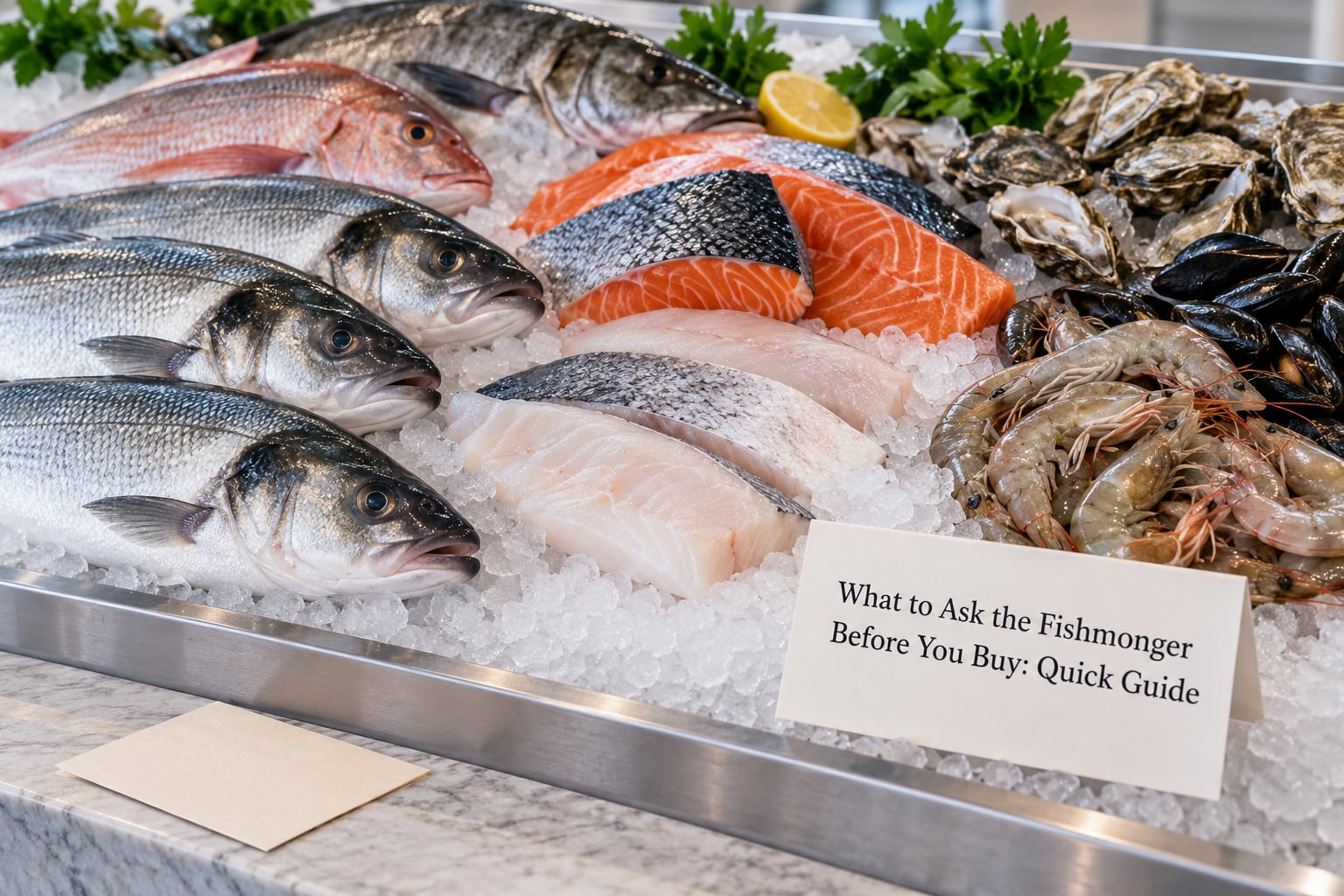
Here is the whole script in one table. Each row tells you what the answer reveals and what it changes about how you cook it, price it, or store it.
| Question | What the answer reveals | Why it matters |
|---|---|---|
| Is this fish fresh, and how can I tell? | Days since it landed and how the counter staff judges it | Sets your cooking window and whether you cook it tonight or freeze it |
| When and where was this caught? | Catch date, region, boat or farm | Flavour, seasonality, and how many days it has been out of cold storage |
| Is this wild or farmed? | Fishing or aquaculture method and country of origin | Fattiness, texture consistency, price, and how it holds up on a grill |
| What species is this exactly? | Common name, scientific name, and whether it is a fillet or a whole fish | Rules out substitution and tells you how firm the flesh will be |
| How was it sourced? | MSC, ASC, or BAP certification and traceability | Bycatch levels, feed inputs, and whether the label claim covers the actual boat |
| Was it ever frozen? | Flash frozen at sea, super chilled, thawed, or never frozen | Texture, thaw time, and why the price may be lower than a “fresh” fish |
| What cut is this, and what is my yield? | Whole, steak, fillet, or portion, plus pin bones and skin | Stops you buying twice what you need for dinner |
| How should I transport it home? | Cold chain, ice packs, packaging | Protects texture and keeps you inside the safe time window |
| How long will this stay good? | Best-use window versus a firm safety limit | Decides whether dinner is tonight or whether you freeze it at home |
| What does this weigh, and can you trim it? | Price per pound on the cut you are buying, plus trimming help | Lets you compare a fillet fairly against a whole fish |
Cheat sheet for the counter, saved here so you do not scroll while someone waits on you:
- What came in today?
- Where was it caught or raised?
- Wild or farmed?
- Is this the real species name?
- Was it ever frozen?
- Is this a fillet or a whole fish?
- Any pin bones left in?
- When should I cook it?
- How much is this on the bone?
- What would you pick for a weeknight dinner?
1. Is this fish fresh, and how can I tell?
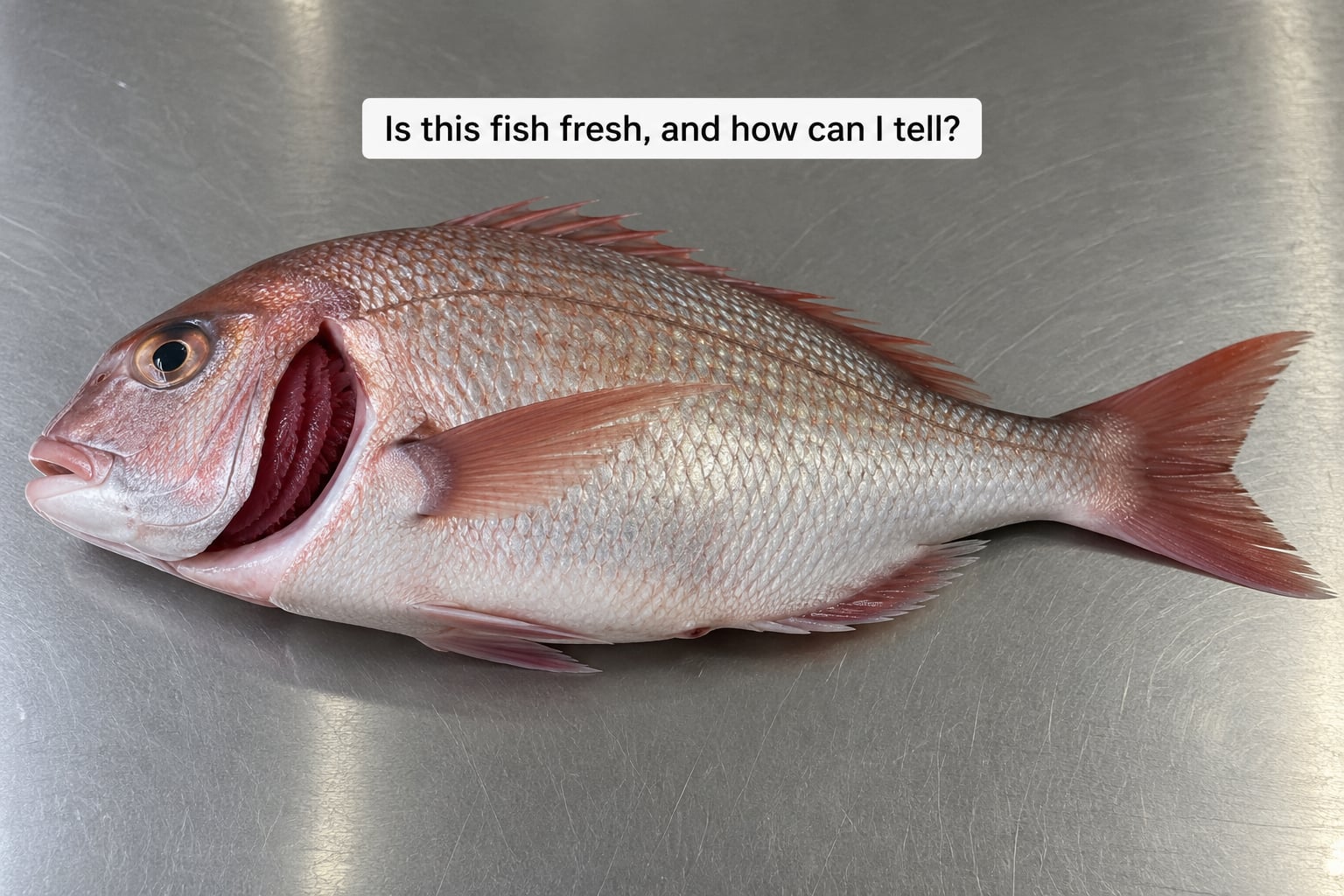
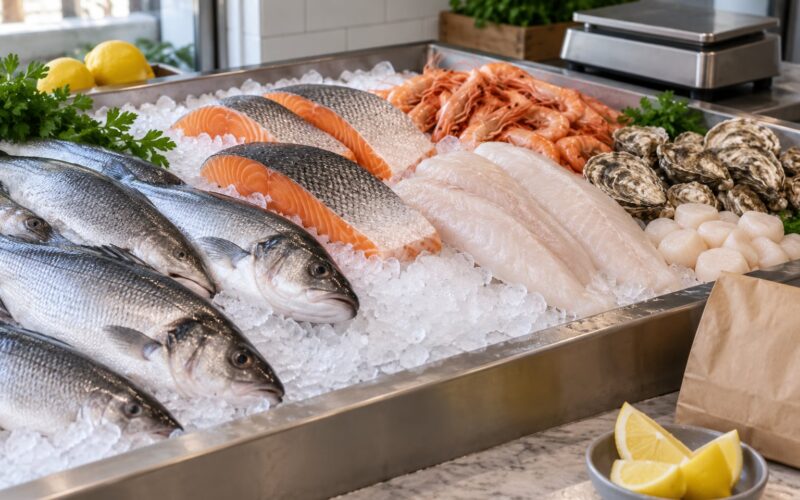
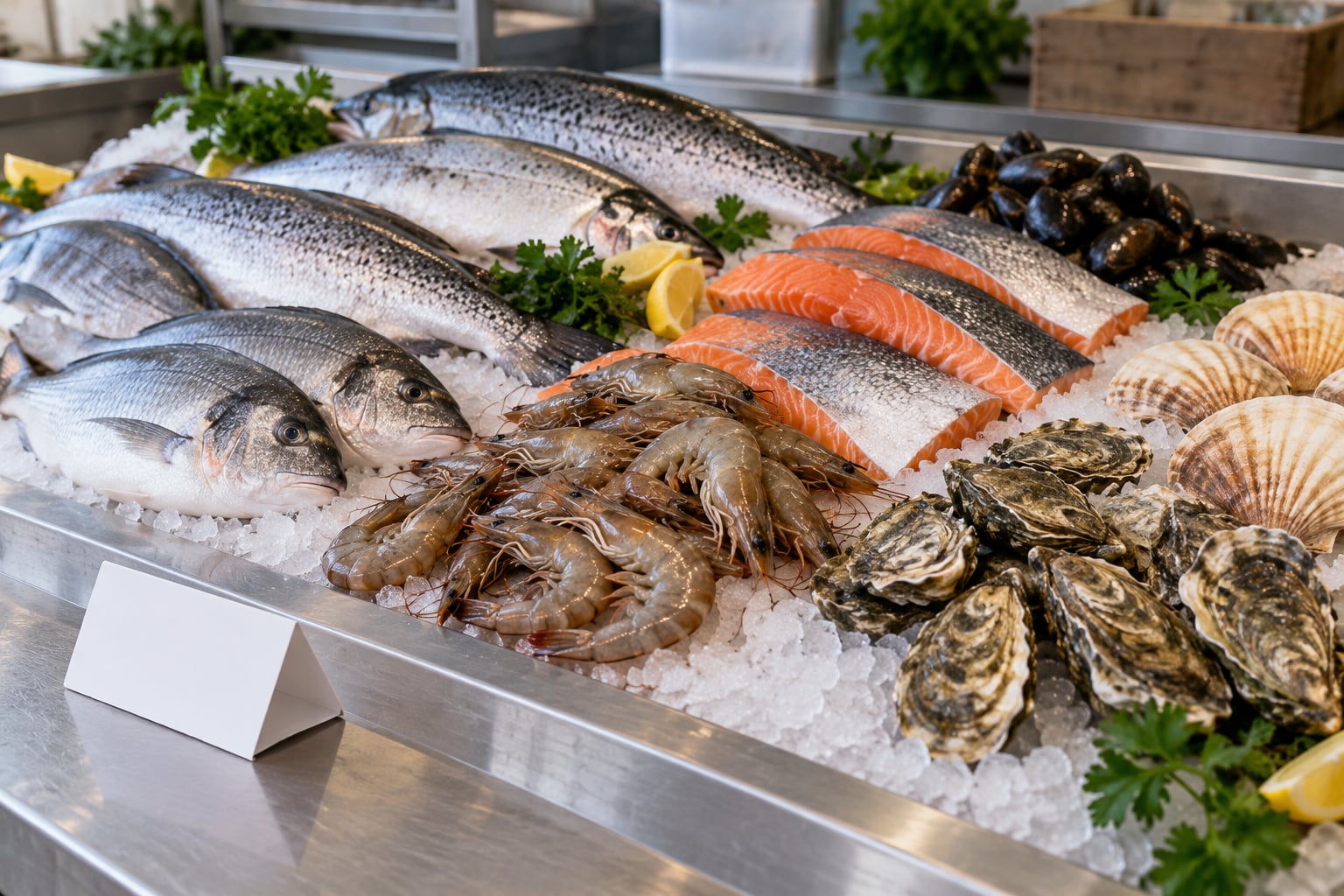
Fresh fish has clear, shiny eyes, elastic skin, firm flesh that springs back after you press it, and bright red gills. It should smell like clean ocean air, not sour or ammoniated. Those four checks let you verify what the fishmonger tells you.
| What to check | Fresh looks like | Walk away if |
|---|---|---|
| Eyes | Clear, shiny, slightly domed | Cloudy, sunken, or milky white |
| Skin | Shiny, tight, elastic, scales intact | Dull, wrinkled, sliding off |
| Flesh | Firm, springs back, leaves no lasting dent | Mushy, sticky, or stays dented |
| Gills | Bright red and moist | Brown, dry, or coated in slime |
| Smell | Clean, briny, like the sea | Sour, fishy-sour, or ammonia |
| Ice bed | Fish fully covered, counter wet but not flooded | Fish sitting dry in a shallow tray |
| Frozen fish | Solid, no ice crystals or frost patches | Heavy freezer burn, grey dry edges |
A good answer sounds like this: “That came in this morning, look at the gills, and press the shoulder, it should bounce back.” A bad answer is vague reassurance about quality with no day attached.
The first signs of bad fish are smell first, then texture. If you pick up a piece and the flesh feels slick and sticky rather than springy, it has broken down. Do not plan to cook your way through it.
2. When and where was this fish caught?
Catch date is the single most useful piece of information on the counter. A fish landed yesterday and a fish landed nine days ago can both be sold as fresh, but they cook and store very differently.
Good answers name a region and a day: landed in Maine two days ago, or flown in from British Columbia yesterday. Region tells you about seasonality, since wild fish is abundant when it is in season and scarce and dearer when it is not. Being able to name the boat or the farm is an even better sign.
Ask the question mid-shopping, not at the register. It gives the staff time to check the box rather than guess.
3. Is this fish farmed or wild, and which is it?
Both are good buys, and the honest answer is that farmed fish is more consistent while wild fish is more variable. For salmon, farmed is usually fattier, softer, and more forgiving on the grill. Wild is leaner, firmer, and more flavour-forward, but the size and texture can swing from one fish to the next.
| Factor | Wild-caught | Farmed |
|---|---|---|
| Flavour and texture | Bolder, firmer, varies by source | Milder, fattier, very consistent |
| Availability | Seasonal, weather dependent | Year-round, steady supply |
| Certification to ask about | MSC | ASC or BAP |
| Feed question | Not applicable | Ask what the fish were fed and how much |
| Best buy | When you want distinct flavour and the price is fair | When consistency matters or you are feeding a family |
Ask which country the farm is in. Norwegian, Scottish, and Chilean salmon arrive frozen in different ways, and the answer tells you how long it will sit in transit.
Don’t take previously frozen as a downgrade. On long supply routes, fish frozen at sea within hours of landing is frequently better than “fresh” fish that has spent a week in transit on ice.
4. What species is this, and is that the name on the menu?
Ask for the exact species, and ask for the scientific name when you are buying something you intend to eat rare. Menu names drift: white tuna is often escolar, snapper is frequently substituted with rockfish, and king mackerel gets confused with kingfish. Regulators publish seafood substitution reference lists precisely because the swap is common.
Ask whether you are looking at a whole fish or a fillet, and whether the fillet is skin-on or skinned. Those three answers tell you how much work stands between you and dinner.
Green flags and red flags at the counter
Green flags: staff explain the difference between two products without being asked twice, the ice is rebuilt regularly, and the counter smells clean rather than sour. A good shop will offer a substitute when today’s fish is not right and will tell you honestly that something is not good today. Forum shoppers across Reddit and Quora keep repeating the same thing, that a fishmonger who admits a fish is off is one you can trust with everything else.
Red flags: staff cannot say when the fish arrived, the case is dry under the fish, or you are the only one asking questions on a busy Saturday. That is not a moral failing, but it is information.
5. Is this sustainably caught or responsibly sourced?
Sustainably caught means the fishery has independent standards for stock health, bycatch, and traceability. Three certification bodies come up constantly, and it is worth knowing which one applies to what. MSC certifies wild marine fisheries. ASC certifies farmed seafood. BAP certifies aquaculture operations, mostly in the United States and Asia.
A good answer names the certificate and the certification number on the box or the label card. A bad answer is a phrase with no body behind it, like “responsibly sourced” or “line caught.” Ask which vessel and which certification number, and see whether the answer comes easily.
Certification covers the fishery or the farm, not the whole chain, so it is a useful filter rather than a verdict. Ask about local freshwater advisories too, because lake and river fish carry state-specific mercury guidance that has nothing to do with the ocean fleet.
6. Was this fish previously frozen?
Ask this plainly. You are not insulting anyone, and you may be about to save money. Fish caught and flash frozen on the boat keeps more of its texture than fish that stays on ice for a week, which is most “fresh” seafood sold at a distance from its landing port.
Good answers name the method: flash frozen on board, super chilled to just above freezing, or thawed after being frozen. A vague “it’s fine either way” means they would rather not tell you, so walk.
Home cooks on cooking forums frequently report that flash frozen fish beats nominal fresh fish for weeknight dinners, and there is a practical reason. Frozen fish is portioned consistently, does not need a complicated thaw window, and goes straight from freezer to pan.
7. What cut is this, and how much usable meat will I get?
Ask what proportion of what you are holding is edible. A whole fish yields somewhere around a third to a half of its weight as usable fillet depending on species, so a whole fish and a fillet priced per pound are not the same purchase.
Ask whether the pin bones are out. The fillet that looks clean can still have a row of fine bones in the shoulder section, and that is the part that ruins a dinner at the table.
Useful follow-ups: will you pin-bone it for me, can you leave the skin on for pan-frying, is this thick enough to roast whole, and would a smaller fish be better value for four people. Staff will often suggest a cheaper cut that suits your meal better than the one you were reaching for.
8. How should I store and transport this fish?
Ask how the shop packs fish to go and how long it has been out of refrigeration during the drive home. The answer is usually simple: insulated bag, ice packs, refrigerate immediately.
The safety rule that matters is a total of two hours out of a refrigerator kept at 40°F or below, and only one hour when the temperature is above 90°F. This includes your drive home and your prep time, which is why the fish counter and the fridge should be close together in the same trip.
If someone tells you about a 10-minute rule for fish, treat it as a trip hazard, not a safety standard. Ten minutes does not make fish safe, and two hours does not make fish unsafe by the minute. Cold chain in one piece matters more than any single number.
9. How long will this stay good after I buy it?
Ask for a best-use date rather than a safety limit, because the two are different. A fishmonger might tell you this salmon is at its best in three days even though it stays safe in the fridge for a week if sealed.
At home, keep the fish in its original wrap or an airtight container on a plate over ice, and refrigerate at 40°F or below. Plan on cooking fresh fish within one to two days. If that is not happening, freeze it the same day you get home, in portions you will actually cook.
Cook fish to an internal temperature of 145°F, measured at the thickest part. It flakes apart past that point, so pull it a little early if you plan to serve it with a sauce.
10. What should I pay, and can you tell me the price by weight?
What to ask the fishmonger before you buy about cost
Price confusion is mostly about comparing different things. Per-pound pricing on a skinless, pin-boned fillet looks steep until you compare it against a whole fish that still needs butchering, and against a supermarket case fillet that was portioned and frozen on the other side of the world.
Four questions make the comparison fair. What is the weight of this piece before trimming. Is the price for the whole fish or for the fillet only. Is there a discount if you buy the whole thing and have it broken down. And what is the market price on the same species today, if it is under a different name on the board.
Supermarket and specialty counters also differ in what they can tell you. A supermarket case is turned over daily and priced by a central buyer, so the staff often cannot say which boat it came from. An independent counter can usually name the supplier and the day, and can sometimes break down the fish or suggest a cheaper cut.
Frequently Asked Questions
What are some questions to ask about fish?
The core questions at any counter are: what came in today, where was it caught or raised, wild or farmed, what species is it exactly, was it ever frozen, is it a fillet or whole fish, are the pin bones out, how long will it stay good, and how much does this weigh before trimming. What to ask the fishmonger before you buy starts with those four: arrival date, origin, freezing history, and cut.
How can I tell if fish is fresh?
Check four things: clear shiny eyes, tight elastic skin, firm flesh that springs back after a press, and bright red moist gills. Fresh fish smells like clean ocean air rather than sour or ammonia. Ask to smell it, then press the shoulder near the head. Fish flesh should push back and recover, not stay dented. If the tray under the fish is dry rather than wet and iced, that is your fastest red flag.
What are the first signs that fish has gone off?
Smell comes first: a sour, ammonia-sharp, or old-vegetable odor means the fish has broken down and no cooking method will rescue it. Texture is second, with flesh that feels sticky, slick, or mushy instead of springy. Cloudy sunken eyes, dull wrinkled skin, and brown dry gills come with it. If you noticed any one of these before asking, the fastest response is to put it back and pick the next piece.
Is frozen fish better than fresh fish?
It depends entirely on the freezing. Fish flash frozen on board within hours of landing usually has better texture than fish that traveled days on ice, and it costs less for that reason. Fish that was chilled but never frozen loses moisture over those same days. Ask the fishmonger whether it was flash frozen, super chilled, or thawed. Frozen fish is also more consistent in portion and needs no thaw window, which makes it the practical weeknight choice.
What is the 10 minute rule for fish?
There is no official 10-minute rule for fish. The guidance people mean comes from the broader two-hour rule: keep seafood out of a refrigerator at 40°F or below for no more than two hours total, and one hour when the ambient temperature is above 90°F. That clock covers your drive home, unpacking, and prep, not just counter time. Cold chain in one unbroken stretch is what matters, not any single number.
How much mercury in fish is safe to eat?
Current FDA and EPA advice is to eat two to three servings a week from the Best Choices list, which includes salmon, sardines, rainbow trout, pollock, and shrimp. Larger predatory fish accumulate more mercury, so swordfish, shark, marlin, orange roughy, Gulf tilefish, and bigeye tuna get less frequent recommendations. Advice shifts over time, so check the current FDA advice list before changing a regular meal plan, especially for children or during pregnancy.
Start with the cheapest question in the room: what came in today. The answer shapes everything else, including how quickly you need to cook, what you should pay attention to on the way home, and whether a cheaper cut from the same species would serve you better.
Then ask the fishmonger for their recommendation and tell them what you are cooking. Shoppers who say what they are making get better fish than shoppers who point at the prettiest piece on ice, and the same fishmonger who taught you the questions will happily tell you which one to skip today.