Splitting a bulk meat order with friends works when you settle the math before anyone starts cutting: agree on the total weight and total bill, pick one division method, weigh every share, label it, and collect or deliver it while it stays cold. Most disputes come from skipping one of those five steps, not from the meat itself. The whole job takes an afternoon once the plan is written down.
Bulk meat arrives in bigger pieces than a single household wants, and the entry cost on a whole cow, half cow, bulk beef box, or club case is enough to make people hesitate. Splitting with friends lowers what each person puts down and lowers what each person has to freeze, as long as everyone agrees on how the division works before the knife comes out.
Table of Contents
- What You Need to Split a Bulk Meat Order
- Step-by-Step: Divide the Order Fairly and Keep It Safe
- How to Split a Bulk Meat Order by Weight, Cost, or Equal Servings
- Label Each Portion Before It Goes Home
- Keep the Meat Cold During Handoff
- Common Mistakes When Splitting a Shared Meat Order
- Frequently Asked Questions
- How do you split a bulk meat order when the pieces are different sizes?
- Should friends pay for the exact weight they receive or an equal share?
- How long can a bulk meat order stay in a cooler during pickup?
- Can we split a bulk meat order into different cuts?
- What is the easiest way to label and track everyone’s portion?
- Should the butcher package each friend’s meat separately?
- Final Check Before You Split the Order
What You Need to Split a Bulk Meat Order
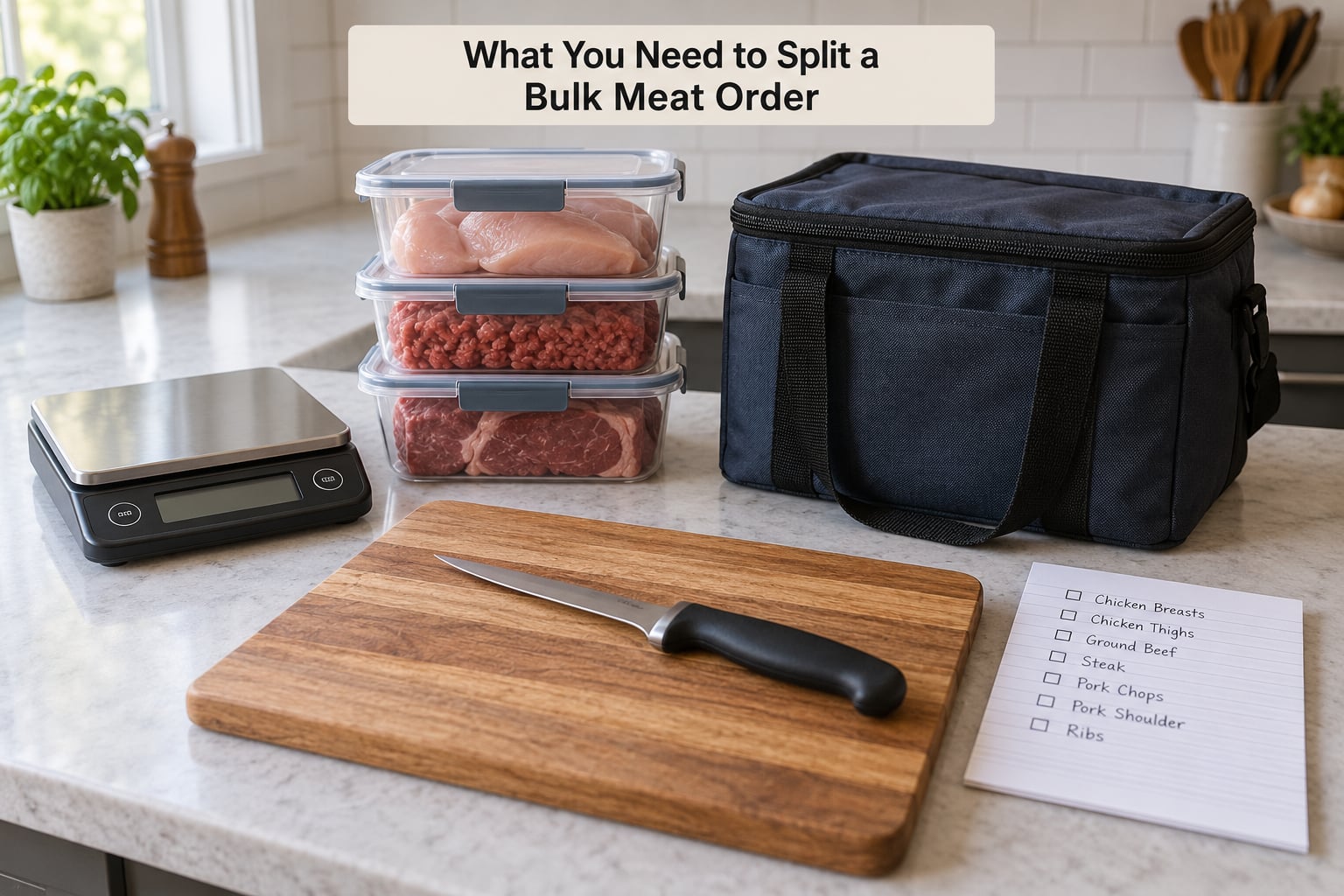
You need four things before the meat arrives: the numbers, the people, the tools, and the plan. Without the first one, nothing else matters.
- The billable weight and the total. The final weight your processor charged for, the processing or cutting charge, and any delivery charge.
- A roster. Every person’s name, contact, and how many they plan to take.
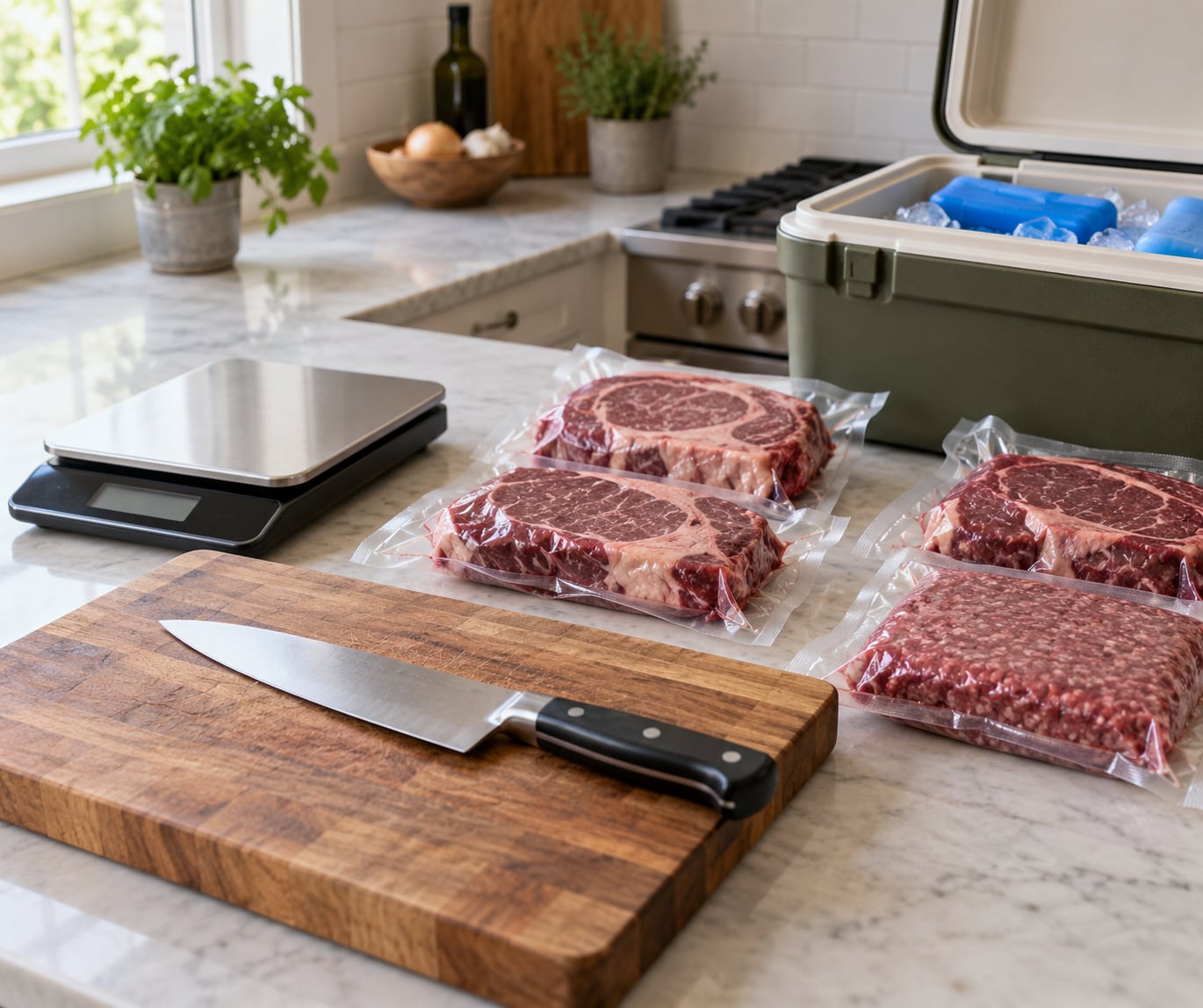
- A kitchen scale that reads ounces. A postal scale works fine. Volume measures are useless for this.
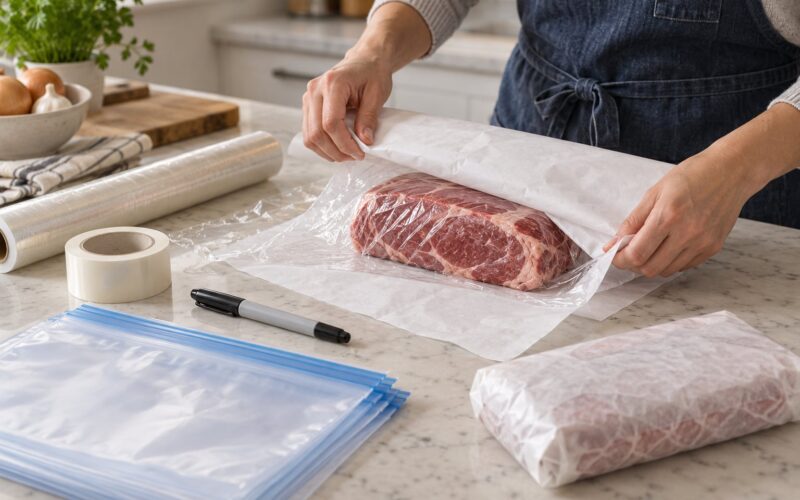
- Cutting tools. A sharp boning or chef’s knife, a cutting board, and freezer-safe bags or containers.
- Labeling supplies. Masking tape and a marker, or printed labels if you want it to look tidy.
- Cold transport. A cooler, a picnic blanket to sit the cooler on in a hot car, and enough ice or frozen gel packs to cover everything.
- A written payment and pickup plan. Who pays what, when, and where the portions get handed over.
Here is the short version of why the numbers come first. A 24-pound bulk box billed at one rate is not 24 pounds in your freezer. After trimming, bones, and packaging, you may end up splitting 18 pounds of usable meat. Dividing 24 and dividing 18 give two different answers, and the one you agreed to has to be the one you tell your friends about.
Step-by-Step: Divide the Order Fairly and Keep It Safe
There are three phases to splitting a bulk meat order with friends: decide who gets what, pack it so it can be identified later, and move it without breaking the cold chain. Work in that order and the collection is boring, which is exactly what you want.
How to Split a Bulk Meat Order by Weight, Cost, or Equal Servings
There are three ways to divide a shared order, and the right one depends on how much your group trusts each other’s freezers.
| Method | The formula | Works best when |
|---|---|---|
| By weight | Total packaged pounds divided by the number of people | Everyone has a freezer and roughly the same appetite for every cut |
| By cost | Total bill divided by the number of people | Some people take a big roast and others take only ground beef |
| By servings | Total servings divided by people, then converted to pounds | One household is much larger, or you are splitting for an event |
Here is a worked example. Four friends split a 12-pound bulk order. By weight, each person takes 3 pounds. By cost, each pays a quarter of the bill, which is fair when one of them takes two pounds of ribeye and another takes three pounds of stew meat. By servings, a quarter-pound per serving for a family of four works out to 48 servings across the group, so each person takes 12 servings’ worth.
Bone-in cuts throw this off. A bone-in rib chop at 14 ounces yields far less edible meat than 14 ounces of boneless roast, so equal pounds can mean unequal dinner plates. Say that out loud before cutting, and let the group decide whether bone weight counts toward a share or sits outside it.
The other half of the fairness question is trim. Fat caps, silver skin, and stray bone can be 10 to 15 percent of the weight you paid for. Decide whether that loss is absorbed across the group or taken from a shared pile nobody claims. My preference is to trim first, weigh the usable meat, and divide only what is left.
Label Each Portion Before It Goes Home
A label should carry six pieces of information: the owner’s name, the cut or cuts inside, the weight, the cost share, the pickup date, and a storage instruction. Adding the freezer plan helps too, especially if someone is picking up in three weeks while the rest go home tonight.
Write it like this: Maria, mixed: 3.1 lb, roast and stew, one-quarter share, picked up Oct 12, freeze on arrival. Masking tape on the outside of the bag works; so does a marker directly on the freezer bag if the tape peels in the cold.
Written records prevent the two problems that actually happen. One is a stranger’s package going home with your friend because the boxes looked alike. The other is a text thread six months later where nobody remembers whether Dana already got the two pounds of brisket. A photo of the labeled pile in the group chat costs ten seconds and settles both.
Keep the Meat Cold During Handoff
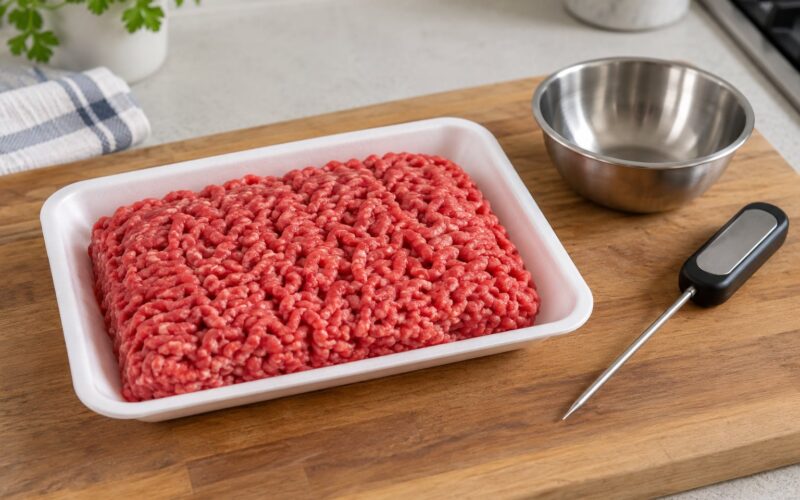
Raw meat should stay at or below 40°F (4°C) from pickup to freezer, and the safe minimum internal temperatures are the ones to cook to, not the ones to store at.
| Meat | Safe minimum internal temperature |
|---|---|
| Poultry, whole or ground | 165°F (74°C) |
| Ground beef, pork, lamb | 160°F (71°C) |
| Whole cuts of beef, pork, lamb, and fish | 145°F (63°C) with a 3-minute rest |
For same-day transport, use a cooler that holds its temperature for the length of the drive, not just the length of the trip to the store. Pack the cooler full, because air is what carries heat, and put the heaviest sealed packages on the bottom against the ice. Set the cooler in the shaded footwell of the car rather than the trunk, which heats up fast.
Keep raw meat away from anything ready to eat. If one person is taking ground beef for burgers and another is taking soup bones or a roast, put the bones in a separate bag inside the box so nothing leaks onto a package meant for the oven.
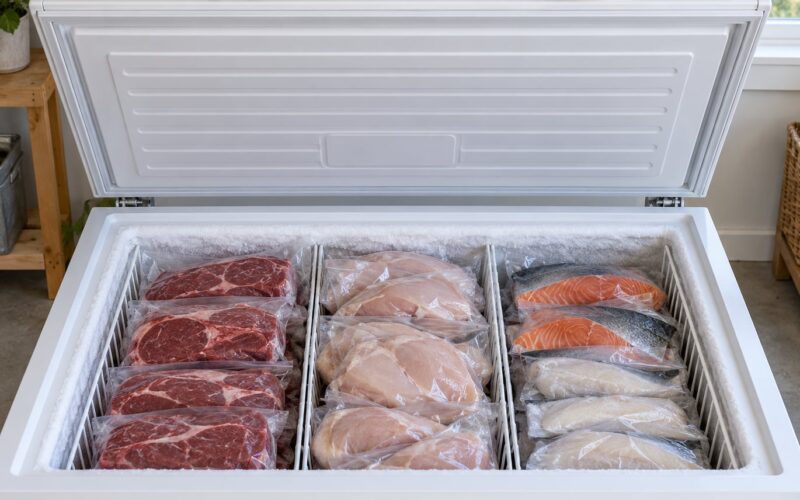
For later storage, get everyone home and into a freezer within two hours of pickup. A properly vacuum-sealed package keeps its quality in a 0°F (-18°C) freezer for roughly 12 months for steaks and roasts, and closer to 4 to 6 months for ground beef and sausage. Freeze what you will not eat in the first month in single-meal portions rather than one large brick, because a frozen block blocks airflow and thaws slowly.
Common Mistakes When Splitting a Shared Meat Order
Dividing before the final weight is known. Estimates are how arguments start. Wait for the actual bill and the actual packaged weight, then divide.
Forgetting that trim and bone are not edible weight. Trim everything first, weigh the usable meat, and only then split. Record the trim loss so nobody wonders where four pounds went.
Assuming equal pounds means equal value. A share of ribeye and a share of shank are not the same dinner. If the group cares about cuts, use cost shares or trade cuts deliberately instead of pretending they are identical.
Using unmarked containers. Every package gets a label before it goes into the cooler, even if you plan to hand them over in person. Collection gets staggered more often than people expect.
Leaving meat unrefrigerated while sorting. Sorting and weighing take longer than you think. Do it in batches and put each batch back in the cold, or work in a garage or porch that is already cold rather than a warm kitchen.
Letting one person chase every payment. Set a due date with the pickup date, not after it, and give everyone the same number to pay. Reconcile in the group chat in one message so nobody has to keep a private tally.
Three habits keep the waste down. Reserve trim for stock, ground beef, or a friend who wants it; ask your processor for smaller vacuum packages so nobody has to thaw a 5-pound brick for two meals; and pick one collection point where the cooler stays cold instead of trading packages in a parking lot. If someone has no freezer room, agree in advance on a backup plan, such as a second collection or a partial donation to a neighbor, before anyone is standing at the counter with meat in hand.
Frequently Asked Questions
How do you split a bulk meat order when the pieces are different sizes?
Weigh the usable meat after trimming, not the raw pieces, then group cuts of similar value into shares. If one person takes two pounds of ribeye and another takes three pounds of stew meat, decide up front whether bone and fat weight counts toward a share. Cost shares handle this better than weight shares, because the dollar amount follows the value of the cut rather than the size on the scale.
Should friends pay for the exact weight they receive or an equal share?
Equal shares are simpler and avoid arguments, but they are unfair when one person takes mostly expensive cuts. A good middle ground is an equal dollar share with a written cut preference list submitted to the processor together, so the group’s total match is balanced before cutting starts. Whichever you choose, write it on the group agreement before the deposit is due, not at pickup.
How long can a bulk meat order stay in a cooler during pickup?
Keep raw meat at or below 40°F (4°C) and use a cooler packed solid with ice or frozen gel packs for the whole drive, not an hour or two. A full cooler holds safe temperature for most of a day if the ice is replenished. Get everyone into a freezer within two hours of pickup, and use a thermometer inside the cooler if the drive is long or the weather is hot.
Can we split a bulk meat order into different cuts?
Yes, and most groups do better when they try. Submit one combined cut list to the processor so the whole order is cut consistently, then divide by cut afterward. If you want a trade, such as one person taking all the roasts while another takes all the steaks, agree the trade in writing and confirm each person is getting comparable value before the meat is cut, since the processor does not sort shares for you.
What is the easiest way to label and track everyone’s portion?
Masking tape and a permanent marker are the cheapest reliable option, with the owner’s name, cuts, weight, cost share, and pickup date on every package. Keep one master list on paper or in a shared note showing each person’s weight and amount owed. A photo of the labeled pile in the group chat at handoff catches mistakes immediately, and it settles questions weeks later.
Should the butcher package each friend’s meat separately?
Ask the processor whether they can label packages by name at the time of cutting. Many will do it, and it saves the group from sorting at pickup. If the shop will only package by cut, plan to repackage and weigh at home, which is why you need the scale and labels ready before the meat leaves the cooler. Smaller vacuum packages are worth requesting, since they thaw faster and waste less.
Final Check Before You Split the Order
Run through this once before the first cut: confirm the final weight and total on the bill, choose one division method and write it down, trim and weigh the usable meat, record each share, label every package before it enters the cooler, organize the payment, and arrange transport that keeps the meat cold. Six lines, one page, and the whole afternoon goes smoothly.
Settle the method and the labels first, because a portion you cannot identify is a portion nobody gets paid for. Then collect or deliver promptly under refrigeration, and everyone eats well for the next year.