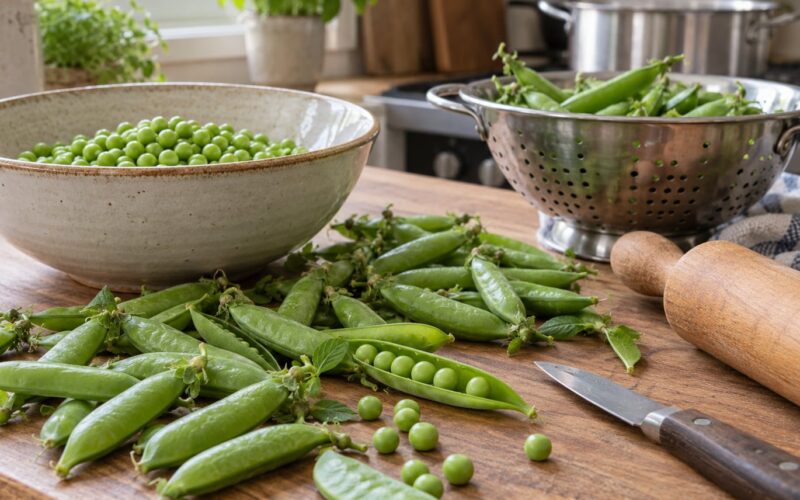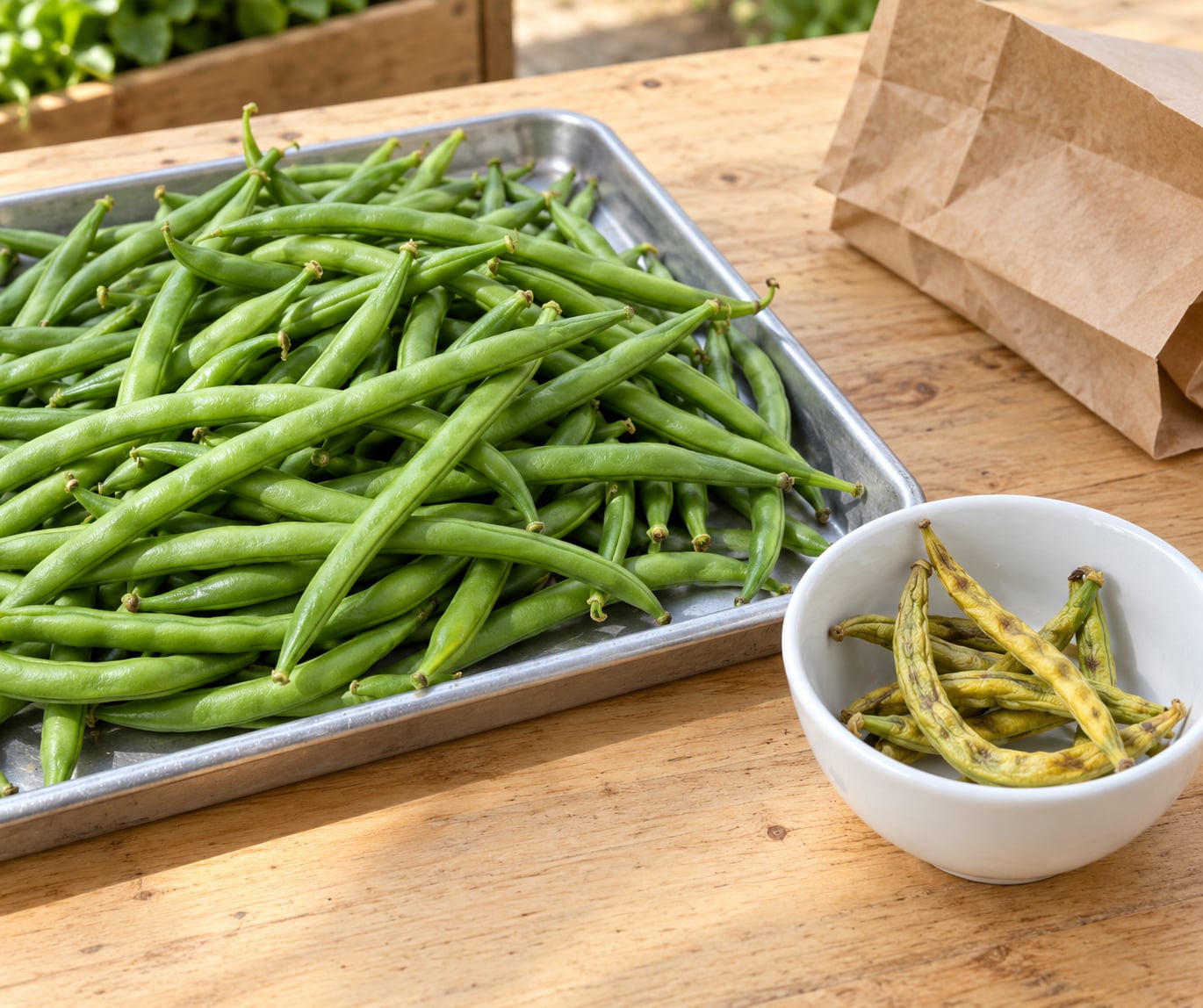
Fresh green beans are crisp and firm, bright green all the way down the pod, and they snap cleanly with an audible crack when you bend one in half. That takes about thirty seconds per handful. If a pod bends without breaking, feels rubbery, smells sour, or has brown patches or fuzzy growth, it is past the point where I would cook it.
Green beans go by a lot of names: snap bean, French bean, string bean, common bean. Same vegetable, same rules. The freshness test does not change with the name or the variety, which is why it is such a fast check to run at the market or in the produce aisle.
The thing most people get wrong is trusting color alone. Green beans are water-rich pods that keep losing moisture after harvest, so the first sign of age is texture, not hue. A dull pod that still snaps is fine. A vivid pod that folds like a rubber band is not.
| What to check | Fresh green beans | Past prime or spoiled |
|---|---|---|
| Color | Bright, even green from stem to tip | Dull, yellowing, brown at the ends, or dark patches |
| Bend test | Resists, then breaks with a clean audible crack | Bends without breaking, or needs pulling and tearing |
| Feel along the pod | Firm and plump, small undeveloped seeds | Hollow, flat, soft spots, or bumpy from swollen seeds |
| Surface | Dry, smooth, taut skin | Slimy, sticky, wet patches, matted clumps, fuzzy growth |
| Smell | Clean, faint grassy or sweet note | Sour, fermented, musty, or vinegary |
Table of Contents
- What You Need
- Step-by-Step: How to Tell If Green Beans Are Fresh
- Look for Bright, Even Color
- Check That the Pods Feel Firm and Snap
- Inspect the Beans Inside the Pod
- Check for Dryness and Storage Condition
- Smell for a Fresh, Clean Aroma
- Common Mistakes
- Frequently Asked Questions
- How can I tell if green beans have gone bad?
- How long do fresh green beans last in the fridge?
- Are green beans good after 3 days in the fridge?
- Why are my green beans fuzzy?
- Can I leave fresh green beans on the counter overnight?
- Are frozen green beans as good as fresh?
- The Snap Test Decides It More Often Than Color Does
What You Need
Nothing special. A handful of beans, decent light, and about half a minute of attention is the whole toolkit.
Helpful extras, if you have them:
- Clean, dry hands. Wet fingers hide the true surface condition of the pod, and a dry touch picks up stickiness and slime that washing would disguise.
- A loose shopping bag or basket. Beans piled into a bag and carried home squeezed under other produce bruise at the stem ends, and bruises turn first.
- A paper towel. For the fridge. A lined container or bag is the single biggest factor in how long they stay crisp.
- A fridge crisper drawer or vented container. Not a sealed airtight tub, which traps moisture and speeds rot.
If you grow your own, add pruning shears and a shallow basket. Cut the pods off rather than pulling them, and keep the haul in one layer so nothing sits on something crushed underneath.
Step-by-Step: How to Tell If Green Beans Are Fresh
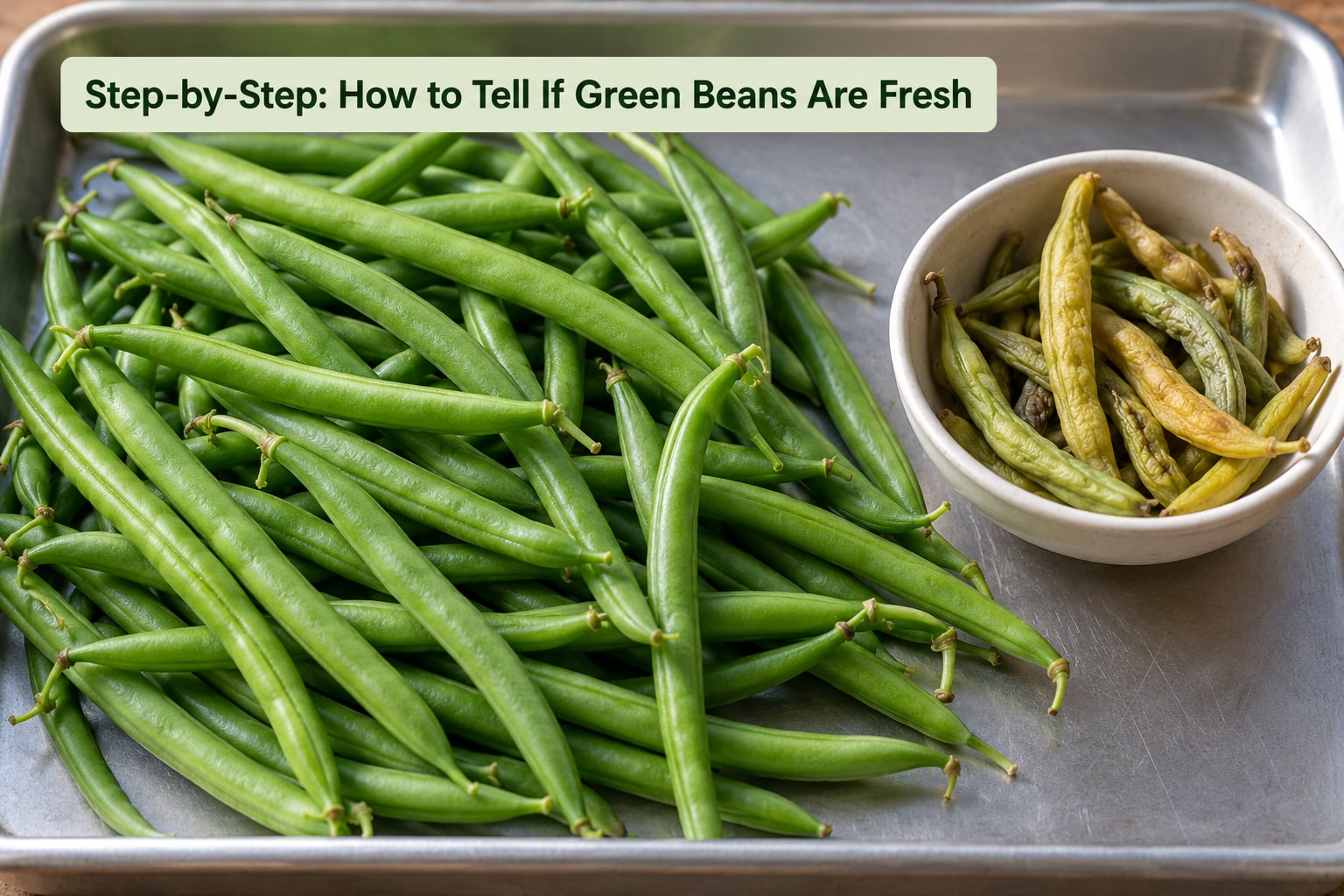
Run the checks in this order. Color first because it takes a second, then hands-on, then nose. By the time you are smelling them, you already know most of the answer.
Look for Bright, Even Color
Fresh green beans are a vivid, even green from stem end to tip. Some varieties, particularly the darker Italian pole types, are naturally deeper in color than the pale French types in a supermarket bag, so judge each pile against itself rather than against an idea of what green should be.
Move past pods that are yellowing, dull all over, or going brown or tan at the ends. Dark brown or rust-colored patches on an otherwise green pod are a warning, especially if they feel soft rather than dry. Natural variation is fine: a few darker streaks, a slight color shift from stem to tip, or faint ribs running the length of a thicker bean. Uniform fading is not.
Check the stem ends too. A fresh bean has a bright cut end. A brown or corky stem end means water has been moving out of the pod for a while.
Check That the Pods Feel Firm and Snap
This is the check that settles most arguments, and it is the one people describe as the snap test. Pick up a single bean, bend it gently in half between your thumbs, and listen. A fresh pod resists at first, then breaks with a clean crack. You should hear it. If you can feel the fibers stretching without breaking, that bean is tired.
Also give it a squeeze lengthwise along the pod. Fresh beans feel firm and plump with seeds that are small and undeveloped. A pod that feels hollow, flat, or soft in spots has lost moisture and is past its best for texture, even when it looks perfectly green.
Do not confuse a slightly flexible bean with a bad one. Snap beans are naturally a little bendy, especially the thinner French types. The line is at whether the pod breaks cleanly or requires pulling and tearing. Rubbery, leathery, or truly limp is a fail.
Inspect the Beans Inside the Pod
Open one pod from the bottom pile. That is the one most likely to be past prime, so it gives you the honest answer for the rest.
Inside a fresh pod you will find small, firm, undeveloped seeds that barely raise a bump on the surface. When the seeds swell, the pod turns lumpy and bumpy on the outside, the fibers toughen, and the bean gets stringy and tough rather than tender. That is a picking-window problem, more common with home-grown beans left on the vine too long than with store-bought ones, but it happens in market crates that sat through a slow week.
A bulging, bumpy pod is a quality problem rather than a safety problem. It is still edible, it just will not crisp up in the pan, and it is better in a soup or a stew where it cooks down.
Check for Dryness and Storage Condition
Fresh beans are dry to the touch. A slimy, sticky, or slick surface means bacteria are already working on sugars that are still present, and that is a discard signal, not a rinse-it-off signal.
Look for wet patches, matted clumps, fuzzy white or grey growth, or a pile that has clearly been sitting in condensation. In a bag, fresh beans lie loose and individually defined. If they are stuck together in damp wads, they have been wet too long, whether that happened in the field, in the crate, or in your own fridge.
Smell for a Fresh, Clean Aroma
Fresh green beans smell like almost nothing: a clean, faintly grassy or sweet note, the way a snap bean smells straight from the garden. That faint smell is a good sign.
A sour, fermented, musty, or vinegary smell is not. That is the same off-odor that shows up in old cabbage and other low-acid vegetables, and it means the beans have started to ferment. It does not rinse off and it does not go away by cooking harder. If a bag of beans makes the back of your nose twitch, get rid of it rather than cooking your way through it.
Common Mistakes
Judging by color alone. Color is a screening step, not a verdict. Beans keep losing water long before the green fades, so the bend test and the squeeze catch age that color misses. Run all five checks or at least the snap and the smell.
Treating every variety as interchangeable. Thin French and haricot beans are tender and quick to cook. Thicker Italian, wax, or pole types hold more water and fiber and tolerate longer cooking. A thick pole bean is not bad for bending more readily than a slender haricot type. Compare the pile against itself.
Ignoring damaged pods. One crushed pod in a crate can wet and bruise its neighbors. At home, pull out any pod with a split, a soft end, or a brown spot rather than leaving it in the bag to spoil the rest.
Washing beans and sealing them wet. Washing before storing shortens their life, and a sealed tub or bag of damp beans traps the moisture that mold and bacteria need. Keep them dry in the fridge and wash right before you cook.
Leaving them on the counter overnight. Green beans are perishable. The USDA FoodKeeper guidance puts fresh green beans at about three to five days in the refrigerator, and other sources you will read say anywhere from four to seven days, or up to ten in a loose bag unwashed. That spread is real and it comes down to how dry, cold, and undisturbed they were. Treat the shorter number as your working number.
Letting a purchase sit for a week before cooking. Fresh is perishable, so buy the amount you will cook within two or three days. More than that, blanch and freeze instead, or pick the day you plan to cook.
| State of the beans | Where they go | Usable time |
|---|---|---|
| Fresh, unwashed and dry | Fridge, upper or middle crisper shelf | 3 to 5 days per USDA FoodKeeper; often closer to 7 unwashed in a loose bag |
| Fresh, washed | Fridge | Shorter than unwashed, because residual moisture speeds decay |
| Cooked | Fridge, covered | 3 to 4 days |
| Blanched and frozen | Freezer | 8 to 12 months |
| Pressure canned | Pantry, sealed jar | A year or more; boiling-water-bath canning is not safe for green beans, because they are a low-acid vegetable and botulism spores survive that method |
One more thing worth knowing: green beans are chilling-sensitive. Kept in the coldest part of the fridge, often the back shelf near the freezer, they can develop rust-colored streaks, pitting, and a dull texture. Put them in an upper or middle crisper shelf instead. Nobody tells you this, and most people blame the beans.
Frequently Asked Questions
How can I tell if green beans have gone bad?
Discard green beans that are slimy or sticky, smell sour or musty, have fuzzy white or grey mold, or show soft brown or black patches with a mushy texture. Beans that are limp, wrinkled, or leathery are past their best for eating crisp, though they are usually still safe to cook into a soup or stew if there is no odor, slime, or mold. Smell is the fastest test, and sour or vinegary is the clearest signal to throw the whole batch out.
How long do fresh green beans last in the fridge?
USDA FoodKeeper guidance puts fresh green beans at about three to five days in the refrigerator. Many home cooks get closer to a week when beans are kept unwashed and bone dry in a paper-towel-lined bag in the crisper. Washing them first, or sealing them wet in an airtight container, usually cuts that down. Plan on the shorter number if the beans are already more than a couple of days old when you buy them.
Are green beans good after 3 days in the fridge?
Three days is comfortably inside the window, and beans stored that way are usually at their crispest. Day one is when they are firmest. By day three you may notice the stems starting to look less bright and the pods taking a bend instead of a snap. If they still break cleanly, have no odor, and are dry to the touch, cook them. If they are bending without breaking, use them in something that cooks down rather than steaming them.
Why are my green beans fuzzy?
Fuzz on green beans is mold, and it is one of the clearest discard signals there is. It shows up as white, grey, or greenish fuzz on the pod, often starting where beans touch each other in a damp bag. Dry them out immediately by spreading them in a single layer on a towel, but if fuzz has already developed, throw the batch out rather than trying to pick the spots clean. Some home canners also see a white film during pickling, which is a different process and a different call.
Can I leave fresh green beans on the counter overnight?
No, or not for long. Green beans are perishable, and the general food-safety rule is to refrigerate perishable produce within two hours of cutting or purchase, or one hour in a hot room above 90 degrees. Overnight on the counter is fine as a total accident, but it is not a way to store them. Put them in the fridge unwashed and dry, and they will last several more days. The important caveat is that bacteria do not always change how food looks or smells, so time and temperature matter more than appearance.
Are frozen green beans as good as fresh?
Frozen green beans are picked and frozen at peak, so their nutrition is locked in and they keep for months. Fresh beans are crisper and better in a salad or quick saute, while frozen ones soften into soups, stews, and casseroles without losing color. Small or thin beans are not automatically better or worse. Watch for pods with a wide, flat, or bent shape and avoid beans with bulging seeds, since those freeze up tough.
The Snap Test Decides It More Often Than Color Does
If you do one thing, bend a bean. Color is a fast filter for the obviously old pile, but the break test tells you about the pile in between, which is where most decisions actually get made. A crack means cook it, a stretch means use it in something that simmers, and a sour smell means it goes in the bin.
Back at home, keep the beans dry, unwashed, and in the upper or middle of the fridge, away from the coldest shelf. Check the pod closest to the bottom of the bag first, since that is the one that spoils earliest.
Last reviewed in October 2026. Shelf-life guidance follows USDA FoodKeeper and general USDA food-safety recommendations on perishable produce.