If you want to know how to make herb infused vinegar, the method is short: steep 1 cup of fresh, bruised herbs in 2 cups of vinegar with at least 5% acidity, sealed in a glass jar in a dark cupboard for two to four weeks. Hands-on time is about five minutes a jar. The waiting does the work.
It is also the best use for a herb surplus. If a market haul or a garden bed hands you more basil than you can cook through, a bottle of vinegar captures the flavor in a form that keeps for months and dresses anything from a plate of tomatoes to a roast chicken.
The finished vinegar is shelf stable, needs no refrigeration, and costs a small fraction of a store-bought bottle of flavored vinegar. Below is the full method, the ratios that matter, and the mistakes that ruin a batch.
Table of Contents
- What You Need
- Step-by-Step: How to Make Herb Infused Vinegar
- Choose the Right Vinegar and Herbs
- Use a Balanced Infusion Ratio
- The Six-Step Method
- How Long to Steep and How Long Herb Vinegar Lasts
- Common Mistakes and How to Fix Them
- Packing the jar too full
- Using delicate herbs that turn muddy
- Skipping the drying step
- Letting acid touch a metal lid
- Judging flavor too early
- Steeping too long
- Ignoring a film on the surface
- How to Use Herb Infused Vinegar
- Frequently Asked Questions
- How long does herb infused vinegar last?
- Does herb infused vinegar need to be refrigerated?
- How long does it take to infuse vinegar?
- Can I use dried herbs instead of fresh herbs?
- Do I have to strain the herbs out of my infused vinegar?
- Why is there a film on top of my infused vinegar?
What You Need
Everything comes from a normal kitchen, and the quantities below make one standard batch using a quart jar.
- 2 cups vinegar at 5% acidity or higher — distilled white, apple cider, white wine, red wine, rice, or champagne vinegar. Check the label; diluted vinegar below 5% is not a safe base for a room-temperature infusion.
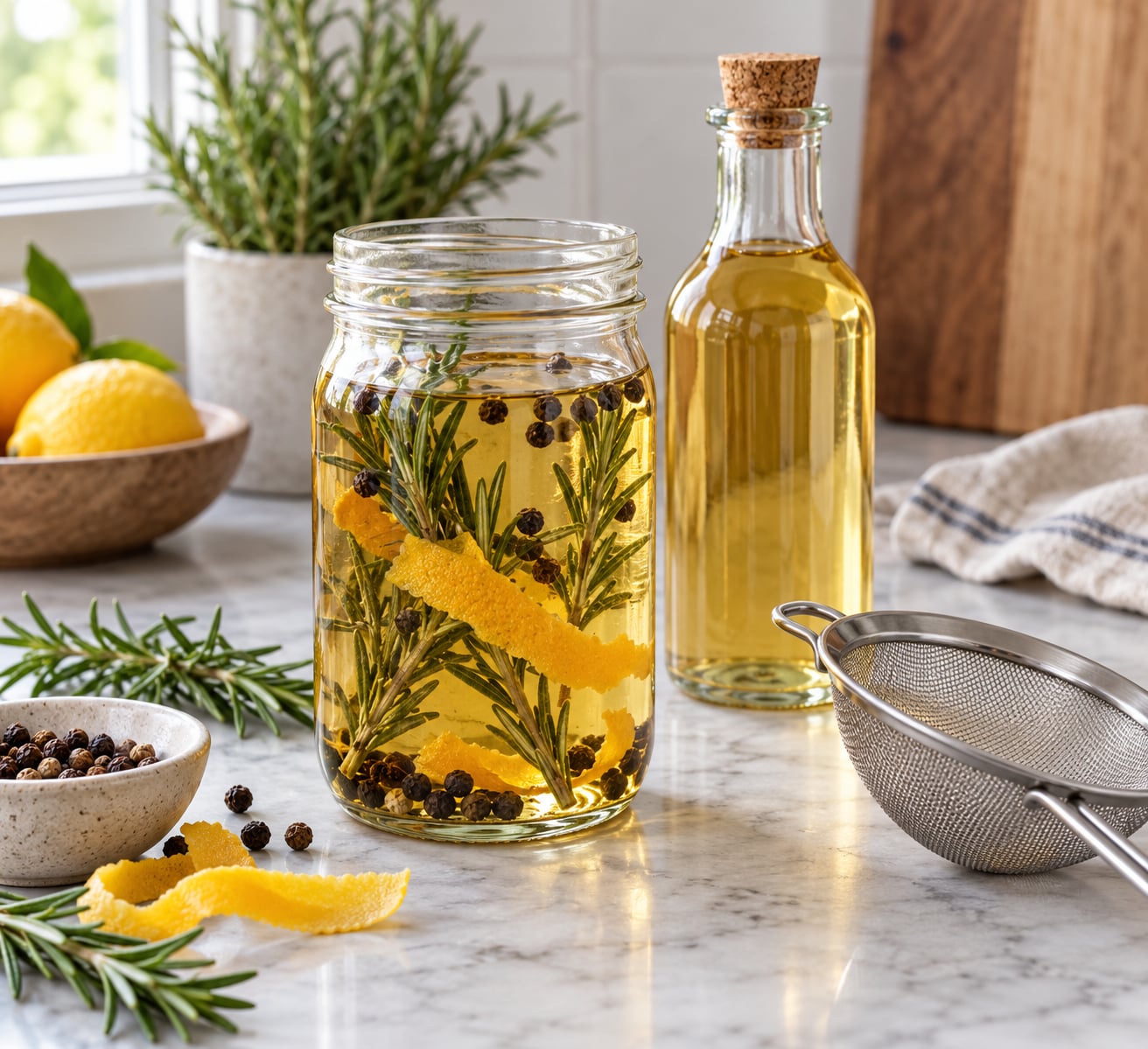
- 1 cup fresh herbs, loosely packed, washed and completely dry. Rosemary, thyme, oregano, sage, tarragon, dill, chives, mint, or lemon balm all hold up well.
- Optional extras: 2 peeled garlic cloves, 1/2 teaspoon whole peppercorns, 1 tablespoon whole mustard seed, a strip of lemon or orange peel, or 1/2 cup of berries or stone fruit.
- 1 clean glass mason jar with a non-metal lid. If all you have is a metal two-piece lid, cover the jar mouth with plastic wrap or a square of parchment paper first and secure it with a rubber band.
- Glass or non-metal utensils, a kitchen towel, and labels or masking tape and a pen.
- A fine-mesh strainer, cheesecloth, or a paper coffee filter for the finished batch, plus corked bottles if the vinegar is a gift.
One warning before you start: do not dilute vinegar with water to stretch a batch. Water drops the acidity below the level that keeps the infusion safe at room temperature. If you want a lighter vinegar for a dressing, dilute at the moment you use it.
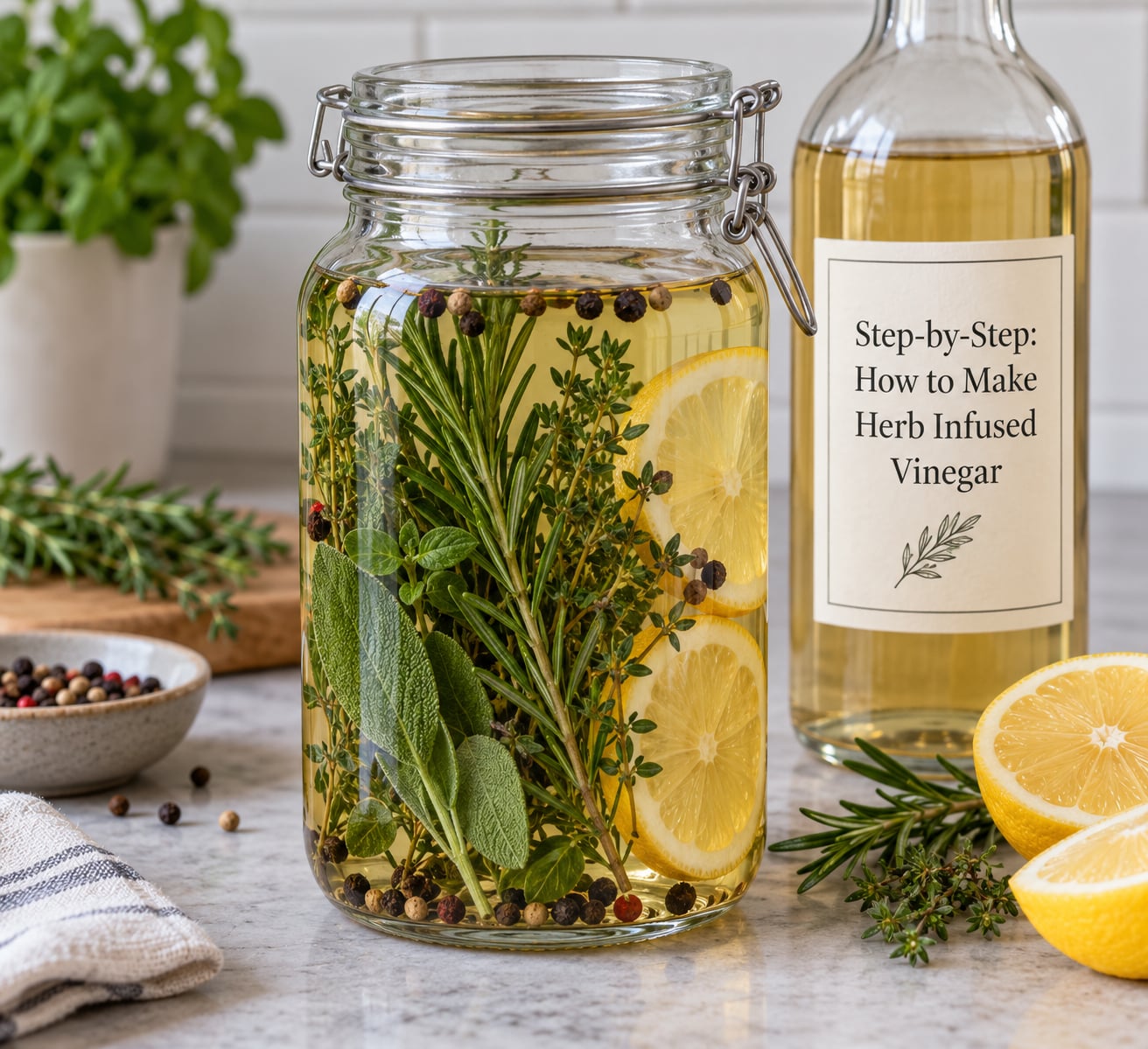
Step-by-Step: How to Make Herb Infused Vinegar
Choose the Right Vinegar and Herbs
The vinegar sets the base flavor and the herbs ride on top of it. Distilled white vinegar is neutral and sharp, so it takes flavor well but keeps none of its own; red wine vinegar brings fruit and tannin; balsamic is already sweet and dark, so it needs herbs that will not disappear into it.
| Vinegar | Best herbs to steep | Flavor result |
|---|---|---|
| Distilled white vinegar | Rosemary, thyme, oregano, chives, mint | Clean and bright, herb flavor dominant |
| Apple cider vinegar | Rosemary, sage, garlic, mustard seed | Fruity and mellow, slightly sweet |
| White wine vinegar | Basil, tarragon, parsley, chervil, lemon peel | Delicate and light, good for dressings |
| Red wine vinegar | Thyme, oregano, bay leaf, garlic, rosemary | Deep, tangy, tannic |
| Balsamic vinegar | Thyme, sage, garlic, black peppercorns | Sweet and complex, herbs read as an accent |
| Rice vinegar | Dill, lemongrass, ginger, cilantro | Mild, slightly sweet, Asian-style dressings |
| Champagne or sherry vinegar | Tarragon, basil, lemon balm, lavender (culinary grade only) | Light, complex, slightly nutty |
As a rule, sturdy herbs are the reliable ones. Rosemary, thyme, sage, oregano, and bay have enough structure and oil content to give up flavor over weeks without turning the jar cloudy. Tender herbs like parsley, cilantro, and chervil work too, but they give a lighter result and are worth using in the first week rather than the fourth.
Flowers work as well as leaves. Dill and chive blossoms are mild and pretty, and lavender makes a lovely vinegar for baking and cleaning, but only use lavender labeled culinary.
Use a Balanced Infusion Ratio
The baseline ratio is roughly 1 cup of fresh herbs or spices to every 2 cups of vinegar. That is enough herb material to flavor the liquid without packing the jar solid, which is the single biggest cause of a failed batch.
| Herb form | Amount per 2 cups vinegar | Steep time | Result |
|---|---|---|---|
| Fresh herbs | 1 cup loosely packed | 2 to 4 weeks | Bright, garden-like flavor |
| Dried herbs | 2 tablespoons | 2 to 3 weeks | Concentrated, woodier notes |
| Whole spices | 1 to 2 tablespoons | 3 to 4 weeks | Spiced vinegar for marinades |
| Garlic or ginger | 2 to 4 cloves or slices | 2 to 4 weeks | Pungent, good on vegetables |
| Citrus peel | 1 to 2 strips | 1 to 2 weeks | Bright finish for dressings |
| Fresh fruit or berries | 1/2 cup | 2 to 3 weeks | Sweet, seasonal; strain sooner |
Dried herbs are roughly one fifteenth the volume of fresh for the same jar, so use far less. Fruit behaves differently from herbs: it releases water into the vinegar as it sits, so keep the quantity modest and strain it out on the earlier end of the window.
The Six-Step Method
- Clean the jar. Boil the glass jar and lid for 10 minutes, then let them dry on a towel. Residual water is the main thing you are trying to remove.
- Wash, dry, and bruise the herbs. Rinse them, dry them thoroughly, and crush the leaves between your palms or chop them roughly. Bruising breaks the cell walls so flavor escapes; skipping it is why some batches taste weak.
- Pack the jar loosely. Fill no more than halfway for bulky herbs like rosemary, chives, or citrus peel, and no more than two thirds for dense ones. Herbs need room to move so vinegar can reach all of them.
- Pour in the vinegar and submerge. Add enough vinegar to fully cover the plant material with about an inch of headroom. Push the herbs down with a glass or non-metal utensil and check for trapped air pockets.
- Seal, label, and date. Fit the non-metal lid, or the plastic wrap or parchment plus rubber band if you are stuck with metal. Write the vinegar type, herb, and date on masking tape.
- Steep, taste, then strain. Store the jar in a dark cupboard at room temperature, out of direct sunlight, for two to four weeks. Shake it once a week. Taste with a clean spoon at the two-week mark; when the aroma is where you want it, strain out the solids through cheesecloth or a fine-mesh strainer and pour into bottles.
A quick green herb vinegar — basil, mint, or cilantro — can be ready in as long as 24 hours. Rosemary, thyme, and any dried spice want the full window.
How Long to Steep and How Long Herb Vinegar Lasts
Two to four weeks is the steeping window, and taste is a better guide than the calendar. Dried herbs and whole spices can go the full four weeks; tender herbs and citrus peel are usually right at two. If you want a stronger result, add a fresh handful of herbs to the same vinegar and wait another week or two rather than starting over.
A strained, sealed jar of herb infused vinegar keeps a year or more in a cool, dark pantry. The acid does the preserving, which is exactly why no cooking and no refrigeration are involved. Once you open it, keep it capped; if you prefer the reassurance of the fridge, that works fine too, just return it to the cupboard afterward.
Two situations call for different rules. If you keep the herbs or fruit in the jar for looks, move the jar to the refrigerator and use it within a few months, because plant material continues to break down. If a bottle has sat unused for a year, open it and smell it before using it.
Common Mistakes and How to Fix Them
Packing the jar too full
This is the most common failure. A full jar has no vinegar in circulation around the herbs, so you get a weak, uneven result and a risk of spoilage in the pockets that stay dry. Fix it for next time by filling only half to two thirds full. If the batch is already packed and smells clean, add vinegar to top it up and give it another week.
Using delicate herbs that turn muddy
Parsley, cilantro, and chervil lack the structure to hold their flavor for a month. They go cloudy and vegetal if you leave them the full four weeks. Infuse them for a week or two, strain them, and move on to rosemary or thyme for the long batches.
Skipping the drying step
Water carried in by fresh herbs dilutes the vinegar and gives mold something to feed on. Dry herbs on a towel after washing, and blot fruit rather than rinsing it. This is the single detail that separates a batch that keeps for a year from one that does not.
Letting acid touch a metal lid
Acetic acid reacts with the metal ring on a two-piece mason jar lid, which can corrode and flake into the vinegar. Use a glass lid with no metal, or lay plastic wrap or parchment paper over the jar mouth before screwing the ring on. Add a rubber band if the wrap slips. Use wooden spoons and glass bowls rather than metal utensils for the same reason.
Judging flavor too early
Nobody decides to strain an infusion after four hours, but people do taste a thin sample and panic. Vinegar tastes sharper on its own than it does in a dressing, so a batch that seems strong will mellow once it meets oil. Taste at two weeks, keep going if the aroma is faint, and remember that anything over-assertive gets balanced out by a spoon of oil.
Steeping too long
Bitter herbs — rosemary, sage, and anything dried — turn harsh past about six weeks, and fruit can start to ferment. If your vinegar has gone tart, fizzy, or vinegary-tasting beyond what the vinegar alone gives you, discard it. Taste regularly after week four and strain when the smell is right.
Ignoring a film on the surface
A flat, translucent, rubbery film is a SCOBY, a cellulose culture that vinegar produces on its own. It is not mold and it is not dangerous; remove it with a spoon or a coffee filter and keep the vinegar. Fuzzy green, black, or blue growth, or a musty smell, is genuine mold — discard the whole jar rather than skimming it.
How to Use Herb Infused Vinegar
A finished bottle replaces plain vinegar anywhere acid is called for, and the flavor carries further than you would expect. Three parts infused vinegar to one part olive oil and a pinch of salt makes a vinaigrette that tastes finished. A rosemary and garlic vinegar is a strong marinade for chicken, tofu, or roasted root vegetables; drizzled straight over those vegetables after roasting, it does the work of a sauce.
Two kitchen uses go beyond dressings. Mix equal parts honey and vinegar for an oxymel, a sweet-sour syrup good over cheese and yogurt, and dilute a spoonful in water or soda for a drinking shrub.
Around the house, a strong rosemary or lavender vinegar makes a cutting-board rinse and a window cleaner. Some people use a heavily diluted rosemary vinegar as a hair rinse or a foot soak. Keep those separate from anything you plan to eat, and label the bottles.
If you are infusing from a market or garden surplus, this is where the method pays off most: one quart jar turns about a cup of herbs into roughly eight months of dressings. Strain a batch and drop fresh herbs into the same vinegar for a second infusion, then a third, until the flavor fades.
Frequently Asked Questions
How long does herb infused vinegar last?
A strained, sealed jar of homemade herb infused vinegar keeps a year or more in a cool, dark pantry, because the acidity of the vinegar does the preserving. Keep the jar capped and out of direct sunlight. If herbs or fruit are still steeping inside, move that jar to the refrigerator and use it within a few months. Smell it before using after a long period of storage.
Does herb infused vinegar need to be refrigerated?
No. Once strained and sealed, herb infused vinegar is shelf stable and needs no refrigeration, because you started with vinegar at 5% acidity or higher. Refrigeration is optional if your kitchen runs hot. The exception is a jar you are deliberately keeping the herbs or fruit in for appearance, which belongs in the refrigerator and should be used within a few months.
How long does it take to infuse vinegar?
Two to four weeks at room temperature in a dark cupboard is the standard steeping window. Tender herbs such as basil, mint, or cilantro can be ready in as little as 24 hours, and citrus peel usually needs only one to two weeks. Dried herbs and whole spices benefit from the full four weeks. Taste at two weeks and strain when the aroma is where you want it.
Can I use dried herbs instead of fresh herbs?
Yes, and dried herbs concentrate the flavor rather than weakening it. Use about 2 tablespoons of dried herbs for every 2 cups of vinegar, compared with 1 cup loosely packed fresh herbs, since fresh herbs are roughly 90 percent water. Dried herbs usually need two to three weeks of steeping. Watch them after week four, because rosemary and sage turn bitter if they go too long.
Do I have to strain the herbs out of my infused vinegar?
Straining is strongly recommended, though it is not strictly required. Solids left in the jar keep breaking down, so strain for the longest shelf life and the cleanest flavor. Leaving herbs in is a matter of appearance, and if that is what you want, refrigerate the jar and use it within a few months. A fine-mesh strainer, cheesecloth, or even a paper coffee filter works well.
Why is there a film on top of my infused vinegar?
A flat, translucent, rubbery film is a SCOBY, a cellulose culture that vinegar forms on its own during a long infusion. It is not mold and it is not harmful. Lift it out with a spoon or a coffee filter, then reseal the jar. Fuzzy growth in green, black, or blue, or a musty smell, is genuine mold and means you should discard the jar.
Start with a half jar of rosemary or thyme in 2 cups of apple cider vinegar, sealed and dated, and let it sit in a dark cupboard. Two weeks from now you will have a vinegar worth far more than the herbs would have been worth on their own.